Contrast Paints
A while back I mentioned a new type of product on the market, contrast paints. Essentially it’s a paint-medium mix that is more of an intense glaze. The idea is the paint flows easily over a surface, gathering in cracks and having a thinner coat over raised surfaces. What you would usually get with a base coat and wash, you could get with a single coat of contrast paints. Additionally as it’s more transparent that your typical paint, you can get a slight highlight effect too.
Aside from Games Workshop, Vallejo and Army Painter have also thrown their hats into the contrast paint ring. I’ve only dabbled in using paints from GW and Vallejo so far (and I’ve fallen in love with the Vallejo Xpress paints). I steered clear of Army Painter due to issues of the paint reactivating when it becomes wet. There are workarounds with the Army Painter Speedpaints to minimize this, but the property of these contrast paints was pretty much a deal breaker for me ever buying them.
The concept of contrast paints is to use a neutral primer as an undercoat. And then pretty much lay down coats of contrast. As the paints are a little transparent, you really can’t paint over existing coats with different colors unless you are looking to mix hues to get a different shade. Instead you need to apply an undercoat and repaint. So if making some mistakes, it’s best to have brush-on primer handy in a shade similar to the undercoat being used, touch up any whoopsies, and keep painting with contrasts.
Working with contrast paints has been a learning experience though. Generally you can get away with using it directly from the pot. But depending on the pigmentation intensity you are going for, you may need to carefully thin it some with water and/or contrast medium. I found it better to work with lighter shades first, and then use darker shades so that you might be able to bypass touch ups with primer entirely.
The GW contrast line dries quickly and works best steadily painting to cover an entire section of a surface while it’s wet, before moving onto other parts of a model. If say, painting only half a space marine shoulder pad, you might get some uneven results coming back to the other half once that section dries. The portion you painted previously might get some brush strokes and repainting over those parts can impart a darker hue, potentially making that desired color you are striving for a little uneven.
I also learned that a single undercoat just wasn’t enough to bring out the depth possible with contrast paints. I tried first drybrushing white over gray primer. This helped in bringing out the highlights of a model allowing the contrast paint to work better as a glaze.

However I still wasn’t quite happy with the depth of color for the models as you can see with these battle mechs I worked on. I will freely admit though that it could have been the particular GW contrast paints I was using. Maybe thinning it out more would have worked better.

On the interwebs though was the slapchop method. The concept was using a darker undercoat with white highlights obtained through drybrushing. I used a gray undercoat followed up with a thin black wash.
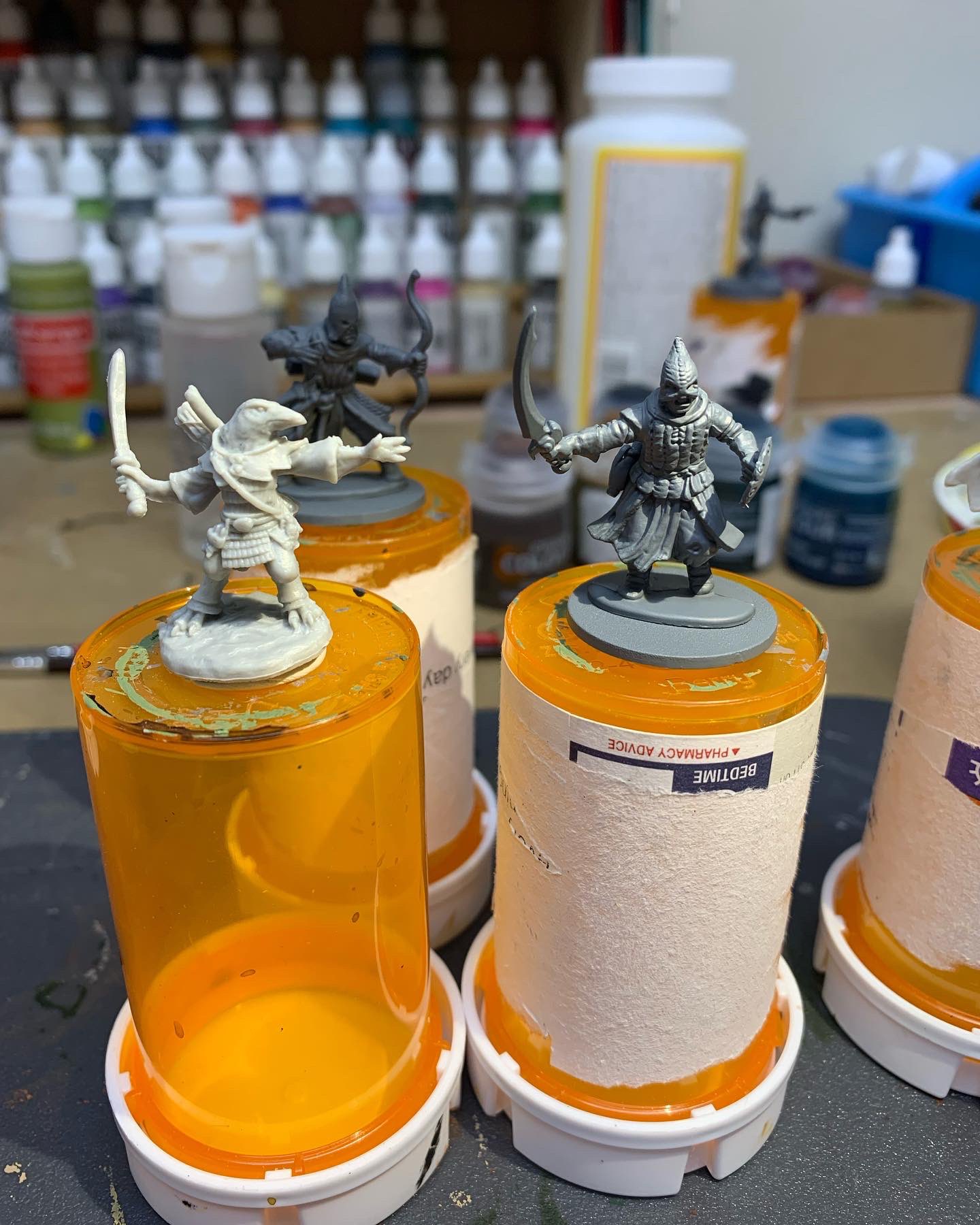

Finally doing a copious white drybrush. The key is to try and leave the recesses of the model black, and give any raised sections a nice highlight of white. This immediately provides a foundation that has a fair amount of depth that will be enhanced with the contrast paint.
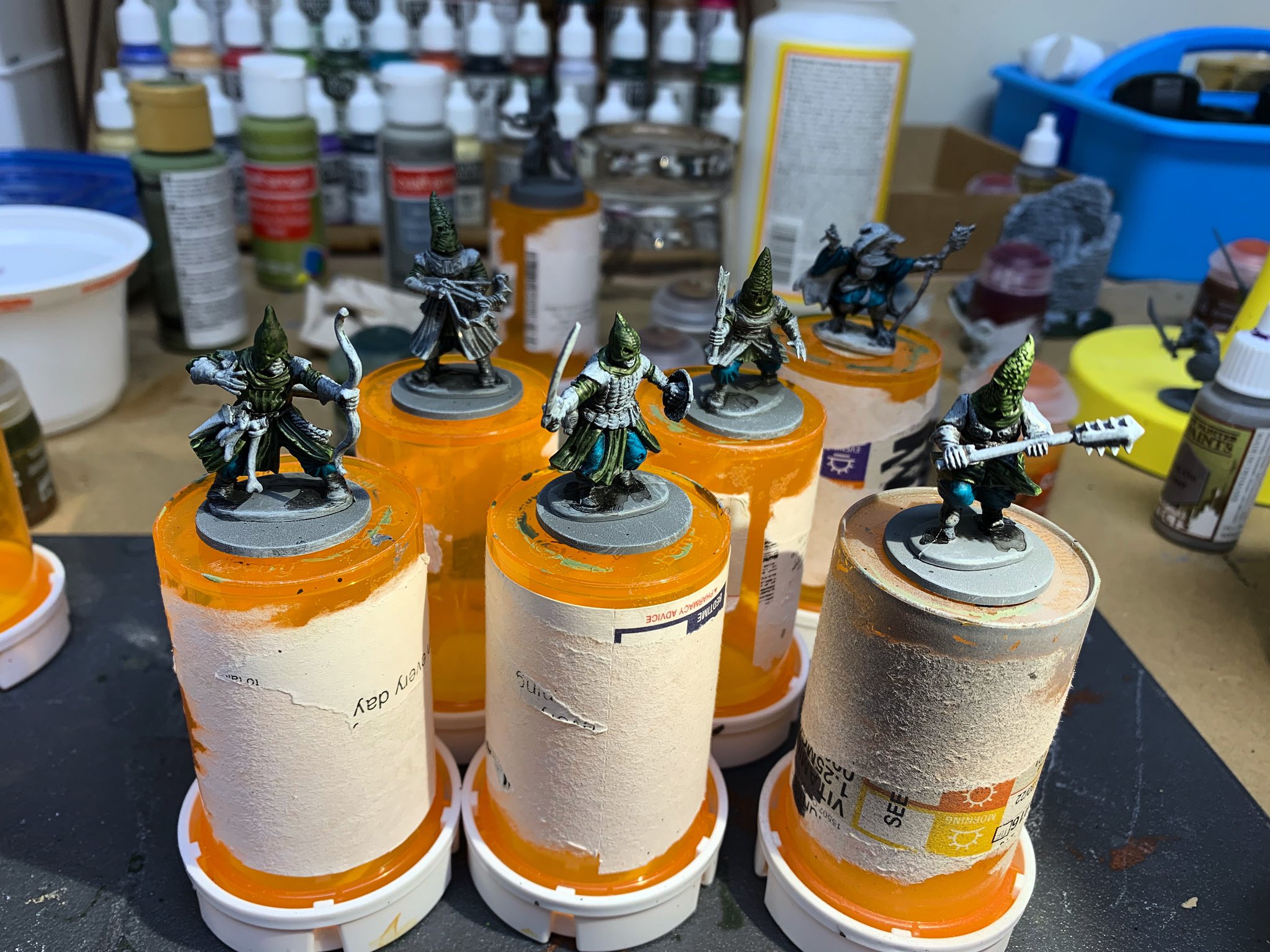
You can see with these cultists, the properties of the contrast paint easily give models with this undercoat method a great look. The nooks and crannies of the model get that deep tone of color, while raised sections with the white base coat have more depth over other areas on the mini. I could get a fair amount done with a single coat over different sections. And as the paints flow well and cover quickly, I could also get models painted up much faster than using conventional paints.

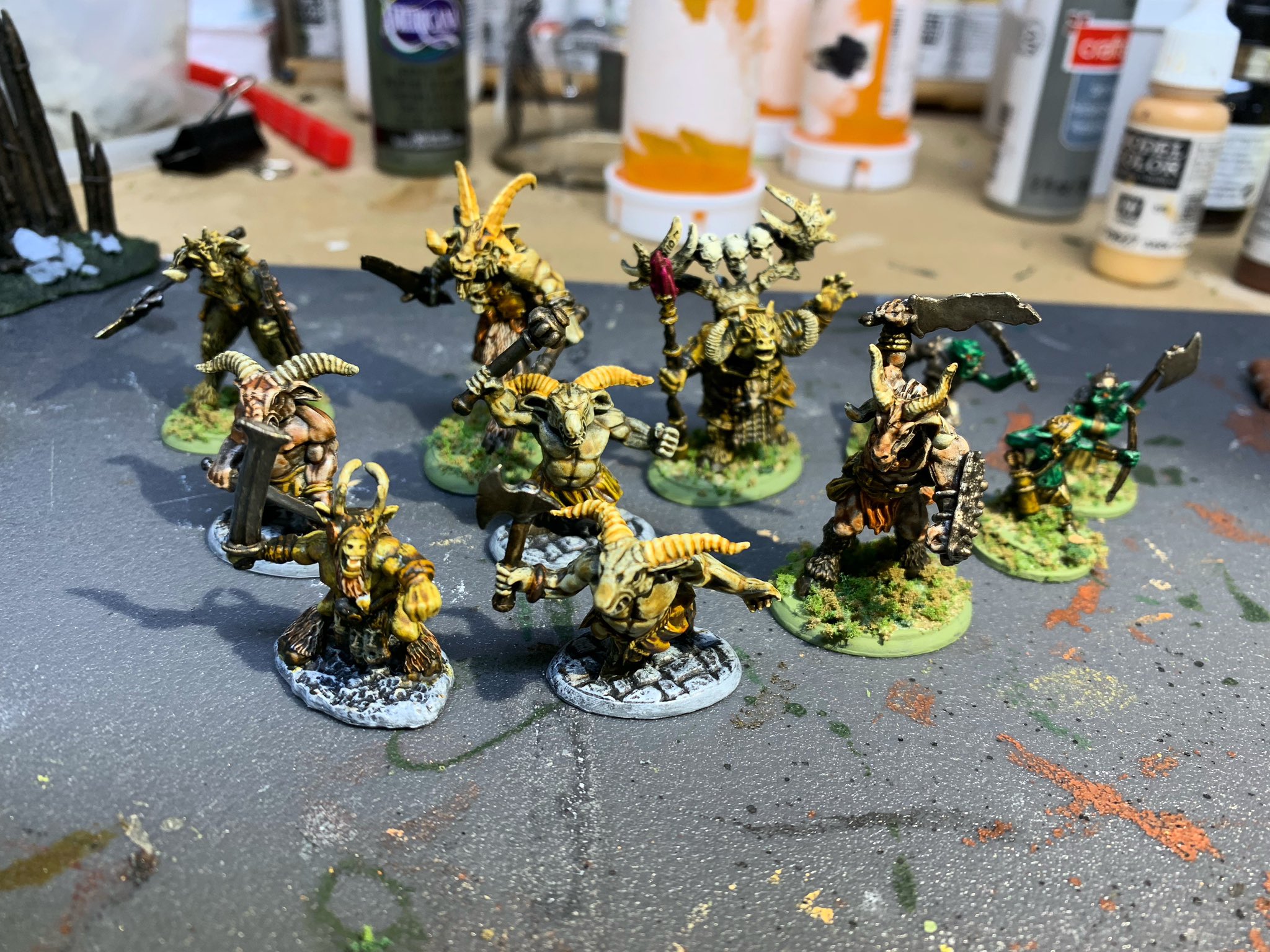
Hands down, using contrast paints will not give you the vibrancy and shadows that the Big Three offers. You cannot get the depth on a model that you normally would using blending. But if wanting to get a fair amount of minis painted to tabletop standard, contrast paints are an excellent choice. I had seriously thought of just giving a horde of my Zombicide minis a simple wash. Now I’m thinking that a quick coat of contrast paints instead would make them look fantastic. If looking for a means to get a fair number of models painted efficiently and still look pretty nice, contrast paints are worth looking into.
 Geek Ken