Category: 15mm
Painting Miniatures: Handling your figure
Your miniature is prepared and primed. However handling the figure nimbly while painting can be difficult, especially if holding it just by the base. There are easier ways and they can also help ensure you get your brush into all those nooks and crannies on the figure.
There are fancy miniature clamps that you can use, but I’m a fan of good old blu tack and soda bottle caps. Blu tack is a soft adhesive putty used for putting up posters onto walls and forms a temporary bond. I gather up old soda bottle caps and use them as a handle to plop figures on.
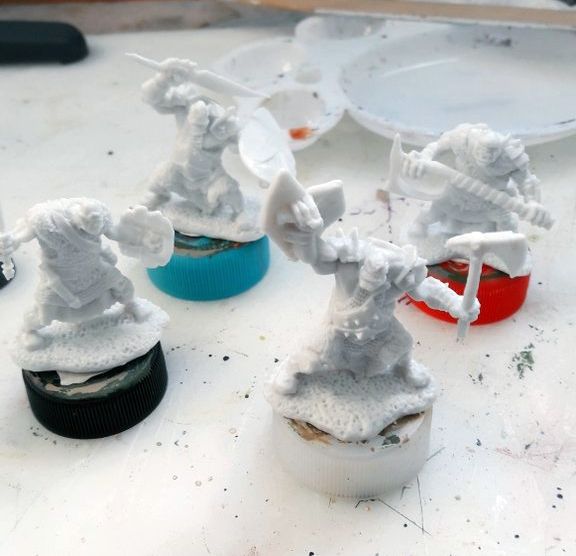
If working with smaller figures like 15mm ones. You can use popsicle sticks (bought at craft supply stores) and PVA, or white Elmer’s glue. The figures below are some examples where I’ve used wooden craft sticks to mount miniatures for painting.

Why use this method? You will have a far easier time holding the miniature while you paint. You don’t have to worry about accidentally touching the figure, smearing a portion that has wet paint. You’ll certainly get some odd areas that will be a challenge to paint, and being able to hold the figure at different angles will allow that brush to get into tight recesses of the figure. It also can provide a more comfortable grip holding a large plastic cap instead of just a thin plastic base.
It’s a small tip, but something worth doing. You want to be able to hold your miniature at a comfortable height while painting. Having them on miniature base stands will make your painting session easier and allow you to keep a relaxed posture instead of being cramped over. Plus it also will give your hands a break being able to hold the miniature comfortably over long periods of time instead of trying to hold them by a tiny, thin base.
Painting Miniatures: Priming
Now that you’ve gotten your miniatures glued and assembled, you’re ready for painting right? Nope. Simply put, there is no point in painting your miniatures if you are not using primer. Primer is formulated to bond tightly to a surface. Alternately paint has some similar properties, but is mainly designed to provide a uniform color. Especially for metal miniatures, it’s possible to rub off paint that is coated directly on the figure. To ensure a better and more uniform bond of paint to the model, you need to prime it first. Priming will also allow for more consistent color over the entire figure, particularly in open and smooth surfaces of the miniature.
So using a primer is important, but what color should you use? It will depend on the overall base colors you are using. Generally white is good if predominantly the model will be painted using bright colors. Black primer is good for darker or more muted, neutral tones. While gray primer is a good middle ground if wanting an all purpose primer color.
Black primer can also be used for speed painting miniatures. You can cut corners using black primer as it can accentuate the details of the figure (by leaving a trace about of black between sections of the miniature). This can be expanded by using colored primers to help reduce painting times. Companies like Army Painter have a variety of shaded primers which essentially work as a base hue for the figure and is great if painting a lot of miniatures using a similar color scheme. While there are plenty of miniature paint primers out there, Krylon also offers good primer sprays which work well and are easy on the wallet.
Working with primer spray cans, you want a well ventilated area and in weather that is dry and not exceedingly cold. Make sure to mix the primer well. I hold the spray can upside down initially hitting it against the flat of my hand, and then continue shaking upside down letting the ball bearing inside mix the paint. Don’t skim on shaking time, you want to shake for a good minute or so at least.
While spraying primer you want to shoot for an even coat, spraying about a foot away from the miniatures. Spray in short even bursts, about 1-2 seconds using a smooth sweeping action. You want to avoid a static position while applying spray as this can cause too much primer to pool up on parts of a model. I like to placing figures on an old pizza box, so I can angle the primer at lower angles to ensure good coverage. Once primed, as you’d expect, let the primer dry completely (most spray primer will dry in an hour or so). If you’ve found areas that aren’t covered, you can position them with the exposed area up and give a quick primer touch up.

Alternately you may want to use paint on primer such as Reaper’s paint on primer. I would consider at least investing in a bottle to have handy. You might see a spot on a model that didn’t quite get any spray primer and need a quick touch up. The other plus is you aren’t dependent on the weather if wanting to prime a model. But between a paint on primer and spray, I would use spray primers to save time and get more uniform results.
Mind you, some figures may not need to be primed. Reaper Bones are created with a particular plastic which the manufacturers claim primer is unnecessary. However using a primer won’t hurt, and can provide a better foundation for certain colors.
Painting Miniatures: Assembly, glues, and filling gaps
Plastic has become more popular and accessible for miniatures which I love, but man you can end up with a pile of plastic bits. Now that you’ve trimmed and cut them from sprues, how do you go about assembling them? Generally you want to invest in two types of glue: cyanoacrylate, instant curing glue (super glue) and plastic cement (model glue).
Instant curing glue is pretty much an all purpose glue for your miniatures. They can instantly bond to a variety of materials and are great for metal figures as well as soft plastics. If you dabble in 1/72 scale wargaming, commonly the plastic miniatures you get are ‘soft’ plastic. As RPG miniatures go, Reaper Miniatures Bones is another similar type of soft plastic that instant glue will work well on.
Super glue cement will form a quick bond. Apply a little to each joint and then set the pieces together holding with gentle pressure for 10-15 seconds. Even though you will get the parts to hold, you want to let the glue completely dry for an hour or so. A small tip, be mindful that too much instant curing glue can seep out, filling in gaps and obscure details on your miniature. Use the glue sparingly and if you’ve added too much you can draw up the excess using a paper towel. Simply twist an end to a fine point and dab it into the glue. Through adsorption the towel can quickly draw up the excess if working quickly. Don’t let the paper towel set in the glue for 10 seconds or so, otherwise you’ll end up with a chunk of paper towel on your mini!
Plastic cement is made specifically for polystyrene miniatures or your ‘hard’ plastics. This glue will essentially melt the plastic and once dry, create a bond that mixes the plastic from each part together. For plastic miniatures I prefer using model cement as it makes the bond unbreakable. You can also really go to town kitbashing and altering figures, as the cement will create a rock solid bond with the parts you use. A small tip, if in doubt that plastic cement can be used for the miniatures you are working with, glue two pieces of the plastic sprues together. That way you can determine if the bond that forms is good enough before trying it out on your minis.
When working with plastic cement use gentle pressure and hold parts together for around 15 seconds. Like with superglue, you can get the pieces forming a bond quickly but be sure to let the miniature dry for at least an hour before painting. You also want to use the glue sparingly and dab up any excess that might spill out. I personally like working with plastic cement when I can. Instant curing glue can be tricky to work with and you can easily get fingers stuck to the miniature or glued together. With plastic cement this isn’t an issue.
Another tool for your bench worth having is a pair of tweezers or forceps. Especially with plastic models, you can get some small parts that are difficult to handle with just your fingers. Using tweezers allows for more precision in placing that part just so on a miniature.
Some other tips with assembling miniatures. Take the time to look through the sprue and/or assembly instructions. Many manufacturers will have labels on the sprue indicating with a letter or number the part and which piece they line up with. Once cut from the sprue, take care to line up your pieces with the figure you are working with. It can be too easy to slip into assembly line mode cutting tons of bits from sprues only to end up with a pile of hopelessly mixed up arms and legs.
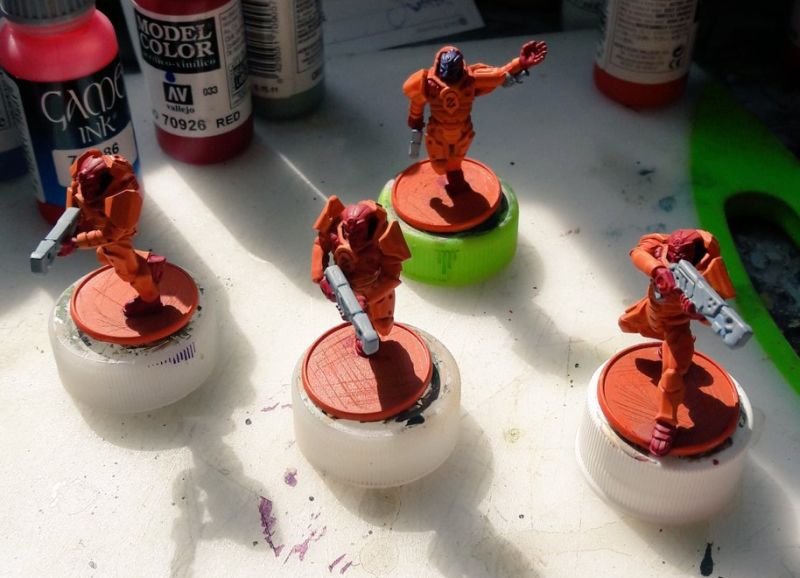
Many miniatures will also come with bases. Most are textured, but you might have some that have a smooth surface. This can be difficult to get a solid bond with the figure. To get around this, I would score the surface of the smooth plastic with sandpaper or a hobby knife. This will create a rough texture allowing more surface area that the glue can seep into, creating a stronger bond. If you look at the bases of the figures below you can see the score marks I put on the bases for my hard plastic miniatures.
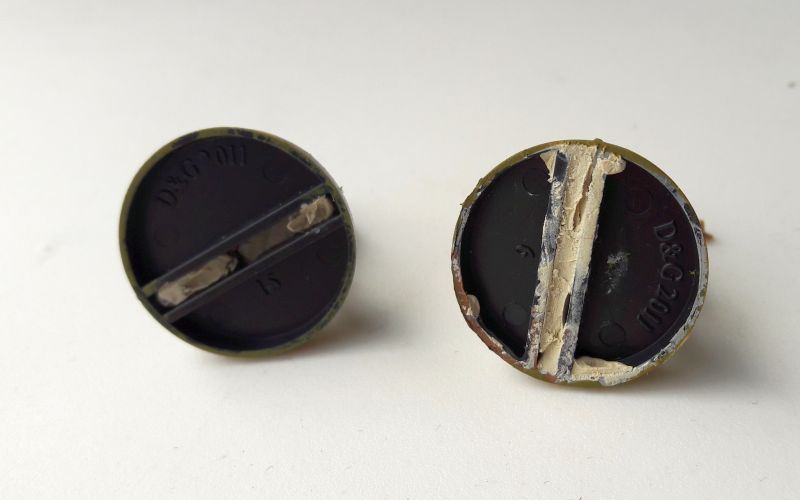
Some bases might have slots which need to be filled in. Similarly, you may have joints that don’t quite fit snugly leaving a gap. Even a small thin crack can become an unsightly detail once painted up. Another hobby supply you should invest in is green stuff putty. This is a two part epoxy that comes as a clay material. Through kneading the two colors together in roughly equal ratios, eventually you will get a uniform green color. The putty can easily be worked with and once dried overnight, you get a solid material that will take up paint well. The material can also be sanded if needed.

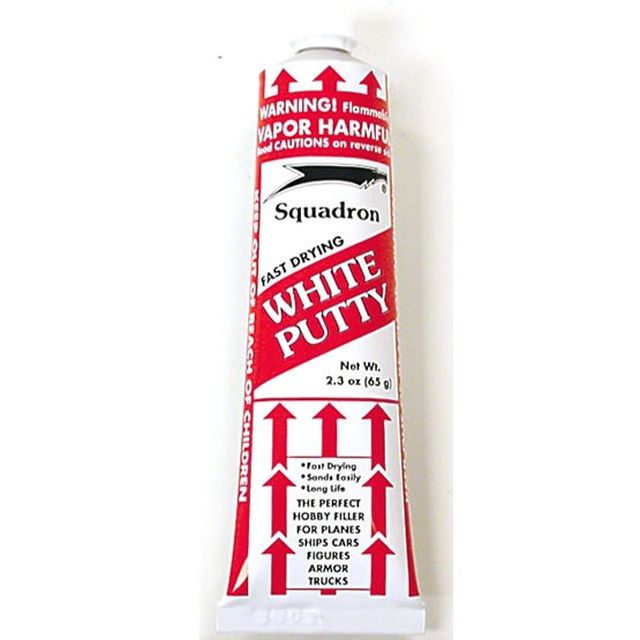
If you have a lot of open gaps like certain bases, you might want to invest in squadron or white putty. This is more a serious scale modelers tool. Like green stuff epoxy putty it can easily fill in gaps. Once dry it can be painted or sanded down. Some types are a little toxic to work with though. However if you’ve got a ton of gaps to fill in (like with these slotted miniature bases pictured below), it’s far easier to use squadron putty than green stuff.
Painting Miniatures: Cleaning, cutting from sprues, and prep work
Last post was an introduction of sorts. I’m going to kick off this series talking about miniature preparation. The things you should do to get your miniatures cleaned and prepped before putting any coats of paint on them. I’ll be splitting this into two separate posts, one will be assembly and this one will deal with cleaning up your miniature.
Lead miniatures of old have molds split into two halves. In order to ensure an even distribution of molten metal and being able to pop cleanly out of the mold, a small amount of mold release agent is added during the manufacturing process. This is also quite common for resin miniatures and plastic model kits. It’s not quite common for modern plastic miniatures, but that can vary depending on the production process.
If left on the figure, essentially you have this material that forms a barrier between the miniature and your primer or paint. With enough handling, you can rub off sections of that grand paint job you applied. So a way to avoid this is to give your miniatures a bath and a scrub.
Get a container of warm water and add a few drops of dish detergent, just enough to be able to work up some suds. Using an old toothbrush, place your miniature sprue into the soapy water, and give the figures a light scrub. Nothing too frantic or vigorous just a gentle brushing, focusing especially on the nooks and grooves as these recesses in a figure can capture a lot of mold release agent. Once you’ve gone over the entire sprue, give the models a final rinse of water and let them dry.
Cutting plastic parts from the sprues can be tedious. You will want to invest in a quality craft/hobby knife (Xacto knife) with plenty of spare blades. Be sure to cut on a good work surface. I use old plastic kitchen cutting boards. And also be sure to cut away from you and from fingers holding the figure or sprue. Sharp knife blades cut safer. If you are getting a lot of resistance when you cut, you likely have worn down the edge of the blade. Consider switching it out for a new one and use the ‘duller’ blade for work that doesn’t require a lot of force like removing flash (more on that later). You might even want to have 2 sets of knife blade handles. One for removing figures from sprues, and another for other general hobby work and cleaning mold lines from figures.
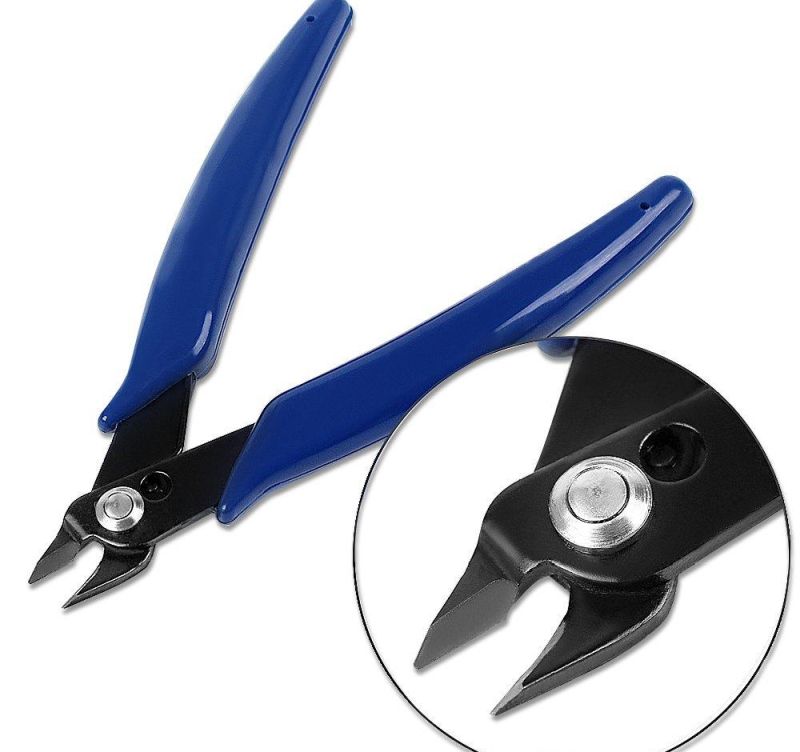
I would recommend investing in special cutter pliers. You can purchase cutters for plastic model kits like from Tamiya. However you can also hit up your local hardware store and buy electrical cutting wire cable cutter pliers. These pliers have both a flat and angled edge. With the flat edge towards the miniature part, you can quickly snip plastic parts off their sprues. It’s much easier (and safer) compared to using a hobby knife as occasionally there can be thick plastic parts which can require a lot of force when cutting
Once you’ve cut pieces from the sprue, you will want to clean up any flash from the miniature. As mentioned before, molds of miniatures come in two sections. Occasionally the seal of the mold can allow some of the figure material to seep out during the casting process. This forms a thin line on some sections of the miniature. With this Russian AT rifle figure below, you can make out a faint line on the profile of the figure that goes from the head all the way down to the base. If left alone, this can add a jarring detail to the miniature when it gets painted, accentuating the flash line.
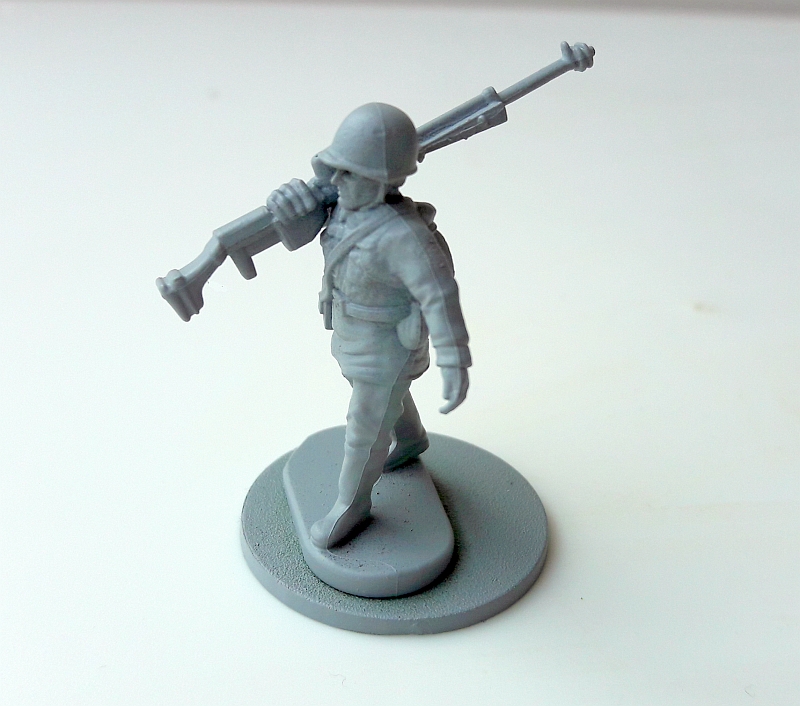
You want to clean that up by carefully removing the excess. A hobby knife can be sufficient but some care is needed. You want to avoid gouging into the figure cutting too much material from the model. With a deft touch you can gently scrape away any flash lines. Alternately for really tight sections or areas that have a curved surface, you will want to use sandpaper or an emery board.
Obviously for metal miniatures you can’t use sandpaper. So if frequently working with metal figures, you might want to invest in a precision needle file set. These can be bought at hardware stores and typically come in sets with files of different types. Aside from flat or triangular faces, these sets may also have rat tail files (circular files) which are great for those odd curved surfaces.

I also would invest in a brass wire brush. After using a file, you can gently brush along the teeth of the file head (make sure to match the angle and not go against the ‘grain’ of the file teeth). With plastic this isn’t an issue however with metal eventually you will ‘fill in’ the surface teeth of the file. Essentially making the file’s teeth no longer able to scrape away any material. Occasionally cleaning out any excess can keep those file edges in good form.
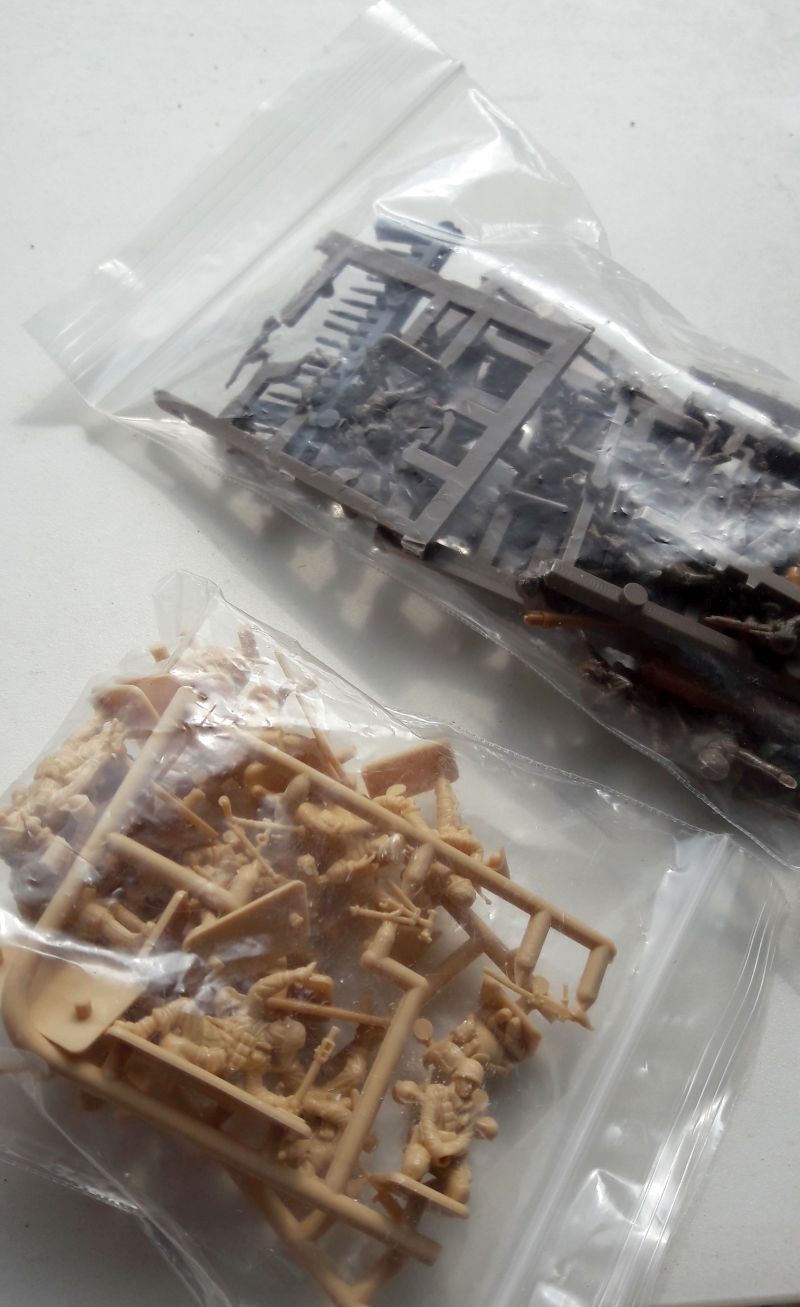
Depending on the amount of flash and intricacies of miniature pieces, you might want to assemble your mini first and then clean up the figure. Next post will cover points on glue and figure assembly. One last tip, save your bits. I typically cut all the excess pieces from a sprue and squirrel them away in a ziplock bag. You never know when you might want to do some kitbashing, need an extra weapon, or a particular angled arm or leg.
Painting Miniatures: Focus of series
I see a lot of people asking for help and information on painting miniatures, be it for those dipping their toe into wargames, or folks looking to add some bling to their board games. Honestly I’ve found most recommended sources offering advice that’s all over the place. To be fair miniature painting as a hobby can throw you down a geek rabbit hole.
You’ve got folks out there that focus on speed painting, cranking out tons of rank and file figures in the shortest time possible. You’ve got people presenting high end talent, geared towards those looking to get into competition class painting. You’ve got fans of airbrush painting. You’ve got military history folks talking about that elusive mixture to produce accurate dunkelgelb. Trying to wade through all that content as a painting neophyte can be daunting.
I’ve been into miniature wargaming for a while. I am not even close to a high skill, Golden Demon class type of painter (hats off to you, Ansel Elgort!). Nope. I’m pretty much at the ‘one foot rule’ skill level (looks good enough if you hold it 1 foot away). But I’ve been around the miniature painting block a bit and over the years picked up some tricks and tools of the hobby.
Throughout the next few months I’m going to put up a series of posts walking through the basics of miniature painting. First off, as any long time reader of my blog will know, I’ll be discussing how to paint up your figures to a tabletop standard. That is, figures looking decent enough to place on the game table. These will not be tutorials on techniques to produce phenomenal painted miniatures suitable for Games Workshop-type competitions.
It will however cover the basics and touch on what I call the ‘big three’ techniques of painting. Using these 3 painting techniques, you can produce some nice paint jobs. Nothing fancy, but enough to add some zing to those unpainted figures you might usually push around the tabletop. It will also go through every step of the process, from cutting plastic bits from the sprue (the ‘frame’ for plastic figures which are channels that plastic flows through when poured into a mold), to that final finish of matte spray. I hope folks find the information useful.
Alien vegetation terrain using straws
I dabble in 15mm sci-fi gaming and lately been using my models as proxies for Beyond the Gates of Antares. Getting terrain together can always be a bit of a chore and at times heavy on the wallet. You can get lots of railroad, medieval, and WW2 terrain easily, but sci-fi stuff is somewhat of a niche market. So inevitably I get to tinkering around making my own.
Vegetation is always something tricky. A really good source is simply aquarium plastic plants, but I decided to try and go the full craft route and thought of working with straws. By melting them partially, they fold open and get this weird pitcher plant type of look. I used a lighter and carefully melted the plastic passing it over the flame. I would also put a little heat on sections of the straw and carefully bend it some to give them a few kinks. Be mindful not to apply too much heat, otherwise you’ll end up burning another hole into the main section of the straw. 
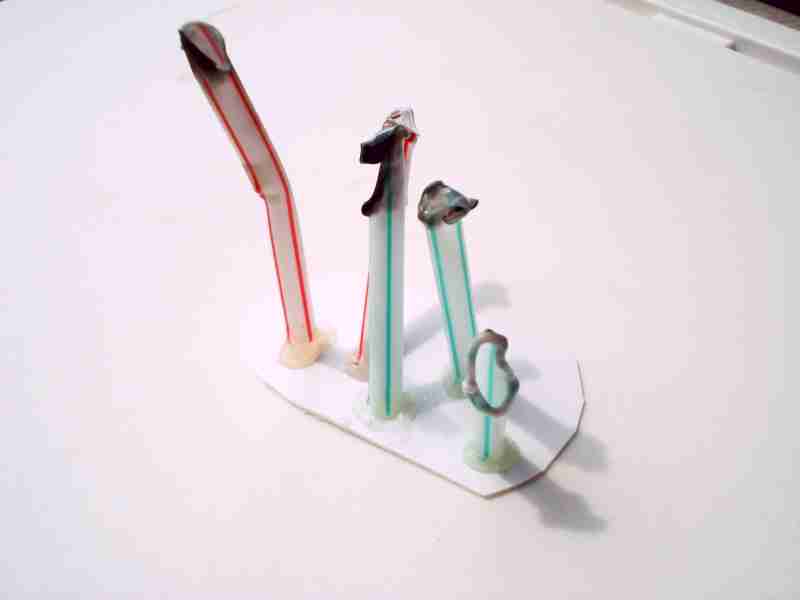
A word of warning, too much heat and your plastic straw will catch fire. Not to mention the fumes are toxic as hell, so do this in a well ventilated area (I also had a fan behind me blowing the air away). After melting the ends of the straws, I used hot glue to mount them to some plastic card as bases. I then gave them a coat of primer. I tend to have trees and the like on individual bases so I can move them around. When painting them up I used primarily a green base coat along with some highlights of bright colors to draw out a lot of contrast.
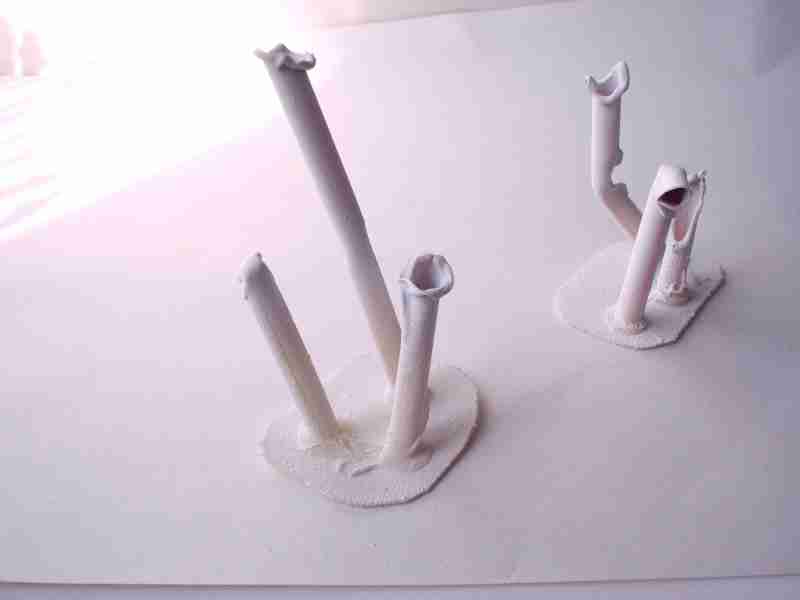
Thrown on some felt, they make for some decent vegetation that is a little different from your typical plant foliage. A pretty easy project and if given a more diligent paint job (compared to what I did), you can get some great looking plants.

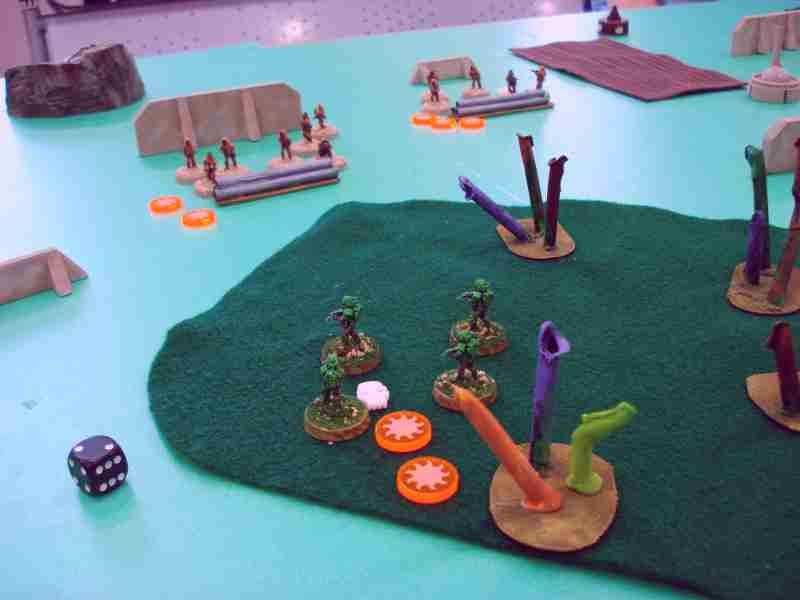
Side Note: For 15mm terrain, straws can make for some decent obstacles too. Stacked and lined up, they can serve as large metal or concrete culvert pipes.
Wargaming supplies in Seoul: Neighbor Hobby
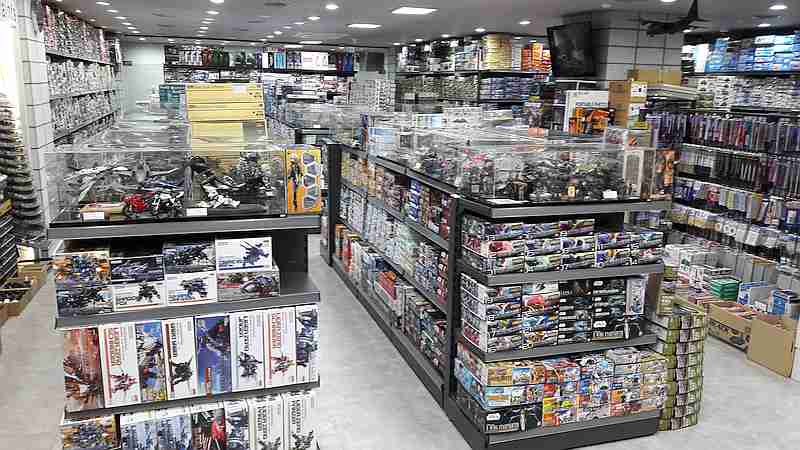
Scouring around for places to pick up paints and supplies I stumbled across likely the new Mecca for hobby supplies for me, Neighbor Hobby. It’s nestled away unassumingly in the lower floor of an office building. But despite it’s location, they have a pretty amazing stock of model kits of all sorts.
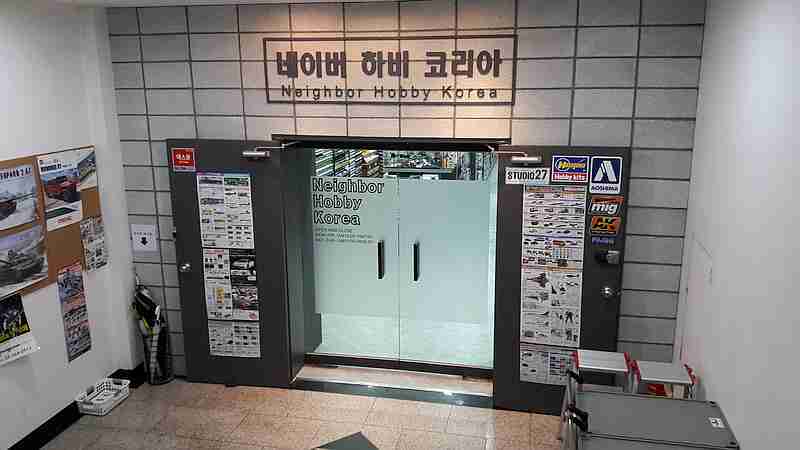
There is a great selection of military models. Unfortunately for fans of Bolt Action, they carry only Tamiya 1/48 kits, but they seem to have a full selection from that line. As 1/72 and 1/76 scale kits go though, they have a great choice of tanks, soldiers, and terrain. With buildings I usually use 20 mm, even for 28mm stuff as it keeps a smaller footprint on the table and looks okay. I find true 28mm scale buildings just a little too big and even the smallest 2 story house seems to dwarf the rest of the table terrain. So having a lot of building model kits for sale was a pleasant surprise.
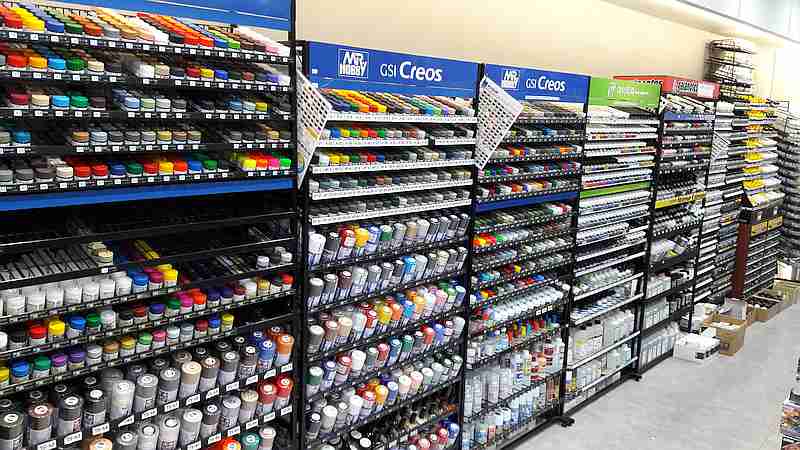
Now for paints, brushes, and other supplies you are set. There is a great selection of paints from Testors, Tamiya, AK Interactive, MIG, as well as my go to for painting, Vallejo. It’s a wonderful amount of choices and stock for both brush and airbrush painters. They also carry a complete selection of Testors and Tamiya sprays. Well worth checking out.
To get there isn’t too difficult. Take subway line 2 to Hongik University and get off exit number 3. You need to cross the street and footpath park and take a side street, then go right. Once you hit a main street go left and it will be in an office building.

Blue pin near the top marks the location.

The entrance is actually a bit odd. Going behind the building from the parking lot you enter on the first floor. You will follow a long hall towards the elevator, and can find the shop directly.

However if you enter the front of the building you are actually on the 2nd floor and have to take the lift down to the 1st floor.

All in all Neighbor Hobby is a fantastic place to pick up military models, paints, and modeling supplies. It certainly is one of the top places to get wargaming model supplies in the city. It’s also in the same neighborhood as Rolling Dice so a great stop to get a double scoop of geek supplies while in Seoul.
Paint scheme reference cards
 This week just a small tip for folks delving into miniature painting. If you are like me you might have a lot of different game systems and army projects going (sometimes several simultaneously). Once an army is done, going back to add a few troops or units is always an option. However it can be a tad difficult to remember what paints were used before for that force.
Another issue is that occasionally your miniatures will get some dings and dents. You may find needing to touch up a miniature or two. So trying to think back what paints you originally used for a base coat along with the proper wash might be a problem. It’s compounded if you’ve been painting a slew of other stuff since then too.
To get around this I use note cards. I write down the paints used for base coats, washes, and highlights. Additionally I pair this information up with the appropriate parts of the models. Along with the name of the paint, I also place a small dab of the paint color on the card.
This way I know exactly what colors I used for say, the webbing on my US Marines, along with the colors used for the drybrush highlight too. The color reference is also there in case I have problems tracking down a specific paint. I then have a hue to compare to if seeking a replacement paint from a different manufacturer. Another plus is I can take the card with me into the shop to directly compare.
They are very handy. I’ve got a slew of unfinished 15mm Russians I’ve been sitting on for a couple of years now. At least with the paint reference cards I have some confidence I can revisit them again using the same color scheme as I had done in the past, ensuring that my army will have a uniform look. So consider keeping track of the paints you use on your minis. While I find note cards handy, but even a notebook is helpful. After all you never know when you might have to touch up a couple of minis (or add another squad to your force).
Drones and Probes for Gates of Antares
I haven’t taken the plunge yet for getting an army together for Gates of Antares. Instead I’ve been using a lot of my 15mm sci-fi stuff as proxy forces and have been having quite a bit of fun. Maybe later I’ll consider eventually getting a batrep done. Seems 15mm is a great way to jump into the game if on the fence wanting to give the rules a test drive.
I’m liking the Algoryns and might work on that faction. However Warlord Games is still trying to expand that model range for them. And sadly the choices for that force are only in metal. While I dig the heft of metal figures, the cost compared to plastic kits is pretty hard to swallow. Might have to clear my bench some of stuff to paint before I consider jumping into another range of models.
Nonetheless one thing I’ve been missing with my proxy forces is a way to represent drones and probes. GoA uses gobs of em. I really dig having some small bonus abilities represented by models on the table. However I wanted to actually get a figure down that I could push around over just using tokens or painted bases.
I picked up some cheap plastic beads I felt would fit the bill for using as probe models. The cost for a huge gross is dirt cheap. Just head to a craft store and check out the craft jewelry section. Being about 7-9mm across, they are perfect for drones.
I wanted to have them floating about though and was considering using some wire, but then I stumbled on some clear plastic tubing for modelling. The material is acrylic and the stuff I got was in 3mm diameter. Perfect for mounting a floating drone onto a base.
The pickle I had however was that the tubing was pretty large so I had to drill and file a larger hole into the plastic bead. Fortunately the beads have a hole already in them (for stringing wire and string through). So I could easily use those as a guide hole when using a larger drill bit. Drilling and filing a portion out of some 20mm slot bases, I was able to use a bit of instant bonding cement to assemble the entire thing.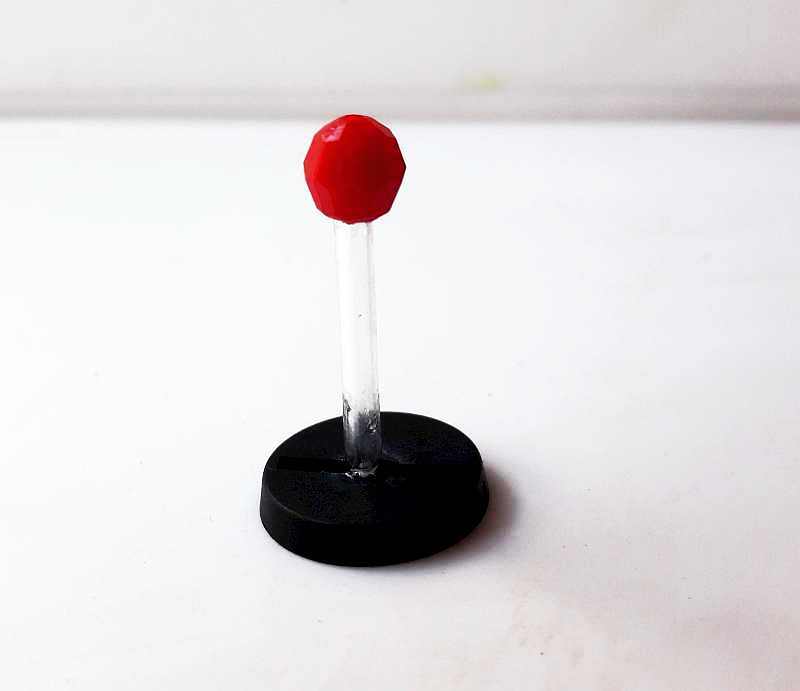
The downside of using beads is that there is a small hole drilled into the top of my probes. So I had to use a bit of green stuff to fill it it. I also used green stuff to fill in the gaps for the slot base.

A bit of paint, drybrush a tad, some flock for the base, and bam…there’s a spotter drone. One thing I like about the model is I can use a variety of colors to indicate different types of drones and probes. The downside is that the beads have a particular pattern on the surface making my painting schemes a limited some. This was a quick prototype and I didn’t quite get the pattern and look to what I’d like, but I can touch it up later.
Hope folks find this helpful. It was super easy to do and pretty cheap. Considering you can end up with a lot of spotter drones for your units, along with support choices, I think you’ll end up needing quite a few drones for your typical GoA force. This isn’t a bad way to get a lot of models assembled for your force quickly (and cheaply).
Hotz Mats felt fields
A long while back I mentioned that I picked up some battemats from Hotz Mats and wasn’t that impressed with them. At the same time I made my order, I decided to pick up some flocked felt field sets from the same company. Despite me not being keen on the treated felt mats, I gotta say that I do like the flocked fields they offer.
I bought 2 sets of the 20-30mm range felt fields. The fields vary in sizes and colors that look pretty good for that scale. Seems they offer smaller scale mats for 6-15mm. The pics I have here are of 1/72 scale Germans. It does seem that smaller models would look a little off with the larger scale mats.

The felt fields are durable though and the flock is tightly adhered to the material. Mind you I keep them stored relatively flat tucked in a box of other terrain, so if tightly rolled up I’m not sure how they would hold up. But I have to say they’ve been through some heat and humidity and still look nice. Through normal gaming wear and tear you’d likely have some fields that would last for years.

The felt fields range in size having one large section, 2 smaller fields (a little over 6″ long), and a mid-sized field. A good mix for a set which looks nice. Throw in some small stone walls or bocage and you’d have a nice bit of rough terrain or light cover for your table. If looking to get some rural terrain and not too keen on modeling your own, they are a good option and worth picking up a set or two.

 Geek Ken