Category: 4e DnD
4E Condition Cards, get em while they’re hot

I’ve been meaning for a while to post about one site I enjoyed peeking at occasionally that is linked on my sidebar, Lastlands. I loved how they had a whole section dedicated to fantasy art. Some great inspirational landscapes and characters were indexed there from various artists. Additionally they had some neat downloads. Now the site is split into two, Lastlands being dedicated to a D&D campaign, and the Weem as a 4E Resource site.
One thing I loved was that the guy whipped up some wonderful condition cards which are still available there. I’m not sure how long he will keep them up though. I like them as you can give them to a player and he knows exactly what is happening with his character. When he makes his save, he can just pass the card back to the DM. I used some self adhesive laminating sheets on mine to keep them extra durable.
I’m going to miss all the neat artwork he had indexed as Lastlands. I hope he can keep his other site active for a while. There are some nifty tutorials for making maps in Photoshop and I liked this truncated combat sheet also (great little tool for new players). Be sure to poke around and check his stuff out.
Amazing D&D sessions from Penny Arcade
So in my daily ritual of scrolling through various web sites I do frequent the web comic Penny Arcade. Sadly I don’t play console games, so a decent third of the strips I don’t quite get. Staple on being out of the American pop culture loop completely by living in Korea, and there is another chunk of strips I’m clueless on. The rest however are a hoot. So much so that I do enjoy perusing their site regularly.
One of to comic creators, Mike Krahulik, has taken up the mantle of being a DM for his group. From my understanding, he is new to the whole RPG bit and completely inexperienced to being a DM. I think this adds a little more weight to the statement that he runs some absolutely amazing encounters for D&D.
I suspect that his group is well into the upper echelons of the paragon tier, or maybe even higher. Because his latest post describes an epic encounter in the elemental chaos between worlds. His posts there are astounding. You’ve got a wonderful visual representation of the game, and a decent set of mechanics to make the encounter work. So set pieces not only look cool, they are functional as well (as this pic below will show).

He has described some pretty cool encounters and shown how he pulled them off in the past. From a free fall combat against a dragon, to a light and mirror puzzle dungeon crawl, Mike has assembled some amazing encounters. And I cannot stress this enough, everything he does has a game function. It isn’t just a prop. The pieces work with the session they are running.
He has congregated his past posts of different D&D sessions. I highly recommend giving them a look. I’ll notch it up to being a professional artist, but the creativity he expresses in his game makes me envious. I urge folks to take a look at his D&D posts. There are some great inspirational stuff there, and enough details on the mechanics to port into your game. And while your at it take a peek at their comic too. Fun stuff indeed.
Using a dice tower at the table
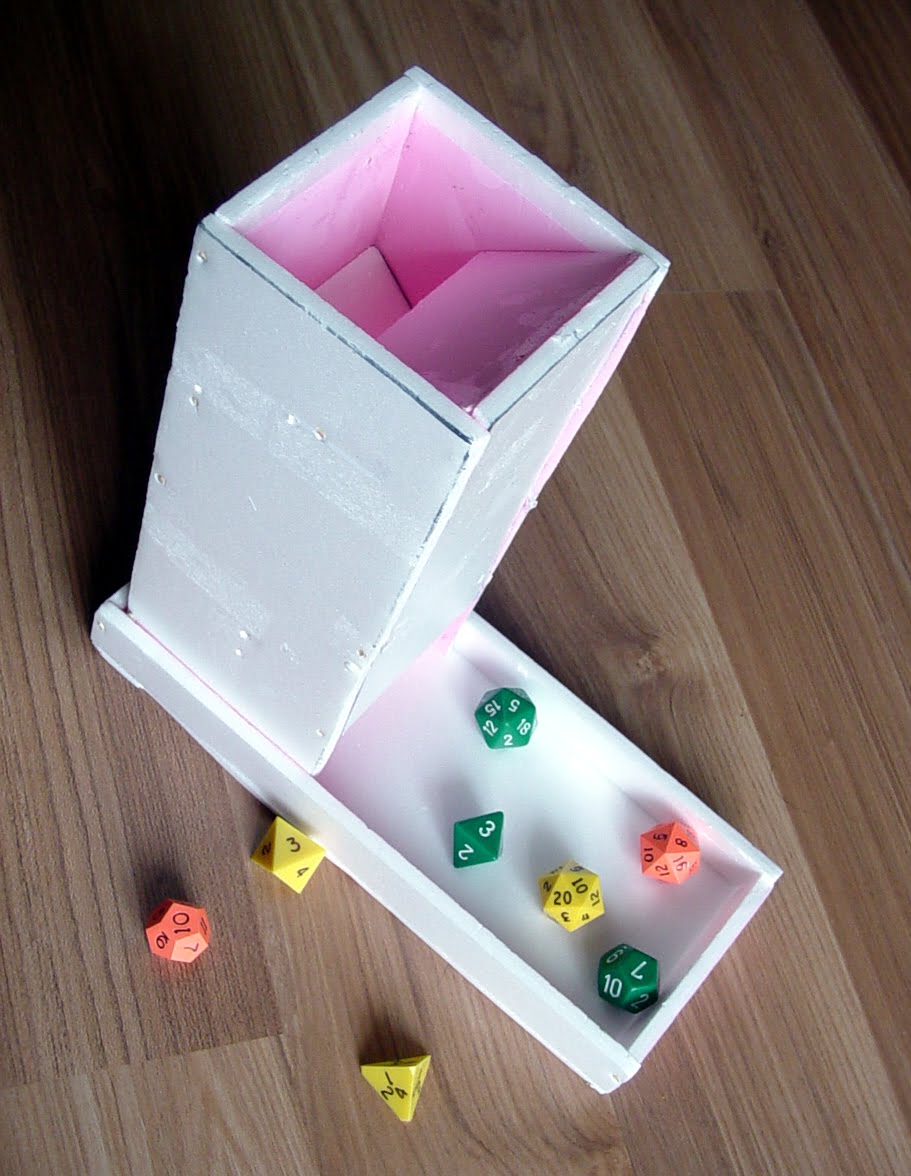
As always, I’m fiddling with things to help improve running my game. Lately a bug has bitten me about using a dice tower for those rolls behind the screen. For the uninformed, a dice tower is a simple contraption that is an open ended box filled with a series of angled slats. You drop dice in one end, they fall out the other, tumbling over the various slats in between. Some are very nice like the ones available at geek chic.

As a DM, I’ve grown to love using a dice tower for several reasons.
Limited space – Between my notes, maps, and books, space behind my screen is limited. I like that I can get a good roll out of the dice, and not have them going everywhere. Typically I’ve got a fair amount of combatants in a fight. I’m rolling for 4-6 minions at a single go. It’s nice to not have to track down dice that scatter all over when I roll a handful.
Less dice mishaps – If using an open ended tower, I’d have it roll up against a screen. For mine, I have a small tray the dice roll into. But in either case, you are going to limit the number of dice that roll off the table, or get a cocked result. I hate having to reroll dice, especially on a cocked die that likely missed only to reroll a 20.
Impressions of impartiality and randomness – You dump in the dice and it comes out the other end. Simple. When I’m rolling for 3+ monsters, I might get a flat roll. Especially with D4s that don’t tumble too well. I hate rolling a few dice and get that one die that flips once or twice. Everyone around the table are friends, but I dislike it when I flub a decent throw and end up having a die result that hurts the player. And face it, as a DM you are rolling a lot of dice. I like that I can go through the mechanical process of rolling dice with some uniformity. Using a dice tower aids in that.
The tower also acts as a great cushion between you and the players when rolling. Psychologically players can take their ire out on the dice tower when the DM rolls a series of critical hits. You can get this a bit using a computer program for rolling dice. I’ve always liked having dice on the table though. This leads me into the last point…
It reminds people you’re playing a game – A dice tower is a toy. It helps remind folks not to take things too seriously. It reinforces that things aren’t personal, the DM is just dumping dice through a contraption. I’ve found at times the tower becomes part of the game. Occasionally I’ve gotten players wanting to use it. When they failed a save twice, I don’t find it unusual to have them throwing the next one via the dice tower. Using a dice tower has helped reinforce that we’re all having goofy fun, using something that at times is inordinately convoluted for something as simple as rolling a single D20.
Dice towers are easy to make. I made mine out of foam board, assembled with white glue and toothpicks as dowels for a bit of support. I also have a detachable tray that fits over the entire box for easy storage. You can pick up the stuff at your local hobby craft store.
Over at Board Game Geek you can find a decent set of plans that fits on just one page. If you don’t want to bother printing on cardstock, an easy way to construct this is with cardboard (just print and paste onto the material). You can also bypass cutting slots for the tabs and just fold them instead, securing with a bit of tape. I encourage people to take a stab at making their own dice tower and use it in your game. It’s a fun thing to have at the table.
Working with extended rests revisited
So a while back I was tinkering around with extended rests and healing surges. I love the idea that players bounce back with full HP after a night’s rest. But what got me is that there was no difference between the guy that got put through the meat grinder, and a fellow that was picking flowers all day. Functionally there was no difference in the amount a player healed, everybody would get a 6 hour extended rest and be ready to jump back into hacking monsters apart.
Now I get this. The players are heroes. They are exceptions to the norm. Plus totally hampering the players takes away from the fun. Yet I still wanted to slip in a little tweak to how extended rests worked. I liked that abilities and HP were topped off, but I tinkered with the recovery of healing surges.
In my mind, healing surges are more than just a measure of someone’s vitality. It was also the gumption, spirit, and desire for a person to keep pushing on. Typically after a night’s rest that person would recharge his batteries and be ready to go. But I thought if the guy got cut down to an inch within his life, the next day he might be a little sapped of energy as exhaustion and trials of the previous day might mean he was not quite at 100%.
So originally I lopped off a few healing surges, largely dependant on the number of HP a player lost before they rested. I liked the idea and it worked pretty well. However, I realized that healing surges were being used as a currency for other game mechanics. Some magic items used them. I also found I was using them as penalties for bad skill checks and failed skill challenges. So I looked at the numbers and realized it was a bit much and fiddled with them a little more.
So my house rule for extended rests are as follows:
A) Players regain all HP and abilities. They should also regain all their healing surges, but that is dependent on 2 other conditions.
B) If players are bloodied before they rest, they regain 2 less healing surges from their maximum (full HS -2).
C) If players spent spend more than 4 healing surges before they rest, they regain 1 less healing surge from their maximum (full HS -1). This penalty is cumulative with being bloodied.
D) If players take a comfortable rest they gain back one additional healing surge. A comfortable rest means the players are in a sheltered location (not exposed to the elements), eating a prepared meal that is not trail rations, and are in a relatively secure location (not taking guard shifts). This bonus healing surge can be above the player’s maximum number.
So if a bloodied character that has exhausted all their healing surges takes an extended rest, the next day they will be at full HP and have HS -3 (-2 being bloodied, and -1 for spending more than 4 HS). If they were resting in an inn however, they would be at full HS -2. Give them 2 full days of rest and they would be ready to go.
I also like this as a bloodied player needs to spend their healing surges before they rest. They are penalized more for being bloodied than for spending excessive healing surges, so if they’ve got em’, then use em’. Also, I like giving players a bonus for resting in an inn or through some other more comfortable means. There are some crafty uses for rituals and magic items that can give the players a little more game milage out of using them. I want to encourage that.
So if you’ve been tinkering with extended rests, what have you all been doing?
DM Battlescreen combat manager
I’ve been using the DM Battlescreen for a while. This is a nice 4E combat manager whipped up by Dzmitry Khimaroda (aka Phantom Palmer on WotC boards). I’ve used a few others before and likely might do a round up review. But so far this has been my favorite.
One feature I like is that you can prepare a slew of battles independently of running them. You can keep a list of characters and monsters in a repository, and draw from that pool in the future. So if you choose to enter in a full monster stat line, you can access it repeatedly. You can also directly export monsters from WotC’s monster builder and online character generator. I’ve been pretty lazy and just entering the HP and defenses of monsters, but being able to continually have access to the same monster entries is pretty nice. So once the work is done, you can whip up a combat encounter in a snap.
You can group creatures by initiative, another nice feature. I also like that I can take a large group of similar monsters and split them into 2-3 initiative groups if needed. I can also put monsters in a pool to take them out later. Pretty handy if I want to introduce monsters in waves. Another really nice feature is that I can color code monsters. You automatically have a number associated with creatures, but having an additional color code helps tons in identifying which monster on the tabletop matches those in the program.
You have a lot of flexibility to heal, and add conditions to monsters. I also like that you can easily delay a combatant and jump it right back into the fray with a click. As you tab through the combat, any conditions that are in effect will pop up for the current combatant. I also like the format that you can see the order of combat, so if someone wants to know when another acts, you can pass that information along. Additionally the entire system can run diceless, and the program can handle a variety of rolls and modifiers.
As with all these types of programs, there is a little bit of a learning curve. For the most part I find things pretty intuitive. If a combatant attacks an opponent, you click on the opponent and apply (or heal) the damage. It is a little clunky if you have a monster that is slain and pops back up, but the program can handle it with a little fiddling.
Overall though I’ve really liked this program. It is fairly robust and has some nice features. It is a bit clunky adding monsters into the program from the monster builder, but that is mostly the chore of running WotC’s program and saving creatures individually. I’m still a bit old school though, as I primarily want just to keep track of HP and defenses using the program, keeping the abilities and powers handy on a printed sheet. However, the functionality of DM Battlescreen is pretty robust, I likely have to think about utilizing the program to its fullest.
If you’ve used this program, or have another personal favorite, feel free to chime in with your thoughts.
Limiting player options for homebrew campaigns
So most typical campaign settings for 4E have additional options for players. They can try their hand at a new race or class, all the while every other option is available from the various Player’s Handbooks. I think at times it feels tacked on, but I get what WotC is doing. They don’t want to limit how people run their games, but add to it. So every campaign setting released has fit this notion of laying out the basic options and adding other things for players to tool around with.
I think with Dark Sun that might change. I’m unsure if they will limit races, but I think dropping the divine power source is in the cards. I like it. I think with Eberron and Forgotten Realms released, WotC can now get out some really wild campaign settings away from the typical fantasy norm (even if one is a little steampunk).
This leads me to what I’ve been doing with my own homebrew campaigns. Originally I wanted to keep everyone happy and not put any limitations on races or classes. But I found out after a while, even with rolling up new characters, having no change in the settings from campaign to campaign made things a little stale.
Having new races or classes definitely adds to a player’s excitement with a new setting. A unique feel of the world helps, and having a setting with slavery, or undead commonly interacting with the living, all helps to keep the interest of the group for a bit. However, I think what really makes for an interesting setting is the limitations in choices for players.
With 3 PHB out now, I have no problem cutting out races, and have done a little too with classes. My current campaign is a bit of steampunk thrown in a typical fantasy setting. Most races are abound, but I dropped off devas and shifters, and completely threw out PHB 3 races/classes. The only addition was introducing artificers as a player class. At first I was worried about hampering my players options and I did get a little grumbling. But I think once a few choices were removed, my players were able to quickly think up some interesting characters.
I think my next campaign I might explore this further. I really think this is another neat concept of the entire role system. I think with previous editions, I would have to completely dump any idea of dropping divine magic. No clerics? No way would my group go with that. But given that you can find leader roles in other power sources, it becomes a possibility now. Each power source has a few different roles tagged with them. Want a world where nature has been tamed? Dump the primal power source (and the classes with it). Immediately you’ve got a campaign setting that has a different feel to it for the players by removing these classes.
I need to think about it. And of course, it largely depends on the players willing to roll with it. I’m definitely in the camp of limiting player options for new campaigns though. A quick and dirty way to give the world a different feel, and make further descriptions of the world have some resonance for the players. So have folks done something similar with their homebrew worlds?
Expeditions of Amazing Adventure: The twisting trade route of the Tahnzabar jungle
Ohmeer and Ashure are the two major kingdoms which border the great jungle of Tahnzabar. The steaming jungle is teeming with lizardmen tribes and foul beasts. Legends speak of the great sorcerer, Hisham the Heretic, who resided deep within the rain forest. His wild magics infused the jungle with chaotic arcane energies such that trees and vegetation grew rampantly and unchecked.
Many claim this was the reason that no formal roads could be built within the jungle. Any effort to clear a path, or lay stone under the thick canopy of trees, was doomed for failure. Within a month the vegetation of the jungle would reclaim the land. Others whisper this was due to foul primal gods the lizardmen pray to, and their dark sacrificial rituals, that helped keep civilization at bay in this wild jungle.
Undeterred and driven by the desire of untapped markets, various trade guilds banded together to create a great stone road that would lie above the trees of the jungle. Such a massive undertaking was secured, when each kingdom offered to send troops to man the road if one was complete. It was rumored that each kingdom felt such a herculean effort would not be completed, and even if so, the flow of goods along the route would be a boon to each realm.
It was nearly 25 years in the making. Guilds of dwarven stonecutters offered their expertise to the design and construction. Arcane guilds charmed many great creatures to aid in the movement of massive loads of stone and mortar. The possibility of new markets for slaves was so tempting that even slavers from the southern deserts offered their stock as workers.
The result was the great stone route. A wall high enough to sit above the trees of the jungle and wide enough for a single cart to pass. The completion of such a monumental task was unthinkable to Ashure. The kingdom unwilling to commit the many troops needed to man the wall and only offered a pittance of men. Ohmeer saw this an opportunity to further extend their influence throughout the jungle of Tahnzabar, and quickly offered to make up the bulk of forces needed to serve as guardsmen.
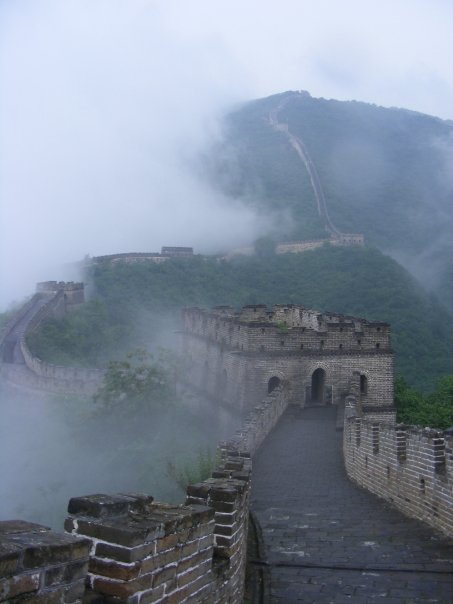
To this day the trade route has stood for over 75 years. It serves as a lifeblood of trade, and become a somewhat of a border, between the kingdoms of Ashure and Ohmeer. It is nearly a two day journey along the wall and the sight of long caravans is not uncommon. Many sections of the route pass through various guard posts, manned by men-at-arms from Ohmeer. Still, the journey can be perilous, as bandits and lizardmen make efforts to raid merchants along the route.
Additionally, as this route was created by the different trade guilds no formal tolls can be collected from either kingdom. However as the route is rather narrow, money commonly changes hands where brokers charge for goods that are exchanged from section to section. One merchant may find his goods put aside as another competitor has his wares shuttled further towards its destination. Outsiders can find this process a chaotic tangle of carts and porters moving crates and barrels in a constant ebb and flow of material. However many quick tongued brokers manage to efficiently move the goods along this route.
Some adventurers might gain employ from merchants carrying more precious cargo as guards. The route is long, and the possibility of resting within a guardhouse is not always guaranteed midway.
Additionally, although the many trade guilds use the route freely, they are typically at each other’s throats midway along the route. It is a common occurrence for rival merchants to pay extra for their goods to get priority. Some have even had another’s goods set aside while theirs are transported ahead. Although it is rare, some merchants have employed men-at-arms to make sure their wares are moved freely. The Ohmeer guards frown on this, but usually stay out of the way if a melee erupts where the combatants stick to blows and avoid open bloodshed.
The jungle of Tahnzabar is also a relatively unexplored land. Midpoint along the road is an excellent starting location to gain access to the more remote regions of the jungle. The rumors of ruins and the ancient laboratory of Hisham the Heretic acts as enticing draws to many adventurers.
Lizardmen tribes are also a nuisance, constantly making attempts to raid the trade along the route, or damage the great stone road itself. Each kingdom has been known to fund the efforts of private mercenary companies to scout out and destroy any warbands seen within the deep jungle.
What MMOs have taken from D&D – Interaction
Throughout this week I’ve been posting a bit about key concepts of MMOs which I think they’ve picked up from D&D. I think the last characteristic of MMOs is almost more influenced by the players themselves than with the game, but certain game elements can definitely either reinforce this or make it a minor aspect of play. Another key aspect of MMOs is social interaction and is something that helps define MMOs from single player video RPGs.
I am utterly convinced that while an engaging MMO, with lots of variety and interesting content, can keep a player’s interest for some time, it is the community and social interaction with others that helps keep that player in for the long term. Being able to explore and play an MMO with others can add to a player’s enjoyment. While the novelty of playing sections of a game can wear off, experiencing the same content with others can make for more rewarding play. It’s the witty banter, failures and triumphs, and in general sharing the experience with others that adds to the appeal.
Granted the importance of this characteristic is something I feel in flux with MMOs. While having a requirement to play much of the content with a group is not ideal, I also think having most content geared to the solo player is not a solid choice. Having a relationship with others in an MMO, whether being in a huge guild, or with a fellowship of 2 other people, keeps players into a game. That quality of social interaction holds an important role in maintaining a player’s interest. It is a slight balancing act to reinforce group play, while at the same time not sacrificing the experience of the lone player. However, a good MMO will foster player interaction.
So this last characteristic of MMOs might be a stretch saying it’s influenced by D&D. In reality, I think you could say just about the same for any game and the people that play them. Participating in the joint experience of a game and enjoying each other’s company, that makes for a fun game. I’m a firm believer you can have the most astounding RPG system at your fingertips, but with crappy people having a crappy time, the end result will be an unpleasant evening for most.
So yeah, it is a bit of a wash. For the sake of completeness I’ll bring up interaction. To claim that MMOs have taken this from D&D is a false statement. However I do think that both types of games get so much more out having a joint play experience with others. The enjoyment people have with adventure, exploration and character progression is muted in D&D when not sharing it with others around the same table. That key factor of social interaction is what makes D&D shine, something good MMOs can (and should) pick up on.
What MMOs have taken from D&D – Exploration
So last time I posted about character progression, how it was a key characteristic of MMOs, and something clearly from D&D. The idea that your character is dynamic and grows in abilities and power over time is not unlike the level mechanic from AD&D of old.
This somewhat ties into what I feel is another key characteristic of MMOs, exploration. MMOs might remain in a fairly static game world, but the pull to explore this world is a major driving force for gameplay. Successful MMOs offer up a variety of environments, lands, and creatures to fight. That feeling when you move into a new area in the game world, and see the different art and environment which it possesses, ramps up the desire to see and explore more.
MMOs constantly thrive on pushing a player to explore more. To travel the game world and adventure. Fighting new monsters, investigating new dungeons, or just seeing the new sights, this is such an important part of the game experience. To remain in a uniform environment, with little variety of creatures and places to explore makes for a disastrous MMO. Variety is a must, simply because the players truly have a wanderlust and desire to explore these virtual worlds.
This dips a little into the story of the game world too, but I find it less so. Some might really want to know more about the history and lore of an MMO, while others might think it secondary. However, if you can structure the game lore to be something mysterious and engaging, it can be a definite plus. Something I think is key in understanding what makes a game enjoyable.
D&D caught on to this long ago. That excitement of opening a crypt and imagining the sights, smells, and sounds as your DM described the room. The choices of branching paths and doors to take, or the choice of heading back with a small bounty verses the thrill of exploring a set of ruins further for even greater treasure, it’s all such a powerful force for the game. I think exploration is such an important point of D&D and really taps into the feeling of traversing a wondrous world of fantasy.
This also touches on the characters players helm. Typically, they might have a precursory idea of their character when they first start. As they play and go through adventures, they learn more about themselves. They begin to explore more about what makes the character tick. A good DM will reinforce this process putting in elements of the character’s life into adventures, or at least put them into situations that make them make moral and ethical choices.
However, this is also one thing I think MMOs fall a little flat on. While a player can learn a little about legends and history of the game, maybe even align themselves with certain factions, most MMOs do not have the dynamic content to allow a character to explore who he (or she) is. I expect that this will be something that changes in the future. I completely expect MMOs to allow players to explore the different political and social interactions of different NPC groups. They’ll get wrapped up evolving stories where their choices make an impact on their play experience. I think it is that desire to explore and experience new things that will drive this. Something all ready that most players experience in their own D&D games right now.
What MMOs have taken from D&D – Progession
 Last time I posted about how adventure is a key component in D&D and MMOs. Another signature characteristic is character progression. Your avatar in the virtual world is not a static being. It is constantly changing and developing as you play in an MMO.
MMOs approach this different ways, but the concept of experience, levels, and the improvement of abilities and powers over time is undeniably an influence from D&D. I dare say this is likely the most important game design for an MMO. The advancement of abilities and skill, all keyed to playing time, is crucial to implement right. Have advancement too slow, and the game will seem repetitive where you feel as if you are going nowhere. Have it too rapid and eventually the novelty of all the new powers and skills wear off for the player. God forbid a player “hit the level cap” or “end game” where they have no means to progress further, and eventually boredom creeps in.
Another means of progression is the acquisition of gear and items. Most MMOs have treasure and loot as an important part of the play experience. The acquisition of a new sword or armor, or obtaining some magic item from a quest. It’s all a form of character progression. The player is constantly trying to obtain directly, or through in-game resources (coin and treasure), new items and gear. This is a huge draw to keeping a person playing, and again a form of character progression.
I think this has morphed over to other mini-games within MMOs. Crafting, fishing, and other non-combat pastimes a player can undertake in game. They are all types of character progression. The rewards may be small, but for many it is the draw to increase a skill by ‘”just another 10 points”, or simply a means to gain other in game resources like gold (again for better gear and equipment).
I think a dirty little secret of a few MMO designers is they have little regard for some players. I think these type of game design mechanics in MMOs tap into that desire for some to do repetitive tasks, over and over again, all to just see a number click over to the next digit. A lot of small mini-games in MMOs might be nothing better than treadmills, all so players can feel an accomplishment gaining a “skill” increase.
I really feel this behavior latches onto the psychology of certain players. Mind you this is something clearly out there in plenty of other video games (take Bejeweled, Mafia Wars, or Farmville). However, as tedious as some people might find it, I clearly see it as some manner of character progression. And I think most MMOs would have subscribers clamoring for these mini-games if lacking in an MMO.
So progression, from gaining ungodly powers, to becoming a better cook, is such an important part of MMOs. The gradual development of abilities, your character becomes a dynamic creation and not something set in stone from day one. This is the constant push to reach that next “level” to get a new power, or obtain that new set of armor that draws so many people to play MMOs.
You can’t deny the influence of D&D on this characteristic of MMOs. And I have to admit that D&D does implement a pretty good curve of advancement among the editions. The broadening of powers and abilities, it varies from edition to edition, but that experience of gaining a new level, getting new spells and abilities, all have a strong influence on a player’s desire to keep playing. That feature of D&D, where your character is not some static creation but something that grows and changes, is something that MMOs have tapped into. Clearly a nod to how important D&D has been on so many video games and MMOs out there now.
 Geek Ken