Category: 4e DnD
Gamma World is the Gateway RPG to D&D
 So Gamma World has been released for a while now. I’m certain a lot of folks since it’s release have taken some time to put down the sword and shield, and taken a swing at wielding a vibroblade and suiting up in Mk. 2 power armor. Something I have come to realize playing Gamma World a bit, it’s a great way to get folks into RPGs and I think works wonders as a quick tutorial for 4E D&D mechanics as well. There are a couple of reasons why…
Few character generation choices – Just about every thing when making up a character is done randomly. You roll on a table and this is what you get. Instead of having to figure out what at will and encounter powers you want, the choice is made for you. Unsure about how to assign ability scores? No worries! You get a bonus to some and just roll for the others.
Best of all everyone else is going through the same process. So that new guy is not stuck thinking he made a bad choice (or feeling lost as a more ‘knowledgeable’ player picks them out). Also as many of the additional powers and gear are random items represented as cards that are drawn and discarded, at most the player just has to decide whether to use a power during a fight. Which leaves more time to dwell on the…
Simplified mechanics – The core of the 4E game is there, but the math and book keeping is easier. No need to write down how many arrows you fired, you either have ammunition or you go hog wild and run out after a fight. No healing surges to muck around with during a rest. You heal up to full hit points. The bonus for hitting and dealing damage with a weapon is easier to calculate. The framework for D&D rules are there, things are just more simple.
Easier setting to grasp – I really think with TV shows and with movies, sci-fi is a little more easier for people to pick up compared to fantasy. Gamma World is envisioned to be 150 years after a sudden blending of alternate realities from a scientific experiment that went awry in 2012. The world is wild and crazy with all sorts of mutated creatures and technology, but the backdrop is a run down civilization taken from the vista of someone’s home city that they currently see around them.
Likely you’d have to explain to a new player what a glaive is. You most likely wouldn’t have to do the same talking about an automatic rifle. I think even the most fantastic futuristic artifact might be easier for a person to understand compared to many fantasy-centric items. When the GM talks of a fur covered beast wielding a stop sign and a trashcan lid for a shield, they get it. This helps with getting the player more relaxed and open to trying more creative ideas and actions.
Creativity is encouraged – How exactly is a player a pyrotechnic rat swarm? With all the random chart rolling, I think Gamma World really ends up pushing players from the start to think about their character. I feel the player has ample opportunity to describe their looks and how they utilize their powers. Much of the mechanics for abilities and powers are handled through such an abstract way, it gives the player a lot of freedom to describe how these abilities look and feel in the world. This freedom to envision what their character looks and acts like is further reinforced by the game philosophy…
Things are fun and temporary – You want loot and high quality gear, but you only get to use it a few times before you have to junk it. You might have this great mutant power, but shortly you will get something else to replace it. The game is made to be zany fun with things constantly being in flux.
Also, you don’t need to be mired down in some elaborate quest to save a kingdom. The game seems to work best as a few short sessions with a lot of action. You aren’t after a pile of gold pieces and gems, or to stop a ritual from being cast by an evil cult. You are after some weird technology hidden away in some ruins (being represented by drawing a card from a deck).
Your character is assembled quickly and randomly. If you get wiped out simply pull out another sheet, roll a few dice, and keep playing. The lethality of the game reinforces how disposable your character is. You don’t have this pressure to work up some elaborate past for your character, mostly because the next fight might result in him being only a pile of ash. I think this all reinforces how much the game should be a lighthearted stab at adventure and having a good time. No need for the heavy campaign story, just sit down, roll some dice, and pray that leaky fusion rifle doesn’t obliterate your character when it’s fired.
So the next time someone wants to know more about D&D, and possibly thinking about sitting in on a session, consider making that first jump with Gamma World. As I mentioned I think it’s a great game all in one box. It has a frivolous theme and a lot of crazy random mechanics to illustrate how much fun RPGs can be. That idea of fun is something every new gamer should take away from their first sitting, and I think Gamma World does that very well.
Suggested gift RPGs in a single box
With last minute shopping or that potential gift certificate burning a hole in someone’s pocket by next week, what kind of RPG would be a good buy for getting a person into the hobby? Both Pathfinder and D&D have some nice boxed sets. However both also have a looming library of other books associated with them. Some potential RPG fans might be a little leery of getting into a game with so much out there. So what about other games that are a full ruleset right out of the box, or a complete game between the covers of a single book. I’ve got a few suggestions for folks then.
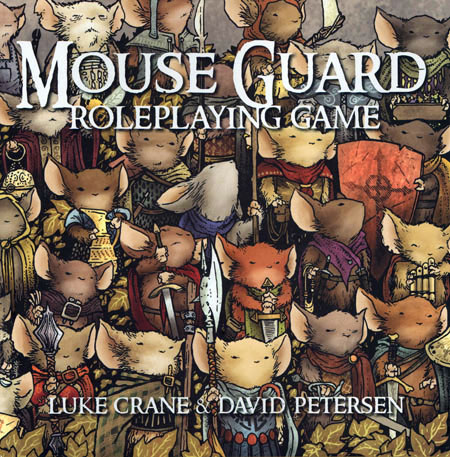
Mouse Guard – An adorable setting where mice have their own simple medieval society fighting for survival in the wild. This is the game for a group of storytellers. Using a simplified Burning Wheels mechanic, players select goals and traits rolling regular 6-sided dice to gain successes against the game master, or against each other. Failure usually means more complications and setbacks in achieving goals rather than simply not completing a task.
I feel this game works better with an experienced GM that is confident enough to lay out a framework for adventures and able to adjudicate fairly on the fly. However given the collaborative nature of the game, if you have a group full of imaginative players that burden of coming up with adventure ideas can be shared. Mouse Guard is a great buy for players that enjoy telling a story, although the setting might be a bit limited. I’d also heartily recommend passing one of the graphic novels around as inspired reading before running a game.

Savage Worlds Deluxe – The Explorer’s Edition was a steal at $10 USD. The price of the book has gone up but I still think this is a solid buy for a very flexible RPG game. The core mechanic is based on rolling a single polyhedral die to beat a fixed target number. The better the skill or ability, the bigger the die. PCs usually start out rolling a lowly D4 or D6, but with emphasis on select skills and improved natural ability, they can move up to rolling a D10 or D12. Of course all of these rolls are coupled with an extra D6, allowing a player to choose the best of either die roll.
It is a very quick and dirty mechanic that leads to fast gameplay and is a ton of fun. Best of all, you can play just about any adventurous setting imaginable. From pulp action, supernatural horror, fantasy, superhero, western, or sci-fi, Savage Worlds gives the GM tools to run just about anything. Better yet, it is able to do so with fluid rules that doesn’t get bogged down relying on a difficult, convoluted tome of a rulebook. The emphasis of the game is on imaginative, cinematic, over-the-top action. What results is a very fun game that encourages players to commit heroic acts, with a fair amount of uncertainty for success. Consider throwing in 3-4 sets of polyhedral dice for a complete gift.

Gamma World – The latest edition of Gamma World is a hoot. Just about everything needed to play is in the box. It is a lighter toned take on the radioactive post apocalypse setting compared to other games. The game offers a streamlined version of the 4E D&D rules that plays very fast and is surprisingly light. Combats can be a little regimented, but can be quite deadly adding some brutal tension to fights.
Fortunately character generation is a snap revolving around random die rolls for abilities and powers. I was a little skeptical at first about this. But somehow it just clicks and I’ve found my players loving this process which, oddly enough, seems to generate more character roleplaying ideas than expected. People have lamented quite a bit about the cards in the game. However if you really wanted to shoot for a personal alpha mutation deck, you could still get 6 PCs around the table and have a few extra (in a pinch you could do a draft and allow for up to 8 players with 5 cards each). Don’t buy into the hate rumors, you don’t need to continually buy more cards for the game. In fact you don’t need to ever pick up any cards other than what you get in the box set.
What you do need however for a complete gift is a few sets of polyhedral dice (blows my mind WotC didn’t throw in a cheap set). I’d add that you might want to consider a dry erase battlemap also, but a few printed blank 1” x 1” sheets does wonders too. It is a surprisingly fun game and light hearted enough to get even the most stiff-backed player into a roleplaying mood. Good fun there right out of the box.
So those are my picks for someone getting into RPGs. Each has something folks could likely pick up, start playing, and best of all comes in a single book (or box).
Basic attacks or just hack it with your sword
Having my campaign filled with new players, I will admit that sometimes options can be a little daunting during their combat turn. Between the at wills, encounter powers, and class abilities, it can be a bit of information to process when they step up to the melee plate. There is this general idea among the group that each player should try to maximize their actions during their turn. Sometimes they pull off coordinated maneuvers getting a lot of synergy from their respective abilities which is really cool. But sometimes, things can slow down as they are unsure what would be the best course of action.
That’s when I pipe in, ‘Just make a basic attack.’
At will powers seem to be the bread an butter for most player combat attacks. They should be. They are often focused on key ability scores that translate into substantial bonuses for damage and to hit rolls. However at times I do find that they can curb options for players, where basic attacks open up a more free form of potential actions. Can’t quite make the distance to get into melee? Charge in and just make a basic attack. Still a bit too far even with a double move and all your powers are melee attacks? Throw that hand axe and make a basic attack. I tend to see new players so focused on their powers, they begin to ignore the option of just using the lowly basic attack.
Movement effects are optional – There is something a lot of new players forget about with powers that have movement effects, you can ignore them completely (PHB pg. 57). I’ve had players get into an optimal tactical situation and fret a little about using some power which employs a shift, or some other forced movement. That movement is completely optional. So if a player wants to just crank out the hurt and not bother dancing around, remind them that all that forced movement on a power means they can do it if they want to, and not that they are forced to.
Weapon proficiency is your friend – Making attacks using key ability score powers helps tons in getting past a monster’s defence. However weapon proficiency bonuses are worth noting too. At times I’ve found my ranged-heavy PCs cornered or surrounded, so that making ranged attacks is difficult. I try to remind them of that option of making a basic attack with a melee weapon. While it may not be the most optimal attack, they do get some form of a bonus to their to hit rolls.
Melee Training feat – There is a little gem of a heroic feat locked away in the PHB2 (pg. 187). Melee training allows a player to select any ability score other than strength with melee weapons they are proficient with. For melee basic attacks, they get a full bonus for that ability score with to hit rolls and ½ the ability score for damage (been hit with errata). Now non-strength characters have another option in place of other powers. That wizard might not be to hesitant to hit something with their staff if backed into a corner knowing they can use their intelligence modifier as a bonus (and don’t forget the weapon proficiency bonus to boot).
I am seriously considering giving this feat away as a freebie my next campaign, but just limit it to one proficient weapon type of their choice. I might even consider keeping this limitation in and house rule a similar feat for ranged weapons also.
Heavy thrown weapons – Fortunately there are weapon types that give a little flexibility for ranged attacks using strength instead of dexterity. Suggest that fighter to think about picking up a javelin or a throwing hammer. It gives them just a little bit of tactical flexibility if their mobility is hindered during a fight, and still allow them to make some kind of attack.
I’ve found once I started suggesting making basic attacks as an option, my players have begun to think beyond the stack of cards in front of them. The ranged rogue in the group has picked up an enchanted sword as a backup weapon. The warlord now opens up combat hurling a javelin before making a charge into the fray. I’m getting players doing bull rushes, kicking over braziers, throwing chairs, making all sorts of improvised attacks. Even the group sorcerer has stepped up and hacked away at a lowly minion with their dagger, rather than sacrifice a move action to get some distance for a ranged attack.
So I implore DMs out there if your players get locked into turn indecision, encourage that basic attack. Push PCs into realizing there are other things they can do in fights outside that list of powers. More importantly, those options are not horrible actions for PCs to take. After some time don’t be surprised if your players start coming up with some creative attacks and trying to use the environment in fights too.
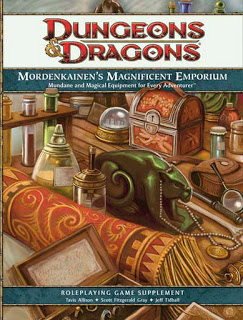
Thoughts: Mordenkainen’s Magnificent Emporium
WotC released a new magic item book and I’ve had a month or so to finally read through it thoroughly. It’s an interesting departure from the previous adventure vault books, being pretty sparse on the number of items and having more emphasis on descriptions and providing a back story of the items themselves. Add to that additional mundane items, armor, weapons, and a bit of rules for henchmen, and you’ve pretty much have a concise rundown of the book content.
The magic items are a mixed bag. Some classic AD&D items return and get a 4E treatment. Just about each item entry has some details on the item’s history and lore. It seems they are making an effort to put some wonderment and flash back into magic items, and I think it’s a nice touch. There is a nice section on giving magic items story elements. I think there is a fairly good spread of items to cover just about any class or item slot, giving your PCs some new things to drool over.
Cursed items are also included. I really like the idea that curses are pretty much item properties that a DM can slap onto just about any existing item. The emphasis seems more on using cursed items as a vehicle for story elements, rather than befalling your players with a ‘gotcha’ situation. There are lots of suggestions for introducing cursed items and I especially enjoy the idea that item curses might be tied to a very beneficial item. So that awesome sword might make a PC an absolute monster in combat, but having this great power comes with a trade off. It’s a nice idea and gives the players tough choices.
There is also quite a few new equipment, armor types, and a few additional weapons. I expect much of the weapons were additions to the stock essentials books. There are also some neat superior implements to give them a unique twist. However these require a feat to use. I appreciate the option and allows a small work around with your min/max PCs (especially as there is a cap on the bonuses from feats). I expect that tying superior implements to feats also can curb some abuse, but it does give that ‘chicken or the egg’ conundrum for players. They can’t get the benefits of a superior implement unless they take the feat, but might not take the feat unless they have access to such an implement. This is something that will require some DM to PC communication for certain.
There are also some tables describing the value of certain trade good along with approximate costs for different housing. Combined with the additional equipment, I like having this handy. It allows me as a DM to explore other types of rewards aside from the normal magic item or gold option.
This is sort of an important book as it is the first jump into magic items post-essentials. This leads me to a bit of a sour taste with the book. A handful of items have been presented before in the adventurer’s vault books (AV). Granted some of the properties have been tweaked, but why they didn’t just stick to being in the errata I don’t know. It would have been nice to just present new, never seen before, items to the 4E game. I get the idea that WotC wants to abandon all the earlier books, and not saddle new DMs coming in through essentials with having to pick up the other AV books. I can see this simply besides a few older magic items being included, they also provided the rules for PCs making alchemical items. If this is the case however, I think they made a huge omission with the henchmen.
The lauded henchmen rules are also here. For the most part they give the DM an idea of how different hirelings could be introduced into the game (and most are very fragile with combat stats effectively like minions). There are examples of companion characters, which effectively give the players a chance to round out a party with another man-at-arms henchmen. But are there any rules for them? Nope. You’ve got to dig out the DMG2 to get those rules. I am very surprised with representing certain magic items and providing alchemical rules, the companion rules got left out. A quick and dirty version could take up one page. In the end, new DMs coming in from essentials are pretty much left to using examples in the book and will have to wing it if they wanted a higher level NPC.
Another huge beef with me is making this an independent game store only purchase. I get trying the throw some support back to the smaller retailers. And I think having an initial limited release for 6-8 months including only these retailers a nice gesture. But totally avoiding the larger book distributors is pretty harsh. Some folks just might not have the option to get this book at smaller retailer, and that is doing nothing towards some independent retailers taking advantage of this (last I checked some were selling this book at $70+ on Amazon). Next time, here’s to hoping WotC considers giving the FLGS a 6 month head start and then open up distribution to other retailers.
So is it worth your dollar? If I were a new DM and jumped in with essentials, I’d say an emphatic yes. Aside from the magic items, you have a lot of armor, weapon, and equipment options for the PCs. Otherwise I see the books as a very optional purchase. If your players want to explore other weapon focus feats or you wanted to dabble in curses, this is something you’d likely want to buy. As always, more magic items are nice to have but if you all ready have the adventurer’s vault books you likely have enough items all ready. For the DM that has much of the 4E material, I’d consider picking up Mordenkainen’s Magnificent Emporium as a nice stocking stuffer, but not that must have book.
Expeditions of Amazing Adventure: the Floating City of Phomparr
Nestled in the center of the great swamplands is Phomparr, the floating city. This city is a dizzying network of canals and streams broken up by small marsh mounds of thick vegetation. It is rumored that hundreds of years ago, a cult following a primeval destructive god spread throughout the land. The populace offended Melora by worshiping this primitive god of a past age. They had cut swathes of trees and cleared the land for large temples of stonework. In her fury, Melora raised the river waters making the land a swampy marsh, with ground so soft no stone foundation could be laid.

Phomparr declined but slowly crawled back from this great cataclysm. While much of the land could not bear a stone walls, trees with thick tangles of roots sprung up easily. Simple structures of light wood and bamboo could be made, elevated up as platforms above the flooded swampland. While Melora washed the land with her fury, she also imparted her gifts of life. The tropical swamp exploded with verdant growth as a myriad of fresh vegetables and fruits could easily be cultivated, and the dark waters were stocked full of fish.
Now only great public meeting halls and temples are the common structures seen within Phomparr, precariously balanced on long stilts of bamboo and timber. Some more wealthy citizens try to elevate their status having such homes above the waters and motes of tangled roots and grasses. However, most of the citizens happily live their lives on small boats. It is common to see teeming markets of fresh food and dried fish among the tangled network of canals within the city. Despite the ancient calamity that befell them, the resilient people of Phomparr have remained and flourished in this wild tropical swampland.
The city of Phomparr is widely known for their great markets. Many adept trappers and herbalists delve deep within the swampland wilds, returning with unique flowers, roots, and wild beasts. The markets are a bustling affair of trading and auctions for fresh goods and exotic plants and animals. At times such trade is a dizzy affair for those not familiar with the rapid exchange of words, hand gestures, and goods the local citizens engage in. But if one has a quick tongue and a sharp sense of commerce, unique goods can be purchased. As such, many traveling merchants make the dangerous trek through the wild swamps to Phomparr to seek out wondrous animals and plants, items that would turn a great profit in the more temperate neighboring lands.
The people of Phomparr have little need of a city guard. Many take up slights against family honor by a quick thumping of heads to the offending family. Occasionally though, a darker deed is committed. Such evils are punished through a quiet formation of a townsfolk mob that see to the sinking the responsible party’s boat. For without a boat one is doomed in Phomparr, as this exiles them to a harsh life in the unforgiving remote swamps as tribal wildmen.
More zealot followers of Melora as of late have become an increasing vocal minority within Phomparr, seeking to destroy any standing structure. They see constructed temples to Melora as an affront to the god, and especially have ire towards those citizens that seek to live in stilt houses. This has caused some friction between the more wealthy citizens and some of the lower class. However most citizens would agree this fringe element of Melora worshipers are too fanatical in their beliefs.
Scrolls for 4E – Part 2
Last time I talked a bit about how I use scrolls in 4E, now I’d like to offer my house rules for creating them.
To create a scroll, the player must have the ritual feat. Players can only create scrolls with spells (or powers) that they are capable of using. So they cannot create scrolls for spells that are of a different class, or those of a higher level. Any power except at wills or class feature powers can be created into scrolls. Additionally, no power with the martial keyword can be used to make a scroll.
The time needed to create a scroll is in days equivalent to the level of the spell. One more day is required if the spell power is a daily. Each day is spent writing a condensed version of the spell’s power and requires many special reagents and magical inks. In essence the spell is cast and key fragments of the spell are bound to special parchment. Each day also requires an extended rest. If this cycle of work is broken, the entire process must be restarted (but does not require any additional materials or costs for reagents).
The cost in gold is equal to the level of the spell X 50 gp. The exception is for daily powers, which double the base cost for the scroll. Example, a level 1 daily spell would cost 100 gp to prepare (50 gp X level X 2), the same cost for a level 2 utility spell (50 gp X level).
Rituals can also be created as scrolls. In order to prepare a scroll, the player must have access to a written version of the ritual. To prepare a ritual scroll the player uses similar rules and time as those for scrolls. Note that players are not bound to using the same class or power source when preparing a ritual scroll, however they cannot prepare a ritual scroll that is higher than their level.
The component costs for preparing a ritual scroll are doubled. If the ritual requires a focus to be expended, that focus must be present when the ritual scroll is cast. For example, View Location can be bound to a ritual scroll, but the focus must also be present when the scroll is used. It is not ‘stored’ in the magic of the scroll.
Casting rituals from scrolls is a difficult task, as the ritual is truncated to select power words, diagrams, and key movements of the hand. Any skill check made using a ritual scroll incurs a -5 penalty.
Time to cast is dependant on the original casting time:
- 10 minutes or less – instantaneous
- 30 minutes – 10 minutes
- 1 hour – 30 minutes
- Greater than 1 hour – half the casting time (ex. Raise dead would take 4 hours instead of 8)
It is expensive and time consuming to create scrolls. Additionally for many rituals, if time allows, it is likely better to cast a ritual carefully, rather than trying to quickly fire one off from a scroll. Sometimes the expedited time is helpful (say being able to cast a knock ritual quickly) but for more powerful rituals, most likely it is better to take the time to cast it normally.
I also wanted to be sure that there were key powers from classes that remained exclusive. Magic missile is such a staple power in the wizard’s repertoire, it would be silly to spend the time and effort to transcribe such a minor magical power into a scroll. Rather, it would be more useful for the wizard to spend his time preparing a spell of more power. I’d use this reasoning if players are clamoring to create a stockpile of Healing Word scrolls.
Allow players to buy scrolls also and use the costs for creating a scroll for an idea on the price (quick rule of thumb: 50 gp X level and double it for a daily power). However I would really encourage using scrolls as treasure. The costs for creating them can serve as a guideline for replacing an equivalent in treasure. The flavor alone might be something players enjoy, as a low level wizard might appreciate the ability to fire off a warlock’s Vampiric Embrace. As I’ve mentioned before, for some villains having a few scrolls tucked away in a chest within their lair just seems appropriate. Hope folks find this inspiring to try and put scrolls back into their 4E game.
Scrolls for 4E – Part 1
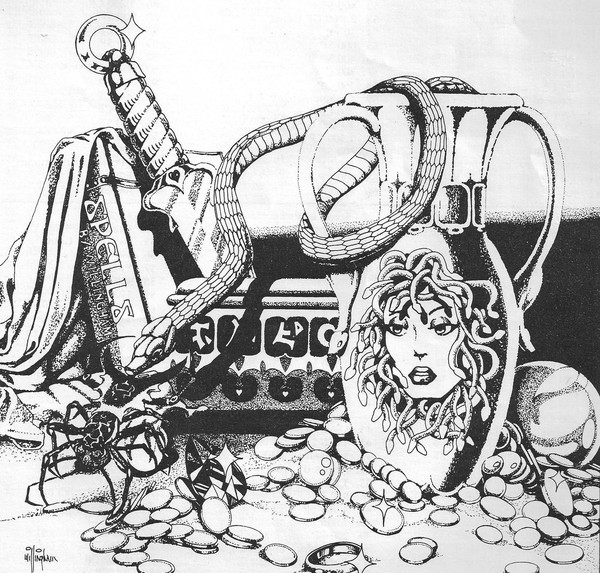 Looking through the random treasure tables in Pathfinder’s Gamemastery Guide made me realize that I miss scrolls in 4E. I’ve noticed I’m not the only one as Blog of Holding has been thinking about this too. I’ve parsed out rituals as scrolls in my game, but I miss honest-to-god, one shot spell scrolls. I always felt they gave the PCs a little flexibility. Plus I think they represent classic loot for some baddies. Nothing like raiding a necromancer’s tower and scoring a few scrolls in the process. So here is a few house rules I use for scrolls in my game:
Players must be trained in the ritual feat to use scrolls. Using a scroll is a standard action. The scroll must be read from one free hand (typically a minor action to produce from a pouch, tube, backpack, pocket folds of a cloak, etc.). The reader must be unrestrained and able to speak. Once the scroll is used the magic fades from the page and the parchment becomes too brittle to write on.
The spell (or power) expended from the scroll is based on the reader’s abilities and skills. The spell cannot gain any implement or weapon modifier bonus from the player. The spell’s power emits from the scroll, and the player can manipulate it somewhat, but not direct the spell through a wand, staff, or other magical focus as an implement.
Characters may use scrolls for any spell equal to their level or lower. If a player is not trained in the power source of the spell on the scroll, they must make a moderate DC check to successfully cast it. The DC value is based on the level of the spell being read from the scroll.
This check has no skill training or ability bonus modifier. The player does gain a level bonus for this check. If the player fails this check, they expend their standard action but the scroll is not used (and may be attempted again). In effect, the player gets about halfway through the spell and begins to fumble lines, and not understand specific symbols and words on the scroll. Note this check is not made if the scroll user is trained in the same power source of the scroll spell.
Example, a 4th level wizard is attempting to cast cure light wounds (2nd level divine utility power). They must make a moderate skill check to use it, as the wizard draws power from the arcane. The DC for using the scroll is 13 (appropriate for a moderate level 2 check), and the player would only get a +2 bonus to this roll (level modifier bonus for a 4th level PC). If they were attempting to cast Shadow Veil (2nd level utility warlock spell), no check would be needed as the power is drawn from the arcane source.
I use this as it allows PCs to dabble in other spell sources, but still requires a bit of luck to pull it off. Granted the higher the level of a player in relation to the spell being cast means they will get a better shot at reading the scroll correctly. However if they want to avoid this completely, it’s best to stick with similar spells that draw from the same source of power.
I also have tinkered around allowing rituals to be cast from scrolls too. However this is a bit much for now. I’ll get on to how I allow players to make scrolls in part two.
Hey, WotC! Give us a Nentir Vale campaign setting all ready.
So a while ago a Nentir Vale campaign setting was floated out there, but was pulled from the line of upcoming products. I imagine that a bit of the material got rolled up into threats to the Nentir Vale, as there is some background info in that book to my understanding (didn’t pick it up, so can’t say anything concrete on that). It looks like the Nentir Vale and the surrounding region will be a blank slate which is a shame and something that needs more attention, especially for new DMs.
I get the focus WotC had when 4E rolled out. Work on presenting the rules and help with explaining the nuts and bolts of the game. As for describing a campaign world, let the DM decide. Why bother putting all this work into describing possible histories, legends, and a fantasy lore that most DMs are just going to cherry pick from, or at worst ignore completely. Nope, best to just reinforce over and over, ‘this is your game, play the way you want, make the world the way you want.’ I personally found this direction a little refreshing. Let people play what they want, don’t saddle it down with all this canon of past editions.
Of course the failure with that comes with new players. I expect most people that rolled into 4E all ready were playing D&D. They had a grasp on making up their own campaign, or at least had a slew of older edition books to draw inspiration from. But what about the new DM? As much as I loved the idea of ‘just make it your own’ I think new DMs needed a little more guidance. I think if I was a 13 year old trying to get a campaign running, I’d need some help and a lot of background to get some adventure ideas.
Given this void of a D&D world for new DMs to play around in, the writeup in the DMG was not too bad. A fleshed out town with a few ideas, beginning adventure, and a sketch of the surrounding lands. Add to that the Keep on the Shadowfell as a free pdf download, and there were a few things out there to keep a group busy. But I expect folks were restless to get a new incarnation of other settings, so Forgotten Realms rolled out.
I really feel that that was one of the big reasons Forgotten Realms sort of fell flat when it released. You had this entire idea of a wild, untamed land in need of heroes, that Forgotten Realms had to be altered and reworked to fit with this new idea of a campaign world. So many changes were made, and this idea of vast expanses of uncivilized regions (something not quite in line with much of Forgotten Realms) seemed to saddle this setting. Likewise I think that was what made Eberron and Dark Sun shine so much when they were released. Simply put they were allowed to be the different settings/worlds that they were. Forgotten Realms had to be the new default setting for 4E, and 4E had these core concepts of a setting that ran counter to established lore so much so, that a lot had to be changed to bring this setting in line with the generic D&D setting 4E needed.
Make Nentir Vale the generic setting – Let Forgotten Realms go. Reintroduce a new world that has the core classes and races, and the default pantheon as part of its world. Let the other campaign settings revel in what makes them different (like drow, swordmages, the underdark, portal circles, etc.). Everything in this new setting would be reinforced by material in the core books. If a new group picks up a campaign setting, they have this entire new pantheon and mythology to wrap their heads around. They likely have new races and new classes as options, it can be a little overwhelming if you are new to the game. Offer a setting that supports what are in the rulebooks, not new material that alters and amends what they are trying to become familiar with. A Nentir Vale setting would help with this and best of all, fits perfectly with the points of light theme.
Use available products – With Keep on the Shadowfell, Thunderspire Labyrinth, and the Pyramid of Shadow, WotC all ready has a heroic adventure path with this setting. Add to that a few other books they’ve put out like Hammerfast, you’ve got a small line of products that would sell if they had some support. WotC all ready has a lot of material available, they just need something to help tie it all together. A campagin setting would be a step in that direction.
Let the fans do the heavy lifting – A lot of fan made material is out there. Why not announce more source material for the Nentir Vale would be a new series in Dragon? Let folks submit their historical timelines and thumbnail sketches of the surrounding regions. Let them offer ideas of what is in Harken Forrest or the Witchlight Fens. Better yet once most of this is printed in Dragon, at the end of the year compile it into a single PDF and offer it to folks with a DDI subscription. A print version would be great, but a compiled digital form is workable too.
Blurbs and short highlights are fine – We don’t necessarily need a complete detailed history and a full description of each region, just flesh out the surrounding lands a little more. Give the players an idea what certain regions a particular race would call home. Write up a few paragraphs on particular kingdoms and lands. Spend more time and material on presenting potential threats and villains for the players to face off against. We don’t need volumes of material, just something for inspiration.
Stick to the heroic tier – Getting up to level 10 is just fine here. We don’t need to dip into world cataclysmic events and gods. Keep it focused on the lower tier to help new players get into the story. Spreading out appropriate threats to higher tiers cuts off story avenues for a new DM. Keeping everything heroic means just about any villain or evil faction could become a potential story for the DM to use.
Give us a generic setting in the Netir Vale. Give new DMs some more information and a world they can play with that adheres to the limited fluff in the rulebooks. Combined with Kobold Hall, and a few one shot adventures in Fallcrest, new players could get a solid start in their adventure career. They could branch out further heading to the Keep on the Shadowfell (just drop the first part with the kobold hideout and you’d have a solid adventure to shift into). They then could follow it up heading to other locales, or stick with playing the published adventures. In the end players could have a grand campaign all throughout the Nentir Vale and potentially move on to other parts of this new world if needed. Give Nentir Vale some support, WotC!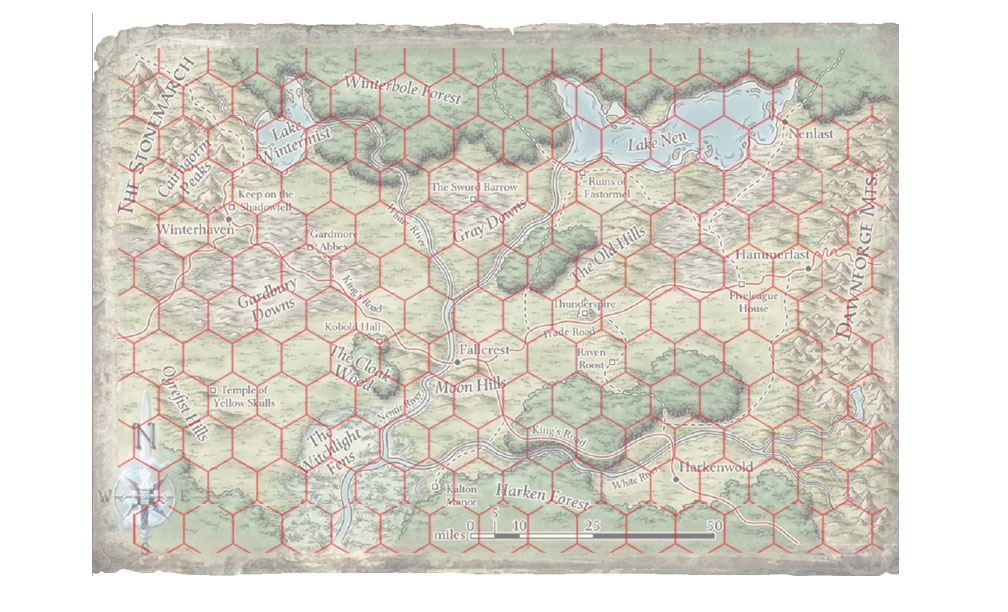
Initiative combat cards
I’ve sort have gone full circle with tools to keep track of combat. I toyed around with some different programs and found a few I liked. But of late I’ve sort have gone back to keeping track of stuff with paper and pencil. Maybe if I pick up a tablet I’ll try out combat manager programs again, but I’ve found that a laptop on the table sort of adds another divider between myself and the action.

I’ve whipped up a combat sheet and like using that. But I thought I might try using something a little more visual in keeping track of initiative order. So I made up some initiative cards that would also have some info on the PCs and monsters.
I made them to fit on an index card for some added bulk. I ended up placing self-laminating sheets over my cards. That way I could use a dry erase marker and get a little more mileage out of each individual card. I also included a format so that the card could fold in half. They can be used as stand up tents or be slipped over a DM screen. This might be more useful if you want to allow PCs to keep track of the order (the other side is blank so it can be freely written on).
One big drawback is that they do take up a bit of space on the table. However I like that I have just about all the important stuff right on the cards. I can also split the HP box into sections of 2-3 columns so I can use one card for a few monsters.
The big plus is I can turn cards sideways as I go through the initiative order indicating they’ve had their turn. Players can see where they fall in line with the turn order and know when they are on deck. Plus if I have to shift things around, it is just a matter of switching the card order (for delayed actions and such). I hope folks find them useful for their game.
Get off my 4E lawn
A while back I let my DDI subscription expire. I simply found I wasn’t utilizing it as much. I enjoyed reading the content in Dragon and Dungeon, but wasn’t really using it in my game. I found much of the online tools lacking compared to other offline programs (like.. cough… Masterplan… cough.. or power2ool).
There has been some improvement. I tooled around with the monster builder and liked that. The compendium was neat. The few times I used the character builder I found it pretty useful. So there are some promising tools there with DDI, just not quite something I am using in my game to maintain a subscription for.
The big thing that I do see becoming a problem is player errata. Granted aside from Dungeon and Dragon online mags, I think the character builder is almost an essential tool now. Despite what people say about the powers and feats available, once you start parsing down what race/class you are playing, choices start to limit a bit. Stick to particular campaign settings and you get even more limited options. You can build a character without DDI.
However without DDI you cannot build a PC that is using the current character rules. It seems that WotC is making a complete pass through the old classes in the PHB. October errata rolled out another list of changes, this time for the rogue. Granted if you are maintaining your character via the character builder, this is no big deal. If not, you have to print out those changes and keep em handy, likely also highlighting powers/abilities in the PHB to remind you they’ve changed. It’s getting unmanageable.
Now for the regular gamer Joe that plays with his buddies every once in a while. The whole falling behind in errata is simply not a big deal. They can play D&D to their heart’s content with all the books they bought and have a grand time. But sitting down with another group. Bringing a character into organized play. Suddenly that could become a problem if they aren’t rolling up the PCs using the latest iteration of the the character builder.
I’m glad WotC is continually going through material and making sure stuff that is broke gets fixed. But at the same time I’ve realized that so much has changed from the original core books, you are being pushed into maintaining a subscription service to keep up with the rules.
Now, you don’t have to do that. You can simply hole up in your basement with your buddies and have a ton of fun playing 4E. But if you want to play with other folks, things can get a little bumpy. I am seeing things parsing out even more between folks that’ll be using DDI to make up their PCs, and the poor sods using the printed rulebooks.
I think I’ve become that crusty old gamer sticking fervently to his worn books, muttering about past days where they didn’t have to keep a subscription to a database to roll up characters. Others will roll their eyes at me, gently pat my hand and tell me to go sit in the corner quietly, while they continue their conversations about the new Magic Missle Mk III. Yeah, I think throwing in the towel with keeping up on the errata and letting my DDI subscription lapse has turned me into that old hermit gamer. I just hope I don’t become too out of the loop that I have no idea what is happening new with D&D, but I think this blog has all ready starting to become obsolete.
 Geek Ken