Category: Campaign Planning
Hey, WotC! Give us a Nentir Vale campaign setting all ready.
So a while ago a Nentir Vale campaign setting was floated out there, but was pulled from the line of upcoming products. I imagine that a bit of the material got rolled up into threats to the Nentir Vale, as there is some background info in that book to my understanding (didn’t pick it up, so can’t say anything concrete on that). It looks like the Nentir Vale and the surrounding region will be a blank slate which is a shame and something that needs more attention, especially for new DMs.
I get the focus WotC had when 4E rolled out. Work on presenting the rules and help with explaining the nuts and bolts of the game. As for describing a campaign world, let the DM decide. Why bother putting all this work into describing possible histories, legends, and a fantasy lore that most DMs are just going to cherry pick from, or at worst ignore completely. Nope, best to just reinforce over and over, ‘this is your game, play the way you want, make the world the way you want.’ I personally found this direction a little refreshing. Let people play what they want, don’t saddle it down with all this canon of past editions.
Of course the failure with that comes with new players. I expect most people that rolled into 4E all ready were playing D&D. They had a grasp on making up their own campaign, or at least had a slew of older edition books to draw inspiration from. But what about the new DM? As much as I loved the idea of ‘just make it your own’ I think new DMs needed a little more guidance. I think if I was a 13 year old trying to get a campaign running, I’d need some help and a lot of background to get some adventure ideas.
Given this void of a D&D world for new DMs to play around in, the writeup in the DMG was not too bad. A fleshed out town with a few ideas, beginning adventure, and a sketch of the surrounding lands. Add to that the Keep on the Shadowfell as a free pdf download, and there were a few things out there to keep a group busy. But I expect folks were restless to get a new incarnation of other settings, so Forgotten Realms rolled out.
I really feel that that was one of the big reasons Forgotten Realms sort of fell flat when it released. You had this entire idea of a wild, untamed land in need of heroes, that Forgotten Realms had to be altered and reworked to fit with this new idea of a campaign world. So many changes were made, and this idea of vast expanses of uncivilized regions (something not quite in line with much of Forgotten Realms) seemed to saddle this setting. Likewise I think that was what made Eberron and Dark Sun shine so much when they were released. Simply put they were allowed to be the different settings/worlds that they were. Forgotten Realms had to be the new default setting for 4E, and 4E had these core concepts of a setting that ran counter to established lore so much so, that a lot had to be changed to bring this setting in line with the generic D&D setting 4E needed.
Make Nentir Vale the generic setting – Let Forgotten Realms go. Reintroduce a new world that has the core classes and races, and the default pantheon as part of its world. Let the other campaign settings revel in what makes them different (like drow, swordmages, the underdark, portal circles, etc.). Everything in this new setting would be reinforced by material in the core books. If a new group picks up a campaign setting, they have this entire new pantheon and mythology to wrap their heads around. They likely have new races and new classes as options, it can be a little overwhelming if you are new to the game. Offer a setting that supports what are in the rulebooks, not new material that alters and amends what they are trying to become familiar with. A Nentir Vale setting would help with this and best of all, fits perfectly with the points of light theme.
Use available products – With Keep on the Shadowfell, Thunderspire Labyrinth, and the Pyramid of Shadow, WotC all ready has a heroic adventure path with this setting. Add to that a few other books they’ve put out like Hammerfast, you’ve got a small line of products that would sell if they had some support. WotC all ready has a lot of material available, they just need something to help tie it all together. A campagin setting would be a step in that direction.
Let the fans do the heavy lifting – A lot of fan made material is out there. Why not announce more source material for the Nentir Vale would be a new series in Dragon? Let folks submit their historical timelines and thumbnail sketches of the surrounding regions. Let them offer ideas of what is in Harken Forrest or the Witchlight Fens. Better yet once most of this is printed in Dragon, at the end of the year compile it into a single PDF and offer it to folks with a DDI subscription. A print version would be great, but a compiled digital form is workable too.
Blurbs and short highlights are fine – We don’t necessarily need a complete detailed history and a full description of each region, just flesh out the surrounding lands a little more. Give the players an idea what certain regions a particular race would call home. Write up a few paragraphs on particular kingdoms and lands. Spend more time and material on presenting potential threats and villains for the players to face off against. We don’t need volumes of material, just something for inspiration.
Stick to the heroic tier – Getting up to level 10 is just fine here. We don’t need to dip into world cataclysmic events and gods. Keep it focused on the lower tier to help new players get into the story. Spreading out appropriate threats to higher tiers cuts off story avenues for a new DM. Keeping everything heroic means just about any villain or evil faction could become a potential story for the DM to use.
Give us a generic setting in the Netir Vale. Give new DMs some more information and a world they can play with that adheres to the limited fluff in the rulebooks. Combined with Kobold Hall, and a few one shot adventures in Fallcrest, new players could get a solid start in their adventure career. They could branch out further heading to the Keep on the Shadowfell (just drop the first part with the kobold hideout and you’d have a solid adventure to shift into). They then could follow it up heading to other locales, or stick with playing the published adventures. In the end players could have a grand campaign all throughout the Nentir Vale and potentially move on to other parts of this new world if needed. Give Nentir Vale some support, WotC!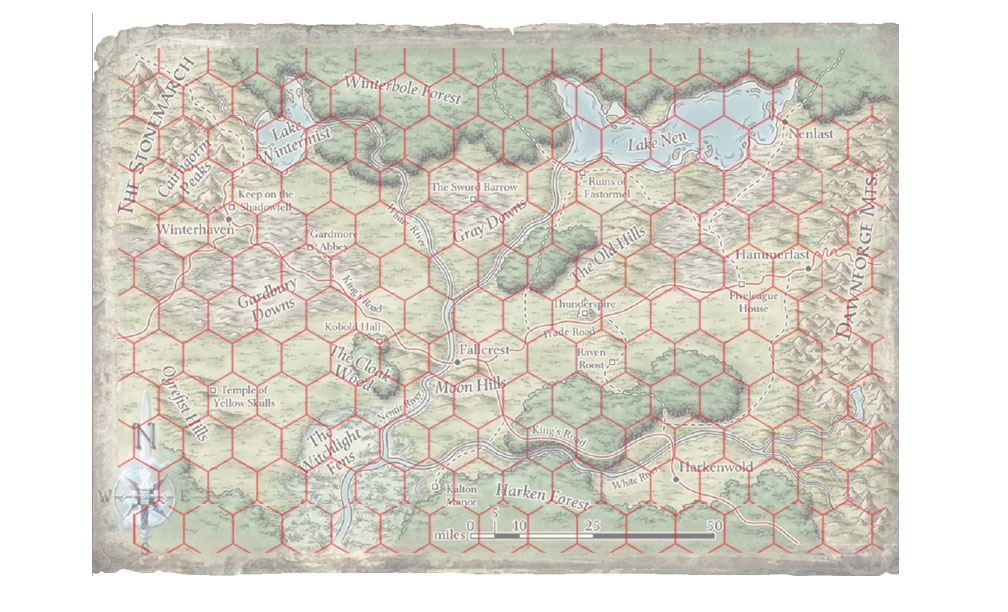
The long campaign
I’ve looked over my adventure log and realized that our homebrew campaign of Terrene has gone on for over a year now. Most of my campaigns have gone on for 4-6 months. Granted I think when I was younger I could get a near weekly game in. Right now I try to run our D&D game every other week, and a handful of times we’ve only managed to get something going once a month.
Still it has been a long time. The group is currently level 5. I think I dragged out the leveling curve a bit when it all started. Most were new to the game (or new to 4ED), so I wanted players to have a bit of time to understand the mechanics of the game and their potential. Since then I’ve noticed the group is really getting some synergy in combats, and all of their characters have grown a lot, fleshing out their motivations and backgrounds more.
To be fair I’ve also run a sandbox game of sorts. There is an overarching story, but at the beginning I always gave the players an option B. So at a potential plot crossroads they could always stick to the main story and tackle the next objective, or run off and do the second option. Granted I do drop in some small elements to build on the main campaign plot, but most of the time it was a designed as a diversion for the main story. I think the players like this, as they have some direction but still have some opportunities to explore the world. The downside is that it can drag things out a bit for the main story of the campaign.
As things have gone on, I think the group is ready to try something different. As for myself, I’ve found Terrene is losing its luster. I’m ready for a change of scenery and want to run a different campaign. I’ve been chomping at the bit to run a Dark Sun campaign, but I think my group is leaning towards Eberron. I’ve stolen a lot of ideas from that setting for the current game, but I might explore the idea of subterfuge among the dragonmarked houses.
No mater what I’ve decided I’m going to stick to a shorter campaign run. I’m also considering throwing off the idea of a major story arc all together. I’m thinking instead of running a sandbox type of game, with the main objective of the group being to raise their status within one of the houses (or at least raise the status of their chosen patrons). I think I want to try and narrow down the scale and work on the PCs backgrounds also.
I really want to explore the concept of making the player’s backstories fodder for adventures. I’m sort of going down this road now, and I think it’ll help add some closure to the campaign if some of these issues are resolved. When starting this new campaign, I think I’ll require something meaty from every player.
So I am curious do folks run a longer game? If so what has make you wrap it up? Or are shorter campaigns of 4-6 months something more people like?
Thoughts: Neverwinter Campaign Setting
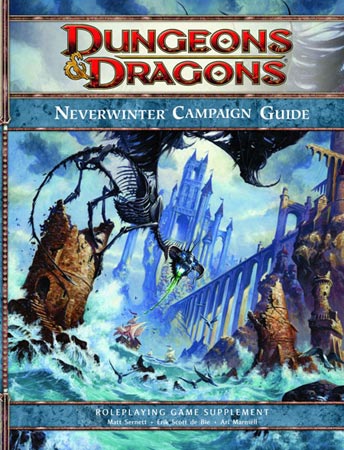
I managed to pick up the new campaign setting out from WotC while on holiday and I think I will echo what many have said, this is an amazing book. It’s chock full of story hooks and adventure ideas all squeezed into a pretty small landscape within the Forgotten Realms. There is a lot going on here in the book and I think WotC has really set the bar high for other campaign books to follow.
Themes – Aside from the nuts and bolts of the setting and locales, I really like the inclusion of character themes. Immediately players have an option to include something in their background that can align them with particular factions in Neverwinter, and give them some motivation or goals. For the DM, they immediately can have some hooks and adventure ideas to reel in the players. I could easily see the first session being folks just rolling up their characters, seeing what themes they might pick up, brainstorming their background a bit, and giving the DM a checklist of ideas to take the campaign off in a certain direction. It really has the potential to effortlessly mesh the main adventure story with the characters.
Heroic Tier – Looks like WotC has been digging through the character builder a bit and come to realize that people like the heroic tier. Some might consider it limiting, but I think it was a great decision to put a cap on the expected levels for the region. I think it gives the DM a broad assortment of villains, movers, and shakers in Neverwinter and allow for a lot of possibilities right from the start. Honestly I like heroic tier. I’ve yet to dabble much in the paragon tier (and haven’t even tried epic). It just seems that the high end of PC levels makes for a very different type of D&D game, with truly epic threats becoming a bit too large in scale for me. Clawing up through the heroic tier seems more manageable and engaging.
Lots of Tidbit Info – Much of the book is scattered with sidebars giving more detail and ideas to the DM. It breaks up the main text well and is a great way to disperse some story ideas without overwhelming the DM. Clearly outlying the goals of a particular villain is a given, but having that additional sidebar on the same page giving suggestions and ideas for adventures is a huge plus.
Politics and Factions – There are a lot of different groups vying for power in Neverwinter and the book does a pretty decent job of laying out the different relationships each has with other groups. There are a lot of options with the potential of enemies becoming allies for PCs (and vice versa). It’s a shame something like this wasn’t done with the other campaign settings. It really gives the DM a foothold in the politics of the region and allows options for that kind of game. Of course all of this could be skipped if you wanted a traditional hack and slash campaign, but it’s nice to have this type accessible.
Another thing I enjoy is that much of Neverwinter is dynamic. There are guidelines for the DM if certain groups take control (or if particular villains get defeated), so the landscape of power can change. There are also a ton of different groups in the region. So much so, you could run 2-3 different campaigns focused on different factions, and still have a lot of territory to explore. I could easily see a dual campaign going with different groups running simultaneously in Neverwinter. Paths might cross and outcomes could have an effect on the story for other groups, but you could also have such intersections a rare event. Things are that broad with the factions in the region and it allows for a lot of replay.
Embracing Wild Fantasy The underdark, demons, abysmal creatures, and the Shadowfell, it’s all here. You can have that gritty explore the ruins and tame the wilds kind of campaign, but it also allows for some pretty unusual locales. I especially enjoy the inclusion of Evernight, effectively a shadow version of Neverwinter, which throws down the framework for a planar campaign. Pretty fun stuff here and I’m glad that the book gives out a ton of ideas breaking away from the more traditional fantasy themes of past books.
Revisiting Forgotten Realms – I think Forgotten Realms as a 4E campaign setting sort of got a bad rap. Granted a lot of the canon of previous editions was thrown under the bus, but I got what WotC was going for with the new Forgotten Realms. They really wanted to push the points of light theme and it works.
Still, it seemed that each additional campaign setting that came out got better and better in presentation and material. Forgotten Realms seemed to have been kicked to the curb. That’s really a shame as there’s a lot of flavor with the underdark, spellplague, and constant demon incursions. As a high fantasy setting, it invokes a lot of imagination and seems to pull the right strings for making a ‘classic’ D&D campaign. I’m happy to see WotC hasn’t abandoned this setting completely. Hopefully they’ll look at sketching out more regions and groups through DDI content and other books.
To wrap up, I think the Neverwinter Campaign Setting is a great book, especially if you are looking at delving into a Forgotten Realms campaign. There is a lot here, and a DM should expect not to try and digest the whole thing from the start. Rather, I feel it is better to work with small pieces of the game world and run with it. There are so many options and ideas, you can easily revisit Neverwinter and run a different campaign all together the second time around. A good buy if you are looking for some inspiration in your game too.
Limiting player options for homebrew campaigns
So most typical campaign settings for 4E have additional options for players. They can try their hand at a new race or class, all the while every other option is available from the various Player’s Handbooks. I think at times it feels tacked on, but I get what WotC is doing. They don’t want to limit how people run their games, but add to it. So every campaign setting released has fit this notion of laying out the basic options and adding other things for players to tool around with.
I think with Dark Sun that might change. I’m unsure if they will limit races, but I think dropping the divine power source is in the cards. I like it. I think with Eberron and Forgotten Realms released, WotC can now get out some really wild campaign settings away from the typical fantasy norm (even if one is a little steampunk).
This leads me to what I’ve been doing with my own homebrew campaigns. Originally I wanted to keep everyone happy and not put any limitations on races or classes. But I found out after a while, even with rolling up new characters, having no change in the settings from campaign to campaign made things a little stale.
Having new races or classes definitely adds to a player’s excitement with a new setting. A unique feel of the world helps, and having a setting with slavery, or undead commonly interacting with the living, all helps to keep the interest of the group for a bit. However, I think what really makes for an interesting setting is the limitations in choices for players.
With 3 PHB out now, I have no problem cutting out races, and have done a little too with classes. My current campaign is a bit of steampunk thrown in a typical fantasy setting. Most races are abound, but I dropped off devas and shifters, and completely threw out PHB 3 races/classes. The only addition was introducing artificers as a player class. At first I was worried about hampering my players options and I did get a little grumbling. But I think once a few choices were removed, my players were able to quickly think up some interesting characters.
I think my next campaign I might explore this further. I really think this is another neat concept of the entire role system. I think with previous editions, I would have to completely dump any idea of dropping divine magic. No clerics? No way would my group go with that. But given that you can find leader roles in other power sources, it becomes a possibility now. Each power source has a few different roles tagged with them. Want a world where nature has been tamed? Dump the primal power source (and the classes with it). Immediately you’ve got a campaign setting that has a different feel to it for the players by removing these classes.
I need to think about it. And of course, it largely depends on the players willing to roll with it. I’m definitely in the camp of limiting player options for new campaigns though. A quick and dirty way to give the world a different feel, and make further descriptions of the world have some resonance for the players. So have folks done something similar with their homebrew worlds?
Halting a campaign with a ‘Meanwhile…’
Over the past few months I’ve had some attrition with my players due to people moving on. It’s common here as most people I meet that play D&D are on temporary work contracts. So my group number has trimmed down some.
My first campaign had a pretty grand story arc. I could’ve easily seen it going up to the paragon tier. But as the group diminished, I felt I was losing a lot of the personal stake in the campaign. I wanted to run something tighter and smaller in scale, allowing a definitive end in a few months.
My kicker was that folks were enjoying the original campaign. Yet with a smaller group size (3), I just didn’t think I could have kept the scale as grand as I wanted. Not to mention, I had milestones planned out but was getting a little burned out with the current arc. I needed a break.
I wanted something smaller in scale and could wrap up in a few months. So my players were willing to jump into a new campaign. However, I was in the pickle of trying to figure out a good way to wrap up the current one. I thought if we tried to play some of it out, it would still take several sessions to tidy up all those loose plot ends. So I took a staple from comics and pulled a “Meanwhile…”
Basically the original group is still together, heading back to a city after exploring an Eladrin tomb. On the other side of the world, another adventure is unfolding with an entirely new group. Two completely different groups running two different campaigns in the same world.
At some point I may get the group to decide to pick up the original storyline, or keep rolling with the new party. As another possibility, I can have some characters fold into the ‘old’ group and jump back into the old quest arc.
This current campaign should end at a fair point and then we could jump right back into the old group. If possible, I might even keep things dispersed and separate. So if the group feels an itch to pick up the other characters, I could just run a few sessions with the alternate party.
I think this is a pretty good compromise. It allows for everyone to hold onto their old characters and still try something new. I think for this to work however, you need a lot of good notes and possibly a decent adventure log. Fortunately I’ve been keeping things up through Obsidian portal. We’ll see how things work out, but I’m excited.
Obsidian Portal for your campaign
Keeping everything in your campaign organized can be difficult, especially if you are running a homebrew campaign. One of the bigger challenges is readily having information available for your group. If you’ve got notable NPCs, history and events, or a unique group of deities, having that information readily available to your players can be a chore.
Obsidian Portal is a great site to keep all of that organized. It’s a campaign wiki, that allows you to easily edit and maintain your campaign. The functionality is great and I’ve come to make it my primary tool for record keeping in my campaign.
At first, the thought of committing everything in a wiki can be a little daunting. But cut and pasting text, slowly expanding entries, adding tags to pages and NPCS is a breeze. I’ve taken to uploading images of maps instead using of the wiki map section, but the default map section is quite functional. Plus it is accessed through a web browser. No need to be chained down to any specific computer if you need to access (or update) any information.
Another important feature is the campaign log. Once I got into the habit of updating the log, I can now just spend 10-15 minutes after a session to post a quick summary. Since I play every other week (and sometimes just monthly), it has been a boon to my game having the group be able to read up on the last session. If they need more info about an NPC or a location, it is simply a click away to get a little bio or more detail. Now we have a record of what they did 4 months ago, and they can gleam any info off of a particular encounter from the past. For the adventure log alone, I’ve loved what it has done with my campaign.
My initial advice is simply start small with your entries. Use 2-3 sentences for most topics, and slowly expand. In a month or two, you’ll have a fleshed out campaign that is well organized and more importantly, completely referenced. I’m considering allowing my players to keep up on the adventure log. I think it would be interesting to have them record events they think were pertinent. Did I mention that entries can be tagged with DM only sections? That NPCs can have a ‘public’ and a ‘DM only’ entry? Yeah, it is that functional.
Check out Obsidian Portal. It is a fantastic campaign tool. As for my campaign? Feel free to browse the adventures of my group in the world of Terrene. I’m a convert to this great site, be sure to use this tool for your next big campaign.
The short (and lengthy) campaign
This is a second part on some thoughts about running long and short campaigns. I enjoy longer campaigns, but sometimes it can be difficult to run. I’d like to continue with some things I like, and dislike, with DMing shorter campaigns.
The short campaign – I think the biggest advantage about this type of campaign is you can have a tight, focused, set of adventures that can tell a concise story. I think players can enjoy this as there is a definitive end to the arc. Also, there is less pressure for jumping into a game, as they know in 2-4 months it will be over (perfect for those folks off on summer holidays).
Another big advantage of having a short campaign is the ability to keep things fresh. Players have opportunities to play a myriad of different characters. DMs can experiment with wild settings and lessen the chance of running out of ideas. You can have a lot of variety, and even switch off playing other RPGs. I really think this diversity can keep the interest of players engaged and elevated.
I also think it can open up a lot of unique roleplaying situations. DMs can introduce elements of inter-party conflict, with players having secret agendas and possibly have alignment switches. With the right players, having a person suddenly turn on the group, can make for a memorable campaign. Since everything is short term, this allows players to go all out with these types of dilemmas. In a long campaign, with a great degree of continuity, something like this is nearly impossible to run (unless you have people dropping out of the group).
The counter to short campaigns is that players may not be personally invested in their character. They might have a more flippant attitude towards quests and adventures, as they know in a few weeks, things will effectively reboot. I also think that most players create a character that won’t change much throughout the campaign. Yes, they can gain equipment, treasure, and powers through advancement, but their drive and motivations will likely not change much. At the end of the campaign that one paragraph bio might get a sentence or two more added to it, but that is about it. There isn’t much room for development beyond that.
Also, the adventures you run might drift into mundane quests. Instead of having an epic tale where the very world is threatened, you might be typically running games through a series of dungeon delves. I think the possibility is there to run an engaging story in a short campaign, but the scale will likely pale on comparison to a longer campaign. Additionally, you are effectively on a deadline. You have to wrap things up in a few months, so players might feel they are running through hoops, traveling from one scene to another. It depends on the group, but some might want time to explore and wander a little more in the world, rather than head off to the ‘next quest’ of the campaign arc.
I’m torn a little about what I’ll do in a few months. I’m enjoying a longer campaign (as is my group), but I’m feeling the draw to running something more concise and shorter. I’d love to heard what most folks run and their experiences with past campaigns.
The lengthy (and short) campaign
I’ve been running my campaign for a few months now. I’ve always been a big fan of the long, epic campaign. However the reality of life encroaches a lot in my group. Being in Korea, most people I know having some interest in D&D are here temporarily. Usually after a year, they are off somewhere else as they change jobs.
I’ve been lucky having a few people staying around for a while, but already I’ve had some attrition in my group due to people moving on. This makes running a lengthy campaign, even if just for 6-8 months, problematic. I’ve toyed with wrapping things up and trying to get smaller arcs run, but the group I currently have really is enjoying the longer storyline.
Still, I’m considering pushing for a conclusion in a few sessions, and might try to run future campaigns with a definitive end that can be reached in a few months. I recently also managed to play in a 3.5 campaign that was enjoyable, but it petered out after a few months and never wrapped up in any form of conclusion. I’m hoping I can avoid this. I guess time will tell depending on the group’s wishes.
With that conundrum, I think each type of campaign provides some advantages and solid points. However, I am still on the fence as to how I’ll keep my campaign running.
The long campaign – One big draw to this type of campaign is that it can be truly epic. You have the time and breadth to allow characters to grow and change. As a DM, you can craft a huge, involved storyline. Even with a string of shorter stories, taken together it leaves an intricate tale in its wake. I think many players look back on these experiences fondly, as they can say they were part of a huge story.
An interesting point with these types of campaigns is the shift away from the initial background defining a character, and more their experiences as they play the game which molds what they are. Sure you might have some central idea of your character’s past, but it eventually gets pushed to the backseat in a long campaign. It’s the actions and events of the game that becomes the largest influence on a character.
The downsides of a long campaign are many. I think the biggest problem is player/DM burnout. Keeping things fresh and exciting is a challenge. Folks may very well get a little bored and want to try something different. All of which makes for a campaign that never really ends, and just sort of crawls to a stop, leaving a lot of dangling plot lines.
Keeping the group together is also another major hurdle. Real life can intervene for some people and cause them to drop out. Sometimes this can work, as 1-2 people taking a break from the game with a decent sized group is not much of a loss. As the game is still running, they can always jump back in after a few months. However, getting players back into the groove of the current party lineup (and caught up with all the drama of past events) can be a problem within itself.
Still running an epic storyline can be enticing. I think players can have dynamic experiences allowing their characters to grow and flesh out organically. These types of campaigns allow for convoluted arcs and tons of interesting encounters, NPCs, and events that can make for memorable sessions.
I’ll be sure to post some good (and bad) points about shorter campaigns in a bit.
Planning sessions with Masterplan
I’m a luddite. I’ve tried using a lot of online resources while playing my game. I’ve tried having initiative trackers, pulling things up on the compendium and other applications all to no avail. I just can’t seem to shake old habits, but I’ve tried to change. Running my games, I just like having things at my fingertips and being able to scribble little notes on my session plans when I need to. Planning my games is different however and I really embrace using a lot of online tools.
I’ve been tinkering a little with Masterplan and been enjoying it quite a lot. They’ve incorporated some new features and I really think I’m going to have to invest a little more time in this program. It’s amazing.
Masterplan is a program that helps with session planning. It allows you to sketch out plots as a flow chart, annotated with notes and text. It includes options to create encounters and skill challenges. It even allows annotating maps (or building maps with tile sets). I’ve yet to really dig into the nuts and bolts of the program but I’ve enjoyed what I’ve seen so far.

One particular feature I really like is the encounter builder. Just fiddle with the drop down fields for your experience budget, and you can draw up a list of potential baddies to create your encounter. The most recent version allows users to import creatures and items from the DDI compendium. In previous versions, you have to export selected items from the compendium yourself. This was a little tedious before (but useful once your library was created). Now importing things directly to your Masterplan library is a snap.
Want to create a map on the fly? Plenty of tools for drag and dropping tiles to make a custom map. There is even a yahoo group where you can export sets of tiles to fill out your library. I’ve dabbled with this a little and the initial prognosis is awesome.
Hopefully over the upcoming holidays I’ll have more time to play with this. I really want to push, pull, and prod this program to see what it can do. Offhand, this looks like a neat tool to make things up on the fly. I’m hoping I can get comfortable enough with this program, so that if my players go off the map, I can completely improvise a few encounters. Just ask them to take a 10 minute break while I whip up 3-4 encounters, complete with a map, traps and treasure. I completely see this as a possibility with this application.
If folks have delved deep into this program, I’d love to hear your thoughts.
EDIT: Oh, and if you want a brief walk through of Masterplan, there’s a YouTube video of some of the features in action.
4E Campaign podcasts
As I mentioned before, when starting off a campaign I think DM’s should freely loot what they can from other material. There are a lot of campaign primers you can pick up online, including from WoTC, that are free. There are two campaigns I want to bring up, mainly because they each include podcasts of players during actual game sessions.
The first is from Roleplaying Public Radio and their new world campaign setting. It is an intriguing setup as the players are part of a new group of colonists in a new land. Things are very fluid politically and there are a lot of moral quandaries and political factions for the players to get stuck in. The new world does have some indigenous tribes on its shores. How much effort should the players make to work with these groups?
One major obstacle is the need for massive labor. Labor is hard to come by so slavery might be an option for the colony. Should the players support such a thing? Also a goblin hulk is sitting off the waters of the colony. Goblins would be willing to do the bulk of labor on the cheap, but at what price in the future?
All of this has a backdrop of a larger story, where ruins of an ancient civilization are abound. Some players will be drawn towards these ruins through visions and dreams. Deep within those ruins lies the trigger for creating a new age, or will it bring the end of the world? Fun stuff abound here.
The podcasts are entertaining (if you are willing to put up with some NSFW junior high locker humor). While it is tailored to a particular group, just sitting through some of the player discussions regarding some of the sticker moral arguments is worthwhile. I think a DM could pick up a lot of ideas on what would work, and what would need some refining, when running their sessions.
Another minus for me in the podcast (aside from some of the coarse table-talk) is the painful recording of every fight. Playing out a combat is fun. Listening to people play is not. I typically find myself skipping much of the combats during the podcasts.
Still with its flaws, I think this is a great setting. Having the podcasts of actual sessions is also a huge plus as it serves as a reservoir for ideas. It can also highlight parts that can work (or need to be dropped/modified) for a session. Plus the setting is so open, I think a group would have a lot of fun tackling some of the political and moral elements of the campaign, all the while having the excitement of exploring a new land.
The other campaign podcast is Return to Northmoor which I’ve enjoyed a lot. The campaign is much more structured like a WoTC’s scales of war. It has info on encounters and thoroughly providing notes for running a game session.
One particularly interesting concept of the campaign is the relationships the players have with each other. Additionally, much of their background has a tremendous impact on the main story. The players begin at the periphery of a large kingdom making their final run on a cargo raft to a remote outpost. They stumble into an arcane mystery which leads them to an ancient civilization related to each of their pasts.
I really enjoy these podcasts. They are broken down into two types. One is a thorough discussion on tips and pointers for running the material provided. The second is actual recordings of the play sessions. What I particularly like is that the play sessions are edited. Some of the more exciting elements of combat are left in, but most of it is truncated or skipped over, with emphasis made on group roleplaying. I think it is a great format, and something to emulate more (are you listening WoTC?).
Those are two I’ve been following as of late. Anyone else found some fun 4E campaign podcasts?
 Geek Ken