Category: D&D
Expeditions of Amazing Adventure: The sorcerous silt of Olsaan
The far western reaches are wild lands. Olsaan is the most civilized region bordering the great kingdoms, likely simply due to its proximity to many trade routes rather than from the people that call these primitive woods home. The many elves, halflings, and even the sparsely numbered humans that live there all seek to try and make a claim within the wilderness. They form a diffuse network of small, fiercely independent, villages and communities among the dense woodlands.
The deep soil of Olsaan is said to have been blessed by the gods for fertility. A claim supported by the bountiful yields of crops from those able to plow through the solid rock. However, few fields can be completely cleared of heavy stones that litter such plots. Those stalwart enough in farming to do so find the ever encroaching woods not worth the effort to maintain large tracts of farmland. Instead generations have learned that smaller plots are more manageable and has become the typical custom for those few that farm within Olsaan.

The many rivers and streams however have been able to cut deep into the bedrock, disgorging the deep soil hidden below. These streams are of a rich muddy color, with the dark earth forming a fine silty bottom in streambed pools. The silt from these rivers and streams is greatly prized. It forms a reagent base for many magical pigments and can be used in the inks of arcane texts. Some have even claimed that the ingestion of this dried mud will infuse the spellcaster with even more powerful magics, although such a boon is temporary.
Exploitation of this natural resource is difficult however. Bullywugs are notoriously known for infesting the many streams and rivers with foul, makeshift camps. They seem to be a constant presence along the rivers and have been known to harass local villages if they feel their aquatic territory is being encroached on.
Others will claim that deeper into the wilds, more primitive forces move about the rivers. After several pints around community fires, tales speak of the very mud itself rising from the bottom of turbid waters, forming hulking, primitive man-like forms. These great primal elementals of earth and mud wield tree trunks as clubs and savagely fight any that they encounter. Likely a story told just to keep children from wandering too deep into the woods, and to keep those less adventurous types from seeking to secure some silt from the deep rivers. Such silt, when dried and placed in a clay urn, would likely bring a small fortune to those willing to brave the wilds and strange creatures of Olsaan.
Expeditions of Amazing Adventure: The silent spirits of Solemoore Woods
North, skirting the borders of the icy tundra plains, are vast tracks of woods. The eastern region of the many forests is known as Solemoore. A handful of villages are nestled about the edges of this grand wood, many filled with adept ice fishermen and trappers. Lumber is another major source as a trade good for these communities, where stout men carefully remove aged timbers from the forest and send cut logs down the lone frigid river that snakes through Solemoore.
Well over a century and a half ago, the dark cleric, Nergahar, had been a scourge to the land. Driven by a frenzied, forgotten god of old, he committed all manners of atrocities as dark rituals. His sole purpose was to open a rift into the Nether and draw out an aspect of his foul god, a nameless creature of ancient evil from the Astral wastes. His mad intention was to bring such an aberrant force of destruction into the world in order to lay waste to mankind.
Some claim that he succeeded in his dark task, but it was himself that become fodder to the evil creature that spilled forth and receded back into the Nether. Others claim that the Nether opened for an instant, utterly destroying the mind of Nergahar, and he wandered the woods as a gibbering hermit until his death. Some even claim that the very ritual that destroyed Nergahar, was altered and refined by the necromancer, Al’Khameed, and this wielder of the black arts inflicted this foul magic onto the lands of Kymoria.

None really know what was the cause of the curse within Solemoore Woods, save that the bleak forest is now pocked with spirits of the dead. Silent apparitions can sometimes been seen drifting among the thick trees. No birds fly through the woods and the pines do not whisper with gentle swaying of branches when cold winds blow. There is an unearthly stillness in the forest. A continual gloom of thick clouds carpet the still landscape, with a reprieve of clear skies only coming once or twice a month.
Few woodland creatures can be found in Solemoore now and most seem stricken with the toll of constant fear. Most deer and other game have patches of grey fur and the very young are an infrequent sight. Moving through the woods at times can be maddening, as if everything in the wood had become muted and ever silent. Sound seems to dampen off into nothingness. A fine mist covers the forest, making navigation through the woods a treacherous task, with even the most seasoned trackers known to lose their bearings.
It is these unusual characteristics that have also made Solemoore woods a haven for bandits. Those with enough bravado and iron nerve have been known to keep camps deep within the woods. They are able to strike at passing caravans and raid villages with some impunity, as they know efforts to track them will be hampered by the silent woods. Such groups of bandits do occasionally vanish though, swallowed up by the tomb-like quiet of the woods. Only a lone member might be seen, stumbling from the woods with hair white as snow and eyes wide with a look of utter terror. They incoherently mumble of lost spirits calling their companions into the black maw.
Despite this occasional dark fate of bandit gangs, their continual presence can be difficult for some communities in Solemoore. Many a village mayor has offered substantial rewards to an adventuring company willing to track down bandit camps within the woods. Even odder recruitment efforts have come from wizards seeking to know more of the woods and the secrets within.
It is not uncommon that some young wizard, emboldened with a scrap of information taken from an ancient tome, to seek employment of adventurers to join in an exploration of some rumored lost ruin within the silent woods. Typically such expeditions become exercises in frustration as navigation through Solemoore woods is difficult. Many of an adventuring party have stumbled out of the bleak forest after a week, recounting days of traveling in circles and bewildering attempts at orienteering (with many rangers too embarrassed to talk further of the matter).
However, some never return, seemingly swallowed up by the woods. Villagers when pressed will whisper that a scant few parties of brave warriors have entered the woods only to have a lone member drift aimlessly out months later stricken with a form of madness, muttering about the hunger of the forest, the consumption of life, and a dark maw within the woods. The rest of their companions never to be seen again.
Expeditions of Amazing Adventure: the Floating City of Phomparr
Nestled in the center of the great swamplands is Phomparr, the floating city. This city is a dizzying network of canals and streams broken up by small marsh mounds of thick vegetation. It is rumored that hundreds of years ago, a cult following a primeval destructive god spread throughout the land. The populace offended Melora by worshiping this primitive god of a past age. They had cut swathes of trees and cleared the land for large temples of stonework. In her fury, Melora raised the river waters making the land a swampy marsh, with ground so soft no stone foundation could be laid.

Phomparr declined but slowly crawled back from this great cataclysm. While much of the land could not bear a stone walls, trees with thick tangles of roots sprung up easily. Simple structures of light wood and bamboo could be made, elevated up as platforms above the flooded swampland. While Melora washed the land with her fury, she also imparted her gifts of life. The tropical swamp exploded with verdant growth as a myriad of fresh vegetables and fruits could easily be cultivated, and the dark waters were stocked full of fish.
Now only great public meeting halls and temples are the common structures seen within Phomparr, precariously balanced on long stilts of bamboo and timber. Some more wealthy citizens try to elevate their status having such homes above the waters and motes of tangled roots and grasses. However, most of the citizens happily live their lives on small boats. It is common to see teeming markets of fresh food and dried fish among the tangled network of canals within the city. Despite the ancient calamity that befell them, the resilient people of Phomparr have remained and flourished in this wild tropical swampland.
The city of Phomparr is widely known for their great markets. Many adept trappers and herbalists delve deep within the swampland wilds, returning with unique flowers, roots, and wild beasts. The markets are a bustling affair of trading and auctions for fresh goods and exotic plants and animals. At times such trade is a dizzy affair for those not familiar with the rapid exchange of words, hand gestures, and goods the local citizens engage in. But if one has a quick tongue and a sharp sense of commerce, unique goods can be purchased. As such, many traveling merchants make the dangerous trek through the wild swamps to Phomparr to seek out wondrous animals and plants, items that would turn a great profit in the more temperate neighboring lands.
The people of Phomparr have little need of a city guard. Many take up slights against family honor by a quick thumping of heads to the offending family. Occasionally though, a darker deed is committed. Such evils are punished through a quiet formation of a townsfolk mob that see to the sinking the responsible party’s boat. For without a boat one is doomed in Phomparr, as this exiles them to a harsh life in the unforgiving remote swamps as tribal wildmen.
More zealot followers of Melora as of late have become an increasing vocal minority within Phomparr, seeking to destroy any standing structure. They see constructed temples to Melora as an affront to the god, and especially have ire towards those citizens that seek to live in stilt houses. This has caused some friction between the more wealthy citizens and some of the lower class. However most citizens would agree this fringe element of Melora worshipers are too fanatical in their beliefs.
Expeditions of Amazing Adventure: the enigmatic arcane endurium of Estalycia
Far to the north east along the icy coasts of the north sea is Estalycia. A small city that carved itself out of the frigid barren rock long ago. The city is encircled by a windswept tundra and further isolated by the Whitepeak mountains.
For centuries this settlement was known for its fishermen and stoneworkers, a minor trade partner to the nearby dwarven cities nestled deep within the surrounding mountain range. The city managed to maintain a lifeline to other regions outside through their adept command of the seas, and merchants from this far off city have been known in the past to aggressively purchase wares from other ports to the south.
However, Estalycia’s role in the world has changed in the past two decades. Out in the tundra, adventurous prospectors came across a large field of strange ore. The dull green metal was malleable and oddly light. After extensive study, several wizards found that the metal could be enchanted and would retain simple magical energies for years. Fragments of this rare element could be infused to provide ever-burning lamps. Other small pieces could be infused with other ritual energies to give off searing heat, or numbing cold.
The craftsmen of this rare mineral called it, Endurium, named for its astounding ability to retain energy. Such amazing properties of this metal have allowed Estalycia to transport fresh catches of seafoods even further to other cities. Lampworks were created overnight, with the demand of their ever-burning lights being a prize possession for nobility and other citizens of status outside Estalycia.

Another wondrous property of endurium is that fist-sized chunks of this strange ore serves as a means to store vast amounts of motion energy. Such energies have served as perpetual engines, operating great lifts and ever-turning wheels that could drive large ships, or wheeled cart caravans. This advancement has even rivaled the ingenious dwarves and their clockwork automatons.
No one is sure how this metal came about. Some claim an ancient star must have struck the world. Others claim it is a patch of earth that was saturated in the blood of titans and demons during some long forgotten war. Nonetheless, this small etch of mineral has been a boon to Estalycia.
The city now has streets lined with smokeless lamps. The normally frigid homes have become comfortable residences with warmed floors heated by enduruim laced water pipes. The precarious coastal stone quarries hold several automated lifts, and its navy has begun to outfit many vessels with waterwheels that can continually churn the salty waters without the need of sails.
It is the inhospitable location and the natural barriers of the Whitepeak mountains that have allowed Estalycia to maintain their hold on the nearby endurium mines. Other more accessible cities would have likely been invaded by neighboring kingdoms. To this day, many whisper that the great dwarven clans would have taken these mines by force if they were not continually harassed by orcs and goblins. Although many more learned tacticians of war would claim the long trek across the icy tundra would be a difficult task for any army, even the stout dwarves.
As the prominence of Estalycia has grown over the decades, the city inhabitants have become even more cosmopolitan. It has become a very popular region for arcane practitioners to settle and conduct their mysterious research. The increase of endurium powered carts and ships have meant more trade, and now it is several merchants from far off regions that seek to enter the broadening markets of Estalycia. Many seek to obtain simple arcane infused goods, energized by fragments of the strange metal. Yet the most coveted good is endurium itself. The sale of the raw metal is severely restricted, and well over a king’s ransom for a large piece.
However many aspiring thieves have tried their mettle in obtaining samples of the enigmatic ore through dishonest means. More brutal ruffians have sought to strike out at the mines themselves. It is a near constant effort that one can usually find employment by local merchants and Estalycian military to stave off any attempts to steal endurium. Likewise, one could likely find a more dishonest benefactor to fund an attempt to gain a large hold of the metal.
A few more reserved opinions with an ear for politics claim that the great dwarven clans of the region seek to control all the sources of endurium. It is a matter of time before a clan attempts to take these fields of strange metal by force. However it is unlikely that one clan alone could do this, and such a prize would make other clans greatly envious. As this arcane element is so rare, there is no possible way all the neighboring clans could benefit from a small group possessing the mines. Hence many well versed in the dwarven kingdoms claim that several noblemen spend many of a long night, drinking ale, thoughtfully pulling on their long beards, pouring over maps and plans to determine how they could obtain this treasure of Estalycia, and still be able to retain it from opposing dwarven clans.
Expeditions of Amazing Adventure: The powerful molten metal of the Voc-Khal peaks
Far to the south, past the great deserts, lay the vast mountain ranges the dwarves claim as their homeland. The highest reaches of these ranges are the Voc-Khal peaks. The great heights of these mountains are constantly battered with cold winds, and their stoic caps are frequently covered with snow.
However these inhospitable mountains are also dotted with several volcanos. These turbulent cracks in the surface of the world disgorge molten earth in a constant flow. Legend speaks of the great demon war. Envious of the grand world created by the gods for man, demons broke through the underworld, clawing their way to the surface. They emerged from the planes of beyond though these pocks of lava and fire.
The dwarves claim that to this day, the metal forged from these molten rivers still carry magic of demons and the outer worlds. The blades carry the keenest edge and armor possess the greatest resiliency. They covet the rich veins that border the steams and rivers of flowing lava. Hence, many noble families try to gain greater stature and establish a stronghold within the Vok-Khal peaks.

Such grand endeavors rarely last however. The fiery lands are rife with elemental creatures, twisted forms infused with the mystical energies that flow through the magma streams. They make infrequent raids on any keeps the industrious dwarves carve out of the mountains. It is as if they are driven by an impulse to crush any form of civilization in the peaks, and tear down any erected walls.
It is not only elemental creatures that prowl the Vok-Khal peaks, but also the cruel duergar. They are known to invade and retain holds created by dwarves. Many a dwarven family have sought to reclaim lost keeps from their evil distant kin. However, some dwarves claim that further in the depths of the fiery peaks are vast duergar cities. They had scavenged the cavernous ruins created by the old demons and made them home, further refining the rough hewn tunnels to crafted halls and deviously ingenious forges.
Although dwarven families will rarely admit this due to pride, their numbers are declining. Some still are driven to reclaim lost family holds, and reclaim past glories. This is such a strong desire, they reluctantly will hire out adventurers willing to join them in expeditions to claim lost houses. More more unscrupulous merchants are willing to aid in these risky ventures offering mercenaries. All done in hopes to secure the rights to transport any fine metalworks the dwarves create in these reclaimed holds and forges.
Others state that duergar strongholds deep within the mountains are not just rumors. These wickedly crafty humanoids have established grand forges and intricate fortresses. They covet the mystical ore as much as the dwarves, and create fine metalworks that rival their distant cousins (a claim best spoken out of earshot of any dwarf if one seeks to retain all their teeth). Such rumors are more than enough to inspire those adventurers brave enough to make the treacherous journey to the distant Voc-Khal peaks.
Expeditions of Amazing Adventure: the clinging mists of Kymoria
Beyond the vast mountains to the east lie many mysterious and relatively unexplored lands. To the south east of the great continent is likely one of the most enigmatic, and tragic, of locales. Kymoria was once known for its fine horsemen and open plains. Infrequent caravans that managed to traverse the great mountains would bring forth pungent spices and fine silks as part of the exotic wares commonly found in this land.
Well over a century the dreaded necromancer, Al’Khameed, rose to power in this nation. Kymoria was always a loose confederacy of princes and Al’Khameed was rumored to have easily twisted the minds of some princes to his will. The remainder that were willing to fight him brought the country to its knees in a bloody civil war.
Tales say that it was at this time Al’Khameed had discovered a long lost ritual. A ritual of such immense power he was able to bring life back to the bodies of the dead. The ritual sapped life from the very land itself and soon he commanded a massive army of walking corpses. So great was his power, so foul were the magics he wielded, that the very ground wilted and died.
Ulaam of the One Eye saw the threat of Al’Khameed and offered his great arcane skills to the neighboring kingdoms that were threatened by the ever growing undead armies at their borders. While some sing of his praises, other more learned historians claim that Ulaam acted simply out of desire to obtain such a powerful ritual himself. Regardless of his motives, Ulaam of the One Eye accompanied a large force of horsemen to strike deep within the dead land.

None lived to tell the tale of that great battle that erupted as the two armies met. Great booming thunderclaps were heard and arcs of lightning and fire erupted from the horizon. What followed was a creeping mist that blotted out the very sun over Kymoria. A wet mist so unnatural, that to this day it still keeps the blackened land shrouded from sunlight.
Ulaam of the One Eye limped out from the damp veil of mist, claiming that Al’Khameed was defeated. Further legends speak of Al’Khameed fleeing further south to the desert wastes, his great army reduced to a meager war band. His every step was hounded by men-at-arms from wronged noblehouses, pursued like a wounded animal from kingdom to kingdom. It was only in the desert wastes he could find a final refuge, where the harsh dunes provided him respite from pursuit.
Kymoria itself withered under the relentless mists that clouded its once fair hills and rolling grass plains. Although the great armies of undead were destroyed, it is said that the land is still infused with necromatic magic. Occasionally scattered lowly undead will shamble from the edges of the mist to terrorize neighboring villages. Undead animals are also not an uncommon sight.
There are still some small fiefdoms within the mists of Kymoria. They are a shadow of their former glory as some stout-hearted folk still try and carve a life from this veiled place. Some whisper even darker tales of lords actually being vampires, as ever-clouded skies give them respite from the sun. The villagers and peasants are simply slaves to their malevolent overlords.
This does not daunt some merchants willing to travel to remote towns within the deep mists, ever trying to discover some prosperous trade route. Such caravans are always seeking men of the sword willing to guard such tenuous ventures.
There are also a wealth of ruins to pillage and explore. Some of the greater cities have been abandoned, or at best only a sliver of the former population still call these doomed places home. Many adventurers have been willing to brave these dark lands and explore the crumbling remains of towns and cities within Kymoria.
Expeditions of Amazing Adventure: The mischievous monoliths of Miandriss
The open plains of Miandriss are dotted with deep lakes that are fed by a myriad of small rivers and streams. This land is known for its fine farmland and rolling plains of grain. But one cannot fail to mention the great mysterious stone statues that also lie about the many farming communities of this land.
Most are level to a man’s chest and hold the visage of some simple humanoid face. The gray stone on many are so worn, barely any detail can be found on their face. It is unknown the purpose of the stone markers, or what race was responsible for creating them.
Many people look upon the statues that grace their fields and homes as good fortune. Most farmers would agree, that to deface or move such stoic rock figures would be tempting foul luck. Even older traditions of more primal beliefs still hold sway over many communities.
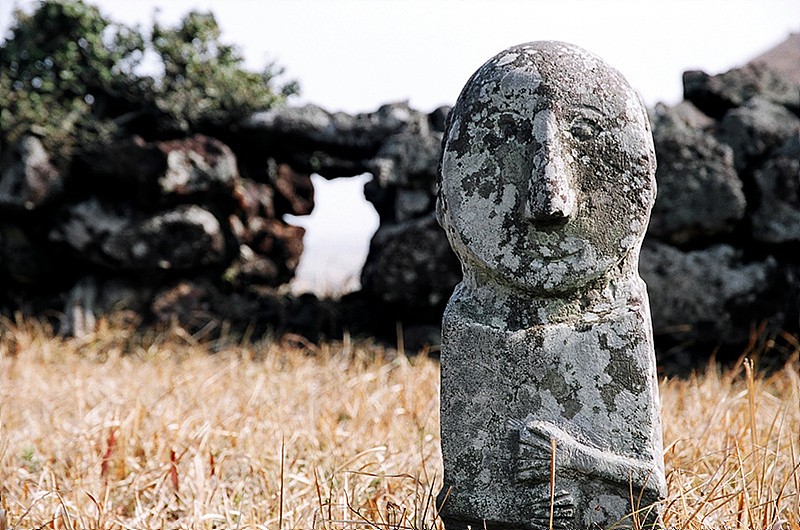
Each long fall before the main harvest, huge bonfires light the night sky. Families with homes near the stone figures will leave pints of dark ale, sharp cheese, and hearty loaves of bread. Most folk will spend the evening around the fires drinking merrily and filling the air with laughter and song. All done to appease the spirits buried deep within the quiet stone faces of the statues that dot their community.
Villagers claim as the night drags on, the fires fall to embers, and the folk weary with sleep and drink retire to their homes, that the rock figures come alive. Sure enough, many farmers will find some of their wheat baled, or fruit from thick orchards in bushels. And pity the miser farmer that did not leave a meal for their stone neighbors. He might wake to find his livestock scattered or a small vegetable patch rooted up. Usually, such a slight is rewarded with some mischievous deed. Yet few whisper of more darker deeds, one of children gone missing in long past seasons.
One thing is for certain, every statue has moved by the dawn of the following day. Even the great imperial arcane guild has documented this phenomenon without any explanation. Attempts to do so have always resulted in some mishap. Whether a young apprentice seems to fall asleep during the observation, or a group of wizards is run off by some irritated beast, no one has actually seen the statues move.
They only know that by the next sunrise these simple figures of man have managed to uproot themselves and move. Be it a mere 10 feet or hundreds of yards, it seems that each season the stone statues of Miandriss begin a migration, quite possibly a great jest from some ancient trickster god.
Expeditions of Amazing Adventure: The twisting trade route of the Tahnzabar jungle
Ohmeer and Ashure are the two major kingdoms which border the great jungle of Tahnzabar. The steaming jungle is teeming with lizardmen tribes and foul beasts. Legends speak of the great sorcerer, Hisham the Heretic, who resided deep within the rain forest. His wild magics infused the jungle with chaotic arcane energies such that trees and vegetation grew rampantly and unchecked.
Many claim this was the reason that no formal roads could be built within the jungle. Any effort to clear a path, or lay stone under the thick canopy of trees, was doomed for failure. Within a month the vegetation of the jungle would reclaim the land. Others whisper this was due to foul primal gods the lizardmen pray to, and their dark sacrificial rituals, that helped keep civilization at bay in this wild jungle.
Undeterred and driven by the desire of untapped markets, various trade guilds banded together to create a great stone road that would lie above the trees of the jungle. Such a massive undertaking was secured, when each kingdom offered to send troops to man the road if one was complete. It was rumored that each kingdom felt such a herculean effort would not be completed, and even if so, the flow of goods along the route would be a boon to each realm.
It was nearly 25 years in the making. Guilds of dwarven stonecutters offered their expertise to the design and construction. Arcane guilds charmed many great creatures to aid in the movement of massive loads of stone and mortar. The possibility of new markets for slaves was so tempting that even slavers from the southern deserts offered their stock as workers.
The result was the great stone route. A wall high enough to sit above the trees of the jungle and wide enough for a single cart to pass. The completion of such a monumental task was unthinkable to Ashure. The kingdom unwilling to commit the many troops needed to man the wall and only offered a pittance of men. Ohmeer saw this an opportunity to further extend their influence throughout the jungle of Tahnzabar, and quickly offered to make up the bulk of forces needed to serve as guardsmen.
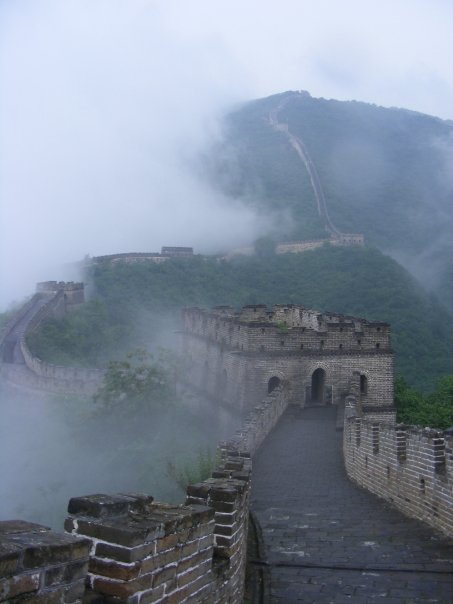
To this day the trade route has stood for over 75 years. It serves as a lifeblood of trade, and become a somewhat of a border, between the kingdoms of Ashure and Ohmeer. It is nearly a two day journey along the wall and the sight of long caravans is not uncommon. Many sections of the route pass through various guard posts, manned by men-at-arms from Ohmeer. Still, the journey can be perilous, as bandits and lizardmen make efforts to raid merchants along the route.
Additionally, as this route was created by the different trade guilds no formal tolls can be collected from either kingdom. However as the route is rather narrow, money commonly changes hands where brokers charge for goods that are exchanged from section to section. One merchant may find his goods put aside as another competitor has his wares shuttled further towards its destination. Outsiders can find this process a chaotic tangle of carts and porters moving crates and barrels in a constant ebb and flow of material. However many quick tongued brokers manage to efficiently move the goods along this route.
Some adventurers might gain employ from merchants carrying more precious cargo as guards. The route is long, and the possibility of resting within a guardhouse is not always guaranteed midway.
Additionally, although the many trade guilds use the route freely, they are typically at each other’s throats midway along the route. It is a common occurrence for rival merchants to pay extra for their goods to get priority. Some have even had another’s goods set aside while theirs are transported ahead. Although it is rare, some merchants have employed men-at-arms to make sure their wares are moved freely. The Ohmeer guards frown on this, but usually stay out of the way if a melee erupts where the combatants stick to blows and avoid open bloodshed.
The jungle of Tahnzabar is also a relatively unexplored land. Midpoint along the road is an excellent starting location to gain access to the more remote regions of the jungle. The rumors of ruins and the ancient laboratory of Hisham the Heretic acts as enticing draws to many adventurers.
Lizardmen tribes are also a nuisance, constantly making attempts to raid the trade along the route, or damage the great stone road itself. Each kingdom has been known to fund the efforts of private mercenary companies to scout out and destroy any warbands seen within the deep jungle.
Expeditions of Amazing Adventure: The arbor temples of Adryia
Halfling folk are the most common denizens of Adryia, with its rolling green hills and pockets of thick woods. Many of the population adhere to the sprawling network of rivers that dissect Adryia into its various provinces. Because of river trade and their wanderlust, many halfings in this region worship Avandra.
It is the halflings to the west however that holds a greater reverence towards the deep woods and hears the spirits within the great oaks. These smaller sects of halfings revere Melora, and share her love of the primal forests. They construct housing of lumber sparingly, and are sure to keep the oldest of the trees standing if clearing an area.
Many temples and community buildings are built around such old trees. It is said that the spirits deep beneath their old bark are alive and whisper to those that are clever enough to hear them. The spirits give council on extreme weather and sudden changes of the seasons. Many farmers have been known to seek a priest at these temples to gain divination on the upcoming planting season, and which types of crop would likely yield a bountiful harvest.

Come deep fall, every five years, this region plays host to the oddest of visitors. It is common for elves to frequent these communities and trade among the little folk. Even the reclusive shifter nomads can been seen among halfings, trading thick furs and smoked meats for stacks of fillbread and the plethora of roots locals harvest.
It is rumored that a great council meets within one temple. Here woodland druids and priests of Melora put aside their differences and seek council of the great trees housed within the temple walls. Dire talk of the possible encroachment of chaotic elementals and twisted humanoids is a topic of frequent discussion. As much as each party views the other worshiping false gods, each strive to aid each other against the common enemies of the woods and natural order. Because of this, many long days and nights are spent planning to counter any incursion of these foul creatures on their respective lands, and at times tense diplomacy is overseen by the halflings.
Some claim that it is only the halflings that could host such diverse guests successfully. It is their good humor, love of hearty food and drink, and generous hospitality that put many at ease. The sincere love that the halfings hold towards the forests is also a strong point.
Legends tell of dark orc armies which have tried to crush the halflings of Adryia. These stout-hearted people have always been able to repulse such attacks, with the oddest of allies always emerging from the woods to offer aid whenever threatened. This legend serves as a dire warning to those that seek to harm these good-natured people of this region.
Expeditions of Amazing Adventure: The shifting pillars of Porphimia

 Geek Ken