Category: DM Tips
Money in Savage Worlds
I’m not a fan of keeping track of money in games. A long time ago I used to dole out silver and gold coins, making sure my PCs kept track of the money they spent for ale and a night’s rest at the inn. I stopped doing that altogether in my games.
However money is still a motivator for some PCs. They want loot, or a means to acquire it through cash, so having some manner of wealth is something I needed. I just didn’t want to get mired down in individual dollars/gold coins/credits. For my 4E D&D game I took up the concept of chests of treasure. I simply awarded some abstract chest of treasure, a pile of coins, or just a share of wealth.
So for my Savage Worlds game, I adopted this as resolving wealth through shares. Shares are an abstract sum of wealth. They can be awarded in ½ increments. When players complete a job, or gain a significant amount of reward, they gain a share. A share is about $250 (or ½ the starting money a player gets during character generation), with ½ shares being roughly half that ($100-125).
Monthly income and expenses – I assume that every month a player goes through ½ a share. This is the gradual expenses of housing, food, upkeep of equipment, entertainment, etc. At the same time, if a player is not actively adventuring, they accumulate ½ a share. So the net income per month is zero. They are spending as much as they are earning.
I see this as a player spending time gathering spell components, income from odd jobs, money for pelts they’ve trapped, or the occasional sale they get from running some business they own. It all depends on the setting and the resources available to the player. Regardless, they get enough to pay the bills, keep a roof over their head, and their belly full.

Purchases – If they want to buy incidentals or some special equipment, I don’t worry if it’s under $100. I consider they have enough money on hand to cover the costs. Restocking arrows, buying flasks of oil, or repairing equipment, I just lump into typical monthly expenses. If they are making a larger purchase for special expensive equipment, that is when I dig into the players’ resources. Then I’ll have players spending shares in at least ½ increments, translating it to dollar amounts. So I don’t sweat the small stuff, it’s the larger purchases and expenses that hit the PCs in their purse strings.
Rewards – Most jobs are going to award each player one share. They might pick up more during the adventure, but one share is going to be the typical reward they’ll each get from a patron. Actively adventuring will cut into the time they would be spending gaining income through other means. At the end of the day, a player will be earning ½ a share in actual profits as they are going through ½ a share every month. So it’s a slow accumulation of wealth but players can earn a bit.
I like this as it leaves open more opportunities to give out rewards. Players might be charged with exploring a set of ruins. For such a task they’ll get one share from a patron. During the exploration they might come across treasure or some artifact that’ll fetch them even more money, allowing them to individually get another share (or a half).
I simply don’t bother with having players record every bit of wealth they get. If they stop a few bandits, in reality they might find a few dollars between them all however it’s not worth writing down. I end up hand-waving a lot of rewards. Players will always find just enough through your typical adventuring to pay for incidentals. It’s the completion of larger tasks that earn them enough reward to be considered a ‘share.’
Being Rich or Poor –These edges and hindrances can be a little tricky. For the wealthy edge I figure that a player is earning 1/2 share a month, regardless if they are actively adventuring or not. I still assume that whatever money they take in, they are spending just as much enjoying a more affluent lifestyle. They just don’t have to work at it as much as others.
This means if typical PCs take a job for 1 share, they’ll net ½ a share in profit at the end of the month. Remember they spend about half a share each month in expenses and adventuring takes away from time spent making a steady income. That PC with a wealthy edge will be walking away with a full share of profit instead. They aren’t penalized for spending time adventuring (it’s nice to live off interest, a trust fund, etc.).
For PCs with a poverty hindrance, they don’t gain ½ a share income every month like other players. So while other players can keep their heads above water and net a little profit leading a life of adventure, that poor PC will always be digging into their pockets a bit more. These guys have to always be on the prowl for work and always be looking for some manner of employment. While others have enough resources to get by, idleness will slowly grind PCs with the poverty hindrance into the ground. They just can’t get the typical monthly income other players get.
I like how this works for my game. PCs slowly accumulate their shares of wealth. Every month of game time I tell players to dock off half a share for expenses. If a lot of time has passed where they haven’t done anything noteworthy, their wealth is unchanged (they spend their time earning as much as they are spending). PCs with a wealthy edge don’t worry about having to spend ½ a share for upkeep, as they get that automatically and spend it every month. PCs with a poverty hindrance might have to worry about being an idle adventurer for too long as their shares of wealth can slowly be whittled away.
It’s pretty simple. I can quickly translate it to actual dollars when they need to spend something. More importantly, the bookkeeping is manageable and I don’t have to have players counting silver coins each time they hit up an inn for a belly of food, a pint of ale, and a place to rest their head.
Plot Crawl Campaign – Running my Cthulhu game with a pile of props
As I blogged about a while back, I am running a 1920s Cthulhu game on the side along with my regular Weird West campaign. I lifted an idea from the Secret Cabal Podcast which I found rather inspiring. Rather than your typical game where someone would initially approach the investigators to tackle a specific mission looking into the supernatural, instead it would be based on what the players wanted to look into. It’s a plot crawl campaign.

It’s much like your good old fashioned hex crawl game. While there isn’t a map of randomly generated content, it’s open ended to allow players to go where they will. Like a hex crawl game, a plot crawl has adventure seeds acting like a map of sorts with a few details laid out to grab the player’s interest. They make the choice where to go and what to look into. Sometimes more choices might branch out depending on what they investigate, but they can turn around and poke their heads into another ‘section of the map’ investigating some other adventure plot if they want to.
It’s designed to run very much as an episodic game. There really isn’t any over arching story. As things progress, you can have recurring villains, NPCs, and past events to weave back in as details if needed. It’s immensely flexible as you can tailor the game to deal with past events and players, building up a larger story, or just go for the ‘serial adventure of the week’ format instead. None of this has to be planned out either. You just think of 4 or 5 different adventure seeds and run with it. The details will be fleshed out as the game is played.
My players started the session being called together by a lawyer overseeing the estate of a recently deceased professor. All of them knew the person and had a relationship with him (be it a relative, colleague, etc.). They were each individually named in the will to be present for the opening of a trunk of the professor’s belongings. They were all led into a room, given a key to a small trunk, and left alone to go through the contents.
Inside the trunk they found different files, photographs, and other tidbits of strange information. I had made up a series of props in the manner of photographs, handwritten letters, and fake newspaper clippings. Each group of clues were given codes to match as a set (so all the clues for adventure G were together, while ones for adventure B were in another set, etc.). The players could rifle through the papers and pictures, and decide what they wanted to investigate.
For my first setting, I did kick things into high gear having the lawyer killed under exceedingly strange circumstances. This was followed up with the players being hunted by undead lackeys. All of it emphasizing that the strange did exist, and there were evil forces at play which knew the players had knowledge to secrets better left unknown.
However at the end of the session I gave the players a task. They needed to continue going through the contents of the trunk and decide that night what they wanted to investigate as a group for the next session. All the clues were fragments of some story, location, or odd supernatural thing. I made it a point that there were more papers and files within the trunk (meaning I would add more to the trunk later), however there were 5 different sets of clues and props for them to go through at first.

This really worked well for the group. It was a task to have them decide on what to do next (expect at least 30 minutes or so at your table). However it really cemented the feeling of them investigating these clues of weird, strange events. That there was another layer of occult existence under the normal world around them, and they were slowly unearthing it. Best of all, I knew exactly what the next adventure would be and it was based on what the PCs wanted to investigate further.
It is a bit of a chore to create some convincing props. However I didn’t have to flesh out any adventures. I just needed some ideas of a location, possible NPCs, and some weird thing for the PCs to look into. So you don’t have to have six different adventures fully prepared at the beginning, just a few ideas presented as six different sets of clues. As the players pick what they want to look into, I can turn around and work on that adventure specifically. Since many of the details were rather vague, I could even use an adventure generator for assembling the next adventure if needed. It really is a surprisingly flexible way of providing adventure seeds where the players get to give input on where to go next.
Something like this can be adopted for other settings and I am really beginning to take a shine to it. Maybe it would be printed public notices posted around a fantasy city, or an infonet log players would look through in a sci-fi campaign. Either way, all I would have to do is sketch out a few ideas and let the players decide what they wanted to check out next at the end of the session. If you are struggling to think of ideas for your next campaign consider running a plot crawl, with props and leads for the players they can provide some inspiration for further game sessions.
Travel for Savage Worlds
 My weird west campaign has my players spending a lot of time in the saddle. Quite a few of the PCs opted to get survival and tracking as skills. It’s something they thought would be helpful and envisioned their characters as more hearty, pioneer folk rather than a bunch of gunhands wanting to stick around the saloons all the time. Because of this, I wanted to try and incorporate some type of events for overland travel which might use these skills, rather than just handwaving it all the time.
I was sort of stumped though. I wanted to try adding some structure to travel, but also have the opportunity for random encounters. I wanted players to be able to use skills to impact how efficiently they conducted their expedition. I also wanted provisions and keeping on course another factor.
Digging around, I found this wonderful set of random encounters for a fantasy SW setting. I really liked how these were laid out. However, it was still a bit clunky for me. So I opted to work on it a little more and make up my own version.
I kept everything related to using cards and had no dice rolling. I also tweaked it some related to expanded events in particular terrain. Really hazardous lands might incur more usage of provisions (which would relate back to fatigue). I wanted to keep this open ended and not get down to too many specifics, in order to allow the rules to be used for a variety of settings. You can draw a single card every day, or instead decide to draw only for each important milestone.
Likewise some of the events are sketched out. Inclement weather could mean the players might suffer exposure and need to make vigor rolls to avoid fatigue. Possibly another check might need to be made to avoid a wound. Say some heavy rains have made riding along a mountainous path dangerous. So failed riding skill checks could have the player’s mount be injured (or themselves taking damage from a fall).
One big change is the number of provisions needed. If you are planning an expedition, you’re going to take enough food to get you there and back again. At key points you’ll be going through food, water, and other items needed during your journey. I wanted to reduce the overhead of excessive bookkeeping and avoid the need to keep track of various ‘legs’ of a journey. So I opted to just have set points where players exhaust a level of provisions. Be mindful that if you are drawing a card every day, but a trip might take 10 days to complete, players will likely quickly run out of provision markers early. It might be better to draw a card every 3 days or so instead.
So here are my travel rules for Savage Worlds. They allow for a variety of events where player abilities can help in reducing misfortune. I think they are also relatively generic enough to work in a variety of settings. Hope people get some use out of them around the game table.
DM Tip: Intimidation isn’t always bad cop, worse cop
This always seems to happen. You’ve got a NPC refusing to offer some assistance or key information. Then a player grabs a d20 and tells you they are cuffing the guy across the face and demanding something, rolling off using their intimidation skill. It’s at a point like this where I might turn the NPC into a gibbering heap, spouting snot, tears, and nonsense, completely worthless for offering any help. That demonstration of physical force and the threat of more has rendered the person panicked in utter fear, unable to act. Or alternately, I might even push an NPC into responding with violence as they feel they have no doubt the player means them harm.
I always viewed intimidation as more than just physical threats against someone. I see intimidation almost like insight, but keyed in on sensing weakness. They are able to read that weakness and then use it as a tool to force someone to their whims.
It can certainly be a physical aspect but it doesn’t have to just be a warrior hefting a weapon threateningly. It could be a stare or a physical presence that instills doubt. We’ve likely all experienced this before. You’ve met someone that just carries themselves in a way that projects threat.
Take the crime drama, Knockaround Guys. There is a scene where Vin Diesel gives a beat down on a local thug in a bar. His dialog at the start of that scene is great. It’s just him talking about wanting to be a tough guy and figuring as a kid 500 fights was the number needed. He describes his reasoning and simply starts taking off his jacket. You can see the steam and ego of his opponent just deflate. The local thug has overstepped the line. In front of him is a legitimate tough and all of this is achieved through words and an imposing physical presence.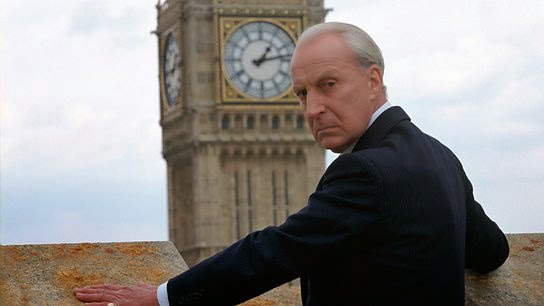
Intimidation is the key ability to know what threats will work and what will sting the most. It’s an ability to read the social standing of someone, and likely what they hold near and dear. Threats don’t have to be physical. They can target a NPC’s character and their standing with the law, or maybe a threat to dishonor them in society or to family (think Francis Urquhart/Underwood from House of Cards).
Someone with a high skill in intimidation can also likely read when a threat is serious or not. It’s staring right through a facade of a violent display and recognizing it for being just chest thumping and bluster. So PCs with this skill could read certain threats and certain social situations much like insight would.
Unlike diplomacy, that seeks a common ground and tries to build cooperation through good will, Intimidation is all about manipulating people through threats (real or perceived). Not all of these threats have to be physical. When you look at intimidation as a means of seeing weakness in someone, and being able to capitalize on that, you open the door for a lot more opportunities and a variety of means to use the skill. Consider letting your PCs explore intimidation being more than just the ability to get answers from someone by knocking out teeth.
The importance of maps
I’ve gone back and forth with maps. On one hand my free time is limited. Rarely I have the time (or skill) to hand draw an elaborate map for my game. While mining online resources is always an option, it does take some time and usually difficult to get a map that is precisely what would fit your game. So at times I’ve slipped into giving a locale or backdrop environment a narrative description. While it does cut down my game prep time, just describing something doesn’t seem to grasp my PC’s interest.
As one deficiency to using a narrative approach, I don’t spout a thesaurus-like vocabulary when I try to evoke a mental picture in everyone’s head. I just can’t seem to get that descriptive and it never seems to match that of a physical representation. Having a physical document, where everyone eagerly props their elbows up on the table to gaze over a printed page, just seems to capture their imagination more.

This works for me too, I just seem to sprout more ideas when I sketch out something. It even works just looking at maps. The Nentir Vale seems more alive when you have a map to gaze at. Even a sparse one like over at D&D Doodle gets your story gears churning. The paved road through the woods depicted there just oozes theme. Could there be bandits? And what of the Farmer’s stead nearby? Does he offer a reprieve from the elements? Or are travelers forced to camp near the waystone before the long trek through the forest? And what of the barren patch of hills to the north?
For my recent Savage Worlds weird west campaign I managed to snag a wonderful alternate history map of the US. The various political states got me thinking about different movers and shakers within this fictional Americas. How did Texas become an independent republic? How friendly would the Union be towards the British Possessions in what would be Canada today? Would the former colonies be close or would they have better relations with the relatively independent Dominion of Canada? All of the partitioned country boundaries of these Americas got me thinking of potential allies and villains for my PCs.
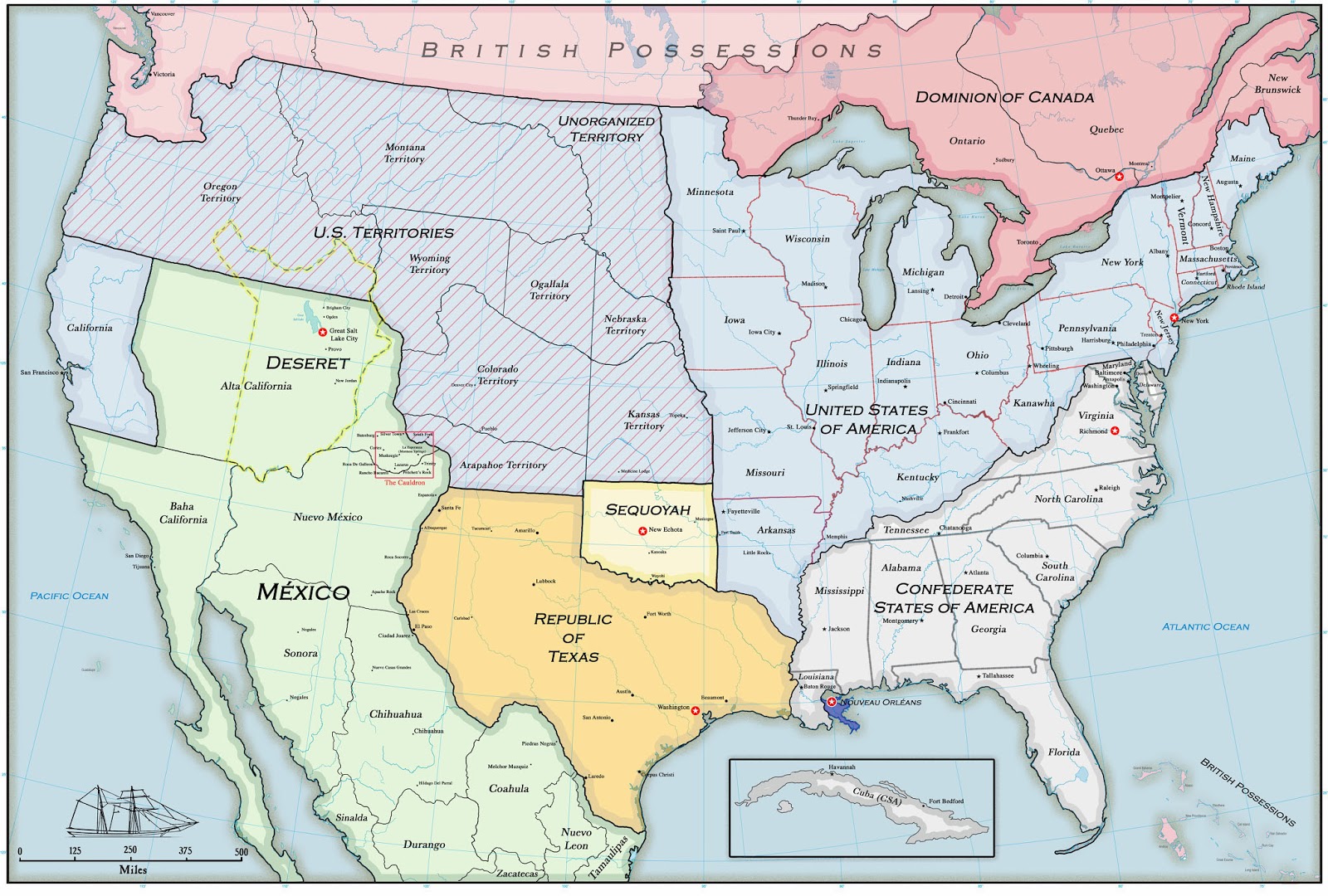
Maps do that. They spark the imagination of players and can certainly get your creative juices going as a DM. There’s a certain concrete feeling of having a physical document in your hand that cordons off potential wild thoughts into tactile plans for stories.
So when considering thinking up your next grand adventure or new campaign. Spend some time sketching or searching for a suitable map. You’d be surprised how many ideas you can get from an image of transecting lines and the stories that might spring from them.
Freesound.org – sounds for your game
A while back I linked a gaming site that had various MMO soundtracks you could download. They had a pretty nice selection and found a few tracks that would work well for some background music to my sessions. I used to shy away from having music for my games. However I found with a decent mix you could get something playing in the background on a loop adding a little flavor to the game, and still not make it a distraction to what was happening around the table.
A few months ago I ran a Savage Worlds game for a local con. Being a demo game with new people, I really wanted to add something to the session to make it stand out. Normally I’m not one for sound effects. However for a few key points in the game, I wanted to add something to make it more of an engaging experience. As it was a horror sci-fi game, I also wanted some type of ambient noise to get everyone in the mood. Having a MP3 player and a miniature speaker, I could easily get something portable up and be able to play some tracks without it being too fiddly and taking up a bunch of space on the table.
So I needed to try and pick up some sounds. I stumbled across Freesound.org and fell into the rabbit hole of creative commons sound files. A bit of digging and I was able to find that perfect space ship alarm. There were tons of industrial and factory sounds. You can really find some wonderful ambient stuff. As for my sci-fi horror game, I settled on a few and also threw in a particularly longer ambient music track that was perfect for setting the mood.
The tracks are free, but many require attribution if being used in other projects. Consider throwing a bit of money to the site also as a donation. There are some nice tracks folks have made available. As for me, I am certainly going to be mining this for certain games. I simply cannot see running a horror game taking place on a dark and stormy night without using this site for some needed atmosphere.

“Bring the salt” – Superstitions in your game
My wife is Korean. Last year there was a death in the family and I was unable to travel to another city for the funeral. Late at night my wife returned and from the parking lot downstairs she called me, “Come downstairs and bring the salt.” No clue why she wanted it but I comply with the wishes of my CO. As I come to her car she steps out and grabs a palmful of salt tossing it over herself and then tossed some over the top of her car. Walking up to our apartment she called back over her shoulder, “To ward off evil spirits.”
Four is a big no no over here. Four is a number aligned with the same word for death and loss so it’s avoided. Giving cash gifts (a common practice) you never give away increments of 4. 30,000 and 50,000 won is okay, but 40,000 is an insult. It’s so pervasive you can’t even find an option to take out 40,000 or 400,000 from ATM machines.
Now as an American I sometimes roll my eyes at stuff like this, but I realize Americans do similar things too. Next time you are in an elevator for a highrise office building, see if you can find a button for floor 13. Once when it was pouring here in Korea I walked in with a dripping wet umbrella. My coworker took it from my hands and opened it up out in the hallway. For a brief instant I thought about bad luck, then I realized how clever it was to allow the umbrella to dry quickly exposing more surface area (rather than being bunched up when it is closed). Cultures have superstitions, and it’s amazing how pervasive they are.
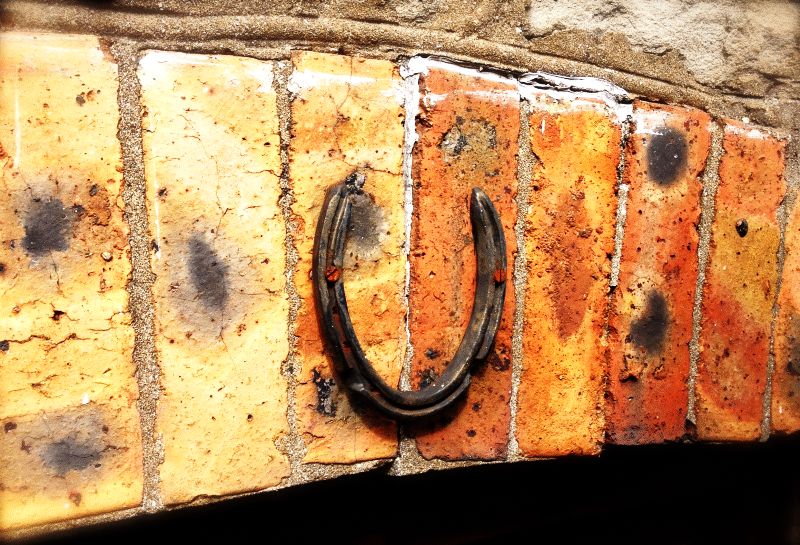
For RPGs, superstitions are a great way to add some local color to a city or people. Further it’s something that can go beyond religious beliefs, being part of the culture for a group. Maybe every doorway holds a simple wind chime to ward off spirits. Maybe for every cup of ale one drinks in the local tavern, you dip in your thumb and press it on the table while you take the first draught. These small details can bring a lot of life to the fantasy world you create and even better, allow for some local flavor from town to town rather than it being another nondescript village.
Superstitions are also ripe for adventure fodder. In a world of fantastic creatures maybe there is a hint of truth to every dark superstition. It’s quite possible that a village hovel that doesn’t mark its doorway with a sigil might have some foul creature come at nightfall. Maybe players failing to follow a superstitious ritual are shunned, or given dire warnings (with ghostly consequences if they don’t follow a local custom). Not all superstitions have to be in place to ward off evil but could be done to avoid mischievous spirits.
Special events can also provide a backdrop for adventures. Festivals and a customary dinner revolving around a ritual can work too. While the players might be included as friendly participants, maybe they are considered outsiders and not welcome as part of the festivities. Maybe petty jealousies among villagers could lead to one fouling an offering or superstitious ward of a neighbor, bringing about some unforeseen horrible fate. Consider our Halloween and the Jack-O’-Lantern. What if a rival decided to smash his neighbor’s pumpkin in spite to bestow a bit of bad luck? Instead of some slight misfortune, the neighbor’s child is spirited away to the Fey. This could be a great setup for a one-shot adventure.
So the next time you describe a small village, consider looking at superstitions. They can offer an easy means to add some interesting detail to the locale and people, breathing a small amount of life into your world. They might even be a great source for a session’s adventure.
Abilities vs skills
I occasionally get this being thrown around in different gaming conversations with how folks lament that skills are just awful in D&D. That it’s so much better just sticking with ability scores. That skills ‘limit’ roleplaying and finding solutions. I consider it poppycock and have been a champion for skills in D&D.
Skills and life experience just make sense, they help add another realistic layer to resolving tasks. Take a theoretical physicist. I’d garner that would translate to an above average INT score in D&D terms. Then take a normal Joe that graduated from high school (regular INT score) that works construction doing welding. Now give them a task of cutting through a locked metal door. Both could very well get the job done eventually.
Now throw them into a sinking ship and give them that same task of cutting through a locked metal door (much like what would model a typical RPG scenario). I think that regular Joe would get through the door in record time, while the physicist would be sleeping with the fishes. It’s not just raw abilities, we also make the use of skills and life experience all the time and even more so in pressure situations.
What also blows my mind is that 4E (and 3E before it) already does this! Skills are based on ability scores. So right off the bat that high charisma PC would likely have a silver tongue, and their diplomacy is above some regular person. It’s not a complete dissociation of ability scores and skills, but rather skill training that compliments natural ability.
I love this idea. It allows for greater flexibility with characters. You are not just a pile of raw ability stats, you can branch out and be good at other things. You can reach beyond just relying on how strong or smart your PC is. If you want to be a learned barbarian with knowledge in the arcana, you can do that and not be saddled if your intelligence score is somewhat average.
Not all skills fit the situation, however I liked the trend that 4E took with making skills be applicable in a broad number of situations. As a DM I think it’s better to remember the importance of pairing up a skill depending on the ability type it’s based on.
As an example in a Gamma World game I had a player trying to focus one of his ranged mutant powers in gravity to pop open an exploding barrel of goop. It was a tricky shot, something as a gut check I would say be based on dexterity, so I called out for an acrobatics check. I got this blank look for a moment. It didn’t register that acrobatics was a skill based on DEX. A dexterity check alone could have worked, but if a player had additional acrobatics skill they could get a bonus. If anything, it was a potential boon to the character depending on where their skill training lay.
I never saw this as a problem in the game. If anything it would encourage players to try different things and round out their character more than dumping everything into a skill or two. The broader the applications a skill could have, the more adept they would be at handling different situations. If anything, they were more confident of trying things rather than sitting back and letting the high charisma player do all the talking.
I’ll admit skills are not perfect for all systems. Savage Worlds has a big divergence between skills and traits. While it’s easier to pick up skills if you have a high strength, you actually need training in fighting to be good at it. However this isn’t seen in D&D.
In 4E particularly, the constant level bonus is sort of silly. Especially as the DCs are continually shifted up. I never quite liked that and felt it better to have just stuck with the idea of paragon and epic penalties that were in the DMG. If I run 4E games in the future, likely I’ll just have a bonus every 4 levels and keep all DC’s at level 1 (with appropriate tier penalties).
DnDnext has some nifty ideas. Most task resolutions revolve around ability scores, but there’s a bonus if trying to do certain tasks based on a skill mastery. It’s pretty close to what is in 4E right now. Still I wish skills were more prominent in DnDnext, but I guess that label of skills chafes at people.
So I encourage folks to not get mired down with terminology. Instead look at the mechanics underlying checks. It’s all based on ability scores you just have the added bonus of being able to train in specific skill sets. Allow that in your game. It’ll give the players freedom to work out a PC that is more unique than a set of six stats.
Awful controllers? It’s the DM’s fault.
It seemed that controllers always had a hard time finding a place around the 4E table for most folks. As an archetype, it was a bit at odds with the other combat roles. Defenders had tools to soak up damage. Leaders were able to crank out the buffs and heals. Strikers poured out the damage. All three of these roles worked in just about any combat encounter.
The controller required other factors to shine, unfortunately meaning certain environmental layouts and monsters were needed to show their effectiveness. Sure they could get a few heavy hitting attacks, but smaller bursts of AoE damage were more common. Even more so, with slows and obfuscating/hindering terrain effects, they needed the space and the right positioning of creatures to really strut their stuff.
I expect that was part of the reason wizards always seemed to under-perform. It’s just that other class types could do things in combat that would work in just about any type of fight. Meanwhile, the wizard was more situational. Sadly, that meant they were really dependent on the DM to provide opportunities to allow them a chance to fully express their abilities and powers. So what are a few things a DM could provide in a fight for a wizard in the party?
Lots of minions – A core aspect of many controller powers are area of effect attacks that do a small pip of damage. Having plenty of targets and more importantly, some clustered up a little, is a decent boon to your party controller. While I don’t use lots of minions in every fight, sometimes it’s good to really fill out the ranks and give that controller plenty of targets to pop.
I try to play the opposition smart, but having those minion types more keen on keeping ranks than spreading out is something I also employ once in awhile. Usually I’ll give that third minion a chance to stick with another creature when I move them around by rolling a d6, just a simple 2 in 6 chance to have a few cluster up. So a few encounters with lots of minions (and the occasional gang of baddies clumping up) is a decent way to give a nod to the party’s controller.
Foes coming in different directions – Having simple battle lines where players can close ranks can make for some solid tactics. But continually allowing this can quickly mean the players can easily manage the engagement and the use of a controller diminishes. When you’ve got multiple monsters piling in from different directions, it’s a great opportunity for that controller type to hinder movement of some targets, giving the other party members time to engage one side first.
Creatures needing to close in – I usually like to mix in ranged attackers in most of my combats. I like to ramp up the threat so that folks not in hand-to-hand still need to worry some. However I lean towards making the melee monsters the more resilient types. And when rolling out creatures in waves, I make sure it’s those melee monsters needing a turn or so to move into the fight. It’s a means to allow the controller to do their stuff and hinder movement of creatures charging in. By tying up one or two targets the group can focus on other monsters first. The group plays smart and everyone has a chance to do something cool.
Traps and hazards that affect both foes and friends – Layering on a wall effect, or some area power hindering movement can add to it’s effectiveness if plopped down next to a few squares of hazardous terrain. Effectively you are adding another 2-3 squares of area under a wizard’s control effects. Give them a chance to do so. A small burst area with flanked by a spiked pit now provides a larger area that’s been locked down.
Sometimes it might lead to monsters preferring to chance a hazard over a spell effect. Does the goblin jump off an elevated platform risking a serious injury? Or do they sit by and let a flaming sphere roll over them? Likely they’ll take the 20’ jump and take their chances. Either way it’s a win/win for the controller.
Take a peek at the PC’s character sheet – Give a look over their powers. Think of some environment that would show off that power. Knowing the abilities of your players can allow you to occasionally craft some fights that allow these powers to be used effectively.
Not every fight has to utilize there tips, but I’d seriously consider giving at least one encounter in a typical delve a few of these characteristics if you’ve got a controller-type in your group. Controllers really need a few wrinkles in your typical encounter makeup to shine. So once in awhile, try to oblige and allow them to enjoy that choice they made playing the wizard.
Improvising 4E encounters
At first I was a bit hesitant about creating encounters on the fly for 4E. I slipped into this mindset about planning everything out. While I still feel combats in 4E worked much better as set pieces, at times PCs might go off into another completely different direction. When they did that, I felt combat likely shouldn’t be an option as I just wasn’t comfortable enough creating something up on a whim. I wasn’t sure if it would be challenging enough (or too difficult).
What I failed to notice was that the monster math in 4E was very open to DM. It just took some effort to sit down and work it out per level. It was deceptively hindering at first but when you really looked at it, you saw how simple and elegant it was.
Then there was the Sly Flourish DM sheet, where the guy did what we all should have done at the beginning, just create a spreadsheet that does the math and print it out. Granted this was using adjusted HP and damage with the ‘updated’ monster stats, but it laid out how simple creating monsters were.
The DMG did have a similar table but required a little calculation. Still if the effort was made, you could instantly create a challenge appropriate fight for PCs. All that was needed were a few keywords for damage types and you had the core of an interesting monster.
I really think one of the biggest flaws in presenting 4E was not including a fully sketched out table like this. Also not really providing more monster themes was another failed opportunity. Maybe they wanted to hide how easy this all was. That in a flash, you could make up custom monsters with damage, HP, attack bonuses, and defenses that would be level appropriate.
Honestly, I’ve found the openness of the entire nuts and bolts of the game refreshing. You could pull things apart, cram things together, and 9 times out of 10 it would work fine. The elegance in being able to quickly create encounters just worked so well. It’s something few folks are willing to admit, that 4E gave the DM a lot of tools and freedom to make really cool stuff. I don’t think I ever really bothered making up custom monsters with older editions like I did with 4E. Best of all was that it worked very well.
Sadly I don’t think this was ever really explored more, and I wish more emphasis was placed on the DM taking stuff like this and running with it. While it was great having pre-made monsters and traps the idea you could whip up your own in a snap should have been promoted more. It’s one of the elements of 4E that made it my favorite edition.
 Geek Ken