Category: DM Tips
DM Tip: Insight is not a lie detector.
Sometimes you might have this happen. Some NPC spills his guts dropping off some key information to the party. You get one guy that grabs a D20 and says, ‘I’m gonna see if he’s lying with Insight.’ Nope. Hold on. Back up there, buddy.
See I don’t buy insight acting like a default lie detector, where players wave their hand an automatically read untruthful thoughts. Insight is also about reading social situations. Great insight allows a person to recognize the two people chatting civilly over in the corner really cannot stand each other. Insight allows a player to hear the slight strain in an NPC’s voice saying things are fine, and recognize that subtle shift of their eyes to some burly thugs nearby.
Want to go all out with insight being a BS detector like Christopher Walken in True Romance? I’ll be rolling a bluff check against it. As a DM you should always be rolling bluff checks to counter the ‘insight = truth meter’ that players pull out. If they blow it, I say they believe them. If they beat out the bluff check, I rarely say, ‘You think he is telling the truth.’ I always try to obfuscate the result with, ‘You think he’s holding something back’, or ‘You see him lick his lips and give a smirk.’ I rarely ever give a black and white answer to passed insight checks if they are just seeking a truthful answer.
To me, insight is more about reading the subtle body language of people. I like to frequently give clues to the NPC’s mindset more than if they are simply telling the truth. Does the person have a pleading look in their eye when they beg the group for help? Do the player’s see the Duke slightly roll his eyes when he thanks them for dispatching the orc marauders? Does the group see the inn keeper tense up when they approach?
I use passive insight checks a lot to allow a group to read an NPC’s motivation. Sometimes it is a much more effective hook having a NPC say one thing, but his body posture or mannerisms give a completely different impression. I find it frequently sparks that investigative process where the players slowly poke around an NPC through dialog. It is much more interactive than just having a PC roll a D20 and see if the NPC is BSing.
I also allow insight to get clues on other skill checks. Sure some PC might ace the diplomacy check, but he just successfully made the flunky patrol guard allow them to pass. It’s the seasoned sergeant of the guard that really decides who gets into the king’s court. Insight is the key skill to walk into the room and assess who are the likely people with some authority, seem knowledgeable, or are well respected by others.
When do I have PCs use insight for a yes/no answer? Illusions. Yup, most folks forget insight is the key skill in disbelieving illusions. Since the players have a tool at their disposal to counter illusions, don’t be afraid to pull them out. In a magical fantasy setting, there should be plenty of opportunities to pull out the illusion card. It doesn’t necessarily have to be diabolical either. Maybe a merchant uses a simple illusion to make his wares look plentiful. How about an enchantment to give an elder noblewoman a slightly youthful appearance (think of it as gnome magic botox)?
So the next time a player quickly rolls a D20 for an insight check, don’t just respond with a yes/no to queries for the truth. Tell the player he thinks an NPC is holding something back. State the NPC appears to be sweating profusely as he stumbles over his words. Get away from treating insight as just a lie detector.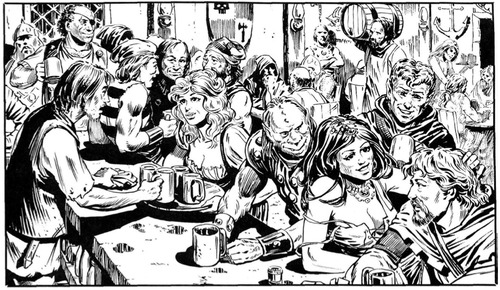
Skill challenge scenarios: Poisoned! (part two)
In the last post I described a skill challenge where the group was poisoned in an inn. They had to work quickly to find an antidote not only for themselves, but also for the other patrons.
Round 1: The paladin thought it best to use his skills in healing to try and determine what type of poison would have this effect. As he helped the sick patrons, he also carefully tried to evaluate each person and find the likely toxin. The rogue in the group tried to determine if she could find any trace of the poison near the barrel using perception. The cleric in the group also decided to help the sick utilizing his healing skill. Everyone rolled and all earned successes. Both the cleric and paladin had managed to deduce a common group of poisons that would inflict these symptoms. The rogue managed to spot a few small dark smears on the barrel’s side. Carefully, she gathered up a sample of the thick viscous resin.
Tally after round 1: 3 successes, 0 failures
Round 2: Armed with the knowledge of the type of poison (and a sample), they sought off to try and find an antidote. The rogue quickly set about asking key people she felt would know one trained in the apothecary arts. Earlier in the day, she had heard some commoners speaking of the skills of one particular apothecary, with talents exceeding even the priests at the local temple (successful roll). Several minutes later, with a few quick turns through the alleys and some banging on doors, they managed to get to the right location. Both the paladin and cleric had offered their skills in healing to aid the elderly apothecary, make easier having a sample of the dreadful toxin (one skill check made at a +2). With their deft hands and combined abilities, by daylight they were able to concoct enough antidote to help all that were afflicted by the poison (both had successful rolls).
Tally after round 2: 6 successes, 0 failures. Skill challenge successful for a complete victory.
I liked the quick thinking of the party’s rogue in trying to get a sample of the poison. I decided there to allow a bonus to a future healing check made by the others, just as if she had sucessfuly aided another. I also held my breath a bit in the second round. If one player had decided to simply aid in a healing check, the group would have secured a partial victory (and a potential hollow one at that). Fortunately, they decided to press through and each make a check.
Skill challenge scenarios: Poisoned! (part one)
- Complete Success (6 successes) – The players manage to find an antidote for the poison. They are able to revive the patrons that were also injured. As a plot point, they also discover that the poison was very unique, concocted from a root extract not found in this region.
- Partial Success (4-5 successes) – The players manage to find an antidote for the poison. Yet, the process is slow and tedious. Several patrons have succumbed to the poison and died. This brings some negative light to the adventurers presence in town.
- Failure (3 failures before either success condition is reached) – Each player is inflicted with the filth fever disease (MM pg 180). Many of the patrons have died. The inn has lost popularity, and the inn keeper will likely have to close down. Most of the people in town will react very coldly to the group, seeing them as the cause to much of the ordeal. The local noble might even pressure city guards to ‘assist’ the characters in moving on to the next village.
In the next post, we’ll see how this played out (DUN DUN DUN….)
Skill challenge ‘rules’ are frameworks.
 There was a general theme I had gotten from the DMG2, don’t take the rules in D&D as gospel. If something doesn’t work in your game, tweak it and have fun. I especially got this impression from the skill challenge section. WotC changed the success/failure ratio (something I think needed to be done to make it a challenge), but made it clear that DMs should feel free to modify skill challenges to make them fun and engaging. At the heart of it, I think WotC finally wanted to get some kind of structure and reward to all those roleplaying and skill aspects of the game, so players didn’t feel like the only way to get XP was from killing monsters.
The recent podcast posted on the D&D experience seminar I think has cemented this idea. Save my game had a seminar that was a great listen. It covered a fair bit on skill challenges. If you are still finding skill challenges a little clunky in your game, or just unsure how to make them more engaging, I highly recommend giving this a listen. Even if you think you’ve gotten a good command of running them, I think it has some helpful tips.
One thing I have had little experience with is running an extended skill challenge. Most of my challenges have been short ones, as I couldn’t quite wrap my head around having one that would go through several rounds of checks. After listening to a few suggestions, I think I’ve definitely gotten some good ideas on how to approach running one. I’m eager to try one for my game and have a good series of scenarios for such a challenge.
They also dole out some good advice on encounter makeup and addressing some tips on handling a game on a time schedule (like for conventions and LFR events). I highly recommend giving this a listen. Some great stuff in this podcast.
DM Tip: Reduce lighting in encounters
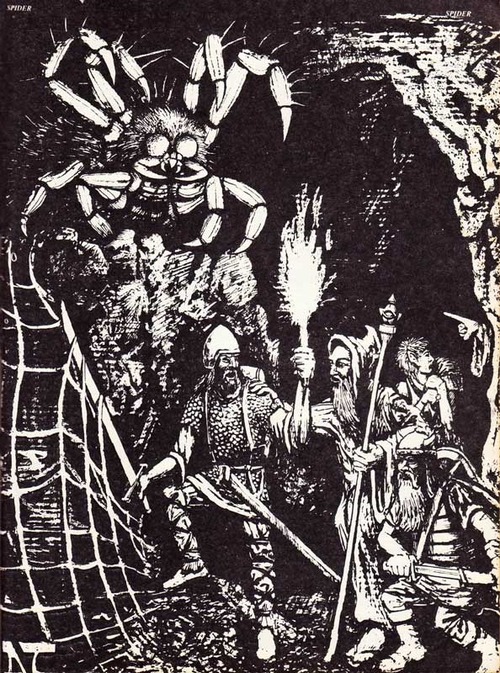 The next time you are trying to add some flavor to an encounter, consider toying with the area lighting. Certain PCs may have difficulty discerning targets off in the distance under dim light conditions (PHB 262), granting those monsters a slight advantage (-2 penalty for attack rolls). Having the complete absence of light can really make an encounter difficult as the penalty for total concealment bumps up to -5 (PHB 281). Keep in mind though that area of effect and close attacks don’t grant a penalty under these conditions.
Counter this with monsters that have darkvision. There are a surprising number of those that do, even at the heroic tier such as undead-types. If you throw in some manner of an environmental hazard that simply reduces (or removes) the player’s light source against some creatures with darkvision, you suddenly have a very challenging encounter.
Having a fight in an open underground chasm, with a constant wind reducing open torches to dim light can make things interesting. Consider having magical effects also. A zone-like effect that nullifies light to utter blackness might make a fight against undead a memorable one.
I’d use something like this sparingly, as it might make certain players upset about being unfairly put at a disadvantage. At the same time however, it might make a few players shine by employing non-combat oriented skills and abilities (say the wizard casting a simple light cantrip).
Splitting treasure parcel 8 and rewarding parcel 10
I could talk a lot about the treasure parcel system for 4E (and likely will do just that in later posts). For the most part, I like the idea of the parcel system. I like that DMs are given a general yardstick every level on how much treasure a party should get.
Somethings fall a little flat. I really miss having random treasure tables. There is a random treasure generator for 4ED, I’ve used in the past that is pretty nifty. It’s too bad that WotC has not provided something similar with DDI, I certainly hope so.
Another problem I have is that the treasure parcel system is a little too structured at times. You’ve got 10 little piles of loot to spread out over a series of adventures. Recommendations are given to combine a few, and leave a few encounters with nothing at all. Not bad suggestions, but I’d like the flexibility of handing out some treasure when I want too, without worrying about dipping too far into the remaining parcels. All the while, I don’t want to be throwing too much coin my player’s way (or short-changing them). So there are some quick and dirty rules I’ve used with treasure parcels.
Rewarding parcel 10 – I see parcel 10 as optional. I like to use that parcel as a guideline for any monetary quest rewards. Depending on the adventure, if I think my group need a little more economic incentive for tackling a quest, I throw in some gold pieces equivalent to parcel 10.
Usually, I drop this parcel from encounters if the group is handling an adventure that would have this as a reward. Typically, I’m giving a little extra coin throughout a series of adventures on route to that next level. As long as each ‘reward’ is up to the gold value of parcel 10, I don’t worry about handing a few extra out. WotC recommends freely using parcels as quest rewards, but I typically like having the big stuff for the players to find directly.
Splitting up parcel 8 – I also like to split parcel 8 up three ways as additional treasure parcels (8A, 8B, and 8C). I use these parcels for small booty rewards. If I ever run a small random encounter where I think a little coin would be appropriate, I use one of these parcels. Say the group runs across some gnoll slavers. I would expect that they would carry some treasure, but likely not be hauling around some fantastic magical weapon. In that case, I’d add some coin from one of my newly split parcel 8s.
As things progress towards the end of the level, if I’m a little short on opportunities to hand out the remaining parcels, I tack on the remaining hordes from parcel 8. I really like doing this as I can give out a bit gold coin if I want to, and still keep within the guidelines of the parcel system.
So treasure parcels. Love em? Hate em? What tweaking have you done in using them?
DM Tip: Taking 10 and passive skill checks
Don’t limit passive skill checks to just perception and insight, remember that passive skill checks can also apply to other skills (PHB pg 179). I always get a list of passive skill check values for Arcana, Dungeoneering, History, Nature, and Religion from my players. That is a long list, but having the passive skill check values for all of those skills helps in tons with running my game.
Knowing what my characters can pick up subtlety allows me to quickly dispense out information and clues. Having my players roll for each check can slow down the flow. Plus it telegraphs information and hints through metagaming.
As an example, players want to use religion to determine information about an unremarkable artifact. If they blow a roll, they know there might be some importance, but they just messed up on the attempt. If they roll exceedingly high, and I comment there is nothing noteworthy about the artifact, players know that my statement is true (and not that their skill is so low, they have no idea of its importance).
Passive checks bypass that. Also, I can cue players that something jogs their memory and they know fact X due to a passive check. Typically they will want to make an active check then and see if they can gain more information. To me that is a great way to utilize knowledge checks. If they are trained in the skill, they will pick up on something leading to them try and get more information with an active check. Even if they fail, their trained ability helped them at least gleam some info from the current situation.
Don’t forget the listed DC values for knowledge checks were changed in an errata. Common knowledge is now a DC 10 (down from 15), with paragon tier knowledge at a +5, and epic tier knowledge a +10. Being trained in a skill, with some moderate bonuses due to ability scores (don’t forget the 1/2 level bonus), you now have characters that can pick up on a lot of subtle clues through passive skill checks.
Quickly assessing monsters they encounter is also another way to use passive skill checks. Having the player roll becomes a crap shoot typically, where having them use passive checks can guarantee they have some moderate success. A high ability score, combined with trained knowledge and a few levels, means most players can pass a DC 20 check discerning a lot of knowledge about creatures in a fight.
So be sure to whip up a list of knowledge-based skills from your players. Use passive checks based on those skills more. You can speed up your game, and reward players for dipping into various skills. Anybody else doing something similar?
DM Tip: Creating spell effects for magical items.
I always loved wands in the previous editions. They are toned down a lot in 4E, but still pretty useful. In the PHB, rules are given to allow players can make their own wands, but I’m always hesitant approving that (pg. 242). However, I do think the suggestion of the DM designing their own wands great, especially as treasure in 4E is much more custom made for the group.
The rules are a good base, but what about the wizard that opted for another implement to specialize in? If they didn’t take wands, they are sort of missing out on all the versatility wands can give with an extra daily encounter or utility spell. A quick work around is to simply replace the wand with another implement keyword, and just run with it. So you can easily replace a lvl 8 power wand with the same properties, but make it a rod, staff, orb, or even a tome. They all grant the same +2 enhancement, and the player can finally get a nifty item that fits their implement mastery.
Don’t stop at arcane implements though. Take any basic magical item and use the rules for powered wands to grant it a spell effect. Increase the level of the listed item by 2 (notice a basic +1 wand is lvl 1, a +1 powered wand is lvl 3). To figure out the gold cost, use the base cost listed and multiply it by 1.88888, rounding up to the nearest 10, 100, or 1,000 (or 10,000 if needed). So a +3 magic robe could be imbued with a daily power to cast dimension door, and would now cost 17,000 gp.
Simple stuff, and now you can create all sorts of nifty magical gear without making completely game-breaking items.
 Geek Ken