Category: Firestorm Armada
Firestorm Armada QRS
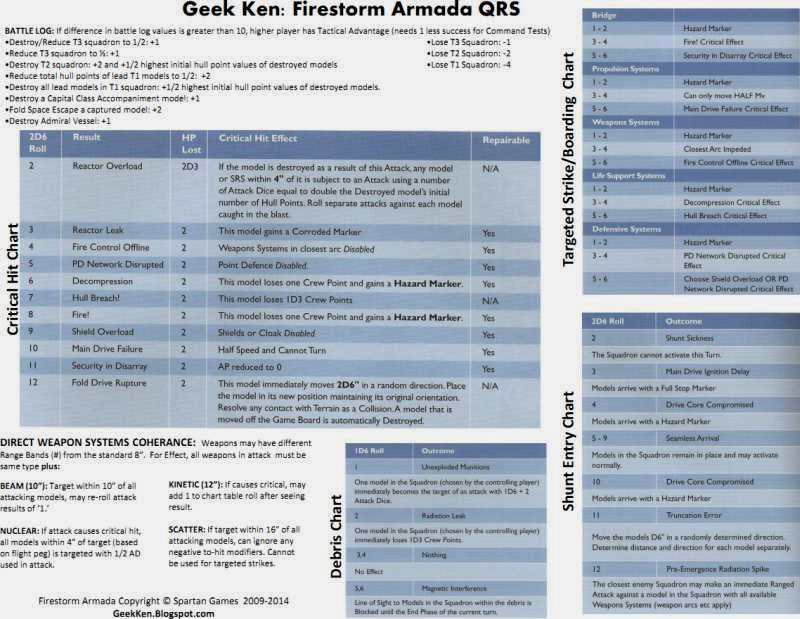
One nice thing about Firestorm Armada when it first released was the great quick reference sheets that were included in the rules. Sadly, when the hardback book rolled out there was no updated QRS. Now the second edition is out and no word if another reference sheet will be available.
I’m not too keen with the charts in the back of the current book. There are a lot of small details throughout the rules and it’d be great to have a summary of the various table charts. It just seems the ones in the rules are sort of sparse. I really enjoy having a good summary section when I get one (cough…Bolt Action…cough) and it makes me wonder why more rules don’t have them in their books.
I decided to whip up one myself. It’s not going to win any awards for layout but it’s functional and I tried to keep it on a single front and back sheet. Hopefully I made no glaring mistakes with the rules.
The new book presents the rules pretty well but I’ve always liked having a reference sheet to jog my memory. Plus having some critical charts handy (especially the battle log points/penalties table) is ideal when I play. Hope people get some use out of the sheet here.
Free Firestorm Armada Battle Log
So I have been absolutely inspired lately to do lots of Firestorm Armada-themed stuff. I’ve been working on fleet lists. Also I’m finally getting the itch to work on my Relthoza fleet (might still hold off though as my German platoon and British Bren carriers are giving me sad faces). Needless to say, the game has been on my mind a lot lately.
2E has introduced the battle log. As you destroy fleets, you earn points and lose points for losses you incur. For the most part it’s a form of tracking victory points. However you can also give up points for other strategic aspects of the game. Spending battle log points can improve the chances of calling in reserves. If the difference in points is over 10, command checks are easier. Overall it allows for more accurate tracking of victory conditions and I dig it.
The bum deal is I’ve got no way too keep track of points other than using pen and paper. I expect Spartan Games will release a super cool battle log tracker sometime. However I prefer to get something I can use now, rather than waiting a month or so. So I present here Geek Ken’s Battle Log Tracker, a simple version you can print, cut out, and get to the table right now. It’s simple, functional, and best of all absolutely free. Hope folks find it useful for your games.

Review: Firestorm Armada 2nd Edition

So the 2nd edition of Firestorm Armada (FA) has finally come my way and I’ve gotten a bit of time to go through the book. I enjoyed the previous edition and want to spend most of this post talking about what changes have come about. My impression of the first edition can be found elsewhere.
Overall it’s the same game with a few tweaks allowing for more tactical choices. A very big change is the introduction of MARs (Model Assigned Rules) to each race in addition to rules for specific ships. Also there are now some unique weapon systems that provide different game effects, again allowing for some variation in how the different races play. So let’s sort of go through some of the changes from the previous hardback edition.
Movement is relatively unchanged. However the drift maneuver is no longer an option. I’m somewhat miffed with this as ships are still required to move at least ½ their speed. This means smaller ships are still required to be moving 5″ or so every turn. While cutting engines is always an option, it’d be nice to have a tactical movement option allowing for some maneuverability but still keep it to 1-3″. I might have to house rule something. Hrmm…
[½ speed: A squadron can reduce their maximum speed to ½, allowing them to move at least ¼ their normal full movement rate (and at most, one half of their current maximum move rate). Doing so they gain a ½ move token. The player can remove this token at the beginning the squadron activation to resume normal speed. If a squadron had a ½ move token at the beginning of its activation, the highest speed the squadron can reach for this turn is its normal movement rate minus its turn rate in inches. This will also affect their ½ speed rating. In practice, players will find that smaller (or more agile) ships will not be hindered by reducing speed, while larger ships will take at least an additional turn to get up to full movement.]
Command distance is a big factor in the game now. While squadrons can break up, the entire squad becomes disorganized meaning they cannot combine or link fire. This also becomes a big factor for wings and fighters (more on that later) and can come into play regarding weapon systems too. So the gist is that keeping ships in command distance from each other is a bit more important than before. On one hand I like the idea of keeping ships as cohesive fighting units, on the other hand the tactical flexibility of peeling off a cruiser or two is no longer an option which is sort of meah.
The mechanics of shooting, LOS, damage, etc. for the most part is the same. There are a couple of big changes however. One is the concept of tactical strikes. On larger ships (those with hull points greater than 2), specific systems can be targeted. So players can try to take out the bridge, wipe out weapon systems, or potentially take security systems offline increasing the likelihood a boarding attempt will work. There is a penalty to hit rolls when attempting this but that option of cutting out key systems is interesting.
Another big change is that target ships have -1 damage and critical ratings from attacks landing in their rear arc. This certainly allows for smaller, more nimble ships to slip into the rear arc of larger capital ships and potentially do some damage. It translates into improved positioning of ships and being mindful that the direction of approach to a target is important (and trying to keep a defensive position so no one slips in behind you).
Lastly a huge change to the rules are the introduction of specific weapon systems. Firstly, the 8″ range bands are no longer uniform. Some weapon systems have range bands that increase to 10″ and 12″. Torpedoes now are based on 12″ range band increments also. This means you now have options for increasing tactical engagements at longer distances and disparity of range bands among systems and races can make for some deft maneuvering at further ranges. Additionally, certain weapon systems have bonus effects if they all fire as a single volley of similar weapon types (termed as coherency). This may mean rerolling any ‘1’ results as with beam weapons, or doing higher ranked critical hits with kinetic weapons.
Adding to this is a slew of MARs options that every race has. Further, capital ships have a number of hardpoints. Each hardpoint allows for buying certain systems or small tweaks to the ship profiles (like increasing its move or shield rating). Aside from hardpoints, almost every ship has the option of altering a few systems or incorporating MARs allowing for a lot of racial and fleet variation. To keep things manageable, every ship in a squadron must have similar technology and MARs so you don’t get this mishmash of different tech types in a single squadron.
Damage no longer takes assault teams into consideration, so crew hits only affect the crew rating. This eases some bookkeeping. Boarding actions are also cleaned up some. Every ship can launch at least one boarding action a game. What’s nice is that this no longer reduces your AP, so you can still defend from boarding actions as normal (you just can’t launch another attack). Most boarding assaults are set to destroy key systems in a ship, but can also be used to capture ships so that they fold space off the table. Lastly, instead of a round of point defense and then running the boarding action, the PD and AP of the target model are combined. The boarder makes their attack with the defender rolling this combined pool to ‘cancel’ hits. It’s a more streamlined than before.
Flights and fighters are lumped into a term called, Short Ranged Ships (SRS). Assault craft, bombers, interceptors, and fighters are still the varying wings that make up SRS. For the most part the composition and idea of them being a single unit is still retained from the hardback rules (using a d6 to represent the wings). SRS are now represented as either a small token or a large token but each represent a maximum of 6 wings. Up to two SRS tokens can be part of a single squadron. Overall the means of attacks and resolving them are unchanged, how they actually operate is very different though.
Rather than a unit individually zipping around, the SRS token must always remain in command distance of its parent carrier. If it starts its turn outside that distance they are immediately recalled back to their carrier. Alternately, you can give an order for the SRS to make an attack run where it will approach a ship and try to get within base contact of the flight stand. This makes fighter wings a bit more like an extension of a weapon system for the carrier. They support the carrier directly instead of running off as their own flight group. Further, once they make an attack run they are immediately placed back on the carrier (allowing for rearming and relaunching during later turns). I’ve yet to try them out but the simplicity of their use and the reduced management of not having to move fighters back to a carrier for rearming is nice. Additionally, flight stands that are run off return to the carrier, which can can later be relaunched giving some real teeth to fighters. As dogfighting is the best way to inflict damage on wings, interceptors certainly have an important role in countering enemy SRS.
Fleets are now partitioned off into patrol (up to 800 points), battle (800-1200), and grand fleet groups (1200-2000). Each fleet is further split into three tier groups, where battleships, carriers and such are tier 1, down to frigates and escorts being tier 3 (with cruisers being tier 2). Each fleet must have a certain number of squadrons from each tier. Additionally, up to 25% of the fleet points can be used for alliance vessels that can fit into the tier requirements. For the most part this allows fleet construction to be an easier process. Rather than working off a set percentage of points for fleet composition, the player now has model limits based on these tiers. One gripe I have is that these actual limits and information on squadron sizes are no where in the book. Instead they are available as separate PDFs.
The star admiral is still part of the game. Instead of granting specific bonuses to a particular ship, they allow for the use of tactical cards and improve the chances of making any command checks (ex. checks if a squadron is disordered). Tactical cards are also another feature of the game. For the most part each fleet has the same cards and may have 1-2 additional racial specific cards. These can be played once during a turn to allow for some special maneuvers and one shot abilities. It’d be nice to talk about them more in detail, but I have no idea what the cards do as there are no details on them other than how they are used (another gripe of mine).
A new mechanism for the game is introduced to allow for more tactical options through a battle log. For the most part, players start with a battle log total of zero (but some scenarios increase this). Battle log totals range from positive and negative integers. As players inflict damage on the opponent fleet, destroying ships, their total increases. As they receive losses, their battle log total decreases. For the most part it works as a victory point tracker with the larger the differences between the totals, the more pronounced the victory.
What is particularly interesting is that battle log points can be spent on certain game mechanisms. They can be used to alter die rolls for reinforcements. They can also be used to return spent tactical cards to your hand. This is a very clever system allowing you to essentially give up victory points to gain a needed edge (or recover from a flubbed reserve roll). As players gain points by defeating enemy ships, it further encourages players to be aggressive and inflict damage onto their opponent’s fleets. This really adds a neat layer of strategy to the game (especially the cycling of tactical cards).
The game has 6 scenarios within the book. They range from simple engagements to trying to capture objectives, or control sectors on the board. As a nice touch the book suggests that battles aren’t necessarily in deep space, but rather within key systems. Hence, the preponderance of terrain and close distances of engagement. You are fighting over key areas of control, rather than large ranges of territory, with the scenarios supporting that concept.

The Good – Firestorm Armada has not changed too much and is still an enjoyable naval-fleet-action-in-space type of game. The presentation of the rules and layout is well done. The additional weapon and MARs systems have given the game much needed flavor between the races. And it all works well without requiring a tremendous amount of bookkeeping and cluttered, simulation-type rules.
The book is very nice and well bound, with a pleasant matte finish on the pages. There is a surprising amount of whitespace on the pages so the text is not cluttered. Sections of the book are divided up with margin tags of a specific rule topic on each page making it well organized and easy to reference a part of the rules if needed (not to mention a simple table of contents and index). The book has lots of great color photographs of models, along with simple color graphics for particular rule situations, and also lots of written examples.
The Bad – There is a decent chunk of information missing from the book. Not having a list of the tactical cards is a hefty ding. Not detailing the major fleets and their composition is especially damning. There are no token sheets like in previous editions, and the lack of a template for SRS tokens are especially maddening. The quick reference is a list of charts and no where close to the usefulness of the previous QRS released with the first edition softback book.
The Verdict – If you are a brand new player, Firestorm Armada is a great game to jump into. The big boxed sets are especially nice as they give the player everything needed to play. It might be well worthwhile waiting to pick up the fleet boxes of races you’d like. It is still an enjoyable game that while not quite embracing aspects of physics with movement, still makes for a fun afternoon of space combat. If maneuvering in cruisers to an optimal range to fire full broadsides of anti-matter cannons is your thing, you will certainly enjoy FA.
If you are a long time player of FA, you will likely find a lot here to like. The game finally has some sprinkles and a bit of a swirl in the vanilla of previous racial fleets. The way fighters work are tightened up and make carriers more offensive-type vessels. I think the tactical cards will add some fun wrinkles in the game. All the while the concept of a battle log and spending victory points to have additional tactical options is a great concept. There is a lot here you will enjoy.
The rulebook seems to be missing chunks however. There are no tactical cards, no tokens, no specific rules on actual fleet composition limits (the rules cover how you build a fleet, but don’t have actual tables for the different races). Not having any idea what an acceptable token to represent SRS is another missing feature.
I entirely expect they will be available as downloadable files or separate products (the fleet composition sheets are already available). However it seems that the focus is for players to go pick up the boxed sets that have all of these items. Separate files and products that can be purchased individually are sort of an afterthought it seems. This gives me a bad taste in my mouth. Yes, all my cool models can still be used to play FA, but despite me picking up this rulebook there are still parts of the game missing. It’s not enough. I need to buy more, and not having the tactical cards is the most aggravating thing (where in the past the STAR cards were very much an optional component).
This gives me some hesitation in recommending the rules. If and when these other parts of the game are separately available, I think you’ll find an enjoyable game here. But it isn’t all within this rulebook, and that makes me less inclined to recommend it to current players of FA. There is a lot here that is amazing and really strengthens the game. But if you are just planning on buying the rulebook, then wait. See what else pops up on the website and then make your decision on converting to second edition.
[EDIT: Months have passed and some of the things I chided Spartan Games about that were missing from FA are available as download files now. SRS tokens are available as a separate product (which I still would have liked as a simple cutout token). However the TAC cards and other tokens can be printed out as color PDF files.
Additionally the V 2.0 rules are absolutely free so you really have no excuse not to take a peek at Firestorm Armada now. Enjoy!]
New fleet documents for Firestorm Armada

As the new version of Firestorm Armada is on the shelves, Spartan Games has put up new fleet files for the major races in the game. From their download section it appears that much of the older files will be slowly getting the 2.0 treatment. So if you are a fan of the game, you might want to keep an eye on the downloads section of their site.
Overall the fleet documents look pretty cool. It seems that games are codified into tiers and points depending on the type of fleet you want to play. For a specific point value game, you have a few choices for each tier. Tier 1 being your command battleship class vessels, tier 2 being the cruisers, and tier 3 being frigates and escorts. The higher point values, the more options you have and the bigger the squadrons. For most of the races there isn’t much difference but some allow for more squadrons of lower tier ships. It’s a bit more regimented than before which I like.
Looking over the ship stats the larger vessels have hard points. You can then pay for specific weapon and defensive systems up to that hard point value. It’s a nice way to tweak your forces and try out different weapon layouts. So not all carriers or battleships are alike.
Model assigned rules (MARs) seems codified now so that nearly every ship save for the smallest frigates have racial special rules. Another layer of variation is that weapon systems appear to have different keywords. There are still primary weapons and torpedoes, but also beam, scatter, kinetic weapons, etc. What is nice is that most frigate ships have the option of also having these special weapon systems. Again, another way to tweak and customize your fleet giving it some flavor.
The profiles for battle stations are also presented. Overall they look like floating masses of guns and hull points. They appear pretty immobile. It might make for some interesting scenarios representing a recon in force or a border skirmish.
I like Firestorm Armada but always felt that the rules didn’t allow for some more variety in the races. It was just little differences, or incorporating more flexibility with weapon arcs (one group had turrets, one had gun racks, etc.). While there were some unique technologies like cloaking, for the most part they were all the same. The optional MARs rules for the different races helped alleviate this but it wasn’t part of the official game. Now they have seemed to have really embraced that concept.
I’ll be blunt, I am a bit miffed that this follows on the heels of a new rule book so soon. Like they wanted to roll out a new book incorporating new ideas, but realized it didn’t go far enough. I understand the position they were in. Either they stick by a rule set that isn’t dynamic enough for the game they wanted, or just go for it and put better rules. For new players, I think this will be a great system. For older players, I can see why some feel a little burned. It’s almost treading on Games Workshop-rollover-of-product territory. But looking at these fleet rules, I am digging the direction they are going with FA. It seems worth getting behind this new book.
Top places for miniature wargame supplies in Seoul
While board games and CCGs have a lot of popularity in Korea, miniature wargames seem quite the niche hobby here. A while back during holiday at home I scooped up some of my 15mm Russians for Flames of War. I figured during the winter months I could enjoy some weekend mornings doing a bit of painting and finally get through that pile of unpainted metal I had stored away. When I really started looking around I found it exceptionally difficult getting the typical supplies I wanted for painting and modeling. So I thought I’d share some of my efforts to any expats.
As a first caveat to this, my Korean is abysmal. I am certain if I had a better command of the language the process would be easier tracking down materials. Korea is very much an online shopping country. There are likely places I’ve missed that have a larger online presence than a walk in store mainly due to my ignorance with the local language.
However miniature wargaming also just doesn’t seem that popular of a pastime. There is an immense pressure on kids to study and private academies are all the rage. Free time is limited for kids and parents want them studying more. So pastimes that leave a smaller footprint around the house are likely more popular. It’s far easier for kids to carry around a CCG or sneak off to a PC bang (internet cafe for gaming) rather than lug around a painting bench and throw down a wargame table. It does seem for the folks that wargame, it’s much more popular for college students than for kids in high school.
Stationery and Art Supply Stores – Odd enough, stationery stores may very well carry some modeling and painting supplies. Give them a look and you might pleasantly be surprised. Foamcore board can typically be found as well as colored felt cloth. I’ve snagged packs for Woodland Scenics flock, plastic sheets from Plastruct, balsa wood, and other modeling material too. So you can pick up a few things to help in construction of terrain for your games from these places.
As painting supplies go, you can find a fair amount of brushes and can even get down to 10O sizes for model painting. I’ve even been able to snag some Apple Barrel craft paints. While I don’t use them for mini painting, they make great paints for terrain. So hobby and craft supplies can be picked up at these stationery stores. It just takes a bit of digging.
Neighbor Hobby – This is a fantastic place if military models are your thing as there is a great selection of kits. Unfortunately for fans of Bolt Action, they carry only Tamiya 1/48 models, but they seem to have a full selection from that line. As 1/72 and 1/76 scale kits go though, they have a great selection of tanks, soldiers, and terrain. They also have several 1/72 scale buildings too.
What does this place for me though is the paint selection. There is a wide selection of paints from Testors, Tamiya, AK Interactive, MIG, as well as my go to for miniature painting, Vallejo. It’s a wonderful selection for both brush and airbrush painters. They also carry a complete selection of Testors and Tamiya sprays. They also have brushes and other modelling supplies. Well worth checking out and they do online orders as well.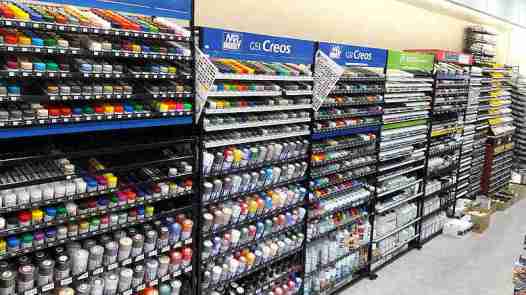
To get there isn’t too difficult. Take subway line 2 to Hongik University and get off exit number 3. You need to cross the street and footpath park, and then take a side street. Once it ends, then go right and you will hit a main street. From there go left and it will be in an office building on your left.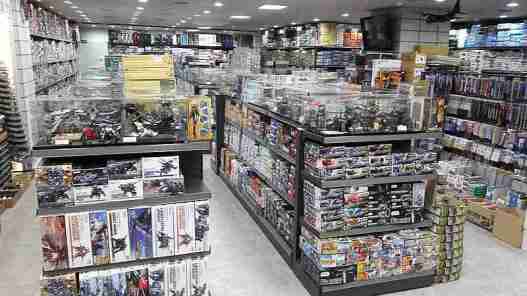
Orc Town – Likely the most popular wargame store in Seoul, Orc Town is one that is Games Workshop-centric. They also dabble in other game systems like Infinity, Flames of War, Bolt Action, Firestorm Armada, and Dust. What is particularly nice about this store is they carry Citadel paints and supplies, especially matte spray and primer (for typical costs). My biggest complaint is that for some products the prices are horrendously expensive and well above retail (seems to include shipping costs). Because of that, I’ve had a hard time justifying purchasing particular model and rulebooks here compared to buying from an international distributor. Still, having a shop where you can walk in and buy some paints is nice. Having one where you can get a bit of table space for gaming is even nicer.
Tamiya Models – On the first floor of the shopping center at the Yongsan train station is an official Tamiya Model store. For a military wargamer this is a fair place to pick up paints and hobby supplies. They have full stocks of enamel and water-based acrylic paint sets. They also have brushes, cement, and other modeling supplies (plastic styrene sheets and other model building material). I find the prices reasonable for Tamiya model kits and for plastic cement and other modeling tools (which can be a bear to find anywhere locally) it’s a great place to shop.
As the gaming figures go, if you are a Bolt Action fan they have a decent selection of 1/48 scale armor and vehicles along with some figure sets. 1/72 scale options are lacking save for planes and 1/35 is the other popular scale for military models. Additionally scenic materials are also lacking. But if you want to track down a particular 1/48 vehicle or historically accurate paints, the Tamiya store is not a bad choice. 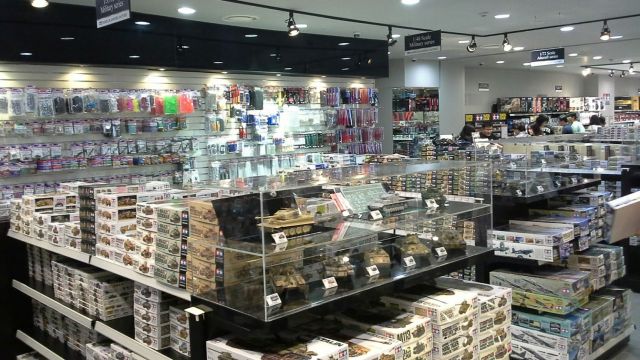
International distributors – Lastly you can always order online and pony up for international shipping. I have had spray paints sent overseas and worked with many stores over the years. It can be done, but expect some costs for shipping. I’ve always gone the route of making a large ($150-250) order to offset the shipping costs. Getting a few paints is exceedingly expensive. It’s best to wrap more goodies into that shipping charge. Because of this, you want to look around for stores that sell other types of games. While you might save a few dollars from one online store selling just paints, using another that lets you also include board games and RPG books into your order is a better choice.
There is a very small wargaming community in Korea but we exist. Hope those into the hobby can find some of this useful for picking up models and supplies for their bench top.
New boxed set for Firestorm Armada

I’m sorta going through a love/hate relationship with Spartan Games. I think they sort of painted themselves in a corner with Firestorm Armada. They cranked out a hardback book to be a ‘definitive’ edition of the rules, then realized the game was not as deep as they wanted. The core mechanics are sound and there was some variation in the ship designs and systems but it just barely scratched the surface. The MARs (Model Assigned Rules) only dabbled a bit with different units and never really expanded beyond a few models. It’s a shame as with all the different races there was certainly room to expand on that concept more. With Dystopian Wars, they really saw how popular MARs was with players and having nation/faction bonuses really made the game more interesting.
A short while back I stumbled across an announcement of a FA 2.0 rulebook which had some details on the new direction of the game. Now being announced is Storm Zone: Battle for Valhalla which is a new boxed set. It looks pretty neat and has rules, tokens, dice, 2 starter fleets, tactic cards, and what looks like cool fighter stands. The price is pretty hefty tagging in about $130 USD, but it looks like you get 2 complete fleets with the set. I really dig the look of the new Terran fleet models and have to say Spartan Games seem to be really improving their sculpts.
One thing that stands out for me are the Tactic Fleet cards. I sort of liked the STAR deck as an addition to the base game. A form of short term bonuses you could employ for your fleet and the more ships you had, the larger your hand (meaning the more options available). It looks like it’ll be tweaked some but I like that FA is dabbling into this somewhat. How core to the play experience is another question, but it may just be an option which would be nice. A little something to add a wrinkle to your typical session.

There is a slight cloud on the horizon with this game. Spartan Games seems to recognize a need to have material that can accommodate older players with the new edition. What worries me is they’ve seemed to have gone a Games Workshop route with a rapid turnover of the rules. I expect the models will be interchangeable, but having fans that have gone through 3 rule books in the space of 4 years seems pretty drastic. I’m certain some will throw in the towel with the game. However another part of me recognizes that they have to bite the bullet as they realized the rules just aren’t as robust as what people want. Core changes to ships and fleets need to be done to allow for some variety in the races, translating to different fleet tactics and a deeper game overall. I’m a little torn with the announcement of these rules. While I have some desire to pick them up, I also realize it’s plunking down another chunk of money while I ignore a growing stack of outdated books I currently own (and thank god I didn’t pick up Marauders of the Rift).
Firestorm Armada 2nd Edition Announced
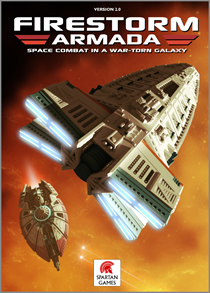
A while back I lamented the release of the rules for Firestorm Armada. I’m a fan of the game and figured with the free rules being released, that was pretty much a death toll for the game. Well it seems like FA is getting a second edition treatment of the rules. And much of it looks pretty good.
I am digging the options for altering ship systems on the fly, granting more power to movement or defensive systems. I am also really excited about the different alien race weapon systems. When Dystopian Wars was released, they really got into the model assigned rules giving units some flavor. FA screamed for this treatment and MAR stuff was released for the game, but not really developed. A racial MAR document was floating around, but never really was folded up officially in the revamp of the rules. Looks like the second edition will address that.
We’ll see how it pans out. On one hand, I’m happy to see the rules getting a revamp. On another, I feel a little burned that the turnover with the rule books were so rapid. Hopefully it won’t sour folks too much on giving FA a try. I really think the rules needed a revamp. The ‘reprint’ of the first edition cleaned up some rules, but didn’t add much to the game. It does look like you will get a much deeper, tactical treatment of space fleet combat. Hopefully Spartan Games can shed it’s image of rapid turn over of rules to give FA some legs.
Firestorm Armada Free Rules
It just seems that Firestorm Armada news around the industry sites have been dropping off. If anything, Dystopian Wars/Legions seems to have captured a lot of folks’ imagination and has new products rolling out pretty regularly. Well it does indeed look like FA is DOA as the rules for the game are available for free online at the company web site.
Unfortunately the pdf does not have rules for the fleets and ships. Fortunately for fans the excellent site, Black Ocean, has got files for all the fleet ships available. Be sure to visit their site and snag them.
I liked FA. While it was more a naval war game with sci-fi trappings rather than a full out space simulation warship game, it captured that feel for me and used pretty simple mechanics. I liked the maneuvering for position and trying to move into ideal firing arcs. My only complaint was that many of the fleets felt a bit too similar, but the MARs rules somewhat addressed that. And for the life of me I never understood why they didn’t adopt a racial fleet system like an earlier version of the MARs rules that were floating around online.
Sad to see the game on the decline and for sure I expect that the line will evaporate in the next few years. It’s odd with the popularity of Battlestar Galactica and Star Trek, that space naval games seem too much a niche genre to get any traction with gamers. Well if you like free stuff (and a fun game to boot), be sure to pick up the FA rules.
Terran battle cruiser and fleet complete
So a long while back I had assembled and primed my terran fleet for Firestorm Armada. It’s been slow going but I got around to completing them and thought I’d post some sequential photos of the battle cruiser as it was painted up.
For my terran fleet, I went with a 2 color scheme over a metallic base coat. I wanted a little contrast with these models compared to my sorylian fleet (which were effectively different shades of green).

I managed to pick up some inks finally and gave the entire model a black ink wash. This really added depth to the metal base coat. It’s been a while since I’ve worked with inks and some of the raised surfaces are a bit too expansive and flat. Took up as much excess as I could muster, but still got some pooling on the flat raised portions of the model.
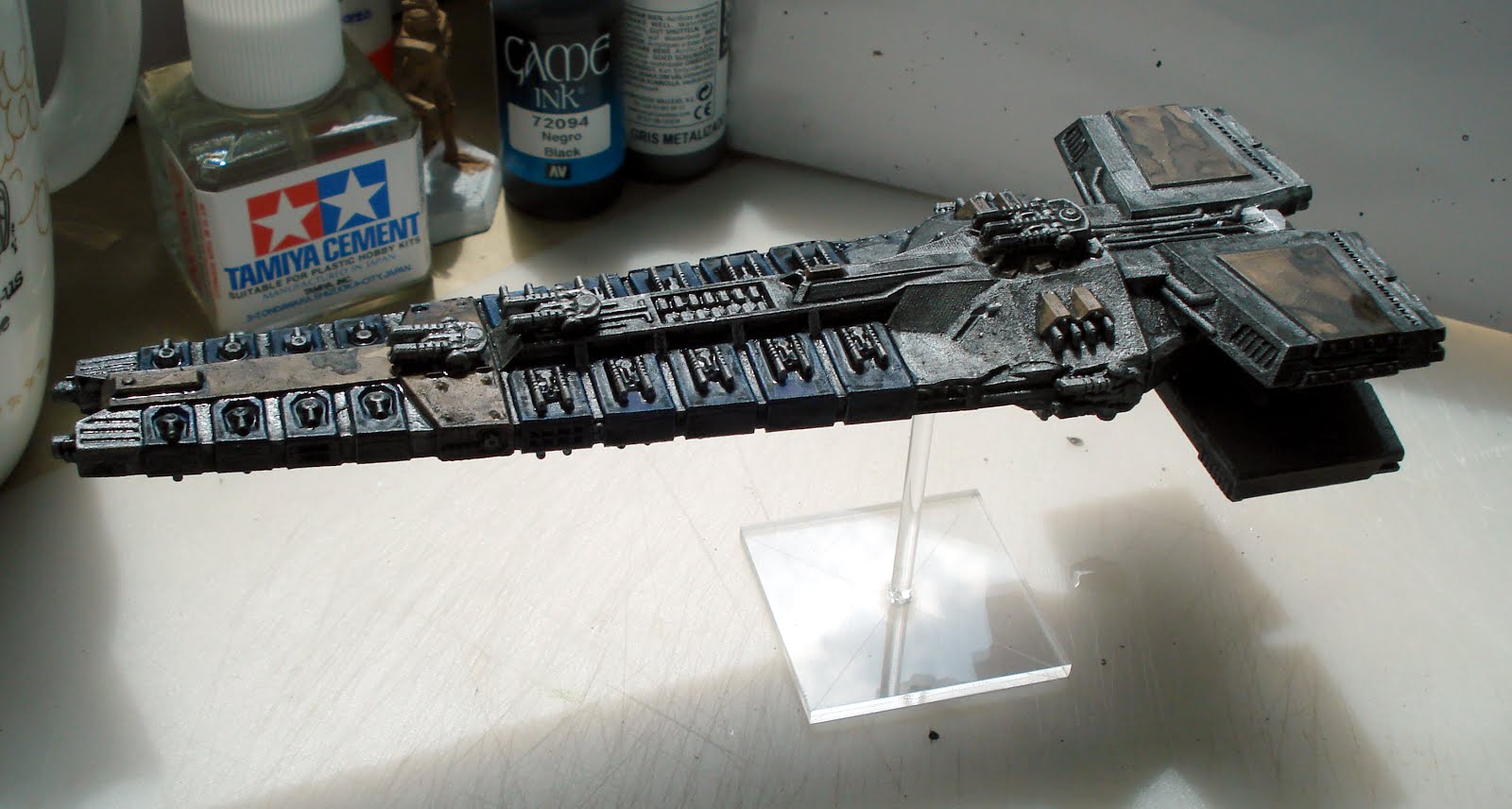
Wasn’t too worried about the ink pooling much as I intended to give the areas a thorough dry brushing. Usually I drybrush the base paint coat, or possibly a shade lighter in tone. This time (as with my cruisers) I opted for much lighter tint. It gave the ship a really weathered look and especially brought out the blue sections.

Here is my assembled fleet. You can notice a big difference in the shading with the three cruisers as I didn’t use inks with them (just a wash of black paint). I think the inks really carry a lot more intense pigment and add a fair amount of depth to the minis.
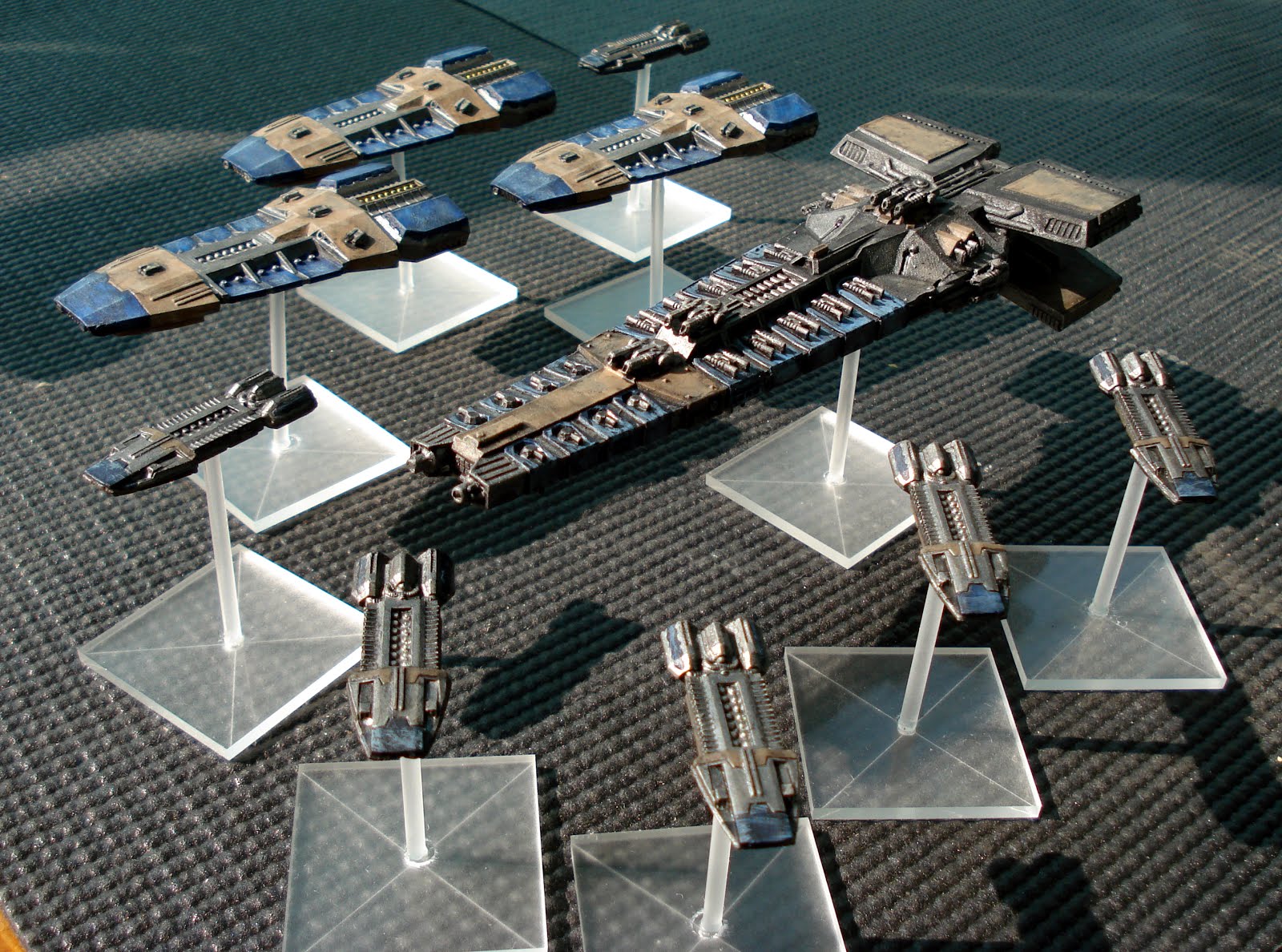
I’ve gotten a bit burned out with ships as I cranked out two complete fleets. Not to mention my Sorylians took forever as I painted the frigates a few different base coats to get the final paint scheme I wanted. The terran fleet has a more ragtag, battle-worn look compared to them. Overall though, I’m happy with how they all turned out. Now I need to get some game reports in sometime!
Review: Firestorm Armada
Firestorm Armada is a space naval combat game from Spartan Games. There is a hardback rulebook that has been recently released. I haven’t gone through it extensively, but for the most part, not much of the game mechanics have changed from the first softback edition.
A snapshot of the background for the game universe is that mankind has discovered FTL drives, explored the stars, established many colonies throughout the galaxy, and in the process have encountered a handful of alien races. On the periphery of human-controlled territory, a faction of mankind has sought for independence. These two political factions of humans have begun a civil war that has expanded into a larger interstellar conflict, with different alien races pledging allegiance to each of the respective factions.
In Firestorm Armada (FA) each player commands a fleet of ships based on a point total, with some hard limits on the % composition for certain ship types. Players roll for a turn initiative, and alternate turns activating one ship squadron at a time. Squadrons can be independent fighter wings, a group of frigates, up to a single battleship. Each activated squadron moves and then resolves their fire, with the opponent doing the same with their forces. I enjoy this as it adds some tactics to deciding which group to activate, much better than a typical I-go-you-go for your entire force seen in other games.
The focal point of ship firing and movement is the base stand. Nearly everything decided from firing arcs to turning is based on the square stand your model is propped on. Targets are deemed in certain arcs based on where the center of the base sits, not on where most of the target model is. I like this as adds some uniformity to the rules, especially when working out what firing arc a target is residing in. It’s a nice simple way to streamline play and quickly resolve any sticky issues.
Ships move at a relatively constant rate, and have a minimum move distance. Turns are hard-capped at 45 degree increments, interspaced with requirements for moving straight ahead. Generally, the smaller the ship, the tighter it can turn, with larger ships being required to lumber forward more before committing to turning. Ships are considered to be able to move through each other and use a concept of ‘vectoring’, where they can shift in small increments to avoid stacking bases on other models.
I’ll admit that it throws any concept of physics out the window for movement. Full Thrust had a much better system where ships could constantly accelerate, but had a more difficult time turning a higher speeds. In FA, doing a full stop requires a half turn of movement to do so. Yet, once they stop there are no directional changes that can be made. Ships can’t slowly rotate in their position, they have to couple turning with straight movement. Additionally, models must move at least half their speed. If they opt to do nothing (including not firing weapons), they are limited to drifting straight ahead 2″. The movement is clean and simple, but doesn’t effectively use a z axis. This is especially true with certain terrain types, as planets are considered impassable terrain.
Firing at other ships is based on uniform range band increments and firing arcs. Some ships have additional firing systems like turrets that are more flexible, to specific arc channels that are more restrictive than the typical 90 degree firing arcs. Each range band has a number of attack dice that can be rolled to see if they inflict hits. As expected, longer ranges have very little dice pools, and the closer the target, the more dice can be rolled. As a nice twist though, there is a sweet spot with the range bands. Get too close and there is a drop off in the damage that can be done.
In addition to firing arcs, ships can link up fire with other ships within their squadron. They can also split fire with different weapon systems on their ship. So it is possible for a ship to open full port broadsides into one target, and throw its turret weapons to support another weapon volley with other ships in its squadron (or unleash another volley of fire from another arc into a different ship). The larger the ship, the more diverse the weapon systems meaning those huge battleships can lay down an impressive amount of fire to different targets.
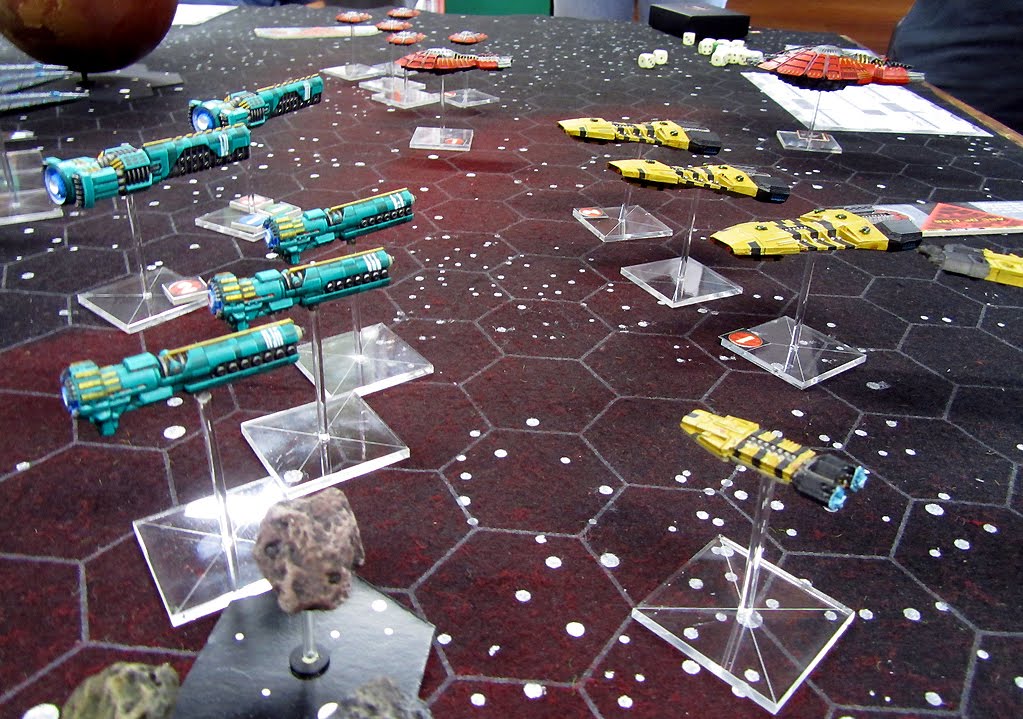
All dice incorporate ‘exploding’ rolls. Most hits are successful on a 4+, with a 6 inflicting 2 hits. Further, all 6s are re-rolled and can lead to further rerolls. Inflict enough hits over the ship’s damage rating and a point of hull damage is taken. Score even higher and the possibility of additional hull damage, along with a critical ship system going offline, can result. As damage is inflicted, it also reduces the attack dice of the target. Crew hits can also reduce the number of attack dice (however this is not a cumalitve penalty). To counter damage inflicted, some races have shield or cloaking technology to reduce the number of hits.
An entirely different weapon system is torpedoes. These weapon systems are never reduced through inflicted damage, even better they always have a constant number of attack dice at all ranges. However they can be countered with point defense systems (in addition to shields and other defensive technology). More importantly, as torpedoes follow a set path to the target, ships in the same squadron can add to the point defense of the target. This makes for some interesting fleet tactics, throwing in smaller ships and fighter groups to provide defensive support to larger ships.
Fighter groups, or wings, are also ships that can be deployed. There are far maneuverable and can throw out a fair amount of damage. However they can be countered effectively with point defense systems. Wings come in different flavors, from bomber groups that can roll more attack dice, to well-rounded fighters, to heavy point defense interceptors, even assault craft for boarding actions.
FA takes the route of having abstract weapon systems and resolves many game mechanics in a similar way. Boarding actions are fairly easy to resolve and done through simple resolution of hits by rounds, scoring wins by simple attrition. With this simplicity and abstract mechanics however, you can get some blandness in with the game.
Since weapon systems are based on either attack dice, or torpedoes, most differences with races are based on the varying fire arcs of ships. Some ships have more flexible weapon batteries using turrets, while others are based on specific weapon arcs (like mostly fore arc weapons, or no aft weapons).
However, with these limitations there are some plusses. Record keeping for hull and crew damage is easy to keep track of (as is the reduction of attack dice). The game uses unified mechanics for attacking and defensive systems. And while movement is maybe not as ‘realistic’ as other games, it captures that idea that smaller ships are more maneuverable than huge capital ships very well. Best of all, a player has to plot out their expected movement for themselves as well as their target. Coupled with ideal firing rates being within a specified range, and not simply parking next to a target and unloading, makes for an enjoyable game. A more freeform movement system with rapid acceleration and deceleration (along with quick facing changes) would hamper this aspect of gameplay.
The hardback edition has incorporated Model Assigned Rules (MARs) in with the current fleets. Now each race and certain ship types have specific rules that alter them slightly from others. I think this adds a layer of complexity to the game and gives even more flavor for certain fleets. Best of all it is entirely optional, so you can still play with the vanilla rules if wanted. However, I like the tweaks that have been made with the different ships. MARs really helped differentiate the races and ship types to make for a more robust game.
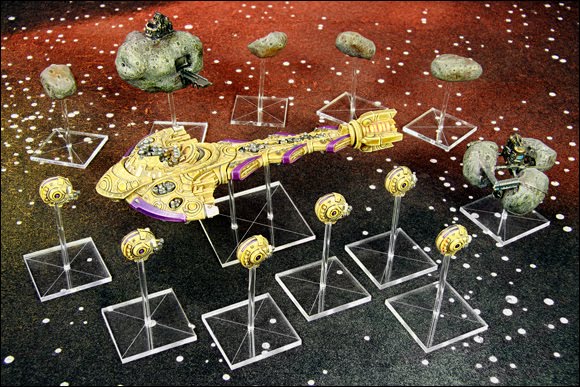
The Good – There is a nice fleet combat system within these rules. It has room for exploring different tactics that go beyond ‘move the biggest ship in as close as possible and unload.’ Maneuvering and trying to bring as many guns to bear, at the most ideal range, is a challenge and enjoyable. There are some differences in the race fleets, especially with the new MARs system. It’s not overly complex and has just the right amount of detail and weight for making a fun afternoon of wargaming.
The Bad – It’s not a hyper-realistic, super detailed treatment of spaceship combat. I’d go as far to say it really plays like a conventional sea naval wargame, with some trappings of science fiction. Some of the more abstract systems make for simplistic resolutions of actions, that might be too glossed over for some tastes. This is not a ramped up version of Star Fleet Battles. Also, luck can rear its head in some games. The exploding dice can make for some very ‘swingy’ turns.
The Verdict – I really enjoy this game. It has just enough detail and mechanics to make for an interesting wargame. I like the randomness of the dice that can lead to some spectacular outcomes, giving the game a few peaks and valleys with your morale during play that you might not get with other systems. FA has enough meat in the rules to make for a great space game, while not being too heavy and too clunky with having more simulationist rules.
There is enough variety of the races and fleets to make for different games, branching out with using varying tactics and experimenting with altering fleet compositions. There are a fair amount of scenarios and additional rules for civilian ships, space stations, and terrain, allowing you to create and play different situations other than your typical fleet battle engagement.
The models are reasonably priced and gorgeous. Also it seems the line is expanding with different ships and races, giving even more variety. However, the information of these new ships are not locked away and only available if you purchase the models. You can freely download the ship stats. Even if you have only the first edition rules, the MARs and fleet cards for the new ships are accessible.
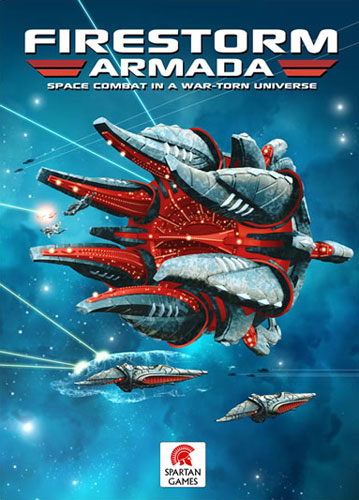
I am however a bit torn about the different books. Some things I like about the hardback edition (cover pictured in this post) is that it cleans up a lot of things from the first softbound edition. Flights are no longer individual wing groups, but are consolidated into a single counter. Boarding actions now end with the target ship being destroyed, and not requiring to be fold-space traveled off table by the assaulting player.
What I do miss from the softback rules were tons of illustrated examples. They are there in the hardback edition, but more as simplified graphics rather than having figure legend explaining what is going on in more detail. I also think the layout of the rules were more organized in the 1st edition (not to mention a nice size font of the rules). It’s almost as if this book was written assuming players had the 1st softback edition already, rather than being for a completely new player. Fortunately, the game is not bogged down with tons of situational or convoluted rules, and are pretty easy to grasp.
If you’ve got a hankering to paint and deploy a fleet of starships. If you find the idea pleasing of deftly maneuvering cruisers to unload a broadside volley of mass driver cannons into an enemy capital ship. Then pick up these hardback rules. Firestorm Armada is well worth the investment.
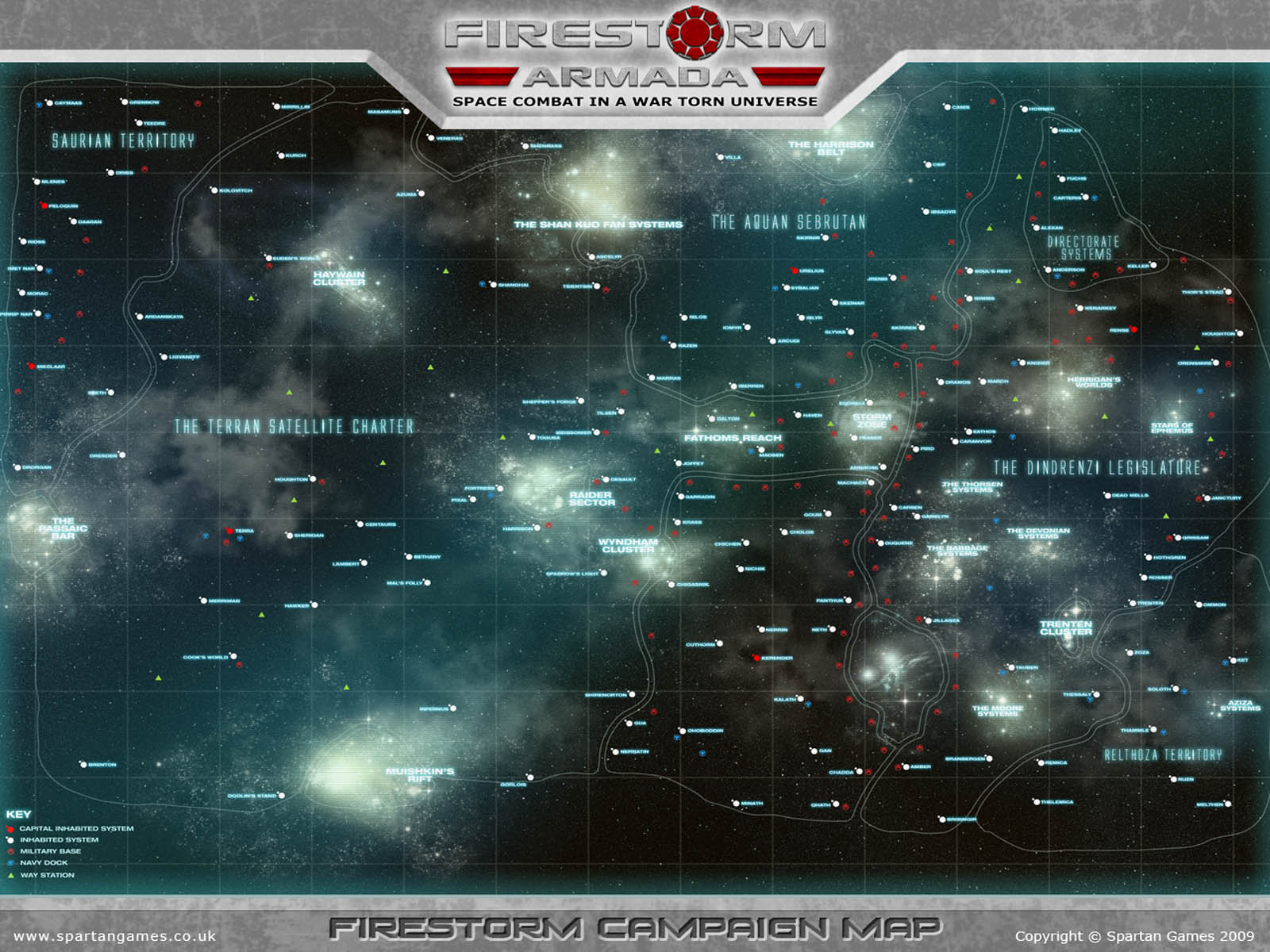
 Geek Ken