Category: House Rules
Scrolls for 4E – Part 2
Last time I talked a bit about how I use scrolls in 4E, now I’d like to offer my house rules for creating them.
To create a scroll, the player must have the ritual feat. Players can only create scrolls with spells (or powers) that they are capable of using. So they cannot create scrolls for spells that are of a different class, or those of a higher level. Any power except at wills or class feature powers can be created into scrolls. Additionally, no power with the martial keyword can be used to make a scroll.
The time needed to create a scroll is in days equivalent to the level of the spell. One more day is required if the spell power is a daily. Each day is spent writing a condensed version of the spell’s power and requires many special reagents and magical inks. In essence the spell is cast and key fragments of the spell are bound to special parchment. Each day also requires an extended rest. If this cycle of work is broken, the entire process must be restarted (but does not require any additional materials or costs for reagents).
The cost in gold is equal to the level of the spell X 50 gp. The exception is for daily powers, which double the base cost for the scroll. Example, a level 1 daily spell would cost 100 gp to prepare (50 gp X level X 2), the same cost for a level 2 utility spell (50 gp X level).
Rituals can also be created as scrolls. In order to prepare a scroll, the player must have access to a written version of the ritual. To prepare a ritual scroll the player uses similar rules and time as those for scrolls. Note that players are not bound to using the same class or power source when preparing a ritual scroll, however they cannot prepare a ritual scroll that is higher than their level.
The component costs for preparing a ritual scroll are doubled. If the ritual requires a focus to be expended, that focus must be present when the ritual scroll is cast. For example, View Location can be bound to a ritual scroll, but the focus must also be present when the scroll is used. It is not ‘stored’ in the magic of the scroll.
Casting rituals from scrolls is a difficult task, as the ritual is truncated to select power words, diagrams, and key movements of the hand. Any skill check made using a ritual scroll incurs a -5 penalty.
Time to cast is dependant on the original casting time:
- 10 minutes or less – instantaneous
- 30 minutes – 10 minutes
- 1 hour – 30 minutes
- Greater than 1 hour – half the casting time (ex. Raise dead would take 4 hours instead of 8)
It is expensive and time consuming to create scrolls. Additionally for many rituals, if time allows, it is likely better to cast a ritual carefully, rather than trying to quickly fire one off from a scroll. Sometimes the expedited time is helpful (say being able to cast a knock ritual quickly) but for more powerful rituals, most likely it is better to take the time to cast it normally.
I also wanted to be sure that there were key powers from classes that remained exclusive. Magic missile is such a staple power in the wizard’s repertoire, it would be silly to spend the time and effort to transcribe such a minor magical power into a scroll. Rather, it would be more useful for the wizard to spend his time preparing a spell of more power. I’d use this reasoning if players are clamoring to create a stockpile of Healing Word scrolls.
Allow players to buy scrolls also and use the costs for creating a scroll for an idea on the price (quick rule of thumb: 50 gp X level and double it for a daily power). However I would really encourage using scrolls as treasure. The costs for creating them can serve as a guideline for replacing an equivalent in treasure. The flavor alone might be something players enjoy, as a low level wizard might appreciate the ability to fire off a warlock’s Vampiric Embrace. As I’ve mentioned before, for some villains having a few scrolls tucked away in a chest within their lair just seems appropriate. Hope folks find this inspiring to try and put scrolls back into their 4E game.
Scrolls for 4E – Part 1
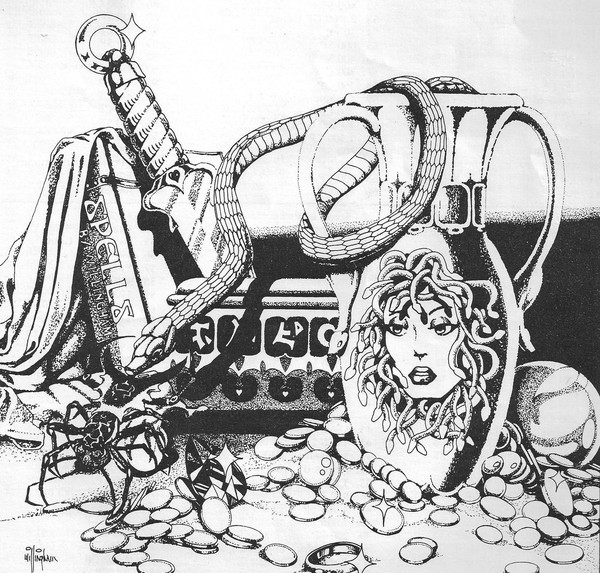 Looking through the random treasure tables in Pathfinder’s Gamemastery Guide made me realize that I miss scrolls in 4E. I’ve noticed I’m not the only one as Blog of Holding has been thinking about this too. I’ve parsed out rituals as scrolls in my game, but I miss honest-to-god, one shot spell scrolls. I always felt they gave the PCs a little flexibility. Plus I think they represent classic loot for some baddies. Nothing like raiding a necromancer’s tower and scoring a few scrolls in the process. So here is a few house rules I use for scrolls in my game:
Players must be trained in the ritual feat to use scrolls. Using a scroll is a standard action. The scroll must be read from one free hand (typically a minor action to produce from a pouch, tube, backpack, pocket folds of a cloak, etc.). The reader must be unrestrained and able to speak. Once the scroll is used the magic fades from the page and the parchment becomes too brittle to write on.
The spell (or power) expended from the scroll is based on the reader’s abilities and skills. The spell cannot gain any implement or weapon modifier bonus from the player. The spell’s power emits from the scroll, and the player can manipulate it somewhat, but not direct the spell through a wand, staff, or other magical focus as an implement.
Characters may use scrolls for any spell equal to their level or lower. If a player is not trained in the power source of the spell on the scroll, they must make a moderate DC check to successfully cast it. The DC value is based on the level of the spell being read from the scroll.
This check has no skill training or ability bonus modifier. The player does gain a level bonus for this check. If the player fails this check, they expend their standard action but the scroll is not used (and may be attempted again). In effect, the player gets about halfway through the spell and begins to fumble lines, and not understand specific symbols and words on the scroll. Note this check is not made if the scroll user is trained in the same power source of the scroll spell.
Example, a 4th level wizard is attempting to cast cure light wounds (2nd level divine utility power). They must make a moderate skill check to use it, as the wizard draws power from the arcane. The DC for using the scroll is 13 (appropriate for a moderate level 2 check), and the player would only get a +2 bonus to this roll (level modifier bonus for a 4th level PC). If they were attempting to cast Shadow Veil (2nd level utility warlock spell), no check would be needed as the power is drawn from the arcane source.
I use this as it allows PCs to dabble in other spell sources, but still requires a bit of luck to pull it off. Granted the higher the level of a player in relation to the spell being cast means they will get a better shot at reading the scroll correctly. However if they want to avoid this completely, it’s best to stick with similar spells that draw from the same source of power.
I also have tinkered around allowing rituals to be cast from scrolls too. However this is a bit much for now. I’ll get on to how I allow players to make scrolls in part two.
Randomizing the threat for attacks of opportunity
I like the idea of attacks of opportunity. It encourages players to position themselves in support of each other, and form up ranks to protect more fragile party members. However, I’ve been seeing in our games it’s becoming sort of a drag on combat.
I’ve noticed at times my players agonize a bit whether to move a particular route due to the threat of attacks of opportunity. This also drags the group’s sorcerer and bow-wielding rogue into action paralysis, as they struggle over deciding to fire off an attack or suffer the wrath of that orc standing toe to toe with them. I really want to encourage movement over the battlefield. 4E seems to really thrive on that. Yet, I’m finding the threat of attacks of opportunity starting to impede the maneuvering of the PCs.
I decided I needed to throw in a random chance if an attack would happen. Overall it would cut down the probability a player would get hurt, and still be a possible threat. This way, there was a chance a player could get hit running across the room, but not saddle them down with having to decide some precise dance of moving square to square in order to avoid a single attack. I work out my house rule as follows:
Roll a D4 – A player provokes a possible attack of opportunity as per the rules. Instead of it automatically happening I roll a 4-sided die. On a roll of 1-2 the player suffers an attack of opportunity and I make a basic attack rolling to hit verses their AC as normal. Otherwise, they don’t provoke an attack of opportunity and get to continue on with their action.
Chance of attacks increase – Each time a player potentially provokes an attack during their action, I increase the chance by 1 and this is cumulative. So if a player charges by two gnolls (possibly provoking an attack from each) the first roll is a 1-2 on a D4, the second would be a 1-3 on a D4.
Third chance and you’re attacked – If the player manages to provoke another attack of opportunity a 3rd time during a turn, I don’t bother rolling to see if it happens. The PC provokes an attack of opportunity as normal.
This works for the baddies too – This also goes for monsters, so everyone is using the same rules. Any time an attack of opportunity might happen, I have the players roll to see if they’ve got a chance to make a swing. I’m still playing around with this. I like the idea of balance (what is good for the players is good for the monsters too), but it can also put a wrench in the player’s tactics.
Some builds and powers take advantage of attacks of opportunity. Having that now a random chance might not go over well with some groups. Also while it will make fights more dynamic with movement, taking away that that edge of potential attacks for the players might mean fights drag out (less attacks of opportunity mean the monsters stay on their feet longer).
So far though this has worked great with my group. Assuming a normal melee attack vs AC would hit half the time, throwing this random chance of an opportunity attack means a player actually taking damage from a hit would be about 25%. This scales up slightly if the player keeps provoking attacks of opportunity, until the point the turn plays out as per the rules.
This means a player can take a gamble and possibly tempt an attack doing a desperate action. If they rush headlong into danger however, the odds stack up against them. Also there is still a fair chance an attack of opportunity will occur, it doesn’t eliminate it. So shifting is still a tactical option.
As I mentioned my players have been enjoying this tweak. It’s just enough to allow them a little breathing room if they provoke a single attack. In turn they’ve begun to make bolder actions in combat, something I want to encourage. I’d be interested if folks have changed how they run attacks of opportunity in their game.
The long and winding road of 4E skill checks
Since 4E has been released there has been quite a few changes with target values of skill difficulty classes (DC). This is something I’ve complained about before and I’m surprised that such a fundamental aspect of the game has changed so much since its release. I realize a lot will say this doesn’t affect how a group plays, that the DM can just adjudicate things and run the game they want. All true.
However having a standard, or ‘official’, set of rules for skill checks and skill challenges is important. It gives a lot of insight into what is expected as a reasonable challenge, and what should be a good yardstick for a DM to use in their own games. More importantly, if gives a lot of guidance to new DMs that might not have a lot of experience or knowledge of other RPG systems to draw from.
Lastly, I feel most players appreciate a system that has rules and is predictable. While good players realize at times a DM might need to herd the story in a direction, meaning some attempts at a skill would always fail. If things are too fluid and appear simply at the DM’s whim, players can get frustrated as they feel have no real influence on feats of skill.
Looking at 4E skill difficulty classes when it was released, easy, moderate, and difficult checks were set at values of 10, 15, and 20, respectively. These increased with the player’s level, but in effect relatively stayed the same as 4E introduced the idea of a constant modifier of +½ a characters level for just about everything from defences, attack rolls, and also for skill checks. Interestingly, there was an additional +5 modifier to all skill check DCs (DMG pg. 42), but was dropped in an errata.
When the DMG2 rolled around the DC values were dropped significantly to 5, 10, and 15, for an easy, moderate, or difficult check, respectively. This was a big change and really opened up how effective skill training (along ability modifiers) could be in skill challenges. Likely it was too lenient a bar as the latest iteration of the rules and skill DCs are now higher, almost to what they were with the initial release of the 4E rules.
Now for a level 1 character the DC values for easy to difficult check range from 8, 12, and 19. Further, where the older versions of the rules increased DCs every three levels, this new version increased with every level. Also, the easy DC values scale up a little less compared to moderate and difficult DCs.
These changes give some important ideas on how skill checks should be implemented and what a DM might consider when working with skill challenges.
Failure is always a possibility – Right off an 8 is needed to pass and easy DC check. Even with the appropriate skill training, a character can fail. Add in ability scores, typically with a standard array this would be a +2 or +3 bonus (although +4 is a possibility), and you can usually eek out a success for an easy check. This is an important philosophy with the game. There are no sure things, and PCs should expect to fail if making a check under duress.
Training is not enough – That +5 bonus helps a lot. But if PCs want to really improve their chances, they should expect to tag that training to ability modifiers. This is one aspect I am not too keen on, as it means there is no amount of training a player can undertake to make up for a similar character with innate bonuses from ability scores. However there is a work around of sorts with the last point…
Taking 10 can be the best option at times – Given that characters can fail, and that simply training in a skill alone will not guarantee a success, PCs really need to consider just taking 10. In fact, I’d push that a DM should offer this up as the default for any skill check made by PCs trained in a particular skill. If that streetwise rouge botches a simple check, I’d seriously consider that they came away with a little knowledge of the local comings and goings. I expect that taking 10 is not something a lot of players do. A DM should encourage it, as those non-skill challenge, non-threatening situations, mean that the players can accomplish quite a bit taking this route.
This leads me to an interesting observation with skill DC values, although they are scaled to take in account the player’s level, they really don’t break down more than just being an easy, moderate, or difficult check. Something overlooked (especially when considering making a challenge more difficult) is the level for DCs. I think this is something being explored with ideas floating around of ‘novice’, ‘journeyman’, and ‘master’ levels of knowledge. I expect this might lead to additional modifiers a DM can thrown into skill challenges. If anything, they’d give a DM a better gauge to figure what would be an appropriate challenge in certain situations.
What does this mean for my game? I’m looking at the idea of altering DCs for certain skill challenges taking level into account. As a general idea with combat encounter building, if I run a +4 level encounter I can expect a tough fight. Likewise, if I bump up the DC ‘level’ of a skill challenge by 5, I can expect a tough challenge even if it the complexity is simple.
It’s something to play with, quite possibly expanding the normal -/+ 2 modifier a DM uses to even greater values of -/+ 4 (which is in effect just bumping up skill DC levels). So that lock on the door of a high level mage might not just be a typical difficult DC check, but would bump up even higher taking the NPC’s level into account. I’ll have to tool around with it, but I think incorporating relative level in with DC values might give a more dynamic range of DCs needed for skill checks.
Reconsidering combat fumbles
I never really liked having fumbles in combat. I know some DMs like to have players drop weapons, potentially hit other players, fall down, and all sorts of unfortunate things happen when PCs roll a 1 on their attack. I just don’t like it. It’s sort of kicking a player when they are down. Worse of all, it’s not because of a bad choice or poor decision, they just bumbled a die roll.
I think as a game philosophy, 4E has moved away from this idea. I like that the save or die concept has been dropped. Players have a few chances to turn things around. So the idea of having fumbles in combat seems to go against the grain of 4E.
I do like the idea of critical failures for skill checks. Even with a PC that has spectacular diplomacy training, you could have some noble zoning out and thinking about what wine they should drink with the evening meal, completely ignoring the pleas from that character. I don’t mind that players completely blow skill checks. I usually set them up with a -4 penalty to their following check (and conversely give them bonus if they roll a 20).
I avoid fumbles in combat though. You get a lot of dice being thrown around. Get a group of 5 folks rolling D20s, after a few rounds you can expect that one of them will roll a 1. Another reason I never liked it is that you tend to penalize the player that has multiple attacks. That chance of having a single fumble for the wizard that plops down a burst hitting 4 monsters is going to find it mushrooming from 1 in 20 to nearly 20%.
Still I’m wrestling with doing something with fumbles in combat. It does add a small aspect of chaos in how a combat develops and makes things a little more unpredictable for players. I don’t want some major mishap like a player falling prone, but I am wondering about having some small penalty.
So I’ve settled on taking a cue from the DMG. If a player rolls a natural 1 on their attack, they complete their turn as normal but grant combat advantage until the beginning of their next turn. If a player makes multiple attacks, only the attack roll for the first target is subject to being a fumble, with the rest of the attack rolls ignored if a 1 is rolled (just counts as a miss). That way there is a slight chance a player can get a fumble and it is the same regardless of how many attacks you make.
I see this as a player overswinging, losing their footing, or something else happening that makes them distracted and not able to effectively keep their guard up. Possibly that wizard had a surge of energy that landed a bit too close, distracting them, or they summoned too much energy temporarily making them a bit dizzy.
I’m going to try this out a bit and see how my players feel about it. I think they might welcome a little more randomness in fights, and hopefully not get too worked up about granting combat advantage. So if you have critical fumbles in combat, how do you work them out?
City chase skill challenge using a flow chart
I wanted to try an extended chase skill challenge for my group. I wanted to try and mimic an extended chase scene in a city with city guards in hot pursuit of the players. It would be something based on skill checks, and avoid a protracted fight but still offer some danger. I looked over the traditional framework for skill challenges and found it lacking.
I ended up using a sort of flow chart. Each player would occupy a spot on the flow chart, with each section being set environments that required different skill checks. Each spot would offer a few choices on avenues to run to next. If they succeeded they would gain some distance from their pursuers. If they failed, they would lose ground with their attackers closing in.
Each turn if the players were a certain distance they would be attacked with either a ranged or melee strike. If hit, they would lose a healing surge. Additionally, every few turns I would require an endurance check. Again, with a failure they would lose a healing surge. When they lose all their healing surges, they were considered caught by their pursuers. If they managed to gain enough distance, they would escape.
It worked pretty well, but I had a few tweaks to make and I’ll offer some tips:
Three groups at most – Originally I had planned each party member to run off in their own direction. I soon found that 2-3 groups work best. I would have each group of players move through enough locations until they made their endurance check. Then I would move on to the other group to keep things moving. You can have each player run in their own direction, but I found things tended to drag for the other players while they waited for their turn.
Have one player make a check – If breaking the party up, have them work as a group. One player makes the check with others assisting. Failure affects them all. As potential attacks are resolved individually (I made a single attack and compared it to each of their AC defenses), they would each suffer healing surge hits separately any ways.
Keep 6 distance markers the goal – Originally 8 distance makers was my minimum, but after some play I found things going on a bit too long to get to that goal. Even with 6 distance markers, it can be a challenge. You may want to keep it closer to 5 or 6 if needed.
Keep needed DCs and skills hidden – When players move into an area, describe the location and let them offer a solution to how they’re going to navigate that section of the city. I tended to offer a few general suggestions if needed, but typically I let the players tell me what they wanted to do. If you just tell them the types of checks they need to make, it really becomes a less interactive challenge.
Be descriptive – I tried to give some different descriptions to the areas they were in and the potential routes available. I found my players came up with some interesting ideas as they made their way through the challenge. If you simply read off each area as a list of skill check options, you will get a boring challenge.
So my bustling room would be comes a dank crowded tavern, with several strong peasants taking a draught of ale after working the fields. When one of the players decided to throw a handful of silver in the air and yell out, ‘Grab some coin if you want another tankard!’, the resulting chaos made was something I’d definitely consider a diplomacy check. Without that ample description I’d likely never hear the player try something like that.
Use lots of modifiers – If players come up with some interesting ideas, offer to give them bonuses to their checks. I ended up liberally throwing around +2 to skill rolls when my players came up with interesting ideas. Don’t stick to the listed DCs either. If you describe a situation and a player comes up with something that would make it trivial, alter the DC.
Be flexible – The most important part is to keep things flexible and alter the flow if needed. Sometimes players will come up with some very good ideas. Sometimes they will fall into a pattern on the chart. So feel free to shake things up and cut off choices, or allow them to go against the chart flow and take different routes. Keep this in mind for skill checks too. If they come up with a skill use that would be more appropriate, then let them make the check with that skill.
One of my players was having difficulty continually making endurance checks. For one bustling room, I described a narrow shop filled with silks and a few noblewomen browsing the wares. A set of stairs led up to a second floor. Immediately my player thought up an idea to tell the shopkeeper and the noblewomen she was to be sent away from her family in an arranged marriage. She decided to run and her would-be husband’s men were following her. She pleaded to the shopkeeper to let her go up to the upper floor and get a moment’s rest before she fled elsewhere.
I allowed her a bluff check (with a bonus for a great idea). She was successful and I then said she could get bonus on her next endurance check, as her ruse allowed her some time to catch her breath. This was something completely off the track for an endurance check, but I liked her thinking and wanted to reward it. So keep things flexible and allow your players to be creative.
Not everyone has to make it – Actually it can end with some players getting caught and others getting away. Be prepared for this. I actually found it an opportunity to plan out a small side adventure where the escaped players would have to try and release their captured friends.
It’s also possible that captured players could get a final chance at escaping by playing out a small encounter in a narrow alleyway. If they are victorious in the combat, they make their escape (catching up to the other party members that slipped away). So don’t be afraid to let some of the players fail the challenge. It’ll lay the foundation for another exciting adventure.
Working with extended rests revisited
So a while back I was tinkering around with extended rests and healing surges. I love the idea that players bounce back with full HP after a night’s rest. But what got me is that there was no difference between the guy that got put through the meat grinder, and a fellow that was picking flowers all day. Functionally there was no difference in the amount a player healed, everybody would get a 6 hour extended rest and be ready to jump back into hacking monsters apart.
Now I get this. The players are heroes. They are exceptions to the norm. Plus totally hampering the players takes away from the fun. Yet I still wanted to slip in a little tweak to how extended rests worked. I liked that abilities and HP were topped off, but I tinkered with the recovery of healing surges.
In my mind, healing surges are more than just a measure of someone’s vitality. It was also the gumption, spirit, and desire for a person to keep pushing on. Typically after a night’s rest that person would recharge his batteries and be ready to go. But I thought if the guy got cut down to an inch within his life, the next day he might be a little sapped of energy as exhaustion and trials of the previous day might mean he was not quite at 100%.
So originally I lopped off a few healing surges, largely dependant on the number of HP a player lost before they rested. I liked the idea and it worked pretty well. However, I realized that healing surges were being used as a currency for other game mechanics. Some magic items used them. I also found I was using them as penalties for bad skill checks and failed skill challenges. So I looked at the numbers and realized it was a bit much and fiddled with them a little more.
So my house rule for extended rests are as follows:
A) Players regain all HP and abilities. They should also regain all their healing surges, but that is dependent on 2 other conditions.
B) If players are bloodied before they rest, they regain 2 less healing surges from their maximum (full HS -2).
C) If players spent spend more than 4 healing surges before they rest, they regain 1 less healing surge from their maximum (full HS -1). This penalty is cumulative with being bloodied.
D) If players take a comfortable rest they gain back one additional healing surge. A comfortable rest means the players are in a sheltered location (not exposed to the elements), eating a prepared meal that is not trail rations, and are in a relatively secure location (not taking guard shifts). This bonus healing surge can be above the player’s maximum number.
So if a bloodied character that has exhausted all their healing surges takes an extended rest, the next day they will be at full HP and have HS -3 (-2 being bloodied, and -1 for spending more than 4 HS). If they were resting in an inn however, they would be at full HS -2. Give them 2 full days of rest and they would be ready to go.
I also like this as a bloodied player needs to spend their healing surges before they rest. They are penalized more for being bloodied than for spending excessive healing surges, so if they’ve got em’, then use em’. Also, I like giving players a bonus for resting in an inn or through some other more comfortable means. There are some crafty uses for rituals and magic items that can give the players a little more game milage out of using them. I want to encourage that.
So if you’ve been tinkering with extended rests, what have you all been doing?
Dumping coins and awarding chests for treasure
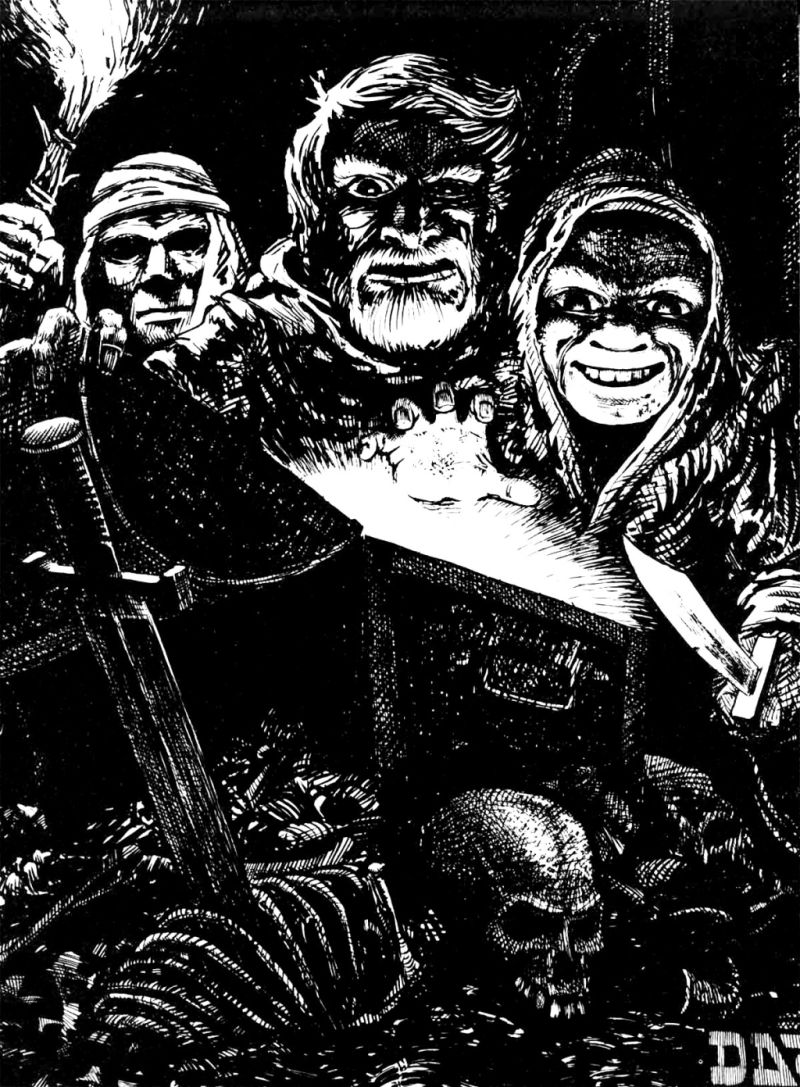
I always stood by handing out coin as treasure. Be it gems, pieces of art, or some other type of precious item, I’ve always been a fan of awarding monetary treasure to groups. 4E uses a pretty regimented structure for treasure rewards. For the most part I like it. It’s a pretty good guideline how much a DM should be awarding for each level. You can switch this around, add a little more (or be a little light) and have an idea where a party would be compared to a ‘typical’ group of the same level.
Lately though, I’ve been tinkering around with dropping the idea of coin/gem parcels completely. I’ve found I haven’t been really keeping track of the mundane stuff my group buys. I’ve been hand waving coin spent on supplies, arrows, food and ale. It is only the odd items like potions or magical weapons that I’ve stepped up with a formal price. Maybe a fairly large ticket item like a new set of armor or a horse might dip a little deeper into the PC’s pockets, but for the most part I just let the mundane stuff slide.
So I started using a more abstract way to keep track of wealth. I started to refer to coin treasure parcels as chests, bags, or piles of coin. When my group gets a coin parcel, I just say that they found a substantial amount of coin and precious gems (or art) that is equal to one chest of treasure.
I’ve completely substituted coin treasure parcels with 2, 1, or 1/2 chests of treasure. I let the group figure out how to split them up, but I tell them to keep things at the minimum of 1/2 share. A breakdown of the parcel rewards can be found here. I keep the magic items similar to the tables in the DM manual and just replace the coin parcels with the appropriate amount of chests.
The big trick of course is to figure out what the treasure chests are worth if a character wants to spend them. I set the value of a chest equal to treasure parcel 7 at the player’s current level. So a lvl 4 player is thinking about cashing in his chests and wants to figure out how much coin he has. He has 2 1/2 chests, looking at parcel 7 for a lvl 4 group, I tell him he has a total of 700 gp (280 gp + 280 gp + 140 gp).
This makes it a pretty easy way to figure out the value for any magical item. Simply take the value in gold, divide it by the gold coin value for treasure parcel 7 at the group’s level, and round up to 1/2 a parcel if needed. It works and it scales pretty well as the characters advance.
It does break down with potions though. I stick by keeping the minimum unit of treasure chests at 1/2, and for consumables, this does get a little inflated at the higher levels. So if possible I try to make sure that a player buy potions that can make up at least 1/2 a parcel. As an example, 1/2 a chest of a lvl 4 parcel would be 140 gp. If a player wanted to buy a single healing potion, I’d say for amount of treasure a player could buy 2 potions (rather than stick him with the loss).
I’d also stand by either swapping out the appropriate amount potions for treasure chests, or just be sure to award 2-3 potions over an entire level. I try not to be tight with handing out potions, and at level 5 or greater, their effect really diminishes compared to a character’s normal healing surge.
So where did I pull out all these values? If you total up the treasure gained during a level and divide it by the number of coin treasure parcels (6), you get an average that is roughly equal to treasure parcels 7 or 8. Also, if you take the gold value of a magic item and divide it by 3, you also roughly get the equivalent coin chest value at that level (PHB pg. 223). It scales pretty well. If a level 1 player wanted to buy a level 5 magic item, it would take roughly 8 1/2 chests of treasure (a lvl 1 chest being 120 gp). But the same item being bought by a lvl 5 player would only be 3 chests.
This is an abstract way of handling wealth. I’m trying to straddle a simple way of handling coin and gems as treasure, but still keep it in line with the ‘gold = magic item of level X’ formula in the rules. So far it has worked out, but as my group advances I’ll be interested in seeing how well it holds up. So if you’ve done other means of handling treasure, what have you used?
Skill challenge scenarios: Poisoned! (part two)
In the last post I described a skill challenge where the group was poisoned in an inn. They had to work quickly to find an antidote not only for themselves, but also for the other patrons.
Round 1: The paladin thought it best to use his skills in healing to try and determine what type of poison would have this effect. As he helped the sick patrons, he also carefully tried to evaluate each person and find the likely toxin. The rogue in the group tried to determine if she could find any trace of the poison near the barrel using perception. The cleric in the group also decided to help the sick utilizing his healing skill. Everyone rolled and all earned successes. Both the cleric and paladin had managed to deduce a common group of poisons that would inflict these symptoms. The rogue managed to spot a few small dark smears on the barrel’s side. Carefully, she gathered up a sample of the thick viscous resin.
Tally after round 1: 3 successes, 0 failures
Round 2: Armed with the knowledge of the type of poison (and a sample), they sought off to try and find an antidote. The rogue quickly set about asking key people she felt would know one trained in the apothecary arts. Earlier in the day, she had heard some commoners speaking of the skills of one particular apothecary, with talents exceeding even the priests at the local temple (successful roll). Several minutes later, with a few quick turns through the alleys and some banging on doors, they managed to get to the right location. Both the paladin and cleric had offered their skills in healing to aid the elderly apothecary, make easier having a sample of the dreadful toxin (one skill check made at a +2). With their deft hands and combined abilities, by daylight they were able to concoct enough antidote to help all that were afflicted by the poison (both had successful rolls).
Tally after round 2: 6 successes, 0 failures. Skill challenge successful for a complete victory.
I liked the quick thinking of the party’s rogue in trying to get a sample of the poison. I decided there to allow a bonus to a future healing check made by the others, just as if she had sucessfuly aided another. I also held my breath a bit in the second round. If one player had decided to simply aid in a healing check, the group would have secured a partial victory (and a potential hollow one at that). Fortunately, they decided to press through and each make a check.
Skill challenge scenarios: Poisoned! (part one)
- Complete Success (6 successes) – The players manage to find an antidote for the poison. They are able to revive the patrons that were also injured. As a plot point, they also discover that the poison was very unique, concocted from a root extract not found in this region.
- Partial Success (4-5 successes) – The players manage to find an antidote for the poison. Yet, the process is slow and tedious. Several patrons have succumbed to the poison and died. This brings some negative light to the adventurers presence in town.
- Failure (3 failures before either success condition is reached) – Each player is inflicted with the filth fever disease (MM pg 180). Many of the patrons have died. The inn has lost popularity, and the inn keeper will likely have to close down. Most of the people in town will react very coldly to the group, seeing them as the cause to much of the ordeal. The local noble might even pressure city guards to ‘assist’ the characters in moving on to the next village.
In the next post, we’ll see how this played out (DUN DUN DUN….)
 Geek Ken