Category: Painting
Review: SAGA
 I never really had the calling to get into ancients or medieval wargaming. A long while back I was into Warhammer which seemed to scratch my itch for medieval-type gaming. Big blocky units moving in formation, a crash of cavalry in a wedge charging a flank, rows of archers and siege weapons, it just was more fun for me to collect and paint minis for fantasy armies than a historical game. I dumped my Warhammer stuff years ago but lately I’ve considered getting into historical ancient gaming. However I really didn’t want to go the route of a huge army. Maybe something smaller scale. So along comes SAGA from Gripping Beast and Studio Tomahawk.
SAGA is a skirmish wargame set very loosely in the mid-11th century. Players form small warbands and battle it out over a small stretch of earth, pitting each warlord-led host against each other. True historical scenarios are somewhat thrown to the wayside and the game pretty much embraces a ‘what-if’ sort of vibe, which is just fine. You aren’t recreating historical battles here. It’s pretty much small unit action of a group of 30-60 men and mounted horses.
The scale is man-per-model and is about 20-28mm. Ranges are set increment range bands. So Very Short is 2″, Short is 4″, Medium is 6″, etc. with ranges maxing out at 12″. Movement is typically 6″ with shooting at maximum ranges of 12″. All references to distances use this nomenclature of range bands. What is particularly nice about this range system is its flexibility. If you wanted to run a 15mm game, just alter the range band scales from inches to cm. Simple.
A key component of the game is the battle boards. Each faction has its unique chart that describes the various actions and special abilities related to common tactics and characteristics of that group. Players roll saga dice, these special d6 (although a normal six-sided die could also be used) and allocate them to different sections on the battle board. The saga dice themselves are 3 symbols unevenly distributed. Effectively one symbol represents 1-3, another 4-5, and the last symbol is a ‘six’. During their turn they spend upwards of 6 order dice removing them from the board and activating certain abilities (some allow more dice to be used up to a maximum of 8). Once they spent the dice they care to, their turn ends and their opponent takes a turn doing the same.

I love it. Certain units will only activate on a particular die range, with the most trained units being able to always activate. You have special abilities that enhance attacks. You also have abilities that can be spent on defense during your opponent’s turn. So deciding what dice to use for activating units and attacking, while keeping a precious few in reserve for your opponent’s turn is a key part of the game. It’s a surprisingly dynamic system where you have to plan out attacks and be prepared for charges.
As lesser trained levy units don’t activate as much (50% of the time) and they share an activation die symbol with more powerful combat abilities, in effect you have leadership become part of order dice allocation. It’s an exceedingly clever system. It builds in that unknown of not being able to count on poorly disciplined units when you need to. To bypass this, you have a warlord for your warband that can order movement to units within range. So if you really need to move those peasant archers, you can bypass the die order allocation with judicious placement of your warlord.
Another nifty point is that units can activate multiple times. So you can take that elite unit of troops and go all out in a fight if needed. However each order beyond the first accumulates fatigue. Units also get a fatigue marker for shooting or being in melee. Fatigue can also be gained if nearby units are wiped out. If a unit has a certain amount of fatigue (which varies depending on the unit quality) it cannot do anything but rest, removing a fatigue token while it does so. If attacked while fatigued, the unit will also fight significantly less effectively. Essentially it incorporates some aspect of morale for units.
Fatigue can also be spent by your opponent. They can be used to decrease a unit’s combat effectiveness in a melee, or be spent to increase the likelihood an enemy will land a blow. This all adds a tactical layer to the game making it very engaging. If I push a unit to move and attack, I’m decreasing the chances I can use it again on later turns. Even worse, an opponent could use that accumulated fatigue against me if that unit is charged by the enemy. Meanwhile, my opponent seriously has to think about that decision of using my fatigue. If they can’t inflict significant casualties, my unit will be able to activate on future turns (as they’ve removed fatigue markers on my unit). This is a really cool feature of the game and allows both sides to be involved, despite it being one person’s ‘turn’ to activate their units.
Combat is a basic affair. Units roll a single d6 to hit with the number of dice depends on troop type, where elite warriors might roll two dice per man, to rolling a single die per 3 models for levies. Warlords are a force unto themselves generating 5 melee attack dice for a single model. Both shooting and melee work against equaling or exceeding a specific number (again more elite units are harder to hit, compared to easier, lesser-trained troops). For each successful hit, the dice are passed to the defender and they can try to make a save, either 4+ or 5+ depending on it being shooting or melee, respectively.
The composition of the force is points-based, with a typical warband ranging from 4-6 points and your warlord being free. Units range from a minimum of 4 models up to a maximum of 12. Units are bought in groups where elite trained warriors are in groups of 4, warriors as units of 8, and levies as a single group of 12. For each unit you have, you get one saga die. Your warlord automatically gives you 2 saga dice and levies offer no dice if you field them.
As force composition goes, it’s an elegant system to ensure a fair fight and something to carefully consider. As you lose units, you lose saga dice reducing your tactical options. Smaller units are cheaper and generate more dice compared to larger, well-trained units, but suffer from being more easily wiped out. Likewise the cheap, large units of levies might be able to soak up a lot of fire and casualties but don’t award any order dice.
The game details 6 simple scenarios, with a bonus multiplayer/faction one. Rules are provided for even larger engagements of up to 12 points. The scenarios range from simple battles for the field to others requiring the taking of terrain objectives. There is even a scenario where an attacker tries to steal a baggage train from the defender.
Out of the book there are 4 factions: Anglo-Danish, Normans, Vikings and Celts. Aside from each faction gaining a unique battle board, every group has special rules. Special heroic warlords can also be bought with rules for fielding these larger-than-life warrior leaders.
The Good – SAGA is an enjoyable skirmish medieval game. It moves and plays unit based, melee combat very well. The order allocation and fatigue mechanisms are interesting ideas and provide a dynamic experience on the tabletop. It provides just the right mix of varying leadership and uncertainty of executing orders through a different process from other games.
The book is well written with lots of examples. The photography of colored models is quite nice. The softback book is printed on quality, glossy paper with oversized pages. The battle boards themselves are decent cardstock and look like they can take some handling wear.
The Bad – Some might consider the special SAGA dice somewhat a gimmick. There are rules and charts for converting the die results to a normal d6. Still it’s a bit of a chore interpreting the symbol on the faction boards with a specific die roll, and the dice set themselves are pretty expensive.
Every faction revolves around a separate battle board. There is not a copy of the board within the rulebook so if you lose one, you’ve effectively lost the ability to play that faction. This relates somewhat to the overall expense of the book. You are paying about $40 for a 72 page softback book (with a fair amount of whitespace on the layout of each page) and a few special cardstock charts. Compared to something like the quality of Osprey’s Bolt Action rulebook, it’s pretty steep. I’m also put off a bit a little by the cheapness of Gripping Beast related to what is available for SAGA online.
Clearly piracy is on their minds, with no online resources for PDF versions of their battle boards (and none in the rulebook itself). There is also this adherence of using special dice for each faction (instead of offering pre-made charts that could work with regular d6). The rules are simple and sparse, with much of the meat of how a faction works parsed off to a single page. It seems that they want to push people buying a set of rules that are a tad overpriced for what you actually get, with limited online support like copies of the faction boards.
The Verdict – While I complain some on the relative cost of the book, and the push for using special order dice, SAGA is a good game. It offers a very engaging system for medieval skirmish wargame action. The order and fatigue system allows for play that’s surprisingly dynamic in action. Despite the limited number of factions in the book, each one has some truly unique abilities giving what would be simply a mob of armored men, some different tactical abilities on the battlefield.
I really like this game. It brings something different to the table in relation to historical skirmish games. The rules are simple and easy to grasp. All the while, choosing what abilities to assign to your troops and when to use them is a challenging tactical experience. Additionally, you may have to consider the limited orders and maneuvering you can accomplish during a single turn, meaning strategic planning is needed to execute complicated moves. It’s surprisingly deep for what appears to be a simple rule system.
If you’ve had a fancy of dabbling into historical wargaming, SAGA is a great system. There are some dings to how the rules are presented and the peripheral items needed for the tabletop. However with a little work they can be bypassed. It really is an enjoyable game with a pretty low model count to make for a fun afternoon on the table battlefield. Consider picking up these rules if you’ve got the itch to have men cry for Valhalla over the clash of steel and crashing of bodies into a shield wall.
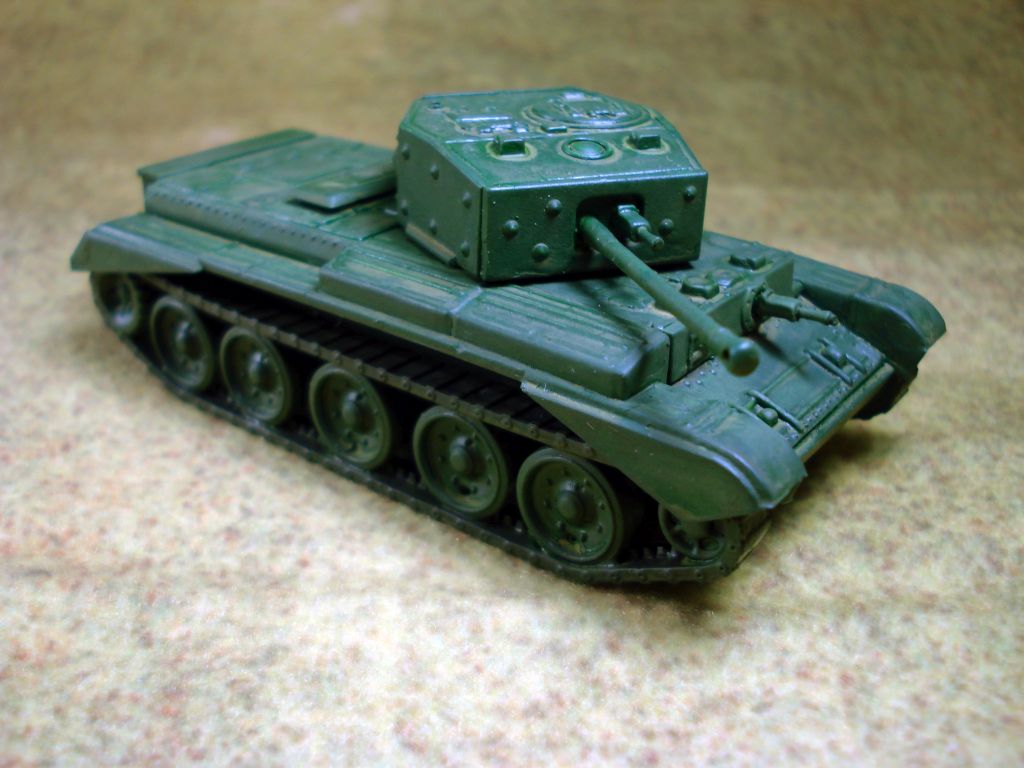
Armourfast Cromwell Tanks
As I’ve been wrapping up my British platoon for Bolt Action, I wanted to get some armor to add to my force. For 1/72 scale there are a lot of options however I stumbled across Armourfast Cromwell kits and found them a nice buy. For a little over $12 you get two models in a single box.
The Cromwell tanks assemble pretty easily. It’s very much a wargame level of detail. The treads wheels are pretty simple in their representation on the tank. However the hull has a fair amount of detail for the hatches and such. The turret fits pretty snug and can be removed. For Bolt Action games I see this as a plus as destroyed tanks are kept on the table. As I’m working on some flame markers, might end up popping off the turret and placing a huge flame marker on it to represent a destroyed tank.
There is a small gap in the side where the main hull sits over the treads when looked at from an upwards angle, but the gap isn’t too noticeable looking at it from the side. Another gripe I’ll have is the hull machine gun. There’s a housing for it, but no modeled barrel (unlike the coaxial mg in the turret). So I had to model my own using a pin wire. Nothing too difficult but a little disappointing. 
Another small bit is that the inside tread wheels are hollow. At a low rear angle, the rear treat wheel appears to be a free floating hollow cylinder.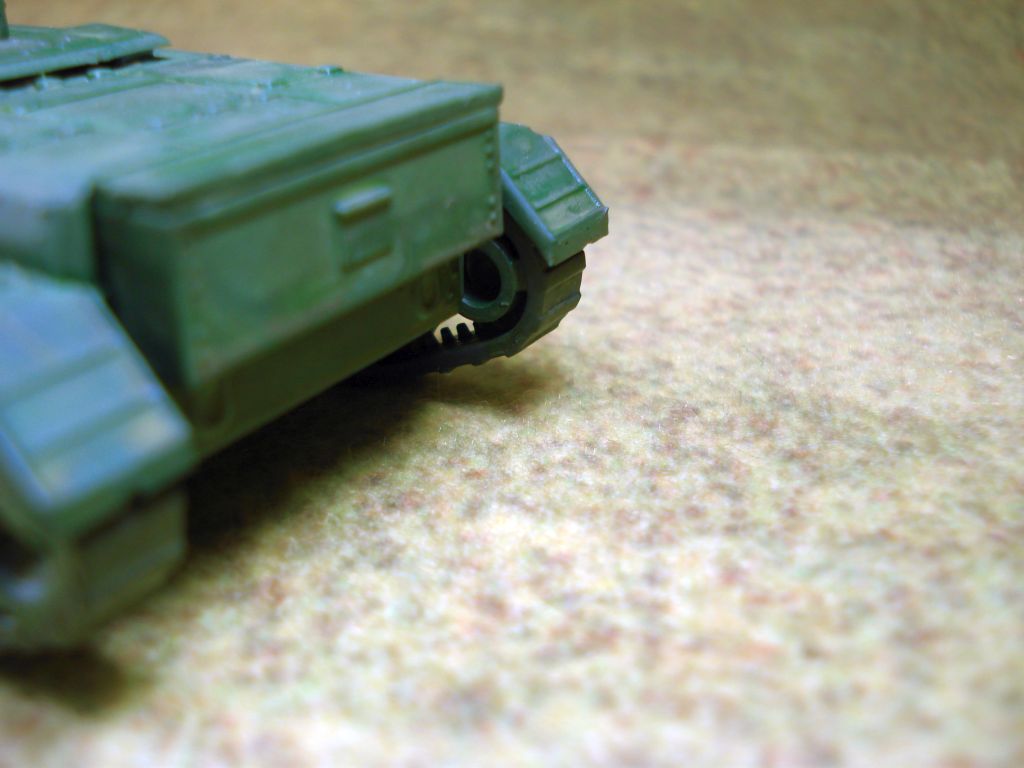
I’ve got a Plastic Soldier Co. British soldier as a side comparison for the dimensions of the tank. The Cromwell is nicely scaled (mind you the figure is on a pretty thick 2mm base) and looks appropriately bulky and menacing.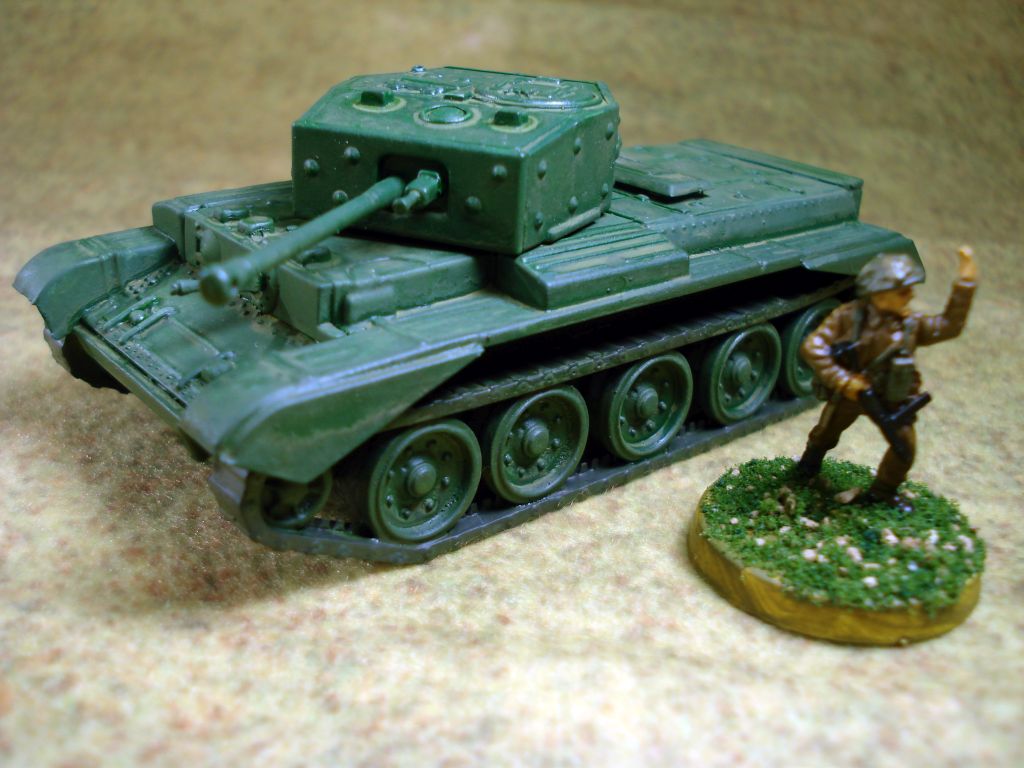
It’s been ages since I worked on tanks this scale. You can tell by the sparse detail I put on the tank markings. I might have to go back and touch up some more detail on the hull and treads. Here I gave it a wash and dry brush of mud on the treads which looks decent. For the price, you get a great set of tanks with good detail.
I will go on a rant here. I’ve noticed on a few of my photographs some white dots that would come out when I adjusted the contrast. With a large painted surface here, I definitely noticed white specks on the tank after I put Army Painter anti-shine varnish on it. Despite warming the can, spraying on a day with little humidity, and shaking the can well, I’d get these specs of white. Some could be brushed off, but some due to the matte spray were stuck on the model.
Now it looks like the matte spray is a clunker too. They seem to have nice paints, but I am not going to bother using their spray can products any more.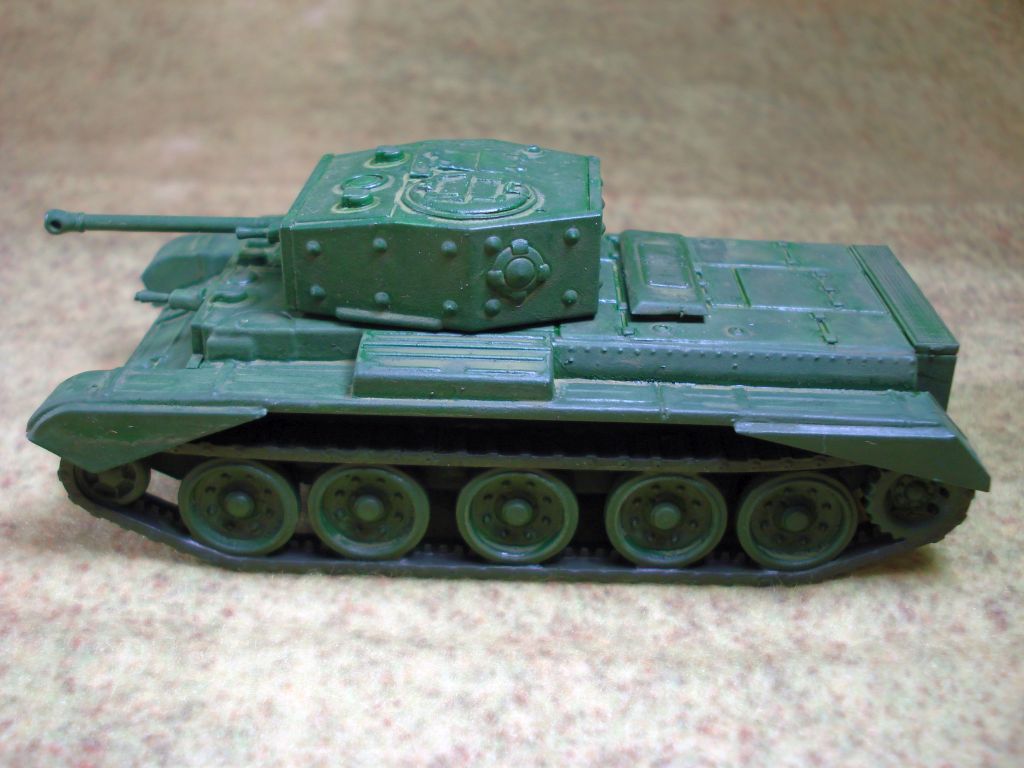
Zvezda British MMG and mortar teams

Still slowly finishing up by Bolt Action British platoon. As I mentioned a while back I went the route of 20mm using minis from Plastic Soldier Co. which is a great buy. The downside is there are not many options for other specialty teams. Finding something at 1/72 scale was a bit of a challenge.
Fortunately for me Zvezda has a range of kits for their own wargame system. The models are nice hard plastic and assemble very easily as they are designed to be snap together kits. I still used plastic cement to keep them firmly assembled. The teams also are mounted on a larger plastic base. So I opted to have mine split up on individual bases.
Overall the models are more in line with an early war uniform scheme, including gas mask satchels. That is a slight problem as most of the Plastic Soldier Co. models I have are in late war gear. However it’s not too disconcerting. Overall as a comparison to Plastic Soldier Co. the models are of the same height, but they do have a slight build compared to the other miniatures.
The Vickers MMG comes with a gunshield on a tripod mount. Not quite sure if that was standard issue with the weapon. So that is a bit of an oddity. I also opted to use a more uniform color scheme for the gun itself. I used the plastic base that came with the kit and altered the mounting so the base would provide 45 degree firing arcs. Just an easier means to handle LOS issues in games.
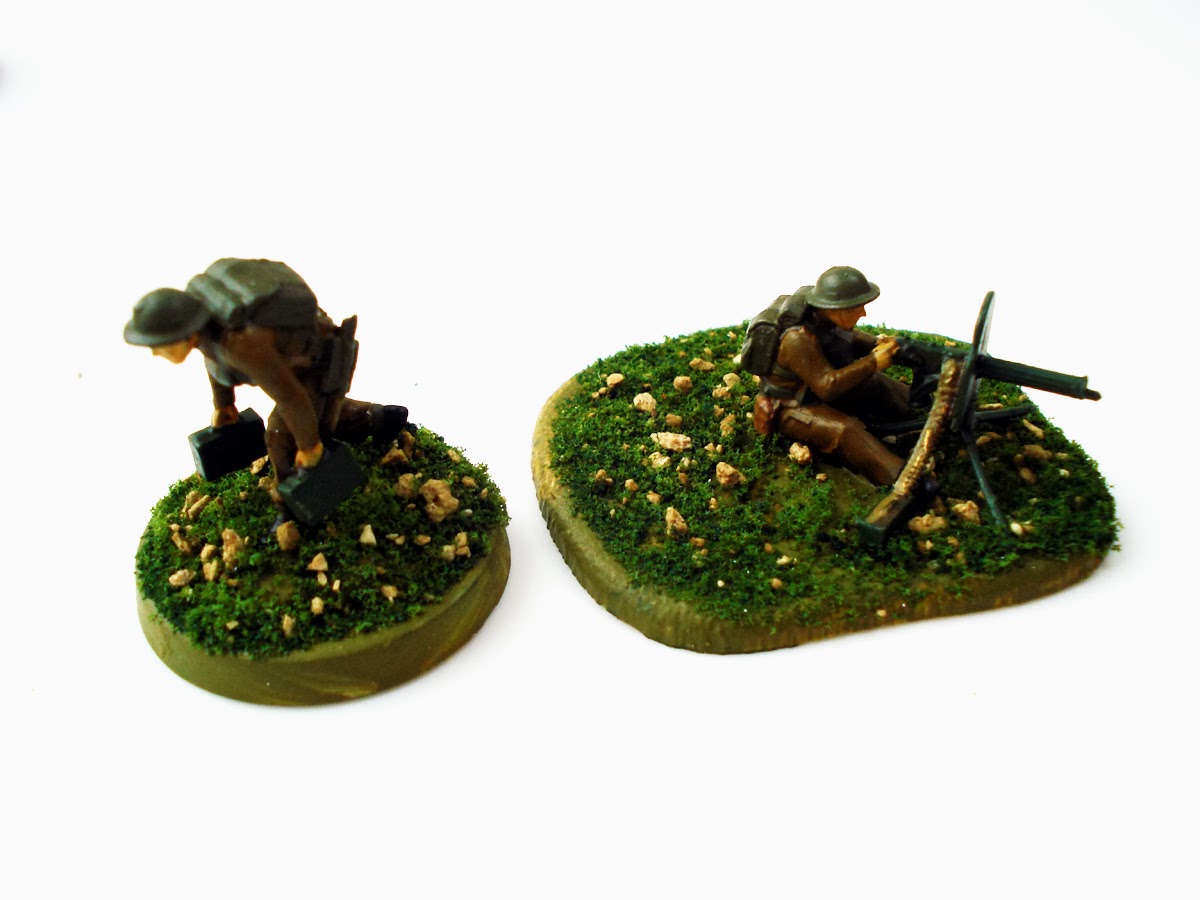
The mortar team depicts the 3 inch mortar. I might cheat and shed a team member to get some flexibility with the model, waffling between a light and medium mortar team as I toy around with my force list. It’s not quite proper, but I tend to have opponents that don’t might slight proxies with models.

They are nice models and pretty cheap. The detail of the main figures are a little muted. Additionally they are certainly geared more for an early war theater. As specialty teams it’s not much an issue, but I would be hesitant using their infantry sets to round out a force of other models (unless you wanted something like an engagement during Dunkirk).

British platoon complete(ish)
Been chipping away at my Plastic Soldier Co. Brits. Finally got the bulk of my platoon done, including a field artillery observer, sniper, medics, NCOs, etc. along with the regular foot soldiers. Still have a MMG and mortar team to paint up, along with a paratrooper PIAT team. Once I get my Bren carriers done I should be finished. So a tad more to do but the end is in sight for that pile of unpainted plastic on my bench.
While I had bitched some about the lack of detail for some of the figures, they really did turn out pretty well. Overall I’m happy with how the platoon painted up. I was super lazy with these figures sticking with a single sepia ink wash. I might revisit them with some more highlights via dry brushing. Will have to consider that. For now, they are sealed and ready for the table. Now I have to consider working on my Germans…

Top places for miniature wargame supplies in Seoul
While board games and CCGs have a lot of popularity in Korea, miniature wargames seem quite the niche hobby here. A while back during holiday at home I scooped up some of my 15mm Russians for Flames of War. I figured during the winter months I could enjoy some weekend mornings doing a bit of painting and finally get through that pile of unpainted metal I had stored away. When I really started looking around I found it exceptionally difficult getting the typical supplies I wanted for painting and modeling. So I thought I’d share some of my efforts to any expats.
As a first caveat to this, my Korean is abysmal. I am certain if I had a better command of the language the process would be easier tracking down materials. Korea is very much an online shopping country. There are likely places I’ve missed that have a larger online presence than a walk in store mainly due to my ignorance with the local language.
However miniature wargaming also just doesn’t seem that popular of a pastime. There is an immense pressure on kids to study and private academies are all the rage. Free time is limited for kids and parents want them studying more. So pastimes that leave a smaller footprint around the house are likely more popular. It’s far easier for kids to carry around a CCG or sneak off to a PC bang (internet cafe for gaming) rather than lug around a painting bench and throw down a wargame table. It does seem for the folks that wargame, it’s much more popular for college students than for kids in high school.
Stationery and Art Supply Stores – Odd enough, stationery stores may very well carry some modeling and painting supplies. Give them a look and you might pleasantly be surprised. Foamcore board can typically be found as well as colored felt cloth. I’ve snagged packs for Woodland Scenics flock, plastic sheets from Plastruct, balsa wood, and other modeling material too. So you can pick up a few things to help in construction of terrain for your games from these places.
As painting supplies go, you can find a fair amount of brushes and can even get down to 10O sizes for model painting. I’ve even been able to snag some Apple Barrel craft paints. While I don’t use them for mini painting, they make great paints for terrain. So hobby and craft supplies can be picked up at these stationery stores. It just takes a bit of digging.
Neighbor Hobby – This is a fantastic place if military models are your thing as there is a great selection of kits. Unfortunately for fans of Bolt Action, they carry only Tamiya 1/48 models, but they seem to have a full selection from that line. As 1/72 and 1/76 scale kits go though, they have a great selection of tanks, soldiers, and terrain. They also have several 1/72 scale buildings too.
What does this place for me though is the paint selection. There is a wide selection of paints from Testors, Tamiya, AK Interactive, MIG, as well as my go to for miniature painting, Vallejo. It’s a wonderful selection for both brush and airbrush painters. They also carry a complete selection of Testors and Tamiya sprays. They also have brushes and other modelling supplies. Well worth checking out and they do online orders as well.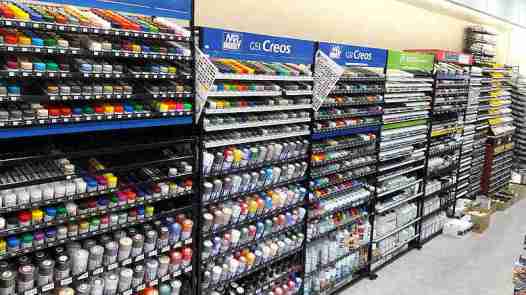
To get there isn’t too difficult. Take subway line 2 to Hongik University and get off exit number 3. You need to cross the street and footpath park, and then take a side street. Once it ends, then go right and you will hit a main street. From there go left and it will be in an office building on your left.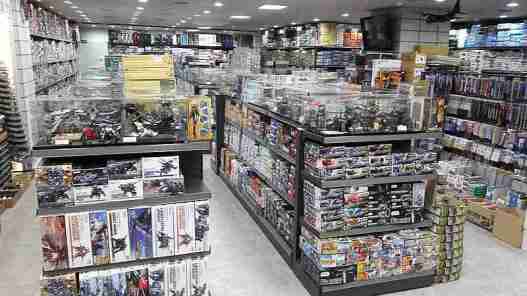
Orc Town – Likely the most popular wargame store in Seoul, Orc Town is one that is Games Workshop-centric. They also dabble in other game systems like Infinity, Flames of War, Bolt Action, Firestorm Armada, and Dust. What is particularly nice about this store is they carry Citadel paints and supplies, especially matte spray and primer (for typical costs). My biggest complaint is that for some products the prices are horrendously expensive and well above retail (seems to include shipping costs). Because of that, I’ve had a hard time justifying purchasing particular model and rulebooks here compared to buying from an international distributor. Still, having a shop where you can walk in and buy some paints is nice. Having one where you can get a bit of table space for gaming is even nicer.
Tamiya Models – On the first floor of the shopping center at the Yongsan train station is an official Tamiya Model store. For a military wargamer this is a fair place to pick up paints and hobby supplies. They have full stocks of enamel and water-based acrylic paint sets. They also have brushes, cement, and other modeling supplies (plastic styrene sheets and other model building material). I find the prices reasonable for Tamiya model kits and for plastic cement and other modeling tools (which can be a bear to find anywhere locally) it’s a great place to shop.
As the gaming figures go, if you are a Bolt Action fan they have a decent selection of 1/48 scale armor and vehicles along with some figure sets. 1/72 scale options are lacking save for planes and 1/35 is the other popular scale for military models. Additionally scenic materials are also lacking. But if you want to track down a particular 1/48 vehicle or historically accurate paints, the Tamiya store is not a bad choice. 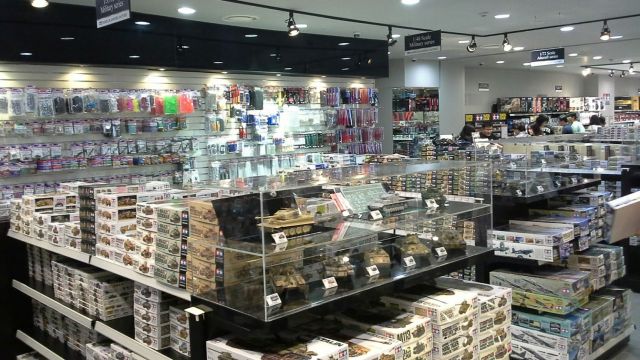
International distributors – Lastly you can always order online and pony up for international shipping. I have had spray paints sent overseas and worked with many stores over the years. It can be done, but expect some costs for shipping. I’ve always gone the route of making a large ($150-250) order to offset the shipping costs. Getting a few paints is exceedingly expensive. It’s best to wrap more goodies into that shipping charge. Because of this, you want to look around for stores that sell other types of games. While you might save a few dollars from one online store selling just paints, using another that lets you also include board games and RPG books into your order is a better choice.
There is a very small wargaming community in Korea but we exist. Hope those into the hobby can find some of this useful for picking up models and supplies for their bench top.
Painted Plastic Soldier Co. British
A short while back I talked about British minis from Plastic Soldier Co. which I thought were okay. The detail on the figs are pretty good but I have a few issues with them. I’ve been slowly painting up my platoon and been making fair progress.
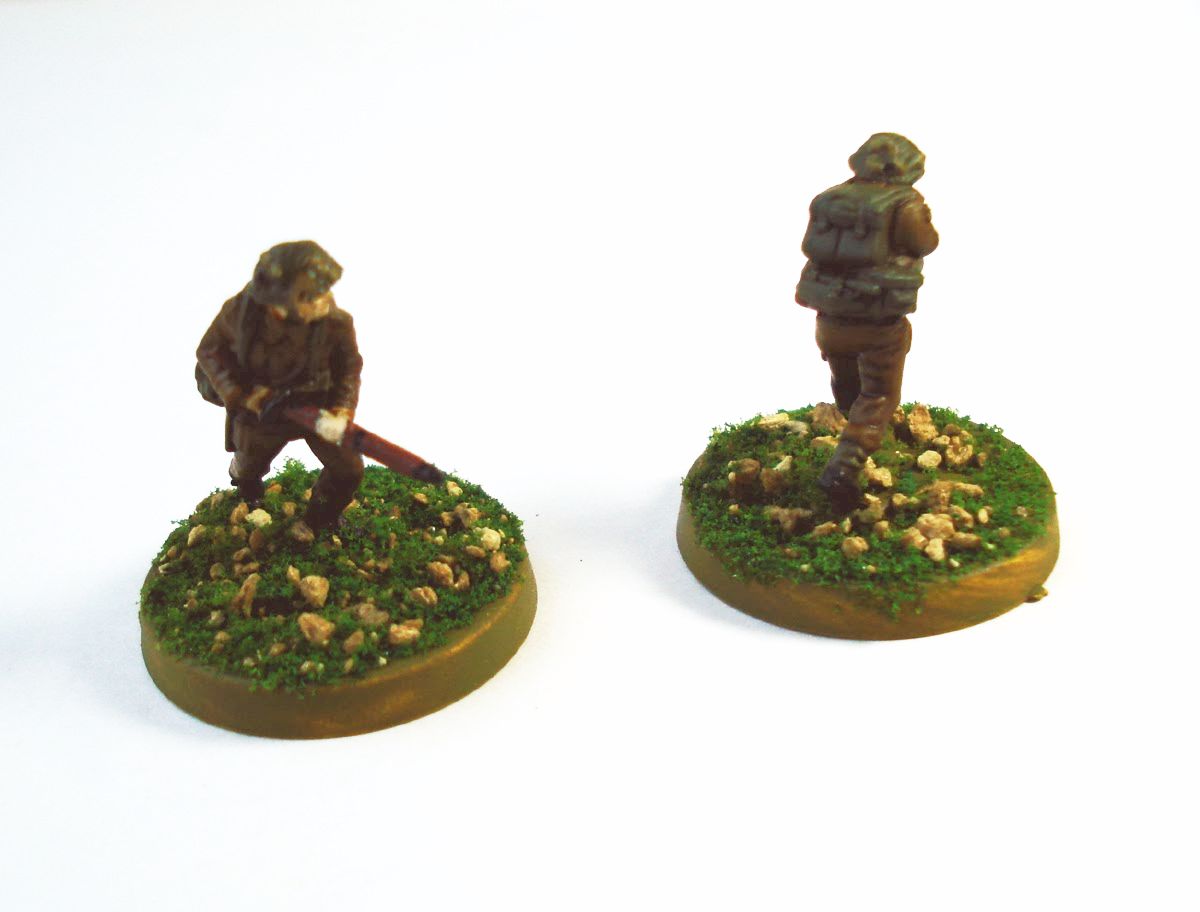
I’ve been using Vallejo paints which has been a fairly new process for me over traditional paint pots and I did go through some rough spots. However I’m getting more comfortable and able to achieve uniform consistency with them now (should look into making a wet pallet). I’ve gone with a complete sepia ink wash for the minis to save a bit of time.
I also might have to go with single figure photos in the future and/or invest in a better camera. Still getting out of focus shots, not to mention I need a better lighting setup. Please forgive some of the crappy pics.
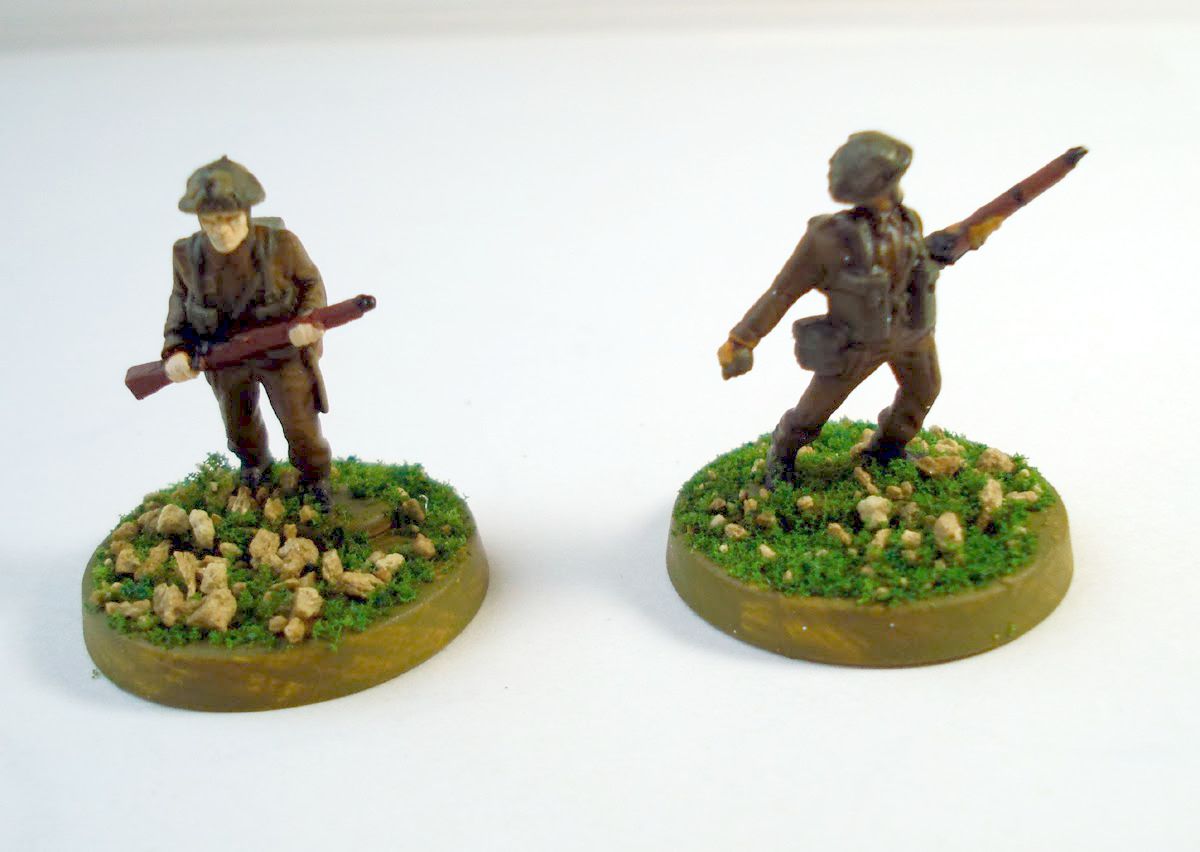

The backpacks have a fair amount of detail, but there is no crease in the miniature separating the top of the pack with the back of the figure, so I had to stick with painting my own line.
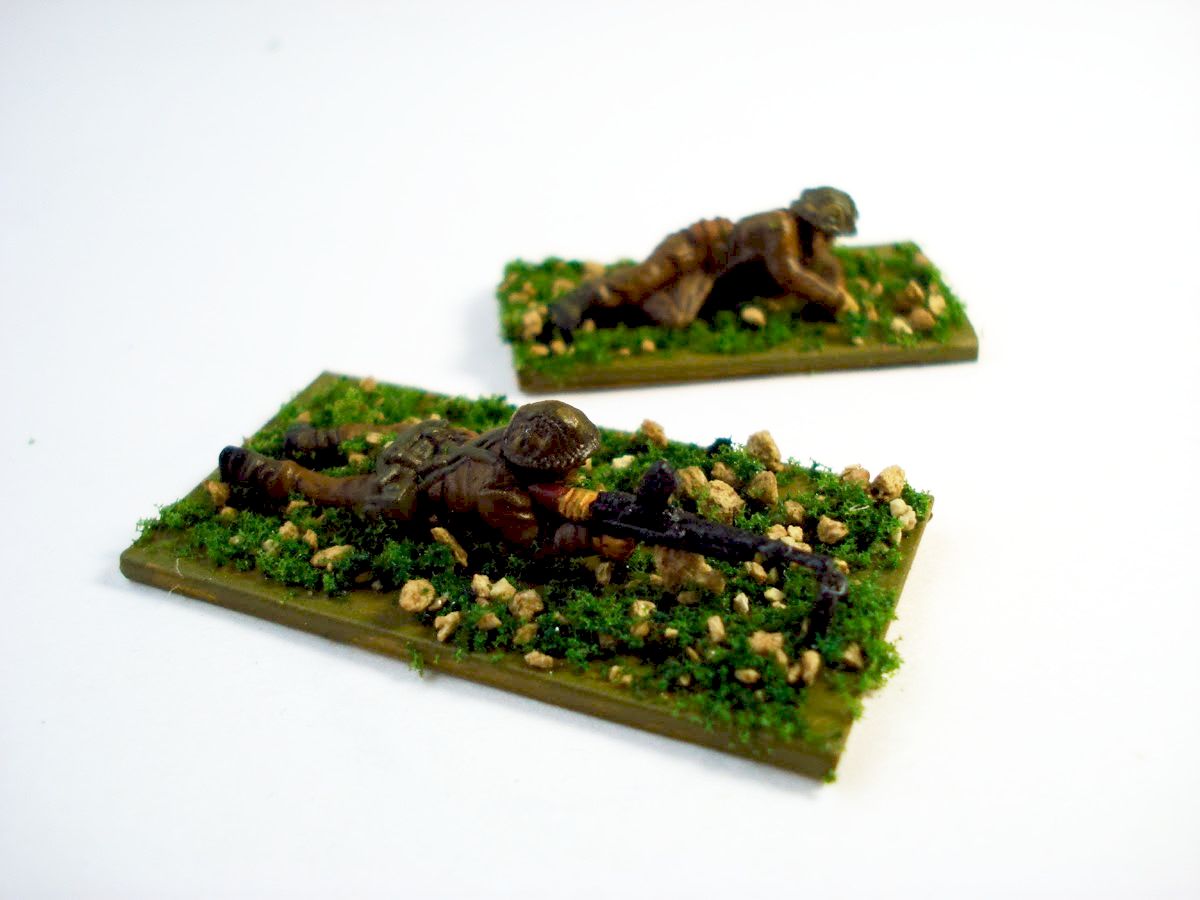
Some prone bren gun teams with a firing and loader figure .
Overall I’m happy with how the figures are painting up. For the price, it’s really a great deal and the models do paint up well (despite some grumbles I have with some of the detail).
Plastic Soldier Company: British Troops
Slowly I’ve been making some progress with my Bolt Action troops. One manufacturer I’ve been gushing over is Plastic Soldier Company. They have pretty decent minis. However from my understanding the sculptures are done digitally. Hence the figures for 15mm are the same for 20 and 28mm. While they can get a lot of mileage out of the plans that way, at higher scales the detail in the figures get a little muddier.
I’ve picked up some WWII British from Plastic Soldier Co. and I’m pretty happy with them. However you really get more detail from the raised portion of the models. Creases, folds, and lines tend to get blurred some. For my British, this is especially noticeable with the back of the models and the packs they are wearing, where there really isn’t a nice fold in the miniature separating the depicted pack. If you look closely in the picture below, the kneeling figure has the stock of the rifle sort of blurring into the shoulder and arm some.

I’m certain this has been one reason why the jump to 28mm hasn’t been fully done yet. I do know some wargaming sites were floating around the blue boxes (28mm) to be released later in the year. Those have dried up and it looks like just the Russians are out. The red boxed 20mm seems to be the scale they are focusing on now. Maybe they’ll wait and see for the Russian figure line before going too heavy into 28mm.
The figures are pretty good though with a decent mix of poses and troop types. There are a few prone Bren gun teams, along with command and radio teams. The figures I have here were primed white with a wash of thinned black primer.
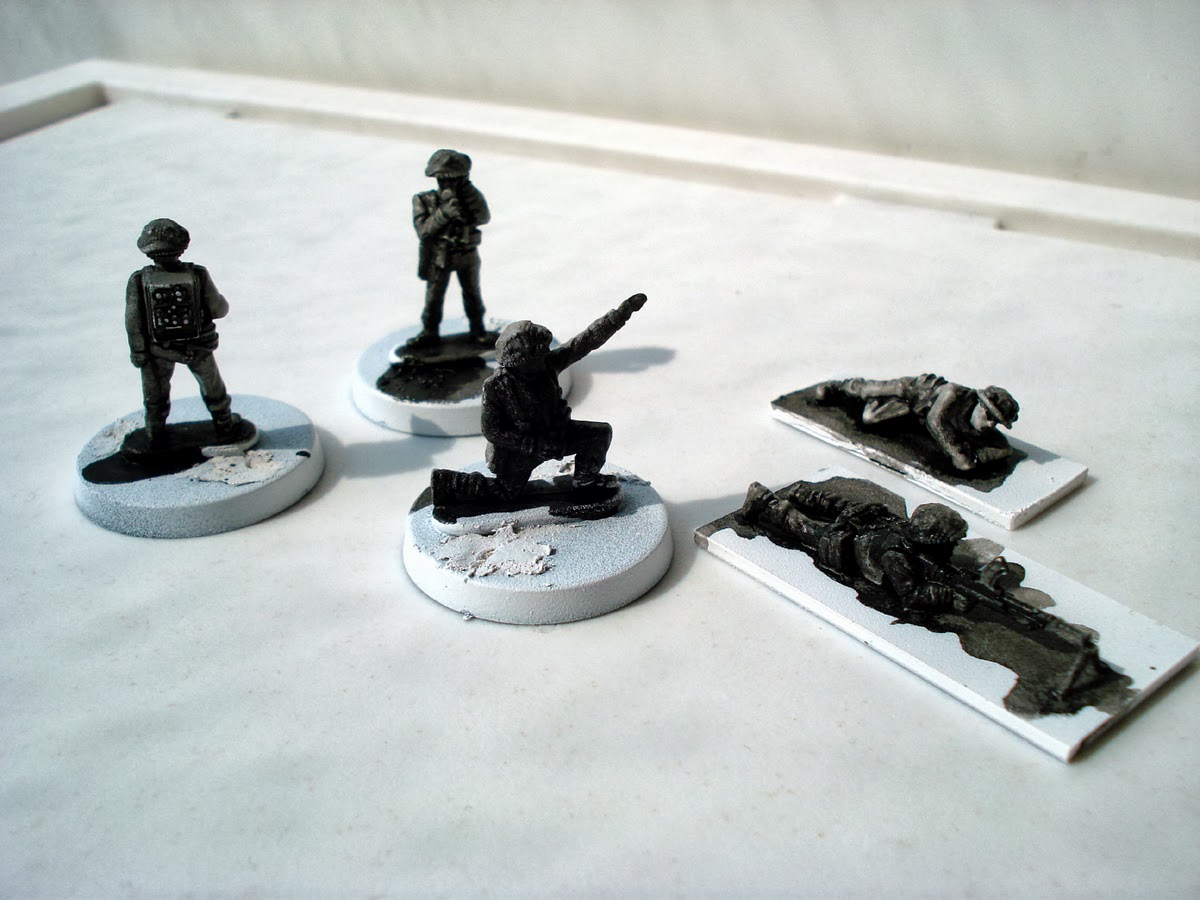
You get a good mix of regular troops and a few NCO types armed with sten smgs.
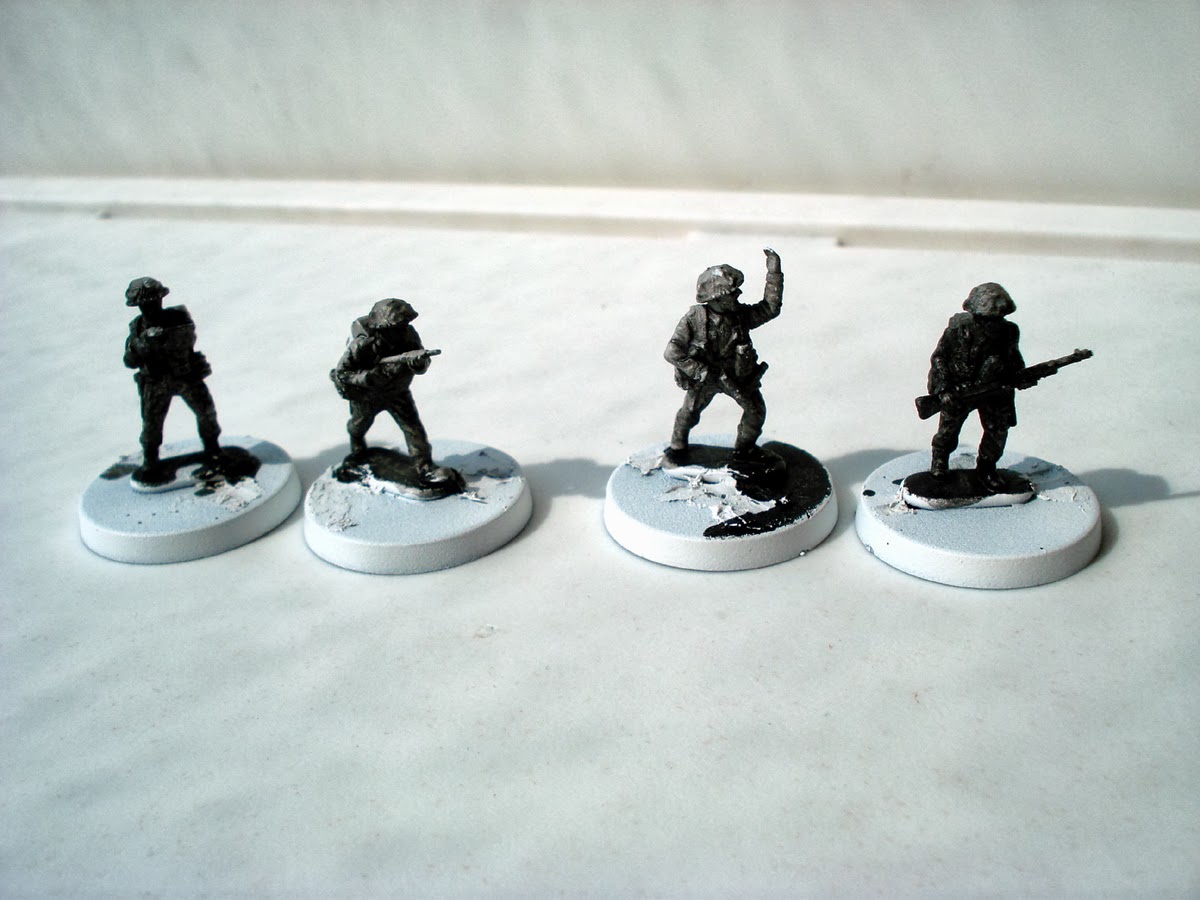
There are even sniper and medic figures.
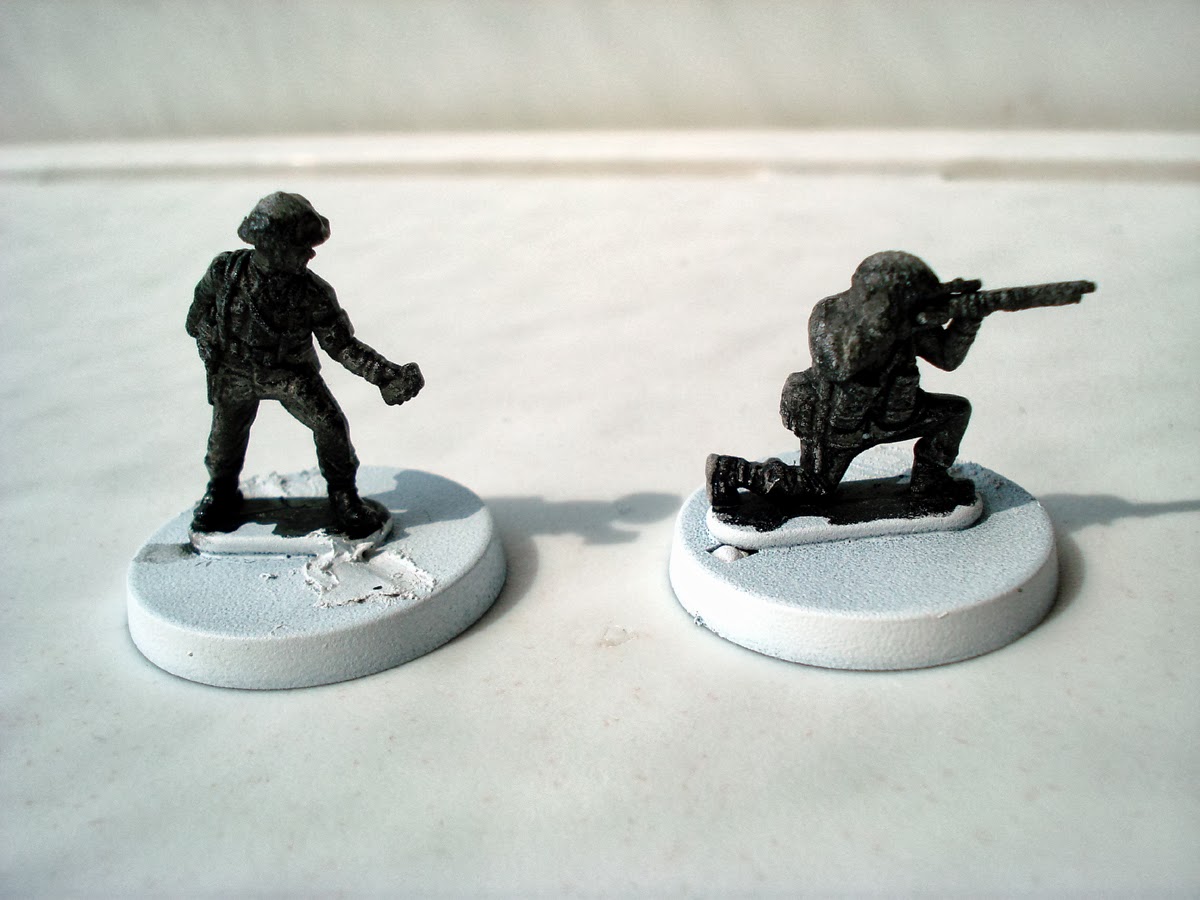
Still you can’t beat the prices for these miniatures. I got a full platoon (66 figures) of British for $17.50. The going price for the 28mm kits (with over 50 models) is about $28. Compared to the price of the Warlord sets of $45 for 40 troops, it’s a great deal.
I’ll freely admit that the Warlord kits are fantastic. You really have lovely figures in those sets with a lot of potential variety of poses and the quality is top notch. However if you are really on a budget, it can be a bit steep. Having a cheaper alternative out there (especially if you wanted to dabble in another army) would be great. I hope Plastic Soldier Co. considers getting into 28mm more. As for 20mm scale, I’m very happy with my purchase. It was well worth the investment.
FoW: Russian scout platoon

I’ve been (very) slowly chipping away at my Russian Strelkovy division. Originally I had a company of infantry to support my Russian armor force. Having a ton of painted infantry stands made me want to work on an infantry army too but I figured I’d take that as a long ongoing project.
I had some leftovers of tankodesantniki figs set aside (just PPSh-41 armed Old Glory and Flames of War minis). Instead of plopping them on my tanks, I was planning on modeling a few on a thin base in single file so I could have them accompany my tanks and still give them some visual representation they were part of the platoon. Even with a few stands made up I still had a ton of figures so was sort of lost on what to do with them. Looking over the FoW lists, I decided to form them together as a Russian scout platoon for my infantry army.
One approach I was going to try with these minis was a single wash of ink. Before for a lot of my other minis I’d do separate washes, especially a flesh wash just for hands and faces. I figure for this group I’d try to speed that up a bit with one uniform wash for the entire stand. Another point I had was just saying no to having 4-5 models per stand. I opted to keep it to 3 or 4 tops instead. It’s just a crap ton of figures and keeping it 3-4 models per stand really made it easier to stretch out the models I had and cut down the work needed to fill out my infantry companies.
Of course it wouldn’t be my typical painting project without a hiccup. Living in Korea it’s immensely difficult getting my hands on proper DIY materials. And despite looking for a long time, spray primer seems non-existent (I just don’t think most folks bother using it for home improvement). So I spend some cash and bought some Army Painter primer online.
Some warning signs for this can should have came with the Firestorm Armada resin minis I originality primed with it. The primer flaked off and simply did not stick to the miniatures. Although I had washed and brushed the minis, I figured I still had some sort of residue on the models that prevented the primer from taking. Working with the same can I primed the metal minis pictured and was not too pleased with the results. The primer sprayed very unevenly, and seemed to leave clumps of primer flecking on the surface of the figures. Using the spray primer I did the recommended procedures, warmed up the can, gave a good minute plus of shaking, waited for a day of no humidity, and still got crappy results.
I’m not going to completely blast Army Painter. Fortunately, I ran out of primer and used another can of Army Painter primer for some 15 mm sci-fi minis. This new can gave a very even coat of primer. So I suspect I just happened to get a bum can. Might still have to chalk Army Painter up into the ‘questionable’ column (I have used their matte varnish and the results seem okay).

Looking over the Russian scout figures, I was going to go with an initial black wash to ease with detailing the miniatures. As the primer job was sort of botched, I opted instead to use thinned down Vallejo surface black primer. I’ve used similar waterbased primer for my FA ships with good results. It did seem to get into the cracks like I wanted, but the figures still had a bit of a ‘fuzzy’ look due to the primer. I powered on and went to using a few coats of base coats that evened out the surface a bit.
As I mentioned I have taken the route of different washes for the same figure before with my other 15 mm forces. However looking at the literal pile of figures I need to paint for my Russian infantry division, I needed a more rapid way of getting through the minis. So for these figures I went ahead and gave a single ink wash for the entire figure.
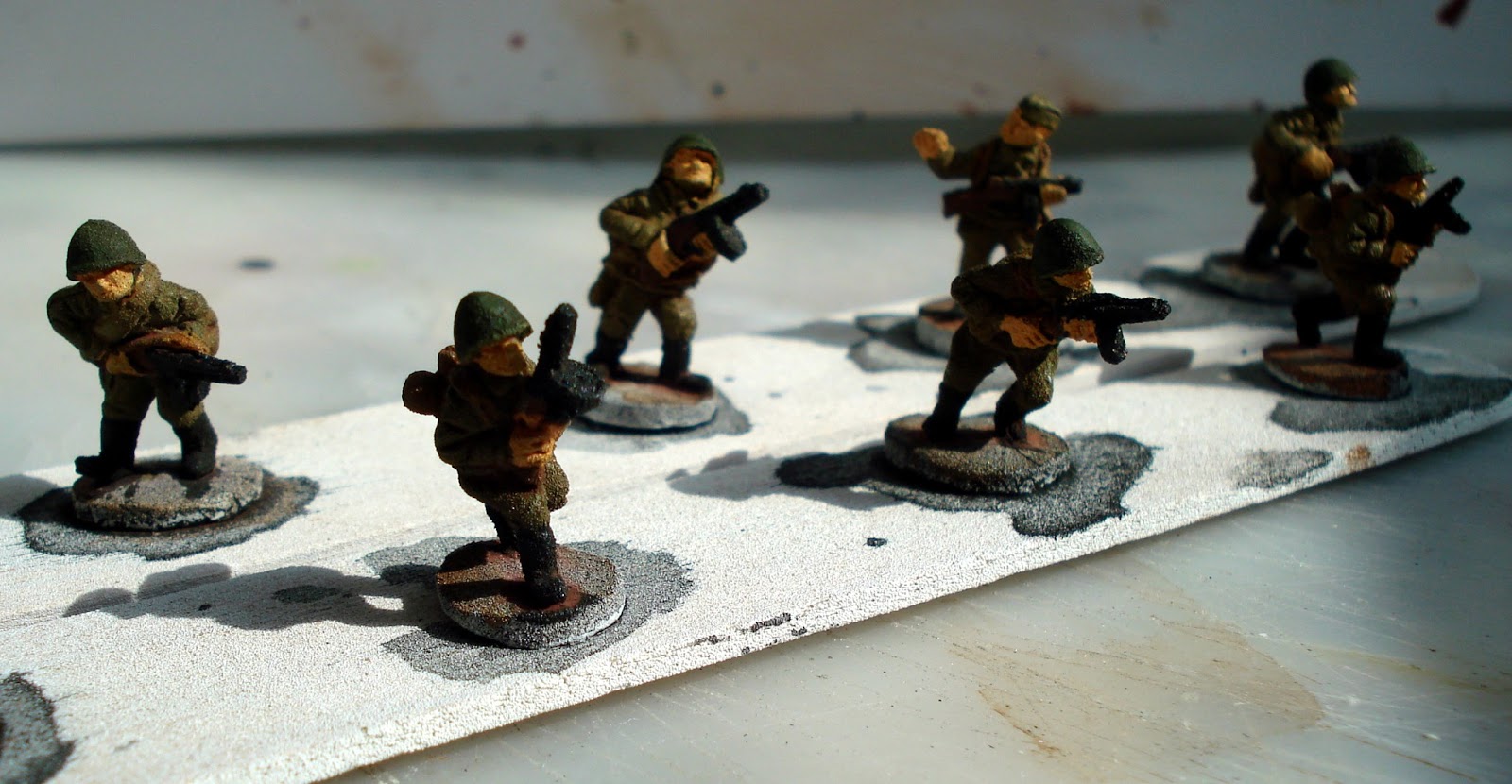
Getting them glued onto bases and flocked, overall I’m pretty satisfied with the results. I will likely give other miniatures a dry brush treatment to bring out the details. These are a bit subdued however I think with the uneven surface primer, it might bring out a weird texture look on the stands if I drybrushed these troops. As I mentioned, using another can of Army Painter primer gave me much better results for other figs. I expect I’d just gotten a bum can of primer. Fortunately, these scouts turned out pretty decent. I think having 3 or 4 to a base will also make the project more manageable. Now to get cracking on more stands.
The 15 minute paint day
 Floating about has been this idea of tackling creative projects in chunks of time. You think of all that time needed to write that story in your head and you’ll never get started. A workaround is to take it in small bits of time along the lines of 15 minutes. If you have more time and get in a groove, go with it. However if your ideas are puttering out, hammer away for just 15 minutes. Given the busy schedules we all have you can still easily find at least 15 minutes free. Keep at it for a month and you have progress on your project. No clue how this works with writing, but I’ve adopted it for my paint bench.
I do what some folks do with their minis, the figures sit around collecting dust for a while and then I get hit with the paint bug. BAM! One month of solid painting and I crank out a ton of figs. At that point I look over at that pile of bare metal and decide to hold off on painting for a while. That thought of having the time to sit down for an hour and get through my models impedes my desire for painting. I’m too busy. I have too many other things going on and just can’t justify the time to sit at the paint bench.
So I adopted a 15 minute paint day. Every day I set aside 15 minutes to work on my models. I count time once I’ve gotten my figures, paints, and water situated (less than two minutes). Set my timer up on my phone and paint. Once time is up, I wash my brushes and clean up my bench.
Face it, you’ve got 15 minutes every day. It’s a small section of time that folks can fit in their schedules. It just takes that gumption to stick with it. To be frank it’s not easy. I still fall behind this work ethic, but have been able to get in at least 5 days a week. When I have more time on the weekends and work an hour or so, I still just count that as 15 minutes (no carrying it over to count for other days).
Those 15 minutes add up. I can say that I’ve gotten in over an hour painting each week. More importantly, you are making continual progress on those painting projects. I never get that sagging feeling of guilt when I accumulate more unpainted figs to the pile, as I am slowly chipping away at that stack converting bare metal into painted minis.
Best of all, on a Sunday morning I’ve got my coffee and zero pressure to stay at the bench. If I feel like painting more I do it. If not, I put in my 15 minutes, stop, and do something else. I never feel like I have to squeeze some time in during a month to paint up that unit of troops that’s been sitting there. I just stick to 15 minutes a day and realize eventually they will get painted.
So if you paint in spurts, and have that long lag time between sessions at the paint bench, consider just trying to sit down every day for 15 minutes. Just a small part of the day, allowing you to work on your models and enjoy the process of painting them up. Just 15 minutes. You’ll be amazed at your productivity at the paint bench.
Terran battle cruiser and fleet complete
So a long while back I had assembled and primed my terran fleet for Firestorm Armada. It’s been slow going but I got around to completing them and thought I’d post some sequential photos of the battle cruiser as it was painted up.
For my terran fleet, I went with a 2 color scheme over a metallic base coat. I wanted a little contrast with these models compared to my sorylian fleet (which were effectively different shades of green).

I managed to pick up some inks finally and gave the entire model a black ink wash. This really added depth to the metal base coat. It’s been a while since I’ve worked with inks and some of the raised surfaces are a bit too expansive and flat. Took up as much excess as I could muster, but still got some pooling on the flat raised portions of the model.
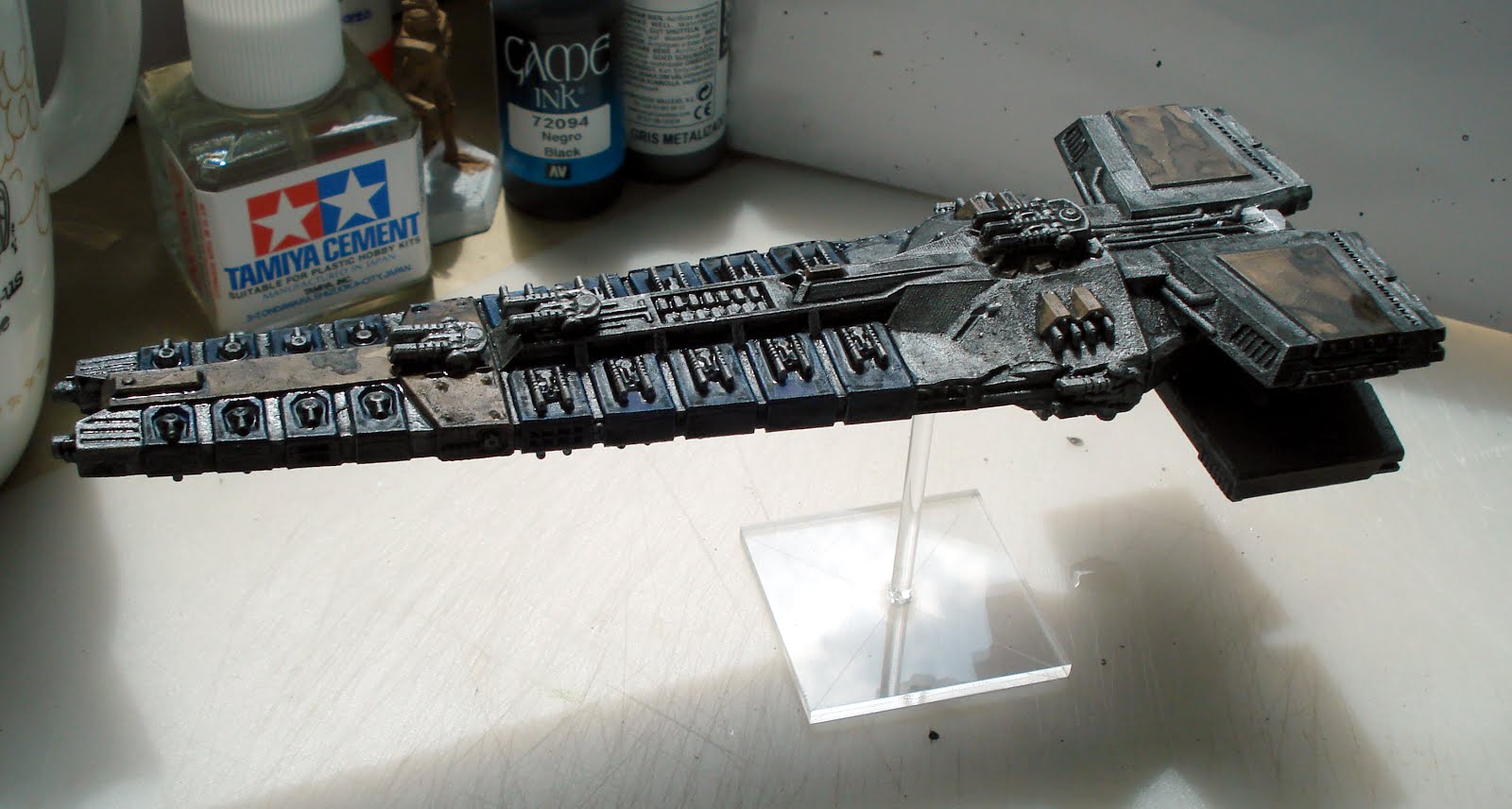
Wasn’t too worried about the ink pooling much as I intended to give the areas a thorough dry brushing. Usually I drybrush the base paint coat, or possibly a shade lighter in tone. This time (as with my cruisers) I opted for much lighter tint. It gave the ship a really weathered look and especially brought out the blue sections.

Here is my assembled fleet. You can notice a big difference in the shading with the three cruisers as I didn’t use inks with them (just a wash of black paint). I think the inks really carry a lot more intense pigment and add a fair amount of depth to the minis.
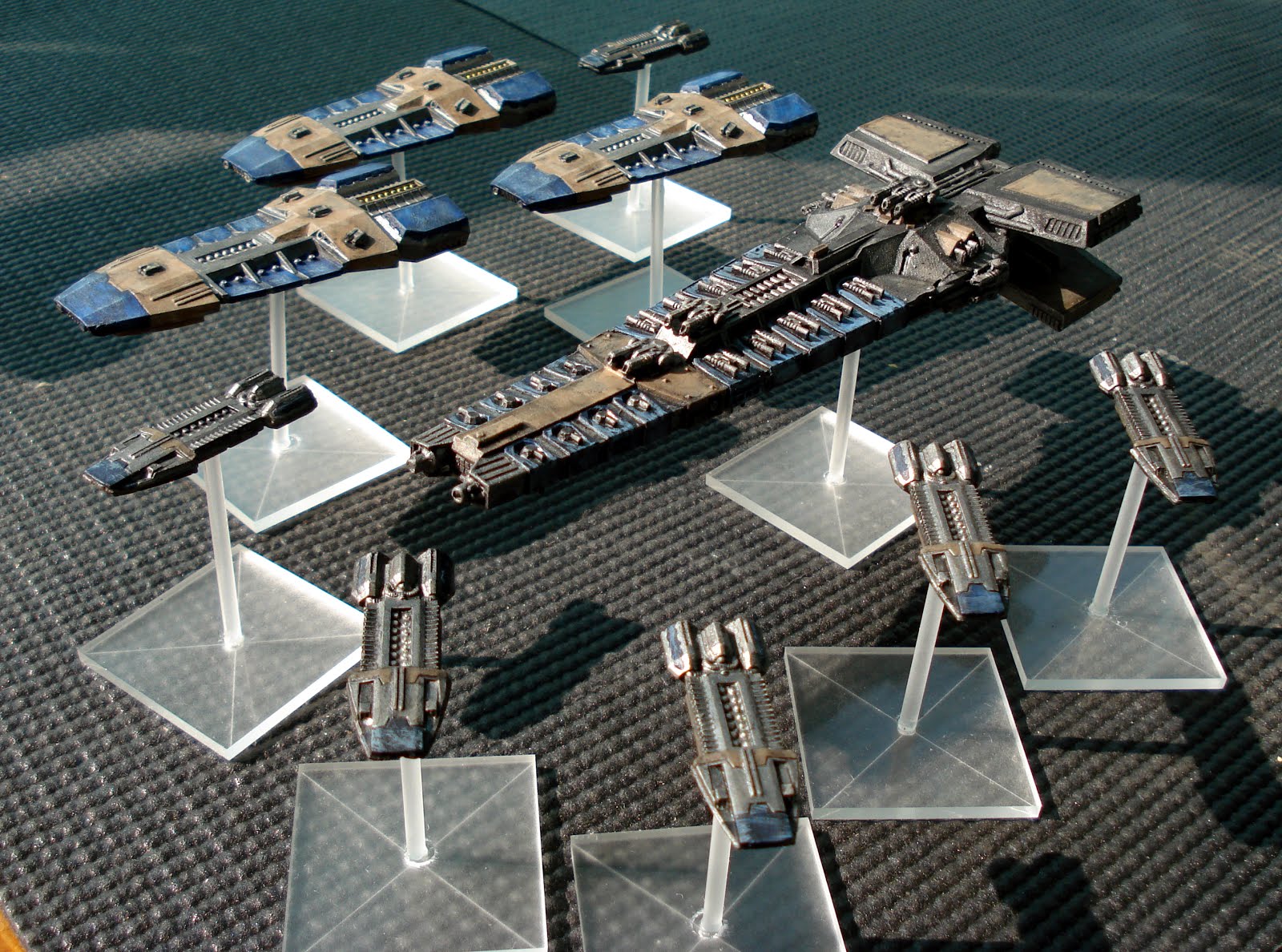
I’ve gotten a bit burned out with ships as I cranked out two complete fleets. Not to mention my Sorylians took forever as I painted the frigates a few different base coats to get the final paint scheme I wanted. The terran fleet has a more ragtag, battle-worn look compared to them. Overall though, I’m happy with how they all turned out. Now I need to get some game reports in sometime!
 Geek Ken