Category: Review
Board game review: Pandemic
Pandemic is a 2 to 4 player cooperative board game by the folks at Z-man games. Players are CDC-types frantically attempting to keep several epidemics under control as various diseases spread throughout different nations, all the while trying to avoid a massive pandemic. It’s a fun game where everyone teams up to try and beat out the clock of different game resources and conditions.
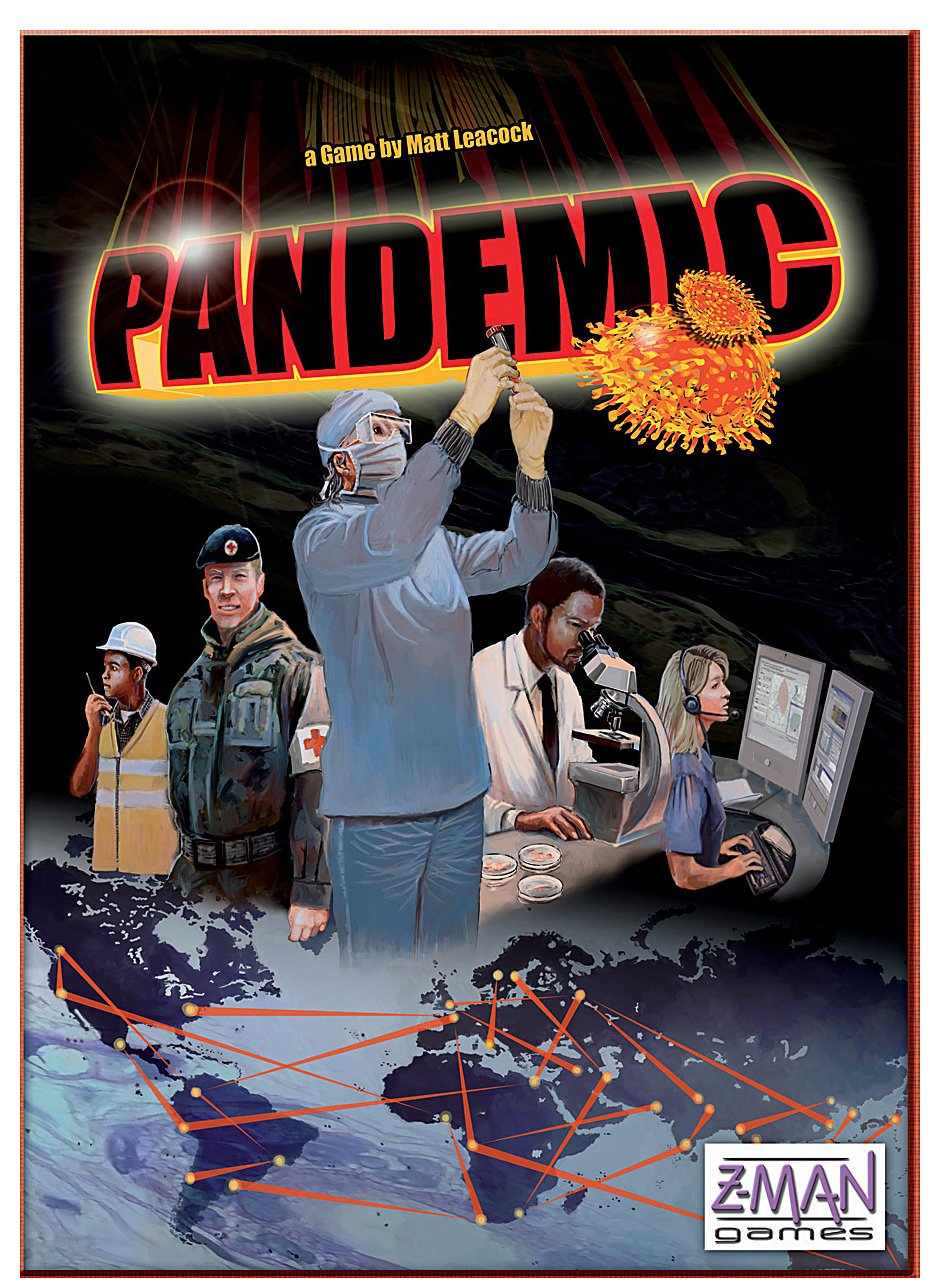
The players must find ‘cures’ to 4 different diseases (essentially turn in a color set of cards at specific locations on the board) before the game ends. There are several conditions ending the game, including exhausting player action cards and disease cube markers. If a player has to draw cards or place these markers and none are available, the game ends. Another more, trickier end game condition to predict is the outbreak track.
A single location can have a maximum of 3 disease cubes of a single color. If you add a 4th, you get a chain reaction spreading additional cubes to adjacent locations. Each time this happens, the epidemic track moves up. Reach the end and the game ends. At the conclusion of a player’s turn, disease cubes are randomly added to the board by drawing cards from a disease deck. Each world location is a unique card, so it is fairly predictable and players can try to work on controlling a potential outbreak.
However, a set number of cards are inserted into the player deck to represent epidemics. When drawn, this creates a burst of disease cubes added to a few locations. Also discards of the disease deck are shuffled and placed on back on top of the deck. This essentially increases the chance of adding more disease cubes to heavily infected areas and the likelyhood of another outbreak, continually moving a marker up the outbreak track to end the game.
So players during their turn are always trying to move to specific locations, remove disease cubes, and make trades to grant a single player enough cards to find a cure. Like the disease deck, player cards are all unique locations. Players have to be in the same location as a card being traded. You can jump across the globe, but that requires discarding the destination card (removing a potential card that could be used for finding a cure). It’s a difficult choice thinking which cards to discard and which cards to keep and players continually coordinate their efforts to work with each other before the game ends.
Each player also gets a specific role determined randomly at the beginning of the game out of 5 possibilities. Each role grants a special ability that ‘breaks’ the rules that other players adhere to. So one player might be able to remove all disease cubes from a location instead of one, or one player can just turn in 4 cards to cure a disease rather than 5. It’s a nice twist to add a little variety in how the game plays for each player.

The Good – It is a fun cooperative game with enough re-playability to keep things interesting. Additionally, the game can be scaled in difficulty by the number of epidemic cards being added to the player deck. An easier game can be obtained using 4 cards, while a challenging game can be played using 6. The epidemic cards really add a curveball to how the game plays, making a rather predictable game become suddenly a very hectic experience. The components are nice and well presented, especially the meaty tactile feel of disease cubes.
The game is also very interactive. Players will find themselves talking to each other, offering advice, and helping coordinate each other’s actions. So even if it is not their turn, they are engaged and looking at their hand, trying to see how they can help in trading cards and moving around the board of other players. Also, as it is a cooperative game with everyone working together, it makes for a fun family game.
The Bad – It’s a cooperative game. This might not be everyone’s cup of tea as some might be more in the mindset of being the sole ‘winner’ of a game. Also as a cooperative game with a lot of player interaction, I’m surprised the game is limited to 4 players. I think games like this really need the ability to play with 5-6 people. The game mechanics are pretty random also, which might not please some people that want a more structured experience, as a bad streak of drawing poor cards can leave a sour taste.
I do know that a new expansion is available for Pandemic which does add another player, and also provides some options of gameplay where everyone plays against a single opponent. I’m a little on the fence about picking that up though.
The Verdict – Pandemic is a wonderful buy. I think the small bit of random roles and randomized spread of diseases, coupled with the high amount of player interaction makes this a great game to play. The presentation and components are nice. I also think the cooperative game experience is also something a little different from your typical game, and it works well. Pandemic is a nice addition to any game collection.
Thoughts: Player’s Handbook 3
I figure rather than waiting about four months before piping up about this book I’d go ahead and make an effort to get something out now. I actually managed to get my hands on the book in a rather timely fashion over other WotC releases. So let’s jump right into talking a bit about the new Player’s Handbook…
Races – 4 new races are listed in the PHB3. I find it interesting that they’ve really pulled the stops out and had some very unique creatures listed, including a brand new primal creation, the wilden. Some like the minotaurs and githzerai are more standard 4E races while others, like the shardmind and wilden, are really pretty far out fantasy-types. I think it’ll depend a lot on the flavor of the campaign, but most might find the incorporation of a lot of these races a bit tough.
 One thing that does bug me a bit is the power creep seeping in with these races. One failing I’ll admit with 4E is the rigidity and importance of ability scores. Once you select your ability scores, it is few and far between in ways to advance them. Unlike older editions with various magic items and the rapid scaling of abilities, you are pretty locked in with your stats in 4E from the start. What else adds to this problem is how monsters scale in difficulty. If you flub an key ability score, 4E is pretty unforgiving as you level up, since much of the monsters are built around players maximizing their character abilities and feats.
The races in PBH3 get around this a bit by having a +2 bonus to stat A, and a +2 bonus to either ability stat B or C. I think it is a little bit advantageous having new races that can really bolster select abilities compared to the older races that were a little regimented. It’s a light form of power creep, and with some players I am shuddering on how these guys will munchkin campaigns.
Classes – There are two classes, the runepriest (a melee heavy leader) and seeker (a primal controller via ranged weapons) that I think could easily slip into just about any campaign. For the most part, I think the seeker is the most basic class introduced in this book. The monk, despite, being a psionic power source, could also fit into an existing campaign world fairly well, as how the use of this power source is not too far away from the flavor of primal/divine/arcane.
The last three definitely embrace the psionic power source using augmented powers. The battlemind, ardent, and psion (respectively, defender, leader, and controller) are the new entries that fit the theme fairly well. I actually think the augmented powers are a little more restrictive in practice once I got to read the rules a bit more. Players start with at will powers, with 2 extra points that can bolster the effects of these powers. There is some versatility in the use of their powers, but the choice of powers themselves is a little restrictive. It seems like a pretty interesting mechanic for 4E.
The monk and runepriest however really get a lot more out of their power use. A runepriest effectively gets a choice of adding one of two small bonuses to each of its powers. The monk gets both a move and attack ability with most of his powers, and can choose to take either one, or both, when a single power is used. As much of 4E tactics are structured around limited choices during a turn, having more choices/abilities adds a lot more tactical options. I see this as some power creep rolling into the game.
Hybrids – For the really unique multiclass characters, PHB3 also introduces rules for hybrid classes. Where the old multiclass character dipped a little into another class while firmly set in another, the hybrid continually double dips into each. They are forced to split HP and armor bonuses, only garnering a little combined advantage with defense scores and weapon proficiencies. As they level up, they have to ensure they get an even split of powers from each class (so a fighter wizard with 2 encounter powers must have one from each class). It’s interesting, and again I am wary of the power gamers out there, but it looks like a decent framework for that person that absolutely has to have an invoker bard. I think it is nice that PHB3 also provides options for swordmages and artificers from the campaign books also.
Skill Powers – Another neat idea. Essentially another pool of power option for players trained in a particular skill. Some of them are quite handy and I think are a good way for a player to pick up an ability or power without having to go the multiclass feat route. I liked the options provided and think this is something that could be added to just about any game.
Feats and Magic Items – A final wrap up of feats and magic items. Most are keyed towards the new races and classes, but there are a smattering of items and feats listed that will work with just about any character. Again, nice to have some new additions and for the most part will fit into just about any campaign (if not aligned with the new races/classes).
The Good – It’s always nice to see some additions to the game that give players some new options. I particularly like the hybrid and skill power rules. I think with these two additions, you can finally really get a character that fits just about any particular idea.
I think that the new races can also accommodate some really heavy fantasy worlds. I also like that having another power source along with a variety of class roles that use this source, as it can lay the foundation for an interesting campaign world. Having more tools and choices will help DMs in the long run, and there are plenty here to make for some fun D&D.
The Bad – Some of the stuff might not fit well within restrictive campaigns. Having a player race of living crystals or primal shifting elementals may not sit well in some worlds. The psionic power source might be a bit too far ‘out there’ also for some games. One thing I don’t quite like is the power creep. I can see players getting a lot of options with these characters that are lacking with the older edition counterparts. This might start surge of campaigns churning over so that players can get a chance to try out all the cool new stuff available. I think long established campaigns might get a little rumbling around the game table over PHB3 being introduced.
I’m also wondering if it is too much, too soon. PBH2 I consider a must buy. It really addressed having the limited races and classes in the first book. This is layering on even more, and it is less than 2 years with 4E being announced. Most of the stuff is pretty far out fantasy. Is this book really needed so soon? I can see some players feeling a little overwhelmed with choices before. PHB3 really ramps up the indecision even more. I’m just wondering are there that many groups that play so frequently, that they are completely bored with the current choices in PHB 1 and 2? I guess so, but less than 2 years into 4E with 3 books for players to roll up characters seems to be a little rapid expansion of the rules.
The Verdict – I don’t see PHB3 as a must buy. I can see many gamers easily passing on the entire book. I see everything in the book optional and none of it really necessary to have. Additionally, I think some of the races and powers might not fit too well with a standard medieval elf-dwarf-human type of campaign. Shardminds and wilden are fantasy, but they are stepping into the realm of some pretty wild stuff. It might not fit everyone’s world very neatly. Because of that I see PHB3 as a niche book for certain campaigns.
I do think you have a group of folks that have explored just about all the race and class combinations out there. They are bored with the current material and are looking for something different. In that light I think PHB3 delivers. So if you are wanting a different character, or getting a more unique flavor in your campaign world, the new player’s handbook is a good fit.
Litko 4E Condition Counters
A few weeks ago I posted a bit on using some conditional counters of my own making. I liked getting away from just a color coded method of using markers and use something that also had writing on them. The ones I made were functional, but I really wanted something a bit sturdier.
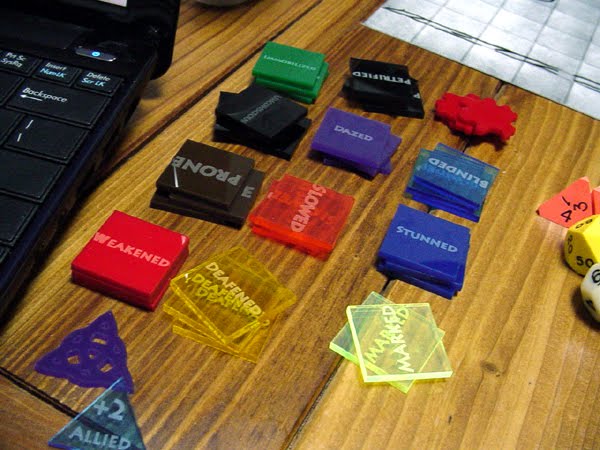
I decided to go ahead and invest in conditional counters from Litko. They have a pretty good set for marking most basic conditions. With that I picked up a player set to indicate marked, curses, and other bonuses. I went a bit further and also picked up a blast and plasma set to indicate other zone effect powers.
They are sturdy plastic about 3 mm thick, with text etched into the surface. The 4E condition markers are a double sided set. I like the beefy colored plastic and can throw them around without worrying about the tokens getting bent out of shape. The wording is clearly marked and I like the color scheme. The markers look like they would stack well under an official WotC mini.

I really like this product. With normal wear and tear I think they would last for years. They have a good selection in their sets. All of which I think are reasonably priced for their value. I also think it would be a great gift for the D&D guy that has just about everything. Be sure to check em out.
(Personal Note: Ordering things through international mail can always be tricky. Sure enough my first attempt at getting some markers resulted in being lost in the mail. After contacting Litko by email explaining my situation, they turned around and send out a replacement order at no charge. Great service, from a great company.)
Thoughts: Eberron Campaign Guide
For the sake of completeness I thought I’d chime in on the Eberron Campaign Guide. I held off picking up the book for a long while as I was currently deep within my current campaign. So I did not want to jump over to Eberron just yet. Additionally I wanted to hold off on shipping overseas, so I waited until I was on holiday to pick it up.
A long while back I posted my thoughts on the player’s guide for the Eberron setting. Overall I liked it and thought it a good buy for people wanting to get into the campaign setting. I’ve currently ported the artificer class over into my home brew campaign as something the players can choose if they so desire. I’ve gotten a lot of milage out of that book. So what about the campaign guide?
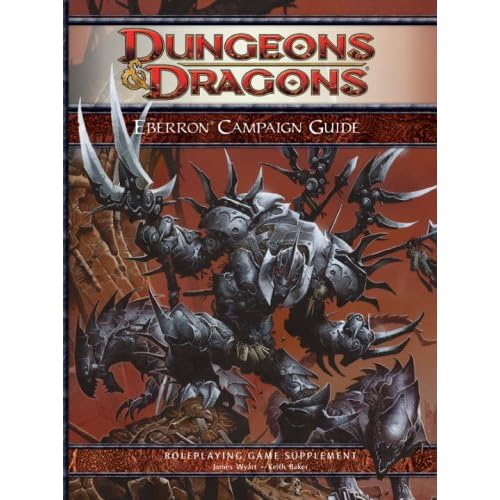
If this is your first exposure to the Eberron campaign setting and you wanted to jump into this for your group, buy this book. It has a ton of information and ideas for running this campaign setting. I think the introduction succinctly describes the setting and can allow a DM to easily grasp the overall themes. Additionally, there are a lot of suggestions on the opening campaign theme for your game. Whether you want the intrigue of the dragonmarked houses of delving into the secret war between the nations, to a more epic theme of the dragon prophecy as a high fantasy campaign, to a dungeon crawling jaunt of exploration to fill the player’s coffers with coin and treasure, just about every theme is covered. Enough ideas and information are given to give the DM some means to sketch out a campaign and run the game they want.
Further details are provided on the typical city settings, interaction of the various houses, implementation of magical technology and travel. Sharn is given a bit more detail on typical city life to allow a DM to take pieces and incorporate them into other cities within Eberron. Not to mention finally having some stat blocks on the various wondrous mounts a player can pick up.
This is followed up by more detailed information on different geo-political regions of the world. Each region is given a thumbnail sketch of the people and notable places within. Also a little detail of the other continents beyond Khorvaire is provided.
The book further goes into the various dragonmarked houses, and their role within Khorvaire. It goes over some of the politics and purposes of each house which was nice. The book also covers some more fiendish organizations and global threats. Again, nice to have if the DM does not want to get the players embroiled into the political bickering between dragonmarked houses. The book wraps up with a beginning adventure and some encounter examples.
I’ll pipe in here and say this last section was a disappointment. It always is tricky to put something like this in these books, especially with Eberron as a setting (since your campaign can take on so many different themes). I like the idea of a ‘flashback’ adventure with the initial fall of Cyre and having the players embroiled in it all. Additionally, the follow up encounter is okay, but I love the idea. It follows up on the group, 4 years later in Sharn. All of them are gathered at a ceremony commemorating the day of mourning (each there for some reason or another).
I really wish at this point the adventure stopped, and they just gave lots of suggestions on what the DM could do next. Having a lot of options and player hooks would have served the book well. I much rather they spent the following pages expanding another section covered, example encounters.
This is something I really enjoyed out of the book. A few example scenarios and locales were provided. Each detailing some interesting terrain of the encounter, with different suggestions of creatures to fight. Best of all, different levels of encounter groups were provided. I really wished they ported this idea over to most of the follow up encounters for the initial adventure.
Note to WotC, I think this would be a great stand alone product. Having a book of encounters, with suggested groups of monsters covering different levels would be a solid buy. Don’t worry about stringing it together as a series of dungeon delves, just give us example encounters in interesting locations.
The Good – A lot of solid information here. I think there is a lot of material to get a DM up and running an Eberron campaign. Lots of background on political, economic, and racial factions. There is also a bit more information on the ‘typical life’ of people in different geographical regions. This book goes a long way towards filling in details that the player’s book skimmed over.
The Bad – Plenty of material here, but I still wish there was more. I think committing more on the geographic locations would have been nice. Plus it is very centric to one continent, a bit more on the others within Eberron would have been helpful.
Also it’s an interesting idea of kicking off an Eberron campaign by having a flashback adventure, but I think overall the whole adventure falls flat. I wish they spent more pages with material like the last two encounter locations in the book. For me, I would think that type of material would be more applicable and easier for a DM to use over having a complete initial adventure.
The Verdict – If you are new to D&D and want to run an Eberron campaign, this is a great DM buy. It has plenty of information and a enough details on the movers and the shakers of the world. As a big plus it also covers a lot of ground on giving the DM ideas for running a variety of campaign themes.
If, however, you have run an Eberron campaign in the past and (more importantly) have many of the old campaign books, I think you could pass on this. Much of the material is simply background material on the world and its people and places. Much of that would all ready be at your fingertips with the original 3.5 release. I think with that book you could skip much of the material in this new book, and armed with the 4E player’s book be able to run an effective campaign.
While some of the factions, villains, and groups are interesting, I also expect this is a book strictly for DMs that want to run a game in this setting. Not a whole lot of meat in the way of rules here. If you are running a homebrew setting, likely much of this material is more background information rather than stuff you could port directly into your game.
That is my impression of this book in a nutshell. If you’ve run an Eberron campaign before, just be sure to pick up the 4E player’s book. Nothing in this is an absolutely must have, and you can likely make up what you need to fill in any gaps by yourself. If you are a new DM to 4E Eberron though, I’d say this is a must buy.
Toodles for now!
Board Game Review: Mall of Horror
Given that Halloween is just around the corner, I’m in the mood to post about things scary, spooky, and well… backstabbing, cut-throat board games.
The setup for Mall of Horror is classic George Romero zombie apocalypse. Various groups have headed off to the mall to hole up, and hope they can survive long enough before they are rescued. They are surrounded by the living dead and it is only a matter of time before zombies burst through flimsy barricades to eat one of the survivors.

The game is pretty simple. You have a certain number of pieces on your team, each with special abilities, and worth a set amount of points. You simply want to survive long enough (i.e. be one of the last few eaten) until the survivors are rescued. The person with the most points wins.
There are several rounds to the game. Players chose a member of their group to run through the mall and hide in a certain location, the only problem is each location can only hold a certain number of survivors. If you can’t get into the destination you want, you have to hide somewhere else.
Also some destinations have special abilities. The security station can allow one player to look through the security cameras (and find out where the zombies are moving). The parking lot holds a supply truck where players can pick up various tools to barricade locations, or weapons to take out zombies. After the survivors settle in, the zombies move according to a random die roll. If you are lucky, you’ll have few zombies at your location. If you are unlucky, the zombies burst into a section of the mall and then the real fun starts.
The zombies will feast on one player. Afterwards they are sated for a bit and wander off, leaving the remaining survivors. Who gets eaten is decided by a vote from the players at that location. This is a particularly gruesome aspect of this game. Want to man the security cameras? Want to loot the truck? Want the other guy to be thrown to the zombies? No random die rolls, everything in the game is decided by vote.
Each player is given a voting wheel that has all the player teams. To vote, they just secretly rotate their wheel to the team they want. Each survivor at a specific location gives the player a number of votes (some, like the ‘guy with the gun’ are worth 2 votes). Have enough votes on your side, and you get things your way.
What results are rounds of vicious deal making and backstabbing. Need some help raiding that truck? Sure. But you gotta help me vote that other guy gets thrown to zombies at the grocery. Get ready for some under-the-table deals and be ready to up your negotiation skills.
Granted a player can be eliminated, but that doesn’t mean they get to sit out waiting for a winner. Each round they get to add another zombie to the mall (likely busting through a location, resulting a survivor being zombie food). Also for each tie, they get to decide the winner.
The Good – A relatively rules light game. With very nice components and nice art work. Quite a bit of randomness is in where the zombies move, so there is a lot of replayability. Plus the game is all about interaction with each other. The only solid strategy is being good at negotiation.
The Bad – The player pieces are a bit lack luster (basically stickers on wooden wheels). Too bad they do not match the quality of the zombie pieces. Also, given the kill-or-be-killed mentality, some people may not like the game.
The Verdict – This is a game not for the thin skinned, nor the easily bruised ego. I think it is a game best played with friends. I would not drop this down at a dinner party full of strangers and expect a fun evening. However, having your pals over for some beer and pizza, all the while cheering as someone has a member of their group eaten by zombies, well… it’s just a lot of fun.
Thoughts: Dungeon Master’s Guide 2
So WoTC seems to be keeping with the theme this year being the ‘book 2’ of releases. While AV2 was a nice addition, I’d tag it up with the MM2 of being simply more of the same (more treasure and more monsters). While not necessarily a must have, both had some nice additions to improve campaigns. PHB2 I think added a lot to the holes in the first book, giving players a ton of new options when rolling a character. So what about the DMG2?
I have to say I think the DMG2 is a great addition to the core books. They really kept with the idea of making this book an advanced guide that takes off on topics the first DMG covered. It covers a lot of topics, including treading over some old ground to further refine and explain some items from the first book (skill challenges especially).
There is one overall theme I see from the DMG2, ‘make the game what you want’. While the first book laid down the rules, DM2 gives a lot of options to the DM. Nearly all of them lay down a groundwork for rules, and throw in the recommendation to alter whatever to make it work for your game.
I think this point is seen strongest in skill challenges. The overall rule set is presented again, but so many options, alternatives, and examples of these variants are provided. I think the DMG2 has shown how free-flowing skill challenges should be. If DMs were struggling to run them before, I think they will have better ideas of how to incorporate them in their game now. And by not demanding DMs adhere to a strict format, I think folks can use them in their games to a higher degree of success than when they were first introduced.
When the group pushes well beyond the heroic tier, I think you tend to risk burnout as the players become to feel they are encountering more of the same. The DMG2 shines in this respect offering a lot of pointers and suggestions to elevate a DM’s campaign to the paragon tier. Like the first DMG that provided a groundwork for an initial campaign with Fallcrest and Kobold Hall, the DMG2 introduces Sigil and a doorway to planar adventures. This introduction is great, as it gives DMs a means to explore other campaign ideas into the Planes, something which can be tricky to incorporate into the ‘worldly’ beginnings of most heroic campaigns.
I also think normal burnout of running campaigns can encroach just about any DM. Again the new book gives ideas for cooperative story-telling, bluntly surveying your players for ideas and opinions, and outlining other potential campaign themes. More tools and ideas are presented to get your player’s characters into grand adventures, and much of it is great stuff.
There is still some chunky material with new hazards, artifacts, and NPC class templates provided. Traps have been given some more discussion and examples (albeit the section is pretty much the same material from the previous Dragon article). I think they also refined creating monsters which is nice. Clearly WoTC saw improvements that needed to be made to the stuff they put out in the first MM. MM2 incorporated a lot of these design attitudes (such as having solo monsters do something cool when first bloodied). Having similar guidelines provided in the DM2 means folks can make up monsters that will fit in well how DnD games have changed since release.
The Good – There is a lot of good things about this book. While I think the focus of the first DMG was for beginning DMs (which it did its job well, and was a great audience for that book), this book is definitely geared towards those DMs that have had a few sessions under their belts. I think it helps address a lot of problems that come up when your group hits the paragon tier, looks around, and then say, ‘Now what do we do?’ Having a lot of suggestions for campaign arcs, and further character development, go a long way to addressing these problems.
The Bad – While the book covers a lot of ground, more would be nice. Give us more templates, traps, hazards, and especially more artifacts. How about more organizations or campaign themes? The DMG2 does a fine job, but more entries world be nice. I still think having more ideas for campaigns would be helpful. How about some guidelines on governments and commerce? No strict rules and tables please, but a few pages covering some basic concepts. Also, ideas on speeding up your game and help in running combats are noticeably absent. There is a lot of chatter on the web about DMs having this issue, some useful guidelines would have been a welcome topic.
The Verdict – While I think most of the ‘book 2’ releases this year would be optional, I’m going to put the DMG2 alongside the Player’s Handbook 2 as a must buy. There is simply too many good ideas, suggestions, and topics included here. All DMs are going to get into higher levels of play, and having ideas for the epic and paragon tier games are incredibly helpful. The chapter on running encounters was also great, stressing the importance to taking the action up a notch for higher end play. This is a great addition to the core series, and I think nearly every DM will find it a good buy.
Review: Adventurer’s Vault 2
I’ve managed to get a copy and plow through the Adventurer’s Vault 2. In the first book WoTC added a little more to the book by including alchemical items, m ounts, and additional mastercrafted weapons and armor. This was nice as it became more than just a list of new magic items. AV2 is just magic loot. Nothing additional other than more items your players can drool over. But what they added fills a few holes in the previous lists, and for the most part I think are worthy additions.
I think one of the strongest points of the book are the variety of new items provided. Even if a folks might think game effects of magic items are tepid at best (I really think for the most part magic items are the new feats from 3.5), having some concrete examples can act as a springboard for new homebrew items. As I noted before making custom magic items can be pretty easy, especially adding spell effects to items. So armed with some official examples, I think DMs could whip up something of their own making and not worry about creating some overblown powerful artifact. So on to some specific points…
Ammunition – Finally some one shot ranged items. I can see some DMs feeling a little hesitant about handing out powerful magical ranged weapons. As an alternate, these items are great for those players that typically snipe away from afar by offering something small to add to their attacks. A few choice, one-shot arrows is something I’ll be giving out in my regular group frequently. It’s a step down from a solid powerful magical weapon, but having that one arcane bolt, made for that one special attack, just oozes with exciting RP potential. I can’t wait for one of my players to drop the next main bad guy with such an item.
Tattoos – For those primal heroes, I can totally see this fitting in with their theme. It is an interesting concept to have a permanent fixture on a character’s body that empowers some magical force. Have your shaman find a magical etching on a piece of leather. A local medicine man can transcribe the etching using special inks. After the tattoo is inscribed the etching fades away. A suitable mini-quest with lots of RP, much better than the same shaman just looting something out of a treasure horde.
I’d add DMs should take the tattoo idea and run with it. With the appearance of tattoos as a magical item, I’m seriously considering taking a look at tweaking Eberron’s dragon marks for a home brew campaign. Tattoos are a neat idea and I’m glad WoTC jumped at providing some ‘official’ examples.
Wondrous Lair Items – I can see as players approach the paragon tier, they are going to begin attracting followers and needing a more stable home base of operations. Having a few of these items can provide a cool home lair for your players. Also having these items can serve as inspiration having your player’s attacked on their home turf. Nothing like seeing their secluded keep as a target for marauders.
These items (and sets which I’ll talk about shortly) taps into a problem I see a bit with larger parties. By level 7 or 8, likely you will have players that managed to pick up a good set of armor and/or weapons. An upgrade I’m sure is welcomed, but some players might find their needs for loot sated with the stuff they already picked up. Handing out these wondrous lair items makes for a nice alternative, where the players get a chance to get something cool to add to their possessions (rather than just replacements for stuff they have)
Item Sets – I feel these are a great way to add small items to a player, slowly increasing his abilities, rather than completely overhauling gear he has. The sets also might work as a good hook. A rumor of gaining another item to round out a set likely would be tempting, despite what dangers await. I especially like the idea of group sets. Another way to cement the party with something that binds them together and makes them more powerful
I think a key way to introduce sets is to ignore the potential of combined abilities and treat them as regular magic items initially. Just use them to fill out treasure parcels. As the players move along the campaign, gradually reveal the items have some manner of synergy. I think this way the items evolve in power, hinting to the player that there is some larger story behind the artifacts.
Speaking of story, I enjoyed the item lore sidebars in AV2. A little more detail of lore for specific items, and especially the adventure ideas, were a worthy addition to the book. I’m a sucker for little tidbits and adventuring ideas for one-shot sessions.
The Good – Lots of magic items, and some new types too. I was happy to see just about all the bases covered, even the addition of totems and tomes. I was also happy to see they included some items that dipped into the other campaign settings (Eberrron and FR), but were nice enough to include the rules for those abilities. The lore and adventure ideas related to certain items were a nice touch. One thing I absolutely love was the index. All items were not only broken up by level, but by type and slot too. Hopefully WoTC will look into providing an errata of the first book to have a similar index.
The Bad – Not all items are hits out of the park. I especially am befuddled with the inclusion of immurments. These special terrain enchantments seem better in DM hands as hazards. I guess for the ultimate ambush, something like this could be used by a group (or for the ultimate hunt luring a monster). Still it seems a little out of place. Also, where are the bard items? I guess they are still stuck with the items from PHB2.
The Verdict – Is this absolutely needed? No. I think with the first AV, a DM will have plenty of neat magic items at their fingertips. If you have the money though, I would recommend picking it up. The types of items covered makes for a good addition, and the types alone can spark a lot of homebrew creativity. Not to mention, the item sets and lore sidebars can offer a few adventure ideas themselves.
Board Game Review: Zertz

Zertz (pardon not using the accented e, damn simple text editor) is an engaging 2 player strategy game. This is from Belgium, but an english version put out by the folks at Rio Grande Games is available. The board is a series of disks placed in a hexagonal pattern. Different sets of colored balls are kept aside in a common pool for each player. As the game progresses, players capture these balls. The first player that obtains one of the varying sets of balls wins the game.
Each turn a player has two choices:
They can capture a ball. This is done by placing a ball next to one on the board and ‘jumping’ the ball into an unoccupied space. The ball hopped over is captured. They can make repeated captures with the same placed ball if its new position allows it.
They can place a ball on the board. Taking a ball from the common pool, it can be placed on any unoccupied space. However when placing a ball, they have to remove one disk from the board. The removed disk must come from an edge and cannot ‘disturb’ other board pieces (i.e. you must be able to freely slide the piece away without moving its neighbors).
There are three colors of balls of varying numbers. A player wins by capturing either 4 white, 5 gray, 6 black, or 3 balls of every color. Simple rules.
It is an incredibly challenging and fun game to play. The aspect of removing pieces of the board means you are continually being forced to make more and more limited choices. Many times you have to give your opponent a capture, in order to score one for yourself, as victory conditions are dependant on the color of the balls captured to make a winning set.
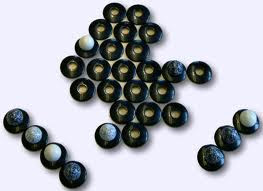
The Good – The game has simple rules, but is a challenging strategic game. Additional disks are provided to expand the board if players are up for a more abstract challenge. The pieces are sturdy and elegant. I have to say this is a game with a wonderful look. It really captures the attention of a lot of people passing by.
The Bad – The game can be a little too cerebral. Everything is based on strategy, so veterans will likely have a huge leg up on new players. The game is also for two people (but playing up to 4 using partners with alternating turns could work).
The Verdict – This is a wonderful strategy game for two people. It is quick, easy to pick up, and very deep for such a simple, elegant game. The extra board pieces can add some replayability. I’d highly recommend this game if you want a fun, light strategy game.
Thoughts: Eberron Player’s Guide
Being in Asia I typically end up getting many of the new releases months after they hit the US market. Of course between traveling and being generally a little lazy with reviewing new WTOC material, I typically have an even longer lag time. After all the Eberron campaign guide was released last month. Hee… I’ll post my thoughts anyway.
 I like the Eberron campaign setting. I like the swashbuckler adventuring feel, with plenty of noir plopped on. Plus the concept of magic as a trade is interesting. The more ‘modern’ influences resulting from this magic concept on the campaign world makes it stand apart a bit from other traditional fantasy settings.
One thing that makes this book a little different from the Forgotten Realms setting, is how much has remained the same from the previous edition after being revamped for 4E. Forgotten Realms made a lot of drastic changes to the world landscape. So much so, you could consider 4E Forgotten Realms almost a reboot of that setting. Eberron has taken a simpler approach and just refined a lot of the mechanics to reflect 4E changes. As such, the world has not changed much from 3.5 which I consider to be a good thing as it makes it tons easier to port an existing campaign over to 4E.
Because of this similarity to the previous edition, I want to just sketch out a few things I got from the Player’s Guide:
Races – Changelings, Warforged, and Kalshtar all are detailed. For the most part I feel changelings and warforged have interesting abilities. I think both of them will offer some dynamic character possibilities. The kalashtar however are a little lacking. They have a means of mental telepathy which is neat, but their racial power is a little lackluster. It is clear the race screams psion class, but I think without that rule set in concrete (aside from Dragon play test rules) the race is a little limited in potential.
Artificers – I’m liking this class. It is nice to see another arcane leader option provided. Particularly I like the extended semi-daily powers of healing infusions. Artificers get a dynamic heal/buff that can be recharged through using healing surges after a short rest (making them effectively encounter powers). What is particularly neat is that any player can donate these surges. So the entire burden is not on the artificer to keep healing infusions going, it can be spread around a bit (especially that one guy that always seems to get though fights without a scratch).
Feats and Dragonmarks – Lots of new options and dragonmarks provide some interesting abilities. Another neat point about dragonmark feats is access to specific rituals, without needing the ritual caster feat. Dragonmarks are also not tied down to racial prerequisites. For maintaining the feel of the campaign, being a racial outsider having such a feat should have a lot of repercussions in game. I suspect it will impact campaigns differently, depending on the DM, but I’m fine with that.
The Good – There is a lot a basic information and background to flesh out a campaign. I think they provide a lot of ideas for the player to whip up a personality and bio that fits the setting. They also give a lot of thoughts on the theme of the campaign, and I think it helps both the DM and players ease into the setting, providing some solid guidance on what makes Eberron different from traditional fantasy worlds.
I think enough detail on the political and social structure of the world is provided, so that both DMs and players can get a hold of the fantasy-noir aspect of the game. It is great that enough detail is given to run a game and get people excited about Eberron without requiring the campaign guide.
The Bad – However some things are a little skimmed over. I find a lack of a proper player map disappointing. The provided map is okay, but printed so small much of the detailed settlements are illegible. Having a larger, simplified map with clear regional borders would have been a good addition. I can see keeping a super detailed map for the campaign book, but a larger player-oriented map would have been nice.
Adding to this point is the player regional backgrounds. Over all I think the section is good, as it gives players a good snapshot of each region, with plenty of ideas to fit their character into it. But having a small mapped portion like the Forgotten Realms player guide would have been pleasant.
I’m also disappointed artwork was not provided for some of the player equipment, especially the weapons. Some of the descriptions are rather lacking. If they can provide a full page spread of example player travel documents, a simple black and white sketch of the weapons would have been a plus.
It is also too bad other details like lizard mounts of the Talenta Plains are totally missing. Okay, keep the stats for the campaign guide, but some simple fluff text with artwork would have been fine. Right now there are hints eluded to dinosaur-like mounts, but no concrete details. Bleah…
The Verdict – A good purchase with enough meat to allow players to run a 4E Eberron campaign. Even if a DM had no interest in running the setting I would consider picking up the book. The new races and especially the artificer allow for some interesting options that would be a good edition to an existing campaign. Plus the concept of the dragonmark feats might add a little spice to a homebrew setting without too much alteration.
Preview: the Psion Class
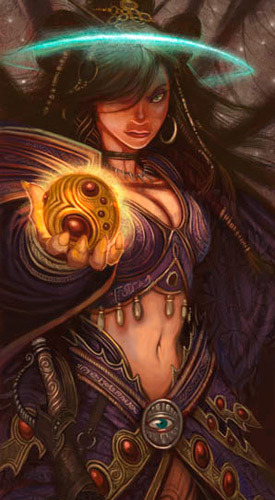 Content for the new Dragon magazine is now up detailing the Psion class. Personally I was never a fan of the psionics character, but in some campaigns I could see them working. I just never quite liked the fluff of having players manipulate things with their minds. I guess I am just an old-timer with my magic and spells (‘You dagnabbit psionic kids. Get off my lawn!’)
Still it looks like an interesting class. What I particularly like is how the implementation of power abilities are slightly tweaked. Players slowly expand primarily with their at will powers and get daily and utility powers as normal. They gain no encounter powers. Rather they obtain power points (starting with 2) that they spend to augment their at will powers. Most at will powers can be augmented twice, effectively having 3 ‘levels’ of effects. After a short rest, they regain those points back. They’ll end up with the same number encounter powers as other players, just some differences in the game mechanics for using them.
I foresee this becoming popular in a lot of knock off systems (and likely has already been implemented elsewhere). You have a few key signature powers or moves, with a pool of points to tap additional effects to them. You end up having a few options, deciding how much to buff up a certain attack. I like it, and it screams for being used in certain genres (pulp-action or superheroes).
As for 4ED though, I can see more bookkeeping for the player. It’s a neat idea, and I expect for many veterans they will like the free-wheeling power use of this character class. I’d be hesitant dumping it on a new player. Yet, the play style of being able to selectively bump up abilities, rather than picking from a predefined set is intriguing. An alternate magic system in the works maybe?
 Geek Ken