Category: RPGs
For the future of RPGs…get rid of the DM!
A while back on G+ there was a request for suggestions on a RPG gift for a 12-ish kid. Now their interests weren’t quite towards fantasy, so it was a bit of a pickle as D&D and Pathfinder were out as options. Folks gave helpful suggestions but it got me thinking about the difficulty a group of kids might face jumping into RPGs. Plus, I wondered about the future growth of the hobby without having that influx of new players and kids getting interested at a young age.
From a player perspective, I think RPGs are fine. You have a character. You have a group of people to bounce ideas off of and interact with. It’s sort of structured storytelling. As a DM however, I think it’s much more of a difficult role to grasp. As a DM, you straddle this line of referee and director. You are the one thinking up the neat adventure ideas. It’s like you are throwing out toys to the group of players and see what they pick up and play with. It’s hard to conceptualize as a young kid. Even worse, you all are playing the same game but having a very different play experience.
I think we’ve gotten this concept drilled into our collective skulls. This is how RPGs work. You have a group of players and a GM. The GM crafts the framework of the story. They are the arbitrator of rules. They play the opposition for the players. For the most part it works immensely well. But as a young kid being shown this, I wonder if it’s overwhelming. If the divergence in play experience is so different for the DM compared to the PCs, you have kids liking the idea of RPGs but never really running them (simply no one wants to DM).
So what could RPGs incorporate if trying to draw in a younger audience? While older players might accept the different game roles for RPGs, I think this is something needing to be altered for younger players. On to some ideas…
No DM… – By far I think this is something that needs to go. You have this drastic division of tasks and player expectations when a game requires one to actually referee. There is such a large split in what the different players actually do while playing the game, I think it creates difficulty in trying to convey that shared play experience. One person suddenly gains all this additional responsibility compared to the others.
Removing that division would likely help in making RPGs more acceptable to younger players. Some games have dabbled in this. Fiasco (while potentially wildly inappropriate for kids) is a prime example of a DM-less game. You have a good/bad dice mechanic where either the player decides the outcome, or allows the other players to decide it for them. Mechanics could be structured to remove the lone burden of storytelling and helming the opposition by one person, and instead have the input of others dictate the story and what happens.
…or Share the load – An alternate to this would be having a DM, but require that all the players take a seat behind the screen. Possibly each major story junction would use one of the players to act as the DM for that scene. One aspect could be that the ‘DM player’ gets some bonus which can be used at a later time during the game. That way people are encouraged to DM and give the players hard choices, as they get a resource to use when they shift back to being a player. The key point of this is to steer away from one person running the show and make it more a shared duty among the entire group.
Material on sheets, not tomes – Have a system with less choices right off the bat. Make character progression and creation simple and easy to grasp. Having this huge book with pages and pages of options is daunting. Keep the options and information limited, and slowly branch it out. Not only is this great for the PCs being able to jump into the game, but it also means potential conflicts and opposing forces can be easily worked up. Having this huge laundry list of abilities and skills for the PCs likely means NPCs might need something similar, and then likely means a full-time DM would be needed to craft the other story characters.
I pooh poohed Penny Arcade’s Thornwatch initially. A deck of cards to represent actions and abilities of a player? What a silly concept and how limited. But slowly I realized the genius behind this. If you have limited stats and abilities that are simplistically represented, you can also do that for NPCs and monsters. This gives room for having a game that doesn’t require someone to DM, and instead could have conflicts be resolved automatically through some other process. I think they just might have a breakthrough hit there with getting young kids into RPGs.
Less choices, just more outcomes – Another possible way to reign in things without needing a DM might be having less possible choices for tackling a problem, but have some wiggle-room with gradations of successes and failures. With a traditional RPG the DM needs to be ready to parse out all the wild ideas from the PCs in how they find solutions to obstacles. Then they either succeed or fail, and move on to the next conflict.
An alternate would be to shake up the problem-solving process having very specific approaches to solutions, and instead have varying degrees of outcomes. Star Wars: Edge of the Empire has a nifty dice mechanic for resolving checks, and introduces complications and advantages along with the outcome. Mouse Guard RPG (aka Burning Wheel lite) has a similar concept with allowing players to accept success or failure, adding complications to other tasks. In both cases these advantages/disadvantages build on the story having an impact on future decisions.
The input from the players are initially limited, but the outcomes have more branches. Having the other players give input to how well (or badly) a situation resolves for a player has a means for running a game without a DM. As outcomes are paired with conditions, this actually could limit player choices (or make others far more appropriate to select) for future obstacles. You have this branching path of of events that slowly expands due to outcomes, rather than having 20 ways to approach a problem initially.
Decentralize rule authority – Have everyone give input to how situations resolve. While one player might want to do something, everyone else at the table decides the outcome. Get away from the DM making all the decisions. Even better, have some kind of game mechanic dictate how well or badly a PC does with input from the other players.
Mouse Guard has a set script for actions and different phases with resolving conflicts. It’s a very cut and dried way to determine outcomes and has room for allowing other players give their input how things unfold. Avoiding one person have the final say in the rules, and instead adopting either a die roll or the decision of other players could do wonders for having a RPG without the need of a DM.
D&D has its roots in wargaming and it shows. The entire idea of a Dungeon Master, a referee, an arbitrator of the rules is so very much from older wargames. Typically you needed a neutral party to disseminate limited intelligence to simulate the fog of war. You’d also need a final say on how much an impact certain terrain would have on movement, how much cover does a building provide, or line of sight issues. While players could always adopt the ‘just roll a die and play on’ means of resolving problems, it was ideal to have a referee in the game.
This is something that RPGs need to eventually drop. I think it is a major stumbling block for introducing new players into the hobby, especially for younger players. Shifting RPGs away from a central person laying the foundation of the story, to a shared responsibility is key. It may not be possible to completely eliminate it. But the idea of having a dedicated DM for the entire game should be dumped. Having a rotating DM seat throughout a session, even something as simple as the player on the character’s right decides what happens next, is a step in the right direction. The responsibility for telling the story of the game needs to be disseminated among all the players.
In the long run, clinging to the idea of a lone DM running the show is something that will keep the hobby from flourishing in the future. Here’s to hoping new RPGs on the horizon drop that concept and come up with something exciting and new.
What are the monsters fighting for?
A big adjustment I had DMing 4E was to rethink how fights worked compared to AD&D. I used to throw down a lot of fights back then. Usually my dungeons were chock full of monsters and fights were fast and furious.
With 4E I find combats are a lot more dynamic and almost have a cinematic feel. They’re a lot more tactical and everyone is constantly maneuvering around for a better position. Even in an open room, in 4E you have a real engagement, where in AD&D it would be a glossed over fight (maybe some excitement if a person rolled a 20). It took me a while to wrap my head around how combats played out in 4E, and what works well (or doesn’t).
I found out one important thing with 4E fights, if you are fighting just to have some combat, it’ll make for a boring affair. In older versions this was never a big deal. If my group got jumped by a monster wandering the woods, I’d just play it out. 4E combats work better as staged set pieces. If you used an old approach of just dumping out monsters to fight on a grid, things get old pretty fast. So I learned to ask myself constantly, ‘why should this be a fight?’
I found this was critical in designing encounters and more importantly, stringing them together to make an enjoyable session. So when I’m planning out a dungeon, I try to think of a few reasons why I should be having a fight and what is the purpose of the combat encounter.
Moving the story along – Likely the number one reason players are trading blows with creatures. The group is in combat with a main villain, or some key encounter, because of the story. It is an event central to the plot. Not every fight has to hold a critical element to the campaign arc, but it’s something you should be striving for.
I try to avoid having a fight simply to give a clue. If I go this route, I try to limit to a few rounds, usually having the opposition run, surrender, or offer some other quick resolution to get the players moving on.
As an example, my players landed on a dock where a local crime lord had control over the longshoremen. A few burly dockworkers with cudgels badgered their ship captain into getting more coin to unload some cargo. They turned their ire towards the players, clearly itching for a fight (the non-lethal thumping of heads kind). Combat went for about two rounds before the town guards came in and broke it up, siding with the longshoremen on who started it.
It was a short fight, but it helped established a few key points that some dockworkers were more thugs than laborers, and that local authority were either corrupt or inept. I didn’t want to drag the fight out to a bloody conclusion. But at the same time I thought it useful to have the players exchanging a few blows, before getting some key information about the town they were in.
Drain the resources of the players – This is an effective way of ramping up the difficulty of later encounters. A straight up engagement against a group of guards may not have a tremendous story purpose. But if it is an encounter before the group moves further in a bandit camp to fight against the main bad guy, you’ve definitely have a reason to have the fight. While the party is expected to win, they will take a little damage. This results in healing surges being used, and may result in use of some magic item powers, all of which drains the resources of the party for future combats.
It’s a decent ploy to make that later combat against the main villain a little tougher, without having to ramp up the encounter level. If players have used most of their healing surges, a few magic items, possibly even a daily, you’ve got players working a much tougher fight. The main trick is to keep the group moving and not have them head back to town for an extended rest. This does not necessarily have to be a battle either. Traps make for great ways to drain the group resources also. Don’t forget that you don’t have to almost kill the players, you just need to dig into the HP a little and in turn, whittle away at their healing surge total.
A combat for the sake of combat – This is something I try to avoid. Yet sometimes after several nights of talking around problems and clever use of skills to overcome obstacles, it’s nice to have a throw down with some monsters and hack away at things. However I think for these type of encounters to work, you should have one rule. Keep things interesting.
Pull out the stops and have a fight on a collapsing bridge over a chasm. Dig through the monster manuals and pull out some wild planar creature. Whether it’s the location or the type of creatures they fight, make the combat exciting and memorable. A bar fight with some surly dwarves may have nothing to do with the campaign, but can make for a grand time. You won’t get the same player reaction from another nameless wilderness encounter in a wood clearing.
Don’t hesitate to hand wave a fight – Don’t worry about having an actual combat for every encounter also. If the players have to infiltrate a fortress and fight through waves of opposition, you don’t have to play out every combat. Hand wave a bit and resolve it through narration. Maybe have that first fight against a few initial guards and don’t worry about the rest. Save the encounter combat for the main boss at the end.
This is where healing surges work wonders. Tell the players they made their way through an orc enclave, slaying a few groups, then have each player lose a healing surge. If you want to be tricky, also roll a basic attack against each player and have them dock off another surge if you hit. It’s a nice way to represent some scrapes and bruises from a fight, without having to actually play out a combat.
In my past campaign, I had my players clear out a kruthik nest. The original layout was an optional encounter if they failed a skill challenge, followed by a tough fight, with a final fight against the nest queen. While my group succeeded at the skill challenge, they opted to take on the optional encounter. After that happened I looked hard an long at the second encounter.
Did I have to have this fight? Would it really push the story along? I wanted a series of progressive fights, ramping up the difficulty to emphasize the group was going deeper and coming closer to the nest queen. But that optional encounter took off a few healing surges, so did I really have to have another full battle to do the same? Nope. So I just narrated to the players they ran across more kruthik and killed them as they explored further the tunnels. I moved them on to the final fight, just handwaving the middle combat and sticking to the more meaningful final encounter against the nest queen.
These are a few things I keep in mind when I design a string of encounters. I still (as the kruthik example above) flub things. While it may look good in preparation, actual play can change things. You might get a really bad string of rolls from the players (and some awesome rolls for the monsters), so a simple fight on paper may end up being much more difficult. I try to keep things fluid with my plans and read the players’ moods at the table to keep things interesting.
So with 4E, I’ve had to shift my thinking about combats compared to previous editions and shed that idea of a throwaway combat. Seems DnDNext has let this creep back in somewhat. I’m sort of on the fence with that but by recognizing this difference in how combats fit into the story, it’s made my 4E game better.
Railroad flashbacks as a first session

It’s always a bit of footwork to get a new campaign rolling, especially that first session. I like a short adventure giving the PCs some action. I also like all the players having some shared background to help cement relationships. It just helps get the ball rolling.
For my latest Savage Worlds campaign I decided to do a slight departure from having a lot of open talk on past relationships, and avoid the players starting off with a small adventure to tackle. Instead I put them on a story railroad to help create a shared experience and let that be the backdrop to how the players established their own relationships. There were a few key aspects for how I set this up.
Less details, more a thumbnail sketch – I didn’t want players to get all their powers, abilities and stats all lined up. I wanted very broad ideas of who they were. So a dwarf psionist or human tracker good with a bow was all I needed. I especially did not want any backstory.
Use paper dolls – I created a simple set of generic stats and types of abilities for typical hero icons. I created a melee type, a ranged weapon type, and a caster type. All with average D6 stats and without any edges or hindrances (for the 4E fans out there, consider a character with 14 in all stats, using a basic attack, possibly a magic missile at-will for spell casters, with no feats or class abilities). I didn’t need them having anything special.
I did this primarily as much of my group had not played SW before. I wanted to get one combat in and let them learn the nuts and bolts without a lot of distractions of power choices and edges. The fight would be heavily scripted with a hard stop, to allow any fallen characters a chance to recover. It was designed just to get a feel for how fights work in the system.
Run a story railroad – I created a context and background for the situation, including a short melee conflict. There are a lot of ways to do this. The key points are to have the group forced in a situation where they are around each other for an extended period of time, and have the opportunity to get into a combat. Maybe the group is part of a military campaign, or under a castle siege. Possibly the group are doing some required service for 6 months to a local lord, with the keep being attacked once during that period. Maybe they were all shipwrecked on an island for a year (cue the theme to Gilligan’s Island).
In my Dark Sun conversion using Savage Worlds I had the group leaving Tyr joining a merchant caravan. The caravan was ambushed (playing out the fight), creating a dire situation for the group. They managed to crawl to Raam and were promptly put into indentured service for a year to pay off losses incurred to the merchant. I fast forward everything so that they had completed the year of service, and were preparing to leave the merchant house in Raam. It was heavy handed, but created a situation where the group was forced to have a common experience and be in each other’s company for some time.
Determine set relationships randomly – I had each player roll a D6 and paired off everyone. The highest rolls were with the lowest, next highest with the next lowest, and any pairs rolled were given a matching partner. I did it in such a way that everyone at the table had a least one relationship with another. They were free to have other relationships among the other players, but it was required to have one with the other PC they matched up with through the die rolls.
Have the players fill in the details – Once that was set, I let the PCs tell me what happened throughout the year. How did they initially meet? What key events happened throughout the year? What did they do as individuals? How did they establish this connection with another player? In the end they all knew each other, but likely had some particular shared experience with one other player.
What is important about this is that I let the players have control over the story. I’d set some ground rules and potentially reign in some ideas (they couldn’t kill the merchant they worked under during that year). However I let the group tell me how they spent their lives during that time. I let them figure out where they came from, and how deep their friendship went with the others. The setup was just the backdrop, the players had firm direction with they did during that past time.
Another great thing is the DM can slowly set up other elements in the campaign world. As past events unfold, you can allow rumors and bits of information to accumulate. Maybe a player learns more about a key NPC, or finds out some important news, or gets the real inside scoop on the relationship between different NPCs.
For my group, Tyr was firmly under control of the sorcerer king. I had them initially explain why they joined the merchant caravan heading to Raam. Then I had them describe their lives and what service they provided the first 3 months at the merchant’s house. At the 6 month mark, I got more information on their lives and what happened at the house, however I dropped rumors that Kalak, the sorcerer king of Tyr, was slain. Fast forward another 3 months, after getting more details of their lives from the PCs, I gave them information that the impossible had happened in Tyr. It was confirmed that the sorcerer king was indeed dead, Tyr had abolished slavery, and was now known as the free city.
This is a great way to offer some background on the world in broad strokes, and not just give an info dump to the players. Additionally, you can have the players become part of that knowledge gaining experience. If players were doing required service at a noble’s keep, maybe a PC overhears a fight between the local lord and a duke emissary. Maybe the player working the kitchen hears all the juicy gossip about the lord’s youngest son being a rake and a gambler. Maybe the player working the keep library stumbles across an ancient map.
Wrap everything up and get the characters completed – At the end of the night, all the player characters should be completed. It is quite possible things can change during the course of the evening. Maybe a player learns that a ranged fighter wasn’t as exciting as being a melee swordsman. Maybe the idea of being a scout-type hunter wasn’t as exciting as being a bounty hunter. You will very likely see players getting a lot of different ideas about their characters after they get some time to work out their relationships with others.
So let them explore that with very generic characters initially, and then follow up with having them get the nuts and bolts ironed out on their character sheet. At the conclusion of the first session they should have their character details and stats completed and ready to go.
I had a lot of hesitation initially with my group. What do you mean you don’t want to hear my backstory? What do you mean you don’t want me picking all my skills? What do you mean it’s not important why I joined this group? And trust me, when I said that the group was forced into service in the merchant’s house for a year, plenty of eyes rolled up at the table.
However at the end, that perspective completely changed. That heavy handed story railroading lay a foundation for creating a shared experience for everyone. They could say they all knew each other for over a year (with some knowing each other even longer). They all had encountered difficulty and learned to depend on each other. It really allowed the group to gel and get past that uncomfortable part of getting to know one another. Give it a try sometime for your game. You will be surprised with how much backstory and adventure fodder will come from your players.
Doing a Dark Sun hack using Savage Worlds
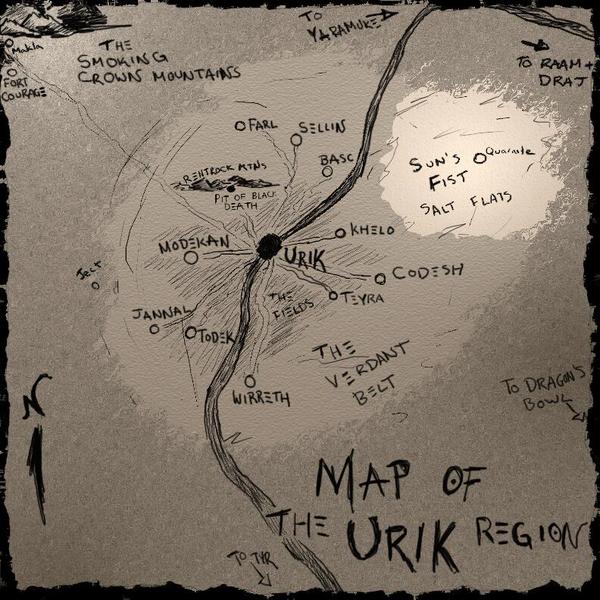 So the consensus of my group was if they were to dip their toe into fantasy, it would be a setting far away from traditional Tolkien-like high fantasy. Likewise, I think 4E was just not in the cards. Many of the players had that ‘been there, done that’ feeling with the game. After a year and a half, it was time to try something new.
So I took the plunge into Savage Worlds. A big part of the reason was that if we got tired of our regular campaign we could jump into something else without too much of a learning curve. I wanted modularity and Savage Worlds offered that. Also, I liked the streamlined system that Savage Worlds has. GURPS is a bit clunky for me and the character creation system, while very detailed, seems a bit of a chore to dig into.
We had made a short stint with a Savage Worlds hack of Traveller but that petered out due to extended summer vacations and a bunch of new folks coming into the group. The crew of High Hopes is still wandering the stars, but put on the back burner for now. Given some of the folks were acclimated with SW, likely we would stick with that for our next campaign.
With the game system decided, the next task was the setting. Supernatural horror and campy super hero stuff was on the table. Fantasy was initially a no go however I got to worrying about adventure ideas. I did not want to craft a huge overarching campaign story like last time and keep things pretty much a sand box. This was a bit of a kink for me if we dabbled in a more modern setting, as even with fantastical elements, I’d likely hit a wall with adventure ideas. Lately, fantasy settings seem to get my creative juices flowing more.
So I thought about using Dark Sun. Fortunately there is a ton of stuff that you can find online that has used Savage Worlds rules for the setting. Armed with a lot of good resources, I was able to whip up a rules a mishmash from different sources and other conversions to get a framework together of the different races and magic system.
One thing I did tweak a bit was the rules for weapons breakage. So in my game non-metal weapons will break on a critical failure for a fighting roll. If being used against a foe wearing metal armor, a roll of 1 on either fighting die results in the weapon breaking. Metal weapons are exempt from this rule. Further, metal weapons do +1 damage to targets not wearing metal armor.
It’s a small tweak, but I wanted something simple to remember and allowed for some advantages for wearing metal armor. Definitely this is something that will creep up on my player’s wish list of gear to get.
So far the group has been having fun in the setting. They have started in Raam and are making their way to the newly freed, Tyr. I think there will be lots of exciting things for them to do. Expect more posts in the future about the game.
Review: Essentials Rules Compendium
 I’m thinking about what 4E books I’ll keep and what I’ll get rid off. I imagine that a lot of 4E stuff will start getting pretty cheap to pick up. I never did get into 4E essentials, but I have picked up the Rules Compendium for the new essentials line.
As a quick overview, the book is a hefty volume covering all the rules fit to print about 4E, updated and incorporating the various errata that has trickled out from WotC since the release of the new edition over 4 years ago. It is packed with text going into detail about just about any rules question that would likely pop up during a game, with plenty of examples and a fair amount of artwork. All in all, a fairly good volume for a ‘rules book’.
There are a few new tweaks to the existing rules buried in certain chapters. The skill DC values have been modified bumping up the values for most checks. Also higher level skill challenges utilize an advantage system. As players score successful checks, these are little perks to give the players a chance to get more successes as the challenge progresses.
Treasure now can be classified by rarity, with items having a flat bonus being common items. Most items with a daily ability fall within the uncommon to rare range. Again, a nice idea giving the DM a little more guidance on how items compare with each other, rather than just being based on the relative level. This rarity also translates to the value of an item, with more rare magic items fetching a greater price.
There are some other nice additions. Randomized treasure is a possibility now, with a DM rolling several times to determine the amount of coins, gems, artwork, or possibility of getting a magic item. Still not quite that definitive D100 chart, but passable. I also like that the standard arrays for ability scores have been expanded a bit. Two options of a specialized array (maxing out a key stat with an 18), or dual specialist are now choices (2 high stats of 16). Which is nice to give those looking for a quick build another option besides the point buy arrays listed.
I also really liked the skills section. Not only do they give a run down of each skill, but they also give a little summary of some out-of-the-box uses for skills. Some great information for both players and DMs to see how skills can be stretched and applied as unique solutions to problems.
However as I started to go through the book, I became to realize more and more what was missing. I figured this would be a comprehensive ‘go to’ book for just about any rules question. Instead I found some things to be what I consider as glaring omissions. This leads me to the problem I see with the Rules Compendium, a lack of focus for its audience.
This book was rolled out with the essentials line. I imagine it was marketed as the ultimate rules resource for players and DMs alike. At the same time, the book had been hyped as a great buy for the guy that’s been with 4E since launch, and this book finally has all the updated rules in one volume, all at their fingertips. Because of being tied in with the essentials line, I tend to think there are some critical parts of the book that have been left out, simply to be covered in other products. If you are an essentials player, no worries. But if you bought this book to serve as a one volume rulebook for older 4E material, you are out of luck.
This mixed bag also rears up with some of the material presented. The powers section covers a small explanation of augmentable powers, which is great. But then in the first chapter you find quite a few pages dedicated to explaining roleplaying games and what D&D is all about. Not to mention quite a few tips for new DMs running their game. Good info is there, but I tend to think shouldn’t the new DM material be presented in the essentials Dungeon Masters Kit?
Again, if the Rules Compendium is going to straddle that line between brand new players and folks very familiar with 4E, and also with both players and DMs alike, there is quite a few missing chunks of rules. This is a slight for a book that claims to be a definitive rules compendium.
No rules for rituals (a little information provided in a sidebar, but still missing some key points), and the same could be said for alchemy. Nothing on feats, especially those related to multiclassing. Nothing on class hybrids either.
Do we need a complete list of every feat or ritual? Nope. However just a summary of the nuts and bolts rules would have been great. How does a player obtain and master a ritual? How many rituals are in a PC book? How do choosing multiclass feats differ from regular feats?
This isn’t just the player side of things either. Why not provide rules for designing traps? At least have the chart for typical damage output for a given player level please. How about the monster design rules? Even a quick summary chart for creating a monster of a specific role (covering the attack bonus, damage output, and defenses per level), or typical minion damage per level would have been great. I’ll also take a moment to point out what I consider a glaring omission, no weapons table. Not even a typical equipment cost list. For a book trumpeted as a handy reference, I’m astounded this was not included.
This last part is also a quibble, but how about summarizing some of the more key tables and charts in the back of the book as another appendix. Yeah, I don’t have to flip through 4 different books to find something now, but I’m still flipping through pages with this book to find the right chart (I guess the deluxe DM screen that came out covered that).
The Good – There is a lot in this book. Much of it is well presented and the ease of reading it (avoiding a lot of rules heavy language) shows through. I’m a fan of the concise format and it encourages people to grab it, throw it in their backpack, and go game somewhere.
The Bad – I think it suffers from trying to be a book for both the essentials only crowd, longtime 4E players, and serve as a guide for DMs and players all at the same time. Trying to cover everything in a single manual likely meant something in the rules had to be left out. And I tend to think these omissions keep the book from really being a stellar product.
The Verdict – For a brand new essentials player, I’m unsure if this is something they would want. I think much of the material is in the red box and a lot more has trickled out in the player’s series of books (Heroes of the Fallen Land) and the Dungeon Master’s Kit. They have quite a bit of rules in only a few books, and much of it is not heavily modified by errata. For the longtime 4E player, I think they will get a bit more out of this book.
This book is at my gaming table when I play 4E. I like using it. I’m glad I bought it. If you hit the convention scene a lot (or need to haul around a lot for games at other people’s houses), the availability of a concise book of updated rules for 4E is nice. But the omissions from this book means I still have to crack open the occasional DMG and DMG2, even the PHB sometimes (or move to the online compendium which is likely going under). I think if portability is an issue, buy this book. Otherwise I think this is an optional buy. Nice to have, but not quite an ‘essential’ rulebook.
Magicians (a language learning RPG) Kickstarter campaign wrapping up
Kyle Simons approached me a while back about his project on kickstarter, Magicians. It’s an interesting hybrid RPG that uses traditional storytelling along with a free dictation application to teach a foreign language. The game itself is a modern fantasy setting in Seoul, where the players discover they can wield magical power. Players soon discover that all around them is a secret hidden world of fantastical forces (some good, some evil).
There are a couple of intriguing things about the game:
Educational – I hear this sometimes about how RPGs have a positive impact on education. It’s refreshing to see a game that directly promotes learning. The key to character advancement is paired with mastering Korean. Language pronunciation and improving vocabulary is a front and center with the game.
Use of voice dictation software – While focusing on the written language is great, having additional utilization of oral communication is also important. As a westerner struggling to learn Korean, I’ve found I have to relearn how I produce certain vowels and consonants. It’s a very subtle thing to master and you don’t get this by focusing only on reading and writing comprehension.
Unique Setting – While modern urban fantasy is something touched on with different games, I think traditional Asian folklore is something that has been either ignored or glossed over. I consider it a plus learning about different legends and mythologies through the game. It can also serve as adventure fodder for other settings, and allow you to learn a bit more about other cultures.
I’m happy to say that their kickstarter campaign has been funded. However it’s wrapping up in a few days. If you have any interest in this, now is the time to pitch in. You’re jumping in on a funded project, and I dare say a unique educational application of RPGs. I think it might be something that could catch on as an alternative language teaching method. Would be neat to get in on the ground floor of this project. Check it out!
Tweaking 4E: Expanding uses for power points and healing surges
So while action points and healing surges are cool, I think they can be under utilized. I’m a huge fan of healing surges and think they make an interesting economy in the game. They are a requirement for recharging some magical items and I’ve liked that idea of using a PC’s vitality to enhance their power, so why not expand on that? Likewise, action points are cool but you can only use them once per encounter. Granted the bonus standard action is pretty huge, but only comes into play if you are going though several encounters in the game day.
A while back I talked about limiting choices of powers in my next 4E game. One downside of this is the limit of damage output players have. So to work on this I really wanted to be sure players could count on the limited encounter powers they have. Also, I wanted a way to get more powers that could inflict higher damage. So I’ve been thinking about the following changes.
Action points – Players have two options for action points:
A) Spend an action point can allow the player to do another standard action (as per rules)
B) Spend an action point to grant a +4 bonus to any roll. This can be done after the roll is made.
Players start with 2 action points at the beginning of each extended rest. They can spend multiple action points during an encounter, but can only take the additional action option once.
Healing surges
– Players may spend a healing surge to add one more damage die to at-will, basic, or trained basic attacks. This can be used after a successful to-hit die roll is made (but before any damage die rolls are made).
– If players activate an encounter power and it fails to hit, they may use a healing surge to recharge that power.
– Healing surges can also be spent to re-roll any single die roll. The second roll must be accepted as the result.
This is likely going to allow my players to really crank out the damage. However I want to encourage my players to use healing surges. Not to mention, those 2-3 healing surges they lose in an initial fight leading up to the big boss now have more impact. Players now have to weigh their options when using healing surges. Do they use the surges to keep on their feet, or use them to crank up the damage on an attack? I also want action points to allow the player to do big things. +4 is a huge bonus, but I want players to be able to pull out a huge attack, or pull out of that critical death save if needed. So I am making those action point bonuses go big or go home.
Taken as a whole with some of my other changes, I’m hoping it adds some spice to my 4E game and makes for some more engaging choices for the PCs.
Adding a bit of gray to those black villains (a la Walking Dead)
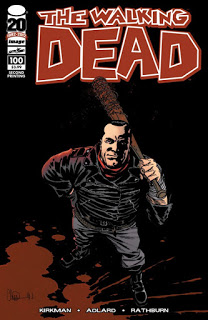
So I finished watching the latest Walking Dead episode. What I don’t quite get is the switch in Rick’s head that has completely flipped from ‘try to be decent’ to ‘eliminate any potential threat’ in such a short time. I expect they’ve been on the run for weeks, but it seems a tad quick for me.
I always chuckled at the fans of the show that railed against Shane so much for the first two seasons. Mostly because if you follow the comics, Rick has gone that route of doing anything to keep the group alive (at all costs) a long time ago. Again I wished they milked out the love triangle a tad more. That resolution near the end seemed to slip too quickly back into Shane simply wanting Rick out of the way for me. Oh well.
As the comic goes, I hope that Kirkman adds a few more twists to the recent villain that has reared his head, Negan. I’ve sort have been wondering how they’ve lined up their position in the world and wonder if at the heart of it, they have their own family and loved ones. They’ve simply slipped too far into accepting the ends justify the means. That other communities of people are just that, others. They aren’t their kin. They are outsiders. So it’s completely justified to offer them an ultimatum and follow through with violence if needed.
With some perspective, Rick in the comics has gone quite over the edge from having the moral high ground. After all he’s shot a prisoner he deemed a threat, ran down a member of Woodbury that may have been a traitor (remember that guy claimed some good people needed a place to escape from the Governor), hacked apart a man that threatened his son, tortured and mutilated a group of cannibals (admittedly for these last two I could see executing them, but gleefully tearing them apart is a tad much), and freely admitting to wanting to take over a community by force if necessary.
So enter Negan. Again, Rick’s group sort of forced his hand killing a group of his men. I expect most folks will not stomach anything but the worst fate for the guy. After all recently…
SPOILER ALERT!
…he was responsible for making things incredibly unpleasant for our favorite, former pizza-delivery guy.
END SPOILER
Still I hope Kirkman muddies the water a bit. Negan is not a nice man. No question about it. But it might be he’s taken Machiavellianism to an extreme and if he’s doing these things to protect his loved ones, maybe it should give us pause to consider if such horrible acts are ever justified at all. Who knows where he’ll take it. Likely we’ll end with another truly despicable Governor-type character. Maybe not.
As the show goes, I wish Rick clinged to that moral high ground a tad more. Mind you, while folks might argue putting a machete to the head of a prisoner was justified, locking that other out in the yard was harsh. I just wished he wrestled a bit longer with the demons of doing absolutely anything to protect his people, even if that meant abandoning any shred of humanity left. It may be well something the show explores. Who knows.
As gaming goes, I tend to stick with making my main villains really bad guys. I think for the fantasy theme and my players being heroes, they really enjoy the highs and lows of taking on the main baddie. If all the black hats are gray, it dulls this emotion some.
I’m not completely averse to this concept though. Recently I’ve been doing a Savage Worlds hack of Dark Sun. There is plenty of moral ambiguity to go around in that setting. I am certain that the group will be finding patrons that are literally the lesser (of several) evils. It’s just part of that setting. I likely will tinker with the motivations of some villains in this vein too. Athas is a harsh world and many are likely doing the best they can for the few they care about, and easily justify turning their backs on others.
Likely I won’t over do it too much. Sadly I think there is too much of this in the world today. No need to cram it into a pastime my group does for fun. Sometimes it’s better to keep those white hats and black hats the color they are.
Tweaking 4E: Trimming down the power selection
One thing that crept into my game was analysis paralysis. My players got to late heroic tier and things began to shut down in combat. They had this huge pile of cards and all these options to go through, with magic items thrown in to boot. It became a little unmanageable.
My feeling with 4E was the cool bit about being able to do lots of different things, also became it’s fault. I think level 3 is the golden level for 4E (possibly level 5). At that point players have 2-3 options of encounter powers and dailies, with a few choices of repeatable standard attacks (at-wills and basic attacks). As they level up, this just starts adding on. You get more and more options, and all those choices seem to gum up the thought process for players. They just have so many choices and feel that pressure of wanting to do the most optimal action possible during their turn. So I began to think about power expansion differently.
Instead of adding more and more, why not reach a set amount of powers and abilities and cap it? As players level up, instead of gaining more options they swap out powers and upgrade the ones they currently have. The emphasis of having more options begins to lean towards fine tuning and improving the powers and abilities they have. With that in mind, there are a few other things to tackle too.
One magic item with a power/tier – For my next game I am leaning more towards the magic items that give static bonuses, over an optional power. While it’s cool to have that +1 acid sword that has a daily ranged attack, having another 3 items that also have daily/encounter powers just layers on the stuff players have to go through in their decision process. This can seriously add to analysis paralysis of the PC. If anything, I’ll add more consumables and one-shot items. Dark Sun introduced the idea of static enhancement bonuses for players without using magic items, and that is something I am also seriously considering. Another option would be to bump up the items they have making that +1 dagger slowly morph into a +3 dagger with +2 fort vs. poison.
Cap the number of powers – Players will have a limited selection of standard powers as they progress. At most from the advancement table, they can have 1 At-Will, 2 Encounter, 2 Daily, and 1 Utility in-combat utility power. Players may gain additional utility powers as described, but their use must have some out of combat effect. This is highly subjective, with the final interpretation of a utility power being decided by the DM. All bonus powers from class or race are not subject to this limitation (ex. Channel Divinity, Wizard Cantrips, Elven Accuracy).
Last time I was talking about using a trained attack in place of your out-of-the-book basic attack as an option for players. At face value, it’s really just a glorified at-will attack. Mechanically, it’s no different from having a 2nd at-will power, but it’s a subtle shift from an additional power to becoming a fall-back regular attack. Rather than having another card in front of the player, it’s on the character sheet and emphasizes that point of when in doubt use this attack. It’ll never be a horrible choice for a player to use the trained basic attack as it’s geared towards their ability scores as an optimized attack.
Some classes are going to come out ahead with power choices. Your wizard and cleric are going to have more options than your fighter. But at the core of it, even the classes with limited choices should still have situational options. They just won’t have a laundry list that’s what is in the game now.
Allow for more retraining each level – At each level, players can retrain up to 3 powers. In addition they can retrain 1 feat. This is key to limiting powers. Each level you have to allow the player to get cooler toys. While they may not be able to add more to what they have, they can at least pick up powers and abilities to create interesting combinations and improve on the attacks they make.
Limited choices break down – This is far from perfect. Utility powers become a huge issue. Some classes get situational skill bonuses that transform into static bonuses. Some classes have utility powers that can only be used in combat. It’s just the way to the cookie crumbles. By the book, at level 10 players have 3 utility powers tacked on to all the other powers they have. Utility powers make a good target for power pruning.
Psionic classes just don’t work with this. This cap power limit is doable with your core classes, but psionic augmentation powers just break down. If anything, possibly the number of power points might be reduced. I don’t play with psionics for my game, so not too worked up over this. Multiclassing and hybrid classes might need a little more tweaking too, however my players never really explored those options.
It’s a huge game change, but I’m liking it. I think the focus shift from more powers to better powers will work out. It’s far from perfect, utility powers especially, but having a cap on the powers players gain through advancement will likely allow them to have more focus, while still retaining a few options, and hopefully curb that analysis paralysis.
Tweaking 4E: Beefing up the basic attack
I’m still throwing the idea around of at least doing a one-shot of 4E once in a while. Maybe do another campaign if I can get some interested in giving it a go. So far they’ve been enjoying another setting and another game. One thing that I want to do is bring back the idea of using a basic attack or at the very least have it in place of an at-will.
Face it, a lot of at-will attacks have that generic option of a single target attack that simply uses a high ability score aligned with a certain class. As I mentioned way back in an old post, there is even a PHB2 feat that does something similar. So why not make a go of it and go full out? I think this actually might open up some classes to being able to focus on other abilities and not lag too behind other builds. Now I could have that CON-based fighter which could still be able to reliably roll out the basic attack damage. So here are my thoughts for a different basic attack-like ability.
All players at level 1 gain a trained basic attack. The player must select one option for this power at character generation, and cannot be re-trained.
A) The player picks a weapon group they are proficient with (ex. axes, bows, light blades, etc.). The player can use one ability score of their choice to be applied to that weapon group. If this ability replaces the default strength (melee) or dexterity/strength (ranged/heavy thrown) modifiers for that weapon, then the chosen ability score bonus is applied to both to hit and damage rolls. The power retains the martial keyword and weapon keyword. At 21st level, the power gains [2W] damage (plus appropriate bonuses).
B) The player gains a ranged basic attack that can target 1 creature. The power has a range and damage equivalent to a level 1 At-Will power of choice from their class. The power gains a damage keyword equivalent to the power source of the class (i.e. arcane, divine, primal, etc.) and the implement keyword. The power gains a bonus to hit and damage rolls based on an ability score of choice. At 21st level, the power gains one additional damage die, plus the appropriate bonuses (example, if the trained basic attack power does 1d8 + modifiers, at 21st level it will to 2d8 + modifiers).
Regular basic attacks are still in the game, but the player can have this listed first as their bread-and-butter attack. It’s the go to attack when they aren’t sure to pull out an encounter or daily power. A fall back choice for an attack and be comforted that they aren’t crippling themselves. I’ll have to tweak this some more, but looking forward to trying this in game.
 Geek Ken