Category: RPGs
Saturday Gaming Spark: Temple of the clouds
A temple of an isolated sect of monks, renowned for their arts of healing and martial prowess. Link.

Saturday Gaming Spark: Decked Jackhead
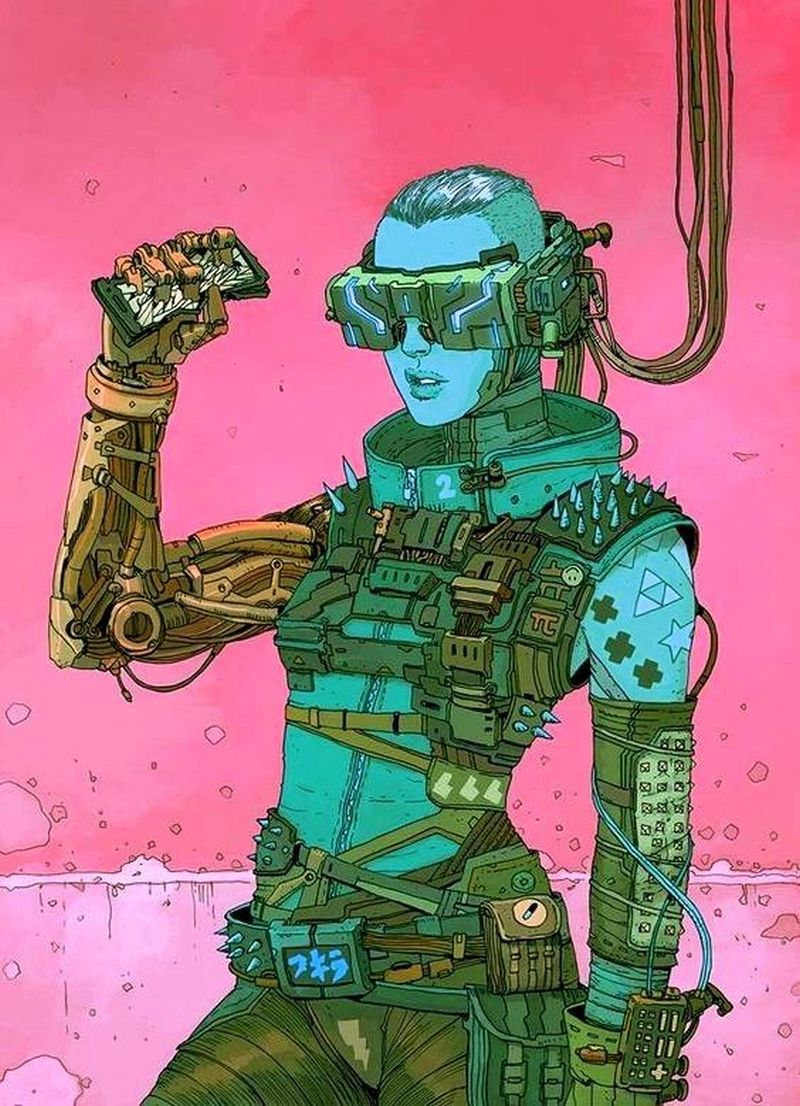
Some wounded exosuit vets find it difficult adjusting to cubical corp work. Instead they take advantage of installed, military-grade, neural jacks and offer their services as cyberdeck and/or meat security for corp firms operating on the legal edges. Link.
Saturday Gaming Spark: A verdant village
A safe haven for weary travellers, a community of xenophobic river elves, or a lost tribe within the deep jungle for your pulp game? Link.

Saturday Gaming Spark: Smuggler’s Well
A secret thieves guild nest or a hideout for city smugglers? Link.

Saturday Gaming Spark: Rustville
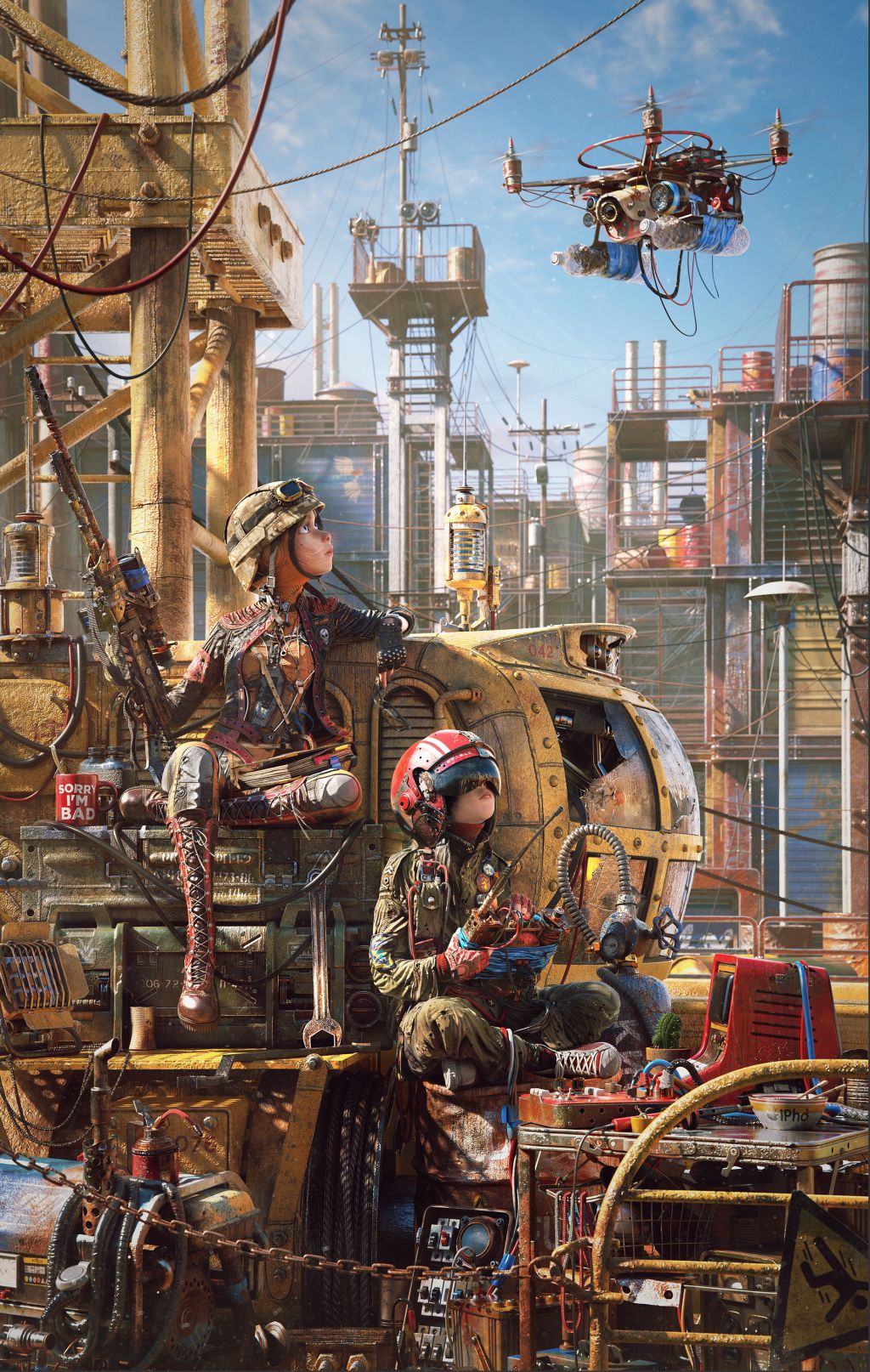
A shanty town of junker street urchins that watch out for their own. The perfect place to find jury-rigged tech but watch your wallet and your back when dealing with these ‘kids’. Link.
Saturday Gaming Spark: The Inkunzi
Captain Gatsha is a grizzled veteran of the dangerous, air ship trade routes and deft navigator of the frequent border clashes. His vessel has seen better days, but the Inkunzi is a stalwart ship with a crew and captain as strong and solid as its name. Link.

Every DM should run a game of Dungeon World
Dungeon World is a fantasy take on a narrative RPG system under the Powered by the Apocalypse umbrella (coined from Apocalypse World, the first game which used these rules). PbtA has your typical players and GM type of setup, but the game is highly narrative driven. Action is pushed forward by PC choices and outcomes from their die rolls.
Not to get too deep into the rules, but generally each player describes what they want to do and the GM chooses the appropriate move (action) that they will test for. Pretty much just about like any other RPG out there. The tweak is the simplicity and the potential outcomes. Players roll 2d6. On a 10+ they succeed. On a 7-9 they are successful but at some cost. While a 6 or less is a failure. Simple.
Immediately what you find playing this is that mixed success results become the norm. Additionally players will also get a slew of failures rolling sixes. As dice outcome probabilities go, results of 6-8 will be common with 7 being a typical roll. This pushes the GM to drive the players into interesting situations, layering on complications and forcing the players to make hard choices, especially when they fail.
When they fail outright on a 6 or less, the GM has control of the narration. They can introduce more baddies, cut off expected routes or resources, and in short drive the story in another direction. While players have a lot of agency with this system those failures allow the GM to throw a big wrench into the works. Nothing like having players expect to rest and recuperate from a long dungeon expedition, only to return to the local village and see it burned to the ground from a goblin raid.

Running PbtA games can stretch your GM chops. You have to learn to be adaptable and improvise more. Continually finding mixed success outcomes is especially a wonderful way to strengthen skills for running RPG games. Your typical D&D game can slip into binary outcomes. Either you succeed or you fail with an ability check. Having to constantly think of that ‘success BUT…’ with a mixed 7-9 dice roll result in PbtA really can help you find ways of using it in other games.
Say you’ve got your thief trying to break into a merchant’s room, eager to steal off something valuable to get some useful information. They make their check to open the door. Make a stealthy move around the room. Possibly a perception roll to find any important information. Pretty much they will either succeed or not. Cut and dried.
Throwing in the mixed success suddenly adds more outcomes and a more engaging experience. Roll a 7 trying to open the door? That thief has successfully gotten inside, but accidentally knocked over a brass candlestick. They hear guards approaching to investigate. Do they make a run for it? Do they instead make a frantic check through the room first? As a GM you might leave a hint of a small chest on the floor, or a table with several papers scattered about. They could likely have enough time to get either the chest or the papers, but not both. On their way out, maybe they sneaked away successfully, but left the door slightly ajar. The guards begin a search through the keep, ramping up future complications.
We like to think we run our D&D games like this, but with so many rolls of that d20 I would expect most sway back to those ruts of just having a pass/fail result. While Dungeon World instead has this type of outcome in the structure of the rules. Yes you can get a fantastic success, or potentially get a disastrous result, but commonly your get what you want at a price. The mechanics of PbtA games push for more complicated outcomes.
This actually fits well with fifth edition. The advantage/disadvantage and inspiration rules allow you some tools to introduce mechanical benefits to the game as well. Having a poor outcome for an ability check might not mean that the PC fails outright. Instead they might be thrown off their feet, with their next check being at a disadvantage regardless of what ability/skill being used. Make a wildly successful check? Consider throwing the player an inspiration token. If a player just barely makes that check to avoid falling over a cliff edge, they might instead lose some critical gear, weapon, or ammunition which falls into the chasm.
So I highly recommend if D&D is your bag to give Dungeon World a stab as a one shot. It’s easy to run and get characters generated. There is a lot of free material out there. In fact likely before getting into the rulebook too deep, I would consider looking at the Dungeon World Guide first. As a fan-made resource it picks apart the base rules of the PbtA system and gives a firm understanding of how to interpret dice rolls from your players and what types of checks/moves are appropriate. Making that first game much smoother to run.
Saturday Gaming Spark: Airship resupply outpost
An icy remote lodge and outpost. Its only lifeline to the world is the infrequent stops of airship captains seeking resupply and the occasional cargo of animal pelts, but a perfect source for rumors. Link.

Saturday Gaming Spark: Alien beach at twilight
A lovely vista of an alien beach. Exploring an unknown world, crash landed in untamed wilds, or are they taking in the sights before undertaking a mission on a remote outpost? Link.

Saturday Gaming Spark: Eastern town within a valley
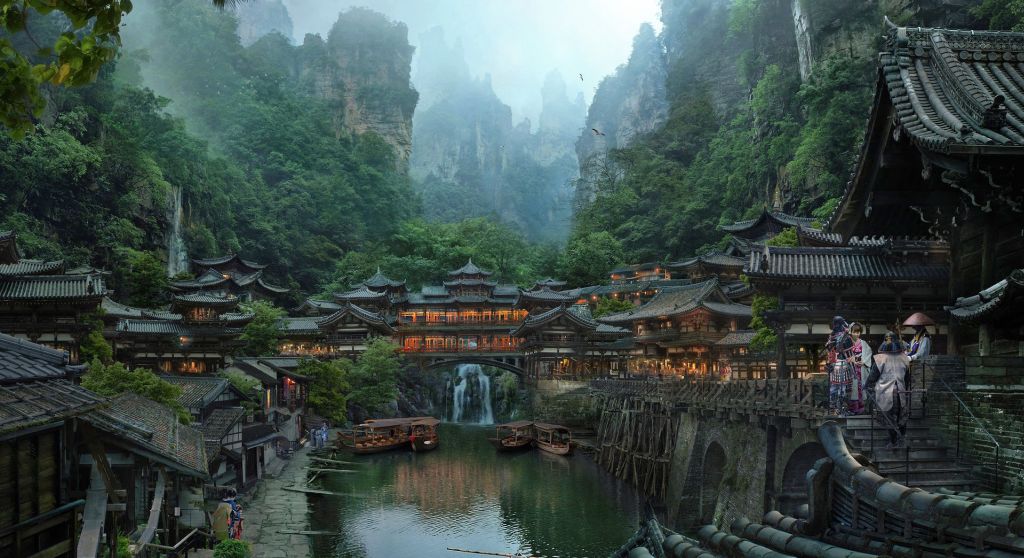
A quiet village nestled among a lush valley. Ideal for palace intrigue or an exotic locale in a pulp action setting. Link.
 Geek Ken