Category: RPGs
Spartan Games terrain Kickstarter
This popped up on my radar. Spartan Games for a long while has been in the wargame and mini business. They’ve really grown into making some stellar resin miniatures and I’m a fan of Firestorm Armada.
It looks as if they’ve decided to dabble a bit in making terrain. There is a Kickstarter campaign running now to offer miniature terrain sets. What’s pretty clever is that it’s a modular frame system, where different artwork for the walls and floors can be swapped out depending on the genre you are playing. While much of the flooring and walls are card, it appears that parts can be upgraded to acrylic and laser cut MDF.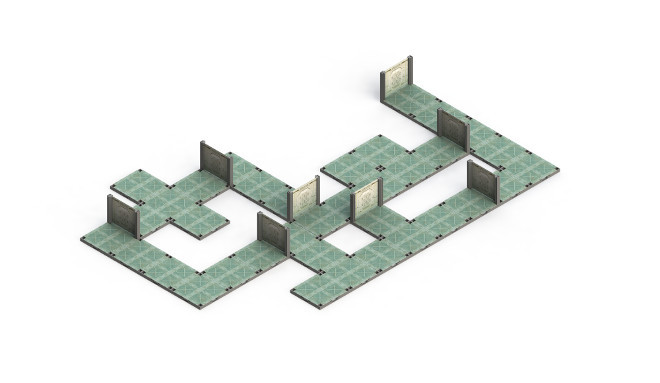
It looks pretty neat. The sets seem reasonable. However my beef would be with the artwork packs. Seems the lower pledge options are for one style of artwork (reasonable), but if wanting to get another style of walls/flooring, you are going to have to pony up about $30 USD and that’s without shipping.
Regardless, it appears this will be a product that they’ll be eventually pushing out into retail. If it looks like something that would tickle your fancy, the KS campaign likely would be a great way to get some of the sets accumulated.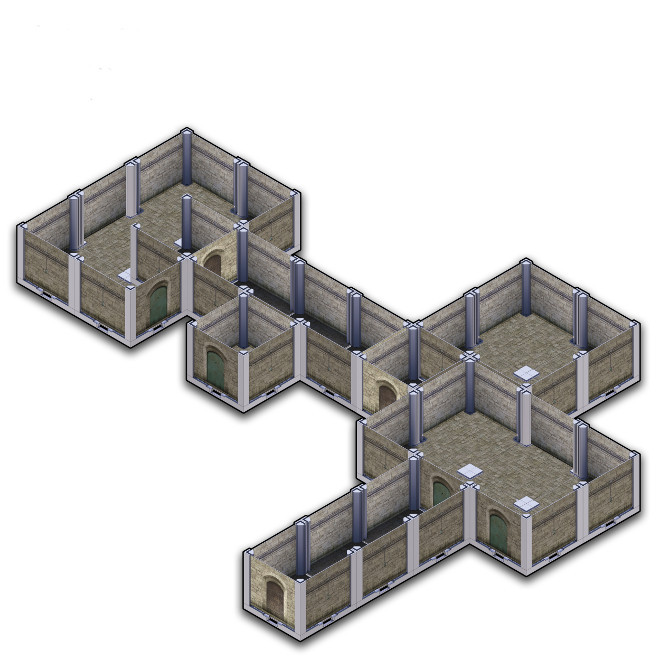
Revisiting Dark Sun
A long while back I ran a Savage Worlds game using the Dark Sun setting. It was a fun game but we hemorrhaged a lot of players and decided to wrap it up. Since then I got a new group going (with a few long time players). They jumped into the weird west and occasionally dabbled in a 1920s Cthulhu game. However both of those campaigns eventually took a serious tone. I think we all wanted something with a little more action and a setting that embraced adventure a tad more.
Many of my players found the idea of a Dark Sun game intriguing. It’s fantasy but with a twist. The setting is dire but certainly allows for heroics. While they’ll entertain being mercenaries for a bit, I suspect they’ll heed the call for a higher, grander purpose. I totally expect a few sorcerer kings to be on their hit list. Dark Sun just really grabs their attention.
As for me, I felt I could certainly get more ideas for adventures flowing in this setting over my weird west game. So we’ll be visiting the scorching deserts of Athas soon using Savage Worlds. Something I’m really looking forward to.
Joesky Tax
Here’s a small mundane item you can throw into your desert-themed fantasy game…
Ember Water – A red, spicy, vodka-like drink made from the seeds of cactus. The thick round seeds are the size of a halfling’s fist and have fruit inside of a dark red color, with each pulp section covered in a soft, pliable, translucent membrane. A single fruit pulp section is placed in a shot glass of water. The coating of the fruit bursts due to osmotic pressure and much of the membrane dissolves in the water, allowing the fruit contents to mix. The result is a peppery drink of 30-40% alcohol that has a clear, deep red color.
The fruit and pulp seeds can be eaten, however while they do have some moisture and posses a high alcohol content, they are unpleasant to eat having an exceedingly bitter and spicy taste. If diluted in less water, the liquid is flammable but the drink becomes more bitter and is unpalatable. Yet some scoundrels have been known to make flammable firebombs in such a manner.

Using different initiative systems for D&D
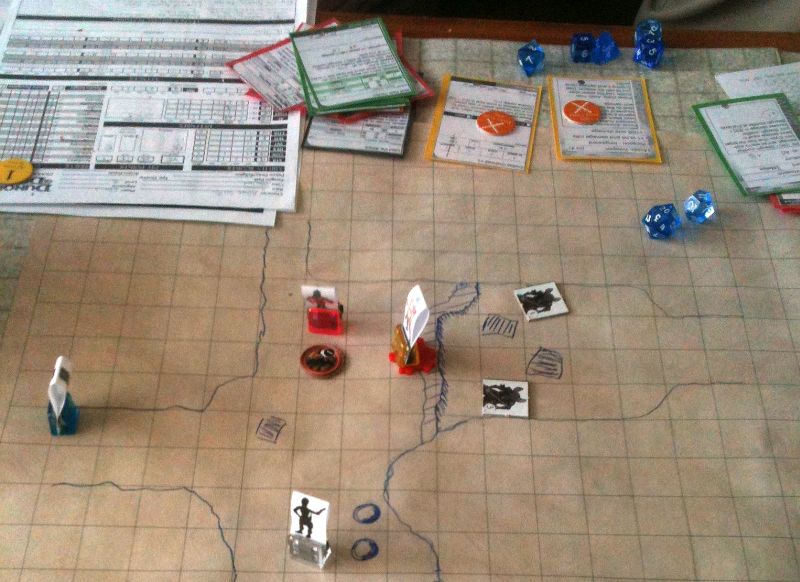 I have a love-hate relationship with classic initiative in D&D. One plus is at least for the first turn, things are chaotic. You can get a player rolling high and step into the action immediately, and you can have a player instead be a little flat-footed by rolling low. It’s fun. However on the following turns it slips into a set order and the humdrum of a predictable routine for turns becomes the norm. Alternately, it’s a little jarring breaking up the narrative to jump into wargame mode for a combat by telling players to roll for initiative.
Newbie Dm has been pondering this last point some, with thoughts of dropping it completely. I can agree that calling out initiative is like announcing RP needs to jump in the backseat as butt-kicking time is taking over the story steering wheel. I don’t quite have an answer for that. There is a certain disconnect with D&D when it comes to roleplaying and the actual mechanics of combat resolution. You can certainly pepper RP into a melee, but there will still be those mechanisms in the background of rolling to hit and damage, with initiative order lumped into that too.
However, I wouldn’t kick initiative to the curb. I realize it can break up the narrative in some cases, but having a completely open order for combats can also allow players to slip into taking over the action completely. I like the idea of combats being deadly and unpredictable. In that aspect, classic rolling for initiative sort of captures that. The problem I have is it slips into a set order, with no surprises after the first turn.
Look at wargames – The idea of unit activation is something that’s been tackled quite a bit through a variety of means in miniature wargames. A lot of designers try to model friction in command and unit activation, and uncertain turn order helps mimic that some. Taking a look at how other games handle unit activation (or initiative), especially wargames, can offer some good ideas for porting them over to D&D. Mind you, what I’ll talk about here is by no means an exhaustive list for systems used in miniature wargames but they are some common themes.
IGOUGO – This is a common turn order system. A player chooses all the units they wish to activate and resolve their actions, then their opponent does the same. This can be shaken up some requiring command checks to see if a unit can be activated.
I’m not a fan of IGOUGO. Even with command checks, you have a degree of certainty how your turn will play out. This isn’t to say it’s not a popular system though. Warhammer 40K and Flames of War use IGOUGO and are probably some of the biggest systems around for wargames. For D&D, you could just have all the players go, and then all the monsters. It can work but not my cup of tea.
Alternate activation – This is a popular stepping stone between IGOUGO and random activation. Players pick one unit to activate and play out the turn, their opponent then does the same, going back and forth until all the units are activated. For D&D, you can have players and the monsters go back and forth, or break it up with the PCs having 2-3 characters act, then a few creatures. It’s serviceable. The kicker is usually figuring out who which side starts at the top of the turn. Commonly a lot of wargames decide that by rolling a die (sometimes with modifiers to represent better command and/or morale). Deciding by the highest dexterity scores D&D might work for D&D.
Random Activation – For me this has become my favorite system in wargames, as it can provide you with utter, random chaos. Granted D&D has this right off the bat with rolling initiative too, however the order becomes static. I’m a fan of keeping things completely random throughout the entire combat for each turn. There are two ways to handle this. One could be that each player/monster is assigned a specific card and they are randomly drawn from a shuffled deck.
Another more flexible system would be splitting a deck of cards up by color, with one side activating when their color is drawn. This could also be done using dice of two sets of uniform colors. To keep ensure everyone gets a turn, you could make a special deck (or pool of dice) where each individual unit is represented by a card of their respective color. One my favorite games, Bolt Action uses this system with colored dice. It’s easy and flexible enough that you can choose what unit to activate (provided you get lucky enough to draw the right colored die).
Savage Worlds also employs a random initiative system going by numerical/suit order using a standard deck of cards. I love it. It makes each turn hectic as you can’t predict exactly when you’ll act from turn to turn. While you could mimic the same thing in D&D just re-rolling initiative for each turn, mechanically drawing from a deck of cards is easier after a good shuffle.
Point allocation – Another system commonly used in wargames is point allocation. Each side has a limited number of command points which can be spent to activate units. Likely not all units on a side will be activated during a given turn and typically a unit can only be activated once. Even using IGOUGO, this can add an element of friction in command and control. SAGA uses something like this and I find it immensely enjoyable.
If you were trying to embrace a more narrative approach to initiative in D&D, point allocation would be something I’d use. When I’ve run Dungeon World, I used a point allocation system. It worked wonders.
The problem with combats for me in Dungeon World was that they were too open. If you had a player or two that were more proactive around the table, they could hoard the action for the group. I needed to break that up and it was a little rough just putting a hard stop to a player’s turn and pushing others to act instead during combat.
So I gave each player 2 markers. When they did something they threw it into the center. If they had no markers, they had to wait. Once everyone spent their markers, they all took 2 markers and the process would repeat. For modelling simultaneous actions in a short time frame, this worked well.
To embrace the open narrative of Dungeon World, I would allow a player to voluntarily give a marker to another player if they wanted. That way if a PC was on a roll doing some cool stuff, another player could allow them to hog the spotlight a bit longer. It added some structure to combats but was still flexible enough for Dungeon World. Going for a more free-form initiative in D&D, I would do something similar.
Handling high (or low) dexterity – This is something that can put a kink into different initiative systems. Players with high dex usually get an initiative bonus acting before others. I’d whip up a house rule allowing PCs to redraw a card, pull another die, or possibly get an additional activation token. There is nothing wrong with giving high dex players some advantage with determining turn order. Regardless, I’d always adopt a house rule to allow players to go first in the case of ties. It’s just a little nod to the players and encouraging them to be heroes over the monsters.
These are a few ideas you might want to port over to your D&D game. If anything, I encourage folks to play other games. I especially think DMs should experience different games aside from RPGs. You really get exposed to interesting game mechanisms playing other types of games, and may be surprised how many things you can pick up to make your own D&D game better.
2015 gaming (and some blogging) resolutions

Another year has rolled around. Looking back I dabble in a lot of different gaming topics. I’m sort of all over the place. Unfortunately it does leave of a lot of unfinished projects lying around. Especially with my miniature wargaming, I’ve probably bitten off more than I can chew. So I’m hoping this year to get some more focus with my hobby.
Get Pacific terrain done – Working with 20mm WW2 stuff, I really want to get more Pacific-themed terrain finished. I made a decent stab at western European buildings and such, but my Pacific terrain is lacking. Having some buildings and jungle terrain is something I’ve wanted to do for a long time but have never gotten around to. I need to rectify that.
Paint at least 80% of what I own – This isn’t monumental but it’s a heavy load to lift. I’ve accumulated a lot of different armies over the past few years and I really want to get them painted. I still have a 15 mm sci-fi platoon to paint up, along with a bunch of bugs, APCs, and a few tanks. Getting those done would be nice.
I have made a ton of progress with my Bolt Action stuff. I’ve got Germans, British, Japanese, and Pacific US Army platoons painted all in 20 mm. I’ve got a British paratroop platoon to work on. Along with some more armor kits to paint up. The big task will be to get my 28mm Russians painted. Not sure how much of a dent I can make into those ruskies at the end of the year, but I want to try.
I’ve also got a Relthoza Firestorm Armada fleet to work on, not to mention my SAGA Viking and Saxon warbands, and a Flames of War Russian infantry division to finish. The latter is really on my back (back, back) burner as I haven’t played FoW in years. I might look into an alternative ruleset to FoW so I can kickstart my desire to get back into WW2 15mm
Find skirmish sci-fi rules I like… – Over the years I’ve picked up several rules for sci-fi wargames, including making some alternatives to existing rules. There are quality rules out there but nothing that I quite like. I was gung ho to jump into Beyond the Gates of Antares however there are some aspects to the rules that I find clunky. Still on the prowl for something I would enjoy more.
…or write some of sci-fi rules of my own. – A few thoughts on a rule set have been rolling around my head though. I’d like a platoon skirmish system that doesn’t require a ton of bookkeeping and charts. Maybe a bit of rules for some armor. I really want to dabble in a fog of war system too. What I want is a little specific to what’s out there, so I’m considering working on a set of rules of my own making.
Buy RPGs I’ll play – I’ve adopted this already in 2014 and will be sticking to it. Over the years I bought a lot of books. I ended up dumping most and decided from now on to get books for games I plan on playing. Savage Worlds will likely be on that list for some setting specific books. I’m on the fence for D&D though. No clue if I will be running a game any time soon. I’ve got the starter set and will probably get the PDFs bound, but don’t see me buying the core books unless I can get a game going. Unfortunately, my group is pretty keen on other RPGs so not sure if 5E is in the cards for me.
Get more board game reviews done – I have a decent collection of board games. I really want to get a good chunk of my games reviewed. Very slowly I’ve been building a base of reviews and linking them to the Board Game Geek site. I enjoy making a contribution to that community. I might have to dabble in some tabletop wargame reviews also.
Compile my Expeditions of Amazing Adventure posts – There is an entire campaign setting there. Throw them together with a map. Flesh out some details on locations. Add a few more locations of interest. Yeah, there is something I could do with that for a fantasy setting. I want to get that done, along with adding a few more locales.
Revisit ASTRO Colony – A long while back I worked on a classroom social studies exercise, where students were different factions of a space colony, all trying to be the lead party in an election so they could gain resources and goals specific for their faction. They had to work with other faction groups to gain a simple majority by vote. It was an exercise to illustrate the how unyielding positions on certain platforms, and still being able to compromise, is a difficult issue for political parties. Especially if their own goals go against the immediate needs of the general public.
At it’s core, I’m happy with how ASTRO colony worked out. However I really need to clean the document up more. The presentation of the material is also unwieldy. I want to get an updated version of that done.
So that’s about it. It’s a pretty long list of goals. Hee. It’ll be interesting how many of these resolutions I can keep for the upcoming year. I sincerely hope folks have a wonderful New Year, and get a lot of gaming in with family and friends over 2015.
2014 state of blog address
 Earlier this year marked a big milestone hitting 300 posts. Since then another year has passed by and I looked over my blog stats to get a feel for how 2014 went. When I first started blogging I was really focused on 4E D&D and doing a lot of posts related to running my games. That petered out some as I began to post my other gaming interests, including miniature wargames and board games. So looking over the traffic for 2014, I’ve come to some conclusions…
RPG posts are popular – No surprise here but RPG posts are the ones that get the most traffic. As I’ve waned some on posting RPG-centric posts, a decline in traffic has been noticed too. My wargame posts are likely too much of a gaming niche (and too generic) to garner much interest from folks.
D&D is king – I’m certain another decline with blog traffic is my shift away from D&D. I also realize there’s a draw to hearing about people starting campaigns, and tackling issues of running a game with a new system is narrative that resonates more than rehashing past games. There’s probably more of a drive for information about wanting to learn about playing a new game, rather than reading about systems they are comfortable running. I expect a popular topic for a lot of RPG blogs in 2015 will be stuff on 5E. There’s no getting around that.
Savage Worlds has some bite – I’ve been more focused on running Savage Worlds and the posts and reviews I’ve done for the game get a fair amount of traffic. Seems a couple of blog aggregators for Savage Worlds have also picked me up. Having a review for Broken Earth highlighted over on PEG’s site helped some too. Currently my group is happy with switching genres and going with more episodic campaigns, so SW fits the bill with keeping a uniform generic system for flipping back and forth with different games.
Board game reviews are decent – Despite not having the reach of RPG posts, board game reviews certainly have a draw. I throw my stuff up on Board Game Geek so that certainly doesn’t hurt drumming up traffic. I tend to review games I’ve vetted some before picking up for my collection. As such most of them are games I like. However occasionally I buy something on a whim and at times get a few lackluster games. I also dabbled a bit posting about various kickstarters, but unfortunately I seem to get a flood of requests to promote other campaigns. I’d love to highlight more stuff coming out in the community, but I do this as a hobby and with my limited time it’s hard to commit to promoting different crowd-funding projects.
In summary, I dig 5E and am eager to try it out but right now my gaming group is keen to do other stuff. I made a commitment to trim back my RPG purchases and only buy books I will play. I broke that getting the 5E Starter set but at $20 it’s pretty hard not to bite. I’m holding off getting the hardback books though. Playing 5E just isn’t in the cards for me right now.
Heh, I’m certain I’ll also lose a bunch of followers switching over to WordPress too. However Blogger just wasn’t doing it for me any more and I was having a hard time getting things to work with G+. I still need to check out a lot of my older posts, but for the most part everything seems to be working okay with the transfer. So I’ll just be chugging along here with posts on miniature wargaming and board games, occasionally throwing some RPG stuff into the mix. Unfortunately as I’m all over the place with gaming, it’s hard to capture an audience, especially as folks seem to have a primary interest in RPGs. I just have to accept I’ve slipped into being a tiny blog about gaming. And I’m okay with that.
Litko game tokens as holiday gifts
Say you want a stocking stuffer for your nerdy, significant other, or want to give a small gift to a gamer pal. Litko makes quality plastic acrylic game tokens and other miscellaneous game items, offering a great gift for them. A long while back I made no bones about my preference using tokens and markers around the table. Having a tactile marker to represent a condition, bonus, or temporary status is great over just using pen and paper. So I’ve had a long affair of enjoying Litko products for years now. They’ve got wonderful stuff for just about any gamer you’d like to get a gift for.
The wargamer – They offer tons of sets and individual packs for tokens. From command and casualty markers, to range band and blast templates, Litko offers some fantastic tokens and markers.

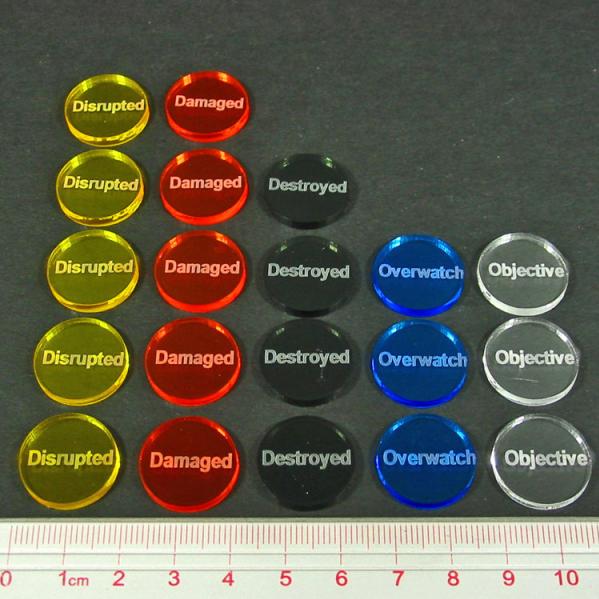
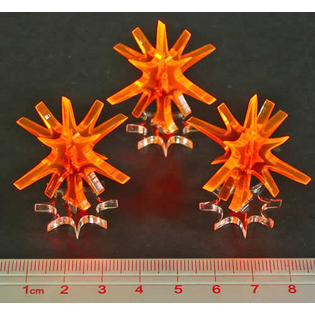
The board game fan – Litko has branched out and now provides game token sets for popular board games too. Imagine spicing up your Pandemic game with these tokens…

Not to mention some really wonderful X-Wing token and marker sets…


And I’m certain Netrunner players would enjoy having these on the table…

The RPG player – Litko also offers a lot of sets and tokens for RPG games also. You can find lots of tokens to mark temporary conditions….
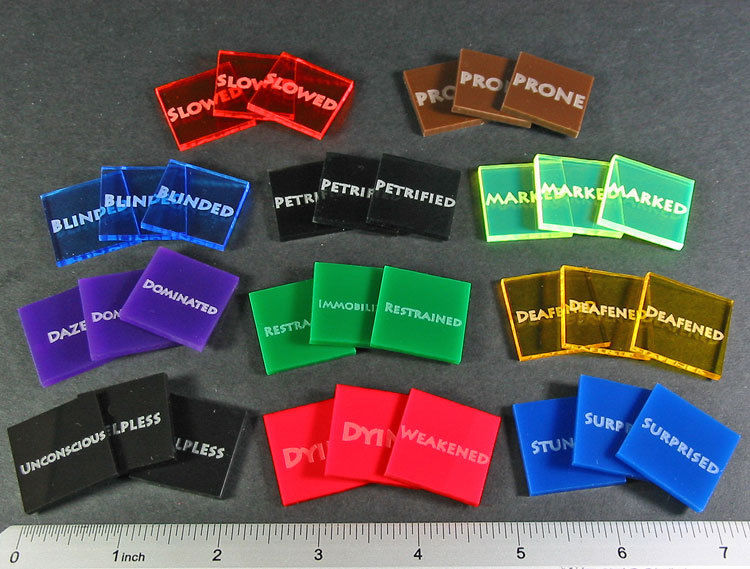
and complete sets are also available like this one for Savage Worlds.

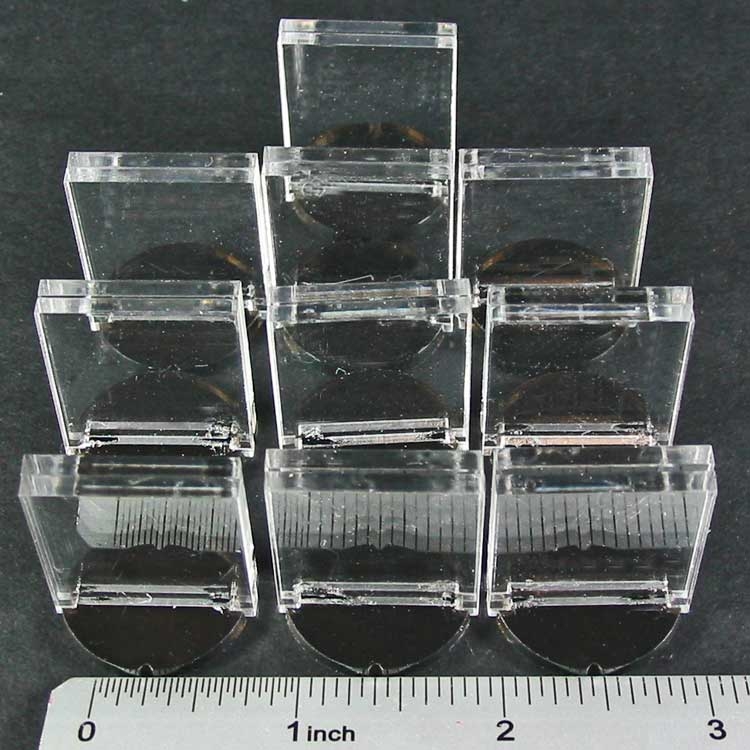
They offer some more interesting items like paper figure miniature stands…
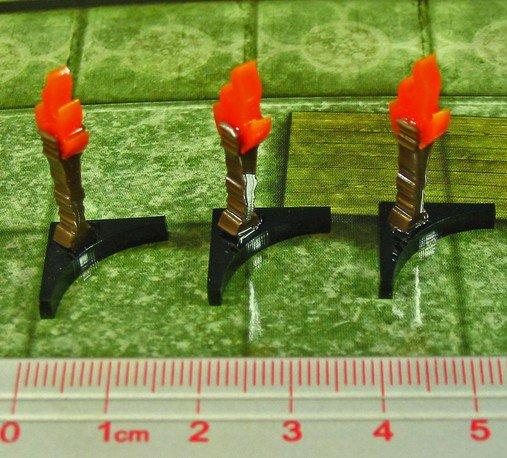
or markers for indicating which character miniature is holding a torch…
And other bits for gamers – Litko also makes a variety of bases for miniatures and other really clever items like counter dials….
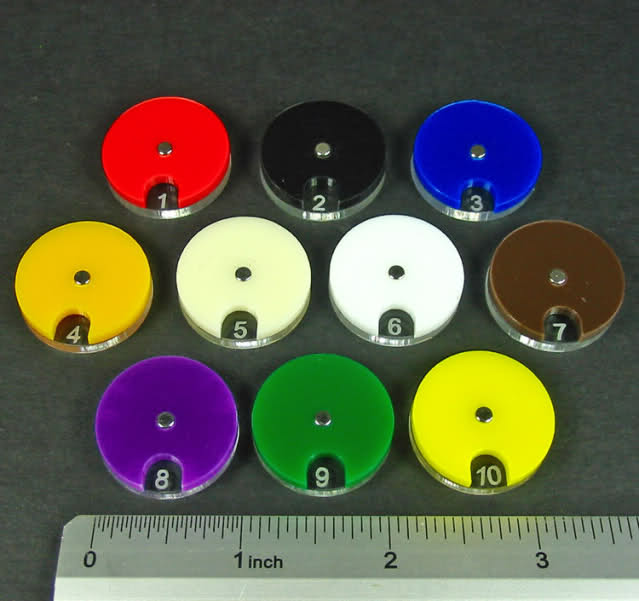
and a variety of portable dice towers which can be taken apart and thrown in a zip lock bag. Perfect for those gaming tourneys.

So I encourage folks to give them a look. Several online retailers also carry their products. And if you aren’t sure about what they’d really like, well just give them a gift certificate instead. Hope folks enjoy the holidays with family and friends (and get some games in too).
Money in Savage Worlds
I’m not a fan of keeping track of money in games. A long time ago I used to dole out silver and gold coins, making sure my PCs kept track of the money they spent for ale and a night’s rest at the inn. I stopped doing that altogether in my games.
However money is still a motivator for some PCs. They want loot, or a means to acquire it through cash, so having some manner of wealth is something I needed. I just didn’t want to get mired down in individual dollars/gold coins/credits. For my 4E D&D game I took up the concept of chests of treasure. I simply awarded some abstract chest of treasure, a pile of coins, or just a share of wealth.
So for my Savage Worlds game, I adopted this as resolving wealth through shares. Shares are an abstract sum of wealth. They can be awarded in ½ increments. When players complete a job, or gain a significant amount of reward, they gain a share. A share is about $250 (or ½ the starting money a player gets during character generation), with ½ shares being roughly half that ($100-125).
Monthly income and expenses – I assume that every month a player goes through ½ a share. This is the gradual expenses of housing, food, upkeep of equipment, entertainment, etc. At the same time, if a player is not actively adventuring, they accumulate ½ a share. So the net income per month is zero. They are spending as much as they are earning.
I see this as a player spending time gathering spell components, income from odd jobs, money for pelts they’ve trapped, or the occasional sale they get from running some business they own. It all depends on the setting and the resources available to the player. Regardless, they get enough to pay the bills, keep a roof over their head, and their belly full.

Purchases – If they want to buy incidentals or some special equipment, I don’t worry if it’s under $100. I consider they have enough money on hand to cover the costs. Restocking arrows, buying flasks of oil, or repairing equipment, I just lump into typical monthly expenses. If they are making a larger purchase for special expensive equipment, that is when I dig into the players’ resources. Then I’ll have players spending shares in at least ½ increments, translating it to dollar amounts. So I don’t sweat the small stuff, it’s the larger purchases and expenses that hit the PCs in their purse strings.
Rewards – Most jobs are going to award each player one share. They might pick up more during the adventure, but one share is going to be the typical reward they’ll each get from a patron. Actively adventuring will cut into the time they would be spending gaining income through other means. At the end of the day, a player will be earning ½ a share in actual profits as they are going through ½ a share every month. So it’s a slow accumulation of wealth but players can earn a bit.
I like this as it leaves open more opportunities to give out rewards. Players might be charged with exploring a set of ruins. For such a task they’ll get one share from a patron. During the exploration they might come across treasure or some artifact that’ll fetch them even more money, allowing them to individually get another share (or a half).
I simply don’t bother with having players record every bit of wealth they get. If they stop a few bandits, in reality they might find a few dollars between them all however it’s not worth writing down. I end up hand-waving a lot of rewards. Players will always find just enough through your typical adventuring to pay for incidentals. It’s the completion of larger tasks that earn them enough reward to be considered a ‘share.’
Being Rich or Poor –These edges and hindrances can be a little tricky. For the wealthy edge I figure that a player is earning 1/2 share a month, regardless if they are actively adventuring or not. I still assume that whatever money they take in, they are spending just as much enjoying a more affluent lifestyle. They just don’t have to work at it as much as others.
This means if typical PCs take a job for 1 share, they’ll net ½ a share in profit at the end of the month. Remember they spend about half a share each month in expenses and adventuring takes away from time spent making a steady income. That PC with a wealthy edge will be walking away with a full share of profit instead. They aren’t penalized for spending time adventuring (it’s nice to live off interest, a trust fund, etc.).
For PCs with a poverty hindrance, they don’t gain ½ a share income every month like other players. So while other players can keep their heads above water and net a little profit leading a life of adventure, that poor PC will always be digging into their pockets a bit more. These guys have to always be on the prowl for work and always be looking for some manner of employment. While others have enough resources to get by, idleness will slowly grind PCs with the poverty hindrance into the ground. They just can’t get the typical monthly income other players get.
I like how this works for my game. PCs slowly accumulate their shares of wealth. Every month of game time I tell players to dock off half a share for expenses. If a lot of time has passed where they haven’t done anything noteworthy, their wealth is unchanged (they spend their time earning as much as they are spending). PCs with a wealthy edge don’t worry about having to spend ½ a share for upkeep, as they get that automatically and spend it every month. PCs with a poverty hindrance might have to worry about being an idle adventurer for too long as their shares of wealth can slowly be whittled away.
It’s pretty simple. I can quickly translate it to actual dollars when they need to spend something. More importantly, the bookkeeping is manageable and I don’t have to have players counting silver coins each time they hit up an inn for a belly of food, a pint of ale, and a place to rest their head.
Savage Space – A fan made Savage Worlds sci-fi supplement
A while back I covered a Borderlands-inspired setting for Savage Worlds. I wanted to take some time and bring attention to another wonderful fan-made sci-fi supplement, Savage Space. Folks that follow my blog might recall that I considered running Traveller for one of my games. I ended up using Savage Worlds making my own conversion rules but much of the game I lifted stuff from Marcus “Chaosmeister” Burggraf’s amazing sci-fi companion.
I feel dirty using it, as it’s such a great space opera set of rules. I am a huge fan of settings that don’t go hog wild with edges and skills, and instead just add a dollop to the base rules. Savage Worlds is flexible that can fit a lot of genres. So settings that embrace that and amend what is necessary is appreciated.
 You get a surprisingly thorough treatment of sci-fi rules with Savage Space. There are a few select knowledge skills. There is a replacement of climbing and swimming with an all encompassing athletics skill, which is something I’ve sort of adopted for my other games as well. Alien creation rules are missing primarily as much of this is covered in the regular rules with racial backgrounds. Cyberware however is something that is covered a bit more, primarily as it can be acquired as equipment of sorts replacing natural limbs with cybernetic ones.
I like the approach done with starships, making them have characteristics like characters. Ship to ship combat is covered more of a general outline in the rules. I think the author admitted these are a little limited in scope, but they provide a good basis for a system. You might need to work a bit more to fit it into your game however in practice (or lift rules from another setting or game). One tremendously useful part of the rules is an adventure generator, providing seeds for some classic space opera missions as well as some more scoundrel, mercenary-type tasks.
It’s not a complete sci-fi setting, as there are no rules for creating systems or planets. However that’s something that can be lifted easily from other game systems. The equipment section is rather complete having a lot of your typical gear and equipment that aspiring star travelers would have for their adventures. As expected there are a variety of weapons with differing technology levels, as well as more mundane and exotic technological gear.
It really is a wonderful set of rules for running a classic space opera game. It may not be a complete setting with a larger campaign detailed out for the universe, but it does have some great bits that can be lifted out and plopped into your own hacked sci-fi campaign. The setting background they provide is brief and paper thin. However the theme of the companion rules is for a generic space opera, so not having a detailed universe setting is expected. Savage Space is a great fan-made set of rules for Savage Worlds, check it out if wanting to run a sci-fi game.
Coventry – A fan-made Savage Worlds Setting
Continually I do see some discussion or a person pondering writing up a fan-made setting, when someone will aptly point out there are already some excellent ones available. As someone mentioned over in the G+ Savage Worlds community there seems to be a lack of reviews and/or awareness that these great fan-made settings are out in the wild. I could mention some great sites that culminate a lot of different fan-made Savage Worlds content. However I think it worthwhile to spend a little time highlighting some particularly good ones that folks have written up.
Borderlands is a popular video game and quite frequently I see in my blog and social feeds about some wanting to visit that as a setting, and continually I point to John Robey’s Coventry. It’s a fantastic job at taking a stab at the Borderlands setting all the while adding some more flavor to make it stand apart.
In a nutshell, Coventry is a planet rich in a resource commonly referred to as Indigo. It’s an immense power source that is exceedingly rare and seems to be abundant on the quarantined world of Coventry. The planet is spoils of a sprawling interstellar war where a terran corporation, Indicorp, took control of the planet. Control is a very loose word though, as their presence is maintained only as large ships and satellite bases in high orbit over the planet.

Coventry has become a prison planet. It is typically a one way trip. Players might be able to garner enough favor with Indicorp to gain a pardon, but most enter into a 25 year contract of indentured servitude. Not all the human residents maintain an allegiance with Indicorp, and there are a few independent settlements on the planet. Unfortunately, they are stuck there as any attempts to launch a craft are thwarted by the defense net of Indicorp in high orbit. It’s like a space version Escape from New York and I love it.
Add to that weirdness, humans were not the only races that settled on Coventry. Rakashan (cat-like predator species) and Avion (winged humanoid lizard beings) also were early colonists that ended up being stuck on Coventry due to the war. Most have adopted to life on the planet and have decent relations to humans provided they keep to their borders, but among each other things are rather strained (seems Rakashan find Avions rather delicious). Add to this eccentric mix the mysterious fungal Mi-Go. The Mi-Go are truly space-traveling aliens modeled after the Cthulhu mythos. They are otherworldly and have their own unknown purpose and agendas.
Players can select any of these races, along with sentient robots, and all are fleshed out rather well. To jump start the character generation process, there are several pre-made archetypes that model the Borderlands characters, as well as incorporate some of the new races.
Like the video game, guns and gear are significant part of the setting. There are a few options for weapons and included are various types of ammunition for each, allowing for a lot of fun tricking out of firearms. Another interesting bit of protective equipment are personal shields.
These shields add a die type to your toughness and each hit reduces the shield defense by one step. Every turn the shield will recharge up a step to it’s maximum defense die. So you’ve got this constant yo-yo defensive boon that ebbs and flows as players are hit. Given that the standard damage for most firearms are 2d8, the PCs need some sort of protection as the game can be rather lethal. It’s a very clever system that matches the Borderlands gameplay pretty well.

Another key part of the game is transmat technology. This is a type of teleporter technology with a wrinkle, an object can be stored as digital data and retrieved remotely. This has led to GotJFree tech. Basically players can have a unit that monitors their lifesigns and upon termination, can store the user’s biological data for a limited time until it is derezzed later. In effect it’s a limited type of immortality (provided the GotJFree unit isn’t vaporized along with its wearer). Different types of units allow for longer storage times, as well as automatic pattern data transmission to central locations. I love it. It’s like a respawn system.
Some people might be put off by the shields and derezz technology, trivializing the lethality of the game. I actually feel that is part of the charm of the setting. It encourages a lot of balls-out crazy behavior as aside from bennies, players have a lot of means to effectively get a do-over. And this works, as the world itself is supposed to be a bit mad. Indigo warps the wildlife, the landscape, and people that are around it too long tend to go a little bonkers.
Some more comments about the setting rules, they are presented in a colorful manner and are professionally done. There are well-written tables, a broad atlas of the world, along with an index of lingo and terminology. What I particularly like is there aren’t tons and tons of new rules, edges, and hindrances. It’s all done very sparingly but at the same time offers something new. Coventry offers a fresh setting, with a wonderful take on the Borderlands world. Give it a try and at the very least, give it a look. There is a lot of interesting ideas and material that can be mined for your own game.
Plot Crawl Campaign – Running my Cthulhu game with a pile of props
As I blogged about a while back, I am running a 1920s Cthulhu game on the side along with my regular Weird West campaign. I lifted an idea from the Secret Cabal Podcast which I found rather inspiring. Rather than your typical game where someone would initially approach the investigators to tackle a specific mission looking into the supernatural, instead it would be based on what the players wanted to look into. It’s a plot crawl campaign.

It’s much like your good old fashioned hex crawl game. While there isn’t a map of randomly generated content, it’s open ended to allow players to go where they will. Like a hex crawl game, a plot crawl has adventure seeds acting like a map of sorts with a few details laid out to grab the player’s interest. They make the choice where to go and what to look into. Sometimes more choices might branch out depending on what they investigate, but they can turn around and poke their heads into another ‘section of the map’ investigating some other adventure plot if they want to.
It’s designed to run very much as an episodic game. There really isn’t any over arching story. As things progress, you can have recurring villains, NPCs, and past events to weave back in as details if needed. It’s immensely flexible as you can tailor the game to deal with past events and players, building up a larger story, or just go for the ‘serial adventure of the week’ format instead. None of this has to be planned out either. You just think of 4 or 5 different adventure seeds and run with it. The details will be fleshed out as the game is played.
My players started the session being called together by a lawyer overseeing the estate of a recently deceased professor. All of them knew the person and had a relationship with him (be it a relative, colleague, etc.). They were each individually named in the will to be present for the opening of a trunk of the professor’s belongings. They were all led into a room, given a key to a small trunk, and left alone to go through the contents.
Inside the trunk they found different files, photographs, and other tidbits of strange information. I had made up a series of props in the manner of photographs, handwritten letters, and fake newspaper clippings. Each group of clues were given codes to match as a set (so all the clues for adventure G were together, while ones for adventure B were in another set, etc.). The players could rifle through the papers and pictures, and decide what they wanted to investigate.
For my first setting, I did kick things into high gear having the lawyer killed under exceedingly strange circumstances. This was followed up with the players being hunted by undead lackeys. All of it emphasizing that the strange did exist, and there were evil forces at play which knew the players had knowledge to secrets better left unknown.
However at the end of the session I gave the players a task. They needed to continue going through the contents of the trunk and decide that night what they wanted to investigate as a group for the next session. All the clues were fragments of some story, location, or odd supernatural thing. I made it a point that there were more papers and files within the trunk (meaning I would add more to the trunk later), however there were 5 different sets of clues and props for them to go through at first.

This really worked well for the group. It was a task to have them decide on what to do next (expect at least 30 minutes or so at your table). However it really cemented the feeling of them investigating these clues of weird, strange events. That there was another layer of occult existence under the normal world around them, and they were slowly unearthing it. Best of all, I knew exactly what the next adventure would be and it was based on what the PCs wanted to investigate further.
It is a bit of a chore to create some convincing props. However I didn’t have to flesh out any adventures. I just needed some ideas of a location, possible NPCs, and some weird thing for the PCs to look into. So you don’t have to have six different adventures fully prepared at the beginning, just a few ideas presented as six different sets of clues. As the players pick what they want to look into, I can turn around and work on that adventure specifically. Since many of the details were rather vague, I could even use an adventure generator for assembling the next adventure if needed. It really is a surprisingly flexible way of providing adventure seeds where the players get to give input on where to go next.
Something like this can be adopted for other settings and I am really beginning to take a shine to it. Maybe it would be printed public notices posted around a fantasy city, or an infonet log players would look through in a sci-fi campaign. Either way, all I would have to do is sketch out a few ideas and let the players decide what they wanted to check out next at the end of the session. If you are struggling to think of ideas for your next campaign consider running a plot crawl, with props and leads for the players they can provide some inspiration for further game sessions.
 Geek Ken