Category: Savage Worlds
Keeping campaigns organized with blogs and wikis
I’ve been fiddling around with my sci-fi Savage Worlds game getting everything together. Something I’ve been a stalwart supporter for over the years is using online tools as information repositories for current games. I tend to game pretty infrequently, just about every other week. So for long campaigns I need a place to keep track of major events that happen. Another plus is I don’t need to saddle my players with scribbling down the name of every major NPC they come across. The important stuff I can put on up the campaign site for reference later.
Additionally we have about 2-3 different settings going on. I sometimes get a little burnt out GMing a particular setting and like to have an occasional one shot game once in a while. It can be a challenge for my players to keep track of the types of worlds they are playing in. Sometimes they need something to jog their memory on who the major movers and shakers are for that campaign. In these cases having an online wiki or blog is great keeping everything together.
For a long while now I have been using Obsidian Portal for a few of my games. It’s a great tool but lately I’ve migrated towards having more simple sites. I’ve found I don’t usually need the complete functionality of a wiki. I can just keep a running page or two of major NPCs or locations. So currently I’ve been leaning towards using blogs instead.
For my Savage Worlds superhero game it’s been a great means to provide a quick reference for major criminal (and neutral) organizations. Also by adding posts and tagging them, my players can filter out a lot of stuff and skim through past posts looking for specific enemies or topics related to the campaign. I haven’t been keeping a running adventure log going for that, but it could be done.
With my sci-fi game I’ve found this especially helpful. Above all other settings I think players sometimes need a little more information on the game universe. Sci-fi encompasses so many styles and themes, it can be difficult to accurately get across to players the levels of technology or how proliferate alien species are. Having a site that they can navigate to get that information is helpful.
Mind you have to be realistic about how deep players will dig through your site. Some may enjoy it but expect many to be willing to skim through about a paragraph at most. So I try to keep things brief if possible, especially for adventure recaps.
One last point though on having a campaign blog or wiki, it’s public. While it’s a way to share your world and ideas with others, it’ll also show how messy your games run including all the lackluster ideas. Just roll with it. Because sometimes you’ll have people mine your stuff for adventure ideas to use in their own games (Hee… or learn about things to avoid if scouring my campaigns). Honestly that alone is a great reason to have your campaign material up on a wiki or blog.

Sci-fi starship combat variant for Savage Worlds
 One thing I latched onto planning out my sci-fi campaign game was using ships as characters. I tinkered a lot with the sci-fi companion rules and they still floundered some with me. I just couldn’t really see making starships a larger part of the game and making it work. If I approached making them characters I could make combat and other aspects of travel more engaging, even if it was being abstract over the traditional vehicle rules.
So I really dug the idea of using ships as characters and I scooped up Savage Space, a fan made space opera conversion. Although the spaceship combat rules were pretty solid, I didn’t quite want to go the route of a battle mat and miniature ships along with using actual ranges to work out combat. I liked the idea instead of using the chase rules from SWD. There were some additional tweaks I wanted to implement however.
Turrets vs Fixed Weapons – I altered the costs some of weapons and kept the idea of fixed arc weapons hitting harder, but were cheaper than turret weapons. Unlike the RAW (Rules As Written) chase rules, I’m allowing ships to return fire against other target craft. Yet they would be limited to turret weapons if the ship didn’t have advantage.
Speed matters – Ships announce their intended speed and it has an influence on ship initiative if substantially higher than the opposition. Some ship weapon systems like torpedoes would require a slower speed to lock in and would be subjected to snap-fire penalties otherwise.
Combat is chaotic – I liked the idea of drawing clubs introducing some type of complication with some ship systems possibly going offline. This allows the repair skills having some other purpose than out of combat checks for ‘healing’ ships. It could be mitigated some with drawing a lot of cards which ties into….
Piloting skill is important – The piloting skill matters. Aside from drawing cards for initiative, the higher the roll, the more cards that can be drawn, and the better chance a different card can be chosen if a club is drawn. Also there is a small change I have with the RAW chase rules, all ships draw 2 cards. If they fail their piloting check, they have to play the lowest card. So piloting has a lot of bearing in ship combat.
Inherent ship agility matters – Another small change I wanted was to have the agility of the ship have some function. I decided to make a basic check using the agility of the ship. Slow, lumbering craft with a low agility would be more difficult to gain advantage during a round compared to more nimble starships. So if failed, there would be a penalty to the Piloting check for that round.
Below are some more details on the ship combat rules I worked up. Another notable aspect is using a damage table for wounds received, but it’s covered pretty well in Savage Space. I also tweaked the range tables some from the rule book to allow for more attacks at medium range (and also allowing for lower range modifiers). Below are some high points of starship combat. Hope folks get some use of of this for their games.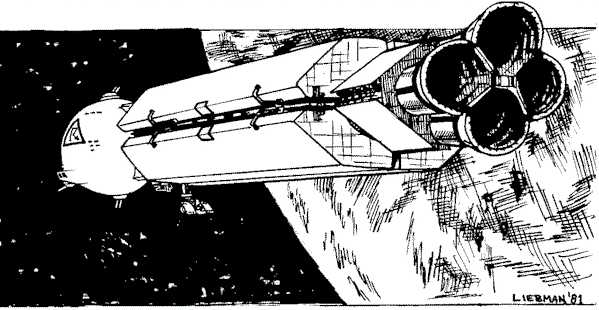
Starship Combat
Starship combat is a variant of the chase rules. Combats will typically be 5 rounds. At the end of the 5th round, and each round afterwards, the GM rolls a die. On an odd result the combat ends with either a ship slipping away, or the pursuing craft breaks off. On an even result the combat will continue at the GM’s discretion (ex. 3 fighters are pursuing a player ship. One fighter is destroyed and another is heavily damaged during the pursuit. A 6th round of combat should happen but the GM decides to break off the fighter attack, deeming the attackers have taken too many losses to likely keep up the pursuit).
For each round of combat initiative is determined by drawing various cards. Follow the sequence below to determine initiative order.
- Declare and record speed (For an ambushed ship current speed is equal to its acceleration).
- Each ship is dealt 2 cards.
- Determine Ship Agility Modifiers. Players make a trait test using the ship’s ability value. This can be modified due to ship wounds (or other applicable modifiers). On a failure the Ship Agility Modifier for this round is -1, on a success the modifier is +1.
- Players make a Piloting check applying any modifiers for wounds, shaken ship, etc. including the Ship Agility Modifier determined in the previous step. On a failure the ship must take the lowest of the 2 cards. On a success, the ship may take the highest. For each raise another card is taken and the ship may take the highest. Note that on a success, players may opt to take a lower card (especially if the higher card is a club).
- All ships act in initiative order. Ships which have a higher card compared to other ships are deemed to have the advantage for this round against those ships. If the selected initiative card is a club, some manner of complication happens to the ship during the round.
Additional Initiative Check Modifiers (All of these modifiers are cumulative to the Piloting trait check):
Speed – Apply a +2 modifier if the ship’s current speed is higher than the fastest opponent. This becomes a +4 if their speed is twice as fast.
Climb – If their climb is higher than their opponent, this confers a +2 bonus but only while in an atmosphere.
Terrain – Some conditions may incur a -2 penalty (like flying through a debris or asteroid field).
If the ship has advantage (their initiative is higher than an opponent), the may fire all weapons to bear on the target ship. Ships without advantage can fire on their attackers but only with non-fixed weapons and have a -2 penalty to Shooting in addition to any other penalties. The number on their initiative card indicates the range and any penalties due to distance are in parenthesis (see the Range Table).
Snapfire Penalty – Some weapon systems have the snapfire characteristic. If the ship’s current speed is equal to its acceleration, or the target is at short range, there is no penalty to fire. Otherwise the craft suffers a -2 penalty to Shooting.
Range Table
| Card | Range |
|---|---|
| 2 | Out of range, enemy is blocked, etc. No attack can be made this round. |
| 3-7 | Long Range (-4) |
| 8-Jack | Medium Range (-2) |
| Queen-Joker | Short range (no penalty) |
Damage Table
| 2d6 roll | Wound Effect |
|---|---|
| 2 | Maimed Ship – Ship suffers severe scars and damage affecting its appearance. |
| 3-4 | Random Sub-system Offline |
| 5-9 | Internal Damage – A vital system inside the ship is damaged and needs repair. |
| 10 | Engine Damage – The engine’s FTL drive goes offline or its agility is reduced by one die type. |
| 11-12 | Cockpit Damage – Scanners, the ship AI, or some other sub-system goes offline. |
Complications Table
| 2d6 | Effect |
|---|---|
| 2 | Disaster: Piloting check at -4. If failed a major system fails at GM’s discretion such as the engine going offline, life support failure, hull breach, etc. |
| 3-7 | Major Complication: Ship Vigor check at -4. If failed ship has a system offline/component failure*. |
| 8-Q | Complication: Ship Vigor check at -2. If failed ship has system offline/component failure*. |
| A | Distraction: The crew has their hands full. If attacking, a -2 penalty for Shooting this round. |
* These complications are typically at the GM’s discretion. Alternately, cards can be drawn for various ship equipment and if a club is drawn the listed complication for that piece of equipment may occur.
Savage Worlds Career edge
I’ve been hammering away at a sci-fi Savage Worlds setting. A long while back I dabbled in a Traveller hack for SW but wanted to embrace the new Science Fiction Companion more. One thing I like about Traveller though was that character generation was sort of a mini-game. You chose to follow along different careers and rolled on tables to see if what skills you picked up. Sometimes something fortunate happened and other times there were these complications (or complete disasters for the player). However a lot of times it resulted in a character that was more fleshed out and a past history.
One particular hang up for starting a new campaign is getting all the players on the same page with setting’s ‘world’. They might have different ideas on what are likely important skills, or worse, sort of overwhelmed with choices. On that front, having lots of archetypes available is helpful. My beef is that archetypes can be a little rigid or maybe too optimized. I wanted to offer some guidance in skills to pick up, but not push them into having particular edges or ability ranks like archetypes have.
Lastly as a sci-fi setting goes, you are going to have a slew of knowledge skills to pick up and can be a little overwhelming for character generation. I’ll freely admit I jumped into throwing in some more edges too which ramps up the complexity of the system some. But for some things I wanted to reward player investment into a background theme, rather than everyone able to be just as effective as that player wanting to specialize.
So I scooped up an idea from Traveller and created a Career edge. This would be an edge that could be chosen once at character creation. It’d allow them to pick up a chunk of basic skills and then possibly choose a few more skills and edges. Lastly, having a list of skills associated with a profession might offer the player some guidance on what other skills to invest in. The gist of this would be a list of 6 skills that players get choosing the edge. Along with these service skills they would choose one specialty branch in that profession allowing them to get a few more skills from its list. The catch is not only do players use an edge, but they also spend 5 skill points from the their total skill pool. Below is an example Marine career skill list:
Interstellar Marines: You received basic military training for the Interstellar Marines, responsible for operations related to assaults on ships and planetary invasions.
Service Skills: Athletics, Edge (Vacc Suit), Knowledge Skill(Military Science), Fighting, Shooting, Stealth
Support: You served as a quartermaster, engineer, or battlefield medic in the Marines.
Specialist Skills: Knowledge Skill(Ship Ops), Repair, Driving, Piloting, Healing, Shooting(Gunnery), Knowledge Skill(Demolitions)
Space Marines: You were trained to fight boarding actions and capture enemy vessels.
Specialist Skills: Edge (Power Armor), Edge (Gravitic Acclimation), Shooting(Gunnery), Fighting, Knowledge Skill(Ship Ops), Shooting
Ground Assault: You specialized in planetary warfare, especially invasions and drop ship operations.
Specialist Skills: Edge (Power Armor), Shooting(Gunnery), Fighting, Knowledge Skill(Military Science), Shooting, Survival
Note that you don’t need all of these specialist skills. I’d still consider getting a list of 4-6 to offer players some choices. For the initial service skills though, you certainly want 5 or 6 skills, as players will be spending 5 skill points when they pick up the edge. They will still have at least 10 skill points to further choose skills. This might sound a lot but for a setting heavy on different knowledge skill choices, they will quickly burn through their points.
This can be very modular for different settings. It’s also likely an easier process than making up archetypes as you just have to think up skills and some edges that would likely apply to a profession or career. Say you were running a Victorian steampunk game and wanted to whip up a career edge list for someone that served in the imperial navy. A basic list of skills would likely include boating, some combat skills, along with some knowledge skills. If they were an officer you’d have some specialty skills and edges related to command. However you might also consider a Connections edge (throughout their career they might strike up a friendship with a nobility or a high ranking admiral).
If they were more a specialist in the imperial navy, maybe they were a medic, cook, or became familiar with the workings of steam engines. You don’t need to make every specialist path a huge list of skills, but could lump them into one list (like the example above for the Interstellar Marines). If you were just a deck crew hand, you’d likely have a lot of overlap with the service skills, but may also pick up some other skills related to a sailor’s life on an imperial steamship. Maybe you might have picked up gambling or streetwise aside from honing your fighting skills.
Once you start making up these lists, you find out how flexible they work and a lot easier than working up archetypes. One note however is that this edge allows players to pick up a ton of skills on the cheap. This tends to work better in settings where there are more skill options to dilute out their pool of skill points.
Another downside is that some double checking may be needed after character creation, especially with certain edge requirements. You might have that occasional player which picks up an edge but doesn’t have a high enough ability score (or training in a specific skill) according to the rules. So when making up these lists a GM has to watch out for those inconsistencies and be prepared to reign in a few edge choices when players are done. It’s a point I will concede to properly built archetypes, as they wouldn’t have this issue. Below is a summary of the Edge (Career).
Career Edge:
This is a special professional edge that is available to characters during creation. This edge represents basic training and skills obtained during a career in one professional field after three to four years of service. This edge can be only taken once. Additionally, this edge will also immediately spend 5 skill points from the player’s total. The player must buy skills using this edge first, before spending any other skill points during character creation. After deciding what skills are obtained from the Career edge, players can spend their remaining skill points normally. Note that any edges obtained from the Career edge still are subject to trait requirements after all skill/attribute points are spent (i.e. a player must still have a Vigor of d6 to obtain the Attractive edge at the end of character creation).
To use the Career edge, the player will choose one career profession. They immediately spend 5 points from their skill point total. They then obtain all the skills and edges for service training in that career. In addition, they also gain skills and edges from specialist training. Players choose one specialty field for that career and gain more edges or skills in one of two ways:
A. Gain 2 different skills/edges from the chosen specialist training list. Chosen skills may be similar to ones gained in service training. If so they increase the trait by one die type (but restrictions for linked ability scores apply).
B. They gain one skill from the chosen specialist training list and can raise this beyond its linked ability score. If the skill is new they gain it at d6. If the skill is the same as one obtained from service training, it can be raised 2 die types (to a d8). Note this is regardless of the skill’s linked ability.
[EX: Fred has a poor Agility of d4 but is strong as an ox. He opts to enter the Marines and takes the Career edge. He gains all the skills and edges from the Marine service training list. He then chooses the Ground Assault specialist training and decides to pick Fighting and raise it (Option B). As he currently has Fighting d4 from service training, he can raise it two die types up to a d8. The increased cost in skill points due to having a d4 Agility does not apply. If it was not a skill on the service training list, he could have it at d6 (regardless of the linked ability score).
EX: Bob also decides to tank his Agility at d4 to buff up his Vigor instead. He enters the Marines and becomes a Ground Assault specialist. He wants to use option A and pick up two skills/edges, eager to gain both Knowledge (Military Science) and Shooting. Unfortunately, he already has Shooting d4 due to service training. As it is an Agility linked skill (at d4), he cannot gain raise this skill to d6 through specialist training for the Career edge. Instead he can take Knowledge (Military Science) and some other skill or edge. If he chose to just focus on Shooting similar to Fred and used option B, then he could have a d8 in Shooting (but only obtain that one skill).
EX: Susan also decides to join the Marines but enters the service having a d6 in all ability scores. She also decides to become a Ground Assault specialist. Susan decides to put a point in both Shooting and Fighting for her specialist training. She had already obtained these skills through service training and currently has them at a d4 each. Since her Agility is d6, she can raise both of these skills up to d6 through specialist training.]
Savage Worlds sci-fi gear: Ablat armor
I’m busy getting things together for my sci-fi Savage Worlds campaign. So I’ve been tinkering with a lot of stuff. One thing that stood out for me was armor for energy weapons. There aren’t a lot of options in the companion book aside from reflective armor. I like the idea of reflective armor and that if can be worn over other types. I especially like how it’s rather frail and can deteriorate due to damage. But I wanted another option.
I can’t envision a universe where weapon systems would migrate to one standard type, as it’d be too easy to offer cheaper defensive systems. That’s one thing I love about the gear in Savage Worlds. Body armor is great for stopping bullets, but worthless against lasers. Conversely reflective armor can disperse laser weapons, but can’t stop a bullet. If you wanted absolute protection, you can combine the two wearing one over the other. The other route is one I don’t want to go which involves power armor (as that diverges into heavy armor only being damaged by heavy weapons).
This is serviceable, but I wanted to give my players more options. Digging out old books of Traveller you’ll find Ablat armor. This was cheap, easily replaceable armor that would disperse energy weapon damage and vaporize when hit by lasers (ablation of the protective material). So it’d offer some protection but get worn out when hit by energy weapons.
I liked the idea of being able to combine ablat armor with regular body armor. You could buy a cheap suit to go over (or under) the ballistic armor. However another option would be to incorporate ablat material onto the the body armor itself. This could be thin ceramic tiles or strips, or maybe a layer of material sprayed over the armor. It wouldn’t last though. Each combat would likely chip away at its effectiveness until the ablat armor had to be replaced. So with that I worked up the following:
Ablat Armor: +4 toughness vs energy damage, negates 2 AP from energy weapons, but offers no protection against ballistic or melee damage. Cost: $500
Ablat armor is thin strips (or small hexagon tiles) of dark, ceramic material that diffuses energy. It is prone to damage easily from ballistic or physical attacks, and portions vaporize with each hit from energy weapons. For every wound that a player receives, reduce the armor value by 2 permanently. Additionally the first time a player is hit in a combat, resolve the damage normally. If no wound is scored roll a die. On an even result, 2 points of armor are permanently removed, just like as if a wound was taken.
Ablat armor cannot be repaired. It can be worn over (or under) traditional armor types but is rather bulky. Ablat armor is usually combined with non-reflective armor as outer coat of energy protection. Usually it is attached in thin strips/hexagon pieces to the surface of existing armor, or sprayed on in a thick coat of ceramic particles with an adhesive compound. This process takes about 2-4 hours and can be done only on planets of average technology or higher. Partial repairs are not possible with ablat, instead an entirely new layer would have to be added. Ablat also does not alter how noticeable the target is except in some odd cases at the GM’s discretion (like an arctic world where the dark, ablat plating might stand out).
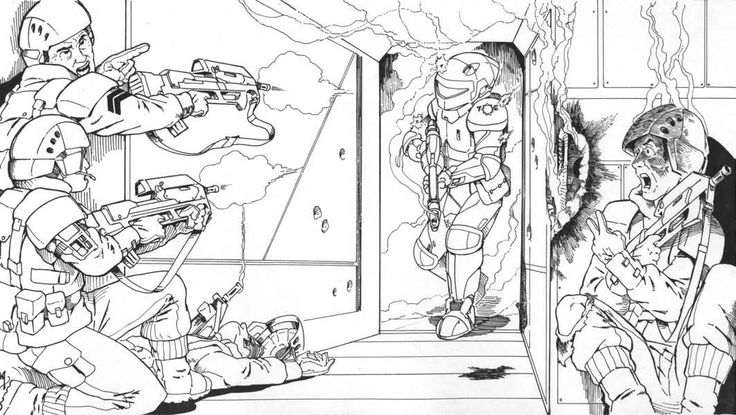
Certainly having ablat armor is something my players will dabble in. I’m also certain they’ll agonize some over the constant drain of cash reapplying damaged armor. However it’ll give them some options and potentially ease that urge to pick up combat power armor as soon as possible. Hope folks get some use out of this for their games.
Savage Worlds sci-fi planet system
 Folks that follow my blog will know I’m a fan of Traveller and even worked on a hack version for Savage Worlds. My Dark Sun game has been going a while but after picking up the new science fiction companion, I’ve got a bee in my bonnet to run another game. So all things sci-fi have sort of been on my mind as of late.
While I have my Traveller hack I really didn’t want to visit that again. I love the feel of the Traveller universe and likely will use it as a basis for my game, but I just didn’t want to juggle different game stats and rule books at my table. I wanted to just use the sci-fi companion and run with it. There are still some tweaks I’m making with the sci-fi companion, but they are pretty minor. Pretty sure it’ll be easy for myself and the players to jump in between different genres as we switch back and forth from sci-fi and Dark Sun.
So I’m slowly in the process of creating a few star systems. I wanted to get some manner of a map to plop down on the table and entice the players to explore some. I appreciate the relatively simple world creation rules in the sci-fi companion but it can create stuff that is all over the place due to every planet characteristic being unrelated random rolls. Because of that I began to eye the world creation system in Traveller.
I love Traveller’s idea of the UPP. A universal planetary profile that quickly provides key information on a planet’s characteristics. However I didn’t want to delve into using that that too deeply to create my maps, as again, I’d be trying to merge rules and stats from one system to match another. Instead I opted to work on my own version that primarily used the tables in the Savage Worlds sci-fi companion with some tinkering. The biggest change is that gravity and atmosphere would have some interaction and impact on the relative tech levels of the planet. I also scooped up Traveller’s tables for governments and culture quirks to flesh out planets some.
The main idea is that all star systems are classified using a universal planetary profile (UPP) for one planet that is the major, inhabited, economic, and political power in that system. It’s a 7 number/letter profile that conveys basic information on the planet. Along with the UPP, there is usually another designation indicating the type of government and any other notable planet characteristics (like trade codes). Each star system typically takes the name of the planet represented by the UPP. As an example:
Floria: NBW523X-L, Po, Ag
Reading the profile from left to right, we see Floria is a normal gravity planet (N) with a breathable atmosphere (B). It is dominated by oceans (W) and has a world population in the tens of thousands (5). It has a typical law level (2) and a below-average technological level (3). Primarily because of this, there is only a haphazard starport available (X) which is likely no more than a flattened plateau just above the sea level. The planetary government is run by a dictator which inherited the title (L) and is not well liked by the populace. Floria also has trade codes of being a poor (Po) and an agricultural (Ag) world.
What is especially nice about using UPP codes is I can whip up a spreadsheet to generate a planet on the fly. So now I can cut and paste a random string of d20 rolls and spit out a UPP for any system. Couple that with some awesome stuff out there for making up sector maps for Traveller and now I’ve got a means to quickly create several sectors. Add in a list of random planet names and I’m good to go. Hope folks get some use out of this for their games.
Free Broken Earth Map
 A while back I reviewed Broken Earth, a post-apocalyptic setting for Savage Worlds. I liked it. It had a nice flavor of not being too out there as a setting with enough twists and weird mutant stuff to make it interesting. One big gripe I had was the maps however. They were pretty hard to navigate using the book.
Seems a free map is available at Drivethru RPG. It’s still a little sparse on details and certainly keyed for locations in the setting, but overall I think much of an improvement from what was presented in the physical book. Worth checking out, and a shout out to the folks that run the Savage Bloggers Network for circulating this.
Tinkering with Call of Cthulhu: The Auction – Part 2
As I mentioned before I like the Auction from The Asylum and other Tales. It’s got some clunky parts though, notably how the auction plays out. The other is somewhat the greater mystery that presents itself later. For new fans of CoC, it’s a great adventure and one I highly recommend. If you’ve got interest in playing it, go shoo and let the rest of this grumbling be for just the keepers and GMs. Spoilers ahead.

.
.
.
.
.
.
.
.
.
.
What trips up the scenario for me is you have this excellent set up with somewhat of a mystery. However you have 8 suspects that aren’t really suspects. It’s clear to the players some kind of creature took the Brass Head. And even after all the investigation the PCs do, it’ll rely on Ausperg stating three of the participants tried to buy it from him before the auction. That’s sort of a waste of session time.
I don’t have a complete fix for this. Even with my changes it’ll railroad the story some. But at the end of the auction night, at least players will have 2-3 suspects that they can track down based on clues they found themselves (allowing Ausperg’s information available as a backup if players miss out on key points). So there are two main aspects I changed. One was how the dumbwaiter operated. The other was how the auction progressed in the evening.
I had the dumbwaiter have call buttons on at the top floor, while in the basement there was only a button to close the door. The critical point was that for the dumbwaiter to reach the upper floor someone had to push the lift button calling it up. The second part was allowing a 6-8 minute break in the auction. At that time four of the participants would leave the room one at a time. PCs could ignore half of the auction guests and focus only on the ones that left during the break.
So the auction played out with about half of the items being bid on. Then a break was taken in the bidding where most of the guests stayed in the auction room. Some would leave and remaining guests would try and engage with as many of the players as possible in idle conversation. Everyone would return for the second round, with one of the lot items in tow. After bidding for the item, Ausberg would ring for the Brass Head. Time passes. Eventually one of his staff investigates and finds bloody remains and the item missing, just as the scenario describes. Now onto the clues for the investigators.
The Dumbwaiter As mentioned it only has call buttons on the second floor. The second floor has 3 buttons. One to close the door, one to send it down to the cellar, and one to call it back up. The basement only has a button to close the door. So the waiter could only have been called up from the basement from the second floor. The dumbwaiter will also only move between floors if the door is closed. However the door can be closed and opened from the inside by manually doing so (or being quick enough to push the button and draw back their hand inside the dumbwaiter). There is blood and gore in the dumbwaiter. It takes about 2 minutes for the waiter to move up or down to the cellar.
The Auction Prep-room The door to the room does not appear to have been forced open (it was never locked as a servant is supposed to be inside at all times). There is gore and blood everywhere, including in the dumbwaiter. One of the surviving prep-room servants will state when they retrieved the lot for the second round of bids, everything was in order. They will admit sheepishly they had stepped out for a smoke when they were supposed to be in the vault during the break. The other servant had slipped downstairs for a cup of coffee. The servant will state that his fellow servant was in the room when he returned from a smoke. He cannot recall if the dumbwaiter was in use then. So there was a time when the prep-room was unlocked and possibly no one was inside during the break. The dumbwaiter could have been activated during that time when no one was in the room.
Auction Break Only 4 people left during the break. They did so in a specific order with about 20-30 seconds in between each person leaving:
– Lesek Czernin was the first person to leave during the break.
– Klaus Hunderprest (the ‘murderer’) was the second person to leave the room.
– Margaret Jameson left the room third during the break.
– Sir Martin Murray was the last person to have left the room.
The important bit is that Hunderprest was the 2nd person to leave, openly claiming to needed to use the toilet. Sir Martin Murray was the last to leave during the break quietly planning on doing the same. Yet Sir Murray entered an empty bathroom, and saw Hunderprest enter when he left the toilet. This is a small clue that there was some lost time in the events described by Hunderprest (Hunderprest left first claiming the need to use the restroom. Sir Martin Murray enters an empty bathroom only to see Hunderprest enter as he was leaving it).
As players make their rounds of investigation of the four, some additional information is gleaned from each one.
– Lesek Czernin will be secretive on what he did during the break. He appeared agitated and tense once the break in bidding was called. Lesek actually leaves the house to approach a car parked outside. If tailed and observed by a PC, Lesek will have a conversation with a man in the back of the car (there are two others in the car, a driver and another person in the front seat). The car will drive off leaving Lesek to return to the house. If PCs are relying on statements from the house staff, a servant will only state that the Lesek was directed outside of the house and they saw them leave and return (but not see what they did outside). Lesek is a red herring. He was simply conversing with his patron on the status of the auction.
– Margaret Jameson (3rd person to leave the room during the break) will have claimed she needed to speak on the phone. Margaret went downstairs to make a call. When she returns, she will be rather agitated. If not observed by a PC, a servant will state she went inside a downstairs room. If players investigate further, sure enough in Ausperg’s office the telephone will have shifted from its proper place on the desk as if someone had used it. She will not initially freely speak of whom she was calling and be rather deflecting if pressed. In reality it was to her father to beg for more money for the auction and she was refused.
– Sir Martin Murray (the last person to leave during the auction break) will also claim they need to use the washroom. He will be rather defensive if asked what he did during the break, simply stating that he was answering nature’s call and be rather standoffish about any details. The truth was that the food during dinner was rather rich, he had a horrible bout of the runs and was exceedingly embarrassed to mention it. After some intensive questioning he will grudgingly admit he may have heard some footsteps in the hall while in the toilet but was unsure. After washing and stepping out of the toilet, he noticed Klaus Hunderprest entering the same bathroom.
– Klaus Hunderprest (the second person to leave during the break) will have announced to other guests as he leaves he need to visit the washroom. During the break, he will slip into the empty auction prep-room and activated the dumbwaiter. After calling up the dumbwaiter, Klaus will enter the bathroom and see Sir Martin Murray leaving. In the cellar, a ghoul will have broken in and be waiting inside the dumbwaiter. The ghoul will go up the waiter and wait for the commotion of people outside to go to a lull. It will stealthily exit the waiter, kill an assistant, take the Brass Head, and then take the dumbwaiter down to the cellar (pushing the buttons and closing the door while inside it).
Through conversation, Klaus Hunderprest’s story should not add up. If cornered in questioning, he will finally claim that he will no longer take part in any further investigation. He’ll stand by the notion that he surely did not rend the poor servant limb from limb and steal away the Brass Head. The incompetence of the police will back up this statement from Klaus. It’s a bit of railroading but at the end of the night, Hunderprest will be free to go. However players should have him as suspect number one in being involved with the murder.
If things fall short with the investigation, Ausperg can drop a hint that Margaret Jameson, Lesek Czernin, and Klaus Hunderprest were all people that approached him to buy the Brass Head. If another nudge is needed to guide players to Hunderprest, a confession from one of the house servants selling the floorplans of Ausperghaus and the staff assignments to Klaus can also be utilized.
At the same time, Klaus will likely know the players are suspicious of him. This can allow for Hunderprest to be more proactive hiring thugs to tackle with the PCs. This situation can then help kick more adventure into the investigation if needed (and interrogation of the thugs leading back to Hunderprest is also another clue if needed).
These changes in events really helped tighten up the entire murder investigation some. It’s apparent that something got into the house and stole off with the Brass Head, but the players will have a much more solid notion that Hunderprest was somehow involved. It also makes the follow up investigation to find him a more direct affair. Additionally by framing the events more as a murder mystery, it also allowed my group to work out their detective chops and stretch their investigative legs some.
Tinkering with Call of Cthulhu: The Auction – Part 1
The Auction is a classic adventure for Call of Cthulhu taken out of the 1983 collection, The Asylum and other Tales. I dearly fell in love with the idea of the scenario and used it for my own Cthulhu Savage Worlds game. For folks not familiar with the scenario, players participate in an auction set in Vienna during the 30s for several rumored occult items. After the auction well…let’s just say things go a little pear-shaped.
It’s a great adventure full of intriguing theme and certainly one of the better scenario setups. For new fans of CoC, it’s one I highly recommend pleading with your keeper to take a peek at and consider running it themselves. I’ll leave it at that with the details. If you’ve got interest in playing it, go shoo and let the rest of this grumbling be for just the keepers and GMs. Spoilers ahead!

.
.
.
.
.
.
.
As I mentioned I’m a fan of the Auction. It works well as something to fold into an existing campaign or for a one shot. It’s not perfect however and seems there are some glaring hitches with the the adventure. One is the auction itself and the other is somewhat the greater mystery that presents later, of which seems to causes problems when running it. I’ve opted to break this up over into a couple of posts talking about how I handled it for my players and the changes made to make it a more engaging adventure.
The first issue I’ve got is the auction itself. For a continuing campaign, this is likely a decent adventure hook. It’s something to allow players to establish contacts in Europe and a means to pick up a few occult items. However I’d put money on most people playing the Auction as something of a one shot session. Most folks aren’t going to have an ongoing Cthulhu campaign.
There is a different draw to getting investigators to participate, and that as being cooperative bidders for a third party. For my game this is the route I took and felt it made a stronger hook. Players are asked to utilize their occult expertise to ascertain the authenticity of certain items and cunningly bid on lesser trinkets to drain the resources of other bidders. All in hopes that the group can eventually scoop up some items their patron is keen on obtaining. I loved this idea and recognized it could be a sort of mini-game within the game.
As written the Auction sounds enticing. The players themselves will likely be excited to participate in it. Who wouldn’t enjoy an evening soiree culminating in an auction for supernatural items? The problem is once you actually start running an auction, it gets old fast. If you dig around, there are some live play podcasts that painfully demonstrate this. There’s a lot of excitement for the first few items, but then PCs realize how repetitive the entire thing is. You can hear one player in a live play recording illustrate this tedium as they quipped something along the lines of, “Are we going to go through the bidding for all the items?”
What cements playing the auction out as a useless exercise is the twist in the middle of the event. There is a murder and the entire auction is halted. Half the items players likely have researched and pondered over won’t even be bid on. I loved the concept, but actually playing out an auction just seemed to mess with the pacing. It had some merit but a faster resolution was needed and players had to have a stake in all the auction lots, just not the ones they were interested in.
Firstly, I had their patron tell the PCs he was interested in about 6 different items from the auction list. He forwarded them a line of credit including a lengthy legal agreement. They would return all the funds placed in their accounts that were unspent and hand over any items successfully bid. I didn’t use actual numbers for cash though. Instead I gave every player 3 credit markers. These represented funds that would be used for the auction. NPCs had 3-4 markers themselves. If anyone was out of markers, they were out of the auction.
PCs got a list of wanted items from their patron. To sweeten the pot some, if a player got an item and had 2 credit markers remaining at the end of the night, they’d get a cash bonus. In game terms, I offered players a bennie if they won a bid for an item desired by their patron regardless of cash spent obtaining it. Thier objective was to try and gain as many items on the list, while carefully bidding on unwanted items to run through the NPC’s cash. If they blew all their cash and got items not wanted on the list, they were stuck with a bill and/or having an NPC they owed a big favor to.
Each auction bid round required players and NPCs to make trait test based on either persuasion or intimidation as primary checks. Secondary trait checks could be made with a -1 penalty for notice or smarts. I felt a -2 penalty for being unskilled would not apply and smarts could always be used. Intimidation and persuasion might be considered an odd choice, however they seemed good candidates in either goading NPCs to bid, or putting up such a strong front they could stare down competitive bidders. Gambling could also likely be a decent choice for a secondary skill.
Roughly half of the NPCs would be wild cards. Before each auction item, I randomly determined which NPCs would be actively bidding. At least half of the NPCs (rounding down) would bid on an item if they had 3 or more credit markers. If all NPCs had 2 or less credit markers, at least one NPC with some credit remaining would always bid, and this lone bidding NPC should be a wild card if possible.
Now winning or losing an item depended on what was being bid for. Players had to have at least 2 credit markers to bid on an item. NPCs needed at least 3, but would bid if they had less depending if any other NPCs weren’t bidding (as mentioned above).
For lots that the patron wanted, the PC or NPC that got got the highest check on their trait test won the item, and would spend their 2 credit markers. If a player or NPC aced their trait test they could take back one credit marker (multiple aces have no effect i.e. at least 1 credit marker was lost if they won a bid). Note that these were not trait challenge rolls or tests of will. Each player/NPC made the appropriate check and the highest roll won.
For auction items the patron didn’t want, the player/NPC with the lowest trait roll would ‘win’ the unwanted item paying 2 credit markers. For each ace that PCs or NPCs rolled beating the lowest trait score, that player/NPC put in an extra marker up to a maximum of 4 (or 3 if they were an PC). So not only had the others gotten the player/NPC to be the highest bidder for the unwanted the item but they had severely overbid for it.
In the case of a tie, players can put in an additional marker to automatically win over NPCs (or other players). If both players put in a marker, they make another check and keep rolling until one player wins. Players didn’t get this extra spent credit marker back if they won the bid, even with an ace.
This set up for a mini game. At the start there were several NPCs bidding for items. If players rolled well for unwanted items, they would slowly decrease the number of NPCs attempting to bid for future rounds. PCs also wanted to try and roll as high as possible for the patron lot items. If they got lucky and aced their rolls, they might win a bid and not spend as much cash. Plus there was always a bonus of getting a bennie if they won the item.
This worked great. It resolved fast. It kept everyone trying to roll high regardless if it was an item their patron wanted or not. Players wanted to gain items as it gave them bennies. They also were engaged and active in just about all the auction lot bids. I scrambled the lot list order some and made sure only half of the 16 items were bid on so only 8 items were bid for. Yet this moved pretty quickly and allowed me to get onto the second part, the murder mystery.
Hindrances as PC motivations for Savage Worlds Demos
Savage Worlds for demos or one shot games works well. It’s a relatively streamlined RPG system and pretty easy to get into. One hiccup however are dealing with hindrances. For prep work you have to really make fleshed out pre-generated characters. Yet once a person sits down, they are somewhat locked into a persona as skills, edges, and their flaws for their character are set for them. When I run my demo games I shake this up a bit.
I don’t have hindrances for my Savage World pre-gen characters. Instead I prepare a bunch of cards with hindrances and tie them to motivations. Players pick a motivation early in the session and gain the hindrances associated with it.
To get the ball rolling quickly when they first sit down, I don’t have players bother with introducing their characters. Instead I hand wave things some and give a nod to the idea that they are all gathered under specific circumstances facing a particular situation together. Once they all get a firm grasp of the challenges ahead of them, I pass out several cards with general motivations on them.
Each card has one word that sums up something the PC would strive to achieve, a drive, or a core aspect of their persona. On the back of each card are more details along with specific hindrances. Once they’ve had a moment to digest all the information, I finally have them introduce their character to the others.
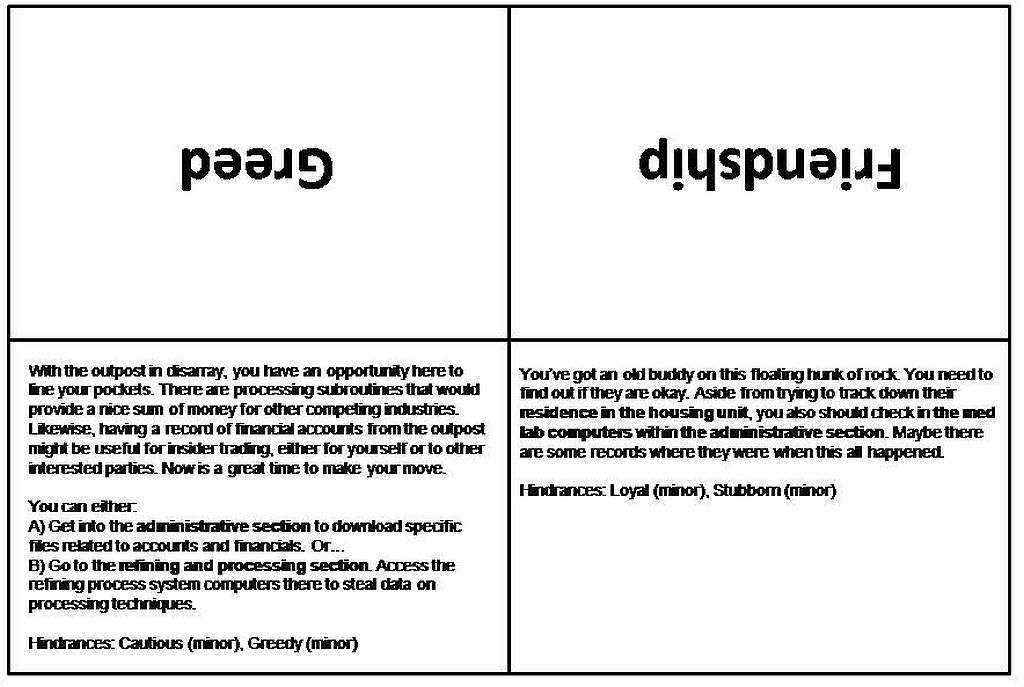
Another key point I bring up with this is if a player pushes the group or does actions that would fulfill their motivation, they get a bennie. Sometimes I have this associated with a particular location depending on the session. If they achieve the task of pushing the action so that they can satisfy their motivation, a bennie is rewarded.
This method does tend to work for more structured one-shots or demos. I’ve run a survival horror, sci-fi game and another weird WW2 game where exploration and investigation was warranted. Having the motivation cards linked to particular areas really drove players to discuss with (and at times connive) each other into exploring a particular area. This helped push the characters into being proactive which is especially helpful for a timed demo game.

Another benefit is that once a player understands the stakes involved and has an idea what would drive them to make certain decisions, they get a better feel for their character. Delaying that initial character introduction until they’ve selected their motivations and the scene is set, allows players some time to let their ideas ferment some. You can really see people get into their character, and they seem to embrace their hindrances more.
As I mentioned, I’ve done this for a few demo games. Most of the time I have people sit down that have never played Savage Worlds. One game I had a table full of 6 players with zero RPG experience. Using these motivation cards helped them jump into the game easily. They had time to get a better idea who was actually depicted on the character sheet. And I’m especially happy to say everyone had a blast while playing.
Sometime I need to formalize my adventure notes and post my past demo games. But I just didn’t want to wait on conveying this concept. It’s worked so well for me and also helps push the players into being proactive. The next time you are running a demo game or a one shot for Savage Worlds, consider using this idea.
Jumped off the deep end of miniature Kickstarters with Reaper Bones
 I’ve avoided the siren’s call of Reaper Kickstarter campaigns of past. But the temptation to pick up a slew of minis is just too much. Their current Kickstarter campaign wraps up in less than 3 days. As usual, you get a ton of plastic minis. The bonus for me is that you don’t need to prime them.
I prefer to use tokens for my RPG sessions over using minis. But I am pretty deep into miniature gaming and been taking a gander to some different systems as of late. Pulp Alley looks neat and Frostgrave is certainly on my radar for something to pick up. As a back up, there is always Chain Reaction which is generic enough for a variety of light arms skirmish games. Yet, I’ve heard some cool things about Songs of Blades and Heroes too for fantasy melee. Yeah…. guess I’ll have plenty of games to run with these KS goodies.
 Geek Ken