Category: Savage Worlds
Starting a Savage Worlds Cthulhu campaign

My weird west campaign is still chugging along. However I found myself dragging a bit with it. While I was gung ho at the onset, I found myself getting a little uninspired thinking up adventures. My players seem to be having a good time, but sometimes I’ve been struggling to keep up the enthusiasm for the setting. I’m convinced now I’ve been approaching it all wrong.
I wanted a spooky western. Yet I found keeping that suspense going has been a chore. There have been plenty of ‘Oh sh*t!’ moments my players have had. However maintaining that tension is just too hard to keep up. I simply don’t have the GM chops to run a longer horror-themed game.
I realized I didn’t need to though. I’ve recognized the player’s aren’t quite the investigator types with their characters. Running it as a Savage Worlds game, they are much more heroic. I needed to drop off emphasis of the supernatural and shoot for a western game with horror trappings instead. It’s a better fit now and I think I can keep a more even tone with the game.
It still leaves me with the adventure-planning burnout though. I certainly need to shake up the setting some and run something else. I took a poll of potential settings and decided to lump a 1930s Cthulhu game in with potential choices. Seems horror is popular as the group wanted to take a stab at a Lovecraft supernatural game.
It’s still horror, but I can certainly run it as a different type of game. The weird west campaign is one where the PCs run around as larger than life heroes, blowing holes in zombies with a trusty peacemaker. This other campaign the players will be wary investigators, needing to be prepared to flee, their mind cracked and sanity waning due to the terrifying knowledge of the Great Old Ones they encounter. More importantly, I can run this as episodic sessions. Just a short break from the weird west game that will let me recharge my GM batteries and craft some fun ideas when we all flip back to a western setting.
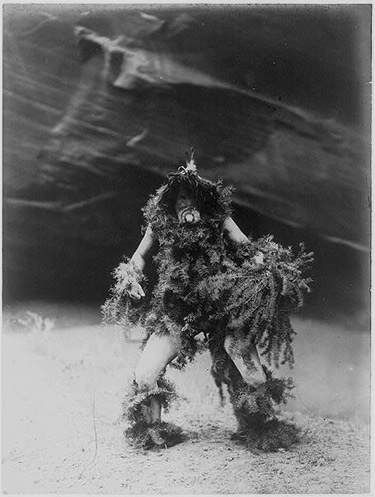
Savage Worlds is pretty flexible as genres go. However, I am super lazy and having some pre-made setting rules makes the task of running a new game much easier. I picked up Realms of Cthulhu and found the book a great purchase. It has a lot of options for different ranges of lethality and think the sanity system works pretty well. There are plenty of NPC templates and critters, not to mention a random adventure generator I can use in a pinch if needed.
I’m trying a different way of running this campaign, with a lot of story ideas up front leaving the PCs to decide what to check out. To pique their interest in potential story lines, I’m working on getting some props together. Likely that is something to warrant another post but I want to see it in action before talking about it.
As resources go, I’ve found a ton of wonderful online stuff including sites with lots of cool photos. Definitely looking forward to getting a creepy Cthulhu game going soon.
Travel for Savage Worlds
 My weird west campaign has my players spending a lot of time in the saddle. Quite a few of the PCs opted to get survival and tracking as skills. It’s something they thought would be helpful and envisioned their characters as more hearty, pioneer folk rather than a bunch of gunhands wanting to stick around the saloons all the time. Because of this, I wanted to try and incorporate some type of events for overland travel which might use these skills, rather than just handwaving it all the time.
I was sort of stumped though. I wanted to try adding some structure to travel, but also have the opportunity for random encounters. I wanted players to be able to use skills to impact how efficiently they conducted their expedition. I also wanted provisions and keeping on course another factor.
Digging around, I found this wonderful set of random encounters for a fantasy SW setting. I really liked how these were laid out. However, it was still a bit clunky for me. So I opted to work on it a little more and make up my own version.
I kept everything related to using cards and had no dice rolling. I also tweaked it some related to expanded events in particular terrain. Really hazardous lands might incur more usage of provisions (which would relate back to fatigue). I wanted to keep this open ended and not get down to too many specifics, in order to allow the rules to be used for a variety of settings. You can draw a single card every day, or instead decide to draw only for each important milestone.
Likewise some of the events are sketched out. Inclement weather could mean the players might suffer exposure and need to make vigor rolls to avoid fatigue. Possibly another check might need to be made to avoid a wound. Say some heavy rains have made riding along a mountainous path dangerous. So failed riding skill checks could have the player’s mount be injured (or themselves taking damage from a fall).
One big change is the number of provisions needed. If you are planning an expedition, you’re going to take enough food to get you there and back again. At key points you’ll be going through food, water, and other items needed during your journey. I wanted to reduce the overhead of excessive bookkeeping and avoid the need to keep track of various ‘legs’ of a journey. So I opted to just have set points where players exhaust a level of provisions. Be mindful that if you are drawing a card every day, but a trip might take 10 days to complete, players will likely quickly run out of provision markers early. It might be better to draw a card every 3 days or so instead.
So here are my travel rules for Savage Worlds. They allow for a variety of events where player abilities can help in reducing misfortune. I think they are also relatively generic enough to work in a variety of settings. Hope people get some use out of them around the game table.
Review: Broken Earth – a Savage Worlds adventure setting
 I sort of lean away from a lot of official Savage World adventure settings and stick with the companion books instead. While having material for a particular setting is great, usually the official settings are a bit much. I completely dig the idea that they take your typical genre and give it a hearty turn. So a setting like Necessary Evil isn’t just with superheroes, but has the PCs playing villains which are trying to fight against an alien invasion of Earth. The official campaign settings are fun twists of your typical genre, but I lean a little more vanilla for my world settings.
A favorite post-apocalypse setting out there for Savage Worlds is, “The Day After Ragnarok.” However it’s got some odd bits dealing with an aftermath closer to the end of WWII. It’s almost a bizarre alternate history setting rather than a futuristic post-apocalyptic one. Likewise, I could always mine Gamma World for stuff, but at times it’s a little too gonzo.
Enter Broken Earth from Sneak Attack Press. This SW campaign setting is a tad more muted with content compared to your typical Gamma World-type game. While it deals with trying to survive in a world altered after a nuclear war, it’s more aligned with the classic, Aftermath! RPG.
Think more along the lines of the Road Warrior and Book of Eli as a setting vibe. That’s not to go without saying mutations aren’t options in the game. They are there, along with more fantastic mutated creatures, but it’s toned down some. The campaign setting is within the northern midwest spilling a little into former Canada. However the major factions and locations could easily be plopped into any other location with little alteration.
Players have a few options for races aside from your typical human. They range from tough irradiated freaks, to non-tech but intelligent ape-beings. Androids and psychic mutants are also an option. Overall the races have small edges balanced with a few hindrances, but nothing is too extensive making me more inclined to include them in a game even if they are a little out there.
As for special backgrounds, mutants, super science, a variety of psychic disciplines, as well as a special alchemist type which make super drugs (akin to the stuff you’d find in a Fallout video game) are all possibilities. It’s a way of giving the game trappings of a stranger theme but not too over-the-top and you’ll find many of the mutation edges conferring small bonuses. A nice turnaround with this are hindrances that can also be related to mutations, so not everything has to give you superpowers.
There are not a lot of additional rules for the setting which is something I like. There’s some details on races and a handful of edges and hindrances. The arcane background types have a few options, but nothing overbearing. Gear and loot have an additional characteristic based on rarity. While lasers and futuristic weapons are given stats, they are exceedingly rare, as are conventional firearms. So by default rules players will likely be pressed to ever get their hands on one (and as such ‘mundane’ items would make for great rewards).
There are some interesting rules regarding communities. They are given basic characteristics along with edges. It’s a concept continually reinforced that players should have strong ties to certain communities, and that these communities can change over time. It’s a simple set of rules that really give life to the world and allow for each location to stand out more than being just a list of characteristics.
On the GM side of things you have a detailed location with several different communities and various NPC wild-cards. The players have an option of aligning themselves with 3 main political groups. One is a nomadic tribe of hunters and gatherers, another is a tech-loving survival group that has been locked away in an underground complex for decades, and the last is a free-wheeling merchant group that maintains its status by being the main trader for various communities.
The factions are interesting. Each one has room for PCs to grow, and include options for forcing them out into the world. Best of all, every faction has faults. The Iron Shelter group are tech-driven survivalists, but they could also be seen a xenophobic community fearing change and perfectly willing to stay hunkered down in their rigid, controlled society. The Wright family head up an immensely successful group of people that thrive on mutual trade, but only those in the extended Wright family really benefit while others in their community live in squalor. It’s these flaws that help inject some gray into what might be considered a black and white world.
There are other factions for the GM to play around with. Most notable is the Green Empire, being formally a small community of ecological protectors, that have slowly morphed into a slavery driven empire powered by biodiesel-fueled vehicles. The initial plot point adventure has the players facing off against representatives from this group. There is an additional plot point campaign more epic in scale, where players initially aid and fight against various sentient AI supercomputers. This plot point campaign involves PCs traveling and exploring lost technical complexes and facing off against robotic sentries. It very much has a Gamma World vibe.
These aren’t the only seeds for adventures, with plenty of smaller adventure plots also included in the book. Along with an extensive list of important NPCs for particular locales, a slim bestiary, and oodles of random encounter charts, there are a lot of tools here for your game. It’s a well put together setting with enough parts for a GM to take a kitchen sink approach, taking everything between the covers, to trimming some options and still having enough to make the setting stand out.
The Good – It’s a great post-apocalypse setting. There are enough rules and detail to give the world some flavor, but not be burdened down by a slog of new material. The setting itself takes an idea of a world about 20-30 years in the future that suddenly ends due to a cataclysmic nuclear war, and then adds another 80 years of recovery to the current day. So it allows some wiggle room for the fantastic with high-tech gadgets, but at the same time have many backdrop trappings of the world now. There are a lot of tables, NPCs, and information on locales and the various factions within them to give the GM plenty of material to easily run a game.
The hardback book is good thick stock with most of the art evocative of the theme. There is an index along with a table of contents which is always a plus. The pages are simple black and white with a comfortable font for reading.
The Bad – One big gripe I have are the maps. The hex scale is nice and the labels are clear, however it still requires a legend. I really wish a more general map with named locations was provided. The book clearly designed to go hand in hand with the SW core rules, yet having some more tables and details on environmental hazards would have been nice. The page stock is a tad thin, and some of the text is rather close to the binding. I wish they were a little more generous with the margin spacing.
The Verdict –Broken Earth is very much a niche campaign book. It isn’t quite a wild-weird setting that something like Gamma World would cover. It doesn’t have room for you to make up tons of bizarre mutants and lots of wild sci-fi tech. It does however provide a little more grounded post-apocalypse world. There is certainly some freedom in the setting to incorporate weird stuff. While the setting has androids, mutants, and psychics, all being a little fantastical, it’s still much closer to a world like a Canticle for Leibowitz, Aftermath!, or Twilight 2000. I think the Fallout video game series captures it the best. It’s a post-apocalyptic setting that is a little off-kilter from a ‘realistic’ world like the Road Warrior.
There are a couple of things I really like about the book. There are some new rules, edges, hindrances, but not so much so that it becomes an entirely different game. It really embraces the adventure setting philosophy of supplementing the Savage Worlds rulebook, not replacing it. The game has a lot of tools to help a GM run the game. There are lots of random encounter charts, random loot, and a ton of typical extras and wildcard NPC personalities.
Finally, does Broken Earth provide enough material to easily run a post-apocalypse game? That is a resounding yes. There are enough NPCs, critters, and detailed locations to seed a lot of adventures. Even better is that there are plenty of campaign plot points to tell a grander adventure (with plenty of opportunities to run a smaller games too). This is very much a pick up and play campaign setting and it’s all enclosed in a single book. If you wanted to take a stab at running a post-apocalyptic game using Savage Worlds, where players carefully explore dangerous ruins with a pitted, rusty metal spear in one hand and a prized, weathered, laser pistol in the other, this book will fit the bill.
DM Tip: Intimidation isn’t always bad cop, worse cop
This always seems to happen. You’ve got a NPC refusing to offer some assistance or key information. Then a player grabs a d20 and tells you they are cuffing the guy across the face and demanding something, rolling off using their intimidation skill. It’s at a point like this where I might turn the NPC into a gibbering heap, spouting snot, tears, and nonsense, completely worthless for offering any help. That demonstration of physical force and the threat of more has rendered the person panicked in utter fear, unable to act. Or alternately, I might even push an NPC into responding with violence as they feel they have no doubt the player means them harm.
I always viewed intimidation as more than just physical threats against someone. I see intimidation almost like insight, but keyed in on sensing weakness. They are able to read that weakness and then use it as a tool to force someone to their whims.
It can certainly be a physical aspect but it doesn’t have to just be a warrior hefting a weapon threateningly. It could be a stare or a physical presence that instills doubt. We’ve likely all experienced this before. You’ve met someone that just carries themselves in a way that projects threat.
Take the crime drama, Knockaround Guys. There is a scene where Vin Diesel gives a beat down on a local thug in a bar. His dialog at the start of that scene is great. It’s just him talking about wanting to be a tough guy and figuring as a kid 500 fights was the number needed. He describes his reasoning and simply starts taking off his jacket. You can see the steam and ego of his opponent just deflate. The local thug has overstepped the line. In front of him is a legitimate tough and all of this is achieved through words and an imposing physical presence.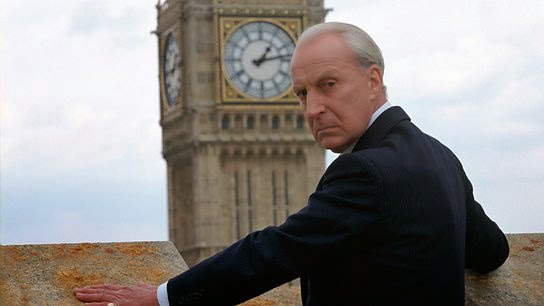
Intimidation is the key ability to know what threats will work and what will sting the most. It’s an ability to read the social standing of someone, and likely what they hold near and dear. Threats don’t have to be physical. They can target a NPC’s character and their standing with the law, or maybe a threat to dishonor them in society or to family (think Francis Urquhart/Underwood from House of Cards).
Someone with a high skill in intimidation can also likely read when a threat is serious or not. It’s staring right through a facade of a violent display and recognizing it for being just chest thumping and bluster. So PCs with this skill could read certain threats and certain social situations much like insight would.
Unlike diplomacy, that seeks a common ground and tries to build cooperation through good will, Intimidation is all about manipulating people through threats (real or perceived). Not all of these threats have to be physical. When you look at intimidation as a means of seeing weakness in someone, and being able to capitalize on that, you open the door for a lot more opportunities and a variety of means to use the skill. Consider letting your PCs explore intimidation being more than just the ability to get answers from someone by knocking out teeth.
Savage Sun! – A Savage Worlds conversion for Dark Sun

A long while back my group was willing to jump back into a fantasy setting, but they wanted something very different from your typical Tolkien-esque world. So it was agreed to run a Dark Sun game using Savage Worlds. Unfortunately that meant I had to dig up some conversions of the setting for those rules.
Digging around however I found quite a few treasures. There are some great SW conversions for Dark Sun. I opted to merge a lot of different sources into a single setting PDF. As part of this, I also wanted to tinker a bit with armor and weapons. A while back I posted on a wonderful idea for keeping track of encumbrance that I found on another blog. So I altered the weight of different weapons expressing them as inventory space slots to fit that encumbrance system.
My group had a lot of fun running around Athas. Sadly, some folks moved out of the country and others moved to another city, so we ended the campaign. Still it was enjoyable while it lasted and likely a setting I’ll revisit again.
EDIT: Doing some digging I managed to track down the person responsible for the bulk of the racial text and the individual that did the foundation to much of the conversion, Rich Ranallo. You can dig through Savage Heroes to find his original conversion.
Wild Dead West – Savage Worlds campaign

My roleplaying days have waned a bit over the past few months. We took a long break playing a lot of board games, including running a campaign session for Descent. Then some of my players had a sudden transition with their employment, so half the group up and moved to another city. Not to mention me taking some time to visit family on a long holiday, so it’s been a break for me running RPGs. While folks were interested in getting back into roleplaying, they decided to put our Dark Sun campaign on hold and try another genre.
During that time I’ve discovered the wonderful 6th Gun comic and immediately wanted to try a weird west setting. I realize Deadlands was always an option for a Savage Worlds game, but I really liked the setting a bit more in 6th Gun. There is the supernatural but it’s not quite as overwhelming as Deadlands seems to be. I wanted a bit of steampunk like the Wild Wild West, just nothing too gonzo like Deadlands has.
So I settled on the Wild Dead West, which has one foot firmly planted in the Deadlands setting but not quite following the official plot points of a full campaign. It’s certainly the weird west but recognizable without the twisted landscape. And while supernatural creatures are certainly responsible for strange stuff that goes bump in the night, humans are likely the most dangerous villains about. Folks seem excited about it. As a new campaign, I’m certainly excited. I’m also shooting for something more episodic, so if we decide to take a long break, it’ll be easier to pick up the campaign again if we take a break and try other games for a while. If anything, it’ll make for some fun blog posts. Hope folks enjoy some of the tall tales that will be coming up.
[On another note if you aren’t doing so, consider giving Obsidian Portal a whirl. It really is a wonderful campaign tool for your game.]
Freesound.org – sounds for your game
A while back I linked a gaming site that had various MMO soundtracks you could download. They had a pretty nice selection and found a few tracks that would work well for some background music to my sessions. I used to shy away from having music for my games. However I found with a decent mix you could get something playing in the background on a loop adding a little flavor to the game, and still not make it a distraction to what was happening around the table.
A few months ago I ran a Savage Worlds game for a local con. Being a demo game with new people, I really wanted to add something to the session to make it stand out. Normally I’m not one for sound effects. However for a few key points in the game, I wanted to add something to make it more of an engaging experience. As it was a horror sci-fi game, I also wanted some type of ambient noise to get everyone in the mood. Having a MP3 player and a miniature speaker, I could easily get something portable up and be able to play some tracks without it being too fiddly and taking up a bunch of space on the table.
So I needed to try and pick up some sounds. I stumbled across Freesound.org and fell into the rabbit hole of creative commons sound files. A bit of digging and I was able to find that perfect space ship alarm. There were tons of industrial and factory sounds. You can really find some wonderful ambient stuff. As for my sci-fi horror game, I settled on a few and also threw in a particularly longer ambient music track that was perfect for setting the mood.
The tracks are free, but many require attribution if being used in other projects. Consider throwing a bit of money to the site also as a donation. There are some nice tracks folks have made available. As for me, I am certainly going to be mining this for certain games. I simply cannot see running a horror game taking place on a dark and stormy night without using this site for some needed atmosphere.

Traveller homebrew conversion for Savage Worlds

A while back I wrapped up my 4E D&D campaign and we were thinking about our next round of gaming to try out. I had recently picked up the new Traveller RPG from Mongoose publishing and liked the rules and setting for a sci-fi universe. The downside was that it’d be another ruleset for our group to jump into. Also, I wasn’t sure how deeply the group would be vested in trying out Traveller. Some were thinking a few sessions would be fun and then maybe rotate to something else. Again the burden of getting everyone comfortable with another set of rules was hanging around there in the background. So doing something using Savage Worlds was rather enticing.
I decided to write up my own Savage Worlds treatment of Traveller. One thing right off was that I wanted to use the rules as much as I could out of the Mongoose book. The first bit was to convert much of the target numbers and penalties to an equivalent with SW. Another key point was to translate some of the characteristics to SW attributes. I ended up having a print out of those tables handy when I ran a game. So I could consistently scan any rule in the book for an equivalent in Savage Worlds. This made it immensely easy to use tables and charts in the Traveller book. Even starship combat was possible as I could just use the Traveller rules for checks, just translate them to SW die types and numbers.
Character generation was a challenge. I really liked the organic process and mini-game in Traveller. One of the major challenges was to work on converting the list of skills to something more manageable. I truncated a lot of different skills. At the same time, I want some gradation in combat skills. Shooting could encompass too many weapon types, so I opted for some carry over with weapons. Having a high skill level in ballistics weapons like a d8 meant you could also shoot well with energy weapons, just at one die type less (d6). It allowed characters a choice with their progression. They were freed up to consider using skills gained for a variety of other professions if they wanted to. Alternately they could try to focus on having as many fighting skills as possible be all at the same relative level.
Knowledge skills could get out of hand using this rule though. You could have a character gain some specialty in one field and be able to use that as a base for a lot of other skills. So for knowledge skills, I still allow some crossover with its application in other fields, but at two die types less. This for me made a bit more sense. Just because a character had a d10 in Astrophysics didn’t mean they were well versed in Biology. However, with all their training in science, they likely got some exposure to this field of science, so they could get a d6 with Biology checks.
Social standing was also not part of the game. To address this I have a temporary attribute that characters used during character generation. Having a high enough social standing at the end of their career meant they could gain some additional edges.
With this as a basis, you could then go through the charts and tables for character generation and basically get the same result. I truncated the careers somewhat to 3 year terms and capped the number of terms at 4 (or about 12 years). Beyond that you’d get characters getting upwards of 20 skill points which was a bit much starting out. This would cut out some hindrance choices (like the old age), but could be worked around just giving the character longer imagined times of career terms.
It’s far from perfect. You are going to get some divergence in the number of skill points between them, but overall I like how they run. They really match up pretty well with the theme and flavor of Traveller character generation. There is also room for establishing connections and picking up hindrances and edges as they go through the process. These are not very tight and rigid as your typical SW system. You are going to get characters with different skill sets and perks. I’d just run with it. By default I gave characters 3 bennies to reroll any trait or table roll during character generation. You might want to consider having only 2 for a more unpredictable career path.
Of course with all those skills, you needed a new table of weapons and equipment. For the most part it’s a port of the SW weapons with a few tweaks and nods to the technology in Traveller. As I mentioned, I really wanted to keep a lot of the material in the Traveller book relevant, so you can still use the equipment and items from that book for your game.
One small bit I added with starships was the concept of the 100 diameter gravitational threshold. I simplified it to a simple random amount of time that was adjusted by the thrust of the ship. I wanted to give something concrete but still have an easy ruling at the table so a GM could just spurt out a time needed and keep the action going. I like the concept that these routes are predictable. When you jump in (or jump out) to certain systems you will be traveling a common route within the system to minimize fuel use. The danger of this is that these sub-system routes are ripe for pirates (or for security patrols). It’s just a little ‘realism’ to back up why players might run into pirates as they jump into a system, or how security authorities know what route the players are taking when they break out of orbit from a local planet.
As trade and ship upkeep goes, I threw in the towel. I tried to use the freighter a base for figuring typical monthly costs for paying off the ship mortgage and upkeep costs and just gave up. The numbers don’t work out if running simple freight. For this I certainly took the spirit of SW with embracing a simple process over the convoluted rules in Traveller. Every two weeks players can run basic freight that will pay off half their monthly costs for upkeep and the ship mortgage. They keep doing this they can always pay the bills and potentially get a little more cash in thier pocket.
Alternately they can dabble in speculative trading, however they won’t get a windfall like they would in Traveller. Instead they will be able to sell goods at 10% over the base cost. For each raise they get on their Trader roll, they get an additional 5% increase in price. This allows the players to get a little extra money with trade goods, but it won’t be a huge amount like in Traveller. The good news is that players can always unload goods at 25% less the base cost for that planet type if they fail to get a buyer. So they will lose a bit of cash, but not be completely wiped out.
This conversion is far from perfect but it was serviceable for me. It allowed me to use the base rules in the Traveller book and quickly port much of it over to Savage Worlds. Feel free to give them a whirl at your own table.
Note: It’d be criminal not to mention Chaotic GM’s Space Savage Worlds rules. They are fantastic. Use them.
Savage Worlds player cheat sheet
 Just a short post today. A long while back I prepared these cheat sheets for my players when we started up Savage Worlds. I just wanted a quick reference for them to cover much of the nuts and bolts of the game, without them having to rely on constantly looking stuff up in a book.
It’s a pretty simple sheet but my players have found them handy. I opted to print them out at half the size and laminated them for resisting your typical table of snacks and drinks. The text is a bit small but readable and the smaller page size helps keep less clutter around the game table. Enjoy!
Gambling in Savage Worlds
I’ve been having a lot of fun running Savage Worlds. Hee, I’d like to think my group is having a good time too. It’s got some kinks in the game and I still make some mistakes, but overall it’s a fun, streamlined system.
I had a player adopt a gambling scoundrel type. The default gambling rules for SW are decent. A player chooses a value of the stakes and folks make a gambling check. The highest and lowest are paired off, with the lower roll paying the difference times the stakes. Then the next highest and lowest are paired off, etc. Ties and odd players are considered to have broke even. It’s a fair way to resolve an hour or so game time of gambling.
The downside it’s a little swingy and doesn’t quite capture that night of gambling. A player can seriously flub a roll and be paired off against someone that got a raise or two. You can get into territory where a player wins 5-8 times the stakes bet. Even weirder, a player could actually lose several times over their initial stakes.
So I thought about tweaking the gambling checks a bit and resolve more around a capped amount players can potentially win. First a player chooses the stakes and ‘buy in’ at 2-3 times that amount. Each buy in is represented by a marker given to that player (say pennies, glass beads, poker chips, whatever). This marker abstractly reflects the cash brought to the table.
All gamblers in the game make a gambling check and it resolves as per the rules (highest and lowest paired off, etc.). However instead of paying the winner, the loser just hands over a marker. Any odd players out do not gain or lose any markers. Players keep rolling until there is a clear winner (getting all the markers), or other players drop out. The markers are then cashed in, each being one stake. So if the stakes were 5 silver, a player ending up with six markers would have 30 silver at the end of the night.
For it to work you need a few people playing, at least three with 4-5 being ideal (including the player that wants to gamble). I always have 2 or more PCs join in the game representing NPC extras at the table. I also try to have one extra have a similar skill to the player, with most having gambling at d6, and possibly one having a lower skill of d4. All participants would have the matching marker total of the player, with one possibly having 1-2 more (they simply are bringing more money to the table).
To speed up the gambling a bit, I have another rule that kicks in when an extra ‘drops out’ and loses all their markers. The next player/extra with the least amount of markers will also drop out of the game. Consider they have actually played a few hands and decide it best to cut out of the action early. At this point the player with the highest gambling skill makes a check. If they pass, they can choose to force that player to stay in the game if they wish. With a raise (not cumulative), they may also convince that player to buy in another marker.
This represents the gambler is able to string along a player having a losing streak, and may even convince them to throw more money into the game to stay at the table. Note this is entirely optional for the player making the check. They may want to have that player drop out. Even if doing so loses a chance at earning more cash, they are also cutting down the chance of having to pay markers.
Lastly, when it’s down to the last 2-3 players, I double the markers won and lost. It can drag out a bit just passing around a single marker over again and again. With multiple markers being won or lost, it tends to resolve the gambling a little faster.
An alternate to this could be that all players just throw their markers into one big pot. However I found actually exchanging markers gives players some gauge with how they are doing as the game progresses. Also they can utilize a large marker pile as a means to push other players into cashing in, wielding their winnings like a bludgeon to force others into calling the game early.
There are a couple of things I like about it. It represents cash in hand pretty well. You don’t have this phantom total of money pop out of nowhere, it’s all based on stakes at the table. The PC rolls a few times, which can average out that single lucky (or unlucky) roll. Having another extra drop out when one loses all their makers gives the player an opportunity to utilize their gambling skill in another fashion (potentially keeping a weaker player in the game for more money to be earned).
Lastly, there is some tension with the game and encourages a player to try and cheat on a particular roll. By default you don’t have this huge incentive to cheat. However if you really need a good roll to win a few markers off your opponent, cheating can be a decent way to get that edge. It’s all about that player flubbing their roll and getting caught, which can lead into more interesting situations.
 Geek Ken