Category: Wargames
British PIAT teams – Italeri anti-tank teams
I’ve been getting the finishing touches on my British platoon for Bolt Action wrapped up. I wanted some anti-tank assets and was in a pickle for finding a PIAT team in 20mm. Hunting around I found some anti-tank teams from Italeri that looked like they would do the trick.
They weren’t quite perfect though. One ding was I was also getting quite a few models for other armies in the kit that I wasn’t working on (and the included German troops were redundant). The other was the troops were paratroopers and not typical British army troops. However one thing I like about Bolt Action is the game adopts an attitude of under-strength platoons with a mix and match force composition. I could easily see the PIAT team as misdropped paratroopers hooking up with an army platoon the initial days of the Normandy campaign. If anything, it’s encouraging me to pick up some paratroops for another force, or possibly include a small group to represent veteran squads.
The plastic itself is pretty stiff. However, it’s just a tad soft and not quite the material found in Plastic Soldier Co. kits. Overall the detail is decent. Some of the molds are blurred though. The kneeling figure has his knees clumped together in a blob, with no real definition for the legs. While most of the webbing and pack kits have a fair amount of detail, some of the packs and excess gear is a little blocky. The faces and helmet netting are somewhat sparse on detail also.
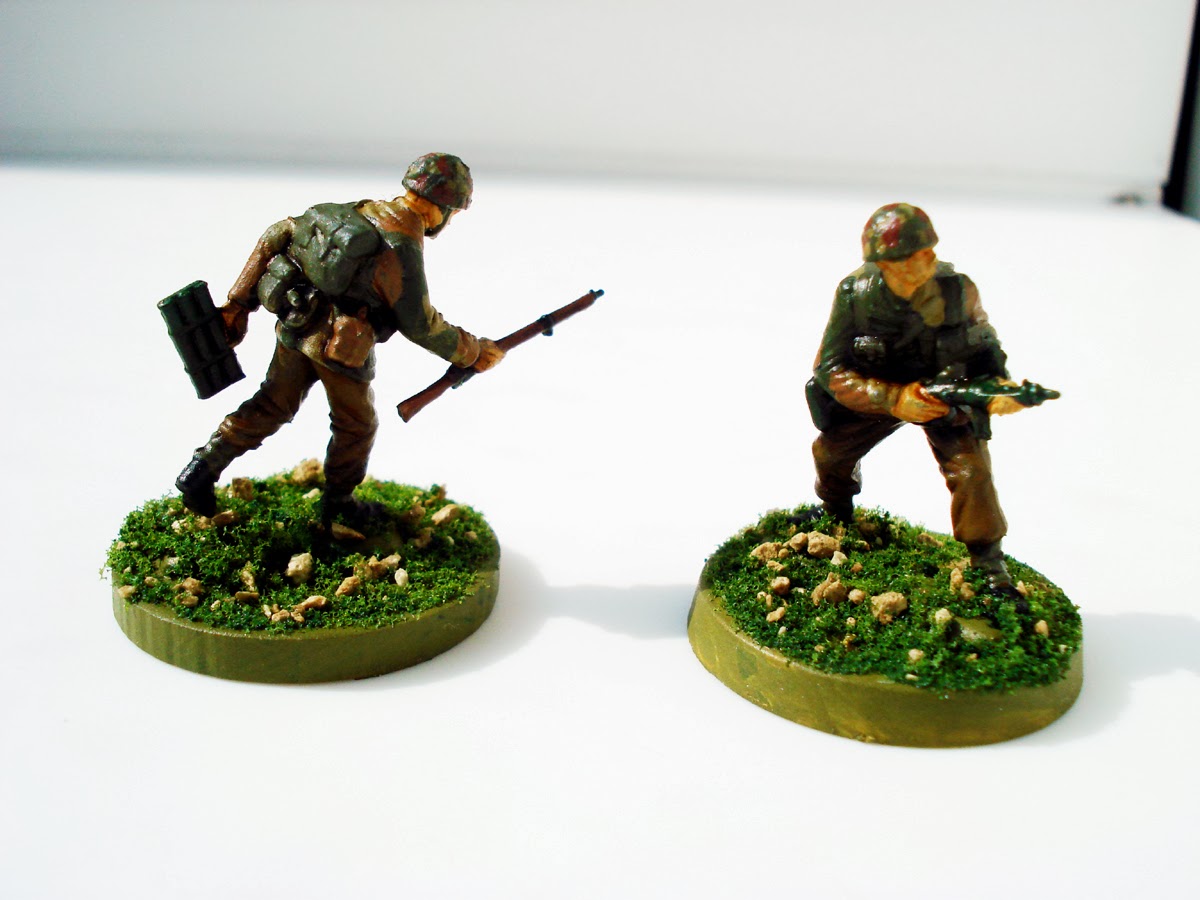

The poses are okay with the firing and cocking figures done well. There are two figures in a running pose with extra rounds that form the rest of the teams. They seem a little odd, but the sculpts capture a dynamic pose okay. It might be considered a little mismatched with the other firing and cocking figures that are in a static pose. Another small gripe is the figures look a little big for 1/72. The Italeri minis are larger by about 2-3mm compared to the 20mm figures from Plastic Soldier Company (pictured below right)

Despite my complaints, overall I’m happy with the figures. I’ve got my PIAT team, the figures look okay and look like they can take a little wear and tear on the gaming tabletop. I wish they were regular army uniformed troops, however I have to admit I am eagerly awaiting painting up a squad or two of paratroopers now. They’d make a great small contingent of veteran troops for my British platoon.

Review: Tank War
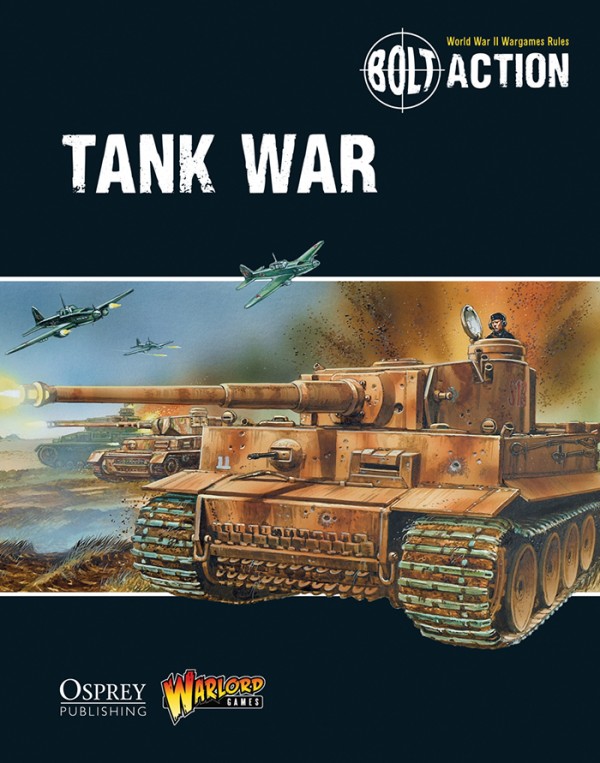
I’ve had my mitts now on the new Bolt Action supplement, Tank War, for a while now. For those living under a rock in the Bolt Action arena, Warlord Games has introduced an all armor supplement rulebook. The big bombshell was that this book would not just be alternate rules for players to dabble in armor, but rather a completely new way to field armor platoons in the game. It was meant as a rulebook to allow infantry to face off against tanks, opening up a lot of different tournament options.
The rule section itself is paper thin, with the core rules only being a few pages. A large section details the structure of the platoon and the requirement of a command tank. Further, there is a new rule where if all the tanks in the platoon are on the same chassis (EX they are all PzKpwf IV’s, even if there are variants among the platoon), then the command distance is increased to 12″. Some armies are still limited to 6″ due to lack of radios. But overall it seems a means to encourage players adopting a more uniform platoon makeup, rather than selecting all manner of armored options to build their force.
In addition, the new pin rules are now in print. Making their way from a recent FAQ, there are rules limiting what can actually pin a vehicle now. Rather than any heavy weapon being able to throw pins out, now you actually have to use a weapon that can potentially penetrate the armor.
Morale of the tank is a huge factor also. Inexperienced troops work as the original rules (any heavy weapon gives them a pin) while veteran tanks use the new rule. Regulars roll a die to see if they act as a veteran or inexperienced when they are hit. I dig the idea that there is an advantage to taking veteran troops, however I wish the probability for regulars was skewed some. I’d prefer on a 3+ they act as veterans instead of a 4+. As written it’s sort of a coin flip. I do feel sorry for all those US players that kitted out 50 cals on their transports, as the value of them throwing out pins on tanks is lessened.
Tank War also introduces an optional set of rules for crew experience. As crews survive they slowly accrue experience which can be used to purchase skills. Broadly they break down into command, driving, and gunnery skills. These give a one shot bonus to the player over the game. They also improve the morale of the tank unit, as all tanks start out as inexperienced crew and morale increases as they gain experience. It’s different and allows for players to explore a campaign game where troops improve over time. There are some point values that can be used instead for legendary crews if players want to dabble in fielding a tank ace on the table.
There is a new scenario that is armor-centric for the game, relying on players capturing 1-6 random objectives. Like your typical scenario, to claim an objective you must spend an entire turn within 6 inches of it and be clear of any enemy. However players can claim objectives and roll off it, allowing them to be recaptured on later turns. So having a mobile force claim objectives quickly (while contesting others later) can be a strategy.
The book also highlights a more fun scenario where players duke it out in a massive tank battle. The authors make no bones about it, this clearly goes into the imaginary battle category of historical wargaming. But I enjoy that they are opting to throw some more fun and frivolous type scenarios into an official book. Not to delve completely in the world of ‘what ifs’, there is also a rather lengthy section on theater specific lists and historical battles.
The Good – It’s a nice addition to the Bolt Action family. It doesn’t throw down a ton of new rules to make for an entirely new game. What really makes Tank War for me is the different theater specific lists and battlefields. There are a wide variety of WWII theaters and operations covered in the book, each with relatively historically accurate force composition rules, as well as some special table rules (terrain, air support, armor platoon command limitations, etc.). These certainly make for Bolt Action to adopt a more historical feel over your typical battle scenarios.
The artwork is classic Osprey publishing stuff with some nice model pics. There is also quite a bit of historical flavor for jargon and terms used by tankers at the time which is a nice touch.
The Bad – There aren’t any rules for mechanized infantry. You can certainly get some infantry squads in your armored platoon lists, however it’s squarely on the 3 tank foundation, with a smattering of other choices. I am a little disappointed that transports weren’t revisited, especially the rules regarding firing their mounted armaments. I was certainly hoping for a strong mechanized infantry list, with rules to support allowing transports to actually fire all those MGs. No dice. Which is sort of a shame.
There aren’t more tank-centric scenarios. The theater specific stuff is nice, but more tourney scenarios would be great. There is a lot of optional stuff in here which is good, but some like the legendary crews can border on being too gamey (and might lead to cheese lists).
The verdict – So is Tank War worth picking up? If you are looking to add a little chocolate sprinkles to your vanilla Bolt Action game, it’s a good buy. If you have been drooling over fielding a platoon of tanks, it’s certainly worth picking up. The optional crew experience rules can make for some fun engagements and allow players to explore a campaign game. The theater specific lists particularly stand out for me as a pleasant addition.
However, the actual core rules for armored platoons are rather thin. It could have been easily offered as a free PDF for players wanting to try them out. If you have no desire to play an armored platoon this is certainly a rulebook to pass on. There is a lot of interesting material inside but not a must have and certainly doesn’t need to be considered a core Bolt Action rulebook.
Plastic Soldier Co. – British Universal Carriers
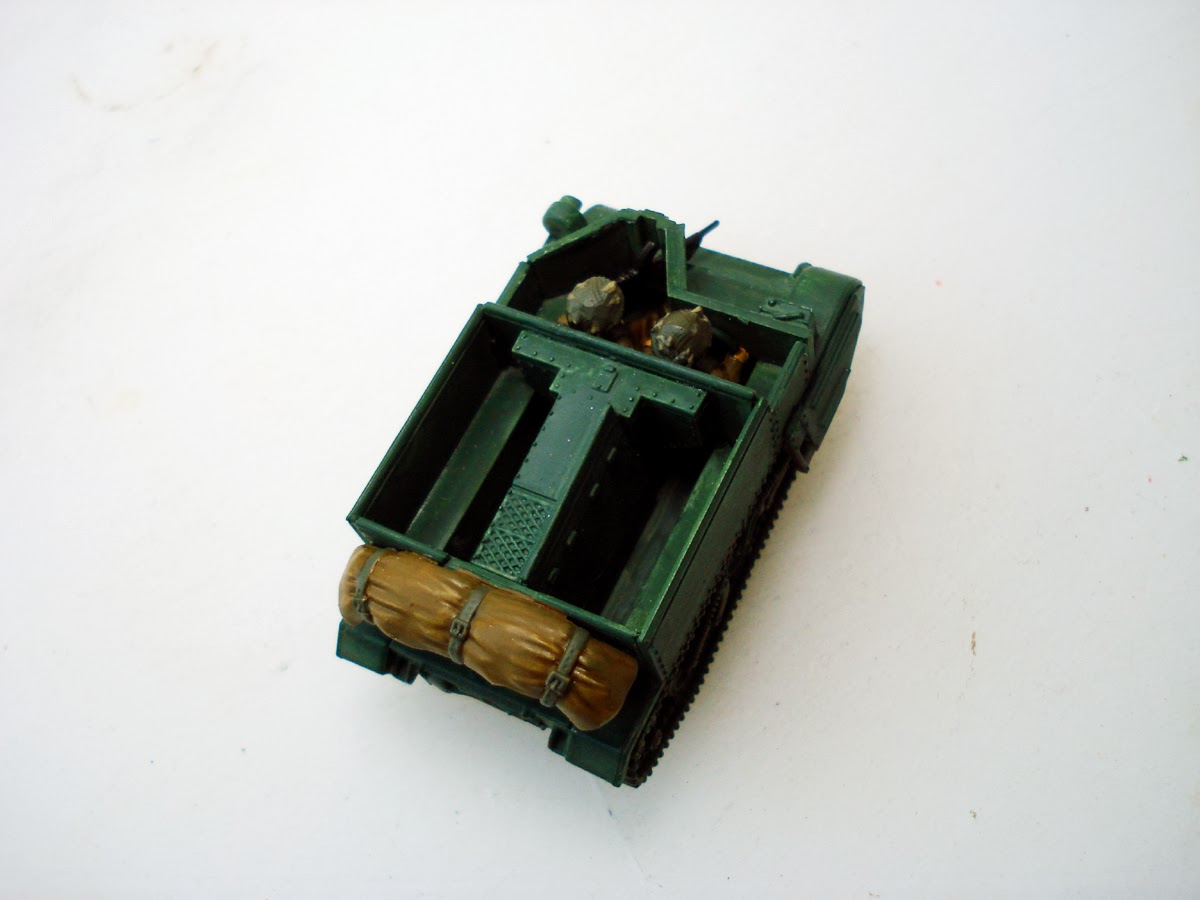
Slowly wrapping up my British platoon for Bolt Action I picked up a set of British Universal Carriers from Plastic Soldier Company. This is a nice model kit with 3 sprues for Mk 1 and Mk 2 carriers. Each includes 2 crew members, Bren LMGs, and a pair of passenger models. The kit for the most part assembles pretty easily. The one downside was the crew members.
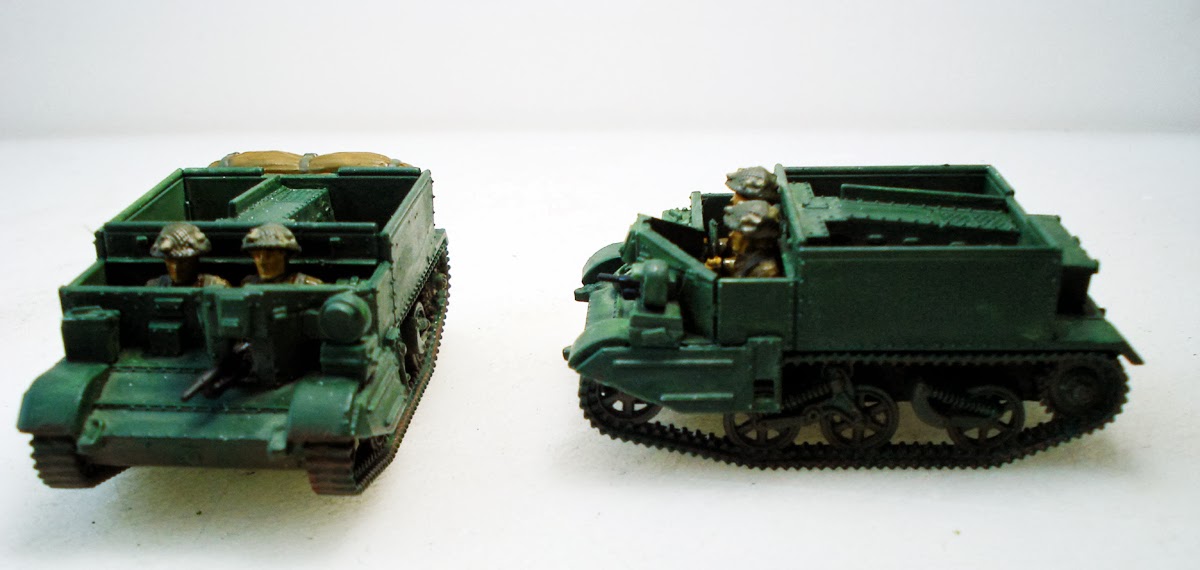
Sort of temporarily fitting them together, I tried out slipping the driver in and thought it’d be no issue to paint it up separately. I found once assembled I couldn’t quite get it in without a bit of force. Fortunately the gunner slipped in a bit easier. However, I then found out the Bren gun simply did not fit within the port slot. I had to work on trimming it down and couldn’t quite get the angle right with the crew member inside. The front armor panel can be attached as a separate single piece. Working on this model again, I would get the Bren gun mounted to that first, paint and seat the crew, then add the front armor plate.
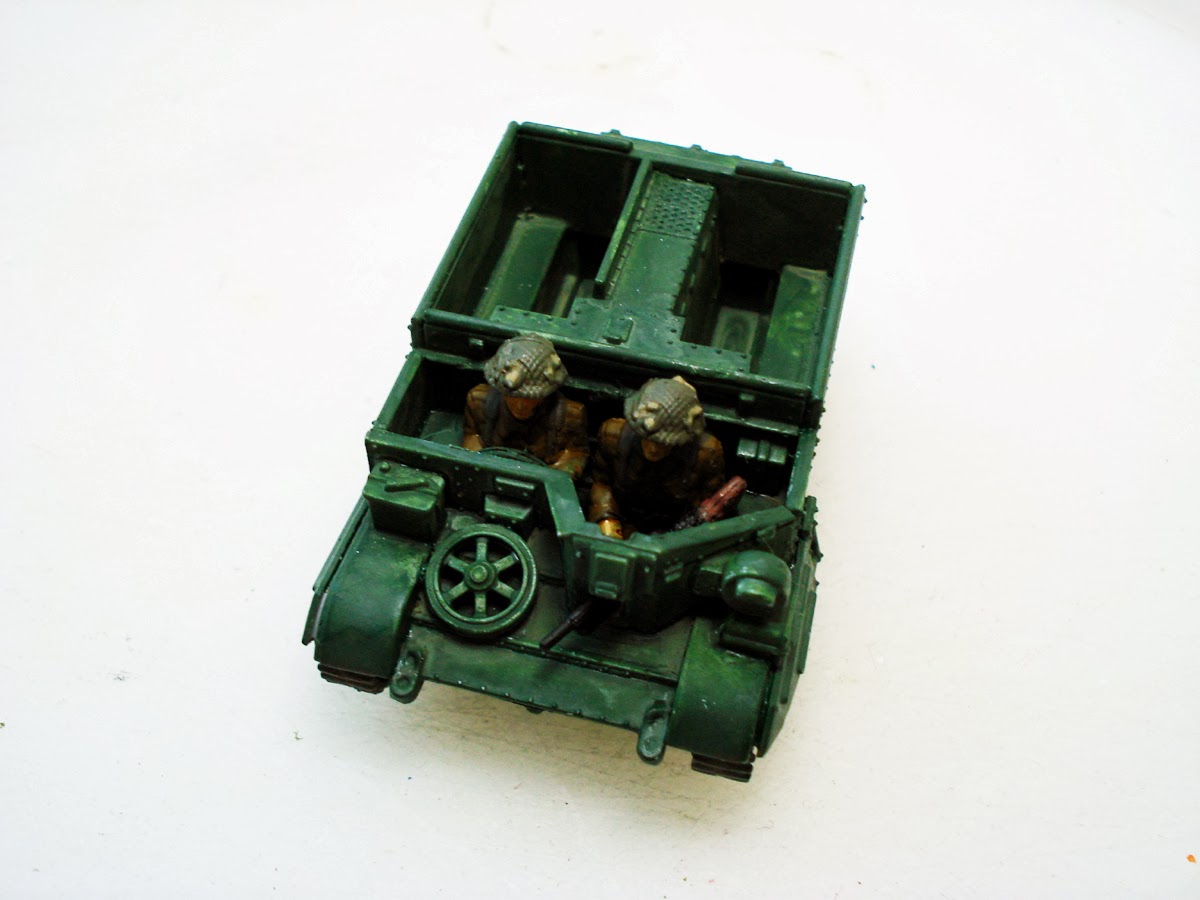
It is nice having a plastic kit though as assembly and doing some alteration is a snap. For myself, I’ve got two for transports and likely will convert the third for a Vickers MMG mount. A bit on the fence for that though.
There are a few small accessories such as a spare tread wheel and a folded canvas tarp for the back.

I modeled mine with passenger troops that could be removed. Just a simple way to model the unit as a full or empty transport, with a visual reminder using a figure.
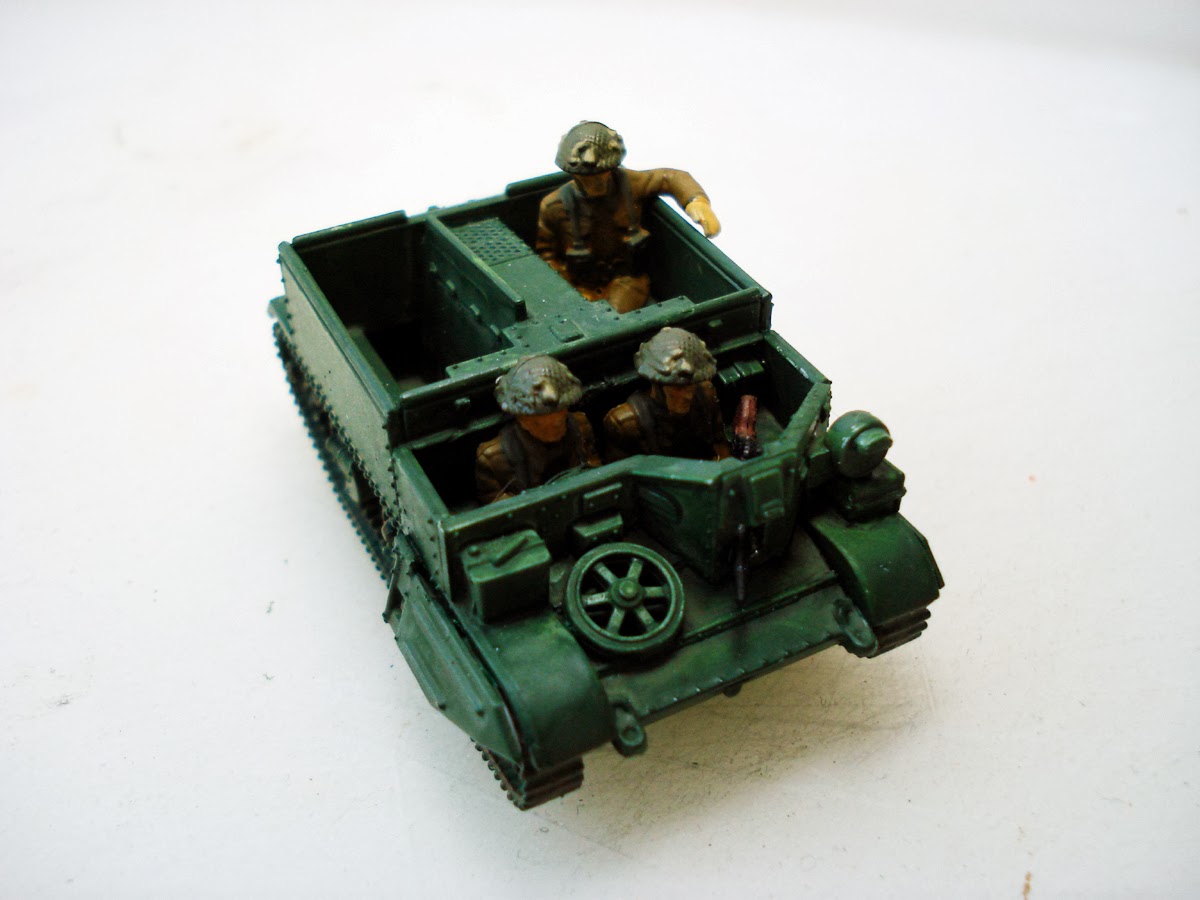
Despite the hiccup with the Bren gun and the crew, it really is a great kit. The models are well detailed and you can’t beat the price for a bunch of transports. Likely with a 5 man capacity, you’ll want a few of them in your force. So getting 3 a pop is a nice buy. The models here are for 1/72 scale. Hopefully PSC will be pushing to expand their 28mm line. I’m certain these would be a great seller.
Scratch built scouring pad trees

My Bolt Action platoons are shaping up and I’ve been on a bit of a kick to get some terrain whipped up. One thing I sorely wanted were trees. However I’m just not able to bite the bullet and pony up cash for them. Looking around for pre-made scenery, trees are a bit expensive. A long time back I had gotten a bulk pack from woodland scenics where you could construct your own trees. It was a mess to put together and while great for a diorama, it just couldn’t handle the wear and tear for my wargaming table.
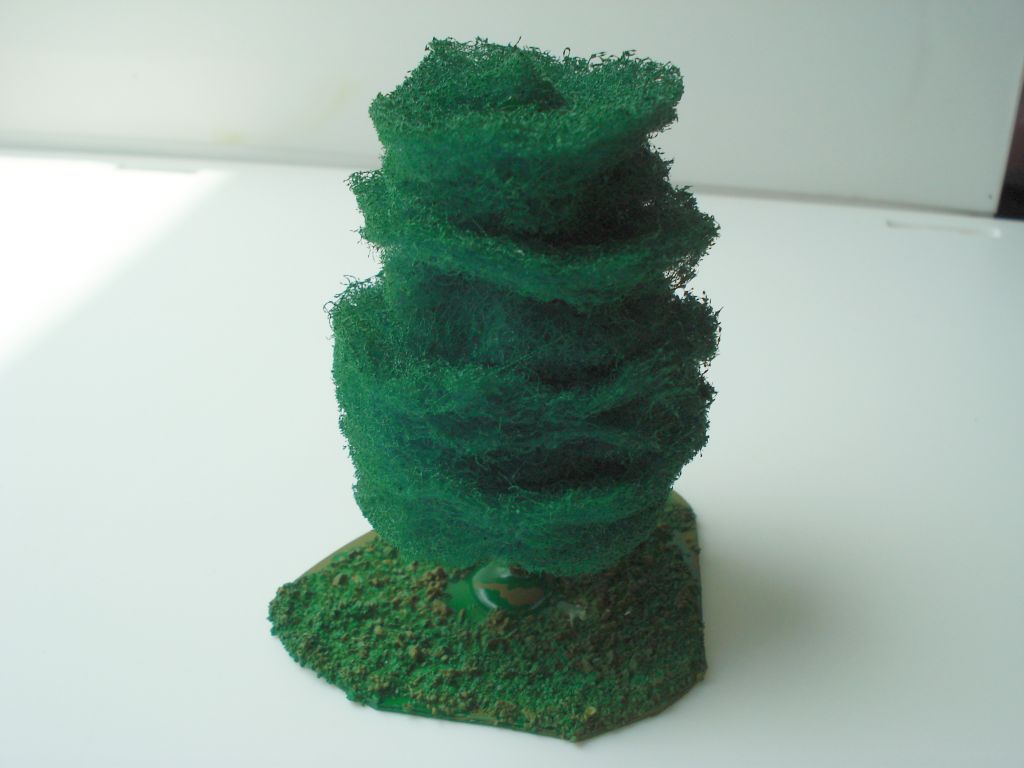
One tutorial I dug up described using cleaning pads for pine trees. Just right for my budget, so I jumped right in and looked into making some up. I picked up some scouring pads for less than a dollar and kept some skewers from some street food after a late night of drinking. I liked these skewers as they were thick ¼” diameter wood pieces.
I cut the pads into rows and then in approximately 1 ½” to 2” squares. I then trimmed the square pads into rough circles. I made sure to save a lot of the small corner bits of pad after cutting the major sections into circles. Some of the pads I cut into smaller circles of about 1 inch to serve as the top section of the tree, and followed this up by cutting the tree ‘trunks’ into 3-5” lengths. I found while larger trees are more realistically scaled, they are almost too big for wargaming.
As the I had to get the center wooden piece through the pad sections, I made a small cut in the center of the pads. Then came the more tedious bit. To give the pads some bulk, I teased apart the pad material for each section. This would almost double their thickness by simple pulling the material apart some.
With a hot glue gun, I added a dab to the center dowel and skewered a single pad section, moving it down to little over ½ the length of the wood. I repeated this, adding more glue higher up the wood shaft, adding more sections. I ensured the last section was a smaller diameter circle piece. All in all, I found 4-5 pad sections was enough for the trees to give them some bulk.

For the tops of the trees, I used the leftover parts of the pads from making the circle sections. Really teasing them apart, I could add 2-3 sections to the center wooden piece after placing some hot glue. This gave a nice small tapered top to them.
To mount my trees, I cut up some old software CDs, carefully rounding the edges. I placed a thick drop of hot glue in the center and then set the tree on the base. I decided rather than using watered down PVA and flock for the bases, I’d use a drybrush over a layer of modelling ballast. I wanted to do this partially to keep from getting flock all stuck up in the trees and also to ensure the trees could take a little punishment with storage and transporting.

I put down a layer of watered-down PVA glue and after letting the model ballast dry, set to painting it. I gave each tree a good coat of green spray paint. A nice part of this is that the paint will also act as a sort of cement for the ballast, and stiffen up the pad sections of the tree too.
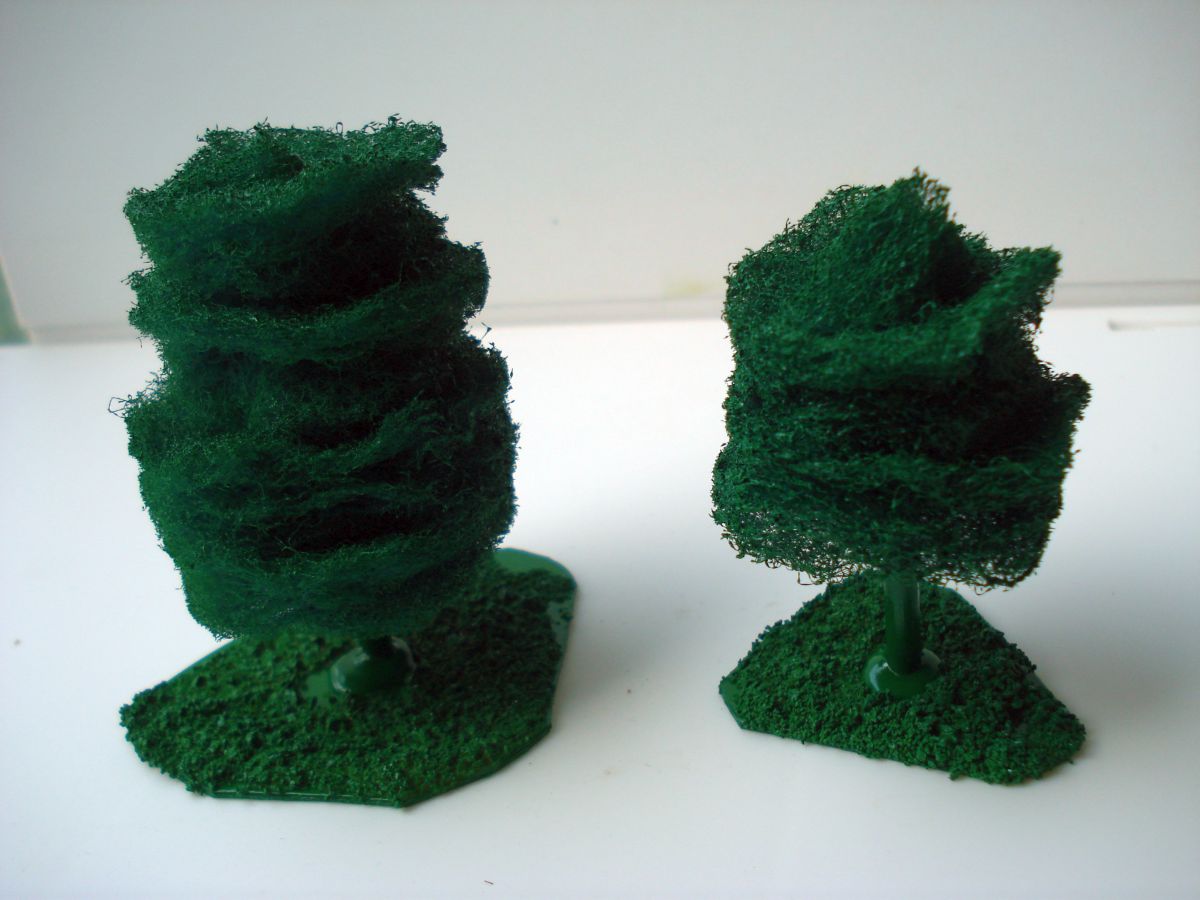
After letting them dry, I painted the trunks a nice brown coat, and followed it up by drybrushing the bases with a lighter green to simulate grass and low brush. More chunks of flock could be added if needed, but overall I liked the effect it gave.
Note I did not highlight the trees any. I feel one solid color, with potentially a wash was enough. Drybrushing the tree leaf sections would likely only highlight the overall pattern of stacked pads even more. With one solid, uniform color of green, the detail of the tree leaf sections are muddled some. Afterwards I went ahead and gave the trees a matte varnish spray.
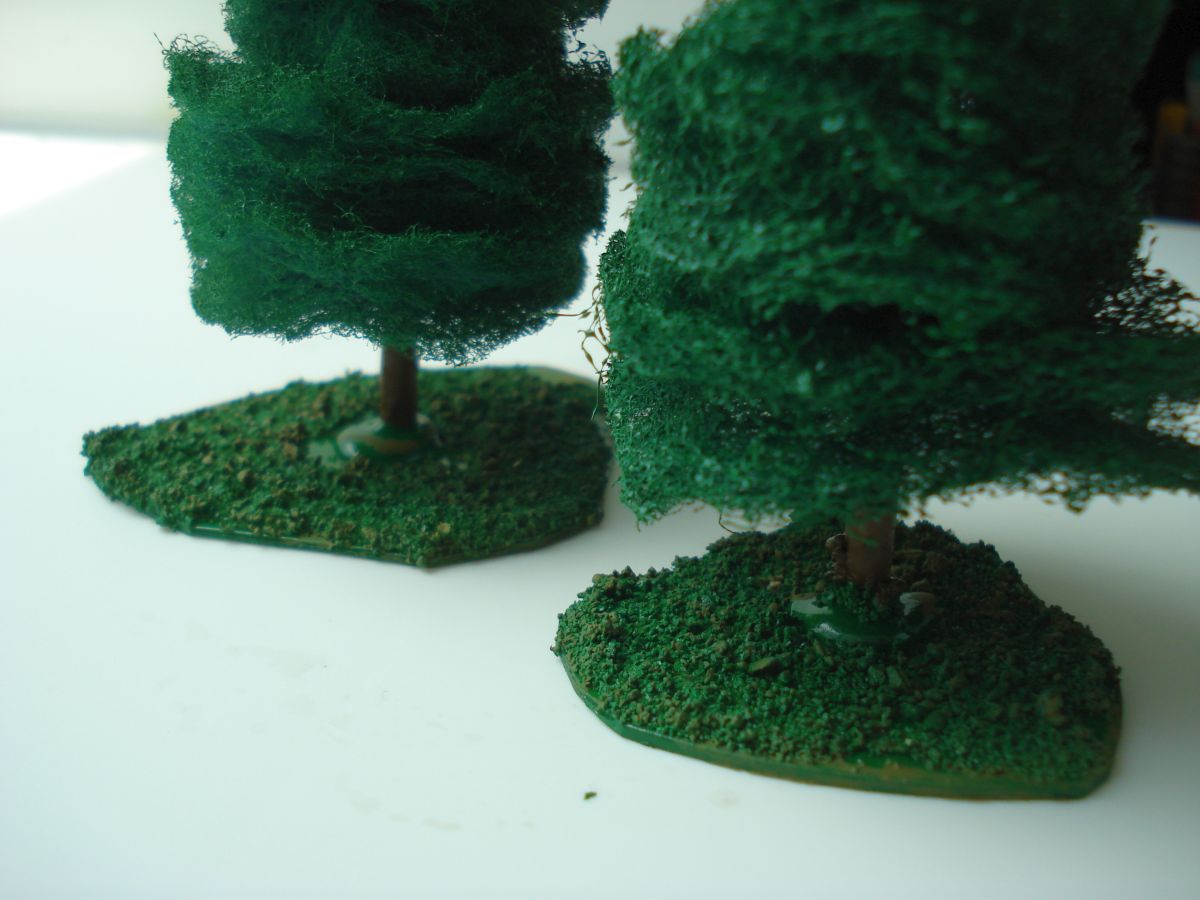
I think they look pretty decent and you simply cannot beat the price. I may very well likely pick up a few model trees and expect if I mix them in with the lot I made, they will look even better on the tabletop. This was a pretty fun project and an evening’s worth of work (minus the time needed for letting the trees dry due to spray painting). Now to just get some more games in!
Plastic Soldier Co. – German platoon painted
Quietly over the past months I’ve been steadily working through my German platoon. There is a local con coming up in September and I think I might try to demo a few games. With my Brits done I wanted to also get a group of Germans finished to face off against them.
The detail for the German figures are pretty good. Some of the MG42 weapons are a little bulky and odd looking, but for the most part the figures are accurately modeled and equipped. I’ve assembled models both from the late war and the heavy weapons kits available from Plastic Soldier Co.
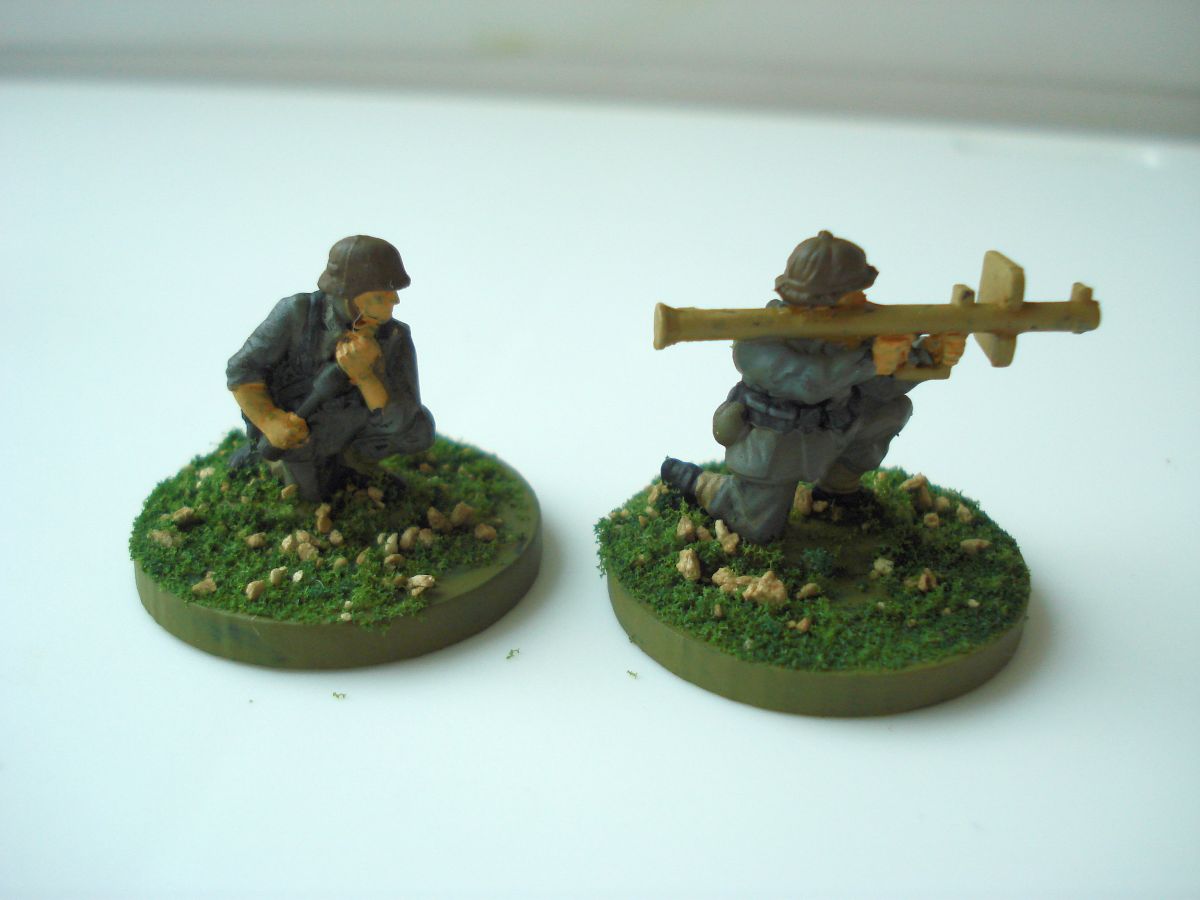

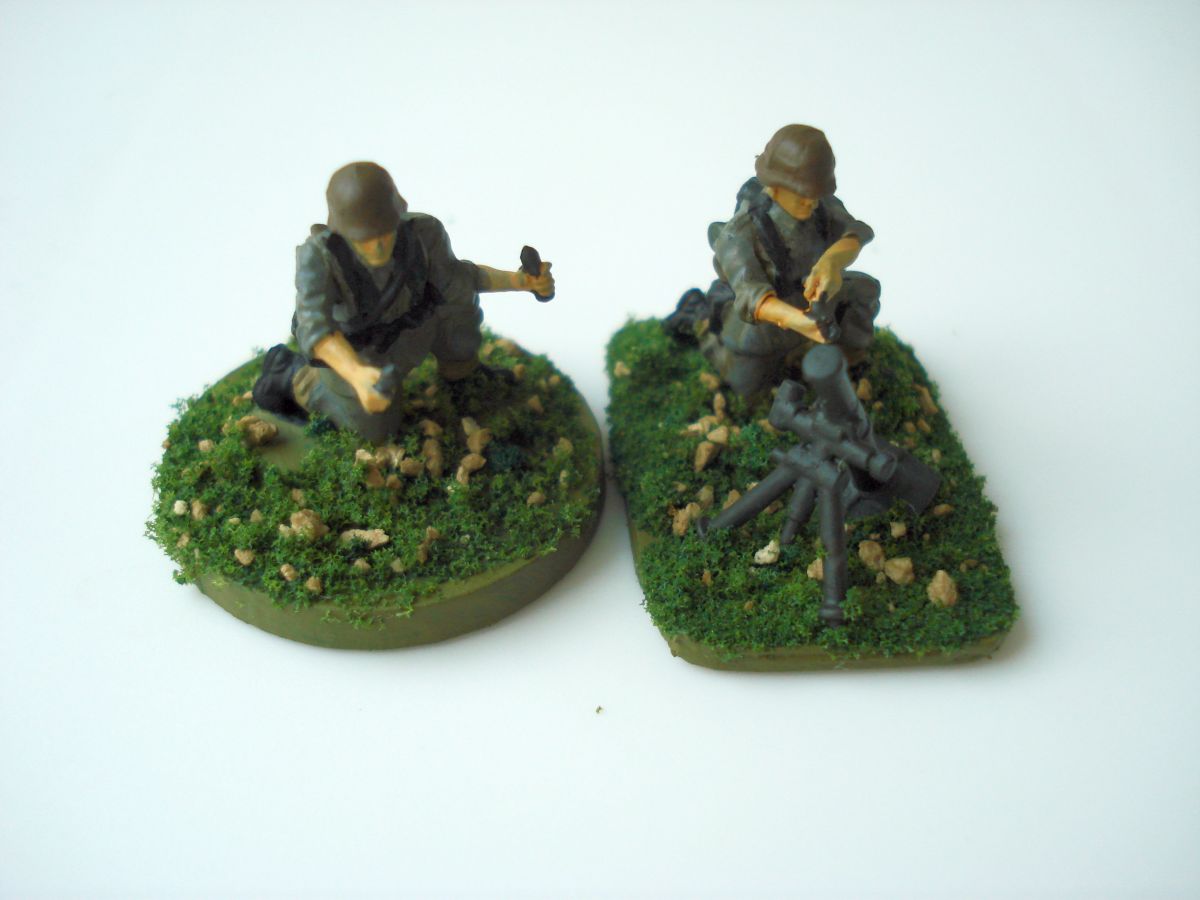
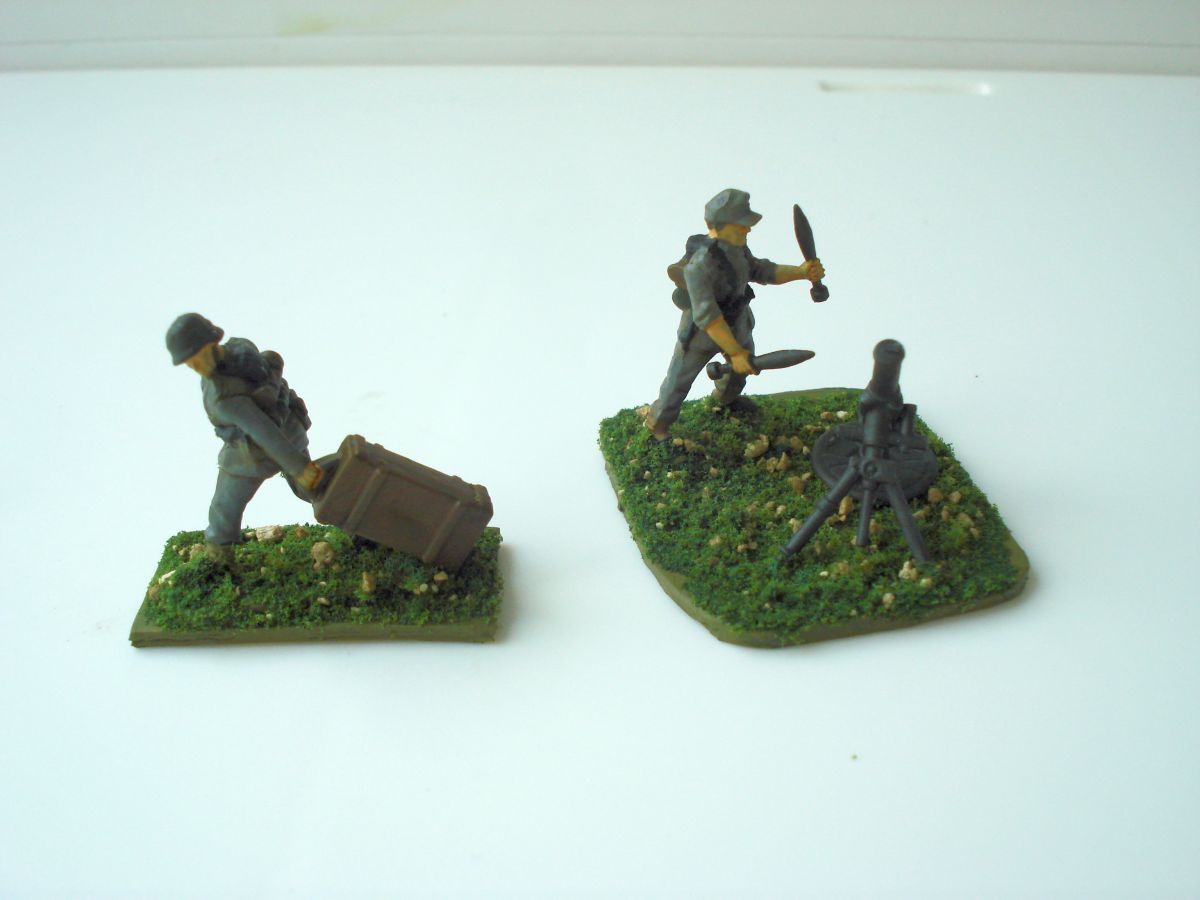

Some of the figures are from Zvezda pioneers and pak-36 sets.
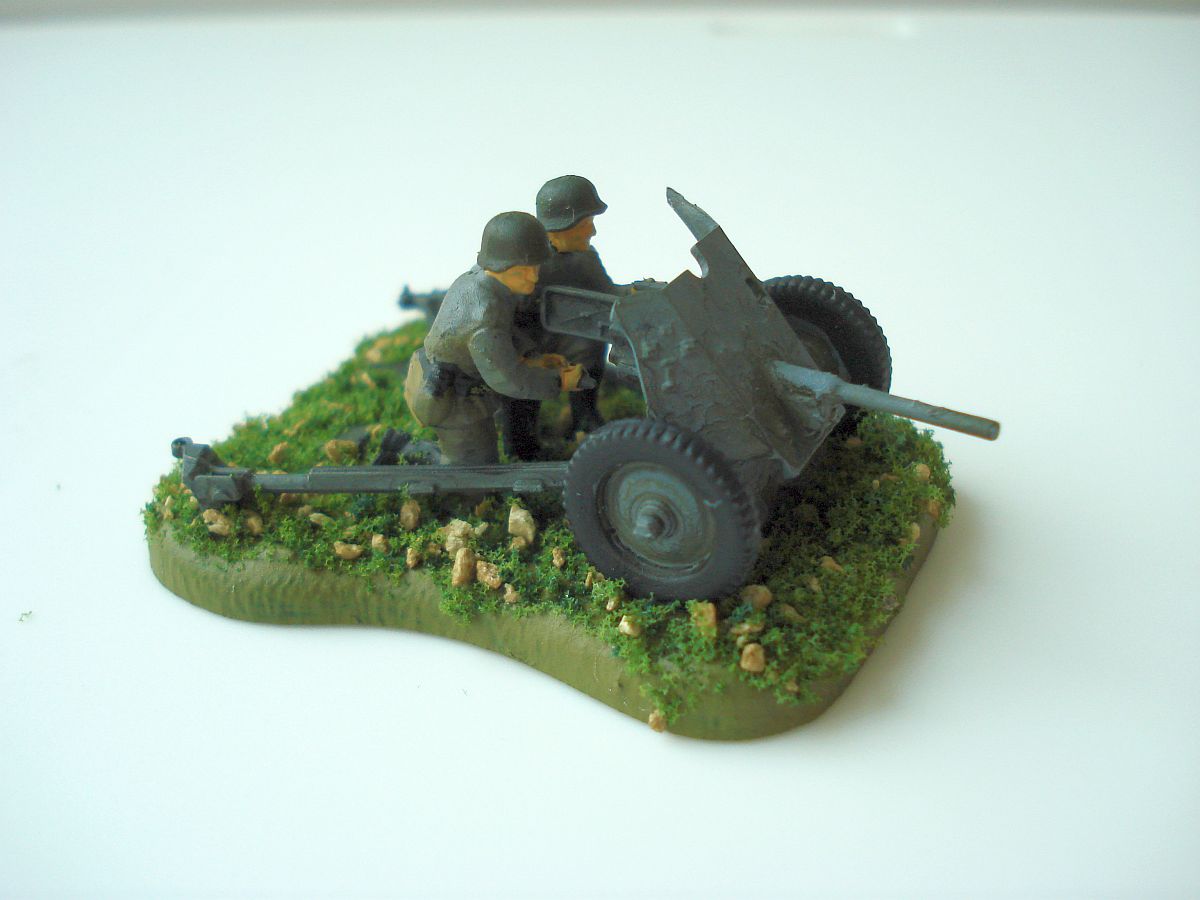
Another handful are Airfix pak-40 crew members (which I couldn’t pass up as the AT gun also came with an Opel Blitz truck). The one below is also with a Zvezda pioneer armed with a flamethrower.

However you can see the bulk are from PSC. They certainly paint up pretty well and happy with how they turned out.

Alleycon 2014 – A local gaming/fandom con in Gwangju
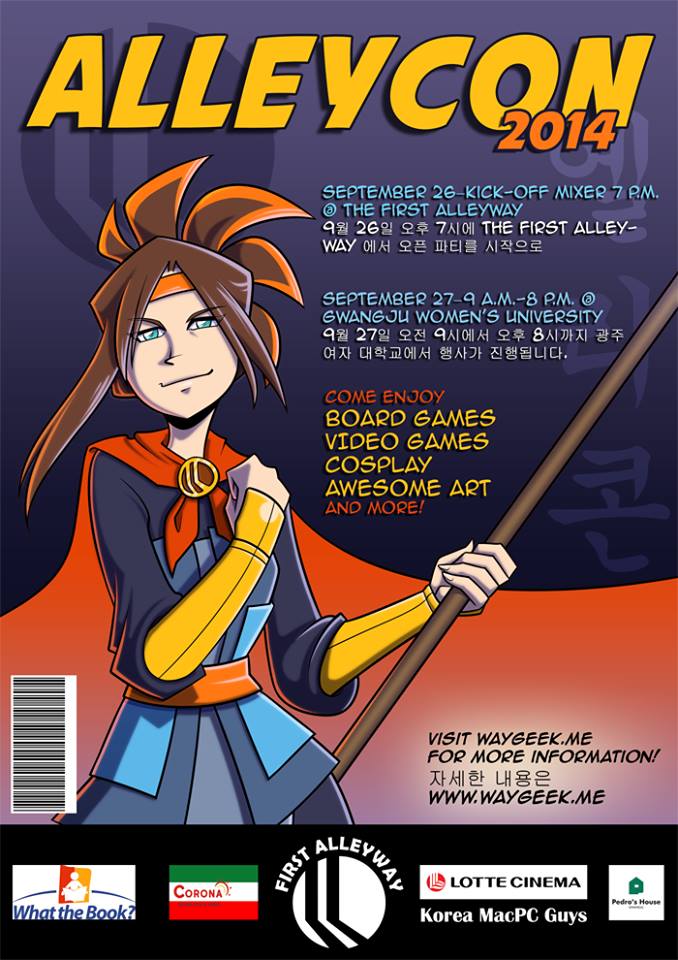
Last year a small geek fandom con dubbed, Alleycon, was run at a local eatery in Gwangju, Korea. This Sept. 27 it’ll be hosted in a larger venue at the Gwangju Women’s University. Last year the event was pretty fun and it looks like it’ll be bigger this year with some more guests and organized events.
Pre-registration I believe is closed, but seems there is still quite a few passes left so registration at the door shouldn’t be an issue. Not certain about the costs, but all day passes should run between 20,000-30,000 kwon. Best of all many con events will have proceeds going to a local orphanage. So you can spend some cash picking up (and playing) some geek-centric items and ease that guilt a little knowing you are doing some good at the same time.
There’ll be a cosplay contest, video games, some Q&A sessions via skype with some sci-fi authors, and a bevy of tabletop gaming. Along with set events, there will also be a room with open tables. So if you are itching to throw down and try out a game in your collection, this might be a great chance to try it out with a few like minded folks.
I’ll be running a Bolt Action demo game and also a Savage Worlds WWII game. Last year I did something similar and had a good time running events as most of my players had not tried RPGs or miniature wargames before. So it’s always a treat to give folks a chance to see what the hubub of gaming is all about.
Hotz Mats gaming mats
Since I was sorta on a terrain kick making asteroids for Firestorm Armada, I wanted to get a better gaming surface than a black cloth. For a while I heard about Hotz Mats which make a variety of felt gaming mats that can serve for some really nice space tables. They are screen printed and have a variety of options with printed hexes or grids, or even mats that are double-sided with an option for one side being gridless. The mats come in a variety of dimensions with 4’ x 8’ being the largest.
So I went ahead and ordered two mats at 45” x 72’ with one being an earth green mat for my WWII and SAGA stuff, and another deep space mat for my Firestorm Armada games. The mats are felt. However they are supposed to be treated with a fabric binder that reduces the wear and tear of the surface, lessening the pilling you typically see with felt.
The mats are a decent thickness (if just a tad thin) and can get a bit creased. However really deep folds can be carefully ironed out. The surface of the painted side is somewhat stiff which I assume is the fabric binding material that is sprayed over the surface. This does keep models from snagging up as much compared to regular soft felt. I could push my ship model stands around without having them get caught up on the material.

The deep space mat is pretty nice for a generic background. A little color is thrown in aside from the star background which is nice. I think if I were to get another I might splurge for the enhanced deep space mat.
I am a little disappointed with the earth green mat. I was hoping maybe a little extra paint to add some texture to it. However it’s really just a bolt of green felt yet still has the fabric binder coated on it. This gives it a decent surface and likely a hex printed version would serve great. Overall the one I picked up is a plain, muted surface for wargaming.

Now to go a bit on the customer service of Hotz Mats. Bluntly, I found it lacking. I do know they pretty much make the mats custom order. And I would put money on a lot of the mats being done in one go, and maybe needing some time to dry out in the open. Coming from Canada, this might mean delays due to poor weather (humidity) mucking up the production.
It took my order an extra two months to arrive. Email responses from the company were also sporadic and I didn’t get any indication my order was shipped. So I will give a huge caveat for buying their mats directly. It’s going to be delayed. Don’t expect a prompt (or any) response to emails. I can understand production delays, but I’m a little less understanding with the lack of communication. Consider the 3-5 weeks deliver to only be valid if you live within the province.
Now I understand they are moving to a new studio. This might alleviate some production delays. If you order from them, I think you need to take a zen-like approach and just accept that after several months you’ll get what you ordered in the mail.
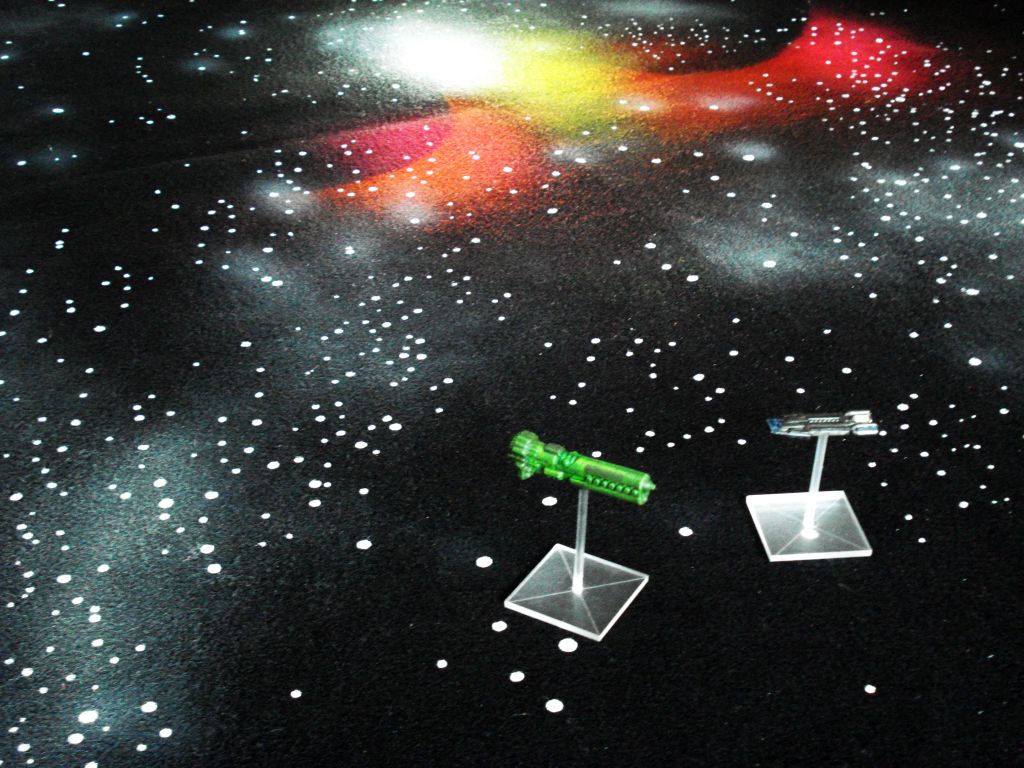
The game mats are decent, seem like they can take a little punishment, and can easily be stored away. However simply put Hotz mats aren’t worth getting as there are better gaming mats out there that are comparably priced. What really pushed it over into the no buy column for me is the abysmal customer service. Seems you’ll get your mats… eventually… when they decide to get them into production… and bother to ship it. There are other options available for gaming mats which provide much better customer service. I can’t recommend buying Hotz gaming mats.
Hill terrain from insulation foam

After making some progress with my 15mm sci-fi troops, I needed to get some terrain together. As always, I’m really on a budget. I’m also hesitant as a likely move is looming in the near future. Keeping the amount of stuff I need to ship low (and light) is weighing on my mind as of late. So really putting a lot of model time into terrain feels sort of a waste, especially if I’ll be throwing out half the stuff I whip up.
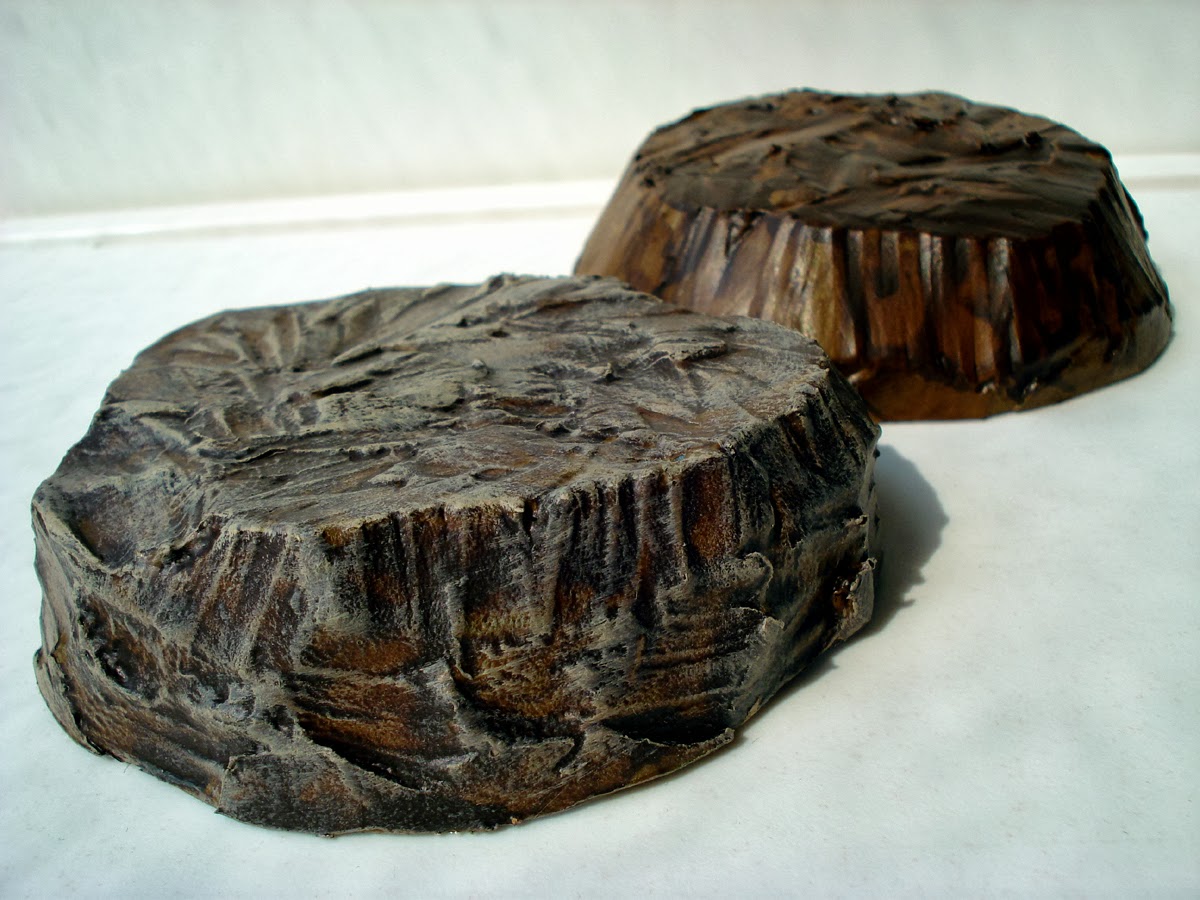
I managed to pick up some packing material made of dense foam insulation material about 3″ thick. As thick cylinders with nice flat sides, taking a knife to the center meant I could get two hills. Roughing up the surface even more with a craft knife left a lot of nice texture with the edges. And a few I cut with an even sharper angle to give one direction a more impassible facing cliff.
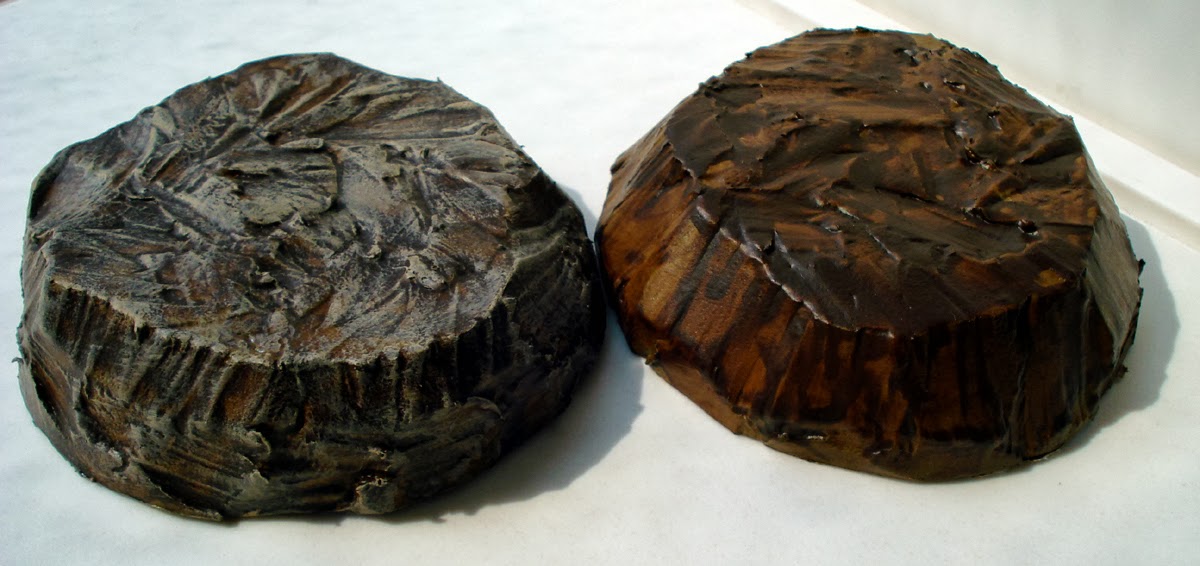
The material was soft however. Using some acrylic paints for canvas and a few coats, I was able to layer on a decent base coat that was more flexible to prevent excessive cracking. A simple wash also brought out more of the crevices and cracks within the cut foam.
A final drybrush really highlighted the texture of the hills. In the image you can see a comparison side by side between a base coat with a wash and one that has been drybrushed. It’s a basic project that turned out pretty well. All it took was a few base coats, a quick wash, and drybrushing. Three basic techniques that can provide you good results in record time.
15mm Sahadeen troops
So I’ve been dabbling in 15 mm sci-fi models a little. I’ve been really lucky being able to get models shipped overseas through Rebel Mini’s directly. As I posted earlier, I worked on a platoon of Earth Defense troops that painted up pretty well.
This time I got some other troops from the Sahadeen line. I like them as they make pretty good rebel forces or some type of irregular troops. I might try dabbling with different tech troops and having some models on the lower end of that spectrum would be nice. One thing I’ll admit, I’m still stuck in the mindset of base coats with washes and highlights. I really should try just sticking with emphasizing highlights through drybrushing with bright contrasting colors. The colors on these guys are a little muted with a single wash.
What I like about these sculptures is that they’re based on the Earth Defense models, showing some armor, but have a type of cloak over them. This gives the models a little more flexibility in the type of troops they represent. I can make them a high tech mercenary group, or make them poorly armed insurgents, all depending on the wargame ruleset.

The troops have pretty good detail on them. I’m a tad lazy though as I liked using a single wash for the mini and then going back to dry brush a few details. I decided on a simple ballast flock for the bases. I think with the color scheme of the figs this type of flocking material goes well. However, I had to give another coat of matte finish to help with keeping the material sticking on the base.
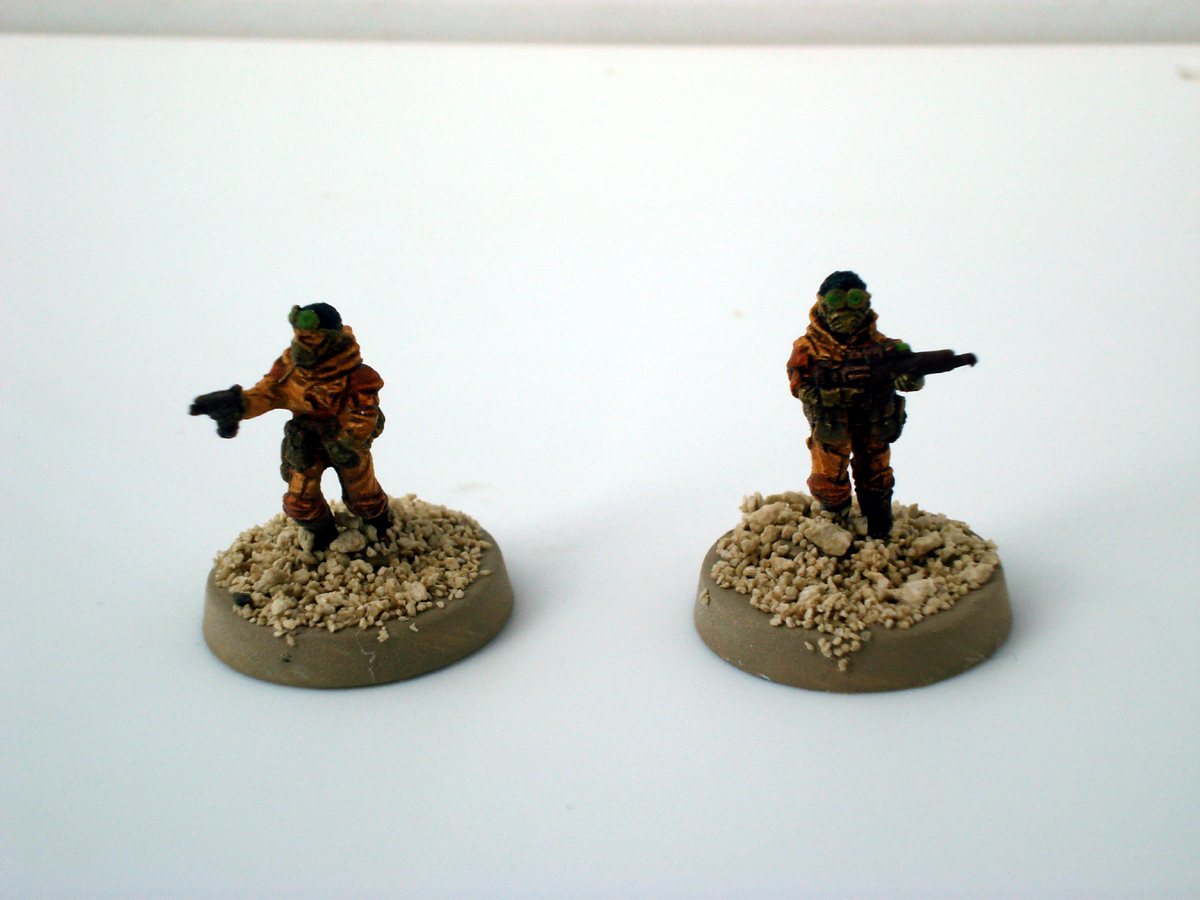
You’ve got a decent variety of poses. With most of the command troops being armed with pistols. I’ve opted assuming they are machine pistols, treating them as a type of SMG.

The squad assault weapon troops are pretty nice with big meaty guns. I like the goggles they have also.

I also picked up some heavy weapons models. This sniper team below I ended up putting on a larger 25mm base.

Below is another NCO-type of leader along with a rocket launcher trooper.
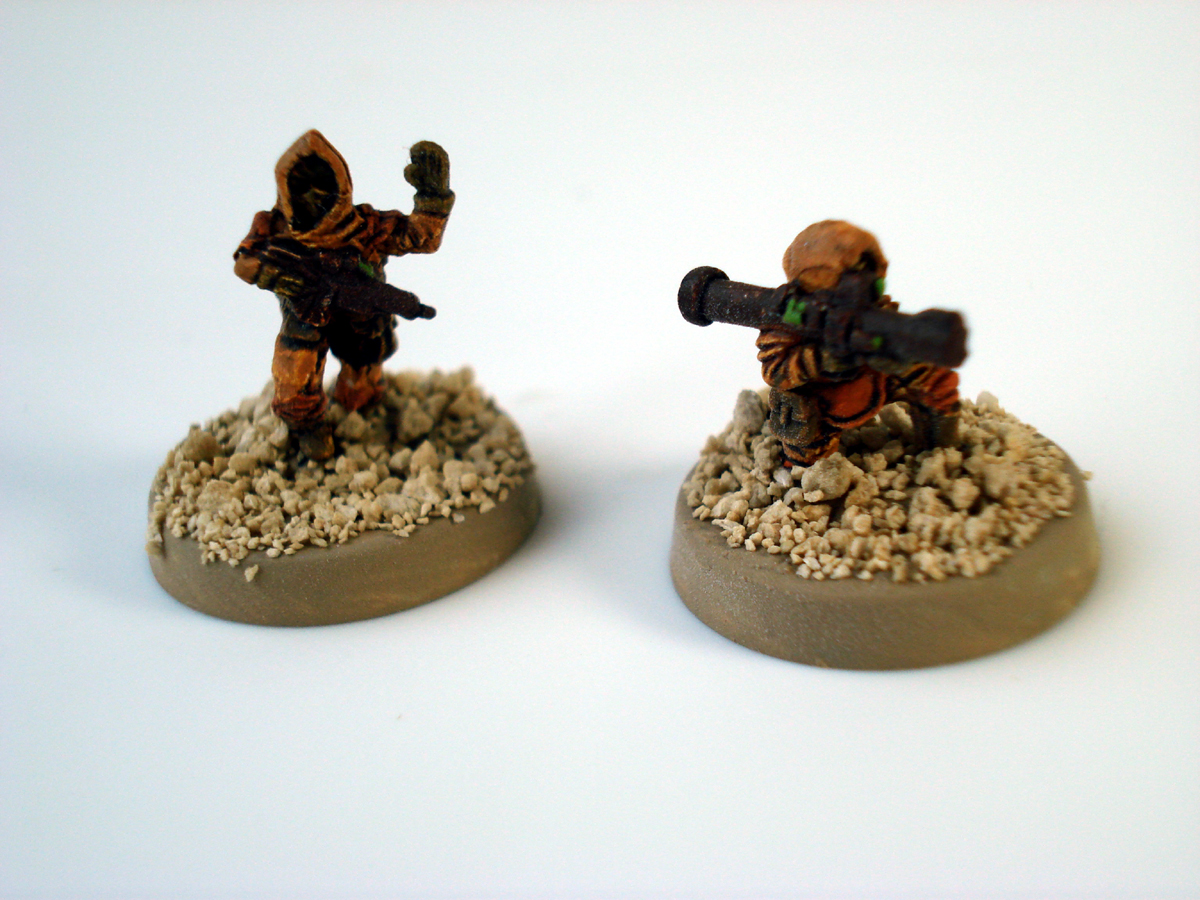
For this platoon I put them on a 20mm plastic base. It’s a tad large but I like them as there’s plenty to grip moving them around. I might go back to a few and add more detail to some of the bases. Having it just a bit larger allows me to throw in some details without making the base too crowded.
Modelmates weathering wash
Usually for my tanks and such I’ll give a drybrush of brown paint to simulate mud and gunk that will pick up on the wheel guards and treads. It’s a simple technique that gets a decent effect. I never really dabbled in weathering pigments much. Then I heard about this nifty line of products for washes from Modelmates.
Modelmates translucent washes come in a variety of pigments that are really nice. A big plus for me is that they can be diluted and cleaned up in water. So I decided to pick up a bottle and try it out. I got the mud brown color wash. They come in plastic containers with a small bead inside to facilitate mixing. The top has a sloped funnel lid to allow excess paint inside the lid lip to drip down back into the pot. The manufacturer recommends trying out the wash on a section first for testing if painting on plastic, as the wash themselves have a little solvent in them. Apparently for some plastics this can be an issue. I think for the typical plastic used in model kits this isn’t a problem, as I didn’t get any peeling of paint or pitting of the model surface.
I dabbed a bit over the wheels and let it set in, followed up with a matte spray coat. I’m really impressed with how the weathering wash looks and it’s a breeze to apply. Here is a bren carrier I’ve been working on. The carrier on the bottom had just a drybrush of brown for mud, with the carrier on top also having a coat of Modelmates weathering.

I would certainly have a lot of water on hand and use a crappy brush. I’ve heard that while it’s water soluble, it can gunk up your brushes and will dry pretty quickly as the solvent evaporates. So having water nearby to rinse out your brush every tank tread or so would likely help in keeping the brush intact. With weathering, it really added a lot more depth to the basic treads modeled on the side of the carrier.
I’m really happy picking up this weathering wash. Likely I will check into picking up other shades, especially if working on an African-theater platoon, as the dust colors look really nice. They are a super easy way to dress up a basic paint job. Best of all they seem easy to work with and cover well over acrylic water-based paints.
 Geek Ken