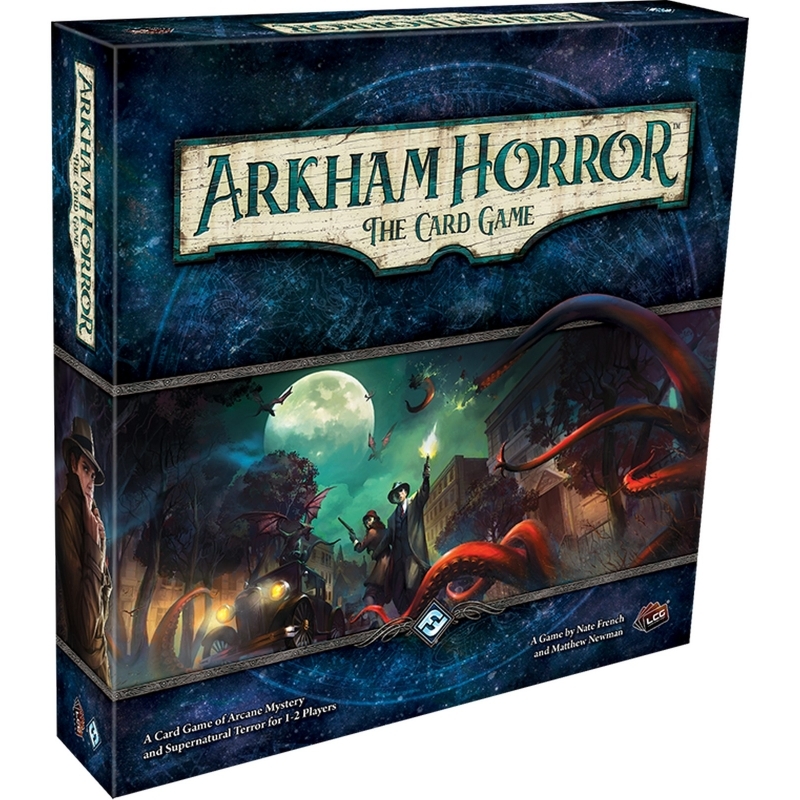
 Fantasy Flight has a lot of games with the Lovecraft theme and decided to jump into the Living Card Game (LCG) pool with a card version of sorts of their old traditional board game sharing a similar title, Arkham Horror: The Card Game. It’s a cooperative, 1-4 player LCG deck builder. Players are investigators that discover there are terrifying things that go bump in the night but being the heroes they are, fight to ensure the safety of mankind. Sadly they’ll likely lose their lives or sanity in the process. The game is designed to play specific scenarios which can be just a one off session. However it really is designed from the ground up to form a longer linked campaign.
In the box you’ll find lots of cards which are split between those used by the player, and those for a 3 scenario campaign story. The cards for the campaign are generally divided into locations and story events for a specific scenario, and other cards which form the encounter deck. The encounter deck represents different obstacles, challenges, and creatures the players run into during the game. Each story has its own set of locations and different pools of cards that are used to create the encounter deck. As it doesn’t have a static composition for the entire campaign, you will find some scenarios have unique challenges and monsters.
In broad terms each turn is split up into different phases. The first is the mythos phase, where a doom token is added to a scenario (agenda) card. Whenever the number of tokens match the value on the card, something horrible happens and the next agenda card for the scenario is put into play. Then continuing the mythos phase, each player in turn draws a card from the encounter deck. This encounter deck will be adding more monsters and unfortunate events for the players. In short, something terrible always happens to every player and they are in a frantic countdown before even more bad things happen as the agenda deck advances.
Afterwards the players have their turns. Each player has 3 actions which can be used to play cards, move to different locations, or do a core activity in the game, carry out an investigation. While each turn there is a slow addition of doom tokens, the players are rushing from location to location to try and accumulate clue tokens through investigation. If they gather enough clues, they get to advance a different set of scenario cards (act cards) commonly resulting in something to their benefit.
This is really the heart of the game. The players have to slowly collect enough clues through investigation to discover what is happening in the scenario and finally learn the major objective needed in order to advance the campaign (destroy a monster, gather enough clues in an area, succeed enough times with a particular skill, etc.). All the while the evil agenda cards are accumulating doom tokens and reaching story milestones that ratchet up the difficulty. Commonly for most of the scenarios there isn’t a hard failure, just punishing effects that wear down the investigators forcing them to capitulate the scenario. At least until the end of the campaign when players learn they either emerge victorious or gibbering madly from being driven insane (or a turned into a pile of bloody goo).
Players will continually be making skill tests. Each investigator has varying levels of 4 select skills measuring their reflexes, physical prowess, mental will, and how clever they are. If this value is equal or higher than a target number, they succeed at their check. Players can play cards to bolster these values. Every card will have some skill icons. For each one that matches the test being taken, they add to the player’s total skill value. It’s not so cut and dried though. For each check a player pulls a random token which modifies their skill total (and the tokens are immediately returned to the pool). Most of the tokens offer a penalty roughly 75% of the time, with some even making the check fail automatically. Essentially this is like rolling dice but with an uneven distribution of results.
As mentioned, cards can be discarded from a player’s hand to boost the skill value of an investigator, and other players at the same location can also contribute to checks. This offers a feeling of working together for key challenges. While a handful of card types are only related to skill checks or one time events, most provide a static bonus or abilities as permanent assets. Players pay resources to put asset cards in play with some being limited to available equipment slots for an investigator. An investigator can only carry up to two assets in their hands for example. Meaning if they had a flashlight and a knife, they’d have to get rid of one of them if they wanted to equip a pistol. Some assets are followers and can provide exceedingly useful abilities (as well as be a buffer for physical and mental damage), but a player may only have one follower in play at a time.
While assets offer static bonuses and reusable abilities, the cards can also be used to boost skill checks. This makes for a fun choice during play. Do you discard an asset to help with a critical skill check? Or do you push your luck hoping to make a successful token draw, so you can put that asset into play as a resource for other actions in the future? While cards that are discarded can eventually return to the draw deck (once a player’s deck is exhausted the discard pile is shuffled and made into a new draw deck), commonly players will not get a chance to see that card again for the game. It certainly has that push your luck factor and can be an agonizing choice sometimes.
Players can play investigators of 5 general class types from bookish seekers, to rough and burly guardians, to mythos sensitive mystics. Each class also dabbles in another investigator class type. These restrictions mean that there will be investigator cards that the player cannot use (being of a different class type) which encourages having another different investigator in tow to tackle a scenario. For a solo player, they have the option of playing one investigator as a true solo experience, or instead have a second investigator in play.
In addition to challenges being thrown at the players from the encounter deck, they can also can run into horrible monsters and fiendish human villains. These enemies will do damage to health and/or sanity. If a player ever reaches zero they are out of the game (but not necessarily out of the campaign). Players find they can either attack an enemy directly to inflict enough damage to kill it, or evade it by essentially stunning it for a round. Evading a creature can be critical. If a monster is ready and engaged with a player, any time the investigator takes an action that isn’t to fight or evade, the enemy gets to attack. This can be brutal as a player trying to move, draw cards, or play cards from their hand will always be having an engaged monster attack them. If they can evade the creature, they can then act without risking an attack of opportunity.
Another kink in the player’s plans are weakness cards. Every investigator has one card that is specific to them which provides some impediment. In addition, one additional random weakness card is added to a player’s deck. Out of 30 or so cards then, 2 of them will be some type of hindrance to the player. Every turn a player must draw a card from their deck, and they can also use actions to draw. While a player is putting assets into play and using cards from their hand to help with skill checks, they will quickly be going through their deck. Yet every time they draw, they are getting closer and closer to drawing a weakness card.
This is an exceedingly clever mechanism. Most cooperative card games depend on the card draw flood. You want to be drawing as many cards as you can to have multiple options during your turn. This curbs that strategy. Some investigator weaknesses can be crippling if a player is unprepared. The player will find the flow of the game changes where they are at a point of wanting a lot of cards and looking to draw that weakness card early in the game (where they have more resources to handle it effectively), compared to getting it later in the game during a critical time when every action and card counts.
While you can get wrapped up in how Arkham Horror is a board game, you can’t neglect that it is a LCG deckbuilder. There are strict rules for constructing a player’s deck. Aside from class card composition, players can only have 2 copies of each named card. As players go through a campaign they can earn experience which is used to purchase more powerful cards (or replace existing ones with more efficient versions). You are limited to decks of a particular size, so you will be continually throwing out cards to make a place for new ones. While the rules recommend starting with some pre-constructed decks, players will eventually want to dabble in making their own.
The Good – It’s an enjoyable implementation of the original board game that has a narrative, choose-your-adventure style of play. Many scenarios will end with multiple options and the decisions, successes, and failures from one scenario have an impact on future games. Cards have enough keywords and varying game elements to allow for some interesting card combinations. While you can certainly go the brute force route of dumping cards for bonuses into skill checks, there are some nuances to explore.
This also comes about from the enemies and challenges that the players face. Aside from hard numbers for wounds, damage, and combat skill values, some creature cards can also have abilities making them play a little differently from other monster types. Combined with limited resources, actions per turn, and the clever implementation of weakness cards, players will have lots of engaging choices during play.
The random tokens for task resolution is also a great idea. You can tailor the pool of tokens to make for an easier or more difficult game. With 5 investigators out of the box, you can get a fair amount of replay from the base game. The solo option is also enjoyable which doesn’t stray too much from the play experience you get with an additional person at the table.
The cards are standard playing size and of good quality with wonderful art. The tokens are of nice card stock and are an excellent means of keeping track of damage and resources maintaining that tactile feel.
The Bad – The token draw for skill checks will likely drive some players crazy. You can typically count on it being a bad modifier, meaning you always have to try and get your skill value +1 or +2 over the base number. This can be for naught as there is a 1/16 chance (if using the normal difficulty) of failing automatically. I like it, but I can see some might find it mechanically jarring, heavy handed, and too luck dependent.
The other criticism isn’t too easy to dismiss. You have a short campaign out of the box of three, linked scenarios. You can get a few replays out of the campaign, but some of the scenarios are going to be repetitive. The mystery of exploring different locations and advancing the scenario story will seep away and you’ll be shifting to a purely mechanical play mode. This is compounded due to it being a cooperative game with automated enemy actions.
Lastly due to the limited card pool and rigid deck construction rules, you really can’t get a deep deck building experience with the base game. This has been addressed some with a new, revised core set, but you likely will want to get an expansion eventually to really explore deck construction.
The Verdict – Arkham Horror is a fantastic game. There is a revised core set that has completely changed the original composition of the old core set, making all my previous criticisms no longer relevant (see Update 2 below). So onto some small nitpicks with the game…
I really enjoy that it takes a narrative structure but there are limitations in how replayable the core campaign is. Eventually that shine of new choices and exploring locations will dull and repetition will arise, switching the feel of the game to more one of a mechanical exercise than that of experiencing a story. The limitation of card variety for the investigators from the old core set fortunately is addressed. You have a fair amount of deckbuilding potential out of the box, but expect to broaden that more by picking up further expansions.
The repetition of the campaign can and likely will be tinkered with. The use of cards for advancing the story is a great idea. If you add a few variations of cards for locations and outcomes for the agenda and act cards, you will suddenly see that scenario which was so repetitive before become much more varied and enjoyable to replay. Something similar was used with another card game, Space Hulk: Death Angel and I will not be surprised if by the end of the year we see a special add-on pack that expands the core box campaign to include variant cards.
For the original core set, it chafed me some. The notion of getting another core set was really promoted by the community and was absolutely wasteful. Almost half the cards were just set aside and never used. All the additional scenario and encounter cards were redundant (not to mention the tokens and rules). But it seems Fantasy Flight Games took this to heart and not only provided a revised core set (Update 2 below) but also released investigator deck packs to help you expand that player card pool easily.
Keen in mind, Arkham Horror is very much a LCG. It is immensely enjoyable. It captures some of the encroaching dread and doom in a horror-themed game (but after repeated play of the same content that will ease some). There is enough variety of card types and abilities to allow for interesting choices during play and also with deck construction. But it is solidly in that LCG camp of buying more cards to expand that card pool.
You can get a ton of game play out of the core set, with plenty of deckbuilding being part of that. However eventually you will want to dip your toe into getting a full expansion. Not only do they provide more cards to get a deeper deck construction experience, but also offers a full campaign story which will be a little more of an epic tale.

UPDATE: Years and several expansions later, I wanted to revisit my review. Is it a good game? That is a resounding yes. It’s wonderful news that the revised core set will have more deckbuilding potential. However with so many expansions and scenario packs available, you have quite a lot of options to build up your card pool. FFG also released a new product that is perfect for your initial expansions to the game. A set of starter investigator decks have a complete player deck along with additional cards that can be added by paying experience as a campaign progresses.
A long standing complaint was that with a single original core set there just wasn’t enough cards to dabble in deckbuilding, and additionally you were stuck with buying at least another base expansion box to get 3-4 players around the table. Now you can pick up one of these decks that not only a fully playable investigator, but additional cards to build your collection. This is something that provides a great means to expand deck construction and reduce the redundancy of a second original core set (which had encounter and scenario cards that were literally chaff). Yes, you might not get a really deep deck construction experience with a single core set. But if the bug bites deep, you have a lot of options to delve deeper into Arkham Horror: The Card Game.
UPDATE 2: Well I am astounded. It seems FFG has taken the issue of a limited core set to heart and is releasing a revised core set which looks amazing. You now have 2 copies of each investigator card and additional neutral cards. Even better, they are packaged as a complete deck for each investigator. Simply choose who you want to play and the deck is already made. Even better, there are additional options for upgraded investigator cards. These are cards that have been already released in previous expansions, but out of the box it will give players more options for deckbuilding as they progress through the campaign.
Throw in additional tokens and upgraded card art, seems you’ve got a fantastic product. Arkham Horror: The Card Game is wonderful and the revised core set makes this hands down, a fantastic game to add to your collection.






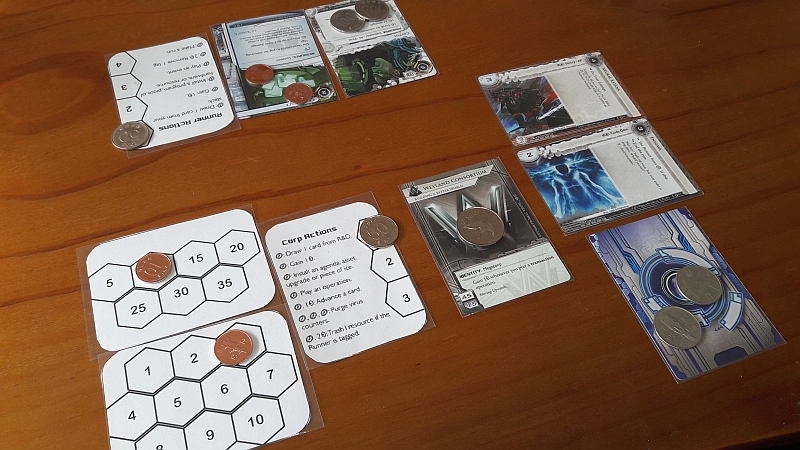
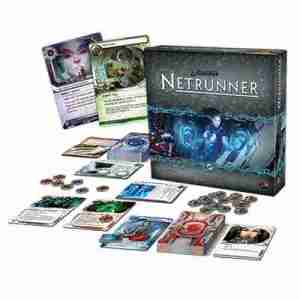 I enjoy Netrunner and have been teaching a slew of players for a while now. There is something that seems to hinder getting players into the game though. A key point is that despite it having a decent core set, it’s just not that approachable to new players. What is looming in the background is this wall of cards that almost seems insurmountable to decipher and break through. There is so much and the pool of cards so vast, it becomes a deterrent to trying to learn. Compounded with this perception is the requirement of having to purchase a big box set of cards to get into the game.





 Geek Ken