Building ruins for Frostgrave

I find Frostgrave fun especially with its low model count and small table space. However as it takes place in a ruined city, you certainly need a lot of terrain pieces. It does demand having a pretty cluttered layout too, so that was something I had to assemble for my games.

Over the years I’ve gotten a little lazy with terrain. I just don’t feel the need to put tons of time into building and painting it. I just need something serviceable and looking decent enough. I’d rather put more time into painting miniatures over building an awesome house. So I was looking for a quick and dirty way to whip up some building ruins.

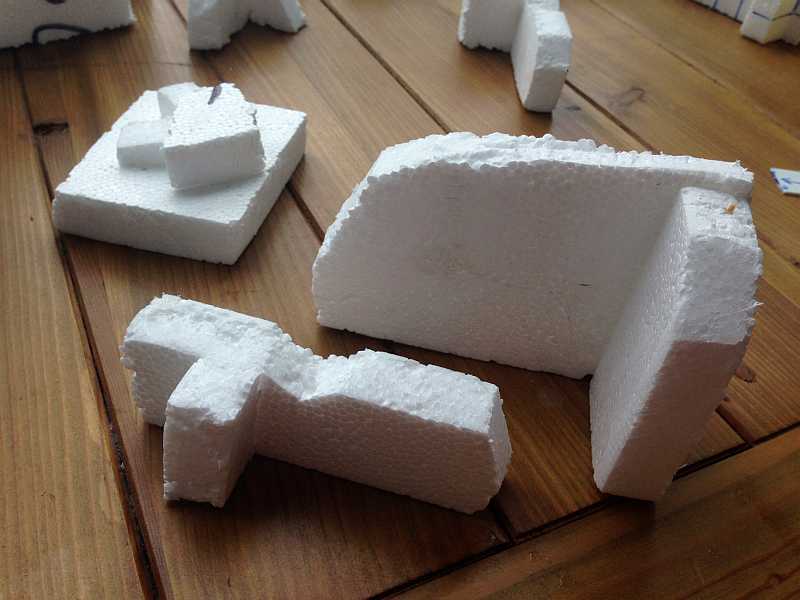
I settled on hacking apart some old styrofoam I had horded from packaging material. Cut apart into sections and assembled with PVA glue and toothpicks as simple dowels, I got a few sections of walls put together. I also went ahead and got a few flat pieces with some odd chunks added to create some crumbled wall sections which would offer a little cover from ranged shots, yet not impede movement much.FrostgraveRuinsA

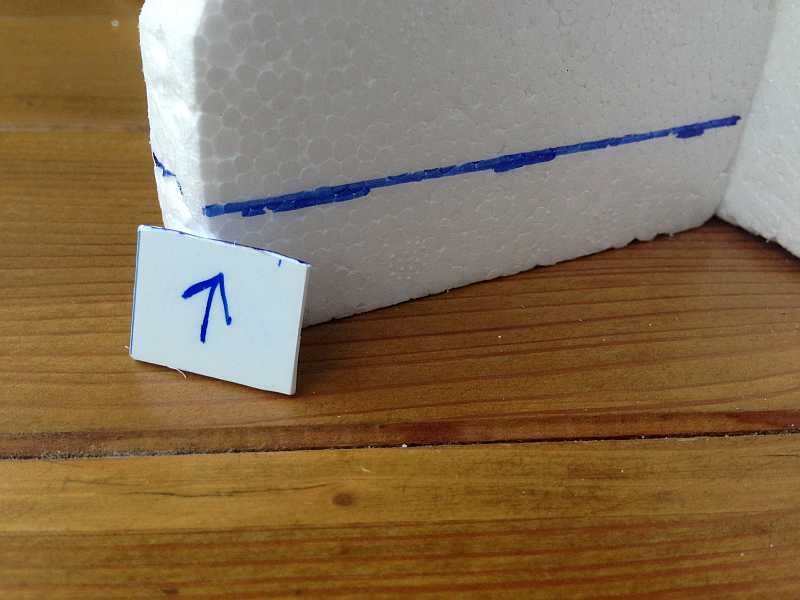
I had to try and work on adding some texture to the walls some. I decided I didn’t need to make an intricate pattern, just some large stones etched into the walls. As a super quick way of doing that I figured I’d need some guide lines. Using a small piece of plasticard about the width of the bricks I wanted, I quickly placed tick marks on as layers of bricks.FrostgraveRuinsC

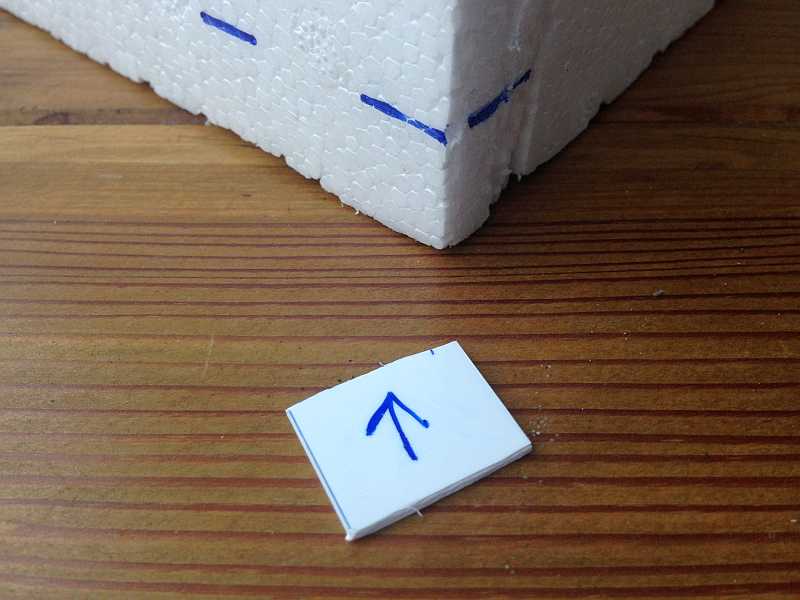
Then I connected everything using a straightedge and a marker to form horizontal lines. One key tip would be to make sure you had all the lines even around the corners. I would then go back and rather unevenly draw in vertical lines to make the brick pattern.FrostgraveRuinsB

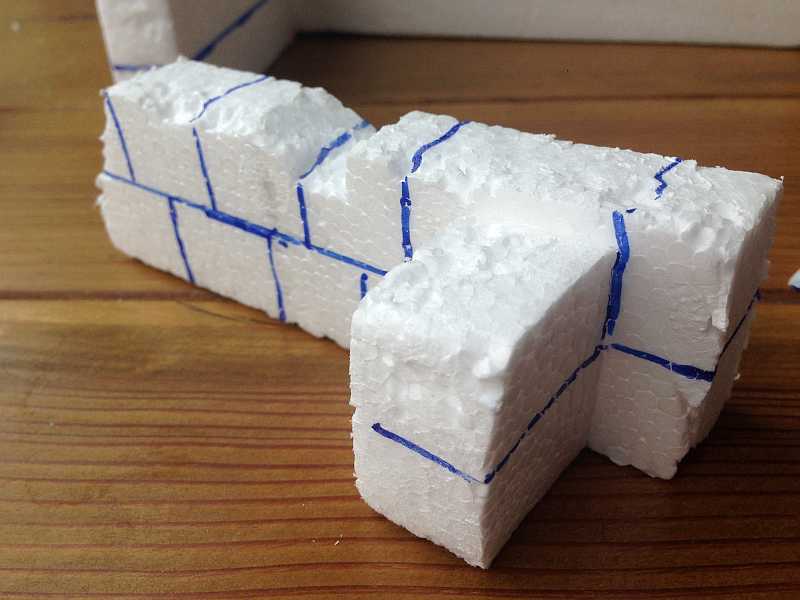
FrostgraveRuinsDI needed some way to form some texture in the surface though. I could then go over each line with a knife, but figured that would take a lot of time. Not to mention I might end up gouging out larger chunks of styrofoam if the knife caught up on the material. Instead I used a soldering tool which would melt the styrofoam. Mind you this was tricky as you could easily go too deep into the material. Also, I would do this in an exceedingly well ventilated area (I also had a fan behind me blowing air away from me) as the fumes are pretty toxic. However the end result was pretty nice.FrostgraveRuinsE

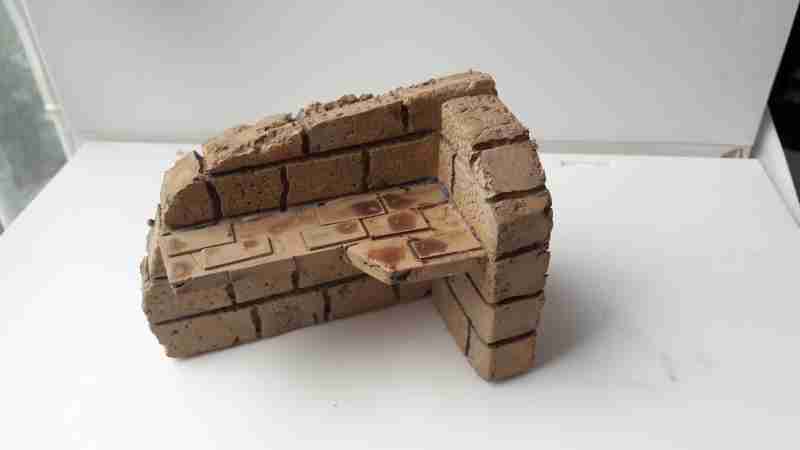
All of this worked fine and dandy for low walls but I also wanted to get some elevated pieces together. I had some second level wall corners made that used a chunk of foamcore board as the floor section. This looked okay but I also wanted to give the floor some texture. I ended up cutting out thin sections of cardboard and gluing them in as flagstones. I didn’t need to do the entire surface, just enough to give the appearance of a few stone pieces. With a wash and a bit of drybrushing, they really add some texture to what would look like a flat piece of foam board.RuinsComplete

I’m pretty happy how they turned out. They look decent and are certainly cheap assemble and paint. Lastly, I was able to get a nice amount of terrain to put together for my Frostgrave games. Give it a try if you need a quick and dirty way to make a bunch of ruins. I’m doing a bit of a different setting for my games to match up with using current models, but these would look just fine on a snow battle mat.RuinsFinal

Dumping lefties from PC games

Flame and the FloodI do love me some PC games. I never quite got into consoles as I was that odd generation where I sort of bypassed the old NES systems and instead was doing PC gaming. By the time consoles were really taking off, I was playing stuff like Wolfenstein 3D, Red Baron, Doom and the like on PCs and never looked back. So over the years I sort of languished with odd keyboard handling as a left handed player.

For a long time it seemed that old trend was dead. Publishers and game developers made sure to add the ability to remap keys as you saw fit. As a left-handed person for PC gaming, this meant I could finally alter basic movement keys away from your customary WASD to something more comfortable for me. Typically that meant using the arrow keys instead. Fast forward almost 20 years and it seems like we’ve gone a complete reversion with efforts of some game designers regarding including key binding customization.

I recently picked up the Flame and the Flood, expecting as a PC title the simple aspect of being able to remap keys would be an included feature. Nope. I am locked into using WASD. While not completely unplayable, I tend to accidentally jump back onto my raft a lot when trying to navigate back and forth from the docks and island screens.

Controlling the raft using the mouse is also a challenge. So I’m trying to use the WASD keys, all the while frantically moving over to also right click any salvage that pops up on passing islands. As for attempting some quick maneuvering to dodge a boar, or a quick swing of a staff to shoo some wolves, good luck with me doing that with deft control using with just a mouse. I purposely play these types of games on a PC over a console for the functionality of being able to use a keyboard and mouse. When I am locked into a right-handed control scheme, it’s disappointing.

There are a surprising number of popular titles popping up lately that don’t bother with the ability to remap keys (or at least include it as a feature at launch). State of Decay seemed like a great little zombie action title, but after playing the demo I waited and was hopeful at launch rebinding of control keys would be implemented. Quick maneuvers, dodges, and attacks are key to that game. Sadly, at launch it didn’t have that feature and I had to wait for nearly a month for that to be finally patched in.

Some games don’t even bother. Telltale Game’s Walking Dead series had limited key mapping. Fortunately movement was both arrow and WASD keys. Unfortunately there were some critical time tasks where you had to quickly mash the E or Q keys. That meant I ended up scrambling to fumble around the keyboard while doing them.
Walking Dead
Bethesda Fallout 4 is another culprit with limited keyboard mapping. Throughout the Fallout games and Skyrim I was happy to see I could alter just about any key wanted. I was expecting the same with Fallout 4. I found lock-picking was locked into using WASD to force the lock left or right (completely different from previous games where they were remapped to whatever movement keys you changed). I also found the settlement portion extremely frustrating.
building-settlement
I never understood how people were able to get all the minute control needed to place and move objects for settlements. After seeing some tutorial videos I realized there was some other keyboard functionality with the settlement workshop screens that I was missing. Sure enough, when I had bound the arrow keys for movement, I ended up disabling them for the workshop menu. My workaround was having to rebind the character movement keys back to WASD so that I could use the arrow keys for settlement construction. Now for working on settlements I end up rebinding keys, and do this…every…single…time. Needless to say, I haven’t bothered getting into the settlement feature much.

I realize that left handed players are a minority, and making games that we can easily enjoy is a low priority for PC video game developers. It just stings some, especially as this trend of not incorporating complete remapping of controls seemed to have been buried in the past. Now it looks like making games more accessible to left handed PC users isn’t a worthwhile endeavor for some game studios anymore and we are dumped to the wayside.

Drones and Probes for Gates of Antares

I haven’t taken the plunge yet for getting an army together for Gates of Antares. Instead I’ve been using a lot of my 15mm sci-fi stuff as proxy forces and have been having quite a bit of fun. Maybe later I’ll consider eventually getting a batrep done. Seems 15mm is a great way to jump into the game if on the fence wanting to give the rules a test drive.

I’m liking the Algoryns and might work on that faction. However Warlord Games is still trying to expand that model range for them. And sadly the choices for that force are only in metal. While I dig the heft of metal figures, the cost compared to plastic kits is pretty hard to swallow. Might have to clear my bench some of stuff to paint before I consider jumping into another range of models.

Nonetheless one thing I’ve been missing with my proxy forces is a way to represent drones and probes. GoA uses gobs of em. I really dig having some small bonus abilities represented by models on the table. However I wanted to actually get a figure down that I could push around over just using tokens or painted bases.

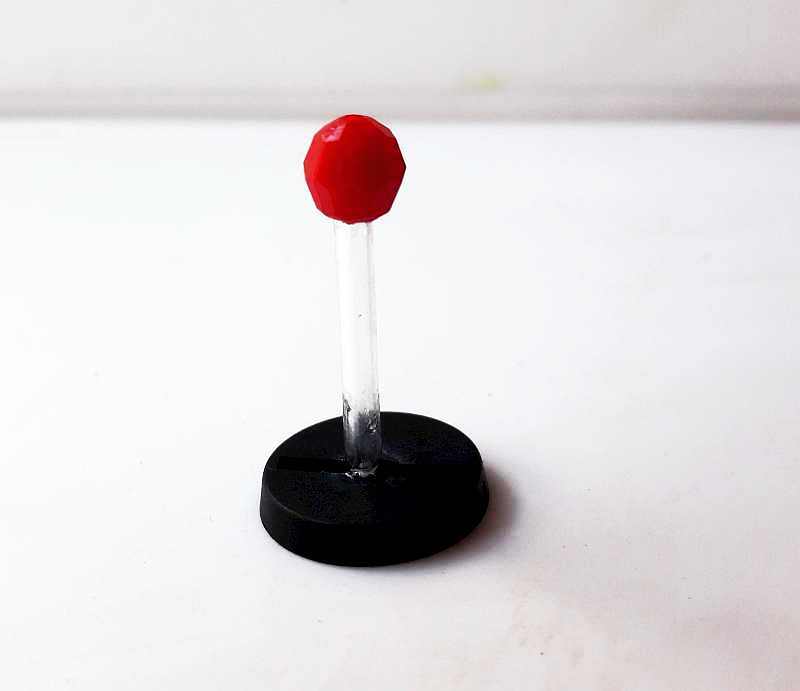
I picked up some cheap plastic beads I felt would fit the bill for using as probe models. The cost for a huge gross is dirt cheap. Just head to a craft store and check out the craft jewelry section. Being about 7-9mm across, they are perfect for drones.ProbeB

I wanted to have them floating about though and was considering using some wire, but then I stumbled on some clear plastic tubing for modelling. The material is acrylic and the stuff I got was in 3mm diameter. Perfect for mounting a floating drone onto a base.ProbeA

The pickle I had however was that the tubing was pretty large so I had to drill and file a larger hole into the plastic bead. Fortunately the beads have a hole already in them (for stringing wire and string through). So I could easily use those as a guide hole when using a larger drill bit. Drilling and filing a portion out of some 20mm slot bases, I was able to use a bit of instant bonding cement to assemble the entire thing.ProbeC

The downside of using beads is that there is a small hole drilled into the top of my probes. So I had to use a bit of green stuff to fill it it. I also used green stuff to fill in the gaps for the slot base.

ProbeD

A bit of paint, drybrush a tad, some flock for the base, and bam…there’s a spotter drone. One thing I like about the model is I can use a variety of colors to indicate different types of drones and probes. The downside is that the beads have a particular pattern on the surface making my painting schemes a limited some. This was a quick prototype and I didn’t quite get the pattern and look to what I’d like, but I can touch it up later.ProbeE

Hope folks find this helpful. It was super easy to do and pretty cheap. Considering you can end up with a lot of spotter drones for your units, along with support choices, I think you’ll end up needing quite a few drones for your typical GoA force. This isn’t a bad way to get a lot of models assembled for your force quickly (and cheaply).

Savage Worlds setting: The 6th Gun

The_Sixth_Gun_RPGA long time back I was running a weird west game that was a lot of fun. I dig Deadlands but wanted to work on my own setting, an alternate history of sorts that dabbled in the supernatural. There were zombies and werewolves out west, just not quite dominating the setting like what you’d see in Deadlands.

I latched onto the 6th Gun comic as a theme and think it’s fitting that it got scooped up officially for a Savage Worlds treatment. Deadlands is solid, but there is so much material out there, it might be a little overwhelming trying to get into the world. The 6th Gun setting just seems to be an easier launching pad for a campaign and something a bit more ‘grounded’ of a setting.

The setting book takes that spirit to heart. There is a smattering of edges and hindrances. As rules go it highlights a few magical systems as either shamanism, sorcery, or voodoo with a few additional spell powers. There aren’t full fledged archetypes, rather a nice selection of character themes for players to mine for ideas.

You do get a pretty comprehensive list of equipment, gear, and weapons. Along with this is a small section of magical artifacts, a bestiary, and a roster of NPCs which are in both flavors of villains or allies. Mind you the allies might be a loose term for some of them, and might offer more complications than assistance to the players.

The book provides a brief description of some key locations, along with the town of Brimstone. Brimstone is a locale that offers a good start to a longer campaign. There are a lot of fleshed out town locations along with suggested adventure seeds and thumbnail sketches of key NPCs. It gives a good staging area for GMs that are looking to quickly get a game running.

Being a western setting with a bit of a supernatural twist means that it’s not saddled down with too much world information. There is a brief background of the campaign setting which revolves mainly around the presence of six magical pistols that grant the wielders powers. True to the setting name, each of the 6 guns and their effects are provided in detail.

There is an involved synopsis of the comic series at the beginning of the book. This provides a fair look into the world of the 6th gun. It might not give the most coherent means of a campaign background but it does provide a GM with a bunch of ideas on the types of adventures players would likely have in the setting, especially if the 6 guns are part of the main plot. Another plus is that it provides some more insight to how particular NPC characters might act (if lifted from the comic series as inspiration).

A decent adventure generator is included in the book. Along with this are five more detailed adventure offerings. They are presented as a series of encounters and trials for players to tackle along with brief descriptions of NPCs, villains, and locations.

As new rules go there are fortunately very few. They all seem to embrace pushing the game into epic tales of adventure quickly. Players can freely pick edges and aren’t limited to ones based on the current level of character advancement. Critical failures can’t be rerolled by spending a benny, giving the GM opportunities to really muck up a situation. Lastly whenever a Joker is drawn, all players get a bennie. This allows for even more boons of fortune and encourages players to take risks.

The Good – The setting offers a framework for running a supernatural western that matches well with the deluxe rules. There is a fair amount of creatures, NPCs, magical items, and lists of gear and weapons to allow a GM to run a game. The material is presented well and the layout and art of the book promotes the spooky western theme nicely (much of it taken from the excellent comic series).

The Bad – The setting is a bit light on background. While westerns are staples of adventures, the supernatural setting might offer some difficulty getting the right tone. The setting obviously can center around obtaining the 6 guns, but there really isn’t a structured plot point campaign to cover that. In that sense the book seems more a toolset than a fully fleshed out campaign setting. Rewarding the 6 guns might also be an issue. Not all of them are equal in power and as they can have such a central role to the setting, giving players one (or some) might ramp up the power curve of the game too much.

The Verdict – The 6th Gun campaign setting isn’t a bad book. I certainly feel that if you were looking for a western with an occult twist, this is a better choice over Deadlands. Fortunately the setting isn’t encumbered with tons of new rules and options for players.

I think what best sums it up is that overall the book provides tools for running a supernatural western. A GM has the option to delve into the mythology of the 6 guns deeply, or keep them peripheral to the game. At first glance the setting has a lot more going for it to provide for one shot or shorter campaign games. Long, epic campaigns might need more work, especially if seeking out the 6 guns won’t be a key part of the story. Regardless, if wanting a western that’s slightly off kilter with ghosts and supernatural creatures, the 6th Gun setting delivers.

Hotz Mats felt fields

A long while back I mentioned that I picked up some battemats from Hotz Mats and wasn’t that impressed with them. At the same time I made my order, I decided to pick up some flocked felt field sets from the same company. Despite me not being keen on the treated felt mats, I gotta say that I do like the flocked fields they offer.

I bought 2 sets of the 20-30mm range felt fields. The fields vary in sizes and colors that look pretty good for that scale. Seems they offer smaller scale mats for 6-15mm. The pics I have here are of 1/72 scale Germans. It does seem that smaller models would look a little off with the larger scale mats.
HotzMatzFieldB

The felt fields are durable though and the flock is tightly adhered to the material. Mind you I keep them stored relatively flat tucked in a box of other terrain, so if tightly rolled up I’m not sure how they would hold up. But I have to say they’ve been through some heat and humidity and still look nice. Through normal gaming wear and tear you’d likely have some fields that would last for years.
HotzMatzFieldC

The felt fields range in size having one large section, 2 smaller fields (a little over 6″ long), and a mid-sized field. A good mix for a set which looks nice. Throw in some small stone walls or bocage and you’d have a nice bit of rough terrain or light cover for your table. If looking to get some rural terrain and not too keen on modeling your own, they are a good option and worth picking up a set or two.
HotzMatzFieldA

Jungle terrain using plastic plants

I’ve been slowly working on some more Pacific-themed terrain for Bolt Action. One stickler for me was getting some appropriate woods for a table together. I’ve got some decent trees that could work for deciduous forest, but really nothing that would work for jungle terrain.

Cruising through a small pet store I stumbled on some inspiration finding fish breeding bedding for aquariums. This lead me to also hitting up a local arts and crafts store to buy some plastic floral arrangements.

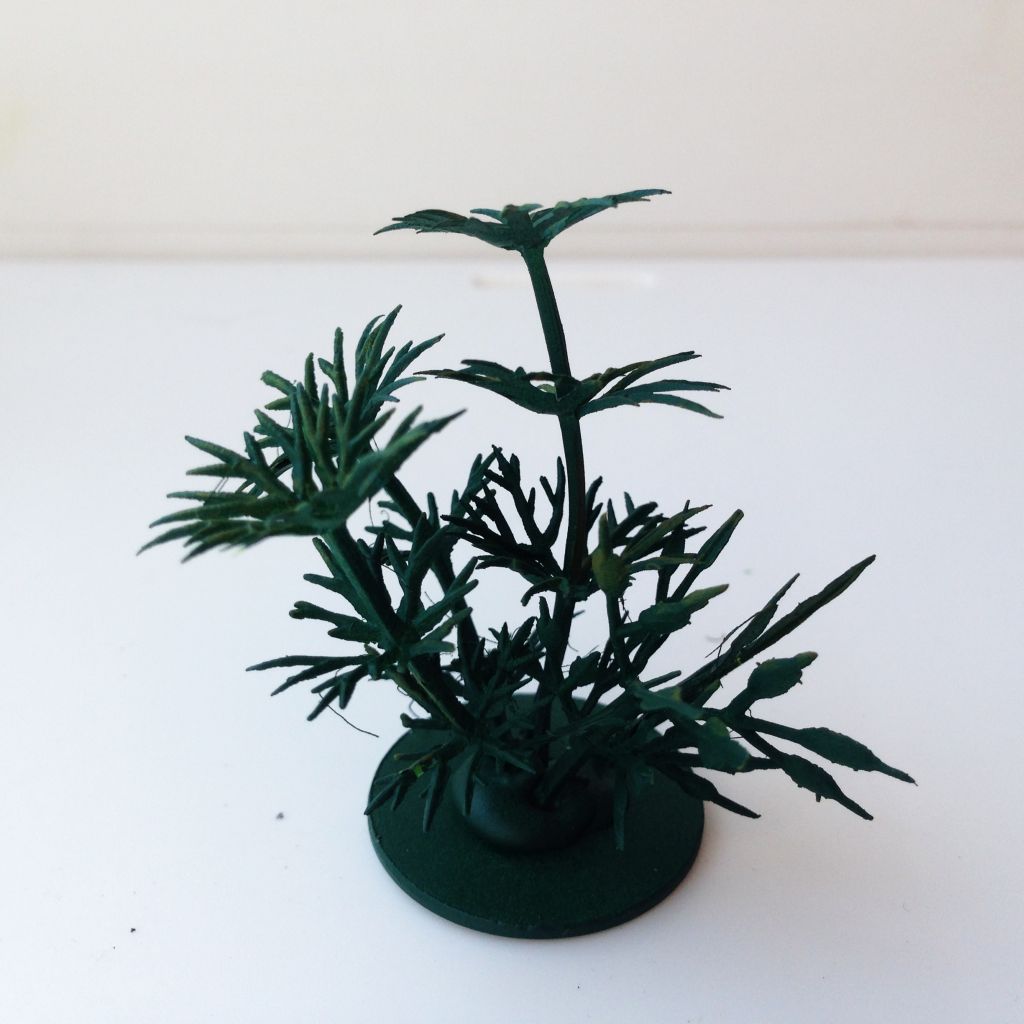
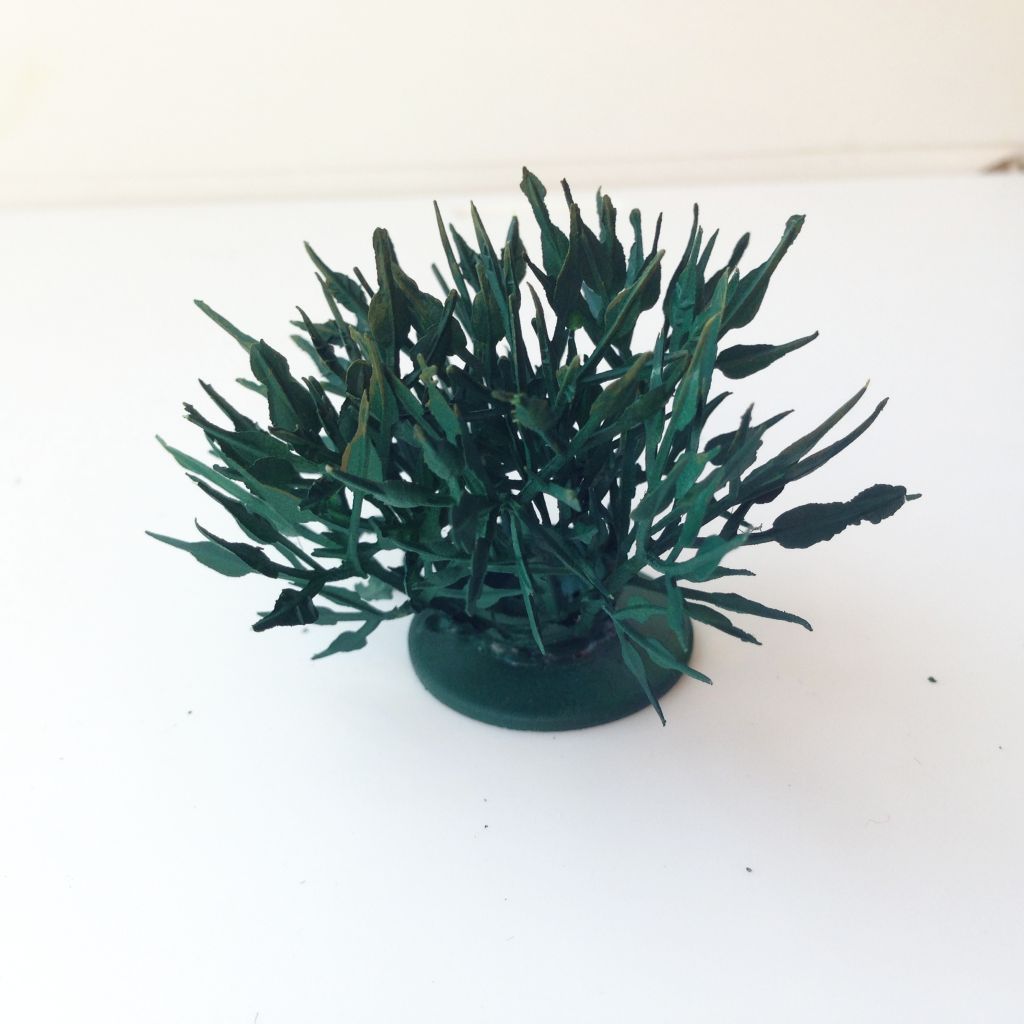
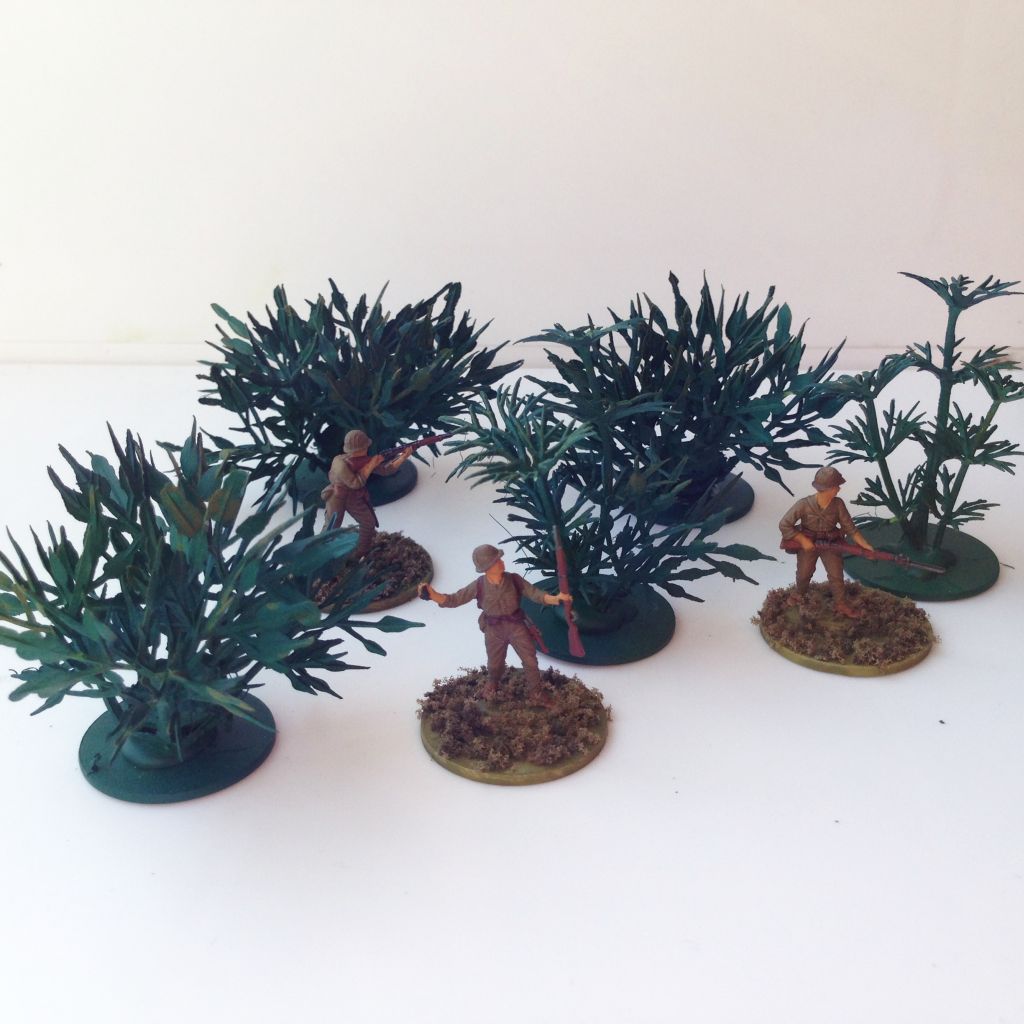
With a craft knife and a hot glue gun, I was able to remove sections of plastic plants and mount them on metal washers. A coat of plastic primer and flat green paint, along with a simple drybrush of a lighter green and I was able to whip up quite a few stands of jungle trees and overgrowth. I cut many sections at varying heights and mixed and matched them to provide a little more realistic look.
JungleTreesC

JungleTreesB
They really look pretty well and being on separate bases, I can move them around to accommodate larger teams and vehicles. Next to some 20mm Japanese troops I painted up, they’ve got an appropriate height and occupy a good chunk of area to offer cover. They were also a snap to get together. Certainly one of my more easier terrain projects to complete. Making trees and jungle terrain this way is easy and offer some decent terrain for your Pacific theater games.
JungleTreesD

Review: Cthulhu Realms

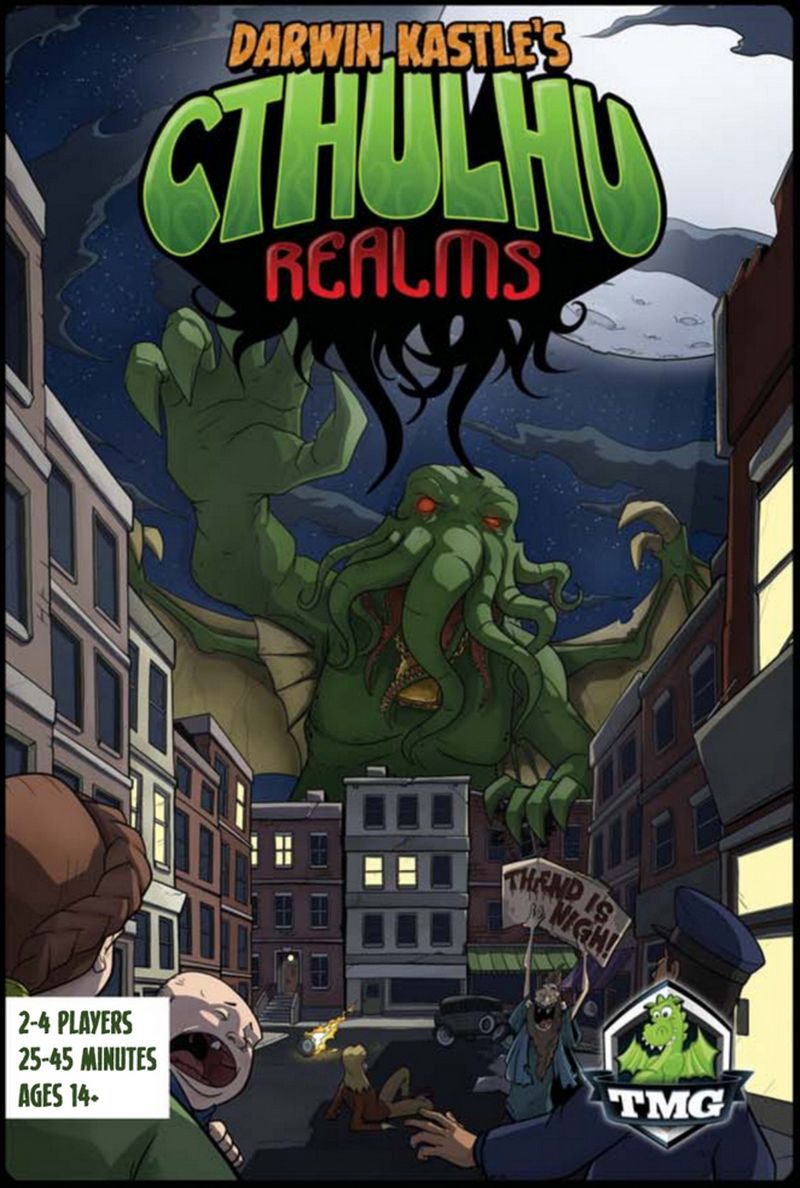
CthulhuRealmsBOXTasty Minstrel Games offers Cthulhu Realms, a small deck building game for 2-4 players. This is a nod and a wink to Star Realms, which is another small deck builder game from a different company. Players are nefarious followers of Cthulhu trying to drive their opponents mad, inflicting damage to their sanity. It’s a game of player elimination where players try to reduce each of their opponent’s point total (sanity) to zero being the last cultist standing.

As mentioned it’s a deck building game. All players start with a standard deck of 10 cards and have common card supplies which are shared with other players. During their turn, a player will play as many cards as possible from their hand. Cards have a variety of powers which can be activated in any order (including switching back and forth between played cards). Generally cards offer conjuring power used to buy cards, gain/reduce sanity, or draw/discard cards. After playing cards, everything is discarded including their hand, 5 cards are drawn from their deck, and their turn ends.

An exception to removing all cards are locations, and these become important as they always remain in play. Further, many cards require a certain color type in play. So locations become great focal points to use in card combos. They can be removed and thrown into a player’s discard pile by being attacked directly (where sanity loss is applied to a particular location instead of a player). Additionally, some locations have a characteristic that forces their opponents to remove that location first, before attacks can be made against a player. Thrown into this is another location type that must be targeted and destroyed before other locations can be attacked. You’ll find out quickly adding locations to your deck a key strategy during play.

There are three types of cards (followers, locations, and artifacts) along with 3 color types of cards. Many card powers require combinations with other cards to utilize all of their abilities successfully. Another key ability of some cards is abjure, essentially a discard ability removing cards from the game entirely. This is a good way to thin out your deck or potentially get rid of a juicy card your opponent would likely pick up.

In a 2 player game, a supply pool of 5 cards is available for each to purchase. In a multiplayer game, between each player is a separate pool of three cards forming a pinwheel of sorts. For a 4 player game this becomes interesting as sanity loss can only be directed towards opponents to your left and right (ones you share card supplies with). There will be a 4th player essentially untouchable. This won’t last long though as sanity loss hits both your left and right opponents simultaneously. So no hemming and hawing about choosing who loses a few sanity points.

The Good – This is an enjoyable, light, deck building game. It moves pretty fast with some interesting card combinations to explore. There are a variety of approaches in play, either focusing heavily on one color of cards, or trying to spread the field and work up a deck of several card types. I enjoy the multiplayer setup making it a little structured in card supply pools rather than everyone using one card supply. The player point totals use a nifty card and counter system to easily track sanity (victory points) which also doubles as a card ability reference. The card artwork is whimsical and of thick stock. Fans of H.P. Lovecraft will likely get many of the inside jokes on the Cthulhu mythos.

The Bad – Not all the card icons are easily digested and deciphered. Expect a bit of a learning curve and having the rules handy to interpret some of them. While the rulebook is a tight document, the layout is a bit of a hassle as it’s spread out on a single, folded sheet of paper. The card artwork is cartoony and just might not work for some. Lastly there are a good number of card types, yet after several plays you might see some card combinations being to recur.

Once a card is purchased, another is immediately added to replace it. This can lead to buyer’s remorse if a powerful card is suddenly added to the supply pool. As there are some especially strong card combinations, it can be simply a matter of players scooping up the right cards first (and these combos can be difficult to break up if not in possession of the right card types). Another quibble is there are multiple powers on many of the cards, and as you can can switch back and forth between other cards in play during your turn, keeping track of used powers and conditions met for other abilities can sometimes be a chore (using pennies or glass beads covering up used powers helps).

The Verdict – I like Cthulhu Realms. It’s a fun, quick, deck builder game. The theme is light and certainly not serious, so I can give a pass on the card art style. It’s not meant to be a somber horror game despite dealing with the Cthulhu mythos. There is just enough variation in the cards and multiplayer layout to add a fair amount of replay. It’s a player elimination game, however it doesn’t quite drag out the process of players dropping out once massive sanity points are being lost left and right.

In the end, you have a compact 2-4 player game in a small box. It’s a surprisingly effective package that delivers a great little deck builder with a low price tag. If you can embrace the playful theme, you’ll find a pleasant gem in Cthulhu Realms.

Keeping campaigns organized with blogs and wikis

I’ve been fiddling around with my sci-fi Savage Worlds game getting everything together. Something I’ve been a stalwart supporter for over the years is using online tools as information repositories for current games. I tend to game pretty infrequently, just about every other week. So for long campaigns I need a place to keep track of major events that happen. Another plus is I don’t need to saddle my players with scribbling down the name of every major NPC they come across. The important stuff I can put on up the campaign site for reference later.

Additionally we have about 2-3 different settings going on. I sometimes get a little burnt out GMing a particular setting and like to have an occasional one shot game once in a while. It can be a challenge for my players to keep track of the types of worlds they are playing in. Sometimes they need something to jog their memory on who the major movers and shakers are for that campaign. In these cases having an online wiki or blog is great keeping everything together.

For a long while now I have been using Obsidian Portal for a few of my games. It’s a great tool but lately I’ve migrated towards having more simple sites. I’ve found I don’t usually need the complete functionality of a wiki. I can just keep a running page or two of major NPCs or locations. So currently I’ve been leaning towards using blogs instead.

For my Savage Worlds superhero game it’s been a great means to provide a quick reference for major criminal (and neutral) organizations. Also by adding posts and tagging them, my players can filter out a lot of stuff and skim through past posts looking for specific enemies or topics related to the campaign. I haven’t been keeping a running adventure log going for that, but it could be done.

With my sci-fi game I’ve found this especially helpful. Above all other settings I think players sometimes need a little more information on the game universe. Sci-fi encompasses so many styles and themes, it can be difficult to accurately get across to players the levels of technology or how proliferate alien species are. Having a site that they can navigate to get that information is helpful.

Mind you have to be realistic about how deep players will dig through your site. Some may enjoy it but expect many to be willing to skim through about a paragraph at most. So I try to keep things brief if possible, especially for adventure recaps.

One last point though on having a campaign blog or wiki, it’s public. While it’s a way to share your world and ideas with others, it’ll also show how messy your games run including all the lackluster ideas. Just roll with it. Because sometimes you’ll have people mine your stuff for adventure ideas to use in their own games (Hee… or learn about things to avoid if scouring my campaigns). Honestly that alone is a great reason to have your campaign material up on a wiki or blog.

EarOtisB

Review: Frostgrave – Thaw of the Lich Lord

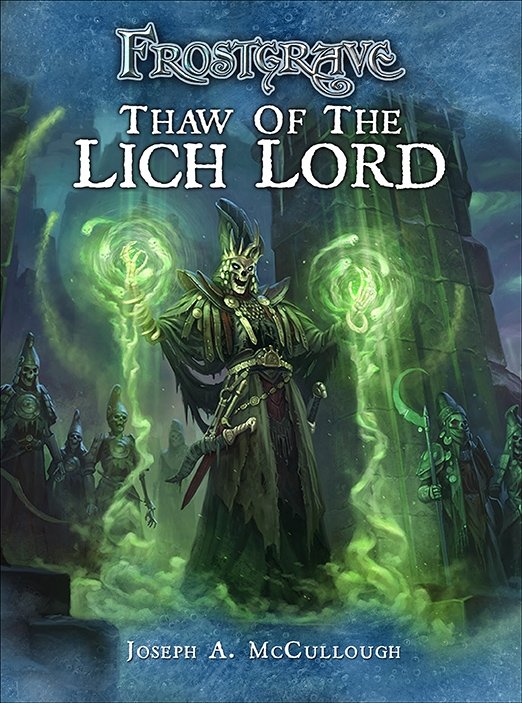
ThawLichLordCoverFrostgrave is a game I enjoy and really scratches that itch of a quick and dirty fantasy skirmish game with a smattering of D&D like progression. You command a wizard and their retinue of mercenary followers as they scour frozen city ruins seeking treasure. Osprey publishing has recently released Thaw of the Lich Lord, a campaign expansion which provides more scenarios and other bits for your Frostgrave games.

There are 10 scenarios which revolve around the awakening of a great undead wizard that was sealed away when the city was originally blasted with ice and snow. The scenarios are a pretty good mix of different locations and most have some special rules with terrain or hostile opposition that each wizard warband has to tackle with. The locations also for the most part strive for a narrative tale like a hall, a frozen river, or in a district section which has levitated above the frozen city.

However most scenarios are still pretty much a loot grab where gaining the most treasure is the primary objective. An interesting twist is that the final campaign scenario is somewhat a cooperative affair where each player tries to gain the fame and glory of personally defeating the lich lord themselves. In fact it’s recommended that a neutral player referee the final scenario, taking control of the lich directly, as it works best for the scenario (however rules are provided to give the lich an AI of sorts).

There are three new spells which primarily deal with the undead. One is a useful homunculus spell which decreases the stats of the wizard, but makes a duplication. If the wizard dies, the homunculus creation replaces them. Soldier followers that die can be revived as a revenant undead creature. Lastly there is a spell that can transform a player into a lich themselves if desired. It’s a tricky spell to cast that can incur permanent stat decrease on failure, but if successful makes the wizard a powerful spell caster adding +10 to their will. These spells are only gained through grimoires or the result of some particular scenarios.

Along with the scenarios and limited spells are new treasures, additional soldier followers, and more creatures to add to your game. The treasure and creatures have their own tables which can integrate into ones listed in the original rule book. Some magic items add bonuses to the campaign game, along with tactical benefits. A nice touch is that the table lists supplement the original (so no need to convert your own).

There are a few more soldier options also. A welcome addition are options like a falconeer and javelin thrower which are nice choices to round out more ranged troops. There is also a pack mule follower for hauling loot and gear (which is a fun choice). Also a bard is available for boosting other troops’ will, and some odd creature followers that can be gained through spells.

More of the creatures added to the game are primarily undead based. There are also rangifers which are reindeer man-type creatures of nature. They are relatively neutral, will attack any undead, and can be added as a warband follower through magic treasure.

The Good – I dig that Frostgrave is exploring different scenario setups. While most still revolve around getting as much loot as possible, there are some with objectives (like stopping a neutral unit from leaving the table, etc.) which is cool. I like how new treasure and monsters can be easily added to the game with new charts. The book is well organized and has great artwork and photos as usual.

The Bad – I’m disappointed with the campaign. There is no real outcome that carries over by winning or losing each scenario, or for the campaign itself overall. Much of scenario outcome rewards are tied into gaining specific magic item treasure. Also the campaign structure and rules are still unchanged and I’ve found some community suggestions are better (of which I stole and tweaked myself). The magic spells offer some cool choices but are still limited in scope. A branching campaign might have been better choice.

The Verdict – Thaw of the Lich Lord is an okay book. Rabid fans will certainly like it. Having new monsters, treasure, and soldiers are always good additions. The campaign scenarios overall are pretty cool and certainly offer something different. However there still is a glaring issue of that gap where some warbands potentially run away with victories while others get mired in a chain of defeats. Some optional campaign structure rules would have been a wonderful addition to curb that. In the end I find Thaw of the Lich Lord an okay expansion, just not quite the must have book I was hoping it would be.

Sci-fi starship combat variant for Savage Worlds

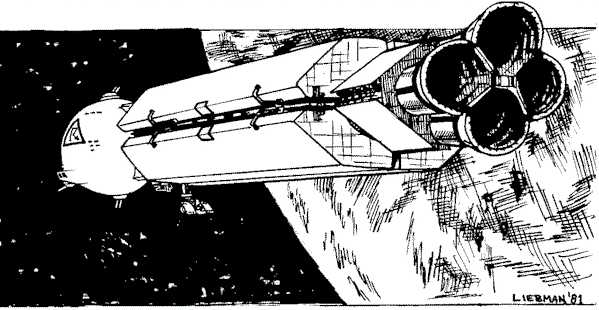
TravellerDOne thing I latched onto planning out my sci-fi campaign game was using ships as characters. I tinkered a lot with the sci-fi companion rules and they still floundered some with me. I just couldn’t really see making starships a larger part of the game and making it work. If I approached making them characters I could make combat and other aspects of travel more engaging, even if it was being abstract over the traditional vehicle rules.

So I really dug the idea of using ships as characters and I scooped up Savage Space, a fan made space opera conversion. Although the spaceship combat rules were pretty solid, I didn’t quite want to go the route of a battle mat and miniature ships along with using actual ranges to work out combat. I liked the idea instead of using the chase rules from SWD. There were some additional tweaks I wanted to implement however.

Turrets vs Fixed Weapons – I altered the costs some of weapons and kept the idea of fixed arc weapons hitting harder, but were cheaper than turret weapons. Unlike the RAW (Rules As Written) chase rules, I’m allowing ships to return fire against other target craft. Yet they would be limited to turret weapons if the ship didn’t have advantage.

Speed matters – Ships announce their intended speed and it has an influence on ship initiative if substantially higher than the opposition. Some ship weapon systems like torpedoes would require a slower speed to lock in and would be subjected to snap-fire penalties otherwise.

Combat is chaotic – I liked the idea of drawing clubs introducing some type of complication with some ship systems possibly going offline. This allows the repair skills having some other purpose than out of combat checks for ‘healing’ ships. It could be mitigated some with drawing a lot of cards which ties into….

Piloting skill is important – The piloting skill matters. Aside from drawing cards for initiative, the higher the roll, the more cards that can be drawn, and the better chance a different card can be chosen if a club is drawn. Also there is a small change I have with the RAW chase rules, all ships draw 2 cards. If they fail their piloting check, they have to play the lowest card. So piloting has a lot of bearing in ship combat.

Inherent ship agility matters – Another small change I wanted was to have the agility of the ship have some function. I decided to make a basic check using the agility of the ship. Slow, lumbering craft with a low agility would be more difficult to gain advantage during a round compared to more nimble starships. So if failed, there would be a penalty to the Piloting check for that round.

Below are some more details on the ship combat rules I worked up. Another notable aspect is using a damage table for wounds received, but it’s covered pretty well in Savage Space. I also tweaked the range tables some from the rule book to allow for more attacks at medium range (and also allowing for lower range modifiers). Below are some high points of starship combat. Hope folks get some use of of this for their games.TravellerArtE

Starship Combat

Starship combat is a variant of the chase rules. Combats will typically be 5 rounds. At the end of the 5th round, and each round afterwards, the GM rolls a die. On an odd result the combat ends with either a ship slipping away, or the pursuing craft breaks off. On an even result the combat will continue at the GM’s discretion (ex. 3 fighters are pursuing a player ship. One fighter is destroyed and another is heavily damaged during the pursuit. A 6th round of combat should happen but the GM decides to break off the fighter attack, deeming the attackers have taken too many losses to likely keep up the pursuit).

For each round of combat initiative is determined by drawing various cards. Follow the sequence below to determine initiative order.

  1. Declare and record speed (For an ambushed ship current speed is equal to its acceleration).
  2. Each ship is dealt 2 cards.
  3. Determine Ship Agility Modifiers. Players make a trait test using the ship’s ability value. This can be modified due to ship wounds (or other applicable modifiers). On a failure the Ship Agility Modifier for this round is -1, on a success the modifier is +1.
  4. Players make a Piloting check applying any modifiers for wounds, shaken ship, etc. including the Ship Agility Modifier determined in the previous step. On a failure the ship must take the lowest of the 2 cards. On a success, the ship may take the highest. For each raise another card is taken and the ship may take the highest. Note that on a success, players may opt to take a lower card (especially if the higher card is a club).
  5. All ships act in initiative order. Ships which have a higher card compared to other ships are deemed to have the advantage for this round against those ships. If the selected initiative card is a club, some manner of complication happens to the ship during the round.

Additional Initiative Check Modifiers (All of these modifiers are cumulative to the Piloting trait check):

Speed – Apply a +2 modifier if the ship’s current speed is higher than the fastest opponent. This becomes a +4 if their speed is twice as fast.

Climb – If their climb is higher than their opponent, this confers a +2 bonus but only while in an atmosphere.

Terrain – Some conditions may incur a -2 penalty (like flying through a debris or asteroid field).

If the ship has advantage (their initiative is higher than an opponent), the may fire all weapons to bear on the target ship. Ships without advantage can fire on their attackers but only with non-fixed weapons and have a -2 penalty to Shooting in addition to any other penalties. The number on their initiative card indicates the range and any penalties due to distance are in parenthesis (see the Range Table).

Snapfire Penalty – Some weapon systems have the snapfire characteristic. If the ship’s current speed is equal to its acceleration, or the target is at short range, there is no penalty to fire. Otherwise the craft suffers a -2 penalty to Shooting.

Range Table

Card Range
2 Out of range, enemy is blocked, etc. No attack can be made this round.
3-7 Long Range (-4)
8-Jack Medium Range (-2)
Queen-Joker Short range (no penalty)

Damage Table

2d6 roll Wound Effect
2 Maimed Ship – Ship suffers severe scars and damage affecting its appearance.
3-4 Random Sub-system Offline
5-9 Internal Damage – A vital system inside the ship is damaged and needs repair.
10 Engine Damage – The engine’s FTL drive goes offline or its agility is reduced by one die type.
11-12 Cockpit Damage – Scanners, the ship AI, or some other sub-system goes offline.

Complications Table

2d6 Effect
2 Disaster: Piloting check at -4. If failed a major system fails at GM’s discretion such as the engine going offline, life support failure, hull breach, etc.
3-7 Major Complication: Ship Vigor check at -4. If failed ship has a system offline/component failure*.
8-Q Complication: Ship Vigor check at -2. If failed ship has system offline/component failure*.
A Distraction: The crew has their hands full. If attacking, a -2 penalty for Shooting this round.

* These complications are typically at the GM’s discretion. Alternately, cards can be drawn for various ship equipment and if a club is drawn the listed complication for that piece of equipment may occur.