Extreme ranges for Bolt Action

A long while back I introduced some house rules for Bolt Action that I use for my games. Just some tweaks to a few odd things I find a little quirky with the rules. One thing that I’ve stewed a bit on however are the ranges. I understand why they are so truncated. For a wargame to be played on the dinner table and trying to encourage maneuvering with squads, you can’t have ranges covering the entire play area.

Now a lot of gamers have a beef with this and cite it as a huge flaw with Bolt Action. I’d totally agree for some weapons it throws all simulation out the window playing the rules as written, especially with tank guns that were actually reaching ranges of a kilometer or more. So a lot of folks lean towards other systems where ranges are longer distances or simply cover the entire table. However for infantry weapons there are a few documents which claim field manual distances were fairly exaggerated. Actual combat engagements were much closer, having rifle fire up to ranges of 300 yards, with truly accurate and effective fire being at only at 100 yards. With short distances like those, 24″ rifle ranges might not be too far off from what was actually seen on the WW2 battlefield.

There was one thing that stuck out for me when reading Battlegroup (another great set of WW2 miniature rules). That was the idea of fire at extreme ranges which could only be used for suppression. Battlegroup has effective ranges for all weapons that can inflict casualties or damage armor. However there is no max range and players can freely fire at anything on the table top that they can see. However these long ranges are limited to area fire only. It’s hard to land a hit and if you do, you only get to put a pin marker on your target. It is for suppression only and you need a ton of firepower but it’s an option.

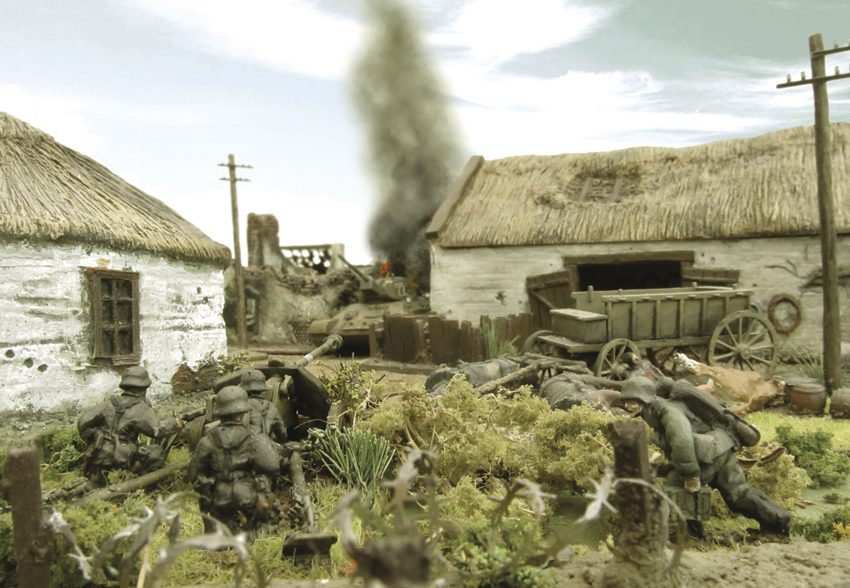
This is certainly something I could use for my Bolt Action games. A fire mode that was difficult to achieve hits beyond maximum range and would only result in pins. I still wanted to cap out ranges though, but stuck at simply doubling listed ranges. Even for armor this could be used, but like rifle fire, could only potentially pin a target. So I decided to incorporate this into my own house rules. You can find a detailed explanation of the rule below.PaK40_BGKursk

Extreme Range – On a fire order, all weapons can fire at targets up to twice their listed range. Weapon fire at this extreme range only hit on 6s on 6s as per Nigh Impossible Shots (pg 37). All hits do not inflict casualties or vehicle damage, regardless of their penetration value. The target will only suffer one pin instead if hit (suppression does not apply). Armored vehicles, whether they are open topped or not, ignore all small arms fire at extreme range. Vehicles hit from weapons of +1 pen or greater suffer a pin as per the Tank War vehicle rules (veterans ignore hits if the weapon cannot penetrate their armor, inexperienced units gain a pin, etc.). Note that weapons which can cause more than one pin such as HE weapons still only inflict 1 pin at extreme range. Flamethrowers and indirect fire weapons firing smoke cannot use this rule.

Savage Worlds Career edge

I’ve been hammering away at a sci-fi Savage Worlds setting. A long while back I dabbled in a Traveller hack for SW but wanted to embrace the new Science Fiction Companion more. One thing I like about Traveller though was that character generation was sort of a mini-game. You chose to follow along different careers and rolled on tables to see if what skills you picked up. Sometimes something fortunate happened and other times there were these complications (or complete disasters for the player). However a lot of times it resulted in a character that was more fleshed out and a past history.

One particular hang up for starting a new campaign is getting all the players on the same page with setting’s ‘world’. They might have different ideas on what are likely important skills, or worse, sort of overwhelmed with choices. On that front, having lots of archetypes available is helpful. My beef is that archetypes can be a little rigid or maybe too optimized. I wanted to offer some guidance in skills to pick up, but not push them into having particular edges or ability ranks like archetypes have.

Lastly as a sci-fi setting goes, you are going to have a slew of knowledge skills to pick up and can be a little overwhelming for character generation. I’ll freely admit I jumped into throwing in some more edges too which ramps up the complexity of the system some. But for some things I wanted to reward player investment into a background theme, rather than everyone able to be just as effective as that player wanting to specialize.

So I scooped up an idea from Traveller and created a Career edge. This would be an edge that could be chosen once at character creation. It’d allow them to pick up a chunk of basic skills and then possibly choose a few more skills and edges. Lastly, having a list of skills associated with a profession might offer the player some guidance on what other skills to invest in. The gist of this would be a list of 6 skills that players get choosing the edge. Along with these service skills they would choose one specialty branch in that profession allowing them to get a few more skills from its list. The catch is not only do players use an edge, but they also spend 5 skill points from the their total skill pool. Below is an example Marine career skill list:

Interstellar Marines: You received basic military training for the Interstellar Marines, responsible for operations related to assaults on ships and planetary invasions.
Service Skills: Athletics, Edge (Vacc Suit), Knowledge Skill(Military Science), Fighting, Shooting, Stealth

Support: You served as a quartermaster, engineer, or battlefield medic in the Marines.
Specialist Skills: Knowledge Skill(Ship Ops), Repair, Driving, Piloting, Healing, Shooting(Gunnery), Knowledge Skill(Demolitions)

Space Marines: You were trained to fight boarding actions and capture enemy vessels.
Specialist Skills: Edge (Power Armor), Edge (Gravitic Acclimation), Shooting(Gunnery), Fighting, Knowledge Skill(Ship Ops), Shooting

Ground Assault: You specialized in planetary warfare, especially invasions and drop ship operations.
Specialist Skills: Edge (Power Armor), Shooting(Gunnery), Fighting, Knowledge Skill(Military Science), Shooting, Survival

Note that you don’t need all of these specialist skills. I’d still consider getting a list of 4-6 to offer players some choices. For the initial service skills though, you certainly want 5 or 6 skills, as players will be spending 5 skill points when they pick up the edge. They will still have at least 10 skill points to further choose skills. This might sound a lot but for a setting heavy on different knowledge skill choices, they will quickly burn through their points.

This can be very modular for different settings. It’s also likely an easier process than making up archetypes as you just have to think up skills and some edges that would likely apply to a profession or career. Say you were running a Victorian steampunk game and wanted to whip up a career edge list for someone that served in the imperial navy. A basic list of skills would likely include boating, some combat skills, along with some knowledge skills. If they were an officer you’d have some specialty skills and edges related to command. However you might also consider a Connections edge (throughout their career they might strike up a friendship with a nobility or a high ranking admiral).

If they were more a specialist in the imperial navy, maybe they were a medic, cook, or became familiar with the workings of steam engines. You don’t need to make every specialist path a huge list of skills, but could lump them into one list (like the example above for the Interstellar Marines). If you were just a deck crew hand, you’d likely have a lot of overlap with the service skills, but may also pick up some other skills related to a sailor’s life on an imperial steamship. Maybe you might have picked up gambling or streetwise aside from honing your fighting skills.

Once you start making up these lists, you find out how flexible they work and a lot easier than working up archetypes. One note however is that this edge allows players to pick up a ton of skills on the cheap. This tends to work better in settings where there are more skill options to dilute out their pool of skill points.

Another downside is that some double checking may be needed after character creation, especially with certain edge requirements. You might have that occasional player which picks up an edge but doesn’t have a high enough ability score (or training in a specific skill) according to the rules. So when making up these lists a GM has to watch out for those inconsistencies and be prepared to reign in a few edge choices when players are done. It’s a point I will concede to properly built archetypes, as they wouldn’t have this issue. Below is a summary of the Edge (Career).TravellerArtE

Career Edge:
This is a special professional edge that is available to characters during creation. This edge represents basic training and skills obtained during a career in one professional field after three to four years of service. This edge can be only taken once. Additionally, this edge will also immediately spend 5 skill points from the player’s total. The player must buy skills using this edge first, before spending any other skill points during character creation. After deciding what skills are obtained from the Career edge, players can spend their remaining skill points normally. Note that any edges obtained from the Career edge still are subject to trait requirements after all skill/attribute points are spent (i.e. a player must still have a Vigor of d6 to obtain the Attractive edge at the end of character creation).

To use the Career edge, the player will choose one career profession. They immediately spend 5 points from their skill point total. They then obtain all the skills and edges for service training in that career. In addition, they also gain skills and edges from specialist training. Players choose one specialty field for that career and gain more edges or skills in one of two ways:

A. Gain 2 different skills/edges from the chosen specialist training list. Chosen skills may be similar to ones gained in service training. If so they increase the trait by one die type (but restrictions for linked ability scores apply).

B. They gain one skill from the chosen specialist training list and can raise this beyond its linked ability score. If the skill is new they gain it at d6. If the skill is the same as one obtained from service training, it can be raised 2 die types (to a d8). Note this is regardless of the skill’s linked ability.

[EX: Fred has a poor Agility of d4 but is strong as an ox. He opts to enter the Marines and takes the Career edge. He gains all the skills and edges from the Marine service training list. He then chooses the Ground Assault specialist training and decides to pick Fighting and raise it (Option B). As he currently has Fighting d4 from service training, he can raise it two die types up to a d8. The increased cost in skill points due to having a d4 Agility does not apply. If it was not a skill on the service training list, he could have it at d6 (regardless of the linked ability score).

EX: Bob also decides to tank his Agility at d4 to buff up his Vigor instead. He enters the Marines and becomes a Ground Assault specialist. He wants to use option A and pick up two skills/edges, eager to gain both Knowledge (Military Science) and Shooting. Unfortunately, he already has Shooting d4 due to service training. As it is an Agility linked skill (at d4), he cannot gain raise this skill to d6 through specialist training for the Career edge. Instead he can take Knowledge (Military Science) and some other skill or edge. If he chose to just focus on Shooting similar to Fred and used option B, then he could have a d8 in Shooting (but only obtain that one skill).

EX: Susan also decides to join the Marines but enters the service having a d6 in all ability scores. She also decides to become a Ground Assault specialist. Susan decides to put a point in both Shooting and Fighting for her specialist training. She had already obtained these skills through service training and currently has them at a d4 each. Since her Agility is d6, she can raise both of these skills up to d6 through specialist training.]
Gripping Beast Saxon Thegns

While I enjoy SAGA I need to admit Frostgrave has sort of taken over my painting drive. I assembled my SAGA warbands a long while back but actually giving them a coat of paint has been a chore. I’ve really been dragging my feet on them. Love the game but my spark for painting the figures consistently seems to flare up for only a few days and then die down to a smoldering ember for months.

But I’ve managed to get some troops painted up. One big draw for me getting into SAGA was the relatively low model count and cheap options for figures. I decided to pick up a few sets of Saxon Thegns from different manufacturers as I wanted to build both Anglo-Saxon and Anglo-Dane warbands. That way I could switch around some of the hearthguard and warlord models, but keep much of the core force of warrior models the same.

I opted for one box of Gripping Beast Saxon Thegns. They are a nice set of plastic figures for a decent price. You get a whopping 44 minis, including a sprue to make a standard bearer, horn blower, and some details like a cloak to deck out one model making it your warlord. For Anglo Saxons a lot of battle board abilities revolve around 10 man units. I’ve puttered around with a few hearthguard but I’m now leaning towards using more warrior units to take advantage of the 10 man abilities. So having a lot of extra figures is welcome.GrippingSaxonB

The plastic figures are well detailed with some nice armament options. You get 5 bodies per sprue with a few extra to make up the command elements. They assemble well and are pretty easy to glue together. Square bases also come with the set including some larger bases for single ranks. I’m using round bases instead but it’s nice to have some included in the box. I’m no expert but the gear and figures seem historically accurate and it’s nice to see a ton of spears in the set also.

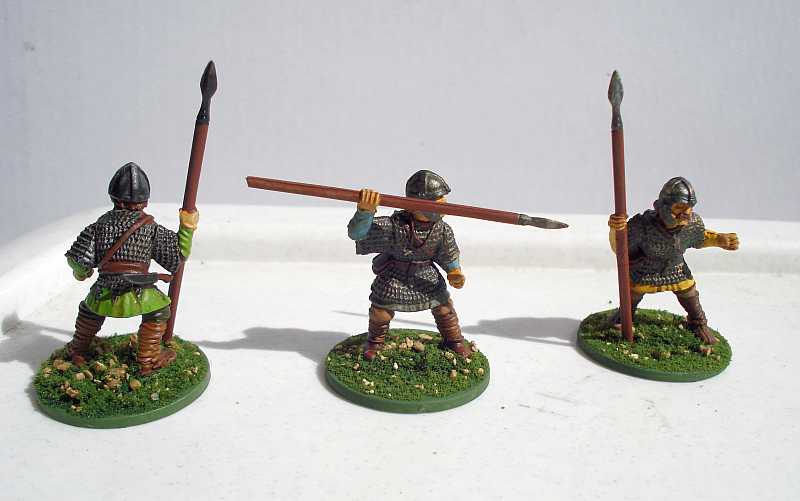
I’m slacking on the historical accuracy some though. To keep things clean with WYSIWYG with the warrior units in SAGA, I’m keeping them in mail armor and dropping the shields. This is passable with the figures I’ve got, but I’ll admit the right arms are sculpted to accommodate shields. I decided to base them without shields, saving those for the hearthguard.GrippingSaxonA

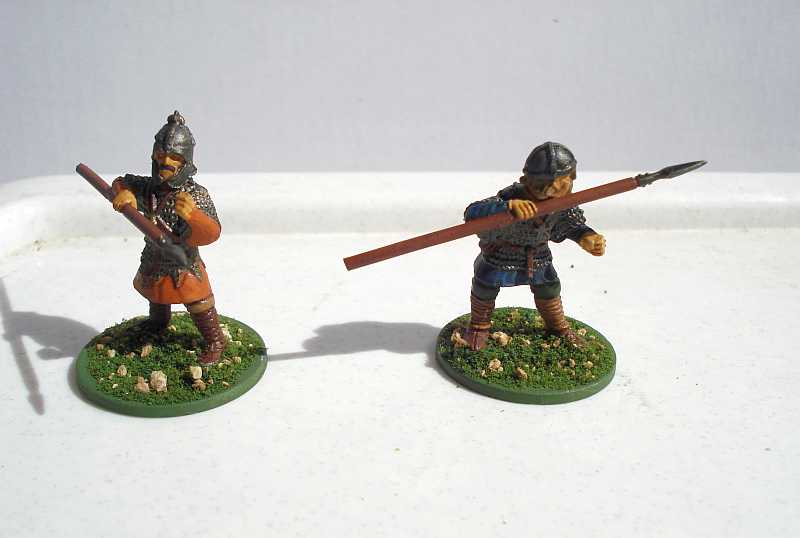
Now another manufacturer floating around with nice medieval plastic sets is Wargames Factory. I imagine a lot of folks would like to know how they stack up and could you mix and match them. The pic below is of two Saxon Thegn figures from each company. The one on the left is from Wargames Factory and the one on the right is from Gripping Beast. I think they are very comparable for scale. The Gripping Beast figures seem a little more stocky in the shoulders and arms, but painted up they don’t really stand apart from each other.WargamesVsGrippingBeast

Overall if I was pressed to stick with one set over another, I’d go with Gripping Beast figures. The minis have a little more detail. There are some nice small bits that stand out (like necklace crucifixes) with the Gripping Beast Saxons. They really are fine minis for a good price and work great for getting up a core force of rank and file figures for your SAGA warband.

Savage Worlds sci-fi gear: Ablat armor

I’m busy getting things together for my sci-fi Savage Worlds campaign. So I’ve been tinkering with a lot of stuff. One thing that stood out for me was armor for energy weapons. There aren’t a lot of options in the companion book aside from reflective armor. I like the idea of reflective armor and that if can be worn over other types. I especially like how it’s rather frail and can deteriorate due to damage. But I wanted another option.

I can’t envision a universe where weapon systems would migrate to one standard type, as it’d be too easy to offer cheaper defensive systems. That’s one thing I love about the gear in Savage Worlds. Body armor is great for stopping bullets, but worthless against lasers. Conversely reflective armor can disperse laser weapons, but can’t stop a bullet. If you wanted absolute protection, you can combine the two wearing one over the other. The other route is one I don’t want to go which involves power armor (as that diverges into heavy armor only being damaged by heavy weapons).

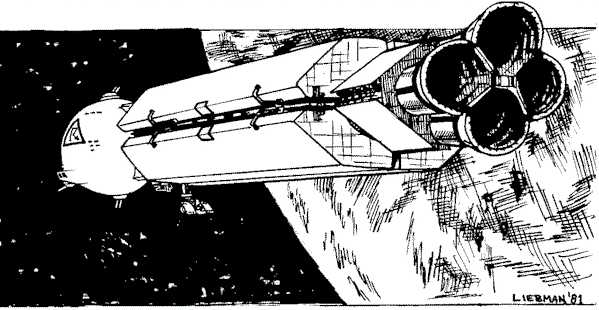
This is serviceable, but I wanted to give my players more options. Digging out old books of Traveller you’ll find Ablat armor. This was cheap, easily replaceable armor that would disperse energy weapon damage and vaporize when hit by lasers (ablation of the protective material). So it’d offer some protection but get worn out when hit by energy weapons.

I liked the idea of being able to combine ablat armor with regular body armor. You could buy a cheap suit to go over (or under) the ballistic armor. However another option would be to incorporate ablat material onto the the body armor itself. This could be thin ceramic tiles or strips, or maybe a layer of material sprayed over the armor. It wouldn’t last though. Each combat would likely chip away at its effectiveness until the ablat armor had to be replaced. So with that I worked up the following:

Ablat Armor: +4 toughness vs energy damage, negates 2 AP from energy weapons, but offers no protection against ballistic or melee damage. Cost: $500

Ablat armor is thin strips (or small hexagon tiles) of dark, ceramic material that diffuses energy. It is prone to damage easily from ballistic or physical attacks, and portions vaporize with each hit from energy weapons. For every wound that a player receives, reduce the armor value by 2 permanently. Additionally the first time a player is hit in a combat, resolve the damage normally. If no wound is scored roll a die. On an even result, 2 points of armor are permanently removed, just like as if a wound was taken.

Ablat armor cannot be repaired. It can be worn over (or under) traditional armor types but is rather bulky. Ablat armor is usually combined with non-reflective armor as outer coat of energy protection. Usually it is attached in thin strips/hexagon pieces to the surface of existing armor, or sprayed on in a thick coat of ceramic particles with an adhesive compound. This process takes about 2-4 hours and can be done only on planets of average technology or higher. Partial repairs are not possible with ablat, instead an entirely new layer would have to be added. Ablat also does not alter how noticeable the target is except in some odd cases at the GM’s discretion (like an arctic world where the dark, ablat plating might stand out).
TravellerArtB
Certainly having ablat armor is something my players will dabble in. I’m also certain they’ll agonize some over the constant drain of cash reapplying damaged armor. However it’ll give them some options and potentially ease that urge to pick up combat power armor as soon as possible. Hope folks get some use out of this for their games.

Savage Worlds sci-fi planet system

306d5-travellermapFolks that follow my blog will know I’m a fan of Traveller and even worked on a hack version for Savage Worlds. My Dark Sun game has been going a while but after picking up the new science fiction companion, I’ve got a bee in my bonnet to run another game. So all things sci-fi have sort of been on my mind as of late.

While I have my Traveller hack I really didn’t want to visit that again. I love the feel of the Traveller universe and likely will use it as a basis for my game, but I just didn’t want to juggle different game stats and rule books at my table. I wanted to just use the sci-fi companion and run with it. There are still some tweaks I’m making with the sci-fi companion, but they are pretty minor. Pretty sure it’ll be easy for myself and the players to jump in between different genres as we switch back and forth from sci-fi and Dark Sun.

So I’m slowly in the process of creating a few star systems. I wanted to get some manner of a map to plop down on the table and entice the players to explore some. I appreciate the relatively simple world creation rules in the sci-fi companion but it can create stuff that is all over the place due to every planet characteristic being unrelated random rolls. Because of that I began to eye the world creation system in Traveller.

I love Traveller’s idea of the UPP. A universal planetary profile that quickly provides key information on a planet’s characteristics. However I didn’t want to delve into using that that too deeply to create my maps, as again, I’d be trying to merge rules and stats from one system to match another. Instead I opted to work on my own version that primarily used the tables in the Savage Worlds sci-fi companion with some tinkering. The biggest change is that gravity and atmosphere would have some interaction and impact on the relative tech levels of the planet. I also scooped up Traveller’s tables for governments and culture quirks to flesh out planets some.

The main idea is that all star systems are classified using a universal planetary profile (UPP) for one planet that is the major, inhabited, economic, and political power in that system. It’s a 7 number/letter profile that conveys basic information on the planet. Along with the UPP, there is usually another designation indicating the type of government and any other notable planet characteristics (like trade codes). Each star system typically takes the name of the planet represented by the UPP. As an example:

Floria: NBW523X-L, Po, Ag

Reading the profile from left to right, we see Floria is a normal gravity planet (N) with a breathable atmosphere (B). It is dominated by oceans (W) and has a world population in the tens of thousands (5). It has a typical law level (2) and a below-average technological level (3). Primarily because of this, there is only a haphazard starport available (X) which is likely no more than a flattened plateau just above the sea level. The planetary government is run by a dictator which inherited the title (L) and is not well liked by the populace. Floria also has trade codes of being a poor (Po) and an agricultural (Ag) world.

What is especially nice about using UPP codes is I can whip up a spreadsheet to generate a planet on the fly. So now I can cut and paste a random string of d20 rolls and spit out a UPP for any system. Couple that with some awesome stuff out there for making up sector maps for Traveller and now I’ve got a means to quickly create several sectors. Add in a list of random planet names and I’m good to go. Hope folks get some use out of this for their games.

Review: Beyond the Gates of Antares

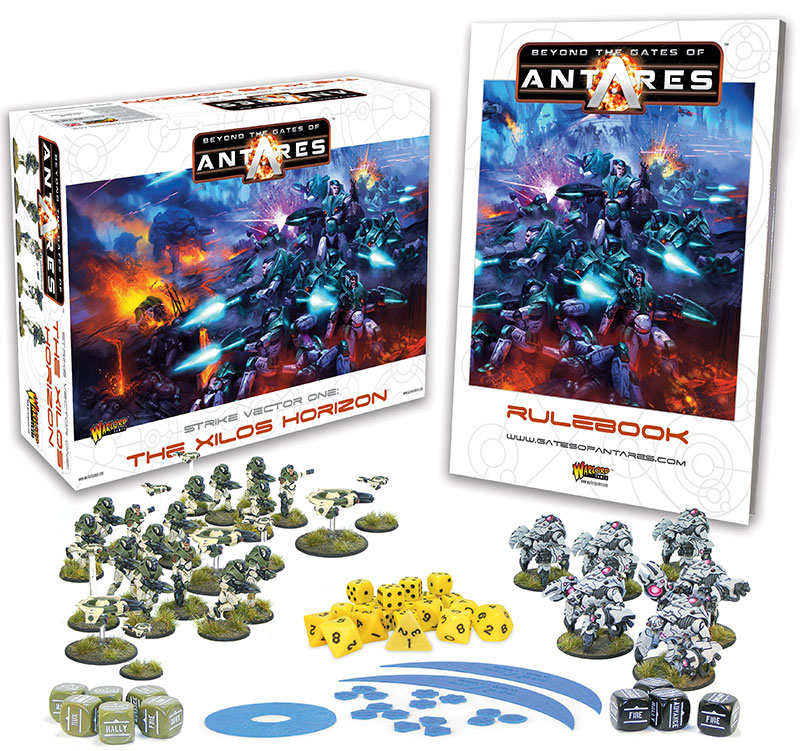
BGABoxSetRick Priestly a while back had a Kickstarter campaign going for a new sci-if wargame that he eventually pulled. It was out just about the time Bolt Action was hitting its stride and I expect he decided to throw his design talents into BA and let his sci-if game ferment a bit. I think that decision paid off as his new game, Beyond the Gates of Antares took some flaws in Bolt Action and improved on them to make for a great game.

Beyond the Gates of Antares (GoA) is a skirmish game for a force of several squads but could be expanded up to a few platoons if desired. It’s a one model-one man system in 28mm scale (although I can’t see any reason why it couldn’t be played in a smaller scale). It is a unit based system where commands are given to groups of 3-10 figures or single vehicle models.

The order system is lifted right from Bolt Action. Each unit is given a single, colored d6 die which is pulled individually for unit orders. If the color matches your force, you select a unit to activate giving it an order to run, move and shoot, hold position and fire, wait in ambush, hit the dirt, etc. It’s a system I like which is a little chaotic and random. Layered onto this is the effect of fire. Units which have been shot at take penalties (pins) to its leadership. This results in pinned units having to check and see if they can activate. If successful a pin marker is removed and the unit commits to its action, otherwise they hit the dirt and hold position (but a pin marker is still removed).

Units have a simple profile of a few stats for movement, effectiveness at shooting and melee, defense, leadership, and initiative. This last stat being representing how likely they can react to the enemy. This is one divergence from Bolt Action. Units not previously activated may potentially react to units within their line of sight either moving themselves or taking an opportunity to fire. Along with committed orders like ambush, this makes GoA a rather fluid game.

Shooting is a pretty simple affair. Depending on the type of weaponry a roll to hit is made with modifiers like for cover and range. Units hit then have a chance to shrug off casualties rolling to resist the attack (again modified by the type of weapon or being in heavy cover). If failed casualties are removed, while for vehicles and larger weapon systems a roll is made on a damage table. Some weapons have ranges that would cover the tabletop but most top out at 30” which seems enough for the typical game of a 4’ x 6’ table size

Regardless of any casualties, a pin maker is placed on a target unit if a hit is scored. Pins not only degrade combat effectiveness but also are markers to indicate penalties to leadership that’ll affect morale and command. As pins slowly accumulate if they ever exceed the command stat of a unit, the unit is destroyed outright.

Assaults are a little more involved. Units have to move into base to base contact. Afterwards each side has a round of simultaneous fire. This is followed up with a round of hand to hand combat that is resolved in a similar fashion except each casualty inflicts a pin. The side with the most pins loses the battle and will likely be destroyed outright. It’s worth noting that all die rolls are made using d10s. This allows for some more granularity in modifiers and troop stats that you might not see with using d6s. Also adopting some chaotic outcomes seen in engagements, GoA embraces the idea of a 1 succeeding (or offering a small bonus) while a 10 fails and usually these will trump the modifiers to a particular dice check.

Movement is a flat rate for models which are halved in rough terrain (with 5” typical for infantry troops). A nice wrinkle to GoA is that some units can push their movement up to 3 times their normal rate with a command check. So if needing to really get a heavy weapons team into position or advance onto an objective, you have that option. However the unit will take a pin after doing so.

A few rules are provided for vehicles and usually revolve around using a type of anti-gravity technology for movement. Additionally, most vehicles have multiple order dice allowing them to take several move and fire actions. This gives them a lot of opportunities to engage several units along with rapid movement and is a nice way of handling the improved mobility of vehicles.

An interesting concept with many of the troop units are the use of robot drones. There are several different types which provide additional defense, or improved modifiers for shooting, along with some that can act as a spotter for the unit. This is especially important as LOS and shooting are based on what models can see with intervening models and dense terrain blocking sight (and lines of fire). Coupled with this are quite a few special rules for ammunition and weapon types, along with varying armor equipment. All of this contributed to differentiating units and alien races that go beyond simply changing some base stats of troops.

Forces are composed of units based on point costs, along with limitations on troop options. A patrol force is required to have so many tactical options, and a limited number of support options. This offers some flexibility with creating your force but also provides some structure. However I do expect that people will dive into building lists to construct the ‘perfect’ army.

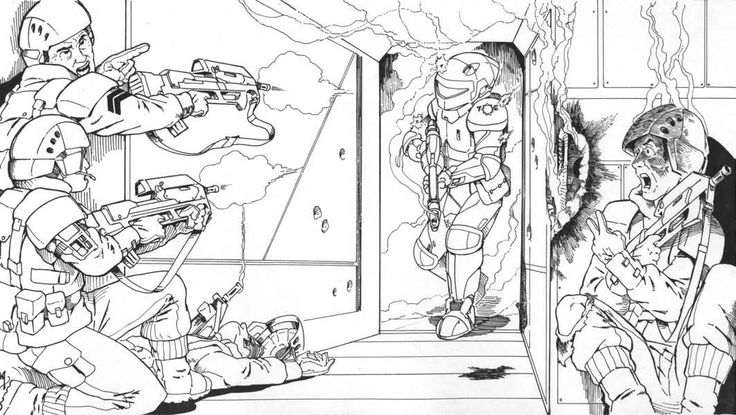
GoA comes with 6 generic scenarios where most revolve around capturing specific objectives or moving into sectors on the board with defined attackers and defenders (although 2 are essentially a ‘kill more of the enemy slog fest). Along with this are 6 narrative scenarios which are objective-based having a little more detailed table setup, deployment, and force composition. Having 12 scenarios along with rules for six different armies makes for a complete rule book. Throw into this a ton of background material on the game universe and you have the foundation for a pretty engaging wargame with room to grow.Gates-of-Antares-Art

The Good – This is a bit more than just Bolt Action in space. There are some tweaks to the rules permitting more flexible orders. The reaction system is great and allows for more dynamic play. Add to this the pinning system and you have a very fun skirmish wargame. There are several army options that embrace particular technologies. Using a d10 means you can layer on different modifiers for equipment and gear (along with troop types) which have some impact on how a unit performs.

The book has a lot of background material and having complete lists for different forces along with a lot of scenarios all mean the game has some legs with providing some system longevity. Coupled with this is a pleasant layout and presentation of the rules. Not to mention the lovely artwork, photographs, and oversized pages which makes the hardback quite an enjoyable game tome to read.

The Bad – I dig the d10 dice but leadership tests fall a little flat with me. In Bolt Action you rolled 2d6 on a leadership stat, while in GoA you roll a single d10. This means you will likely get some swings in both good and bad luck with a flat probability instead of playing with a distribution of outcomes using two dice.

Some of the mechanisms for shooting and combat are finicky. Hits are allocated individually to models, along with rolls to determine casualty outcomes. In practice this means rolling casualties one at a time. I’m working with a house rule to roll individually for special units, leaders, etc. while using a single roll casualty roll for multiple hits on troopers that share the same stats, then alternate between the defender and attacker removing casualties. LOS is also based on model bases and figure centers requiring open lines to targets, so expect some more rigid players considering breaking out the laser pointers. It’s not a big deal but it gluts up play some. Nothing that will ever crop up in friendly games but I expect to hear tales of player competitive friction with tourney play.

I am disappointed some with the vehicle rules. I do wish there were rules for air support and tank assaults. I get why this wasn’t done. You likely need another 4-5 pages to cover everything and defaulting to skimmer-type vehicles makes it easier to have condense vehicle rules. While you can get different flavor of movement types via special rules, the game loses some robustness. Lastly it’s a point based game. You are going to get those min-max force lists and some units underperforming for the points spent.

The Verdict – Beyond the Gates of Antares is a great sci-fi skirmish game. There’s a lot here people are going to like. I’ve been a fan of the random order mechanism and allowing units to react out of sequence is a pleasant addition to this. There are lots of options for gear and equipment to alter the base profiles of units to allow for variety in troops. Suppressing units with fire can be an effective means to remove or lock down units.

The game has quite a few scenarios and offering some special engagements means players have a framework to make their own. I can see players digging in, tweaking current ones and creating their own to make an entire campaign (and something I suspect will be in the pipe from Warlord Games). Along with this is quite a bit of fluff. There’s 55 pages of it, all revolving around several ages where humans expanded into space, reached an epoch, and declined. This resulted in humans evolving and diverging into almost different species despite the existence of faster than light travel via inter-dimensional gates. It’s interesting stuff that’s offers some meat to spark a player’s imagination.

I can’t seem to shake the feeling they are looking at being a serious contender to 40K. The cover art obviously takes some inspiration from the original Rogue Trader 40K book. Given it’s from Priestly, you can’t blame him for trying to produce a wargame that would offer an engaging alternative to that industry behemoth. No idea how that battle will shake out but Beyond the Gates of Antares is a fun sci-fi skirmish game that offers interesting tactical play using some simple, easy to run rules.

Priestly's 'other' sci-fi wargame he worked on.

Priestly’s ‘other’ sci-fi wargame he worked on.

Review: Zombicide – Toxic City Mall

Zombicide has gotten quite a few different expansions out since it was first released, with many of them sufficient to work as a base game. I had a lot of reservations with Zombicide. While the quality of the components were great, aspects of the game play were lacking. Some parts were downright broken and needed house rules to fix (side note, totally feel vindicated on altering the shooting rules as an upcoming medieval version has something similar). However I have to grudgingly admit for a crazy zombie destroying experience akin to the video game, Left4Dead, Zombicide can be a lot of fun.Toxic_City_mall_box

Toxic City Mall is another expansion to the game and closer to a true expansion unlike Prison Outbreak and Rue Morgue (which were stand-alone games). There are only 4 survivors and a pittance of special zombies in Toxic City Mall. It is more designed to work with the base Zombicide game, however there are a few missions in the rules that integrate with Prison Outbreak. While you can mix and match zombies, equipment, and map tiles with Rue Morgue, I don’t believe there are official scenarios in the rules of either book.

Toxic City Mall introduces a few interesting elements to the base game. The most notable are toxic zombies. These are special zombies that spray toxic goo onto their attackers. If killed in the same zone as their attacker, they essentially get a free zombie attack and can inflict a wound onto a survivor. They get higher priority for shooting compared to zombies of a similar type (i.e. toxic runners will get eliminated before regular runner zombies). Toxic zombies come in all types, even a toxic abomination. Toxic abominations have a special rule that convert regular zombies into toxic ones, making them a priority to tackle as they can end up converting a horde of zombies into more lethal versions.

The game also introduces some other small board effects like barricades and rubble. Rubble essentially are piles of debris that block line of sight and movement, allowing you to tinker with board layouts creating choke points and cutting off avenues of movement. Barricades are only used in select scenarios. Barricades require a whopping total of 6 actions to build. The plus is that all players involved in building one get 5 experience.

Barricades are interesting as they don’t block line of sight or shooting, only movement. Lastly, they will stay up until a zombie in an adjacent zone gets an extra activation (either due to splitting or specific spawn cards). They can be a very effective means to corral zombies and allow you to pick them off from shooting. However if a horde builds up and you are unlucky to get an extra activation, you could see that barricade crumble and a mob of zombies piling into survivors.

The likely biggest change to the game however is the addition of zombivors, zombiefied slain survivors that have resurrected as newly undead. Oddly they are still good guys and are allies to other survivors. Slain survivors are simply removed. The next turn their survivor character card is flipped over, carrying over any remaining equipment and experience their living version had, and finally switching out model figures. Toxic City Mall has player cards and zombie version of figures for the original Zombicide included.

A zombie version of one of the new survivors.

A zombie version of one of the new survivors.

The zombie versions have similar skills, except they lose the general extra action at the yellow level and instead gain a bonus specific action. Further, they are much tougher and require 5 wounds to be eliminated. I really love this about the expansion and it addresses one issue I had with the base game. It’s much more forgiving allowing a player to essentially get a do over if their survivor character becomes the main course in a zombie feast.

There are more goodies and equipment cards like assault rifles and hollow point rounds. Toxic City Mall also introduces an extra level red mode. Essentially your character just keeps leveling up gaining more skills by restarting the experience track. This also allows them to equip some special, vicious weapons if they are lucky to find them. It’s a minor addition but something some people might like in making their zombicide games ‘go up to eleven.’

The Good – The toxic zombie types are a good addition to the mix. They shake up the tactics some emphasizing ranged attacks in order to take them out. Adding barricades and rubble to regular maps is also something that can add a little variation to most scenarios. The zombie versions of survivors is likely the strongest addition and something I feel helps address the flaws in the original game.

The Bad – There is some excitement you might get picking up the expansion on the prospect of adding mall tiles, until you realize they pretty much are just additional buildings and special road sections. While there are a few tweaks with the toxic zombies in game effects, they don’t add much else to the game play and sadly abominations are still just huge bullet sponges.

Abominations lead into gear a bit. A fair number of cards are unusable for much of the game. Ultra red cards are only good if a player is in the red level (although they can be discarded for 5 experience). Also quite a bit of equipment comes down to combining it with other existing weapons to make them more effective, rather than just adding to players’ arsenal directly. Search actions are so limited, it can become a chore trying to find decent gear. This is compounded as some missions require creating molotovs, and being able to get all the correct combination of gear cards to make one can be frustrating.

The scenarios are alright but nothing stands out as tremendously innovative. You are still searching for certain gear or going after particular objectives in a set sequence. About a third of the ten missions require having the Prison Outbreak set (and bummer for you if that is your base set for the game). Missions are bigger and longer, however I do wish an additional 1-2 scenarios were provided that were smaller in scale and a little easier to tackle.

The Verdict – Toxic City Mall is a good expansion for Zombicide. The silly shooting rule is still an issue, but allowing players to pop right back into the game again as tougher versions is a great addition. The toxic zombies are a nice way to add some challenge and variation to the zombie horde without adding too much complexity. Plus it’s very modular. You can easily add more equipment and toxic zombies to the regular base game and breath some new life into old scenarios.

The same can be said for rubble and barricades. A difficult mission can be altered in layout to make it a little easier. At the same time, tried and true strategies can be shaken up some (like throwing a large chunk of rubble down in Y-Zone to make it a long gauntlet to run). Again, some small bits and pieces to add to your regular game.

There are more missions to play, different gear to equip, and weapons to tear into zombies with. I’d say if you wanted one expansion to buy for your Zombicide game, this is the one to pick up. There’s a lot here to really supplement the base set and breathe some new life into your frantic games of zombie destruction.

Free Broken Earth Map

a7549-brokenearthA while back I reviewed Broken Earth, a post-apocalyptic setting for Savage Worlds. I liked it. It had a nice flavor of not being too out there as a setting with enough twists and weird mutant stuff to make it interesting. One big gripe I had was the maps however. They were pretty hard to navigate using the book.

Seems a free map is available at Drivethru RPG. It’s still a little sparse on details and certainly keyed for locations in the setting, but overall I think much of an improvement from what was presented in the physical book. Worth checking out, and a shout out to the folks that run the Savage Bloggers Network for circulating this.

Happy Holidays

Will be out and about. Looking forward to picking up a few gaming goodies while doing so. Hope folks have an enjoyable time over the holidays and get some gaming with friends and family in.

c4ad4-walken

Review: Machi Koro

machi-koroFrom IDW games, in Machi Koro players are small village mayors trying to expand their community into a blossoming city. For 2-4 people, it plays in about 20-40 minutes. The goal of the game is to be the first to build all 4 key landmarks within their town, indicating they are the most prosperous community.

Turns of play are rather simple. Players roll a die (or 2 if they build a special location) and collect any income matching the die roll with any establishments they have. They then can build one location. This can be an establishment from a common supply of cards, or one of their 4 special landmarks.

As a twist, some locations will function during other player’s turns. Additionally, some locations force the player rolling the die to fork over cash, or potentially they’ll collect money from other players. Some establishments have a higher payout depending on other locations within your town. Lastly, bonuses and income for the cards are additive, so having multiple copies of the same location is beneficial.

There are a limited number of cards for each type of location. There are also some location types that can only have one copy per community. So when trying to work on income combinations, this can lead to a race to acquire desirable cards.

You end up with an interesting dynamic of trying to cover a decent spread of different die outcomes, all the while trying to minimize your opponent’s income. There are locations out there that can benefit everyone provided the right die roll is made. This adds a giddy gambling feel making it a pleasant, light engine building game with a bit of luck thrown in.

The Good – This is a filler type of game. Something light that doesn’t require a ton of explanation yet still has a smudge of strategy. You can opt for low cost cards that work on a single die, or spend more cash for establishments that give better payouts on two dice. Or you can try to dabble a bit in both and work the angle of getting income from just about any die roll. What works for the game is that players can collect income if anyone rolls a number that matches key establishments they own. It really keeps everyone engaged.

The design of the cards is well done, matching types of income conditions based on the card color, as well as through text. The icons are simple and the design of the cards has a cute cartoon feel which is colorful.

The Bad – There is a lot of luck here which might turn people off. Also, sadly the game can creep into having a repetitive nature. Setup and the available cards are always the same so you aren’t going to get the breadth of options in play. Players can easily find themselves slipping into set strategies.

The Verdict – I like Machi Koro. It’s a fun family game that’s light with enough choices to make it interesting. I think the major aspect of the game which makes it so much fun is how income can be earned. It’s not always based on what you roll during your turn. You can also get income on other player’s turns, and with the right combination of establishments you can get a huge payout. It allows you to grasp that gambling feel by the tail and revel in it, which does adds a sort of interaction at the table.

A big detraction however is the similar game setup and lack of card diversity. There are expansions floating around which would seem to alleviate this some. I’ve taken to using a modified setup, splitting the location cards into separate decks based on the die roll number needed to induce their effect. By limiting the pool of available cards to pick up and play to only 10 types of cards, you end up with just enough limits to make for hard choices, but not completely slow down the game.

However I guess I can forgive Machi Koro for being light. It doesn’t wallow in that pretentiousness of being anything more than a filler game. The mechanics are not groundbreaking but the idea of allowing resources to be gained on other player die rolls works wonders. It helps slip the game from a ho hum, engine building, resource acquisition game to something more exciting. The theme is light, matching the art on the cards and it works. Machi Koro isn’t a deep experience. It needs a little tweak to the game setup to add some variety after several plays. However it’s also something that provides great fun, especially if looking for a family game.

[EDIT: Figure I’d add my tweak to the base game from the Harbor expansion which introduces using a single deck for locations. Cards are drawn from the deck until there are 10 types available. Similar cards stack up in piles, and if a type is exhausted a new card is drawn and either added to existing piles or placed in the supply as a new location. So 10 different locations are always available and may be of varying numbers.

For my games, I split location cards into 3 decks. One deck is for locations of 1-5 , one deck for unique landmark locations (purple 6 cards that is made as per the rules. i.e. 1 card of each type for each player), and a third deck for the 7-12 locations. Four cards each are drawn from both the 1-5 and 7-12 location decks, while only 2 are drawn from the 6 location deck. As per the Harbor expansion, there must be 10 total different locations available and multiple copies are just added to existing draw piles.

You’ll end up with 10 different location cards that are always available (4-2-4). This adds just a little more challenge and using random (but limited) available locations allows for some different play strategies.]