Drawing villains from PC back stories

So you are sketching out a new campaign and drafting up a list of villains, trying to figure out their motivations and what drives them. Sometimes you will blank out on new ideas or potentially start recycling villains. To get around this consider looking over your character’s backgrounds and see if there is any synergy to incorporate their past with NPC villains you are making up.

For my weird west game I had a few general ideas of the villainous movers and shakers in the alternate 1870’s world I was crafting, including some evil organizations. As a first adventure, I set about the players being asked to deliver a holy artifact after being betrayed by a trail guide. However, I only had the barest of ideas though and needed to solidify a few main villains for the game. Tasked with this I scoured over the backgrounds of my players to get a few ideas for evil NPCs.

I fell in love with the 6th Gun comic and really dug the idea of a relentless group of undead soldiers. One of my players was a former soldier so I prodded him for a few more details. He saw himself from a long line of farmers that bred horses. His family and farm got wrapped up in the Civil War and he found himself fighting for more out of defending his home than for political reasons. At the conclusion of the war as it ground to a stalemate and eventual truce, he lost his family and land when it became territory for the other side. Losing everything he became a despondent snake oil salesman out west, more keen on drinking laudanum than selling his wares.

Sixth-Gun-concept-art02Getting that background, I asked for more from him. Of course he was a former cavalry officer, so I asked for more details on his commanding officer during the war. The only bit of solid information I requested would be that officer was someone the PC despised and thought sadistic. The result from him was Major Clancy ‘Buck’ Futter. A gross glutton with an enormous gut that nearly buckled any horse he rode. Joking aside with the nickname, this got my mind running with ideas.

I latched onto that key characteristic of a fat glutton and the idea of someone with a ravenous hunger surfaced. I envisioned the unit near the end of the war getting caught up in a siege. Cut off, surrounded by an enemy army with winter set in, Major Clancy Futter ordered the horses to be eaten. Starving still for weeks, some rumors in the fort fell about that wounded soldiers were quietly disappearing. When the enemy finally stormed the fort, the player had escaped believing his commanding officer was killed in the battle. All of this back information the player knew about.

What my player didn’t know was that Major Clancy Futter survived. Aching with hunger and fearful of starving to death, he was enticed into invoking a ritual of dark magic with some of his men following suit. Culminating this foul ritual by eating human flesh, he would transform and be undying. It was successful but he was cursed with the wendigo. Forever alive, he would be driven with a ravenous hunger that could only be sated for a short time by consuming human flesh. His cadre of men around him were also cursed with this affliction.

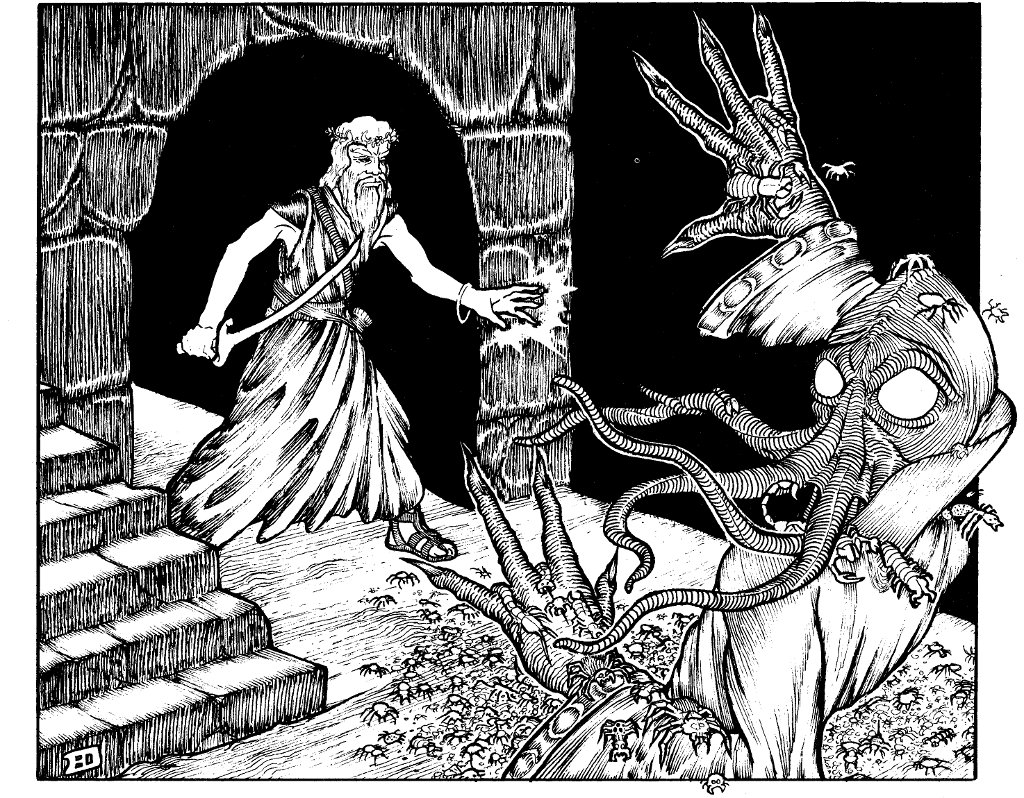
That villain stuck out for the campaign. One of the first clashes the group was at a church, the group inside surrounded by men on horseback. Unable to enter the hallowed ground they called for the PCs to throw out a holy artifact they wanted. My snake oil salesman player quipped something back. I then described some of the men parting and a gaunt fellow riding slowly forward. Despite its emaciated frame covered with a tattered uniform and cavalry officer hat adorning its head, it still had a grotesque paunch of a gut. The villain called out the PC by name, ‘Cyrus McClintock! That you in there? So you made it out of Fort Bean alive.‘ Trust me, jaws dropped at the table as players realized someone in the group had dealings with this creature before.

A small idea from a player back story cemented into a foundation of being a major villain for the game. It became a driving, relentless evil force, ever pursuing the PCs. Additionally it was taken from a player’s past and was a way of drawing that PC into the world, as they had a shared history with the villain. Instead of me having to fill in the story, that player could step up around the table at that moment describing how they knew the NPC, and its likely intent.

So I encourage looking over your players’ back stories and try to mine it for adventure ideas. People and events of note in their past can easily become the villains for a campaign. Asking details from players on a name, description, and mannerisms all can help give the NPCs a life of their own. Best of all the players become part of the world building process for the campaign and become greater invested in the setting. So don’t try and force yourself to think up everything, allow the players to help carry that creative load.

Using a deck of cards for Dread

bloody_playing_cardsDread is a horror rpg from Impossible Dream Publishing. It’s a game with bare bones rules designed for one shot sessions. At the centerpiece of Dread is a tower of wooden blocks (Jenga) where players attempt to pull blocks and place them back on top of the tower for task resolution. If they can complete this manual exercise, the task in the game is successful. Knock over the tower and your player suffers some horrible fate, being removed from the game (they die, go mad, slip into a coma, etc.).

I love the idea, however I can see it getting a little clunky later in the game. Block pulls can take more time near the end as the tower gets more unstable. While that added tension is part of the charm for Dread, it can add some dissonance as you are switching from narrative tension to one revolving around a physical task. Lastly once a tower does fall, you’ve got this break in the game where the tower has to be assembled for the remaining players, further deflating the tension at the table.

Also as pacing goes you can get those crazy flubs of a pull (or the accidental table bump) which send the tower crashing. Everyone can always shrug this off and keep going, but it means additional downtime as the tower is reassembled.

Playing cards can be used as an alternate to the tower with a joker randomly placed in the deck (check in the downloads section). I wanted to give the game some more structure though. Dread is based on a normal assumption that a tower would fall between 35 and 55 pulls. Placing the joker randomly in the last 20 cards of a deck ensures there are some safe draws for about half of the deck.

Tension is in the game though, as players will see their safe options dwindle. Each draw of the card continually makes the deck smaller and smaller. With that joker card ever moving to the top draw of the deck. However this is a still a little too structured though as players can figure out exactly how many draws are needed before something bad could happen.

One way to work around this is having some suits and cards force additional pulls. I opted to have some require another draw from the deck, yet other cards would allow for an option. For those, players may choose to fail instead of making another draw from the deck. Both of these speed up the number of cards being drawn, pushing that joker to the top of the deck faster.

Another tweak was allowing aces for certain suits to be set aside and saved. They could be used instead of pulling from the deck, or offered to other players. The one exception would be for the last 10 cards of the deck. At that point players would be required to draw from the deck as the story scales tipped to the point of being out of control.

What I whipped up here certainly has my mind racing for applications in other games. I’m digging the idea of suits and ranks of cards trumping others allowing players for some options with altering task outcomes. I particularly see this being a means to remove a GM from the game, or potentially move it into being a shared activity. I think that is a big stumbling block for some RPGs. While a GM allows for amazing games they also are an entry barrier, and RPGs that could be played without the need for one likely might expand the hobby more. Hope folks get some use out of this Dread option at their game table.

Fiddling with the new Shaken rules

ErolOtusDruidA big announcement came out for Savage Worlds that the shaken rules were now being tweaked. Old rules were that if a shaken test was passed, the next turn they could act normally. On a raise they could act normal immediately. The new version gets rid of that with players (and extras) being able to act normal immediately if they pass a shaken test. Raises no longer matter.

I totally dig the new rules. It streamlines the process and reduces the fiddly bookkeeping of that extra passing their test and no longer being shaken, but not really as they still can’t act as normal until the following turn. Conditions now are truly either up, down, or off the table. I like that.

However it does hinder some tactics a little. Typical extras are now sitting on a 50-50 chance they’ll be unaffected by any shaken status players throw on them. Needing a raise to act normally really pushed making that shaken status a more lasting condition. Now it could be treated as a condition which can be ignored given recovery is instantaneous on a success passing a simple Spirit test.

I’m tweaking this some. For all tests to recover from shaken a -1 modifier is applied to the Spirit roll. This is a little nudge to the probabilities to make shaken last a bit longer, especially for extras. They effectively recover on a 5+ now.

What I like about this house rule is that leadership edges like Command and Inspire can have a place at the table. The importance of a D6 Spirit over a D4 for wildcards is lessened some, but there is still a slight advantage having a higher Spirit. Additionally putting a shaken condition on something still allows for a lasting penalty that can be taken advantage of by opponents.

So I’m adding this small house rule to my game. A quick -1 penalty to the check that allows for rapid resolution of a shaken condition and embraces the philosophy of Savage Worlds keeping it fast, furious, and fun.

WW2 bamboo hut terrain

One thing I’ve discovered difficult for my Pacific Bolt Action games is finding some appropriate buildings. I simply cannot find anything in 20mm scale. There are some Quonset huts that I had gotten that will certainly be appropriate. However I wanted something a little more rustic

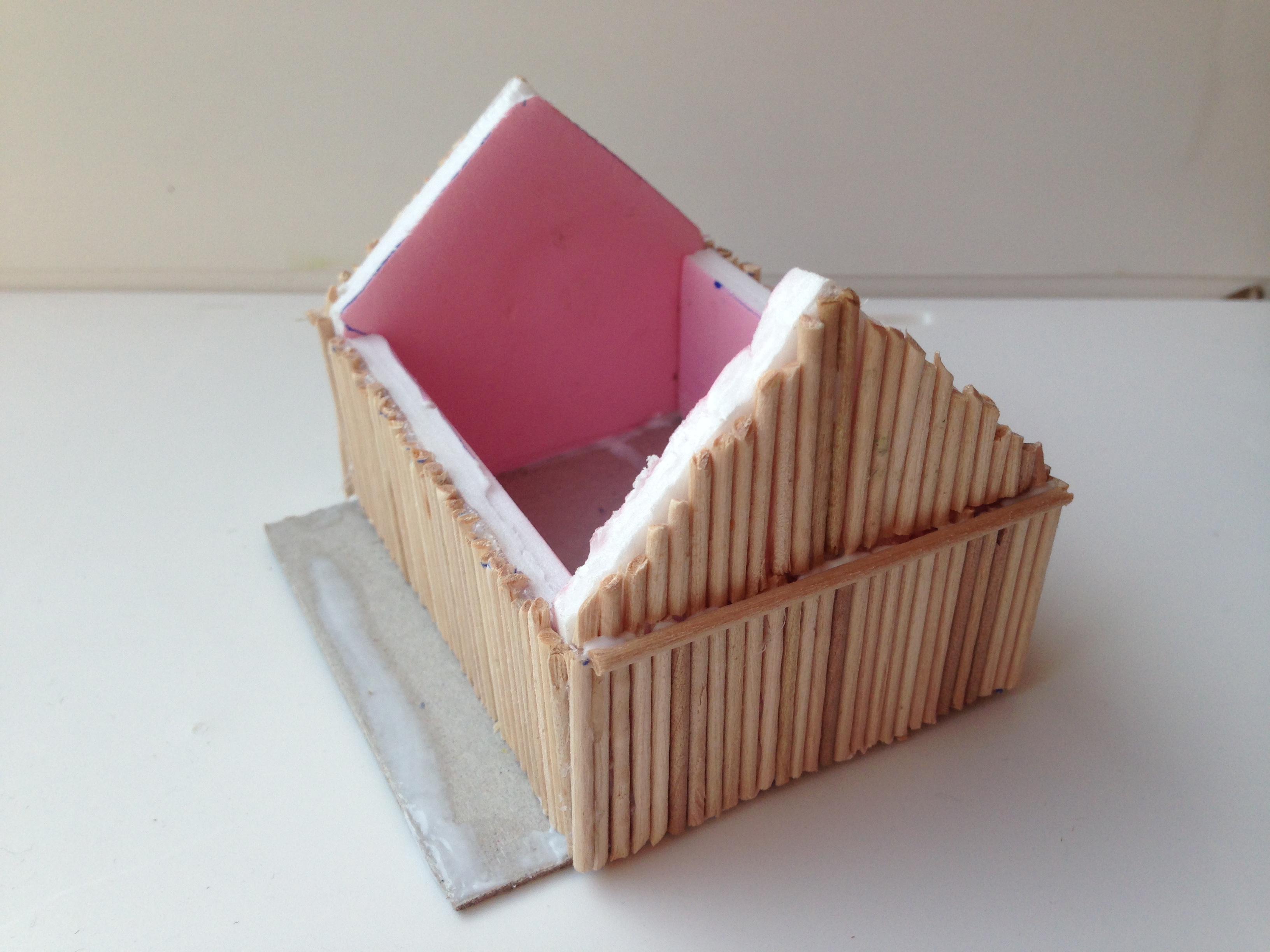
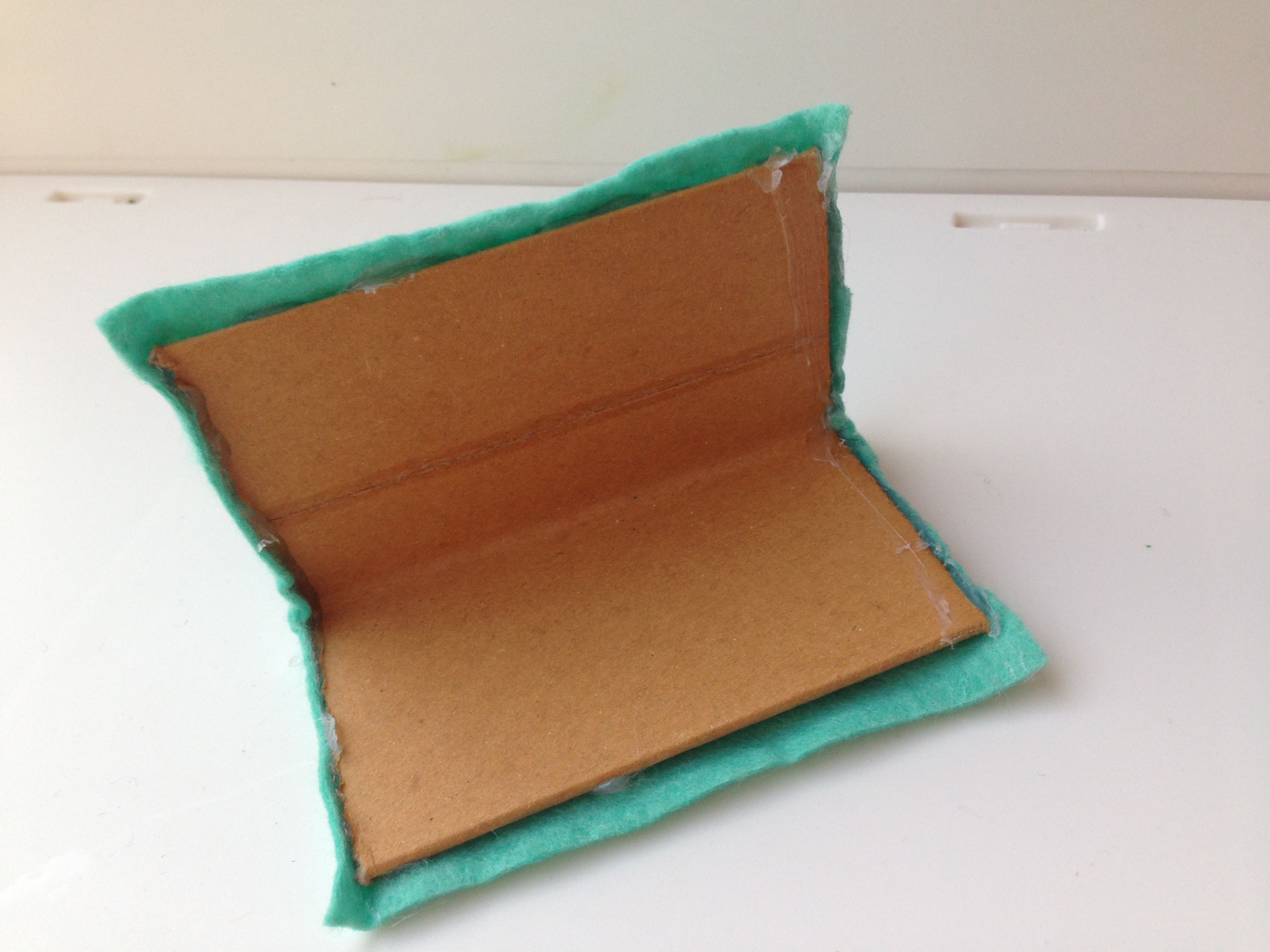
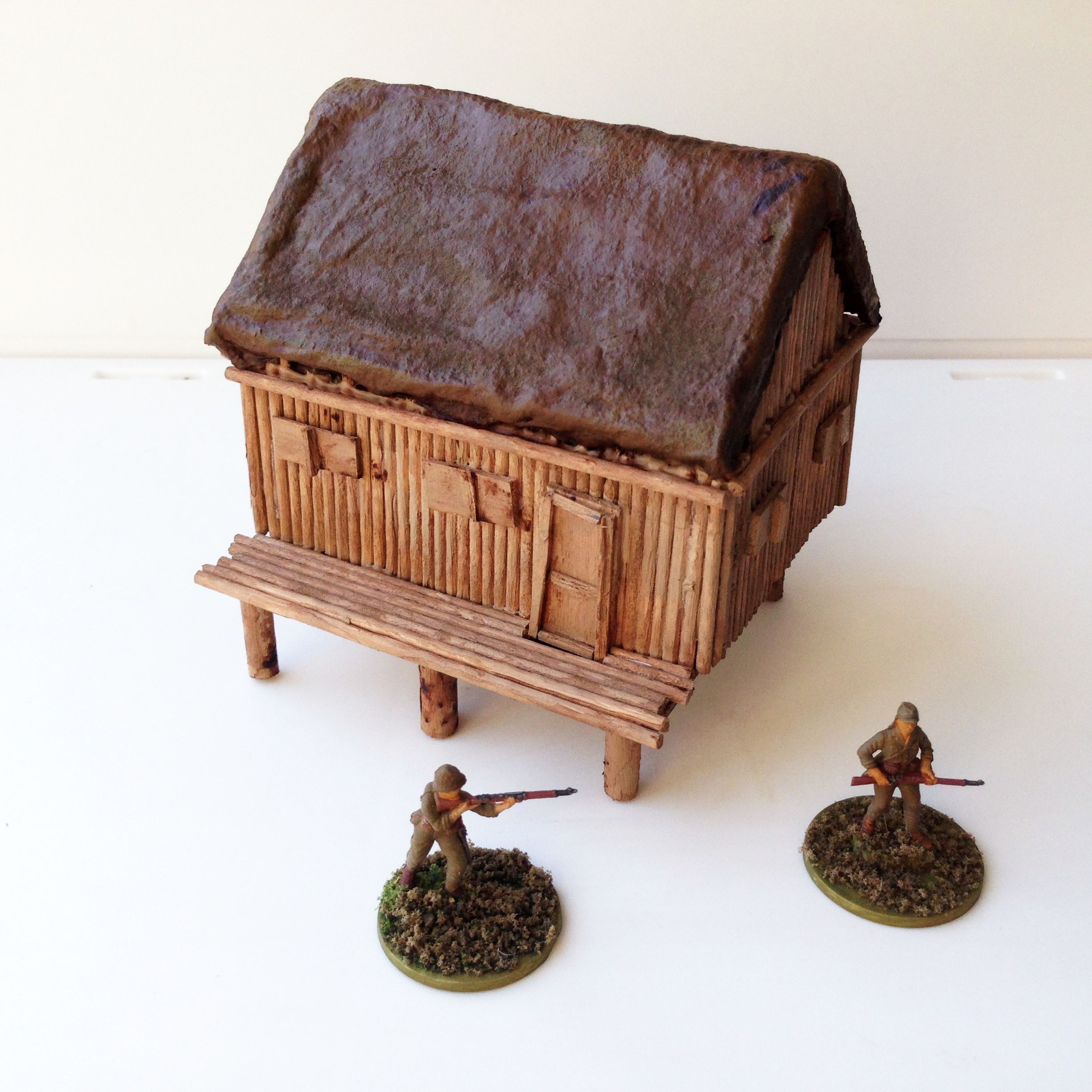
I opted to try my hand at building some structures myself. Using a frame of foam core board, I was able to get a simple structure assembled. I also lucked out and had gotten some thick cardboard at an angle which would work great as one piece roof sections.
IMG_1243
IMG_1245
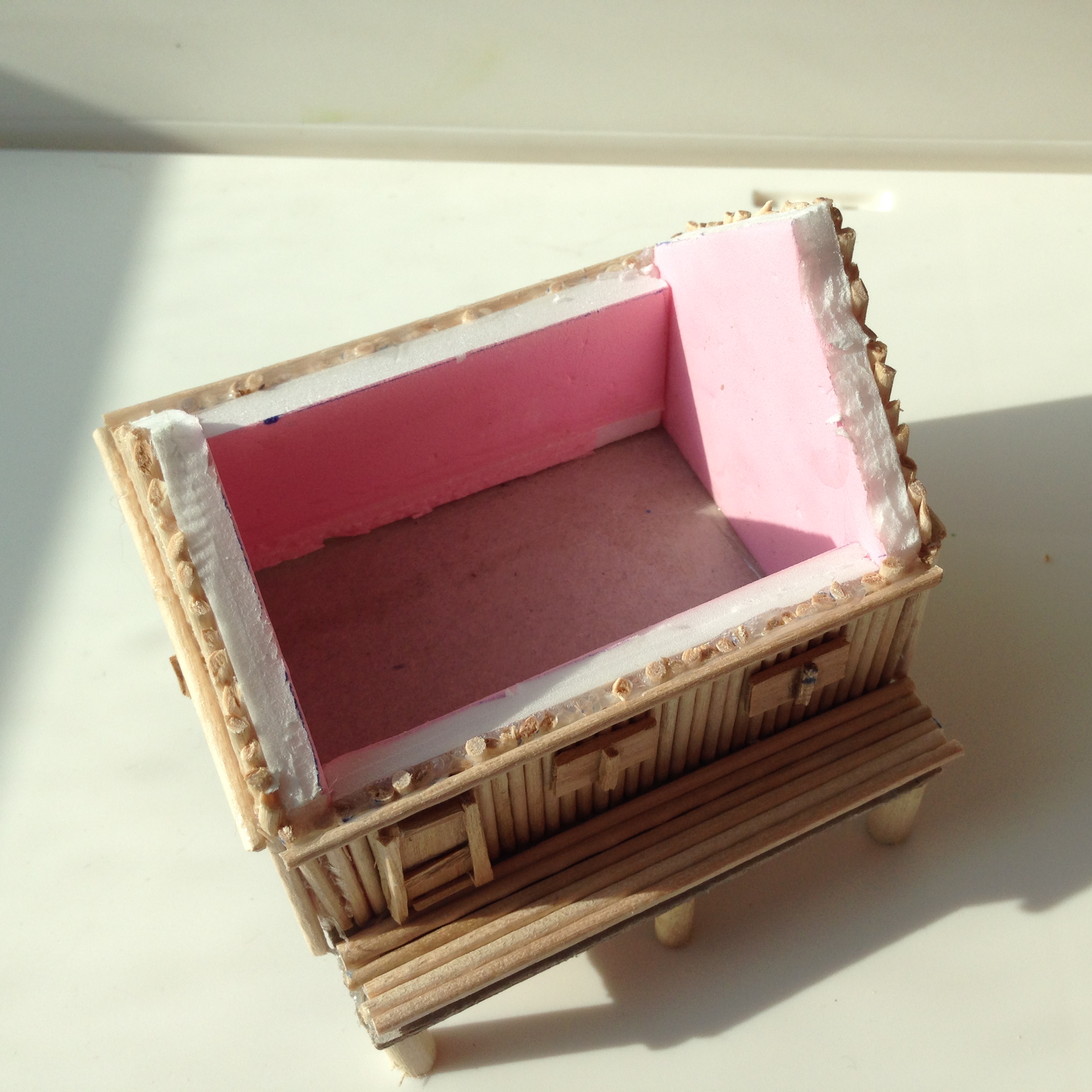
One thing that stands out with these type of buildings is that they’re usually on raised platforms. Hanging onto some sticks I picked up from hitting a street food vendor (gotta love late night munchies after drinking soju in Korea), I was able to cut sections to simulate logs that a hut would stand on.
IMG_1244This lead me to trying to figure out a way of making bamboo walls. I had gotten some wooden food skewers that were about the thickness of a toothpick. Cutting pieces of an appropriate length, I got a pile together to make up the outer walls of the hut.

The trick of course was gluing them to the foam board. I could do this gluing them individually using PVA glue, but I figured that would be tedious. Instead I lined them up side by side using a ruler to create an even edge at the base. Slathering hot glue onto the foamboard, I could then lay the base of the hut down even with the lower portion of the wooden skewers, and carefully press the entire wall section flat onto the wood pieces. They would then be firmly affixed to the foam core walls.

I did this for all four sections of the hut. To hide some of the uneven pieces, I framed the top of the walls with a single piece and was also done on the sides of the hut. This way, I could frame the entire hut with sections of wood with relatively the same length.

For the wall sections that were peaked however, I had to glue those one by one after cutting each section individually with a slight angle. This was a little time consuming but at least I only had two small sections to work on rather than the entire walls of the hut.

After completing the outer walls, I placed the hut onto a thick cardboard base. This base would be used to create the platform for the raised hut. One section was longer to simulate bamboo flooring for the front of the structure. Cutting out larger sections and gluing them individually, I was able to make the entry flooring easily. I then used PVA to adhere the wooden supports to the hut floor.
IMG_1249
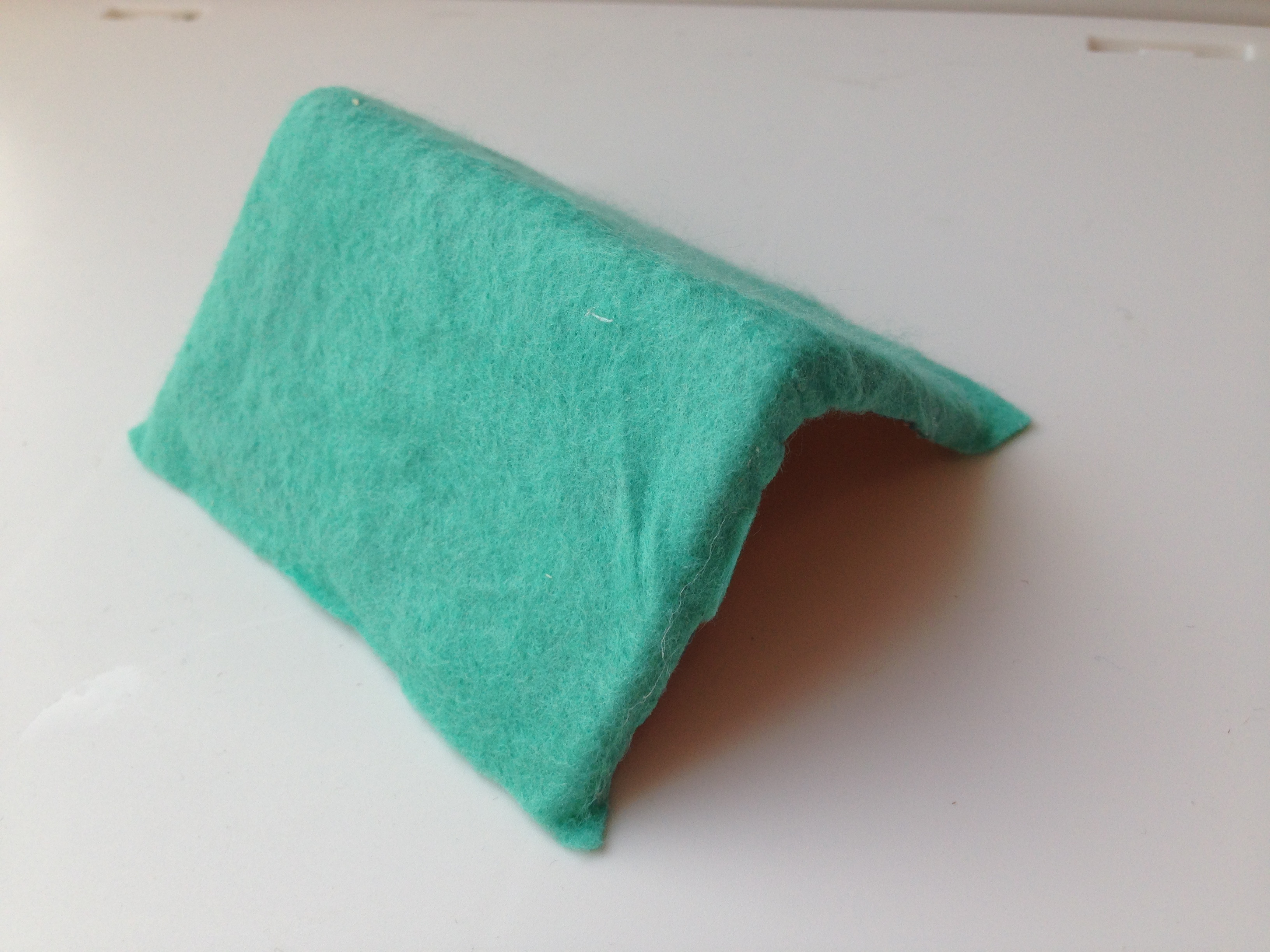
The roofs would need a little work. I decided to go for a grass look and glued a section of cleaning cloth onto the roof piece. Being cloth however, I would need to do something to seal up the surface, otherwise it would absorb all the paint. I gave the entire surface of the roof section a coat of watered down PVA glue. After drying, this created a coating all over the roof providing a simple barrier to prevent paint from being just soaked up.
IMG_1247
IMG_1248
I now needed to create some windows and entryways. If I had the gumption, I would have cut our sections in the foamboard. However this would also require me to cut and glue individual wooden pieces. Instead I cut sections of popsicle sticks with very thin sections to be used for the door frame and shutter supports. Gluing them onto the sides of the hut walls, they could provide openings for troops inside to shoot out of or mark the location of the building entrance.

IMG_1255

IMG_1254IMG_1253Some coats of paint and a basic wash, the hut was done. I opted to keep things simple with painting and gave the interior of the bamboo hut a simple black coat. I’m pretty happy with the results. The roofs fit okay and come off allowing me to place troops inside. The structure itself is pretty sturdy, however I think the real weak parts are the platform supports. Throwing the bamboo huts around in a plastic tub for storage and transportation seems like a great means to snap them off. I’ll have to be sure to keep them wrapped in some bubble wrap.
HutInteriorI’ll also admit the windows and doors a little lacking. It would likely be far better looking if I had cut them out. Instead I opted to go the less fiddly route but the huts turned out okay. While I would love to give a lot of attention to the buildings, I am happy just getting something together that would look decent on the table. I’d much rather spend extra time modelling and painting miniatures than dedicating a lot of time towards terrain. So while my bamboo huts won’t win any awards, they do offer fair looking structures that are flexible enough to allow troops to be put inside, and also handle your typical gaming wear and tear.
HutPainted

Review: Airlines Europe

I wanted to pick up a route economy game. Looking around, I saw one based on the expansion of airlines in Europe during the 30s and 40s and found the theme a bit different from your typical railroad expansion game. Airlines Europe is a 2-5 player game from Rio Grande Games. You are an investor seeking to help young airline companies blossom as they slowly expand their routes across Europe. Hopefully you’ll see your investment in certain companies come to fruition, picking up stocks and strengthening your portfolio in key airlines.

Players try to get as many points as possible. During the game, 3 scoring tiles are placed into a stock supply deck. When they will turn over is not known exactly. Instead players know about 1/3 and 2/3’s into the the stock deck a scoring opportunity will pop up, with the final scoring being randomly mixed in with the last 10 stock tiles of the deck.

As airlines are invested in, establishing new routes, they increase in value constantly moving up a victory point tracker. At set increments, they will be worth a certain amount of points. The player with the most stocks of a particular airline in their public portfolio earns the most points. If players have at least some stock in a company, they will earn some points, but it pays to own the majority of stock for a particular airline.

The game has a varying number of airlines which start in certain cities. Players have the option of taking one action during their turn. They can invest cash into expanding a route between cities for a certain airline. This in turn allows them to pick up a stock from a limited pile (or take one unseen draw from the deck). They can take accumulated stocks in their hand and place it into their portfolio as another action (which also allows you to get cash from the bank). In essence they publicly declare what airlines they are investing in. Instead, as an action they can get money from the bank (which they’ll turn around use for investing in airline routes). Or lastly, they can turn in stocks they possess to pick up stocks for a special airline that is rapidly expanding worldwide.

Picking routes becomes a tricky business. There is a limited number of routes between cities, planes of each airline, and their stocks too. Once you claim a route, you cannot get a similar airline on the same one. Additionally, you always buy the cheapest route. Once you establish a route, the value of that airline goes up in the point tracker. Picking up routes early allows you to expand an airline rather cheap. It also can force other airlines that want to expand, having to buy the same route at a more expensive price. So there is a chance you can cut off opponents (or limit their level of investment) by judicious establishment of routes.

Another key part of the games is setting up your portfolio. The stocks you have in hand are not used for scoring. You have to put those into play, showing all the other players what airlines are in your portfolio. This becomes a bit of a bluffing game. Building up an airline takes a lot of cash. Having other players help is ideal. However you want to be sure you have the majority of stock in a company. If players see they are a minority stockholder, they will get points for an airline, but not as much so they might decide to invest in other airlines. Or worse, they race for gaining more shares to snatch away the majority. This really becomes a large part of the game, deciding what airlines to invest in, what stocks to pick up, and when to publicly declare what airlines you are investing in.

This last bit is another huge part of the game. You only have 3 scoring opportunities. Further, only stocks that are in your public portfolio are used to determine scoring. Stocks hidden in your hand don’t count. As you have one one action for your turn, you have to decide when to ‘go public’ and when to keep that information hidden.

Maybe you want to string along an opponent and help them build an airline. Maybe you want to be sure no one else is getting stocks for an airline you are interested in. Once you add those stocks to your portfolio the word is out on your interests, but if you hold onto those stocks for too long, you might miss an opportunity to get victory points. It can be a challenging decision and is an immensely enjoyable part of the game.

The Good – This is a fun route building game. Although the routes and number of airlines are static, the initial stocks you hold and what are available in the stock market are random and limited. You really don’t know what airline to invest in until you see your hand. Additionally, there is a special airline where players gain their stock by exchanging ones they hold. This airline can be worth a lot of points at the end of the game. Making it a valid goal trying to gain a majority with this special airline. All of this makes for a variety of strategies, making each game a little different.

The components are very nice, with a colorful board, plenty of plastic airline markers, and thick tokens for the stocks and victory points. The rule book is well written with plenty of examples.

The Bad – The random stock assignment and market might put off some people. You are trying to make the best of what’s available and wanted key stocks might simply not come up when needed. So some players might be put off by the random distribution of the market. This is especially true for the scoring. You will not exactly know exactly when scoring will take place. Some might find this frustrating if they managed to miss out on a scoring opportunity, and it can be very difficult to make up for a missed scoring turn.

While the components are pretty nice, the game does have paper money. That isn’t a huge ding, but having tokens or other markers might have been better. Paper money always seems to get a lot more wear and tear through multiple plays.

The Verdict – Airlines Europe is an enjoyable game. It plays just the right amount of time (clocking in just a bit over an hour) and keeps everyone engaged throughout the game. The random stock assignment means you have to be flexible with your initial strategies. The hidden accumulation of stocks, along with the public declaration of your stock portfolio (and what companies you have a majority in), makes for a great bluffing game. Shrewd planning and investment of routes, coupled with grabbing up cheap routes and stocks to curtail an opponent’s expansion evokes that feeling you are an investor slowly helping expand airline service across Europe.

This really is a fun route economy game which veers away from your typical railroad theme. It also works very well as a family game too. There is a small twist to a 2 player game where discarded stocks are thrown into a dummy hand. This can shake up the shareholder leaders for certain airlines that adds some unknown factors to victory conditions for 2 players. All in all, it scales well with many players. I highly recommend Airlines Europe.

Armourfast Hanomag

So I’ve been slowly accumulating different units for my German platoon. I’ve been wanting to dabble a bit in transports. With the new Tank War book out in the wild, I also wanted to think about fielding an armored platoon with mechanized infantry units. So having a few German halftracks would be ideal.

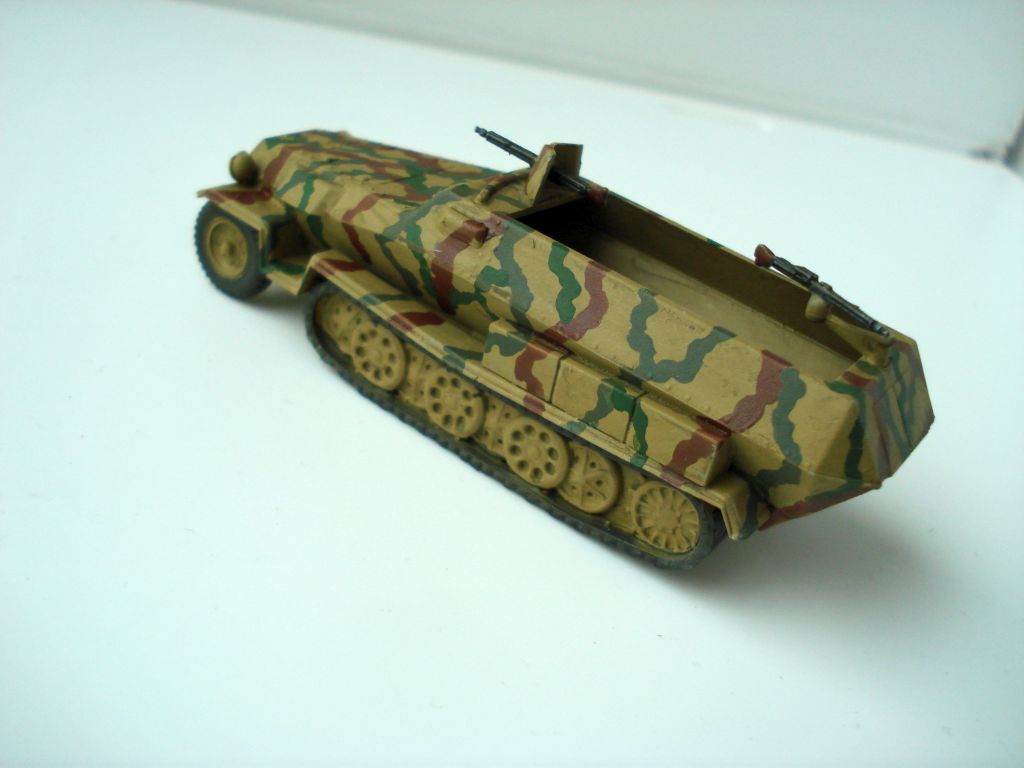
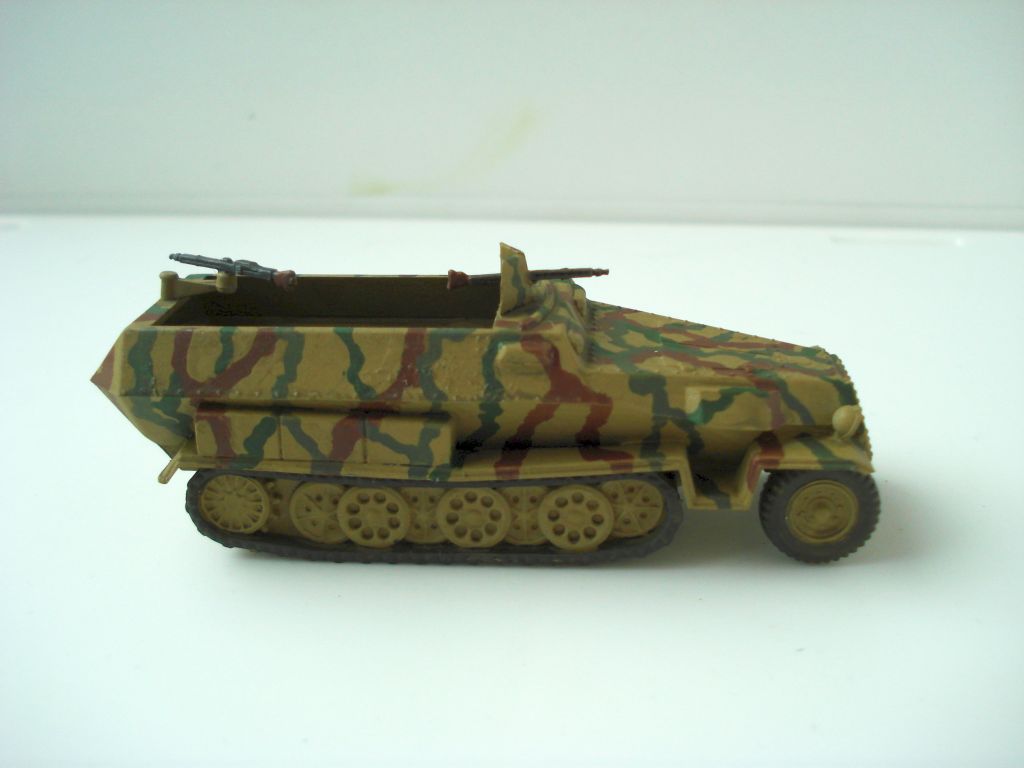
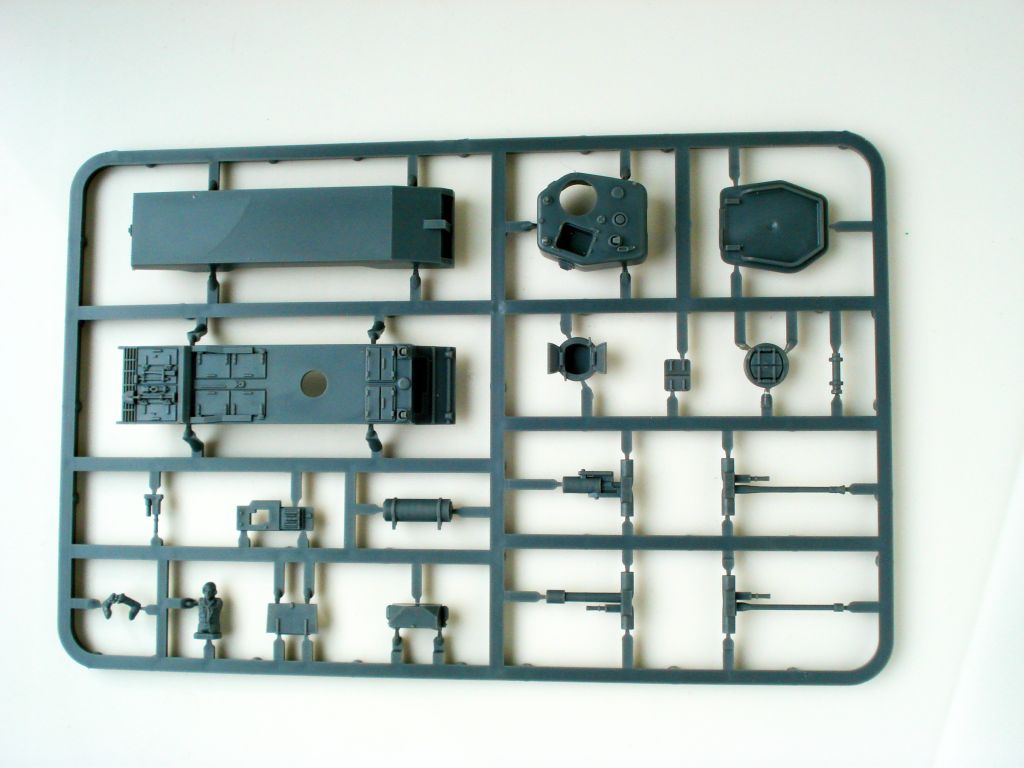
For a while now I’ve been a fan of Armourfast. As with many of the other models I picked up from them, they offer a wargamer-grade replica. This is not a super accurate kit, but a model that has decent detail that looks good enough on the table.Sdkfz251-A

The kit does not offer any crew, with a simple troop compartment. The half tracks include a rear pintle mounted MG42 in addition to a forward mounted MMG. The treads like other Armourfast models are fitted as one piece. The outer side looks good, but the inside tracks are open with struts to support the tread section. When assembled it’s really hard to see the inside tread but if you look really closely at a low angle you can see it. As typical models from the company, they are great for tabletop gaming, but nothing you want to put in a diorama.Sdkfz251-B

The half tracks are a snap to put together and don’t have any gaps. If anything, the port visor guards are a little tricky to mount. There are mounting bumps on the hull of the model, but they really aren’t pronounced so it’s easy to have the ports slip a little when cementing them into place.

I gush a lot over Armourfast. However, for 20mm models you really can’t beat them. They are nice kits for very reasonable prices and given they are transport options for a Bolt Action force, perfect at two half tracks per box.

Sdkfz251-D


Review: No Stars in Sight

From Nordic Weasel Games, No Stars in Sight is a new sci-fi ruleset that expands on the conventional wargame from the same designer, No End in Sight. The game is designed for small unit action of a reinforced platoon with a vehicle or two at most. The scale is for 6-15mm individual models, but larger scales or infantry stands could also be utilized. One thing that stands out is the game is meant to have a very small footprint on the table, with 2 to 3 feet being enough space to duke it out.

The game is more geared towards near-future engagements. Some trappings are offered for more futuristic technology and aliens. However there is a foundation that troopers in the future will be armed with advanced weaponry that utilize some type of projectile. All the while the universe tends to be geared towards a generic setting of future conflicts that somewhat mimic what we have in the world today.

Player’s troops are organized into units or independent fire teams with assigned leaders. Coherency with the units are pretty tight, with each trooper required to be within 6 to 8 inches of their leader. This works out though as squads are designed to be 4-5 troops at most. Players activate a unit and alternate with their opponent until all unit leaders are exhausted. Victory conditions are assessed, stress removed from leaders, and the turn sequence is repeated until one side has a clear advantage (or victory).

Units activate based on rolling a d6 and retaining that many activation points for their squad. Individual troops firing, recovering from pins, movement, and other miscellaneous actions require an activation point. There are options for group fire and movement, allowing 2-3 models a chance to activate on one point. Models but can only move and fire once when they are activated. At the conclusion of the unit’s activation the leader gains a stress marker.

Movement is a simple affair keeping everything at a constant 3 inches provided they are in cover. If players move a unit out of cover into LOS of an enemy however, this becomes a random roll of d6 inches. If caught out in the open, their opponent has an opportunity to fire at them hitting a trooper on a 6 (with the poor grunt being pinned on any other result). So those dashes across open terrain become a very tricky proposition, and even more so as there are no cutoff for weapon ranges. Anything that can be seen on the table is fair game.

Directed fire is split into two types as shock or kill dice. All basic weaponry throw out shock dice. For every 2 shock dice thrown, 1 kill die is generated. Shock dice can pin a model on a 5 or 6, while kill dice hit a model on a 6. Hits are rolled again resulting in killing the model outright on a 6, or wounding them. Either way, hits with kill dice typically mean the target is out of the fight being wounded which can be rather deadly.

Close assaults are even deadlier. When units approach within 6” of each other shock dice are dropped and kill dice are rolled instead, having hits generated on a 5 or 6. Actual hand-to-hand fighting results in just rolling of a d6 between players, with the attacking player killing the enemy if they roll equal to or higher than the defender (and being killed in turn if they do not).

With all of these pins being thrown around and casualties, they all contribute to degradation of morale. If players cannot roll over this amount on a d6, they immediately fall back a random distance. Casualties also incur stress on the leader. For each excessive casualty, one point of stress is added to the leader. At the end of the turn when all units are exhausted, each leader can discard 3 points of stress. All excess stress becomes permanent, making it more difficult to activate on future turns.

What you end up with is this slow degradation of a unit’s ability to function. Pinned models cannot take any actions until an activation point is used to remove the pin. Casualties and activating a unit slowly accumulate leader stress. After a few turns, they begin to whittle down the ability of a leader to do anything but have their squad hunker down and remain in cover.

Different types of troops with varying equipment is offered, from elite troops in power armor to irregular, lightly armed forces. Vehicles are also presented with a variety of armaments although most are land-based as tracked or walker equivalents (with no real rules for flying units). There are several optional rules to mimic near-future battles, including rules for improved communication and command (along with hacking these aspects) and there are also rules for drones and simple automaton combatants.

There are a variety of scenario ideas and a simple campaign system to allow for a more role playing type of experience, following a single trooper or unit through a series of battles. Some more military-centric rules for off board ordinance, smoke, combat drops, and the like are also presented. There are several generic alien species offered with small tweaks to combat abilities along with suggested scenarios to play them as.

Finally suggestions on a point system for force construction is presented. While the numbers do not not necessarily ensure a balanced game, they can provide some guidance for a fair engagement if trying to figure out how best to match up power armored troops against regular militia. This is a nice feature of the game.

Don’t let a point system detract you however. This is very much a wargame ruleset based on players agreeing to have a fun game and tinker around with asymmetrical forces. There are a lot of optional equipment and rules to utilize. The game does require going through some set hoops for playing them however. You have to use a board with a certain amount of terrain density, or at least be willing to break up long alleys of open ground. You really can’t field larger forces more than a few squads of 4 or 5 troopers each.

The Good – Pinning and suppression are key. I really enjoy the whittling down of actions a unit can complete due to taking enemy fire, and it’s not dependent on killing troops (but it doesn’t hurt either). I also appreciate how task resolution uses a relatively streamlined system for determining outcomes.

There is a fair bit of optional rules and varying techs and equipment to give games a little variety. There are a few scenario tables offering a pretty diverse list of possible combat encounters as well as a more narrative campaign. As there are aliens and planetary environments, the game is not exhaustive in detailed rules but certainly provides a nice platter of choice sci-fi elements to try out.

I have the PDF version so I can’t speak on the quality of the printed book. You get a very spartan layout with a decent number of charts including a few summary sheets at the end of the book. It’s serviceable and plainly explains the rules.

The Bad – The game has some rough edges, especially with excessive bookkeeping. Troops typically are wounded which need to be indicated somehow. Effectively they are out of the battle however a unit needs to spend actions stabilizing them and getting them to an extraction point. While untreated wounded troops have an effect on morale, treated/stabilized figures don’t. Add to this individual units getting pins and you have a clutter of markers and tokens hovering around every unit. While a small engagement with 2 units and 8 figures total would not be much of an issue, adding more models into the mix seems to glut the game down some.

Another rule regards stressed leaders passing off leadership to another model in their unit. Effectively this can get rid of any permanent stress (as it stays with the original trooper and is not transferred to the new leader). While the vibe of the rulebook certainly rings of folks playing in an agreeable manner, this is something that could certainly be abused.

Overall I found the rules pretty well laid out. However a few topics seem to jump around some. It feels like a few sections could have been tightened up and reorganized in a better fashion. There are some critical rules that seem to get buried in other key topics. The rulebook is far from being difficult to go through, but it’s also far from being perfect.

The Verdict – I see No Stars in Sight as sort of a mixed bag. I really don’t like the wounding of troops and seems heavy on keeping track of fiddly conditions in the likes of pins, stress, and unstabilized wounded troopers. But the game has many more hits than misses. The random activation of units, the desperate dash of units out of cover, the accumulation of control stress on a unit, all are highlights to the game.

I also appreciate the abstract systems employed by the rules. Movement, cover, and weapon types are not mired down in detailed minutia. However there is certainly enough optional rules and suggestions to make the game have some unique flavor from unit to unit. It’s a decent set of rules that give a challenging feel of command for small, tense, engagements with a futuristic feel. Still, there are some rough edges to the game. I think No Stars in Sight is a fair set of rules and not a bad choice if looking for sci-fi skirmish action, just not quite the home run I was hoping for.

Waygeek, a Korea-centric gaming blog is breathing again.

1280px-Dice_typical_role_playing_game_dice-270x270A long while back Waygeek was a new blog set about trying to cover the gaming scene in Korea. It’s name was a playful take on the Korean word for foreigner (waegukin) and geekery. It petered out as a lot of blogs do. The original site shut down and it pretty much faded away.

That’s changed though and it appears a lot of the old content has migrated into a brand new site. Seems a group of folks have now committed to making it the gaming and geek central site for Korea. Dabbling in RPGs, board games, cosplay, shows, and other bits of geek culture, looks like they cover a lot of topics. If you are an expat looking for fellow gamers, shops, and getting the gaming pulse on this peninsula, you’d be remiss not to check them out regularly.

Bolt Action house rules

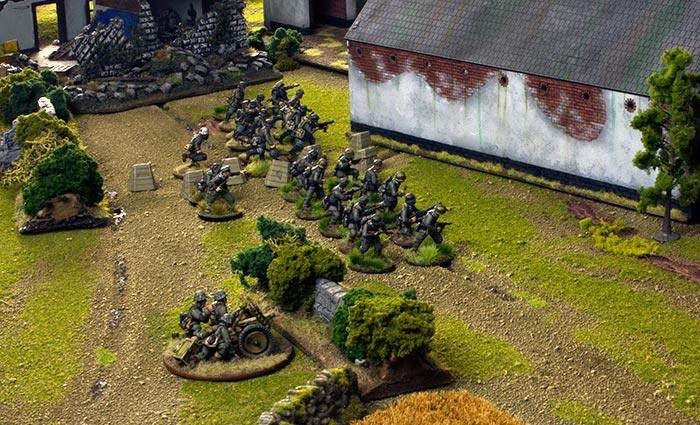
BoltActionDemoImageSome time back I lamented about LMGs in Bolt Action. They aren’t the only rough spot with the rules for me. While I understand the philosophy of some game elements being the way they are, it does at times seem to run roughshod with historical accuracy. Another big stickler with me was transports not being able to fire mounted weapons without passengers. I get why it was done this way (to prevent a bunch of mobile LMG platforms running around), but this sort of flies in the face of some nation’s tactics using armored troop carriers.

Other folks have taken up the mantle for using standard house rules. I think it’s a good idea. For house rules, I always liked having a document prepared to pass around before the game. It’s nice to be able to trumpet loud and clear rule changes you are playing with. So here are my limited list of house rules that can be found in the downloads section.

LMG point cost – I’ve talked about it before. LMGs are broken with their point costs. They cost far more than what they are worth on the tabletop. I’ve opted to drop the requirement of having a loader. It’s likely still overpriced, but at least they are no longer throwing out less attack dice than an equivalent point squad armed with rifles only.

Open-topped armored transports and pinning – I was waiting for the Tank War book to address issues with open-topped vehicles. It never did. Open-topped vehicles are simply too fragile to work as troop transports. By adopting the Tank War pinning rules, it’s a gamble for the attacker to throw a pin on transports now. It encourages folks to pick up veteran troop transports and start utilizing APCs more.

Transports firing weapons without passengers – Another stickler with me was requiring passengers to fire transport weapons. My solution likely adds to the ‘problem’ of roaming LMG teams. However I like the idea that transports can throw their firepower into the mix without needing passengers, but it’s limited to fire orders only.

Fixed weapons rotating – I find it interesting that Beyond the Gates of Antares, a sci-fi sister to Bolt Action, has this rule in place. Not being able to rotate fixed weapons at all seriously hindered MMG and AT guns. Being able to do so now allows them some more flexible use on the table.

Priority air strikes – It’s always a crap shoot with air support. Not only can it bounce and hit your units, but you might flub your support roll getting a strafing attack instead if targeting a tank. It’s a little too random. While there are optional air rules out there, I thought about instead allowing the air observer a greater chance of calling in heavy air support. It still is risky, but can be mitigated with taking a veteran observer (again offering an advantage if doing so).

MMG/HMG teams and pins – MMG teams to me seem fragile and despite the volume of fire they can throw onto a unit, they can only inflict one pin. Being able to rotate helps however I decided to add a new weapon tag, suppression. MMGs when targeting infantry units now have a 1 in 3 chance of dropping 2 pins on a target unit instead of 1. It’s just a little boost to indicate these weapons are effective at forcing infantry to keep their head down.

Deviating smoke rounds – I am not keen with the indirect smoke round rules. It’s too much in the hands of your opponent. I’m more favorable with random deviation on the round lands instead. The distance is also random, and can also drop closer to the target area which might actually make it work too well. But I dig the idea of using smoke more and the rules in the book discourage it.BoltActionDemoImage2

So these are my changes. I haven’t dabbled much in vehicle flamethrowers. I understand they certainly could use tweaking based on the grumbling on various forums. That might be something else to add to the list at a later date. Hope folks get some use out of these rules (or at least inspire you all to whip up some of your own).

Plastic Soldier Co. Churchill

For my Bolt Action British platoon I had originally picked up a Cromwell. I figured it could be a recon element for my reinforced platoon. But for a more standard force, fielding a tank commonly used to support infantry was something I wanted. So I picked up a Plastic Soldier Co. Churchill tank kit.Churchill-B

The 1/72 scale models are well done. They really are a snap to assemble and fit together nicely. The treads and wheel sections fit as a single piece. The rear side of the tread section lacks detail, but it’s really difficult to notice once assembled.

The hull is well detailed. There are some nice extra bits like jerry cans for the rear tread fenders and spare tread sections. The hatch can be modeled with the doors being either open or closed, and include a tank commander figure.Churchill-E

There are a variety of barrels provided for Mk III, Mk IV, and Mk V tanks, as well as an AVRE variant. There is a lot of flexibility with the kit. The set comes with 2 tanks and as you have another turret available, you can really get some mileage out of the models.Churchill-A

I liked the bren carriers I picked up and feel Plastic Soldier Co. has another winner with their Churchill tank. It is a good buy for a 20mm platoon. Not only do they look nice assembled, but they have a lot of options for barrel types meaning you can really stretch the use of the kits out for different tank types. Quite worth the buy for 1/72 wargaming.Churchill-C

Churchill-D