Review: Battlegroup ruleset

Plastic Soldier Co. and Iron Fist Publishing have teamed up to produce the Battlegroup series of books. From my understanding Battlegroup Kursk was the first set of rules released combined with supplementary material to describe that engagement in WW2. From there, a small ‘mini’ book was released with just the base rules. There are several other books released that detail different campaigns with various theater selector lists for forces and scenarios, but these only have special rules related to those campaigns. You need the small rulebook in order to play.

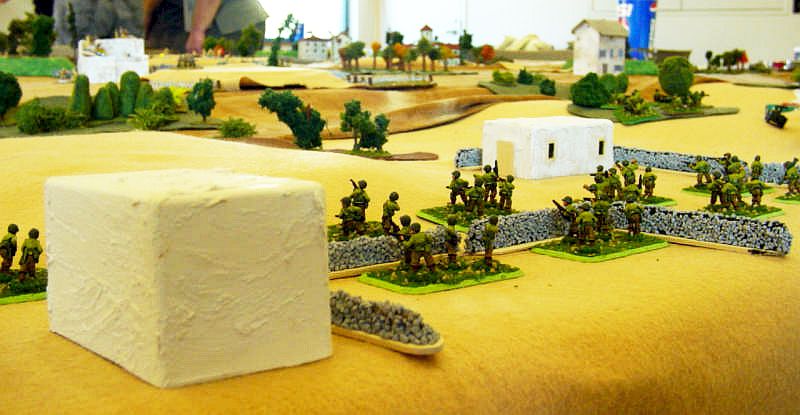
The scale for Battlegroup is set at 15mm to 20mm. Additionally it is a 1 man = 1 model system. There is no basing of units into fire teams. However as the game plays, actual basing isn’t really an issue. There are many examples of folks playing the game with multiple troops on single bases (like Flames of War). However, having a handful of single troops on lone bases is ideal to indicate casualties for a squad.BG Kursk Cover

The rules themselves detail a pretty ambitious task of outlining a system that can be played at a variety of engagement sizes, from a squad up to an entire battalion. The squad level game is a bit of a misnomer as they expect you to take at least a platoon of troops, but it does give you varying levels of forces to play which can range from a few squads for an afternoon of fun, up to a full day of gaming at the battalion level. It’s a point system game, where you decide a point total and purchase units up to this limit. I picked up Battlegroup mainly for company level games.

The game utilizes a IGOUGO system of sorts. A player will roll a set number of dice to indicate the total units they can activate for that turn. For a platoon level this would be 2d6, while at the company level would be 3d6. I groaned a bit at this first but digging into the rules a bit more, I started to like it.

You roll to activate units, which really breaks down into teams. An entire platoon is really 4 individual units (a command team, plus three 8 man squads), and in addition you might have a few LMG teams that are also units. So that 3 platoon company suddenly mushrooms into 12-18 units, making that 3d6 activation roll a little more unpredictable. Add in additional MG teams, AT assets, field guns, artillery spotters, a few tanks, mortars, etc. You suddenly have a lot of things that may not be able to activate on your turn.

Each activated unit can be given one specific order; firing, maneuvering, a combination of the two, or just waiting in ambush to react to your opponent. Reaction orders also are a nice element, giving a chance to interrupt an opponent’s turn. This really allows for a fluid back and forth type of game making the turn progression more tense and engaging.

Movement is a flat rate for vehicles and infantry. Difficult ground will reduce movement to a d6 inch roll depending on the type of vehicle or terrain. Overall movement is a simple, easy system to execute.

There are maximum effective ranges for weapons, with small arms topping out at 30″. However this is tweaked some as there are two modes of fire. Area fire is a simpler affair where total firepower is determined and a single die is rolled to see an effect. If successful, they pin a unit.

The alternate is aimed fire which has a maximum range and individual die rolls for troop weapons, designated to inflicting casualties. Successful rolls to hit forces the target unit to roll for saves (6+ if in open ground, and much better if in cover). Failed saves result in casualties and morale tests, likely resulting in a unit either being pinned or forced to retreat. Combined with aimed fire is the need for spotting a target unit. Again a simple d6 roll test altered by different modifiers. If they can’t spot the unit, they can’t conduct aimed fire (area fire does not require a spotting check).

Vehicle fire mimics small arms fire some, however there is more gradation in target numbers to hit based on the type of gun and target armor. Also unlike infantry units, vehicles must keep track of the number of rounds fired. Close combat is more of an extension of aimed fire. When units come to within 5″ of each other, an intense firefight breaks out with both sides making attack rolls.

Morale is a pretty simple affair. If a unit is pinned they cannot be given an order until it is removed (more on that later). If a unit suffers a casualty, or is damaged, while pinned they roll on a d6 chart. On a 2 or less most units will break outright if they are pinned. The game is exceedingly dangerous to units in the open. Get them pinned and follow up with effective fire, you likely will have them break and run.

This leads into an interesting tweak to the the game, the Battle Rating (BR). Every platoon, tank, command team, etc. in your army has a value and the entire sum represents the overall morale and will of your force to fight. For each unit that is destroyed, you draw a random counter. These are also taken for other aspects of the game, such as your opponent having more scouts or when your opponent takes an objective. Effectively the only way to unpin units requires you also to draw a counter (unpinning d6 units while doing so).

The counters themselves are an uneven distribution of numbers ranging from 1 to 5 (with most being 2-4). As you draw counters you put these aside and secretly sum up the total. If the total of drawn counters ever exceeds your force’s Battle Rating, your entire group collapses and withdraws from the battle. This makes for some nail-biting decisions. Pinned units can do nothing and are exceedingly vulnerable to additional fire. If they break, you draw a BR counter. If you decide to rally some units, you draw a BR counter. So there is this fine line of deciding when to try and unpin units (or instead just let them keep hitting the dirt), as you never know how much pressure your force can take before they break.

There are rules for calling in off board artillery and air support. A series of rolls are made to simulate communication and firing priority. As off board artillery goes, there is a fair amount of randomness where rounds actually land, certainly allowing for the potential of friendly fire. Anti-air assets on the table also have a role which is a pleasant change from other systems.

The book comes with a handful of scenarios depicting typical engagements you might see, from patrols to withdrawing actions. Most scenarios also dictate the use of objectives. Given that holding objectives forces your opponent to draw BR counters, these alternate goals add some variety to the scenarios and provides for some differing victory conditions.

As mentioned earlier this is a point system game. You select units up to an agreed total. The actual force lists are rather structured however, with limited choices based on the core units you pick up. The game is very infantry-centric but armor heavy battlegroups can also be drafted up.

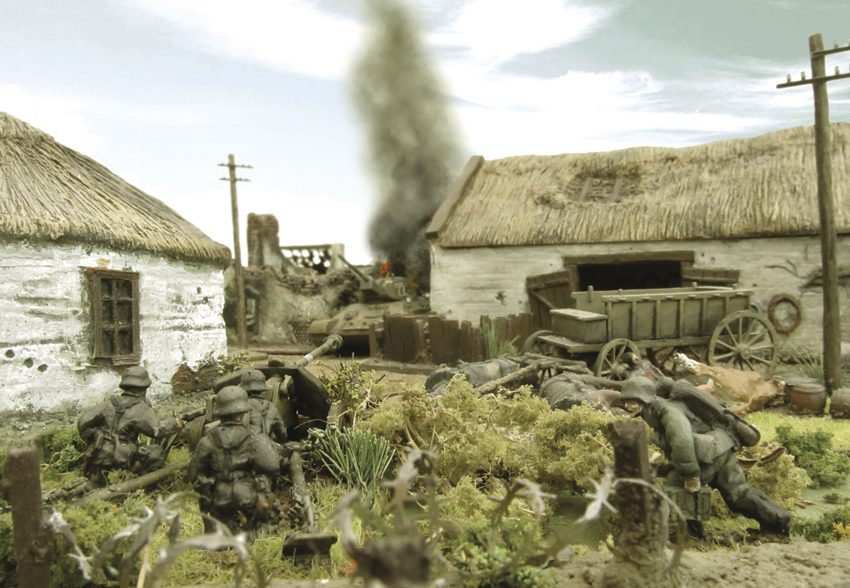
There are no force lists within the rules however. These are all provided separately in different campaign books which have battlegroup lists, special unit rules, unit profiles, etc. and are very much themed towards specific combat theaters. In this aspect, historical gamers will probably enjoy this as gradation in forces can be achieved to represent different parts of the war. With a universal force list for different nations, this would be harder to model. However, you are not getting a complete game just picking up the ruleset book. You also need to invest in a campaign book to play the game.PaK40_BGKursk
The Good – There is a lot here to like. Yes, it’s an IGOUGO system. However with the random die activation and a plethora of individual units representing a platoon, you aren’t going to be able to count on activating every model on the table during your turn. Further, the reaction orders also provide a means to make responses to your opponent’s actions making the game even more dynamic.

Pinning units matter and is an effective means to shut down your opponent. The splitting of fire modes into either suppression or trying to inflict casualties is also a nice touch via the area and aimed fire orders. Among this is the Battle Rating system. Pinned troops are effectively out of the fight. To reactivate them requires drawing a BR counter. If you let them sit pinned and they get hit by further fire, they will likely break forcing you to draw a BR counter as they are destroyed. Do you let them remained pinned and wait a few turns before opting to unpin d6 units? Or do you force your hand early and just unpin that one unit? It’s a challenging decision with slow degradation of your force’s morale, along with the unpredictability when it has had too much and will retreat, all of which makes for a fun game.

The rulebook itself is written fairly clearly and offers plenty of examples. There is a good amount of artwork and photographs to entice the reader. It’s a rather handy size and well bound. The addition of a solid quick reference sheet at the back of the book is an especially nice touch.

The Bad – The game does have its share of bookkeeping. Ammunition use for tanks is the most notable. For a tank or two this isn’t much of an issue, but running with a platoon of armor, it could bog down. I dig the concept as a means to balance out heavy hitting guns compared to the armor workhorses and also a way to mimic logistical problems, but it’s clunky. I wonder if using a d6 roll to determine if a unit was out of ammo would be better.

Another thing that crops up are past orders for opposing units. Spotting a target can also depend on whether it fired the previous turn. Get a big enough game going and it can get a little murky keeping track whether individual units fired on the previous turn or not, so you likely will need to use markers indicating given fire orders.

Some of the task resolutions require a lot of procedural die rolls. Artillery is especially damning as you need to make a fire mission request, a communications skill test, then determine how close the spotting round hits, the number of guns that are part of the strike, etc.. While all the die rolling allows for more predictable results due to probability, it can be a chore to go through.

The rules express a differing view of design also. Some parts are well detailed (like vehicle aimed fire and artillery) while other aspects of the rules are glossed over with abstract task resolution. There aren’t hard definitions of cover. Close combat is very streamlined under a general assault that takes place within 5″ of an enemy. There are some points in the rules suggesting resolution by player agreement as opposed to hard, defined rules. It just seems a bit of an odd match in how the rules are presented where some elements are highly detailed, while others are not.

The book would really be aided having an index. Some important rules are shuffled off into sidebars. It’s not incredibly difficult to find what you need, but tracking down a key rule can sometimes be a little bit of a chore. The book itself is a scaled down version of the larger campaign books. I appreciate the lower price of the rules, however the print is exceedingly small. This isn’t a comfortable font to read at all and it’s a shame a larger one wasn’t used.

The Verdict – Battlegroup is a solid WW2 miniature wargame. There are some rough spots and with larger games, bookkeeping can get to be somewhat clunky. Additionally, this isn’t the most innovate set of rules and you’ll likely be finding yourself treading over familiar game elements found in a myriad of other WW2 rules.

However it gets a lot of things right. One thing that stands out with me is the sheer unpredictability of unit activation and force morale. You can count on your plan of battle up to a point and then… well… things get interesting. It’s another game that emphasizes suppression and pinning of units. This has an important role in the game and you’ll find ordering units to cross open terrain will get either pinned to hell, ripped to shreds, or dispersing in a retreat. The utilization of cover and judicious use of ambush orders are needed.

Yes, it is a point based game. However taking a peek at some of the campaign books, it doesn’t feel like a tournament army list-of-the-month game. Battlegroup really seems to have it’s feet firmly in the historical camp. I’m certain that it’ll get some complaints on not having proper campaign TOEs, but there are far more hits than misses with the force lists.

I don’t think Battlegroup will quite replace my WW2 infantry skirmish game of choice. I need to get a few more games in, however I still feel that Bolt Action and Chain of Command both scratch that itch for me. However I wanted a ruleset I could use for 15mm and was looking for something different to Flames of War. Battlegroup does this quite well, and I totally expect it’ll be my go to rules for WW2 company action in the future. If folks are interested, an excellent overview of the rules as an intro report can be found in a list of PDF download links.
15mm sci-fi habitat structure

A short post today. As I’ve been dabbling in 15mm sci-fi models, I certainly needed to get some terrain built too. I’ve done plenty of fantasy and WWII stuff and it’s never been a real challenge to whip up something serviceable on the table. However for fair looking sci-fi terrain I’ve been a little at a loss.

Some of the model kits floating around are gorgeous, but not quite that cheap. Granted as 40K prices go much of it is a steal, but one thing I liked about running 15mm games was the low cost for picking up figures. I’d rather spend the money on another platoon of minis than just a cool looking building.

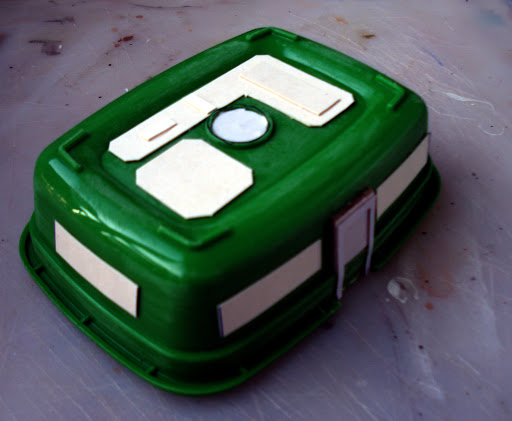
Slowly I’ve been picking up a lot of little plastic containers and odd packaging bits. For the most part I never quite figured out how to add small elements to make pieces stand out and avoid looking like a plastic tub. Then I stumbled across folks adding pieces of thin cardboard from cereal boxes to build up layers of material. Glued onto a plastic container, you can simulate doors and windows. Not to mention add additional layers in odd shapes to put on building details.

A bit of sandpaper was applied to the plastic to scuff up the surface and add some texture. I was able to add a few entrances and windows on a plastic food bin using thin cardboard. The bits of card were able to easily cover up your ubiquitous recycling symbol seen on most containers, and also could add some small detail to the building roof. Pretty easy modelling project to make a sci-fi structure.

I decided to just go with a simple base coat with a quick wash and drybrush. A very simple and quick alternate color for the windows with just a streak for highlights. Granted, it’s a very basic paint job and not too lovingly adorned for details. I think for other terrain I might try to put the effort in, but I’d rather save that for my minis. It’s serviceable, which is fine for now and I can always revisit it for a bit more color and detail later.

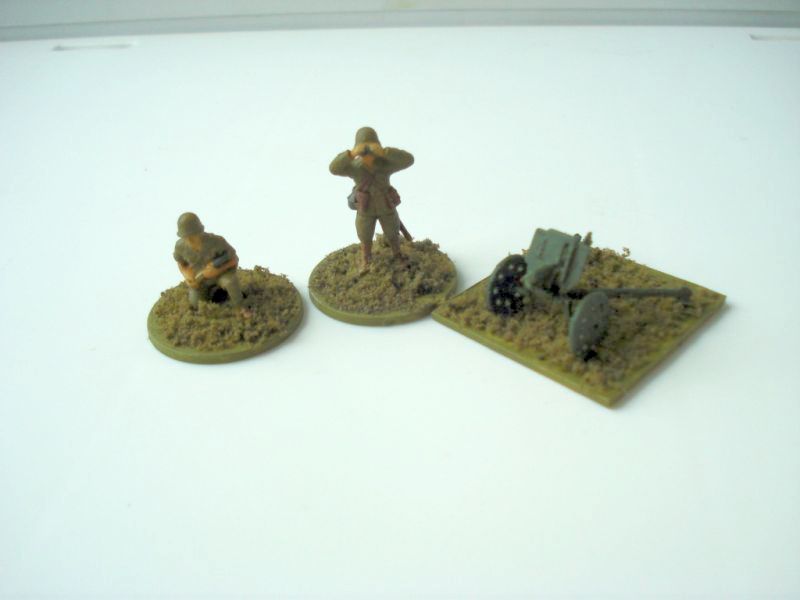
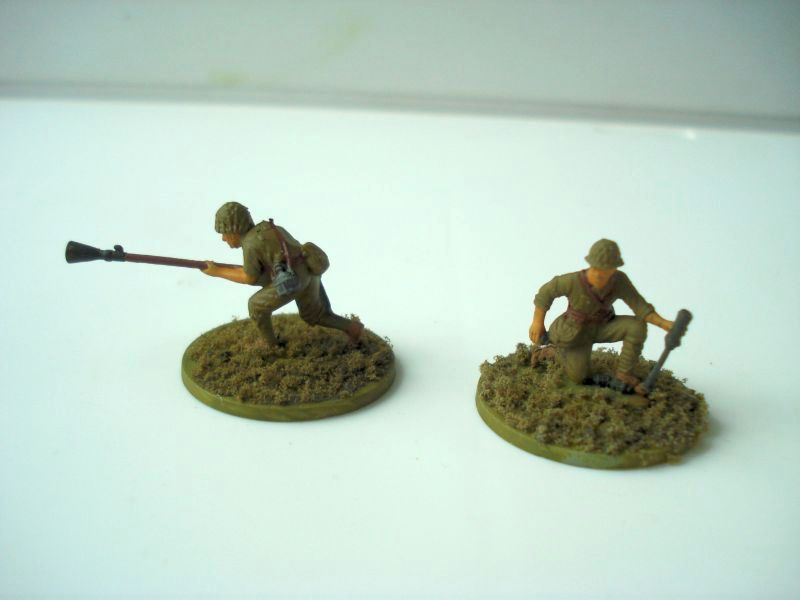
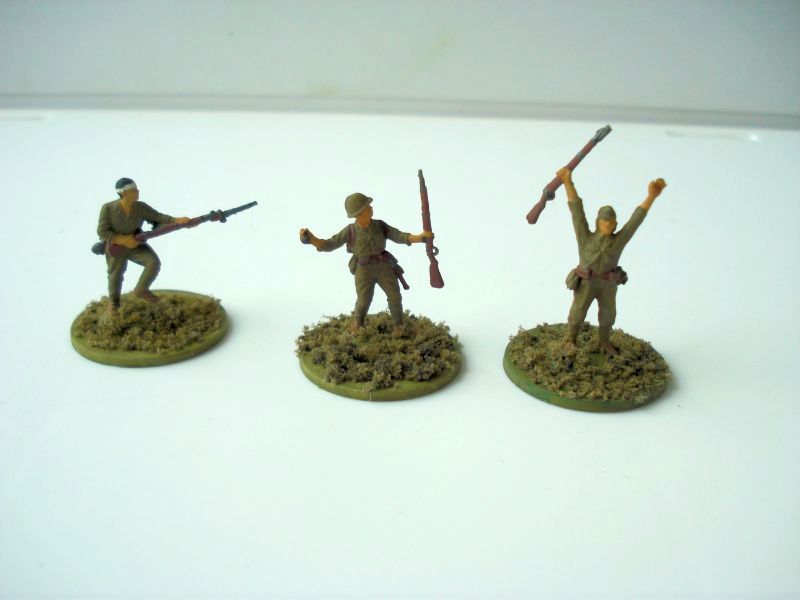
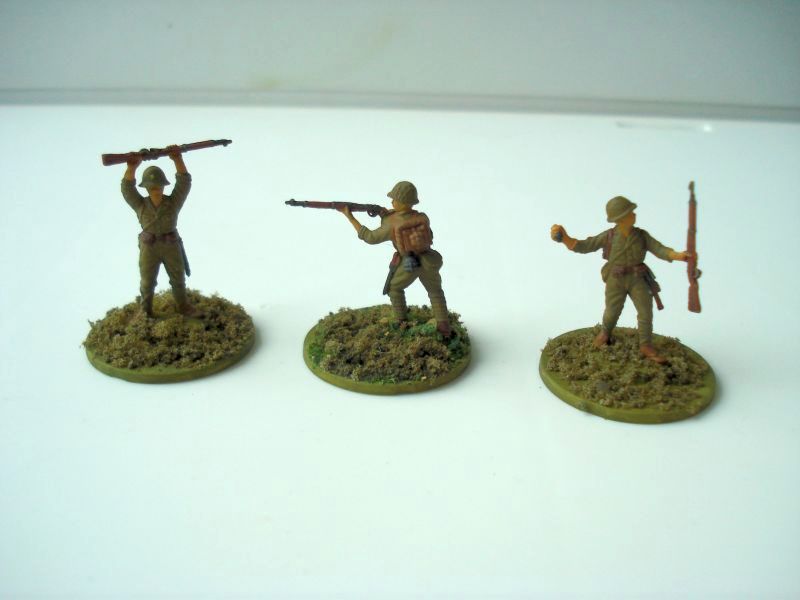
Italeri (and a smidgen of Revell) WW2 Japanese troops

Sadly when it comes to WW2 gaming the Pacific is usually under represented in many war games, especially miniature games. For squad based stuff, Battleground WW2 touched on it a bit with one of their supplements. However it’s always taken a back seat to the European theater. In fact, I daresay that the African theater gets more love over the Pacific.

It all comes down to manufacturers for minis, and clearly they want to produce lines that will sell. Just seems a shame the Pacific and Asian WW2 theater never seems to garner much attention. This was something I certainly wanted to rectify with my Bolt Action armies. So when the Imperial Japanese Army book hit, I certainly wanted to take a stab at collecting a force.

Fortunately, I am delving deep into 1/72 scale stuff, so getting troops is super cheap compared to 28mm. The downside is I really can’t get a lot of specific teams. However there is quite a variety of decent model ranges at that scale.

I settled on buying Italeri ranges for Japanese troops, along with the 70 mm field gun kits. The field gun kits were an especially great find as they had a lot of odd teams. In that set were AT rifle and suicide AT teams, along with some models that would be great for arty observers and could serve as mortar spotters in a pinch. Not to mention a couple of 70 mm field guns.

Japanese A Japanese D

I like the range of Italeri models. There were a lot of options for different mortar types, including knee mortars and rifle grenade launchers. Both of which I could use to cobble together a mortar squad if I wanted. The downside was I could not field any models carrying smgs, so I had to settle with my sergeants just armed with rifles.

Being a Japanese list, I wanted lots of bodies in beefy infantry squads and planned on fielding at least 3 rifle squads and likely a full mortar squad too. Despite the high model count in the Italeri kits, I opted to pick up a Revel miniature set also. I only took a handful from that set but it was enough to fill out my infantry squads.

Japanese C Japanese B

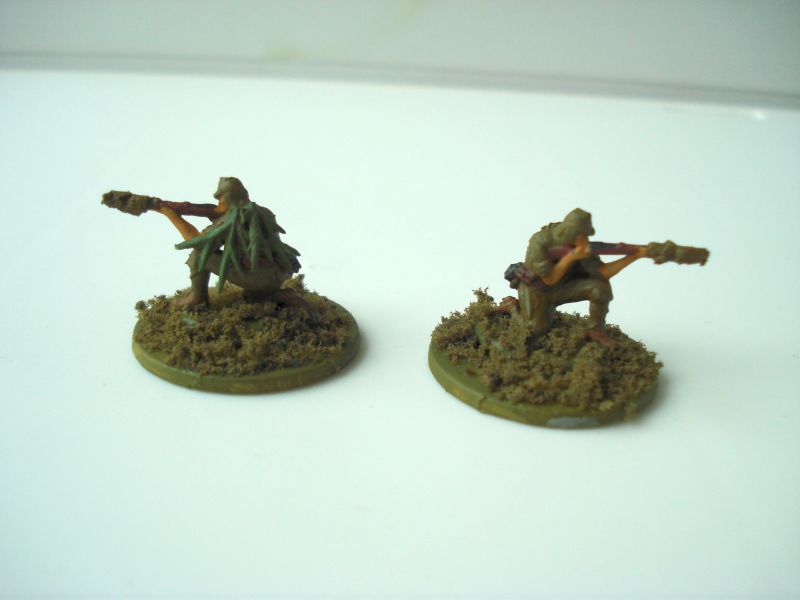
I also was struggling a bit finding appropriate minis for snipers. I opted to use a couple of kneeling figures and glued some plastic plant leaves on their backs to differentiate them some and still slightly capture that look of a sniper. A little wrapping of the barrels in trimmed athletic tape along with a healthy slather of water-downed PVA glue helped too.

Japanese E

I’m pretty happy how they turned out. A sizable force for Bolt Action with enough options to keep it interesting. Not to mention enough minis for another squad or two if I wanted to field another cheap inexperienced unit. Certainly looking forward to playing them and trying a different assault-heavy force. Now I gotta work on more jungle terrain!

Japanese F
Type 92 MMG
Japanese G
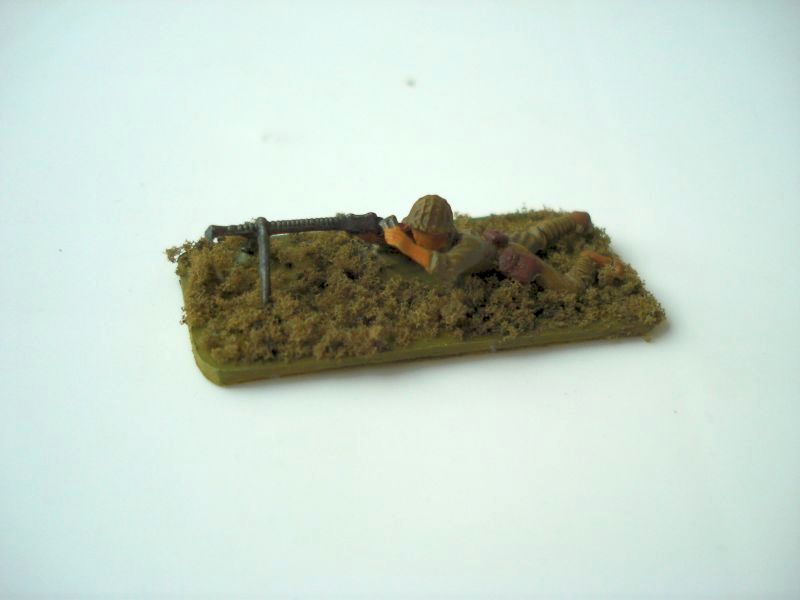
Type 96 LMG mid-reload
Japanese H
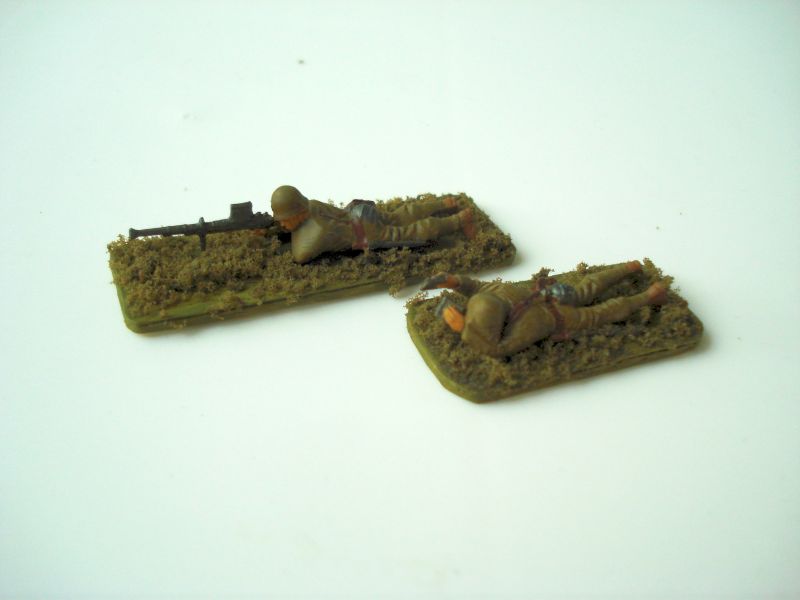
Type 97 AT-rifle

Review: Among the Stars

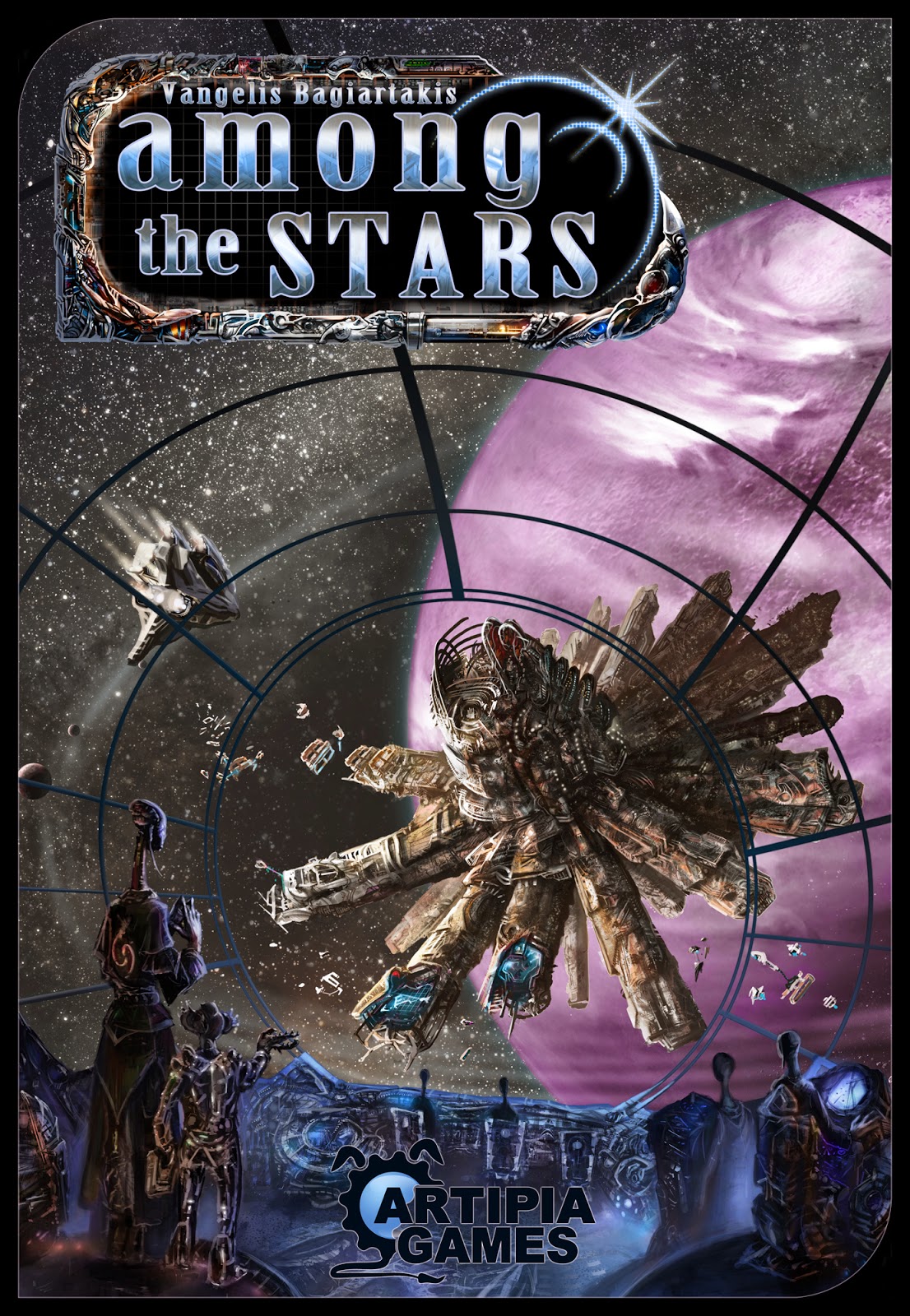
AmongtheStarsBoxArtFrom Artipia Games (and also distributed by Stronghold Games) Among the Stars is a 2-4 player game. The players represent different alien races trying to build the most impressive space station, garnering intergalactic influence at the end of 4 years. As they build onto their space station, added locations award more victory points and the player at the end of 4 years with the most points win.

Among the Stars is a drafting game. Players get an initial hand of 6 cards. They select one and pass the remaining to either the player to the right or left (each game year the direction shifts). Then they play the card, adding it to their space station.

Cards must be placed orthogonally to existing locations (i.e. not diagonally) and are only considered adjacent to those cards. Players must pay for location cards with credits. Additionally some locations require power. So there must be a power plant within two locations and can provide enough energy to build that new section. Each card represents one of six location types (diplomatic, recreation, administration, etc.).

Once built the location typically awards victory points. Some cards have further victory point bonuses if certain conditions are met at the end of the game, such as extra points for each similar card in the station, additional points for being near other location types, the furthest away from the main reactor, etc. This provides interesting play having to account for the spatial layout of your station as you try to get the most points.

Every year you gain credits, however as an action you can discard a card and gain credits instead of adding it to their station. Or if wanting another power reactor, they discard their selected card, paying for a power reactor and placing it within their station.

The reactors themselves provide a limited resource of power. Each reactor has 2 energy cubes. These cubes are discarded when certain locations are added to the station. Further, they can only power locations that are up to two adjacent spots away (remember, a diagonal direction does not count). As many cards that require energy usually provide a good amount of points, it can be a challenge figuring out the optimal layout to provide enough power for expanding your station.

AmongStarsPlayPlayers continue selecting and playing one card, while passing the rest, until all the cards in players’ hands are played (or discarded for credits or power stations). Then a new year begins and the process is repeated until 4 years are completed.

Among the Stars at its core is a fun game. However there are other game elements which add a lot to the gameplay. Players can randomly select a starting race. Each race has a unique power, providing some special ability they can use during the game. There are also random objective cards equal to the number of players which provide bonus victory points if completed. Being placed face up during setup, each player can look them over and decide if they want to focus on a particular goal to earn those objective cards during the game.

Lastly, there are optional conflict cards which provide an additional type of player turn action. These cards typically award victory points if you have more particular location types within your station compared to another player. At the same time your opponent will also lose points equal to those that you gain. It’s a little way to add some back and forth tension mucking up another player’s victory point totals.

In all, it’s an enjoyable game. The slight hiccup is the two player version which requires dummy hands, but it manages to capture that feel of potentially having key cards drafted from other players. This point is what makes the game. You likely will only be able to get one additional card from the hand you are first dealt. Deciding which is the best draw can be a challenge. You really don’t get a feel for the other cards out there until about halfway into the round, making that decision to focus on a particular location type for your space station early in the game risky (but can be immensely rewarding).

The Good – Among the Stars comes with a lot of parts to the base game. The different player races and objectives offer a some variety, in addition to the location cards. This provides a little randomization in the game that goes beyond the deck of location cards, giving some differing play for each game. There aren’t a lot of rules to burden new players, but it certainly provides a lot opportunities to explore different strategies.

The components are done well with cards having a nice, thick backing. The counters are good cardstock and the energy markers represented as clear cubes are a nice touch. The design of the cards can be a little cluttered when figuring out setup (certain cards are added or dropped depending on the number of players), however for actual play they are easy to read and decipher. The artwork is pleasant and certainly helps capture the theme of adding sections onto a space station.

The Bad – It’s a drafting game and by design it will be difficult to plan too far ahead for future turns, which can be a little frustrating. You start each year with a 6 card deck, so you can only expect to use one other card by the end of that year. You only have 2-3 turns to potentially see what cards you might end up with later. In effect, it’s somewhat of a puzzle game where you simply make the best play you can with a new hand each turn.

Also even though some cards are labeled as conflict cards, you really don’t have much player interaction other than using (or discarding) a card that another player might have wanted. So you can slip into this mindset of just building up your station and ignore everyone else. Put simply, this might not be the most enjoyable game if you are looking for more a back-and-forth play experience.

The two player version is a little lackluster also, relying on dummy hands with your opponent likely discarding cards you’d want to use. If players alternated placing a single card for a dummy station using some simple automatic placement rules, it might be more enjoyable. That way you have to try to also beat a third point total and worry about another station layout, other than just your opponent.

Card resolution is done simultaneously and sometimes this can put a kink in the flow of the game for certain cards. Although there are rules to determine a player order in these cases, it can be a little clunky to resolve.

The Verdict – Among the Stars is solid. As a drafting mechanism type game, it’s especially enjoyable. The play is very streamlined and easy to grasp. Yet there are challenging choices you have to make. While scoring points is paramount, you also have to keep an eye on what your opponents are doing. Sometimes it might mean forgoing adding a juicy location and simply discarding a location for credits, as that same card would bring a ton of points to your opponent.

Another key thing that stands out is the variety of game options. You have the option of playing with and without races, objectives, or conflict cards. You can choose to keep a limit on station size layout and even another small variant for the 2 player game is offered. Along with this you get 8 different races and objectives. And on top of everything are the differing station locations and types, with a plethora of card combos that you can explore. All of these aspects contribute to giving the game some legs with play longevity.

Among the Stars is a great game. The drafting mechanic offers a slight tweak to the myriad of deck building games out there. And it also really captures the theme well of slowly constructing a sprawling space station. With nice components, a low entry bar to learning the rules, and solid gameplay, it’s certainly one to add to your game collection.

Spartan Games terrain Kickstarter

This popped up on my radar. Spartan Games for a long while has been in the wargame and mini business. They’ve really grown into making some stellar resin miniatures and I’m a fan of Firestorm Armada.

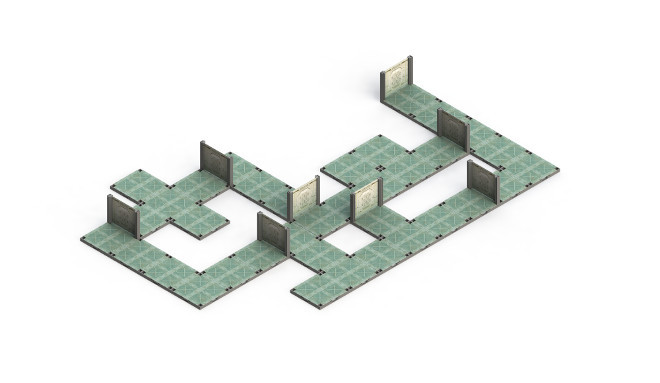
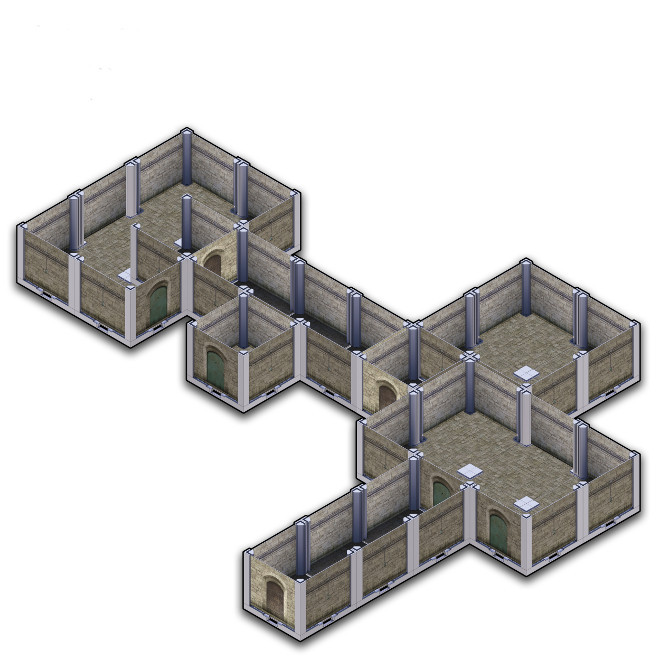
It looks as if they’ve decided to dabble a bit in making terrain. There is a Kickstarter campaign running now to offer miniature terrain sets. What’s pretty clever is that it’s a modular frame system, where different artwork for the walls and floors can be swapped out depending on the genre you are playing. While much of the flooring and walls are card, it appears that parts can be upgraded to acrylic and laser cut MDF.SpartanGamesKS-B

It looks pretty neat. The sets seem reasonable. However my beef would be with the artwork packs. Seems the lower pledge options are for one style of artwork (reasonable), but if wanting to get another style of walls/flooring, you are going to have to pony up about $30 USD and that’s without shipping.

Regardless, it appears this will be a product that they’ll be eventually pushing out into retail. If it looks like something that would tickle your fancy, the KS campaign likely would be a great way to get some of the sets accumulated.SpartanGamesKS-A

Revisiting Dark Sun

A long while back I ran a Savage Worlds game using the Dark Sun setting. It was a fun game but we hemorrhaged a lot of players and decided to wrap it up. Since then I got a new group going (with a few long time players). They jumped into the weird west and occasionally dabbled in a 1920s Cthulhu game. However both of those campaigns eventually took a serious tone. I think we all wanted something with a little more action and a setting that embraced adventure a tad more.

Many of my players found the idea of a Dark Sun game intriguing. It’s fantasy but with a twist. The setting is dire but certainly allows for heroics. While they’ll entertain being mercenaries for a bit, I suspect they’ll heed the call for a higher, grander purpose. I totally expect a few sorcerer kings to be on their hit list. Dark Sun just really grabs their attention.

As for me, I felt I could certainly get more ideas for adventures flowing in this setting over my weird west game. So we’ll be visiting the scorching deserts of Athas soon using Savage Worlds. Something I’m really looking forward to.

Joesky Tax
Here’s a small mundane item you can throw into your desert-themed fantasy game…

Ember Water – A red, spicy, vodka-like drink made from the seeds of cactus. The thick round seeds are the size of a halfling’s fist and have fruit inside of a dark red color, with each pulp section covered in a soft, pliable, translucent membrane. A single fruit pulp section is placed in a shot glass of water. The coating of the fruit bursts due to osmotic pressure and much of the membrane dissolves in the water, allowing the fruit contents to mix. The result is a peppery drink of 30-40% alcohol that has a clear, deep red color.

The fruit and pulp seeds can be eaten, however while they do have some moisture and posses a high alcohol content, they are unpleasant to eat having an exceedingly bitter and spicy taste. If diluted in less water, the liquid is flammable but the drink becomes more bitter and is unpalatable. Yet some scoundrels have been known to make flammable firebombs in such a manner.
BromDarkSun

Using different initiative systems for D&D

VirtualDnDPostI have a love-hate relationship with classic initiative in D&D. One plus is at least for the first turn, things are chaotic. You can get a player rolling high and step into the action immediately, and you can have a player instead be a little flat-footed by rolling low. It’s fun. However on the following turns it slips into a set order and the humdrum of a predictable routine for turns becomes the norm. Alternately, it’s a little jarring breaking up the narrative to jump into wargame mode for a combat by telling players to roll for initiative.

Newbie Dm has been pondering this last point some, with thoughts of dropping it completely. I can agree that calling out initiative is like announcing RP needs to jump in the backseat as butt-kicking time is taking over the story steering wheel. I don’t quite have an answer for that. There is a certain disconnect with D&D when it comes to roleplaying and the actual mechanics of combat resolution. You can certainly pepper RP into a melee, but there will still be those mechanisms in the background of rolling to hit and damage, with initiative order lumped into that too.

However, I wouldn’t kick initiative to the curb. I realize it can break up the narrative in some cases, but having a completely open order for combats can also allow players to slip into taking over the action completely. I like the idea of combats being deadly and unpredictable. In that aspect, classic rolling for initiative sort of captures that. The problem I have is it slips into a set order, with no surprises after the first turn.

Look at wargames – The idea of unit activation is something that’s been tackled quite a bit through a variety of means in miniature wargames. A lot of designers try to model friction in command and unit activation, and uncertain turn order helps mimic that some. Taking a look at how other games handle unit activation (or initiative), especially wargames, can offer some good ideas for porting them over to D&D. Mind you, what I’ll talk about here is by no means an exhaustive list for systems used in miniature wargames but they are some common themes.

IGOUGO – This is a common turn order system. A player chooses all the units they wish to activate and resolve their actions, then their opponent does the same. This can be shaken up some requiring command checks to see if a unit can be activated.

I’m not a fan of IGOUGO. Even with command checks, you have a degree of certainty how your turn will play out. This isn’t to say it’s not a popular system though. Warhammer 40K and Flames of War use IGOUGO and are probably some of the biggest systems around for wargames. For D&D, you could just have all the players go, and then all the monsters. It can work but not my cup of tea.

Alternate activation – This is a popular stepping stone between IGOUGO and random activation. Players pick one unit to activate and play out the turn, their opponent then does the same, going back and forth until all the units are activated. For D&D, you can have players and the monsters go back and forth, or break it up with the PCs having 2-3 characters act, then a few creatures. It’s serviceable. The kicker is usually figuring out who which side starts at the top of the turn. Commonly a lot of wargames decide that by rolling a die (sometimes with modifiers to represent better command and/or morale). Deciding by the highest dexterity scores D&D might work for D&D.

Random Activation – For me this has become my favorite system in wargames, as it can provide you with utter, random chaos. Granted D&D has this right off the bat with rolling initiative too, however the order becomes static. I’m a fan of keeping things completely random throughout the entire combat for each turn. There are two ways to handle this. One could be that each player/monster is assigned a specific card and they are randomly drawn from a shuffled deck.

Another more flexible system would be splitting a deck of cards up by color, with one side activating when their color is drawn. This could also be done using dice of two sets of uniform colors. To keep ensure everyone gets a turn, you could make a special deck (or pool of dice) where each individual unit is represented by a card of their respective color. One my favorite games, Bolt Action uses this system with colored dice. It’s easy and flexible enough that you can choose what unit to activate (provided you get lucky enough to draw the right colored die).

Savage Worlds also employs a random initiative system going by numerical/suit order using a standard deck of cards. I love it. It makes each turn hectic as you can’t predict exactly when you’ll act from turn to turn. While you could mimic the same thing in D&D just re-rolling initiative for each turn, mechanically drawing from a deck of cards is easier after a good shuffle.

Point allocation – Another system commonly used in wargames is point allocation. Each side has a limited number of command points which can be spent to activate units. Likely not all units on a side will be activated during a given turn and typically a unit can only be activated once. Even using IGOUGO, this can add an element of friction in command and control. SAGA uses something like this and I find it immensely enjoyable.

If you were trying to embrace a more narrative approach to initiative in D&D, point allocation would be something I’d use. When I’ve run Dungeon World, I used a point allocation system. It worked wonders.

The problem with combats for me in Dungeon World was that they were too open. If you had a player or two that were more proactive around the table, they could hoard the action for the group. I needed to break that up and it was a little rough just putting a hard stop to a player’s turn and pushing others to act instead during combat.

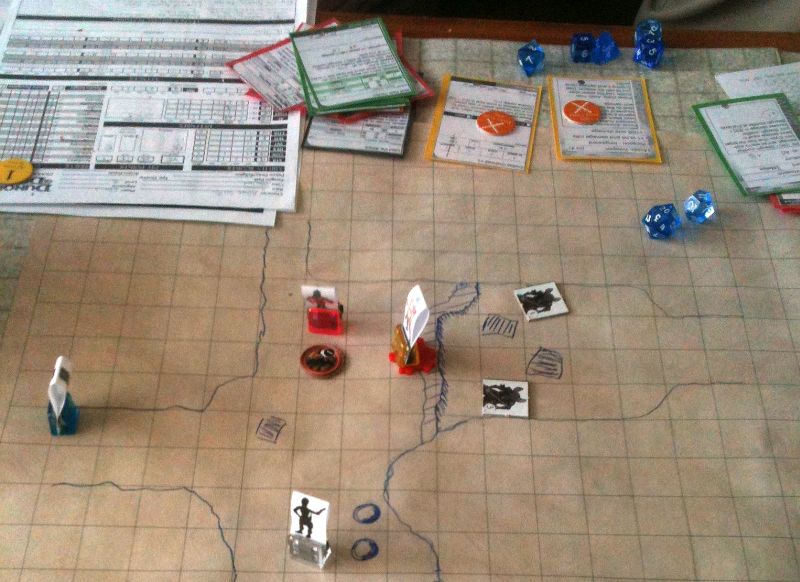
So I gave each player 2 markers. When they did something they threw it into the center. If they had no markers, they had to wait. Once everyone spent their markers, they all took 2 markers and the process would repeat. For modelling simultaneous actions in a short time frame, this worked well.

To embrace the open narrative of Dungeon World, I would allow a player to voluntarily give a marker to another player if they wanted. That way if a PC was on a roll doing some cool stuff, another player could allow them to hog the spotlight a bit longer. It added some structure to combats but was still flexible enough for Dungeon World. Going for a more free-form initiative in D&D, I would do something similar.

Handling high (or low) dexterity – This is something that can put a kink into different initiative systems. Players with high dex usually get an initiative bonus acting before others. I’d whip up a house rule allowing PCs to redraw a card, pull another die, or possibly get an additional activation token. There is nothing wrong with giving high dex players some advantage with determining turn order. Regardless, I’d always adopt a house rule to allow players to go first in the case of ties. It’s just a little nod to the players and encouraging them to be heroes over the monsters.

These are a few ideas you might want to port over to your D&D game. If anything, I encourage folks to play other games. I especially think DMs should experience different games aside from RPGs. You really get exposed to interesting game mechanisms playing other types of games, and may be surprised how many things you can pick up to make your own D&D game better.

Wargaming in Seoul – Orc Town

A while back I talked some about places where you can pick up different wargame supplies in Seoul. One place in particular was Orc Town. They recently packed up and moved to another location, so I thought I’d give them a visit and check out the new store.

Orc Town is now in the southeastern part of Seoul in Dongok I-dong. If you take subway line 3 and get off at the Maebong station, Exit 4, head south a few blocks alongside an apartment complex. Go past a main T intersection and one block west, you’ll eventually hit the store. It is now in the basement of a small business complex.

orktownbldga

Be sure to look for the small sign on the side of the building over the basement stairway.

orktownsign

It’s certainly much bigger than the old shop. There is a small storage section where folks can leave their models in personal lockers for a fee. This is pretty nice for regulars as they don’t have to lug their models around to the store.

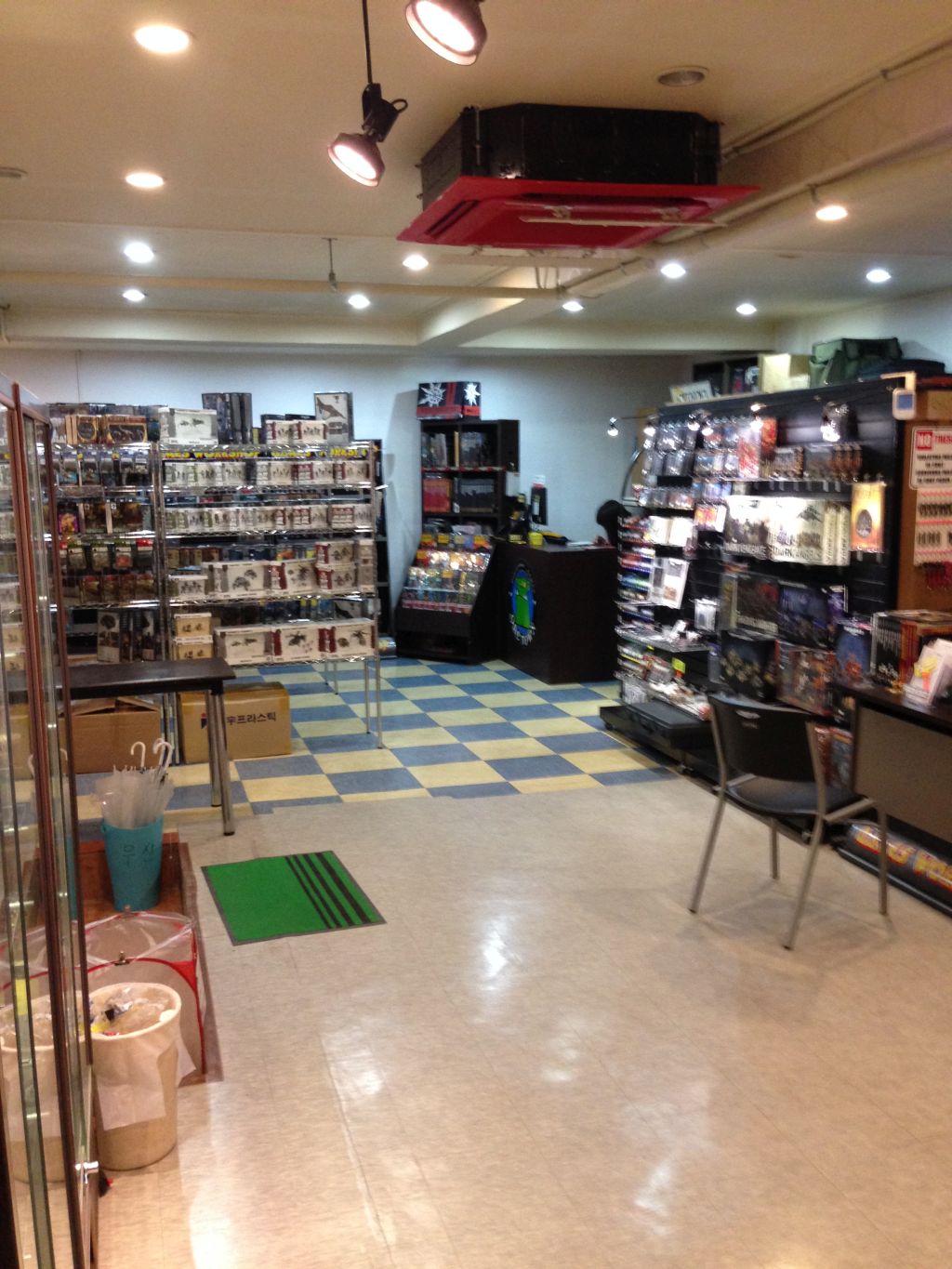
The new place has more space to play, with a side room just for gaming holding several tables. From what I remember, the gaming section here has almost double the number of tables from the old place. They also have a few shelves with store terrain to allow players to dabble in some different scenery layouts.

Orc TownC
 
Orc TownD

They seem to still carry similar products, including Infinity, Bolt Action, Firestorm Armada, a few Napoleonics and a smattering of other historical kits. There are also some Flames of War miniatures and some alternate 15mm WW2 sets. However Orc Town is still very much a Games Workshop store. They carry lots of 40K stuff and a good number of Warhammer Fantasy minis. The store also has a full line of Citadel paints, spray primer, and other GW hobby modeling supplies.

Orc TownB

Sadly, I still think prices above retail particularly for non-GW products. No real clue how the prices for GW products fare but I noticed some of the Warlord games stuff being well over MSRP. I have no idea why. Maybe they can’t get distributors to send stuff over and have to go the route of resale (which likely includes having to pay extra custom fees on merchandise).

They have an online store and I’m guessing with pre-orders, you could get more of a discount to bring it in line with other international distributors. For a handful of items, given that you’d have to pay international shipping charges, it seems ordering directly through Orc Town works out maybe a little cheaper. However I do wonder if making a large order, getting a big a discount from an online retailer, and just paying extra shipping might be more economical.

Nonetheless, if you want to pick up a few models and paints Orc Town seems to fit the bill. If you are a GW fan, it’s the only place to shop. I’d also give it points for allowing space in their store for gaming. Certainly a great way to get some feelers out to meet up with other fellow wargamers.

Armourfast house

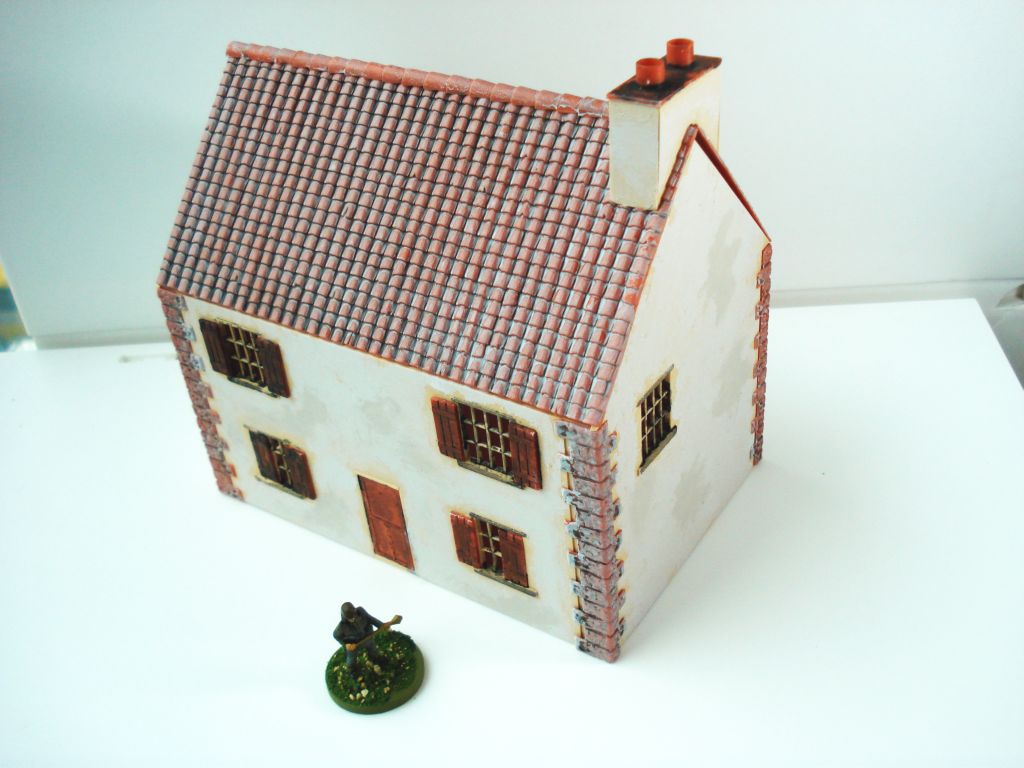
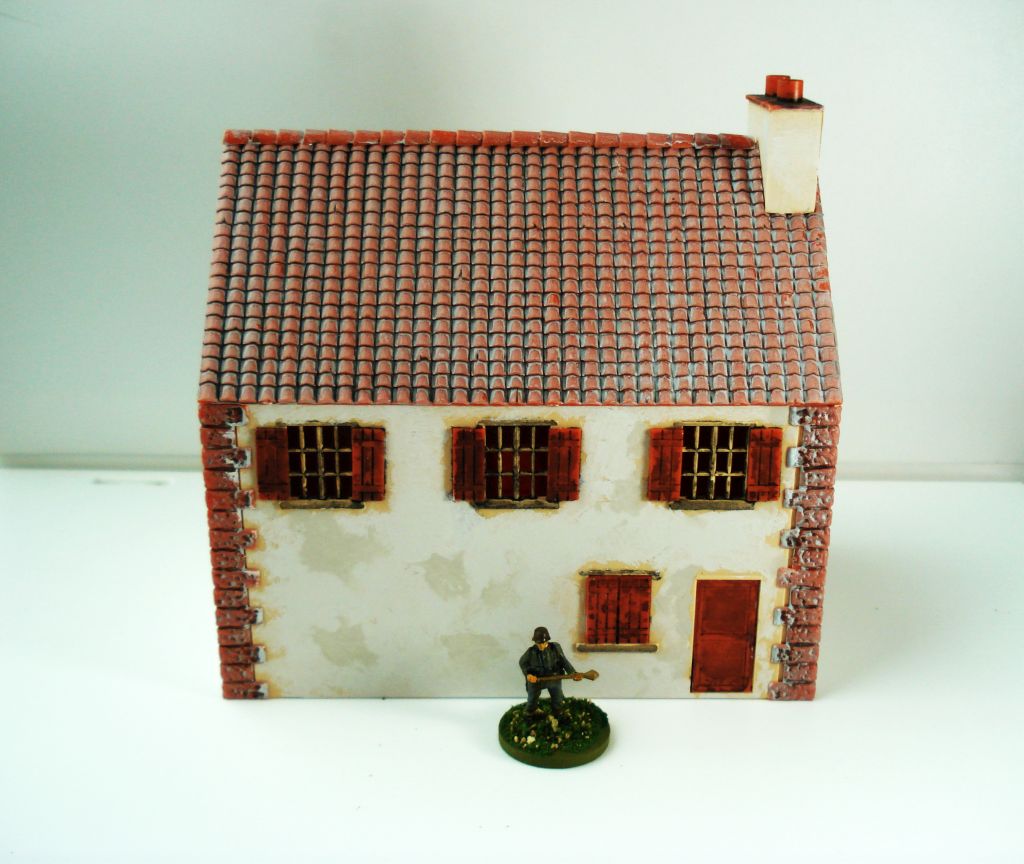
While my Bolt Action platoons have been slowly shaping up, I really needed to get some terrain together. I went the super cheap route getting some paper buildings made which came out okay. However getting troops inside a building can be a key part of the game. My paper models have the roofs firmly affixed to help keep them a sturdy construction. While I can lift them up and plop them over figures to represent troops inside the house, having models with detachable roofs would have been better (seriously have to consider working on making some with foam board).ArmHouseB

Looking around for some options, I ended up buying a tile roofed, 1/72 farm house from Armourfast. The kit is very nice if a little pricey at $14.50 USD. The model comes with varying colors so that you could literally assemble and play without the fuss of painting. I somewhat embraced this and opted to give the model a very basic one-over with some washes and drybrushing.ArmHouseA

The house is simple to assemble and offers some decent options regarding the windows. There are a slew of window shutters you can use to represent open or closed windows. The roof and chimney can be put together without breaking a sweat. I will say however the instructions are a bit sparse and I did have to think through the construction a bit, as there are certain ways the walls for the house and chimney fit together. Nothing brain burning, but be sure to take a bit of time looking at how the pieces fit together.

Still, working with the plastic was a breeze and a welcome change compared to thick blocky houses of resin. The pieces fit together very well, with the roof section sitting fairly snug on the house walls and easily removable. Additionally, the inside walls have small tabs on them, allowing you to put in a second floor if needed. I cut a section of board to do just that and it fits nice and secure, allowing me to get a little more coolness out of the model.Armourfast house

Armourfast house

The scale of the model is for 20 mm figures. I have one of my Plastic Soldier Co. mini in the some of the pics here to give it some scale. Honestly, the house would work just as fine with 28 mm figs. The doors would be a tad small but the space on the table is pretty beefy. Overall the model measures 14 cm by 9 cm, with the peak of the rooftop at 11 cm. I find true scale 28 mm buildings end up occupying too much tabletop real estate. Something a little smaller looks passable and doesn’t seem like a brick of plastic on the table. If you need a quick bit of terrain for your table and looking for something flexible, consider giving this house from Armourfast a look.ArmHouseE

ArmHouseF

In and out of love with Flames of War

A long while back most of the World War II gaming I did was skirmish stuff with Battleground WW2. I really enjoyed the tactics of small unit infantry action and along with a tank or two that game handled it pretty well. Larger forces for smaller scales wasn’t something I was interested in. This attitude was mimicked with my 40K gaming also. After a while, interest in skirmish-type gaming sort of waned some playing 40K and BGWW2 a lot simultaneously. I was itching for something different.

Flames of War was making some noise as trial rules, making the rounds on TMP, and it caught my interest. 15mm wasn’t a scale I was too keen on painting, but the idea of company-sized engagements with combined arms sort of hooked me. What absolutely got me into FoW though was a local mini gaming club that met monthly at a local library. Those guys were really into historical gaming (and miniature wargames in general) and that really drove me to play Flames of War.FoW1

I enjoyed the combined arms aspect of the game, while still retaining a company-sized force. The telescopic range was also interesting with longer ranges being longer distances. Yeah, artillery really should be off board assets but with the idea of telescopic ranges, it allowed me to field a few guns on the table which looked cool. I liked the idea of target experience being the factor for how easy it was to inflict casualties. I liked the idea that hits on a unit could impede movement and shooting so that casualties weren’t the only means to cripple command of a force.

The game had abstract mechanics but they typically led to historical outcomes. FoW tanks ruled the battlefield and could cut through infantry. But get those infantry dug in, and within bulletproof cover, those stands are suddenly a bit tougher to dislodge. Throw in some AT assets and they become a nightmare for tanks to effectively attack, going back to using infantry to assault infantry in those conditions. I liked that.

Another big thing was we used tables with lots of cover. Oodles of terrain were used in our games. I’ve heard of nightmare stories of some employing 40K-like tournament tables, with not a lot of terrain. We never had that issue with plenty of cover and stuff to break up LoS. We also didn’t get into min/max forces with much of the group leaning towards historical company composition for certain periods (even tried a longer campaign with Operation Husky for the invasion of Sicily). So I think I lucked out getting with a great group of FoW players.

But there were rough spots with the game. A glaring aspect was the IGOUGO turn order and no real chance for opportunity fire. Even with pinning units, they could still throw out some dice in attacks. It all became a little predictable. Add to this the meta of super efficient lists, with guaranteed attackers and defenders for certain missions, you ended up with the potential for an alpha strike army. A player could move in and cripple certain forces within the first couple of turns (especially seen with light tank armies). There were specific counters to this, which sort of made for a game where players took relatively safe lists and weren’t willing to tinker around with something different.FoW2

Moving across the world, I packed up my Flames of War models. I ended up taking a few 15mm Russian troops with me in hopes of possibly painting up an infantry force. However I let them languish for the most part as I haven’t played the game in over 8 years. Not getting an opportunity to play certainly had diminished my desire to paint.

Another bit that soured me some on the game was Battlefront’s response to competition. They always seemed to accept folks were going to use other manufacturer’s models. However when Plastic Soldier Co. hit the scene with their 15mm kits, they completely changed their attitude going for a more restrictive policy for hosted tournaments. I don’t blame them. It’s their show and their rodeo with official tournaments. Yet given they release so many different rule and campaign books and have that as a source of revenue, it seemed a little bitter on their part rather than trying to offer a more competitive priced product.

So where does that leave me now? I’m getting the itch some to dabble in 15mm again. I’m feeling the call to paint up those Russians. I’m just not sure that Flames of War will be my go to for 15mm gaming any more.