Review: Tank War

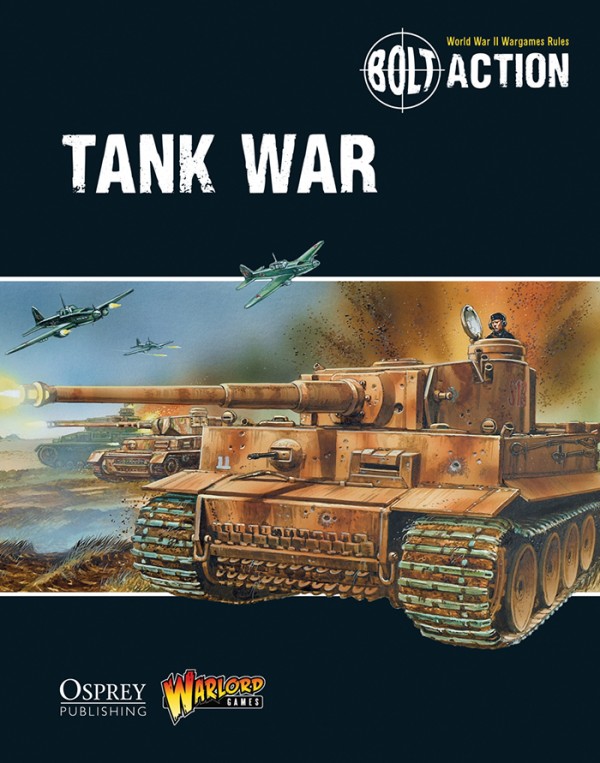
I’ve had my mitts now on the new Bolt Action supplement, Tank War, for a while now. For those living under a rock in the Bolt Action arena, Warlord Games has introduced an all armor supplement rulebook. The big bombshell was that this book would not just be alternate rules for players to dabble in armor, but rather a completely new way to field armor platoons in the game. It was meant as a rulebook to allow infantry to face off against tanks, opening up a lot of different tournament options.

The rule section itself is paper thin, with the core rules only being a few pages. A large section details the structure of the platoon and the requirement of a command tank. Further, there is a new rule where if all the tanks in the platoon are on the same chassis (EX they are all PzKpwf IV’s, even if there are variants among the platoon), then the command distance is increased to 12″. Some armies are still limited to 6″ due to lack of radios. But overall it seems a means to encourage players adopting a more uniform platoon makeup, rather than selecting all manner of armored options to build their force.

In addition, the new pin rules are now in print. Making their way from a recent FAQ, there are rules limiting what can actually pin a vehicle now. Rather than any heavy weapon being able to throw pins out, now you actually have to use a weapon that can potentially penetrate the armor.

Morale of the tank is a huge factor also. Inexperienced troops work as the original rules (any heavy weapon gives them a pin) while veteran tanks use the new rule. Regulars roll a die to see if they act as a veteran or inexperienced when they are hit. I dig the idea that there is an advantage to taking veteran troops, however I wish the probability for regulars was skewed some. I’d prefer on a 3+ they act as veterans instead of a 4+. As written it’s sort of a coin flip. I do feel sorry for all those US players that kitted out 50 cals on their transports, as the value of them throwing out pins on tanks is lessened.

Tank War also introduces an optional set of rules for crew experience. As crews survive they slowly accrue experience which can be used to purchase skills. Broadly they break down into command, driving, and gunnery skills. These give a one shot bonus to the player over the game. They also improve the morale of the tank unit, as all tanks start out as inexperienced crew and morale increases as they gain experience. It’s different and allows for players to explore a campaign game where troops improve over time. There are some point values that can be used instead for legendary crews if players want to dabble in fielding a tank ace on the table.

There is a new scenario that is armor-centric for the game, relying on players capturing 1-6 random objectives. Like your typical scenario, to claim an objective you must spend an entire turn within 6 inches of it and be clear of any enemy. However players can claim objectives and roll off it, allowing them to be recaptured on later turns. So having a mobile force claim objectives quickly (while contesting others later) can be a strategy.

The book also highlights a more fun scenario where players duke it out in a massive tank battle. The authors make no bones about it, this clearly goes into the imaginary battle category of historical wargaming. But I enjoy that they are opting to throw some more fun and frivolous type scenarios into an official book. Not to delve completely in the world of ‘what ifs’, there is also a rather lengthy section on theater specific lists and historical battles.

The Good – It’s a nice addition to the Bolt Action family. It doesn’t throw down a ton of new rules to make for an entirely new game. What really makes Tank War for me is the different theater specific lists and battlefields. There are a wide variety of WWII theaters and operations covered in the book, each with relatively historically accurate force composition rules, as well as some special table rules (terrain, air support, armor platoon command limitations, etc.). These certainly make for Bolt Action to adopt a more historical feel over your typical battle scenarios.

The artwork is classic Osprey publishing stuff with some nice model pics. There is also quite a bit of historical flavor for jargon and terms used by tankers at the time which is a nice touch.

The Bad – There aren’t any rules for mechanized infantry. You can certainly get some infantry squads in your armored platoon lists, however it’s squarely on the 3 tank foundation, with a smattering of other choices. I am a little disappointed that transports weren’t revisited, especially the rules regarding firing their mounted armaments. I was certainly hoping for a strong mechanized infantry list, with rules to support allowing transports to actually fire all those MGs. No dice. Which is sort of a shame.

There aren’t more tank-centric scenarios. The theater specific stuff is nice, but more tourney scenarios would be great. There is a lot of optional stuff in here which is good, but some like the legendary crews can border on being too gamey (and might lead to cheese lists).

The verdict – So is Tank War worth picking up? If you are looking to add a little chocolate sprinkles to your vanilla Bolt Action game, it’s a good buy. If you have been drooling over fielding a platoon of tanks, it’s certainly worth picking up. The optional crew experience rules can make for some fun engagements and allow players to explore a campaign game. The theater specific lists particularly stand out for me as a pleasant addition.

However, the actual core rules for armored platoons are rather thin. It could have been easily offered as a free PDF for players wanting to try them out. If you have no desire to play an armored platoon this is certainly a rulebook to pass on. There is a lot of interesting material inside but not a must have and certainly doesn’t need to be considered a core Bolt Action rulebook.
Standing mountain counters for Runewars

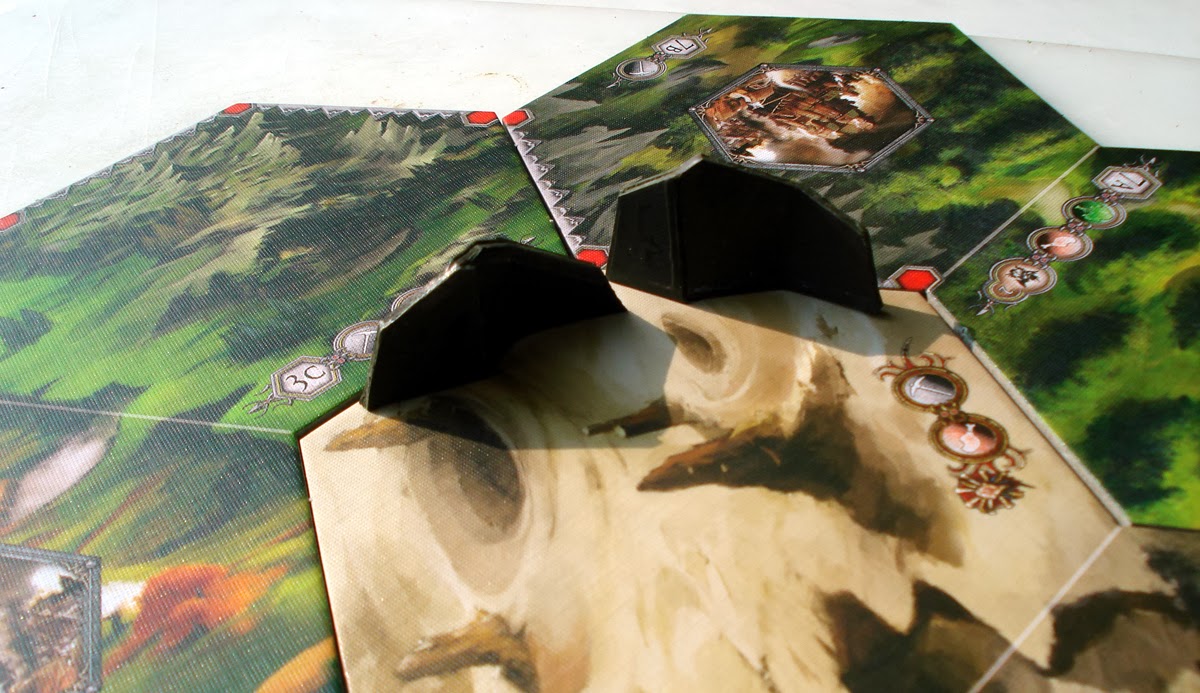
I was in the mood to pick up an epic wargame and decided to get Runewars. The 1st edition had these special map tiles with slots in them, so you could place these cardboard inserts that represented mountain ranges through the tiles. From the looks of pics I’ve seen it gave the board a neat 3D look. The 2nd edition that I picked up didn’t have these inserts which wasn’t a big deal.

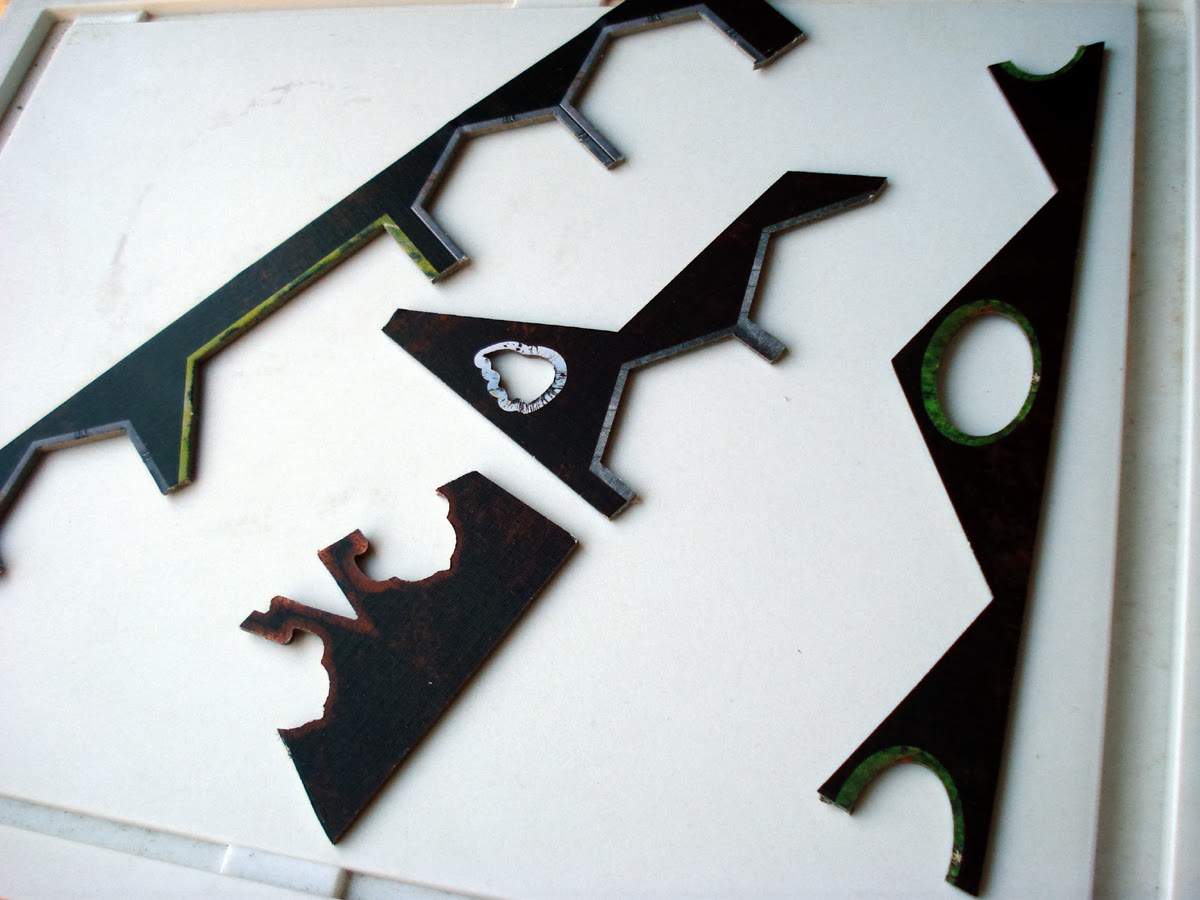
Looking over the board though, I realized although the borders for mountains are just marked with red symbols. Things can get a little cluttered in each map hex. It might be cool to use some kind of marker or token to make the mountains stand out more. After punching out all the game tokens and tiles, I sorta got an idea. See the cardboard stock for the counters and map tiles are pretty thick. You get a lot of leftover material from the game. So why not put them to use?

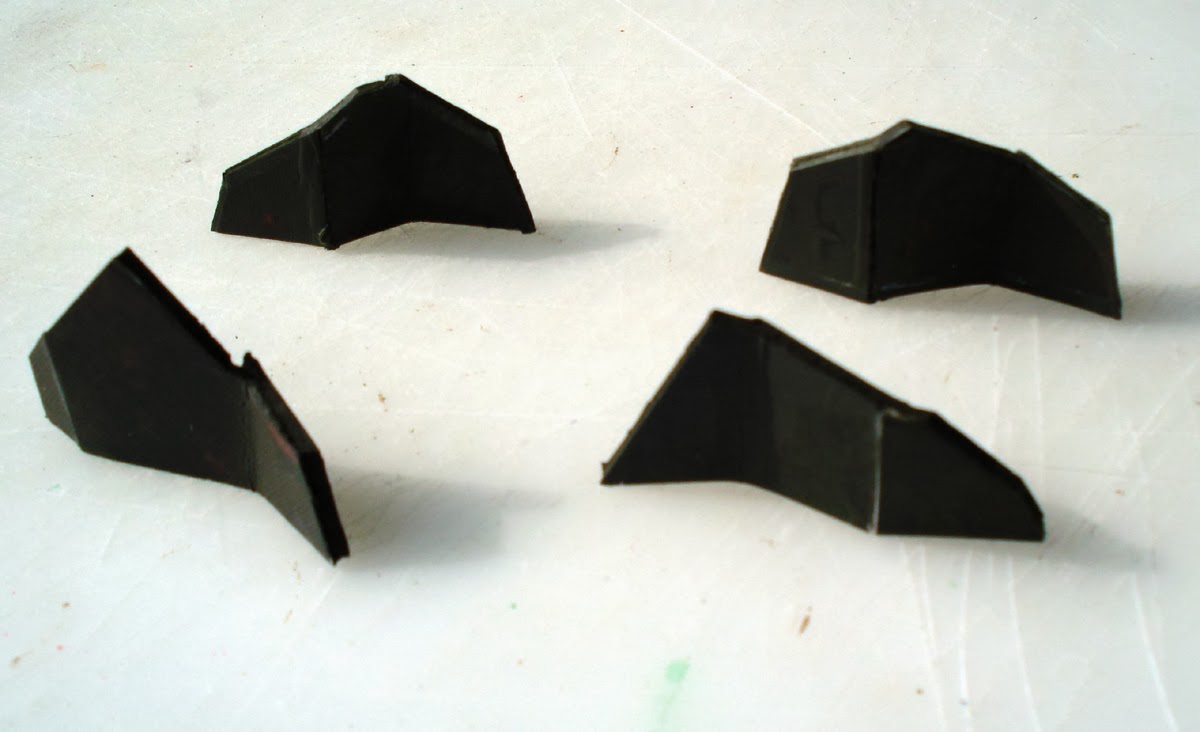
I cut out sections about the size of the tile edges. The problem was to consider how I could make them stand up. The most ideal solution would be to cut slots in each piece and glue smaller parts of cardboard to provide support for the long flat edge. Instead I took the lazy way and scored one side of the cardboard, and then folding it some on the opposite side. After making another fold (scoring the opposite side and folding in the other direction), I made the straight edge now sort of zigzag which is enough for the pieces to stand on their own.

The edges and cut sections were a lighter color. So I went ahead and gave a quick dab of dark paint. I also did this to any of the cardboard sections that had some portions with lighter colors from grassland and water sections of the map tiles. Also, I used PVA glue to seal up the scored folds in the cardboard and repair any splitting ends.

Overall I’m happy with the results. Obviously I could have gone to town painting them, but I wanted a simple marker for the mountain ranges that weren’t too distracting of a color. A nice thing about the shapes is that they easily slip into a small zip lock bag and don’t take up too much box space. Hope folks find this a useful tip.

Review: A Touch of Evil

To get into the spirit of Halloween I’ve been wanting a horror-themed board game for a while now, something that would capture that feeling of investigation some and have monsters to face off against. I’m a fan of the Lovecraft mythos but the games I’ve seen and played never really captured that feeling well. And face it, trying to get the essence of a person losing their sanity facing incomprehensible horrors isn’t really something that translates into a game mechanism easily.

Digging around I decided to pick up A Touch of Evil from Flying Frog. It’s a game that can handle up to 8 players with a variety of play modes from a winner take all, working in teams, cooperative, to even a solo game. Overall it’a something that seems to scratch the itch of a horror game for me.

Players are monster hunters in the 18th century, trying to rid a colonial town of a terrible supernatural threat. They can choose 1 of 8 characters each with varying characteristics among cunning, spirit, and combat abilities. Additionally, each has a special ability that allows them to bend the rules some. Checks and combat are a simple matter of rolling a number of dice and counting 5 and 6s as successes.

The players face off against one of four creatures, being either a werewolf, vampire, a locust-summoning scarecrow, or a spectral (headless) horseman. Each monster has unique minions and other game effects that can hamper the heroes. Some are rather interesting like the werewolf that can pass on its curse to other players or the spectral horseman that runs to town attacking all in his way, to more basic abilities that just increase their combat proficiency.

The player’s turn is broken down into 2 steps. They roll a die and move that number of spaces. If there is a monster in a space, they must fight to defeat it (or run away if they survive the initial attack). Afterwards the player has several options from investigating an area to hopefully find a powerful artifact, gather up clues, heal, or attempt to gain equipment within the village proper. All currency in the game is based off of investigation tokens. Players gain them by traveling around the woods outside the town or by beating villain minions. As a nice rule, if a player flubs and rolls a 1 for movement, they gain an events card to offset the low roll.

When players have enough allies and items, they can try and beat the monster in a showdown. They attempt to track the creature down to its lair and begin an epic fight trying to whittle down the creature’s wounds and survive. If they fail they are knocked out, returning to the center of town next turn minus some resources.

After each player has a turn, the monster gets to play a mystery card. This may initiate an event like adding one of its minions to the board, or it will undertake a special attack. Additionally the monster may be able to move the shadow track. This is a countdown of sorts. When it reaches zero everyone loses. Additionally the shadow track dictates the investigation cost to find the creature’s lair. Earlier in the game, it’s more expensive while the cost to investigate the lair decreases as the shadow track approaches 0.

For the most part, that is the game. Players try to move around the board and successfully employ their skills with tests of cunning and spirit, or fighting lesser monsters at certain locations. They slowly accumulate special items, or buy equipment in town, gathering up allies until they feel they are powerful enough to fight the main villain. The tweak to this is the village elders.

The game starts with 6 village elders. Players can enlist up to 2 of them to help in the final battle with the monster. Most are immensely helpful, improving the combat abilities of the hero. More importantly, they can also soak up hits. The player has to be careful though as if the village elder is killed, the shadow track will move down. This isn’t as clear cut a choice selecting the village elders however. Each elder has a randomly assigned secret, some are beneficial or don’t significantly alter their abilities, however about a third of the secrets hides that the elders are actually evil. Pick the wrong one and you can suddenly find the monster has another minion in the fight.

To ensure you aren’t selecting an evil village elder, players can pay investigation to see where their heart lies. This information is useful, as opposing players can call out evil village elders during a showdown, allowing them to join the monster in the final battle. This entire portion of the game really makes it for me. You want to spend the time investigating the town elders to seek out potential allies, or find out which ones are best to turn on other player’s if needed.

The Good – What stands out are the variety of play modes for the game. You can play it as a coop (or solo), working as teams, or everyone out for themselves and this variety adds a lot of replay value to the game. It’s a fun experience gathering up resources to fight the monster. Additionally the shadow track an effective clock on ending the game which helps ramp up the tension. When village elders die, not only are the players potentially losing an ally but the shadow track drops down, ever closer to zero. This helps capture that feeling impending doom for the players and pushes them to act quickly.

The components are top notch. The cards are thick and coated in plastic. The counters are made of nice cardstock. There are several well sculpted plastic figures to represent the hero pawns, even an audio track CD is included in the game. The board has an antique map look to the layout of the village and surrounding areas. The card art is done rather differently using actual photographs of costumed characters. There are more hits than misses with the depicted photos and it portrays the gothic horror theme fair enough.

The Bad – The game is roll and move. Even with the event card bonus rule added for rolls of 1, it can be frustrating at times not getting to the location needed due to poor die rolls. The combat and task resolution is a little simplistic, where you simply want to roll as many dice as possible to get more successes. Games with high number of players when not working as teams can drag sometimes. And while there are plenty of heroes to try out, there are a limited number of villains which may not provide enough variety in how they interact with the rest of the game. Additionally the art overall is alright, yet some might find particular cards lackluster as the photographs can be a little campy.

The Verdict – A Touch of Evil is an enjoyable game. What really stands out are the variety of play styles, from a standard coop to a free-for-all where everyone tries to be the hero and take down the monster themselves. I feel what works best for the game is the competitive team mode. For me it captures that feeling of an old 60s-70s Hammer film in a colonial setting. The potentially twisted village elders, the snooping around particular locations, the slow accumulation of equipment and allies until you can have the final big fight against the creature, it all works well as a horror game and is great fun. If you’re looking for a horror board game that isn’t quite stuck in the Cthulhu-theme rut, this is a great one to pick up.

Coventry – A fan-made Savage Worlds Setting

Continually I do see some discussion or a person pondering writing up a fan-made setting, when someone will aptly point out there are already some excellent ones available. As someone mentioned over in the G+ Savage Worlds community there seems to be a lack of reviews and/or awareness that these great fan-made settings are out in the wild. I could mention some great sites that culminate a lot of different fan-made Savage Worlds content. However I think it worthwhile to spend a little time highlighting some particularly good ones that folks have written up.

Borderlands is a popular video game and quite frequently I see in my blog and social feeds about some wanting to visit that as a setting, and continually I point to John Robey’s Coventry. It’s a fantastic job at taking a stab at the Borderlands setting all the while adding some more flavor to make it stand apart.

In a nutshell, Coventry is a planet rich in a resource commonly referred to as Indigo. It’s an immense power source that is exceedingly rare and seems to be abundant on the quarantined world of Coventry. The planet is spoils of a sprawling interstellar war where a terran corporation, Indicorp, took control of the planet. Control is a very loose word though, as their presence is maintained only as large ships and satellite bases in high orbit over the planet.

Coventry has become a prison planet. It is typically a one way trip. Players might be able to garner enough favor with Indicorp to gain a pardon, but most enter into a 25 year contract of indentured servitude. Not all the human residents maintain an allegiance with Indicorp, and there are a few independent settlements on the planet. Unfortunately, they are stuck there as any attempts to launch a craft are thwarted by the defense net of Indicorp in high orbit. It’s like a space version Escape from New York and I love it.

Add to that weirdness, humans were not the only races that settled on Coventry. Rakashan (cat-like predator species) and Avion (winged humanoid lizard beings) also were early colonists that ended up being stuck on Coventry due to the war. Most have adopted to life on the planet and have decent relations to humans provided they keep to their borders, but among each other things are rather strained (seems Rakashan find Avions rather delicious). Add to this eccentric mix the mysterious fungal Mi-Go. The Mi-Go are truly space-traveling aliens modeled after the Cthulhu mythos. They are otherworldly and have their own unknown purpose and agendas.

Players can select any of these races, along with sentient robots, and all are fleshed out rather well. To jump start the character generation process, there are several pre-made archetypes that model the Borderlands characters, as well as incorporate some of the new races.

Like the video game, guns and gear are significant part of the setting. There are a few options for weapons and included are various types of ammunition for each, allowing for a lot of fun tricking out of firearms. Another interesting bit of protective equipment are personal shields.

These shields add a die type to your toughness and each hit reduces the shield defense by one step. Every turn the shield will recharge up a step to it’s maximum defense die. So you’ve got this constant yo-yo defensive boon that ebbs and flows as players are hit. Given that the standard damage for most firearms are 2d8, the PCs need some sort of protection as the game can be rather lethal. It’s a very clever system that matches the Borderlands gameplay pretty well.

Another key part of the game is transmat technology. This is a type of teleporter technology with a wrinkle, an object can be stored as digital data and retrieved remotely. This has led to GotJFree tech. Basically players can have a unit that monitors their lifesigns and upon termination, can store the user’s biological data for a limited time until it is derezzed later. In effect it’s a limited type of immortality (provided the GotJFree unit isn’t vaporized along with its wearer). Different types of units allow for longer storage times, as well as automatic pattern data transmission to central locations. I love it. It’s like a respawn system.

Some people might be put off by the shields and derezz technology, trivializing the lethality of the game. I actually feel that is part of the charm of the setting. It encourages a lot of balls-out crazy behavior as aside from bennies, players have a lot of means to effectively get a do-over. And this works, as the world itself is supposed to be a bit mad. Indigo warps the wildlife, the landscape, and people that are around it too long tend to go a little bonkers.

Some more comments about the setting rules, they are presented in a colorful manner and are professionally done. There are well-written tables, a broad atlas of the world, along with an index of lingo and terminology. What I particularly like is there aren’t tons and tons of new rules, edges, and hindrances. It’s all done very sparingly but at the same time offers something new. Coventry offers a fresh setting, with a wonderful take on the Borderlands world. Give it a try and at the very least, give it a look. There is a lot of interesting ideas and material that can be mined for your own game.

Plastic Soldier Co. – British Universal Carriers

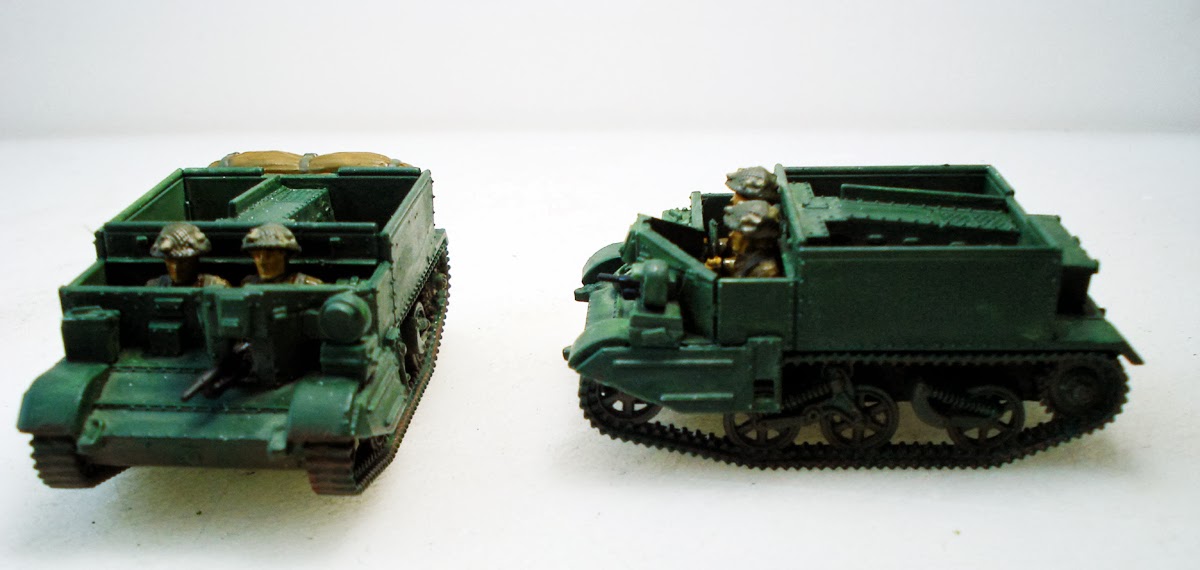
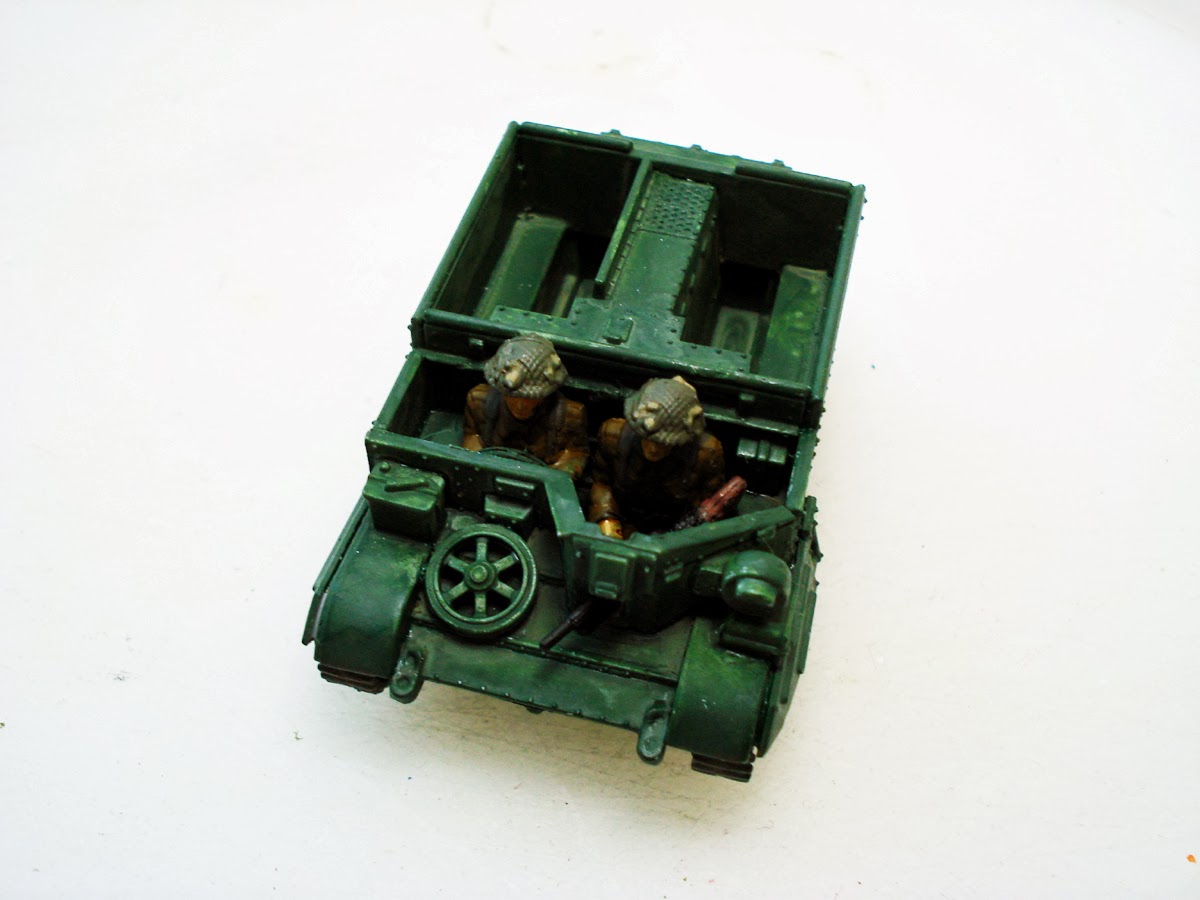
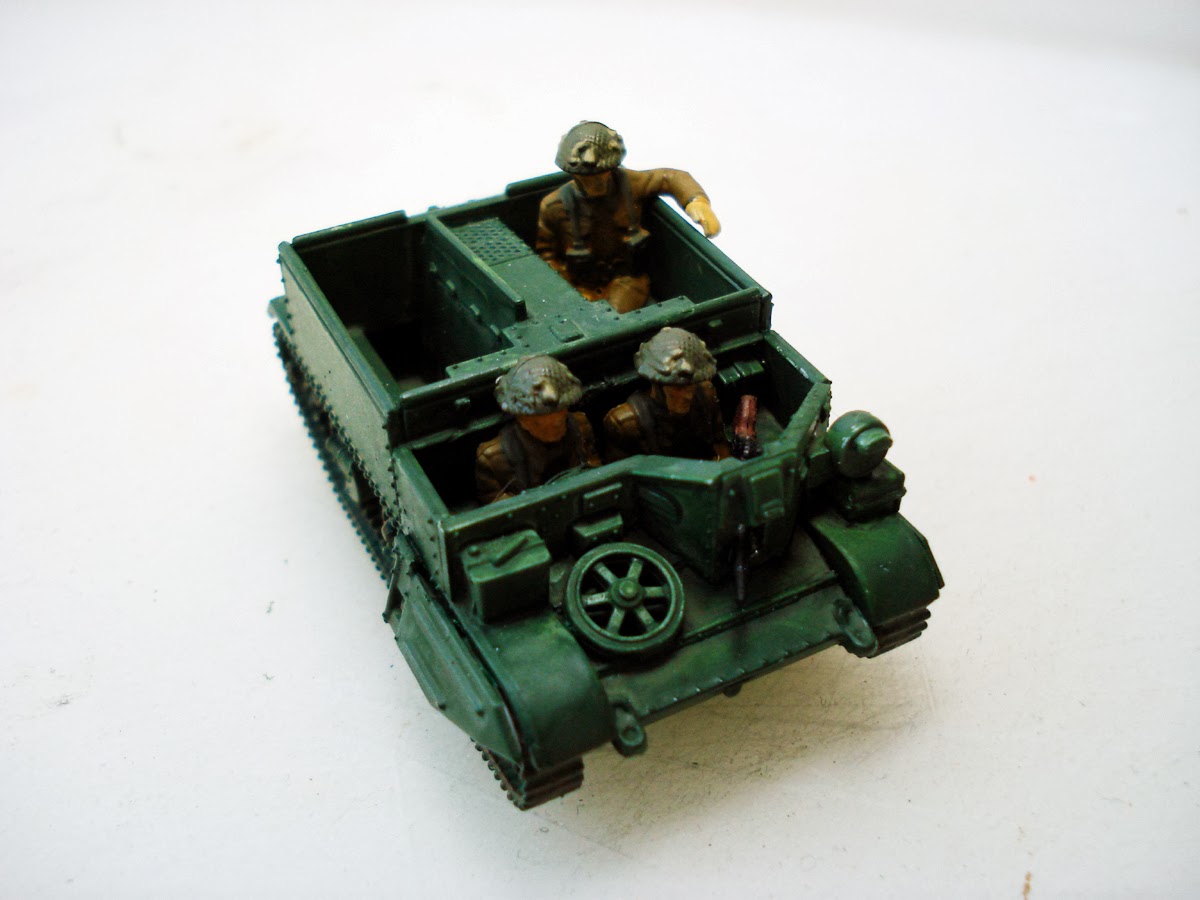
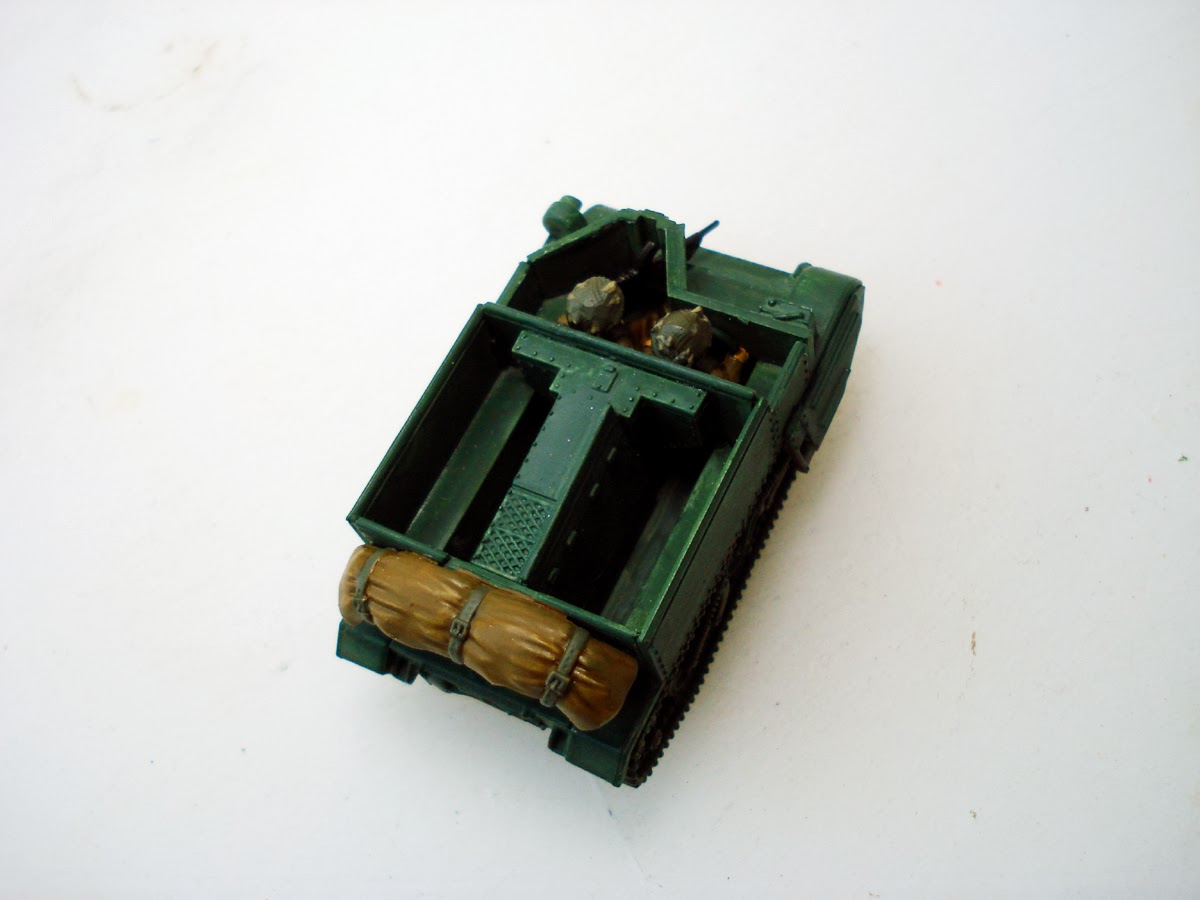
Slowly wrapping up my British platoon for Bolt Action I picked up a set of British Universal Carriers from Plastic Soldier Company. This is a nice model kit with 3 sprues for Mk 1 and Mk 2 carriers. Each includes 2 crew members, Bren LMGs, and a pair of passenger models. The kit for the most part assembles pretty easily. The one downside was the crew members.

Sort of temporarily fitting them together, I tried out slipping the driver in and thought it’d be no issue to paint it up separately. I found once assembled I couldn’t quite get it in without a bit of force. Fortunately the gunner slipped in a bit easier. However, I then found out the Bren gun simply did not fit within the port slot. I had to work on trimming it down and couldn’t quite get the angle right with the crew member inside. The front armor panel can be attached as a separate single piece. Working on this model again, I would get the Bren gun mounted to that first, paint and seat the crew, then add the front armor plate.

It is nice having a plastic kit though as assembly and doing some alteration is a snap. For myself, I’ve got two for transports and likely will convert the third for a Vickers MMG mount. A bit on the fence for that though.

There are a few small accessories such as a spare tread wheel and a folded canvas tarp for the back.

I modeled mine with passenger troops that could be removed. Just a simple way to model the unit as a full or empty transport, with a visual reminder using a figure.

Despite the hiccup with the Bren gun and the crew, it really is a great kit. The models are well detailed and you can’t beat the price for a bunch of transports. Likely with a 5 man capacity, you’ll want a few of them in your force. So getting 3 a pop is a nice buy. The models here are for 1/72 scale. Hopefully PSC will be pushing to expand their 28mm line. I’m certain these would be a great seller.

Scratch built scouring pad trees

My Bolt Action platoons are shaping up and I’ve been on a bit of a kick to get some terrain whipped up. One thing I sorely wanted were trees. However I’m just not able to bite the bullet and pony up cash for them. Looking around for pre-made scenery, trees are a bit expensive. A long time back I had gotten a bulk pack from woodland scenics where you could construct your own trees. It was a mess to put together and while great for a diorama, it just couldn’t handle the wear and tear for my wargaming table.

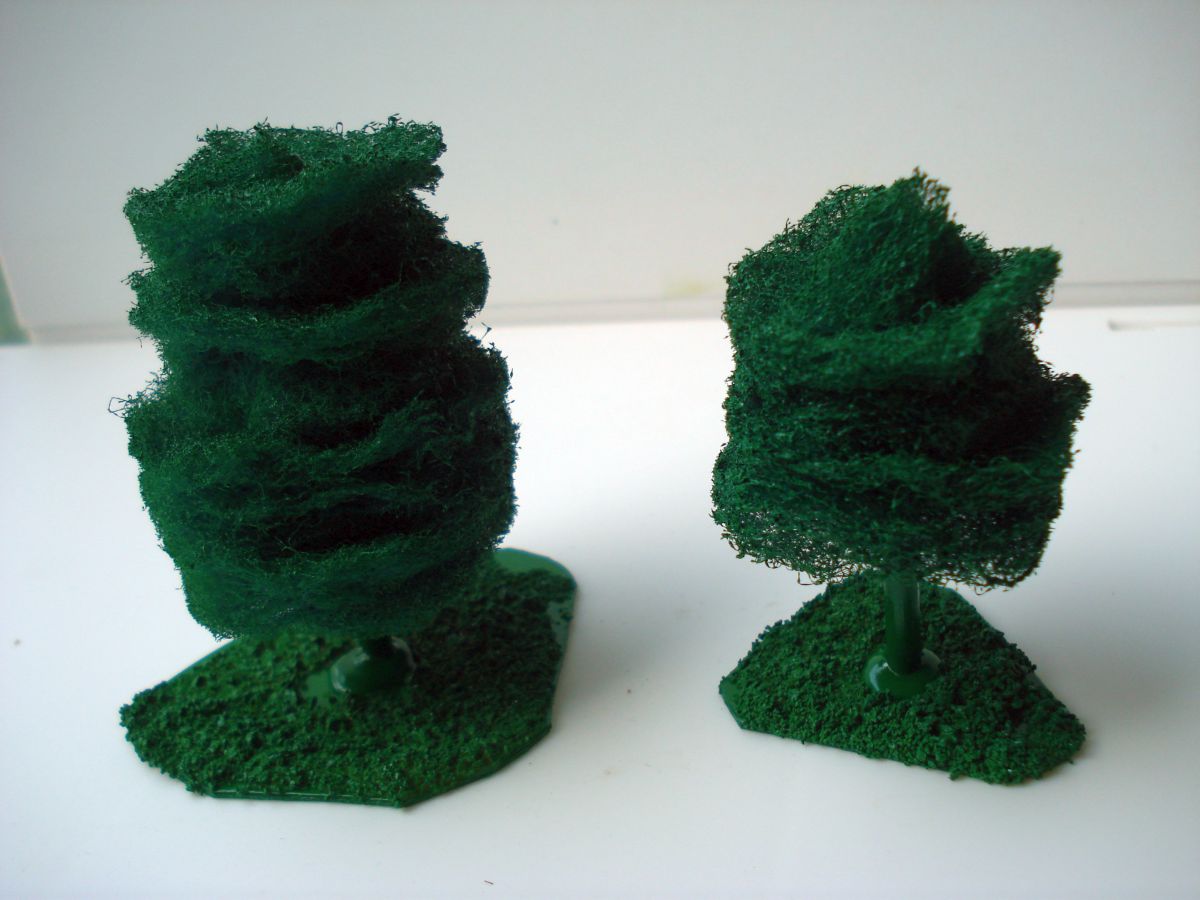
One tutorial I dug up described using cleaning pads for pine trees. Just right for my budget, so I jumped right in and looked into making some up. I picked up some scouring pads for less than a dollar and kept some skewers from some street food after a late night of drinking. I liked these skewers as they were thick ¼” diameter wood pieces.

I cut the pads into rows and then in approximately 1 ½” to 2” squares. I then trimmed the square pads into rough circles. I made sure to save a lot of the small corner bits of pad after cutting the major sections into circles. Some of the pads I cut into smaller circles of about 1 inch to serve as the top section of the tree, and followed this up by cutting the tree ‘trunks’ into 3-5” lengths. I found while larger trees are more realistically scaled, they are almost too big for wargaming.

As the I had to get the center wooden piece through the pad sections, I made a small cut in the center of the pads. Then came the more tedious bit. To give the pads some bulk, I teased apart the pad material for each section. This would almost double their thickness by simple pulling the material apart some.

With a hot glue gun, I added a dab to the center dowel and skewered a single pad section, moving it down to little over ½ the length of the wood. I repeated this, adding more glue higher up the wood shaft, adding more sections. I ensured the last section was a smaller diameter circle piece. All in all, I found 4-5 pad sections was enough for the trees to give them some bulk.

For the tops of the trees, I used the leftover parts of the pads from making the circle sections. Really teasing them apart, I could add 2-3 sections to the center wooden piece after placing some hot glue. This gave a nice small tapered top to them.

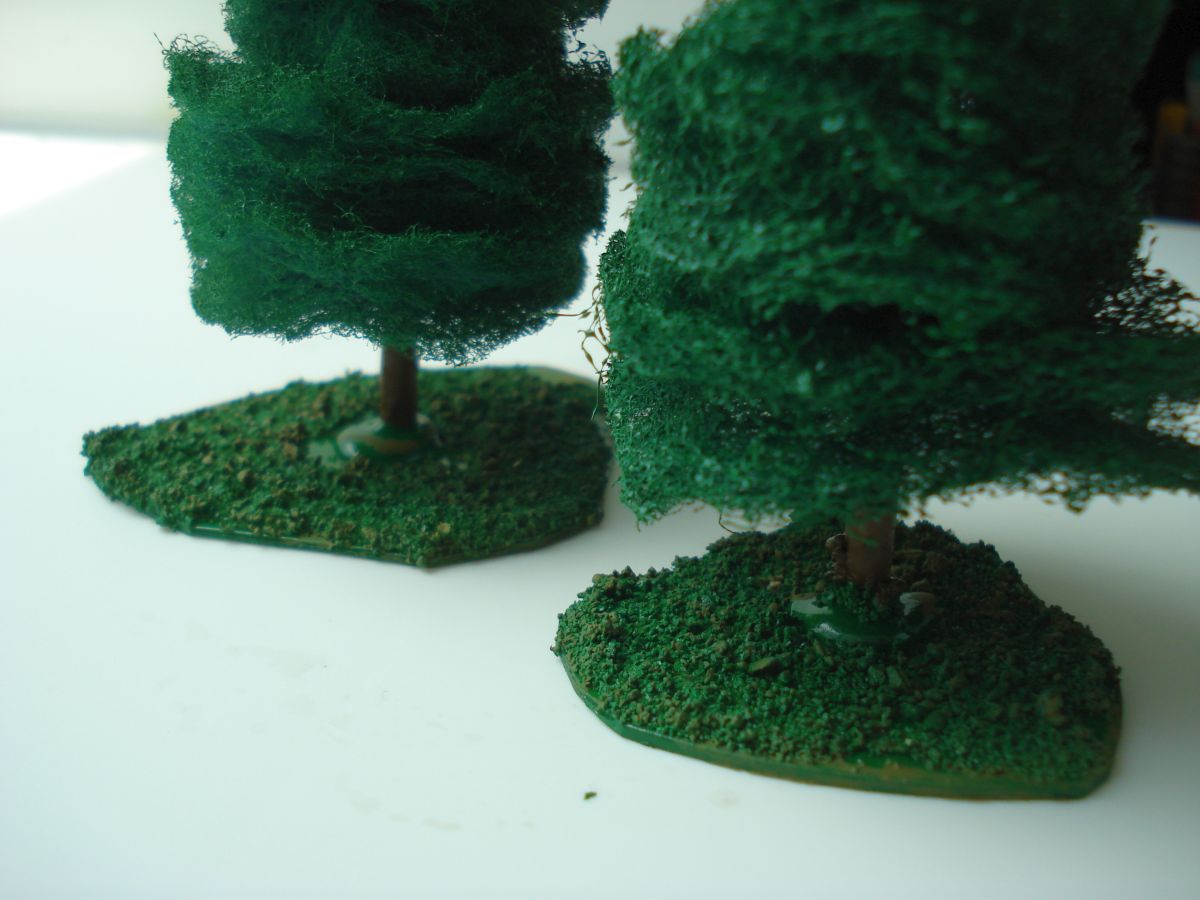
To mount my trees, I cut up some old software CDs, carefully rounding the edges. I placed a thick drop of hot glue in the center and then set the tree on the base. I decided rather than using watered down PVA and flock for the bases, I’d use a drybrush over a layer of modelling ballast. I wanted to do this partially to keep from getting flock all stuck up in the trees and also to ensure the trees could take a little punishment with storage and transporting.

I put down a layer of watered-down PVA glue and after letting the model ballast dry, set to painting it. I gave each tree a good coat of green spray paint. A nice part of this is that the paint will also act as a sort of cement for the ballast, and stiffen up the pad sections of the tree too.

After letting them dry, I painted the trunks a nice brown coat, and followed it up by drybrushing the bases with a lighter green to simulate grass and low brush. More chunks of flock could be added if needed, but overall I liked the effect it gave.

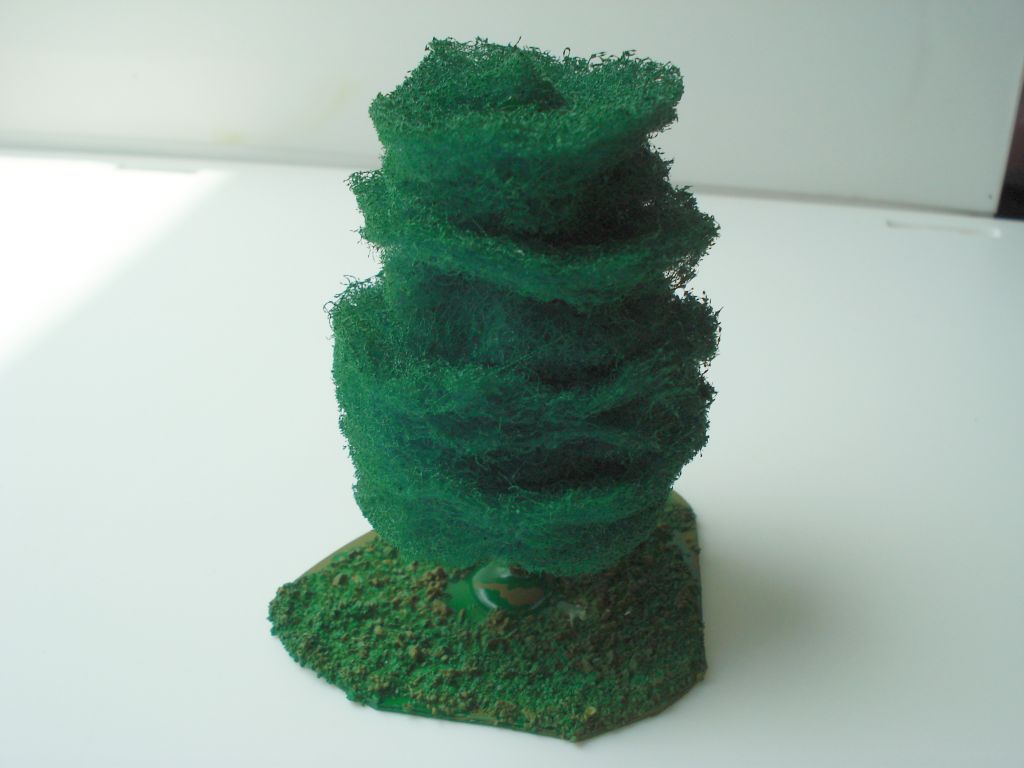
Note I did not highlight the trees any. I feel one solid color, with potentially a wash was enough. Drybrushing the tree leaf sections would likely only highlight the overall pattern of stacked pads even more. With one solid, uniform color of green, the detail of the tree leaf sections are muddled some. Afterwards I went ahead and gave the trees a matte varnish spray.

I think they look pretty decent and you simply cannot beat the price. I may very well likely pick up a few model trees and expect if I mix them in with the lot I made, they will look even better on the tabletop. This was a pretty fun project and an evening’s worth of work (minus the time needed for letting the trees dry due to spray painting). Now to just get some more games in!

Plot Crawl Campaign – Running my Cthulhu game with a pile of props

As I blogged about a while back, I am running a 1920s Cthulhu game on the side along with my regular Weird West campaign. I lifted an idea from the Secret Cabal Podcast which I found rather inspiring. Rather than your typical game where someone would initially approach the investigators to tackle a specific mission looking into the supernatural, instead it would be based on what the players wanted to look into. It’s a plot crawl campaign.

It’s much like your good old fashioned hex crawl game. While there isn’t a map of randomly generated content, it’s open ended to allow players to go where they will. Like a hex crawl game, a plot crawl has adventure seeds acting like a map of sorts with a few details laid out to grab the player’s interest. They make the choice where to go and what to look into. Sometimes more choices might branch out depending on what they investigate, but they can turn around and poke their heads into another ‘section of the map’ investigating some other adventure plot if they want to.

It’s designed to run very much as an episodic game. There really isn’t any over arching story. As things progress, you can have recurring villains, NPCs, and past events to weave back in as details if needed. It’s immensely flexible as you can tailor the game to deal with past events and players, building up a larger story, or just go for the ‘serial adventure of the week’ format instead. None of this has to be planned out either. You just think of 4 or 5 different adventure seeds and run with it. The details will be fleshed out as the game is played.

My players started the session being called together by a lawyer overseeing the estate of a recently deceased professor. All of them knew the person and had a relationship with him (be it a relative, colleague, etc.). They were each individually named in the will to be present for the opening of a trunk of the professor’s belongings. They were all led into a room, given a key to a small trunk, and left alone to go through the contents.

Inside the trunk they found different files, photographs, and other tidbits of strange information. I had made up a series of props in the manner of photographs, handwritten letters, and fake newspaper clippings. Each group of clues were given codes to match as a set (so all the clues for adventure G were together, while ones for adventure B were in another set, etc.). The players could rifle through the papers and pictures, and decide what they wanted to investigate.

For my first setting, I did kick things into high gear having the lawyer killed under exceedingly strange circumstances. This was followed up with the players being hunted by undead lackeys. All of it emphasizing that the strange did exist, and there were evil forces at play which knew the players had knowledge to secrets better left unknown.

However at the end of the session I gave the players a task. They needed to continue going through the contents of the trunk and decide that night what they wanted to investigate as a group for the next session. All the clues were fragments of some story, location, or odd supernatural thing. I made it a point that there were more papers and files within the trunk (meaning I would add more to the trunk later), however there were 5 different sets of clues and props for them to go through at first.

This really worked well for the group. It was a task to have them decide on what to do next (expect at least 30 minutes or so at your table). However it really cemented the feeling of them investigating these clues of weird, strange events. That there was another layer of occult existence under the normal world around them, and they were slowly unearthing it. Best of all, I knew exactly what the next adventure would be and it was based on what the PCs wanted to investigate further.

It is a bit of a chore to create some convincing props. However I didn’t have to flesh out any adventures. I just needed some ideas of a location, possible NPCs, and some weird thing for the PCs to look into. So you don’t have to have six different adventures fully prepared at the beginning, just a few ideas presented as six different sets of clues. As the players pick what they want to look into, I can turn around and work on that adventure specifically. Since many of the details were rather vague, I could even use an adventure generator for assembling the next adventure if needed. It really is a surprisingly flexible way of providing adventure seeds where the players get to give input on where to go next.

Something like this can be adopted for other settings and I am really beginning to take a shine to it. Maybe it would be printed public notices posted around a fantasy city, or an infonet log players would look through in a sci-fi campaign. Either way, all I would have to do is sketch out a few ideas and let the players decide what they wanted to check out next at the end of the session. If you are struggling to think of ideas for your next campaign consider running a plot crawl, with props and leads for the players they can provide some inspiration for further game sessions.

Review: Saboteur

For 3-10 players, Saboteur is a light card game that is part deception and part strategy. Players are dwarves seeking to mine a path to gold treasure. Unknown among the players is that some of them might actually be saboteurs, seeking to thwart the entire operation and keep the gold for themselves.

The game goes through 3 rounds, with the player having the most gold at the end being declared the winner. At the beginning of each round every player receives a role card indicating if they are a simple dwarven miner or a saboteur. An entrance card is put in play a defined distance from three face down goal cards which are randomly placed. Two of the goal cards lead to a lump of worthless ore, while one card is the gold treasure.

During a player’s turn they have the option of placing a card connecting the current paths, discarding a card, or to play an action card. Afterwards they draw one card. The action cards either hinder another player like breaking a mine cart or smashing a pick, or they repair that specific item. If a player has broken equipment cards in front of them, they can’t play any cards (except action cards to repair any broken cards on them). There are even map cards which allow the player to secretly see which of the 3 end goal cards is actually the treasure.

When a path leads to the treasure, special treasure cards equal to the number of players are drawn from a deck. Starting with the player that reached the treasure, they get their choice of treasure cards which have a varying number of gold nuggets. It’s entirely possible that some players will get more treasure cards than other fellow mining dwarves. If all the cards are exhausted and/or a legal path cannot be made to the treasure, each saboteur gets a set number of gold nuggets as treasure while the miners getting nothing. The role cards are shuffled and new cards are dealt to each player for the next round.

The game becomes a fun game of deception. You try to see which opponent might be throwing a wrench into the miner’s plans. If they feel someone is a saboteur, they can try to lock them out breaking their equipment. As a saboteur, you want to try and be subtle with subverting the path away from the treasure.

Not everything is a cooperative effort for the miners though. The player that reaches the treasure first gets their first choice of gold cards. The cards are an unequal distribution of 1 to 3 gold nuggets. Also if any players are saboteurs, the miner that gets to the treasure first will get an extra gold nugget card. So there is a big incentive to try and get to the treasure first (as you’ll likely get more victory points). This might even mean trying to stop other miners so you are the one successfully establishing a path on your turn.

The Good – This is a fun light game with a fair amount of strategy. The rules are very simple and easy to pick up. The game also plays rather quickly taking only 20-30 minutes. The cards are of sturdy stock and the illustrations are pleasant, colorful, playful depictions of dwarves and their mining equipment.

The Bad – While it’s simplicity has some charm, it can be somewhat of a repetitive game. You can get an very bad streak of drawn cards where it’s practically impossible to remove broken equipment played on you. This can be somewhat frustrating. If you are the lone saboteur (which is possible in a lower player count game) and are figured the likely traitor early in the game, it can be disheartening as everyone else keeps dumping broken equipment cards on you preventing you from doing anything.

The Verdict – Saboteur is an enjoyable light game, also a few things really add to the play experience. The role cards used will have one extra card over the total number of players. It’s entirely possible in a lower player count game to have no saboteurs, yet no one will know this until the end of the round. Also, having 3 rounds with new role cards given out at the beginning of each one means a player might not be stuck in a particular role for the entire game.

One really nice twist is that even though all the miners share the glory when a path reaches the treasure goal, the cards are not distributed equally and have different values. So while you do want to be sure and get to the gold with your fellow miners, you certainly don’t share the rewards evenly. This little twist adds some complexity in determining who the saboteurs are. If a player prevents another from reaching the treasure, are they a traitor or are they just a greedy miner trying to reach the gold first?

With a small box, light rules, and being able to accommodate up to 10 people, Saboteur makes for a fun evening. It’s a great filler game and a wonderful way to cap off a night of heavy board games, or make for an enjoyable hour or so by itself.

[Note: There is a slight variation I like using when there are potentially more than one saboteur (5-10 people). Like the Resistance, I add one extra step after the role cards are given out. Everyone closes their eyes and one person announces that the saboteurs open their eyes and find out who else might be a saboteur for that round. Everyone is then instructed to close their eyes again and open them all at once, with the game starting as normal. It can be difficult for the saboteurs to win a round unless they can somewhat work together. This little extra step allows for the saboteurs to strengthen their position when they bluff to the other miner players.]

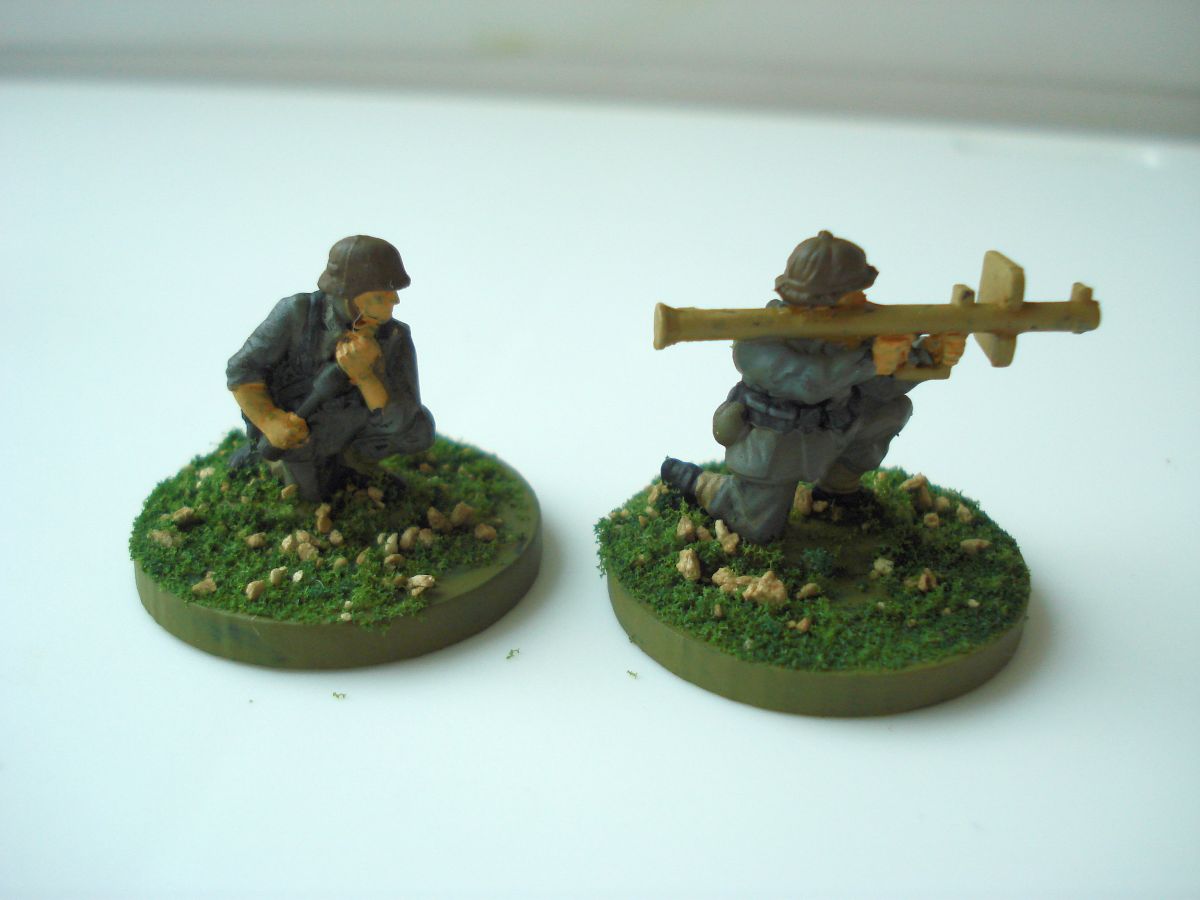
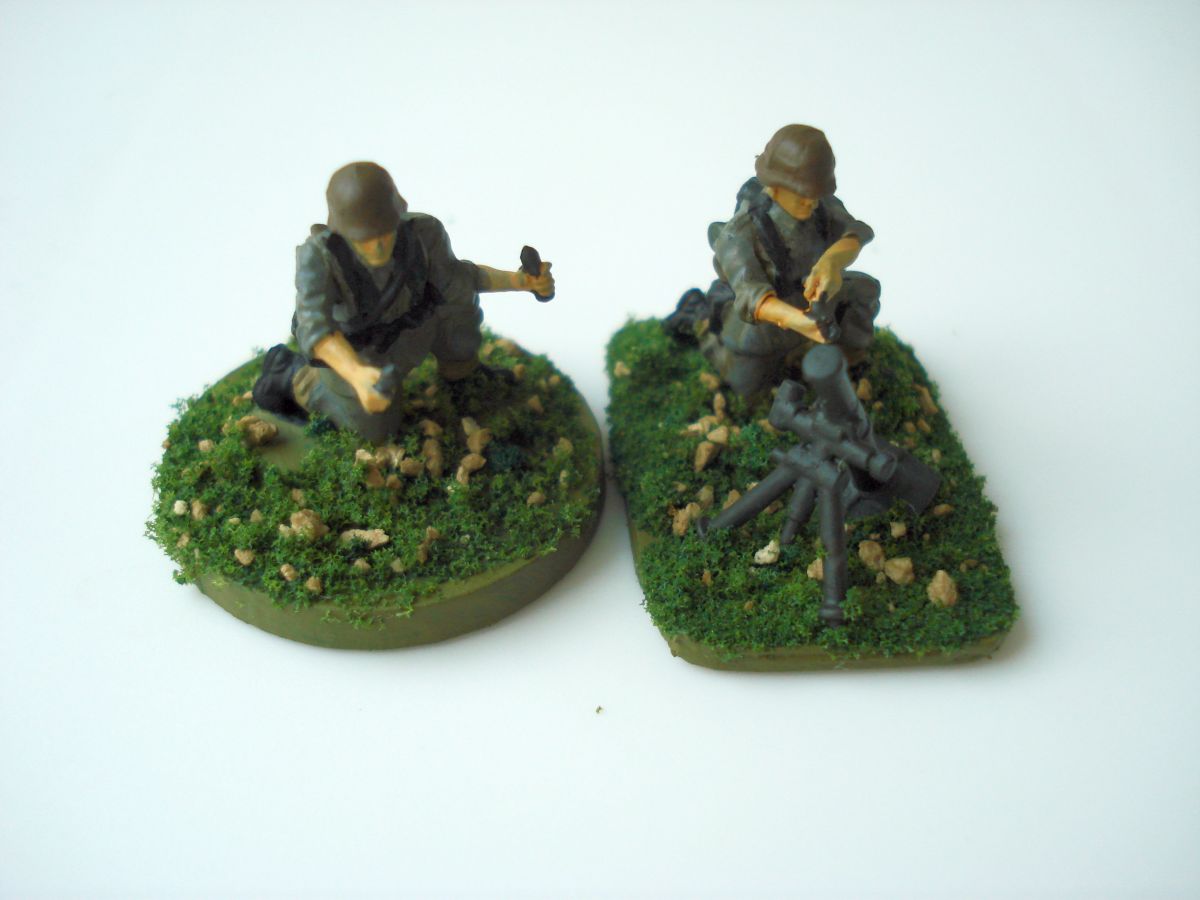
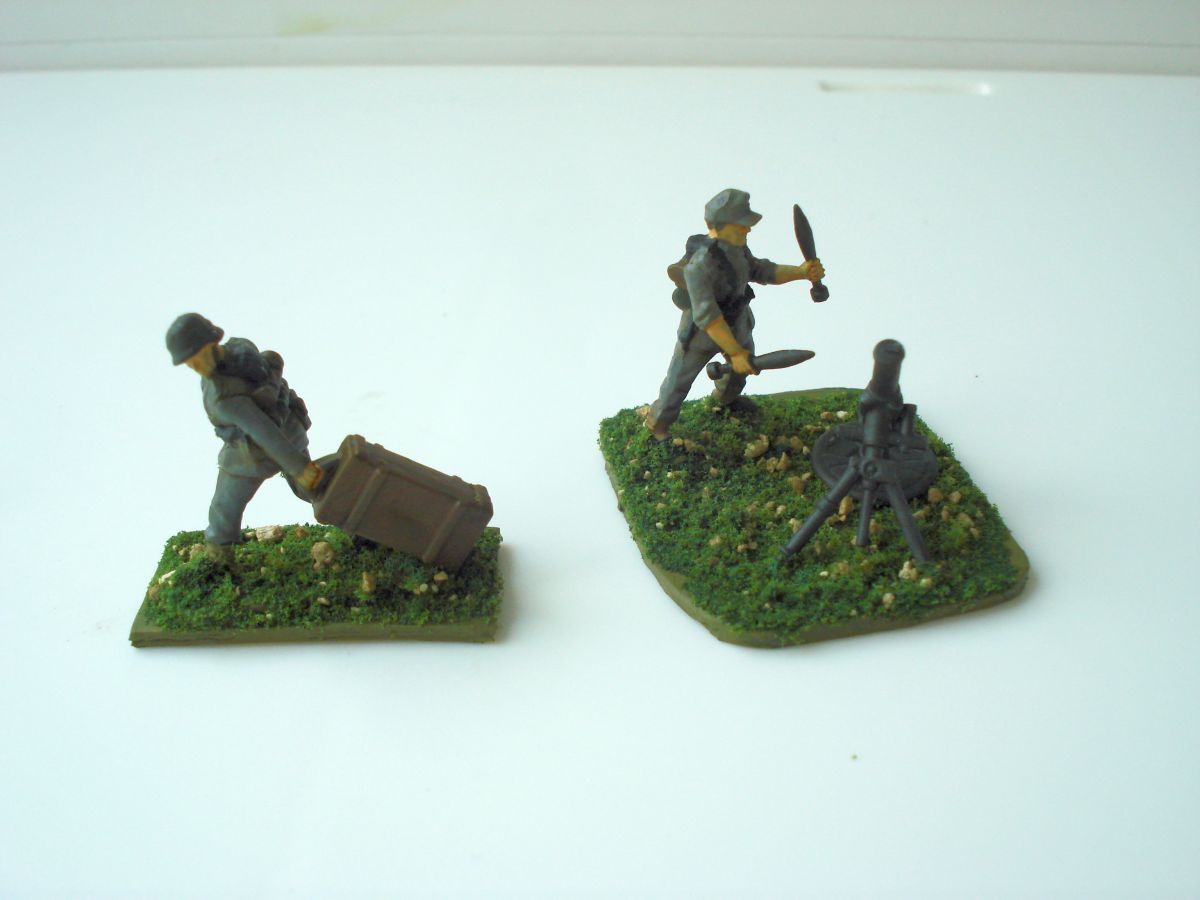
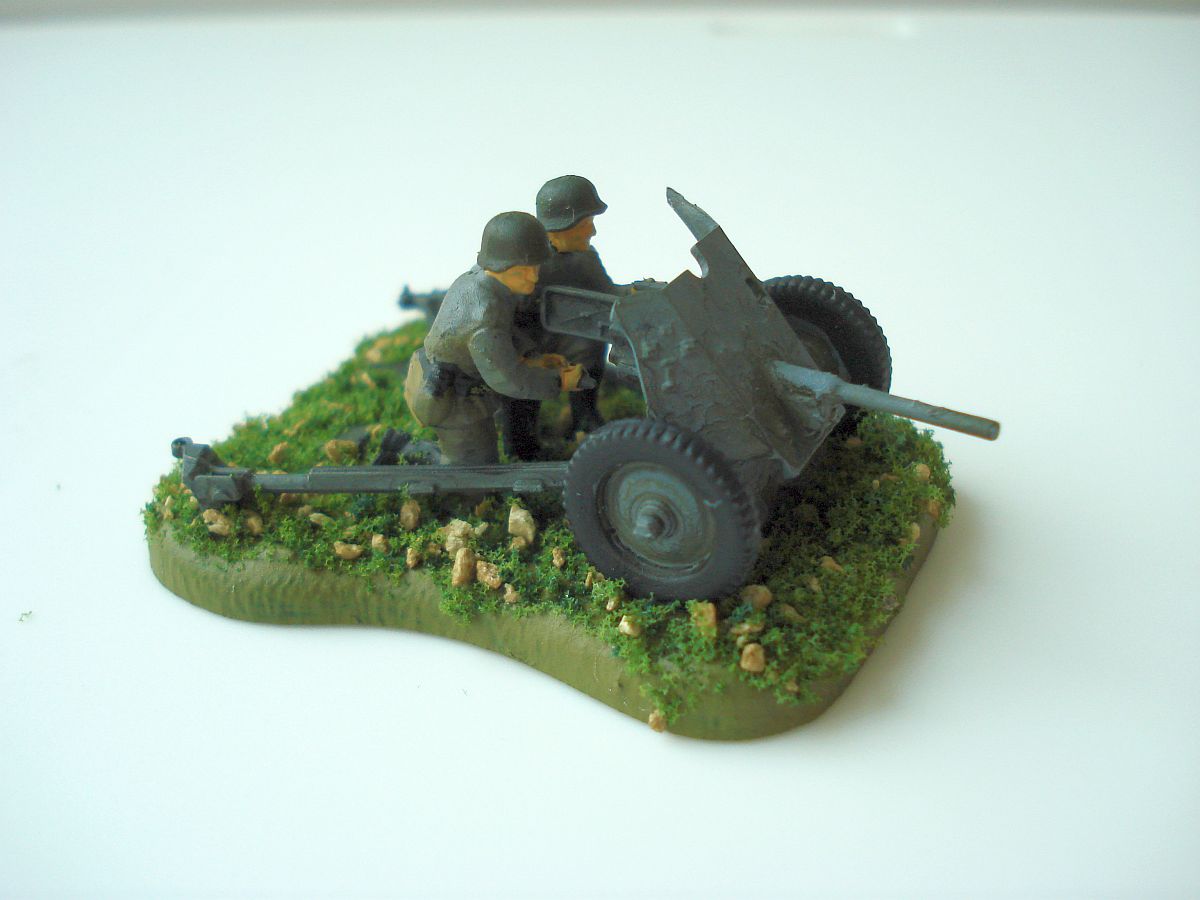
Plastic Soldier Co. – German platoon painted

Quietly over the past months I’ve been steadily working through my German platoon. There is a local con coming up in September and I think I might try to demo a few games. With my Brits done I wanted to also get a group of Germans finished to face off against them.

The detail for the German figures are pretty good. Some of the MG42 weapons are a little bulky and odd looking, but for the most part the figures are accurately modeled and equipped. I’ve assembled models both from the late war and the heavy weapons kits available from Plastic Soldier Co.


Some of the figures are from Zvezda pioneers and pak-36 sets.

Another handful are Airfix pak-40 crew members (which I couldn’t pass up as the AT gun also came with an Opel Blitz truck). The one below is also with a Zvezda pioneer armed with a flamethrower.

However you can see the bulk are from PSC. They certainly paint up pretty well and happy with how they turned out.

Alleycon 2014 – A local gaming/fandom con in Gwangju

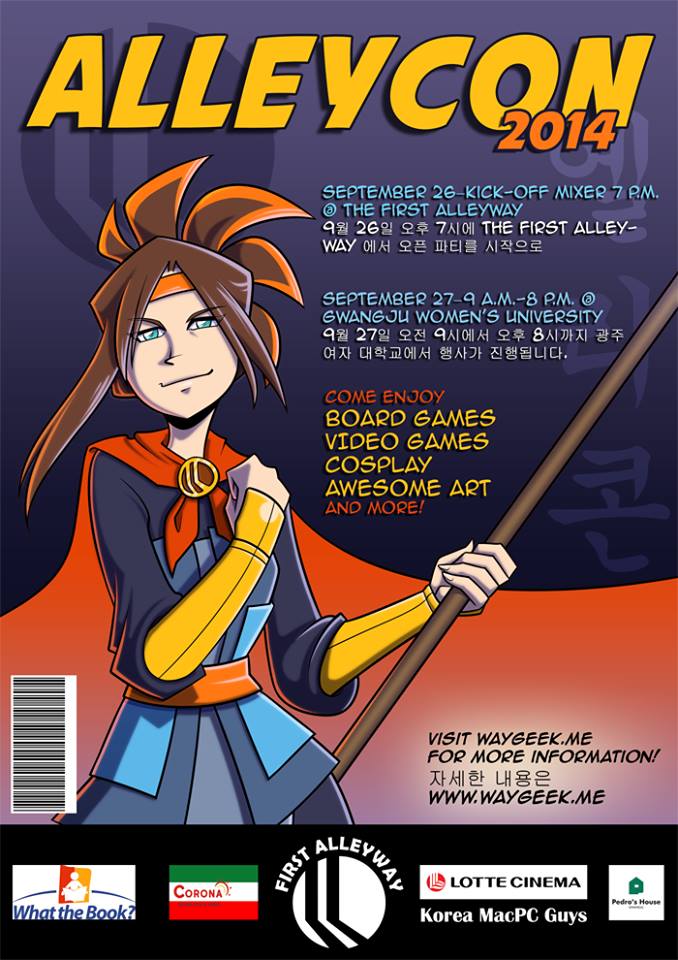
Last year a small geek fandom con dubbed, Alleycon, was run at a local eatery in Gwangju, Korea. This Sept. 27 it’ll be hosted in a larger venue at the Gwangju Women’s University. Last year the event was pretty fun and it looks like it’ll be bigger this year with some more guests and organized events.

Pre-registration I believe is closed, but seems there is still quite a few passes left so registration at the door shouldn’t be an issue. Not certain about the costs, but all day passes should run between 20,000-30,000 kwon. Best of all many con events will have proceeds going to a local orphanage. So you can spend some cash picking up (and playing) some geek-centric items and ease that guilt a little knowing you are doing some good at the same time.

There’ll be a cosplay contest, video games, some Q&A sessions via skype with some sci-fi authors, and a bevy of tabletop gaming. Along with set events, there will also be a room with open tables. So if you are itching to throw down and try out a game in your collection, this might be a great chance to try it out with a few like minded folks.

I’ll be running a Bolt Action demo game and also a Savage Worlds WWII game. Last year I did something similar and had a good time running events as most of my players had not tried RPGs or miniature wargames before. So it’s always a treat to give folks a chance to see what the hubub of gaming is all about.