More Than a Game – Board gaming in Bangkok

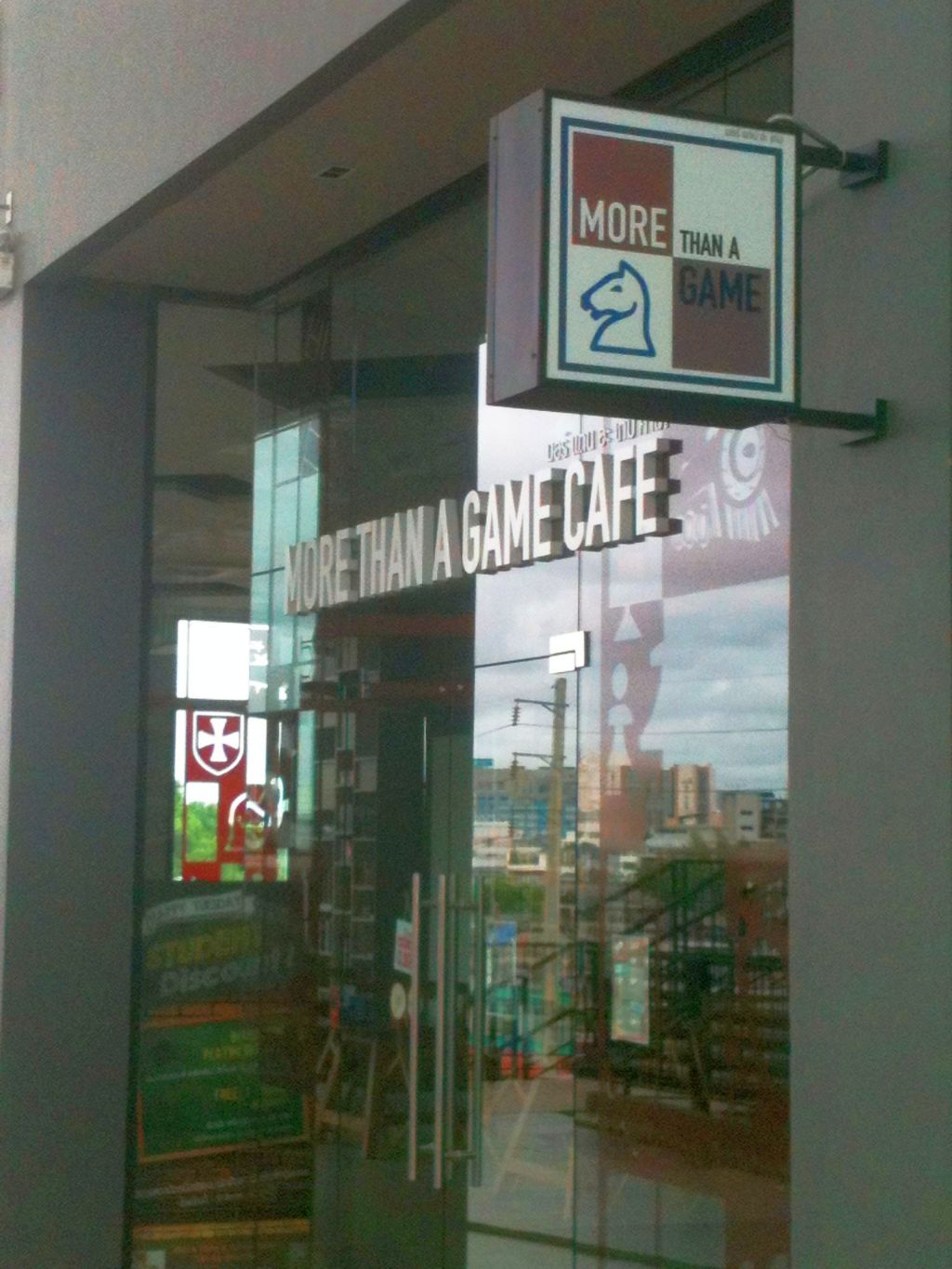
Occasionally I get to do some international travel. While I don’t actively track down game stores, I certainly will jump at the chance of checking one out if I stumble across it. The last time I visited Bangkok, I was pleasantly surprised to find a local board game cafe at a mall near my hotel.

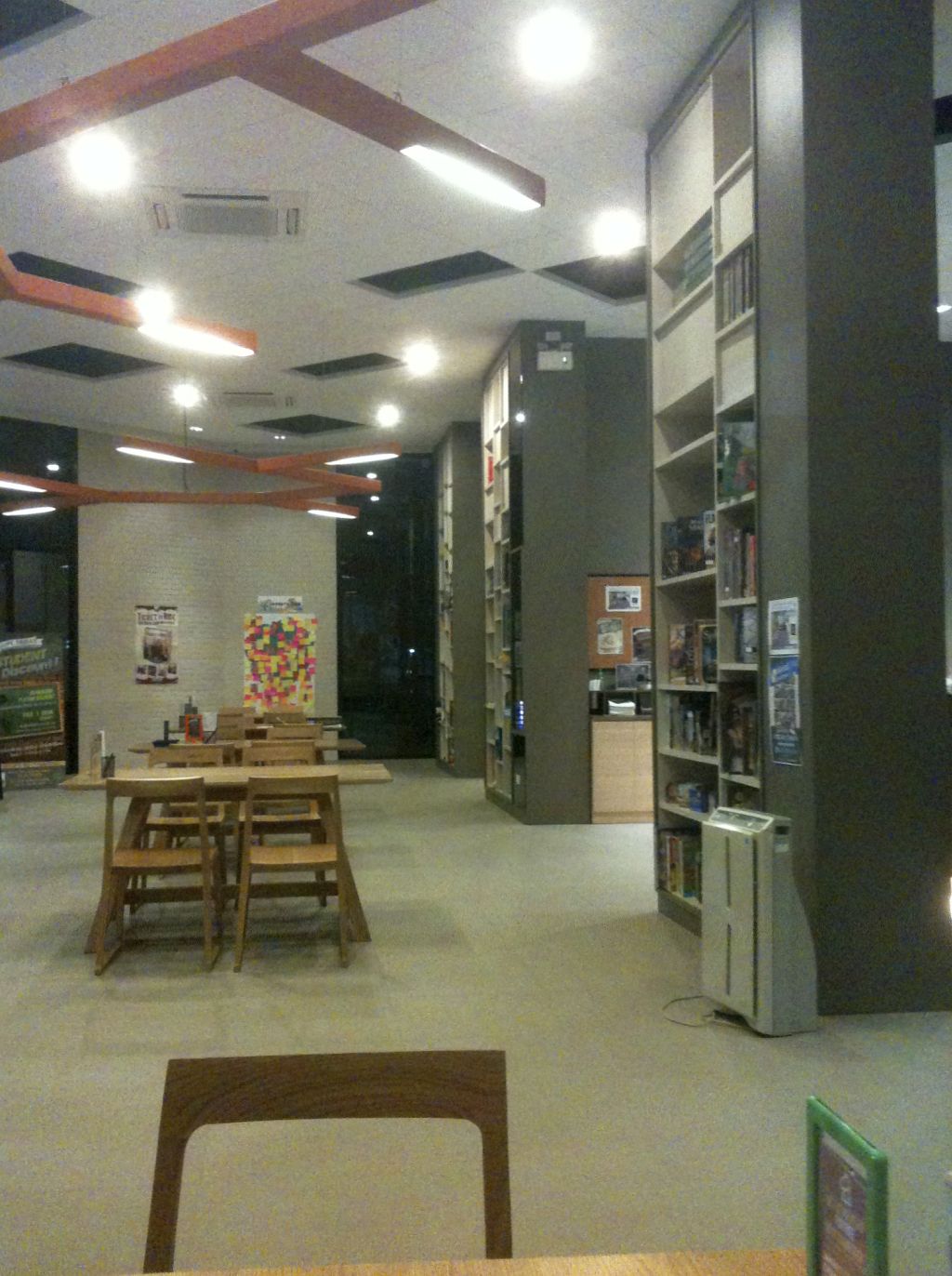
The cafe does not cater to the late hour gamer, closing at 9 PM during the week and at 10 PM on the weekends. However they do open a bit earlier ready for the lunch crowd every day. The place is well lit, with several tables in a nice open area.

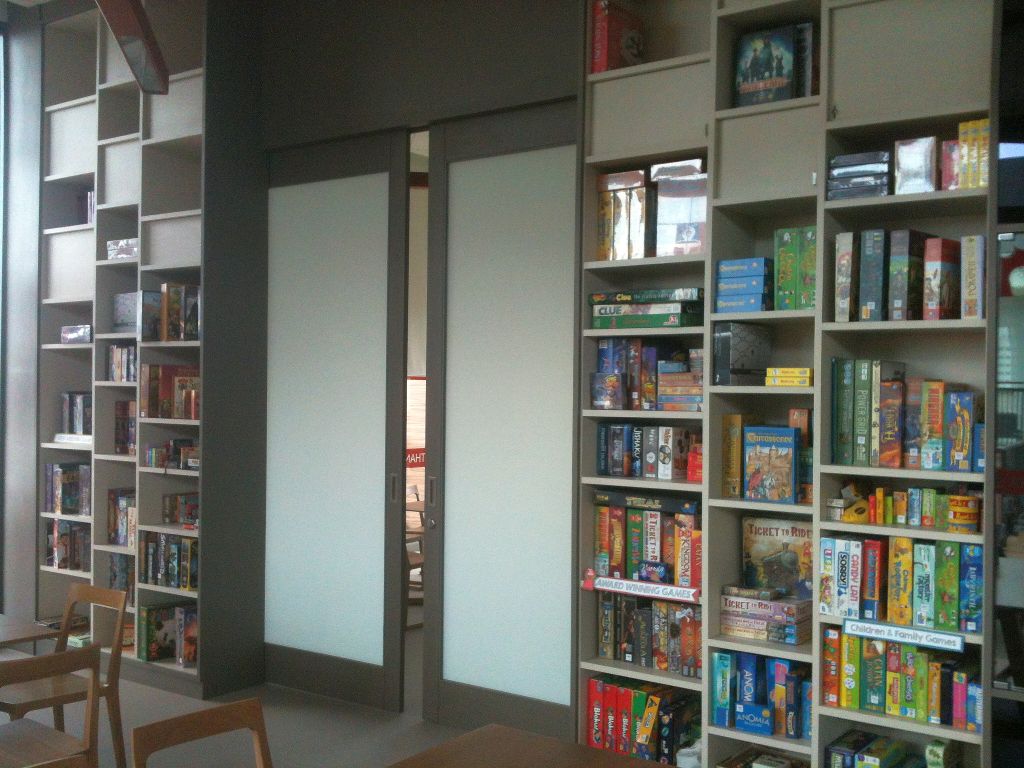
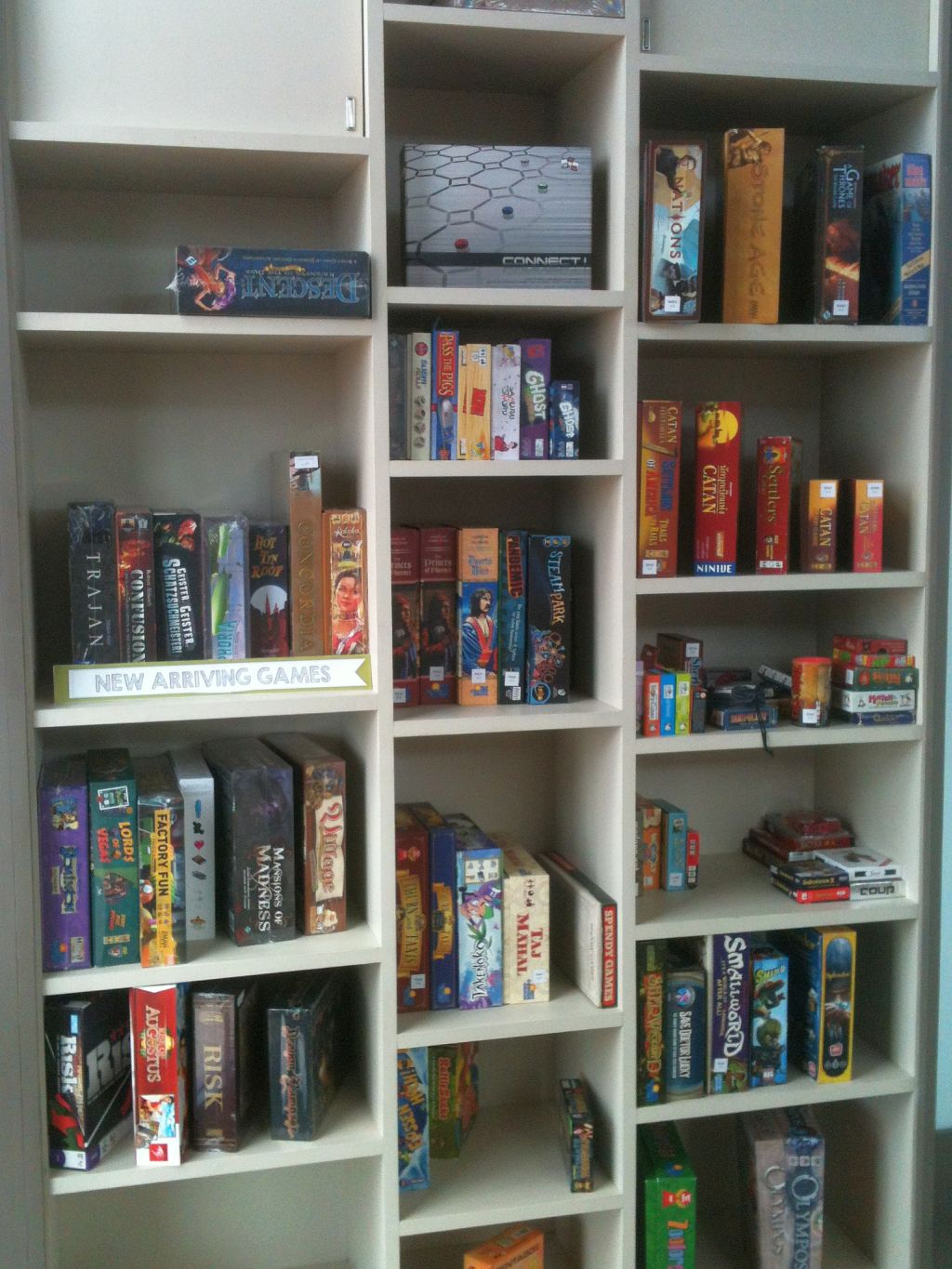
There is a decent selection of games for sale and another full shelf of games for playing in the store. The cafe has a membership which allows regulars to spend time in the establishment playing games. However if purchasing a few drinks, you can also get a 3 hour chunk of time to play games which seems more than enough.

You’ll certainly want to entertain getting something to drink and eat too. Coffee in the typical variety of serving choices are available as well as other non-alcoholic drinks. There are some nice desserts and a few key sandwich choices too. I have to say the waffle desserts are especially tasty. The staff was very friendly and eager to engage me when I came in. Given that they were willing to chat to a foreigner in English was a plus.

From my understanding one of the co-owners is an expat and wanted to try their hand at introducing board game cafes in Thailand. The staff explained that these type of game cafes are slowly becoming popular. And I’d say it seems like they are running a place with some great potential. If you get an opportunity to travel to Bangkok and are close to Chulalongkorn University, More than a Game is certainly a pleasant way to spend an afternoon over some coffee and board games.

Roomy tables.

Well lit tables at night.

Games for sale.

And games for playing.

A closer look at the games you can play.

Hotz Mats gaming mats

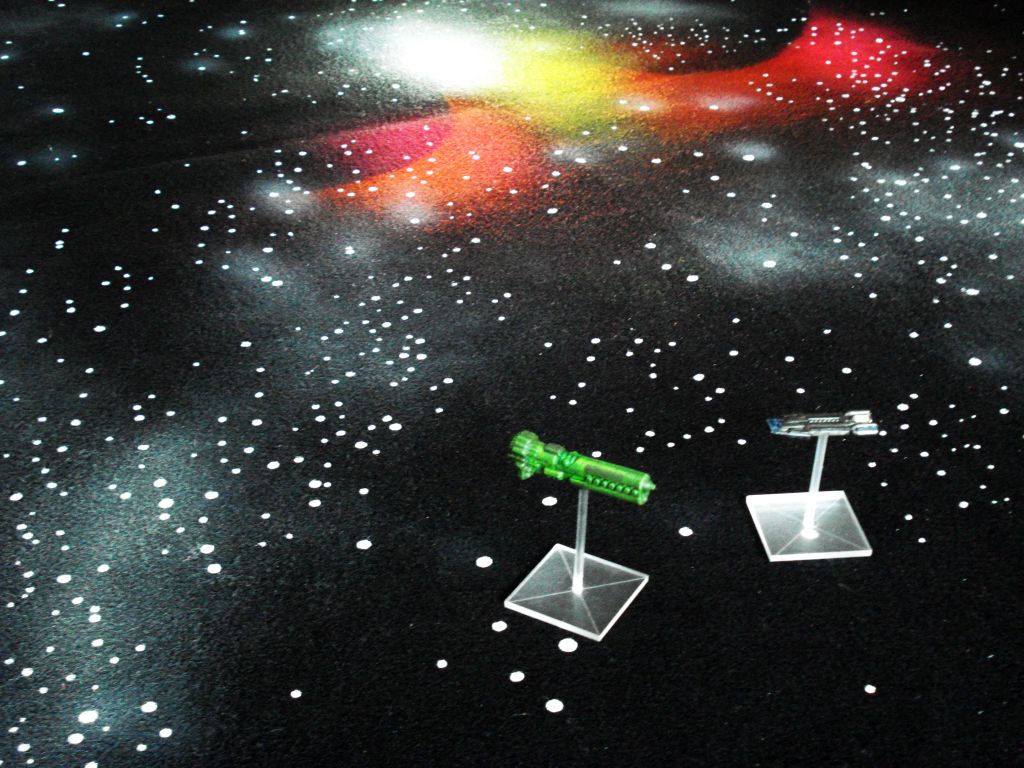
Since I was sorta on a terrain kick making asteroids for Firestorm Armada, I wanted to get a better gaming surface than a black cloth. For a while I heard about Hotz Mats which make a variety of felt gaming mats that can serve for some really nice space tables. They are screen printed and have a variety of options with printed hexes or grids, or even mats that are double-sided with an option for one side being gridless. The mats come in a variety of dimensions with 4’ x 8’ being the largest.

So I went ahead and ordered two mats at 45” x 72’ with one being an earth green mat for my WWII and SAGA stuff, and another deep space mat for my Firestorm Armada games. The mats are felt. However they are supposed to be treated with a fabric binder that reduces the wear and tear of the surface, lessening the pilling you typically see with felt.

The mats are a decent thickness (if just a tad thin) and can get a bit creased. However really deep folds can be carefully ironed out. The surface of the painted side is somewhat stiff which I assume is the fabric binding material that is sprayed over the surface. This does keep models from snagging up as much compared to regular soft felt. I could push my ship model stands around without having them get caught up on the material.

The deep space mat is pretty nice for a generic background. A little color is thrown in aside from the star background which is nice. I think if I were to get another I might splurge for the enhanced deep space mat.

I am a little disappointed with the earth green mat. I was hoping maybe a little extra paint to add some texture to it. However it’s really just a bolt of green felt yet still has the fabric binder coated on it. This gives it a decent surface and likely a hex printed version would serve great. Overall the one I picked up is a plain, muted surface for wargaming.

Now to go a bit on the customer service of Hotz Mats. Bluntly, I found it lacking. I do know they pretty much make the mats custom order. And I would put money on a lot of the mats being done in one go, and maybe needing some time to dry out in the open. Coming from Canada, this might mean delays due to poor weather (humidity) mucking up the production.

It took my order an extra two months to arrive. Email responses from the company were also sporadic and I didn’t get any indication my order was shipped. So I will give a huge caveat for buying their mats directly. It’s going to be delayed. Don’t expect a prompt (or any) response to emails. I can understand production delays, but I’m a little less understanding with the lack of communication. Consider the 3-5 weeks deliver to only be valid if you live within the province.

Now I understand they are moving to a new studio. This might alleviate some production delays. If you order from them, I think you need to take a zen-like approach and just accept that after several months you’ll get what you ordered in the mail.

The game mats are decent, seem like they can take a little punishment, and can easily be stored away. However simply put Hotz mats aren’t worth getting as there are better gaming mats out there that are comparably priced. What really pushed it over into the no buy column for me is the abysmal customer service. Seems you’ll get your mats… eventually… when they decide to get them into production… and bother to ship it. There are other options available for gaming mats which provide much better customer service. I can’t recommend buying Hotz gaming mats.

Starting a Savage Worlds Cthulhu campaign

My weird west campaign is still chugging along. However I found myself dragging a bit with it. While I was gung ho at the onset, I found myself getting a little uninspired thinking up adventures. My players seem to be having a good time, but sometimes I’ve been struggling to keep up the enthusiasm for the setting. I’m convinced now I’ve been approaching it all wrong.

I wanted a spooky western. Yet I found keeping that suspense going has been a chore. There have been plenty of ‘Oh sh*t!’ moments my players have had. However maintaining that tension is just too hard to keep up. I simply don’t have the GM chops to run a longer horror-themed game.

I realized I didn’t need to though. I’ve recognized the player’s aren’t quite the investigator types with their characters. Running it as a Savage Worlds game, they are much more heroic. I needed to drop off emphasis of the supernatural and shoot for a western game with horror trappings instead. It’s a better fit now and I think I can keep a more even tone with the game.

It still leaves me with the adventure-planning burnout though. I certainly need to shake up the setting some and run something else. I took a poll of potential settings and decided to lump a 1930s Cthulhu game in with potential choices. Seems horror is popular as the group wanted to take a stab at a Lovecraft supernatural game.

It’s still horror, but I can certainly run it as a different type of game. The weird west campaign is one where the PCs run around as larger than life heroes, blowing holes in zombies with a trusty peacemaker. This other campaign the players will be wary investigators, needing to be prepared to flee, their mind cracked and sanity waning due to the terrifying knowledge of the Great Old Ones they encounter. More importantly, I can run this as episodic sessions. Just a short break from the weird west game that will let me recharge my GM batteries and craft some fun ideas when we all flip back to a western setting.

Savage Worlds is pretty flexible as genres go. However, I am super lazy and having some pre-made setting rules makes the task of running a new game much easier. I picked up Realms of Cthulhu and found the book a great purchase. It has a lot of options for different ranges of lethality and think the sanity system works pretty well. There are plenty of NPC templates and critters, not to mention a random adventure generator I can use in a pinch if needed.

I’m trying a different way of running this campaign, with a lot of story ideas up front leaving the PCs to decide what to check out. To pique their interest in potential story lines, I’m working on getting some props together. Likely that is something to warrant another post but I want to see it in action before talking about it.

As resources go, I’ve found a ton of wonderful online stuff including sites with lots of cool photos. Definitely looking forward to getting a creepy Cthulhu game going soon.

Asteroid terrain for Firestorm Armada

Living in a Korean city I have an exceedingly hard time getting DIY materials. There just aren’t huge outlet stores like you see in the west (Lowes, Home Depot, etc.). So getting my hands on construction material is a bit of a chore. Also, living in a city means that landscaping material is pretty much impossible to get too. Folks live in apartments so there is literally no customer base here for that type of stuff, hence it’s difficult to pick up gardening supplies.

I think it would be exceedingly easy to pick up pumice rocks or wooden chips as landscaping material, give it a base coat, drybrush highlight, and get a set of great looking asteroid terrain pieces for Firestorm Armada. However I’m sort of stuck with not being able to get material like that easily (or cheaply). So I started looking for alternatives.

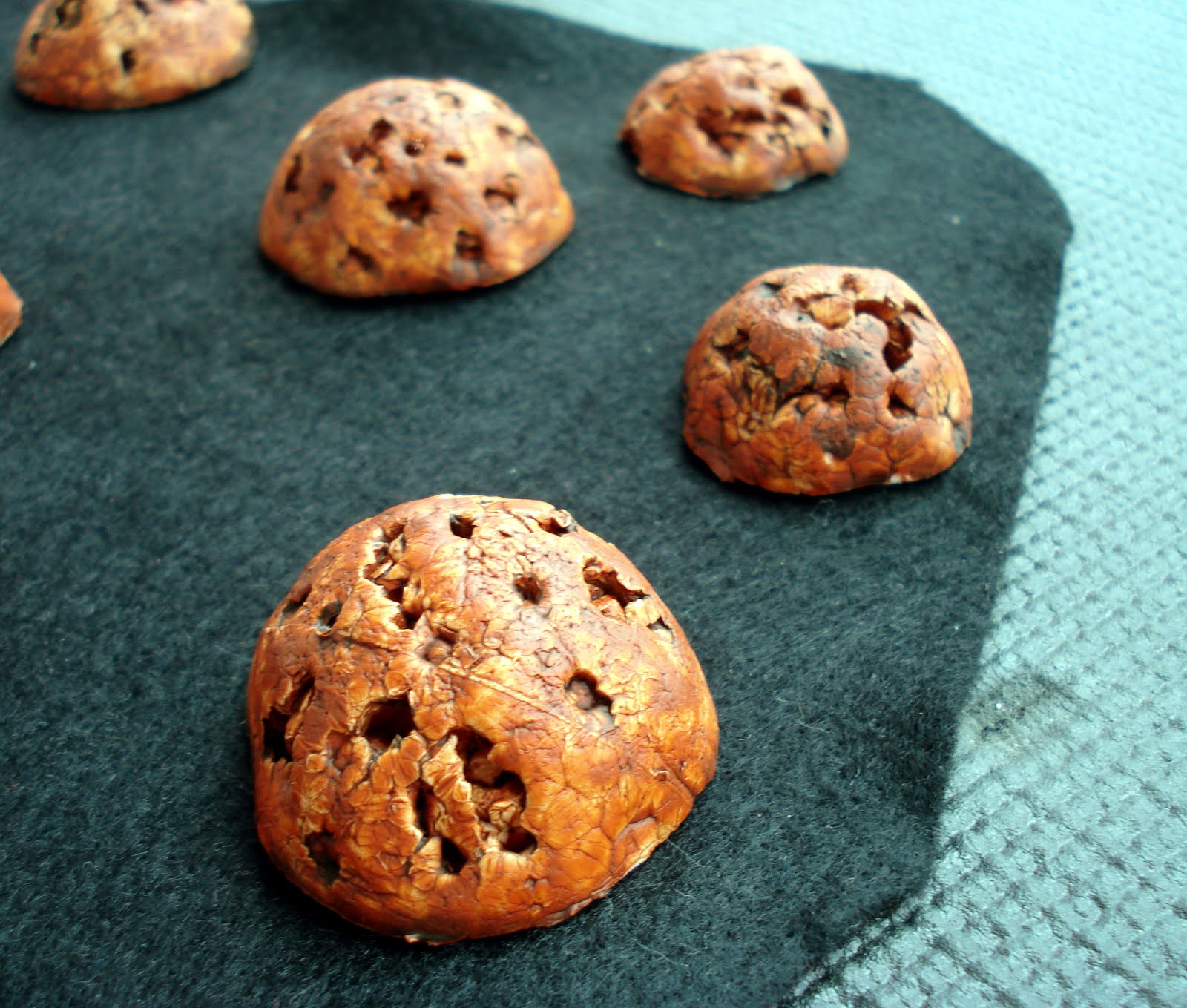
Fortunately, I was able to find an art supply store that had nice supply of styrofoam balls of various sizes. With a bit of compressing and a paint brush handle, I was able to add a bit of texture to the balls once I cut them in half. After quick base coat and wash, I have a nice supply of asteroids to put down on the table.

I also picked up some larger balls that I’ll use for some planetoids. They are a somewhat smaller than the typical planet terrain listed in the FA rule book. You can see one of the larger styrofoam balls in the background for this image. I’ll likely give them a very simple paint job, and despite the smaller size I think they give a neat 3d look compared to a cutout template.

One thing you’ll notice is that I have my asteroids on black felt. As with many of my war games, I am a huge fan of felt. I really like using them to mark roads, woods, fields, rough terrain, etc. I like having very clear boundaries and with FA it’s the same. I can easily layer the felt to create as big a field as needed and have a few smaller sections to make more odd shapes. What really works for this is that I can freely move the asteroid terrain bits around on a set base, allowing models to maneuver where they want, without worrying about altering the perimeter of the field.

Still thinking of possibly adding a few dabs of paint to the felt to give it that star field look. I’m planning on picking up some other colors like a nice purple for nebulas. Now I’ve got some terrain completed, it’s been calling me to get some fleet battles going.

Travel for Savage Worlds

My weird west campaign has my players spending a lot of time in the saddle. Quite a few of the PCs opted to get survival and tracking as skills. It’s something they thought would be helpful and envisioned their characters as more hearty, pioneer folk rather than a bunch of gunhands wanting to stick around the saloons all the time. Because of this, I wanted to try and incorporate some type of events for overland travel which might use these skills, rather than just handwaving it all the time.

I was sort of stumped though. I wanted to try adding some structure to travel, but also have the opportunity for random encounters. I wanted players to be able to use skills to impact how efficiently they conducted their expedition. I also wanted provisions and keeping on course another factor.

Digging around, I found this wonderful set of random encounters for a fantasy SW setting. I really liked how these were laid out. However, it was still a bit clunky for me. So I opted to work on it a little more and make up my own version.

I kept everything related to using cards and had no dice rolling. I also tweaked it some related to expanded events in particular terrain. Really hazardous lands might incur more usage of provisions (which would relate back to fatigue). I wanted to keep this open ended and not get down to too many specifics, in order to allow the rules to be used for a variety of settings. You can draw a single card every day, or instead decide to draw only for each important milestone.

Likewise some of the events are sketched out. Inclement weather could mean the players might suffer exposure and need to make vigor rolls to avoid fatigue. Possibly another check might need to be made to avoid a wound. Say some heavy rains have made riding along a mountainous path dangerous. So failed riding skill checks could have the player’s mount be injured (or themselves taking damage from a fall).

One big change is the number of provisions needed. If you are planning an expedition, you’re going to take enough food to get you there and back again. At key points you’ll be going through food, water, and other items needed during your journey. I wanted to reduce the overhead of excessive bookkeeping and avoid the need to keep track of various ‘legs’ of a journey. So I opted to just have set points where players exhaust a level of provisions. Be mindful that if you are drawing a card every day, but a trip might take 10 days to complete, players will likely quickly run out of provision markers early. It might be better to draw a card every 3 days or so instead.

So here are my travel rules for Savage Worlds. They allow for a variety of events where player abilities can help in reducing misfortune. I think they are also relatively generic enough to work in a variety of settings. Hope people get some use out of them around the game table.

Hill terrain from insulation foam

After making some progress with my 15mm sci-fi troops, I needed to get some terrain together. As always, I’m really on a budget. I’m also hesitant as a likely move is looming in the near future. Keeping the amount of stuff I need to ship low (and light) is weighing on my mind as of late. So really putting a lot of model time into terrain feels sort of a waste, especially if I’ll be throwing out half the stuff I whip up.

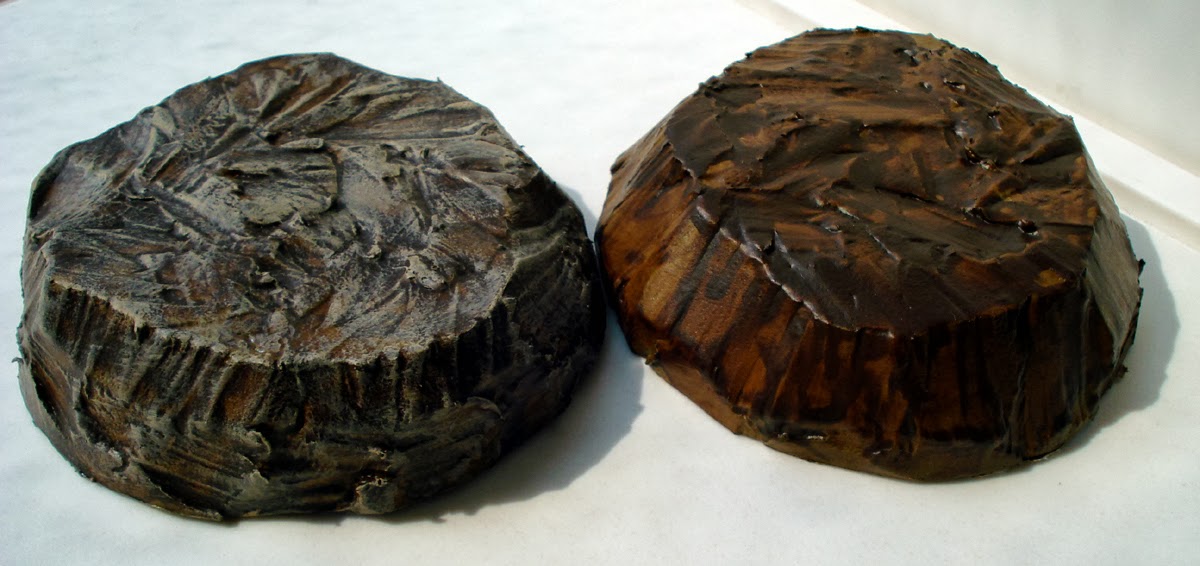
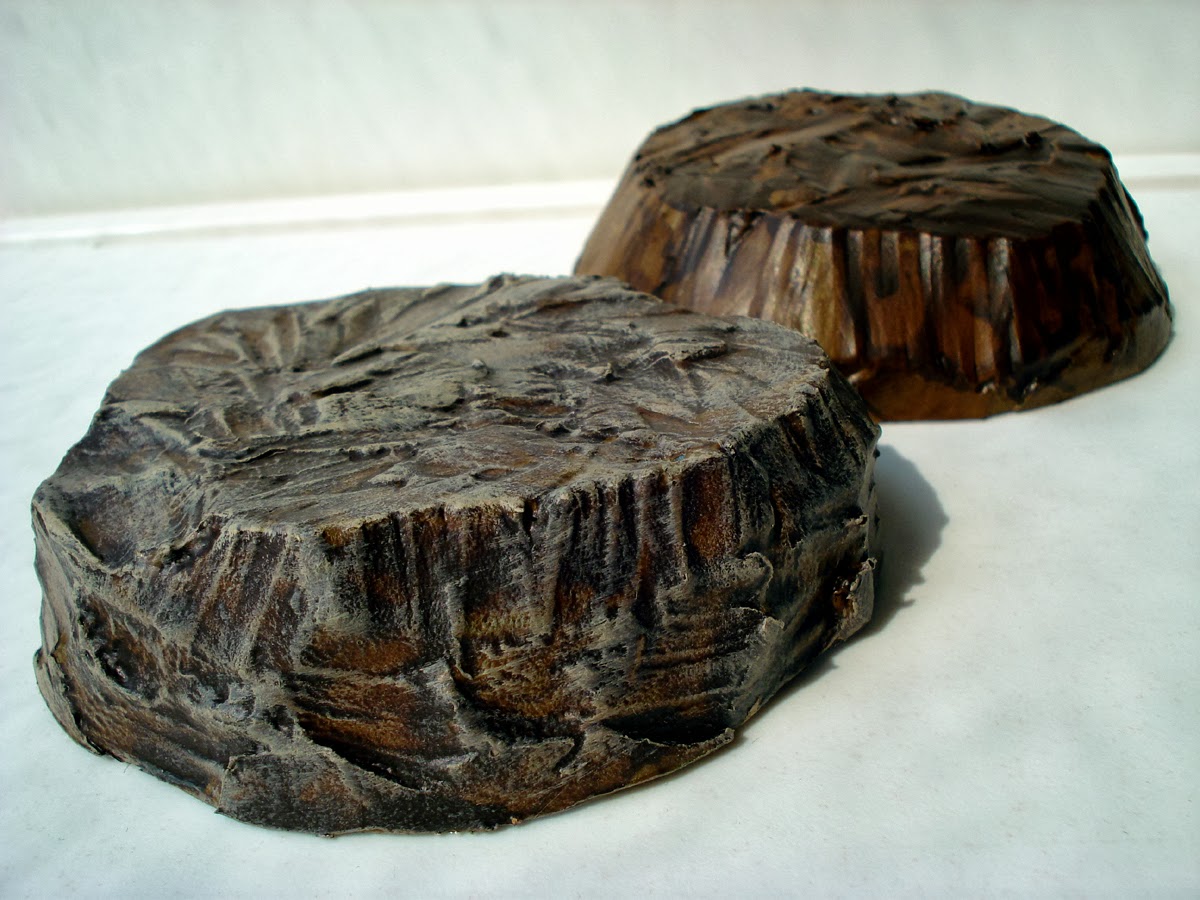
I managed to pick up some packing material made of dense foam insulation material about 3″ thick. As thick cylinders with nice flat sides, taking a knife to the center meant I could get two hills. Roughing up the surface even more with a craft knife left a lot of nice texture with the edges. And a few I cut with an even sharper angle to give one direction a more impassible facing cliff.

The material was soft however. Using some acrylic paints for canvas and a few coats, I was able to layer on a decent base coat that was more flexible to prevent excessive cracking. A simple wash also brought out more of the crevices and cracks within the cut foam.

A final drybrush really highlighted the texture of the hills. In the image you can see a comparison side by side between a base coat with a wash and one that has been drybrushed. It’s a basic project that turned out pretty well. All it took was a few base coats, a quick wash, and drybrushing. Three basic techniques that can provide you good results in record time.

Expeditions of Amazing Adventure: The giant battlegrounds of Gormthal Peaks

Far to the southeast lie the Edgeworld mountains. The furthest range east, south of the gap claimed by the Karagan-Shale dwarven clan is the Gormthal Peaks. This harsh landscape of stone and lava has long been a home to both fire and storm giants alike. For centuries, the giant clans held a loose alliance against the stalwart dwarves that clung to old holds at the base of the mountain range.

However, such a tepid alliance was sundered when the widowed king of the fire giants stole away the storm giant king’s eldest daughter. Such a brazen act, without consul from the father for a blessing (and more importantly, a sizable dowry) was deemed an irreverent insult to the storm giant clans. A great war was taken up that raged on for years. Decades later it still goes on, but no longer are great battles fought. Instead small skirmishes continually break out among their borders, primarily from young giants seeking to make a name fighting their enemy kin.

Such a war among these great beings has taken a severe toll on the landscape. Gormthal Peaks was always dappled with volcanic rock. However now the mountain stone is gouged with deep burning slashes and lava exploding into surrounding soot-choked air. As an answer to the continual gouts of flame and lava, ever rolling dark clouds billow above, arcing lightning and expelling frequent bouts of acrid rain.

What forced the fire giant king to do such a reckless act? None can state with any authority. Some claim that the storm giant princess was claimed without her consent and is still a prisoner within his fiery halls.

Other more bardic tales weave one of forbidden love. The princess knew that her father would never bless their marriage and no dowry would ever satisfy her father’s greed, so she herself spirited away to her lover. So enraged was the storm giant king, that he struck out at the fire giants, claiming he was wronged. Better to fight a war than admit the wounding of his pride, that his very daughter sought true love over family honor.

With war brings opportunities for some. Those willing to make the long trek and face the harsh wilds teeming with vile monsters may find some employ among the giants. Each side is always in dire need of reports of troop movements and activities among the respective war councils. Such efforts of espionage is best done with smaller folk and outsiders. While wary employers, known for wicked deceitfulness, some mercenaries with more neutral philosophies have found work aligning themselves with one giant faction.

Such open employment is looked down on very harshly from the neighboring dwarven clans. However the dwarves have been known to also recruit outsiders to play the part of mercenaries for the giants. Adopting this facade some have done greater acts of subterfuge within the giant holds, most secretly pass information to the Karagan-Shale clan on the activities of their giant enemies. This work is a dangerous game, not only risking the perilous wildlife within the mountains, but also the wrath of the giants if such a betrayal is discovered.

Review: Broken Earth – a Savage Worlds adventure setting

I sort of lean away from a lot of official Savage World adventure settings and stick with the companion books instead. While having material for a particular setting is great, usually the official settings are a bit much. I completely dig the idea that they take your typical genre and give it a hearty turn. So a setting like Necessary Evil isn’t just with superheroes, but has the PCs playing villains which are trying to fight against an alien invasion of Earth. The official campaign settings are fun twists of your typical genre, but I lean a little more vanilla for my world settings.

A favorite post-apocalypse setting out there for Savage Worlds is, “The Day After Ragnarok.” However it’s got some odd bits dealing with an aftermath closer to the end of WWII. It’s almost a bizarre alternate history setting rather than a futuristic post-apocalyptic one. Likewise, I could always mine Gamma World for stuff, but at times it’s a little too gonzo.

Enter Broken Earth from Sneak Attack Press. This SW campaign setting is a tad more muted with content compared to your typical Gamma World-type game. While it deals with trying to survive in a world altered after a nuclear war, it’s more aligned with the classic, Aftermath! RPG.

Think more along the lines of the Road Warrior and Book of Eli as a setting vibe. That’s not to go without saying mutations aren’t options in the game. They are there, along with more fantastic mutated creatures, but it’s toned down some. The campaign setting is within the northern midwest spilling a little into former Canada. However the major factions and locations could easily be plopped into any other location with little alteration.

Players have a few options for races aside from your typical human. They range from tough irradiated freaks, to non-tech but intelligent ape-beings. Androids and psychic mutants are also an option. Overall the races have small edges balanced with a few hindrances, but nothing is too extensive making me more inclined to include them in a game even if they are a little out there.

As for special backgrounds, mutants, super science, a variety of psychic disciplines, as well as a special alchemist type which make super drugs (akin to the stuff you’d find in a Fallout video game) are all possibilities. It’s a way of giving the game trappings of a stranger theme but not too over-the-top and you’ll find many of the mutation edges conferring small bonuses. A nice turnaround with this are hindrances that can also be related to mutations, so not everything has to give you superpowers.

There are not a lot of additional rules for the setting which is something I like. There’s some details on races and a handful of edges and hindrances. The arcane background types have a few options, but nothing overbearing. Gear and loot have an additional characteristic based on rarity. While lasers and futuristic weapons are given stats, they are exceedingly rare, as are conventional firearms. So by default rules players will likely be pressed to ever get their hands on one (and as such ‘mundane’ items would make for great rewards).

There are some interesting rules regarding communities. They are given basic characteristics along with edges. It’s a concept continually reinforced that players should have strong ties to certain communities, and that these communities can change over time. It’s a simple set of rules that really give life to the world and allow for each location to stand out more than being just a list of characteristics.

On the GM side of things you have a detailed location with several different communities and various NPC wild-cards. The players have an option of aligning themselves with 3 main political groups. One is a nomadic tribe of hunters and gatherers, another is a tech-loving survival group that has been locked away in an underground complex for decades, and the last is a free-wheeling merchant group that maintains its status by being the main trader for various communities.

The factions are interesting. Each one has room for PCs to grow, and include options for forcing them out into the world. Best of all, every faction has faults. The Iron Shelter group are tech-driven survivalists, but they could also be seen a xenophobic community fearing change and perfectly willing to stay hunkered down in their rigid, controlled society. The Wright family head up an immensely successful group of people that thrive on mutual trade, but only those in the extended Wright family really benefit while others in their community live in squalor. It’s these flaws that help inject some gray into what might be considered a black and white world.

There are other factions for the GM to play around with. Most notable is the Green Empire, being formally a small community of ecological protectors, that have slowly morphed into a slavery driven empire powered by biodiesel-fueled vehicles. The initial plot point adventure has the players facing off against representatives from this group. There is an additional plot point campaign more epic in scale, where players initially aid and fight against various sentient AI supercomputers. This plot point campaign involves PCs traveling and exploring lost technical complexes and facing off against robotic sentries. It very much has a Gamma World vibe.

These aren’t the only seeds for adventures, with plenty of smaller adventure plots also included in the book. Along with an extensive list of important NPCs for particular locales, a slim bestiary, and oodles of random encounter charts, there are a lot of tools here for your game. It’s a well put together setting with enough parts for a GM to take a kitchen sink approach, taking everything between the covers, to trimming some options and still having enough to make the setting stand out.

The Good – It’s a great post-apocalypse setting. There are enough rules and detail to give the world some flavor, but not be burdened down by a slog of new material. The setting itself takes an idea of a world about 20-30 years in the future that suddenly ends due to a cataclysmic nuclear war, and then adds another 80 years of recovery to the current day. So it allows some wiggle room for the fantastic with high-tech gadgets, but at the same time have many backdrop trappings of the world now. There are a lot of tables, NPCs, and information on locales and the various factions within them to give the GM plenty of material to easily run a game.

The hardback book is good thick stock with most of the art evocative of the theme. There is an index along with a table of contents which is always a plus. The pages are simple black and white with a comfortable font for reading.

The Bad – One big gripe I have are the maps. The hex scale is nice and the labels are clear, however it still requires a legend. I really wish a more general map with named locations was provided. The book clearly designed to go hand in hand with the SW core rules, yet having some more tables and details on environmental hazards would have been nice. The page stock is a tad thin, and some of the text is rather close to the binding. I wish they were a little more generous with the margin spacing.

The Verdict –Broken Earth is very much a niche campaign book. It isn’t quite a wild-weird setting that something like Gamma World would cover. It doesn’t have room for you to make up tons of bizarre mutants and lots of wild sci-fi tech. It does however provide a little more grounded post-apocalypse world. There is certainly some freedom in the setting to incorporate weird stuff. While the setting has androids, mutants, and psychics, all being a little fantastical, it’s still much closer to a world like a Canticle for Leibowitz, Aftermath!, or Twilight 2000. I think the Fallout video game series captures it the best. It’s a post-apocalyptic setting that is a little off-kilter from a ‘realistic’ world like the Road Warrior.

There are a couple of things I really like about the book. There are some new rules, edges, hindrances, but not so much so that it becomes an entirely different game. It really embraces the adventure setting philosophy of supplementing the Savage Worlds rulebook, not replacing it. The game has a lot of tools to help a GM run the game. There are lots of random encounter charts, random loot, and a ton of typical extras and wildcard NPC personalities.

Finally, does Broken Earth provide enough material to easily run a post-apocalypse game? That is a resounding yes. There are enough NPCs, critters, and detailed locations to seed a lot of adventures. Even better is that there are plenty of campaign plot points to tell a grander adventure (with plenty of opportunities to run a smaller games too). This is very much a pick up and play campaign setting and it’s all enclosed in a single book. If you wanted to take a stab at running a post-apocalyptic game using Savage Worlds, where players carefully explore dangerous ruins with a pitted, rusty metal spear in one hand and a prized, weathered, laser pistol in the other, this book will fit the bill.

Digby’s Wondrous Arcane Wares: Thief’s Paw

[A shriveled gnome travels the lands in a ledge wagon drawn by an old donkey. The cart itself appears as a simple shack of knot-ridden boards with tarnished brass fittings precariously perched on four solid wooden wheels. The gnome claims to be none other than the famed mad alchemist and mystic, Digby. Such a fanciful tale is likely just a ploy to sell enchanted trinkets as it would make the gnome well over 500 years old. However one cannot deny the gnarled form is surprisingly deft and almost spritely in step as he moves about his shop. Nearly every village or city within the lands will have Digby come for a visit during the year. When doing so he always makes a simple camp out at the town border, opening his stock of arcane goods to whomever passes, and eagerly offering tales of the magical items of Dungeon World].

Thief’s Paw

Weight 0, Far, Grotesque

This shriveled hand is rumored to have been severed from a thieving ‘adventurer’ and cursed by a powerful lich. The gnarled, blackened hand is stiff and smells of pungent oils and sickly sweet herbs. When held and a brief sentence given as a command, the hand can be dropped and it will slowly scuttle off attempting to complete its task.

The hand is clumsy with a paltry strength. It can carry small items that might fit within its leathery palm of a weight no more than a pound. It cannot offer any deft manipulation of objects, as the joints stiffly creak and fumble with anything but the most basic of mechanical devices. One interesting characteristic is that the hand is a fair climber, able to dig its chipped nails into stonework and even slowly climb up walls.

While it will steadfastly attempt to complete its task and slowly scramble back to its owner, the paw operates as an automaton. It possesses no stealth and some find using the paw can be maddeningly frustrating at times. If ordered to unlatch a window, the paw will open the nearest and dutifully return to its owner, whether the targeted window was the desired one by its master or not.

Nonetheless, the Thief’s Paw is highly sought by burglars. Such rogues have found it able to steal small trinkets and sneak back keys to locked doors. Although having this ghastly trophy could bring more trouble on the owner, as it usually will pique the interest of town guards and other holy followers for possessing a such a necromatic fetish.

15mm Sahadeen troops

So I’ve been dabbling in 15 mm sci-fi models a little. I’ve been really lucky being able to get models shipped overseas through Rebel Mini’s directly. As I posted earlier, I worked on a platoon of Earth Defense troops that painted up pretty well.

This time I got some other troops from the Sahadeen line. I like them as they make pretty good rebel forces or some type of irregular troops. I might try dabbling with different tech troops and having some models on the lower end of that spectrum would be nice. One thing I’ll admit, I’m still stuck in the mindset of base coats with washes and highlights. I really should try just sticking with emphasizing highlights through drybrushing with bright contrasting colors. The colors on these guys are a little muted with a single wash.

What I like about these sculptures is that they’re based on the Earth Defense models, showing some armor, but have a type of cloak over them. This gives the models a little more flexibility in the type of troops they represent. I can make them a high tech mercenary group, or make them poorly armed insurgents, all depending on the wargame ruleset.

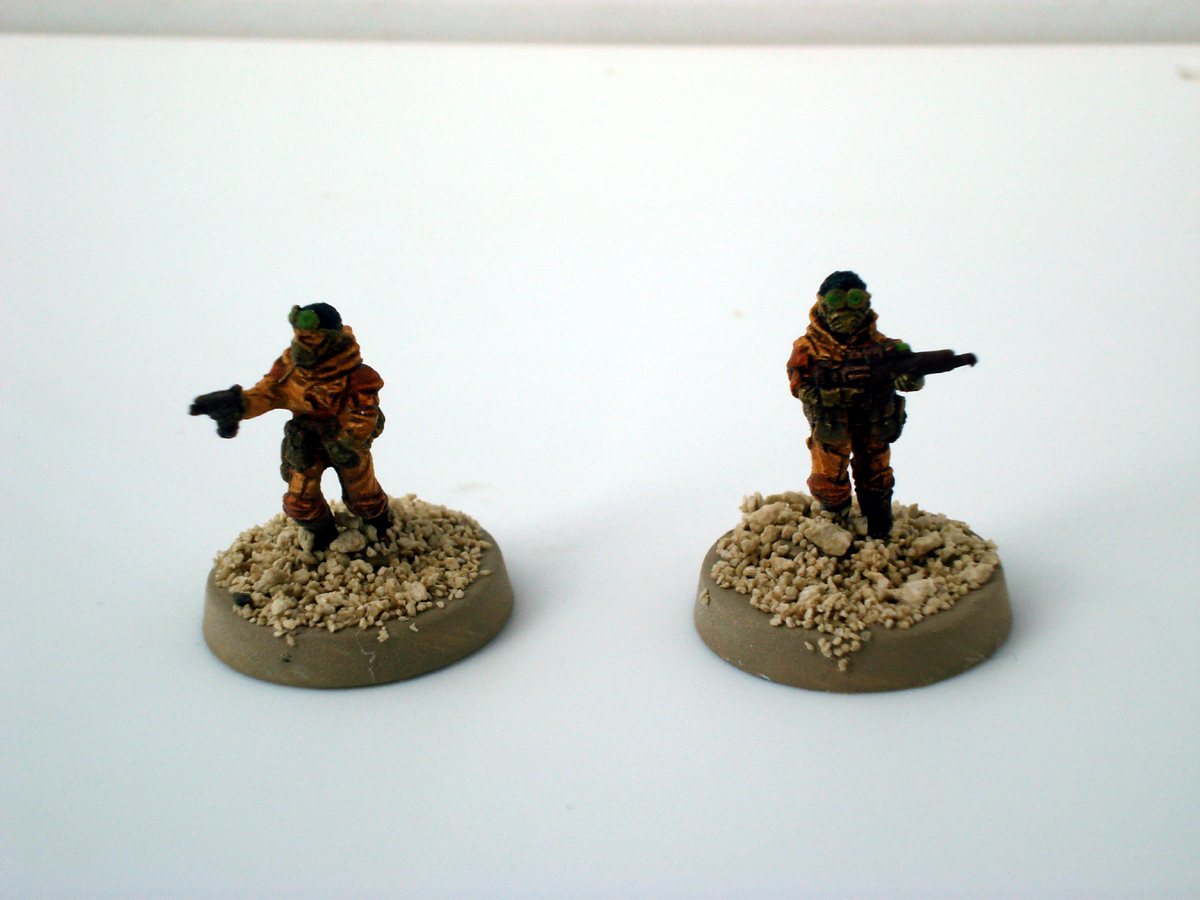
The troops have pretty good detail on them. I’m a tad lazy though as I liked using a single wash for the mini and then going back to dry brush a few details. I decided on a simple ballast flock for the bases. I think with the color scheme of the figs this type of flocking material goes well. However, I had to give another coat of matte finish to help with keeping the material sticking on the base.

You’ve got a decent variety of poses. With most of the command troops being armed with pistols. I’ve opted assuming they are machine pistols, treating them as a type of SMG.

The squad assault weapon troops are pretty nice with big meaty guns. I like the goggles they have also.

I also picked up some heavy weapons models. This sniper team below I ended up putting on a larger 25mm base.

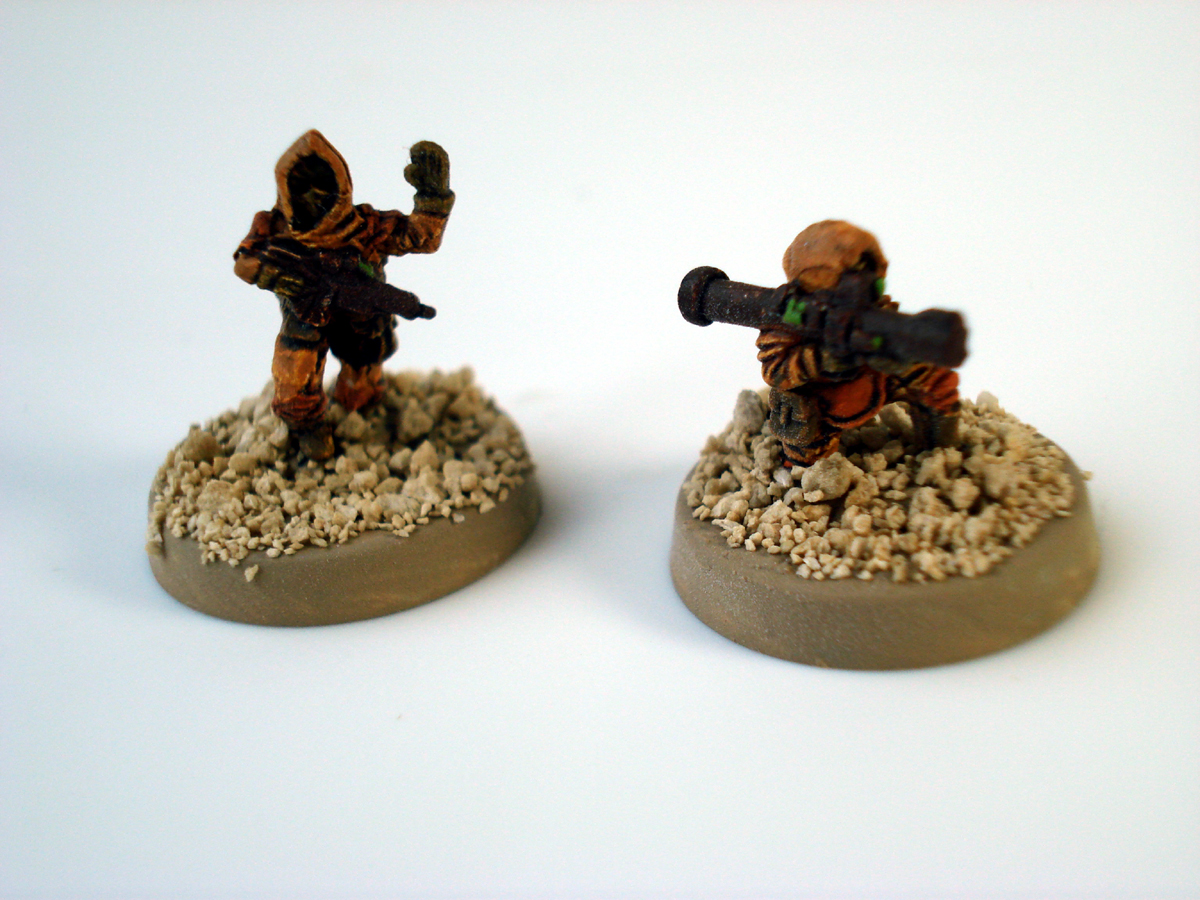
Below is another NCO-type of leader along with a rocket launcher trooper.

For this platoon I put them on a 20mm plastic base. It’s a tad large but I like them as there’s plenty to grip moving them around. I might go back to a few and add more detail to some of the bases. Having it just a bit larger allows me to throw in some details without making the base too crowded.