Rolling Dice – Board Game Store in Seoul

A while back I talked about some places to pick up war game supplies in Seoul. Fortunately for board games, you’ve got a better selection. Board gaming is a relatively popular hobby in Korea, with the CCG scene being particularly popular with younger kids. One of my favorites is Rolling Dice. Now, it’s really a sister store to Dive Dice which also operates an online store. In fact the map I have in the post directs to that name, but the storefront in Hongdaejeom is Rolling Dice.

The store is fairly large, with a pretty nice selection of board games. What I failed to take a pic of is another wall of Magic and X-Wing miniatures, along with another full shelf of Korean Board games. Yup, the pic you have here are just some of the selection of games in English.

The place is pretty hopping the weekends I’ve visited. It looks like Magic has a fairly fervent following with several tables filled with players. With a small shelf of snacks and a bathroom on the facilities, you can say they take gaming in store pretty seriously. Unfortunately for non-Koreans, it seems regional language is the norm for the decks I saw, but there were a few ex-pats having some games (and I expect with the right app, you could get a language translation of cards if needed in a pinch).

To get there, take subway line 2 to Hongik university. Get out at exit 2 and head off for a street parallel to the main avenue. You can see the pin marker on the map pic below for the storefront. Look for it on the 3rd floor of a commercial building. The store hours are a bit wonky and more for the late night crowd. They typically open after 3PM and will stay open Fridays and Saturdays till 12PM. So be sure to swing by the place late afternoon/early evening.

Rolling Dice offers typical retail prices. I’ve gotten quite a few games from overseas distributors and have to say having a local source in Korea will save you tons in shipping, even if you’re playing retail costs. For an expat board gamer, this is a great store to check out. Be sure to give them a look if you are ever in Seoul.

Digby’s Wondrous Arcane Wares: Will-o-wisp Lantern

[A shriveled gnome travels the lands in a ledge wagon drawn by an old donkey. The cart itself appears as a simple shack of knot ridden boards with tarnished brass fittings precariously perched on four solid wooden wheels. The gnome claims to be none other than the famed mad alchemist and mystic, Digby. Such a fanciful tale is likely just a ploy to sell enchanted trinkets as it would make the gnome well over 500 years old. However one cannot deny the gnarled form is surprisingly deft and almost spritely in step as he moves about his shop. Nearly every village or city within the lands will have Digby come for a visit during the year. When doing so he always makes a simple camp out at the town border, opening his stock of arcane goods to whomever passes, and eagerly offering tales of the magical items of Dungeon World].

Will-O-Wisp Lantern

touch, 0 weight

This plain brass lantern has a large open face and a stub of candle within. Engraved on the worn handle is a single word in dwarven flanked by unusual runes. When held aloft and the word is spoken, the lamp alights giving off a bright light equivalent to several torches. The candle within the lantern does not ‘burn’ nor give off heat. The ghostly, white-blue light can only be extinguished if the engraved word is spoken again.

What is particularly amazing about the lantern is that once lit by the command word it will hover in place when released. If the speaker moves, the lantern will follow at a leisurely pace, hovering and always remaining within 10 feet. If a weight greater than a single coin is placed on the hovering lamp it will descend and rest on the ground, still giving off light. Attempts to tie a rope or use the lantern as a means of levitation will fail.

If another person touches the lantern, aside from the person that spoke the command word, it will immediately extinguish itself and crash to the ground, awaiting to be lit again by the magical word inscribed on it.

Wild Dead West – Savage Worlds campaign

My roleplaying days have waned a bit over the past few months. We took a long break playing a lot of board games, including running a campaign session for Descent. Then some of my players had a sudden transition with their employment, so half the group up and moved to another city. Not to mention me taking some time to visit family on a long holiday, so it’s been a break for me running RPGs. While folks were interested in getting back into roleplaying, they decided to put our Dark Sun campaign on hold and try another genre.

During that time I’ve discovered the wonderful 6th Gun comic and immediately wanted to try a weird west setting. I realize Deadlands was always an option for a Savage Worlds game, but I really liked the setting a bit more in 6th Gun. There is the supernatural but it’s not quite as overwhelming as Deadlands seems to be. I wanted a bit of steampunk like the Wild Wild West, just nothing too gonzo like Deadlands has.

So I settled on the Wild Dead West, which has one foot firmly planted in the Deadlands setting but not quite following the official plot points of a full campaign. It’s certainly the weird west but recognizable without the twisted landscape. And while supernatural creatures are certainly responsible for strange stuff that goes bump in the night, humans are likely the most dangerous villains about. Folks seem excited about it. As a new campaign, I’m certainly excited. I’m also shooting for something more episodic, so if we decide to take a long break, it’ll be easier to pick up the campaign again if we take a break and try other games for a while. If anything, it’ll make for some fun blog posts. Hope folks enjoy some of the tall tales that will be coming up.

[On another note if you aren’t doing so, consider giving Obsidian Portal a whirl. It really is a wonderful campaign tool for your game.]

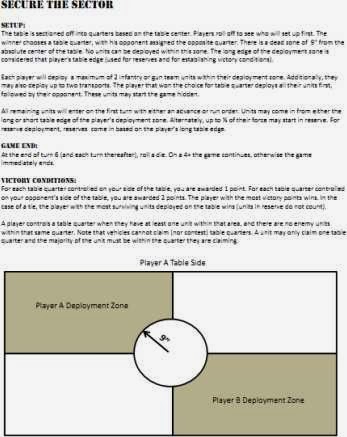
Secure the Sector: a Bolt Action alternate scenario for Maximum Attrition

I do love me some Bolt Action and the scenarios in the book cover some different tactical challenges. However one scenario that stands out for me is Maximum Attrition. The object is to kill as many of your opponent’s units as possible with your troops walking in on turn one. It’s a throwback to 40K where you are just out to kill the enemy army.

Now as a first game scenario, maximum attrition isn’t too bad. The objective is simple (pile up the bodies) and you get to see how everything works. However after playing it a couple of times, it’s become a re-roll for me when deciding what scenario to play.

Not to poop completely on 40K there is a fun scenario in the older editions called Cleanse. The object is to take and hold table quarters for victory points. Tinkering a bit more with that concept, I figured a similar victory condition could be worked up for Bolt Action.

The end result is Secure the Sector. Players have a limited set up in a table quarter with reinforcements coming in on the edges of their deployment zone. The objective is to claim as many table quarters as possible by the end of the game. You get more points claiming quarters on your opponent’s side of the table. In the case of a tie for points, the victor is determined by the number of surviving units.

Secure the sector focuses on advancing and taking large sections of territory. You still have to eliminate units but it’s tagged with pushing forward and holding positions. In my experience, maximum attrition comes down to a waiting game. One player finally makes the advance and if they can’t come to grips with enough of the enemy quickly, they get chewed up with pins and counter assaults. I like how this scenario encourages you to capture areas outside your deployment zone, all the while trying to minimize your losses. Another big wildcard with how the scenario plays are reserves using flanking maneuvers. It can make those players that turtle up in their deployment zone, suddenly have units contesting their table quarter at the end of the game.

The couple of times I’ve playtested this, we’ve had a lot of fun. Hope folks enjoy this scenario at their tables and use it as a replacement for maximum attrition.

Review: SAGA

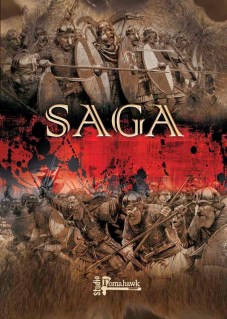
I never really had the calling to get into ancients or medieval wargaming. A long while back I was into Warhammer which seemed to scratch my itch for medieval-type gaming. Big blocky units moving in formation, a crash of cavalry in a wedge charging a flank, rows of archers and siege weapons, it just was more fun for me to collect and paint minis for fantasy armies than a historical game. I dumped my Warhammer stuff years ago but lately I’ve considered getting into historical ancient gaming. However I really didn’t want to go the route of a huge army. Maybe something smaller scale. So along comes SAGA from Gripping Beast and Studio Tomahawk.

SAGA is a skirmish wargame set very loosely in the mid-11th century. Players form small warbands and battle it out over a small stretch of earth, pitting each warlord-led host against each other. True historical scenarios are somewhat thrown to the wayside and the game pretty much embraces a ‘what-if’ sort of vibe, which is just fine. You aren’t recreating historical battles here. It’s pretty much small unit action of a group of 30-60 men and mounted horses.

The scale is man-per-model and is about 20-28mm. Ranges are set increment range bands. So Very Short is 2″, Short is 4″, Medium is 6″, etc. with ranges maxing out at 12″. Movement is typically 6″ with shooting at maximum ranges of 12″. All references to distances use this nomenclature of range bands. What is particularly nice about this range system is its flexibility. If you wanted to run a 15mm game, just alter the range band scales from inches to cm. Simple.

A key component of the game is the battle boards. Each faction has its unique chart that describes the various actions and special abilities related to common tactics and characteristics of that group. Players roll saga dice, these special d6 (although a normal six-sided die could also be used) and allocate them to different sections on the battle board. The saga dice themselves are 3 symbols unevenly distributed. Effectively one symbol represents 1-3, another 4-5, and the last symbol is a ‘six’. During their turn they spend upwards of 6 order dice removing them from the board and activating certain abilities (some allow more dice to be used up to a maximum of 8). Once they spent the dice they care to, their turn ends and their opponent takes a turn doing the same.

I love it. Certain units will only activate on a particular die range, with the most trained units being able to always activate. You have special abilities that enhance attacks. You also have abilities that can be spent on defense during your opponent’s turn. So deciding what dice to use for activating units and attacking, while keeping a precious few in reserve for your opponent’s turn is a key part of the game. It’s a surprisingly dynamic system where you have to plan out attacks and be prepared for charges.

As lesser trained levy units don’t activate as much (50% of the time) and they share an activation die symbol with more powerful combat abilities, in effect you have leadership become part of order dice allocation. It’s an exceedingly clever system. It builds in that unknown of not being able to count on poorly disciplined units when you need to. To bypass this, you have a warlord for your warband that can order movement to units within range. So if you really need to move those peasant archers, you can bypass the die order allocation with judicious placement of your warlord.

Another nifty point is that units can activate multiple times. So you can take that elite unit of troops and go all out in a fight if needed. However each order beyond the first accumulates fatigue. Units also get a fatigue marker for shooting or being in melee. Fatigue can also be gained if nearby units are wiped out. If a unit has a certain amount of fatigue (which varies depending on the unit quality) it cannot do anything but rest, removing a fatigue token while it does so. If attacked while fatigued, the unit will also fight significantly less effectively. Essentially it incorporates some aspect of morale for units.

Fatigue can also be spent by your opponent. They can be used to decrease a unit’s combat effectiveness in a melee, or be spent to increase the likelihood an enemy will land a blow. This all adds a tactical layer to the game making it very engaging. If I push a unit to move and attack, I’m decreasing the chances I can use it again on later turns. Even worse, an opponent could use that accumulated fatigue against me if that unit is charged by the enemy. Meanwhile, my opponent seriously has to think about that decision of using my fatigue. If they can’t inflict significant casualties, my unit will be able to activate on future turns (as they’ve removed fatigue markers on my unit). This is a really cool feature of the game and allows both sides to be involved, despite it being one person’s ‘turn’ to activate their units.

Combat is a basic affair. Units roll a single d6 to hit with the number of dice depends on troop type, where elite warriors might roll two dice per man, to rolling a single die per 3 models for levies. Warlords are a force unto themselves generating 5 melee attack dice for a single model. Both shooting and melee work against equaling or exceeding a specific number (again more elite units are harder to hit, compared to easier, lesser-trained troops). For each successful hit, the dice are passed to the defender and they can try to make a save, either 4+ or 5+ depending on it being shooting or melee, respectively.

The composition of the force is points-based, with a typical warband ranging from 4-6 points and your warlord being free. Units range from a minimum of 4 models up to a maximum of 12. Units are bought in groups where elite trained warriors are in groups of 4, warriors as units of 8, and levies as a single group of 12. For each unit you have, you get one saga die. Your warlord automatically gives you 2 saga dice and levies offer no dice if you field them.

As force composition goes, it’s an elegant system to ensure a fair fight and something to carefully consider. As you lose units, you lose saga dice reducing your tactical options. Smaller units are cheaper and generate more dice compared to larger, well-trained units, but suffer from being more easily wiped out. Likewise the cheap, large units of levies might be able to soak up a lot of fire and casualties but don’t award any order dice.

The game details 6 simple scenarios, with a bonus multiplayer/faction one. Rules are provided for even larger engagements of up to 12 points. The scenarios range from simple battles for the field to others requiring the taking of terrain objectives. There is even a scenario where an attacker tries to steal a baggage train from the defender.

Out of the book there are 4 factions: Anglo-Danish, Normans, Vikings and Celts. Aside from each faction gaining a unique battle board, every group has special rules. Special heroic warlords can also be bought with rules for fielding these larger-than-life warrior leaders.

The Good – SAGA is an enjoyable skirmish medieval game. It moves and plays unit based, melee combat very well. The order allocation and fatigue mechanisms are interesting ideas and provide a dynamic experience on the tabletop. It provides just the right mix of varying leadership and uncertainty of executing orders through a different process from other games.

The book is well written with lots of examples. The photography of colored models is quite nice. The softback book is printed on quality, glossy paper with oversized pages. The battle boards themselves are decent cardstock and look like they can take some handling wear.

The Bad – Some might consider the special SAGA dice somewhat a gimmick. There are rules and charts for converting the die results to a normal d6. Still it’s a bit of a chore interpreting the symbol on the faction boards with a specific die roll, and the dice set themselves are pretty expensive.

Every faction revolves around a separate battle board. There is not a copy of the board within the rulebook so if you lose one, you’ve effectively lost the ability to play that faction. This relates somewhat to the overall expense of the book. You are paying about $40 for a 72 page softback book (with a fair amount of whitespace on the layout of each page) and a few special cardstock charts. Compared to something like the quality of Osprey’s Bolt Action rulebook, it’s pretty steep. I’m also put off a bit a little by the cheapness of Gripping Beast related to what is available for SAGA online.

Clearly piracy is on their minds, with no online resources for PDF versions of their battle boards (and none in the rulebook itself). There is also this adherence of using special dice for each faction (instead of offering pre-made charts that could work with regular d6). The rules are simple and sparse, with much of the meat of how a faction works parsed off to a single page. It seems that they want to push people buying a set of rules that are a tad overpriced for what you actually get, with limited online support like copies of the faction boards.

The Verdict – While I complain some on the relative cost of the book, and the push for using special order dice, SAGA is a good game. It offers a very engaging system for medieval skirmish wargame action. The order and fatigue system allows for play that’s surprisingly dynamic in action. Despite the limited number of factions in the book, each one has some truly unique abilities giving what would be simply a mob of armored men, some different tactical abilities on the battlefield.

I really like this game. It brings something different to the table in relation to historical skirmish games. The rules are simple and easy to grasp. All the while, choosing what abilities to assign to your troops and when to use them is a challenging tactical experience. Additionally, you may have to consider the limited orders and maneuvering you can accomplish during a single turn, meaning strategic planning is needed to execute complicated moves. It’s surprisingly deep for what appears to be a simple rule system.

If you’ve had a fancy of dabbling into historical wargaming, SAGA is a great system. There are some dings to how the rules are presented and the peripheral items needed for the tabletop. However with a little work they can be bypassed. It really is an enjoyable game with a pretty low model count to make for a fun afternoon on the table battlefield. Consider picking up these rules if you’ve got the itch to have men cry for Valhalla over the clash of steel and crashing of bodies into a shield wall.

Currency in Gamma World

I get the newest edition of Gamma World is a fast and loose game without needing a money system. However having a complete economy based on barter itself can get tangled up with a lot of questions. How much is a piece of junk worth? What about salvaged omega tech? For the most part I think it’s expected that players just handwave the whole affair and move on to the next set of pre-fall ruins for exploration and looting.

However if a group wanted something more of a serious game, some guidelines for a monetary system would help. An abstract system might work, with simple markers to represent wealth, but players are often rewarded with pre-fall tech and items. All these bits and pieces of technology lend itself to having some value in relation with other other goods.

For my game I wanted to delve into using monetary units, but not get too bogged down. I wanted some form of currency, and a system for figuring the value of salvage and junk. Yet at the same time not resort to a list or table of costs to figure an item’s value. So I settled on a few basic house rules to introduce an economy in my game that steps away from a complete barter system and uses a form of currency.

Bottle Caps – Taken straight out of the computer RPG, Fallout, most of monetary transactions are through bottle caps. They are lightweight, resistant to most wear and the elements, and are somewhat difficult to create. The caps do have a lifetime however, with excessive rust being an issue. As such, some caps are deemed worthless.

It is not uncommon for more devious merchants unwilling to take 5% or so of caps offered for goods. A common ploy is to complain such caps are ‘too worn for trade’. This also provides an excellent opportunity for players to wield their interaction skill and haggle a bit if desired.

Most goods and services are paid in caps. A simple local meal and a night’s rest would be a single cap, as would a full day’s menial labor (work is cheap in the post apocalypse). Most equipment that can be purchased is of relatively high quality and good craftsmanship, and would be roughly 5-6 caps a piece (ammunition being a separate purchase). Such gear and equipment might even incorporate some limited pre-fall technology, such as a compound bow having ball-bearing cams and equipped with a simple laser sight. Sets of gear like an explorer’s kit or climbing kit would run about 20 caps, a slight discount for buying several pieces of gear in one go.

Packaged, properly sealed food and drink are also worth 5 caps each and are highly prized. Fresh water, unless sealed in a pre-fall container, does not have much value. Most water must pass a sniffer test (usually some simple-to-operate pre-fall tech that quickly analyzes a portion) before it could be sold. Most communities are notorious for passing off lightly irradiated water to travelers as ‘sniffer free’ pure H-TWO-O.

Yawns – Yawns are pre-fall currency that are highly prized for their rarity and resistance to all forms of damage. A single yawn is worth 50 caps.Typically such currency is a small, engraved plastic disk with a square hole. The disks are roughly 25 mm in diameter and 2 mm thick. Yawns are lightweight and practically indestructible. They are made of an inert material and are highly resistant to radiation. Some incredibly wealthy individuals have been known to create clothing layered in such disks, almost as a suit of mail to protect themselves from radiation.

The characters and lettering on these disks are of a pre-fall language that can be found on most omega tech. Some elders claim that they were the common currency of several tribes that fell under the influence of one great power. Some claim that such power was obtained not through warfare, but through economic might, with the disks taking the name of that great tribe’s coin.

Junk Salvage Value – Junk salvage that players find are of relatively good condition and usually worth 2 caps each as a base value. Some items require a power source to operate. Such junk would be worth 5 times the base value (10 caps). Jury-rigged batteries, alternate homemade fuels, and simplified pre-fall energy producing technology (automated solar panels, geothermal power plants, tidal and wind generators, Mr. FusionTM biowaste reactors, etc.) are readily available, allowing many forms of older technology able to operate. The energy needed to operate such technology is easy to obtain, but what is lost is the manufacturing ability to create such technological marvels.

Actual scrap is worth much less that the typical junk salvage that players would find during their adventures and is the common target commodity of Junkers (people willing to gather up such scrap material). Due to their poor quality (and at times highly radioactive nature), scrap junk at best would be 1/8th the base salvage value. Usually 8-10 pieces of scrap junk might be enough to warrant a price of 2 caps. However some especially resourceful beings are able to make a living gathering such scrap, and old refuse storage facilities have been the spark of many armed conflicts between wandering bands of Junkers.

Omega Tech – Functioning omega tech is worth 50 times the base value of salvage (100 caps) mostly due to their limited functionality. Omega tech that can be jury-rigged to operate as salvageable tech is a little more reliable and worth a bit more. Omega tech that can be salvaged is worth 75 times the base amount, or 150 caps.

Some especially rare omega tech may be worth much more. Automated facilities that operate algae farms, water purification plants, and robot manufacturing facilities are some examples. These locations are highly prized and sometimes result in entire communities residing on the grounds of such places.

Review: Castle Panic

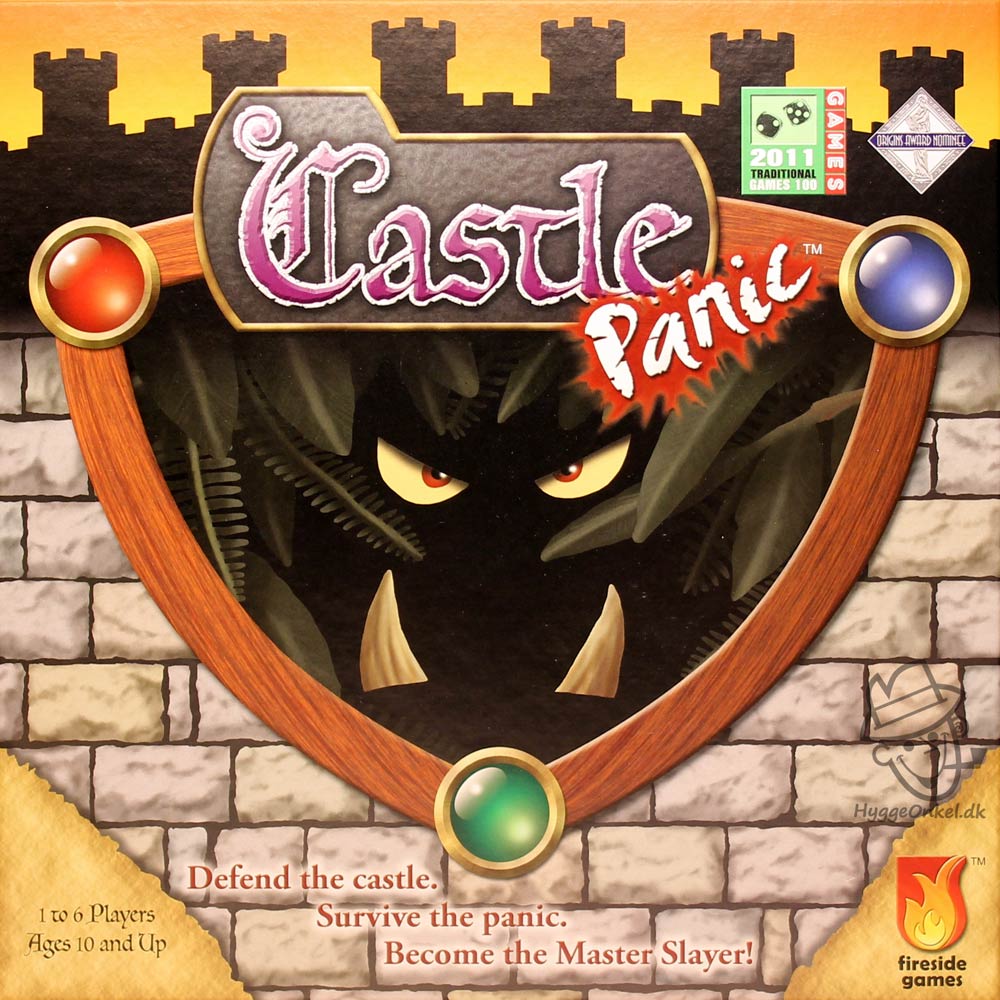
Castle Panic is a semi-cooperative game from Fireside Games for 1 to 6 players (yup, it can be played solo). You each play stalwart defenders of a castle trying to organize your defenses as goblins, trolls, and rampaging orcs lay siege to it.

Play revolves around a person drawing and trading cards, attacking monsters on the board, and then randomly adding additional monsters. The game ends in a victory with the players killing all the monsters, while a group loss results if all the inner tower sections are destroyed.

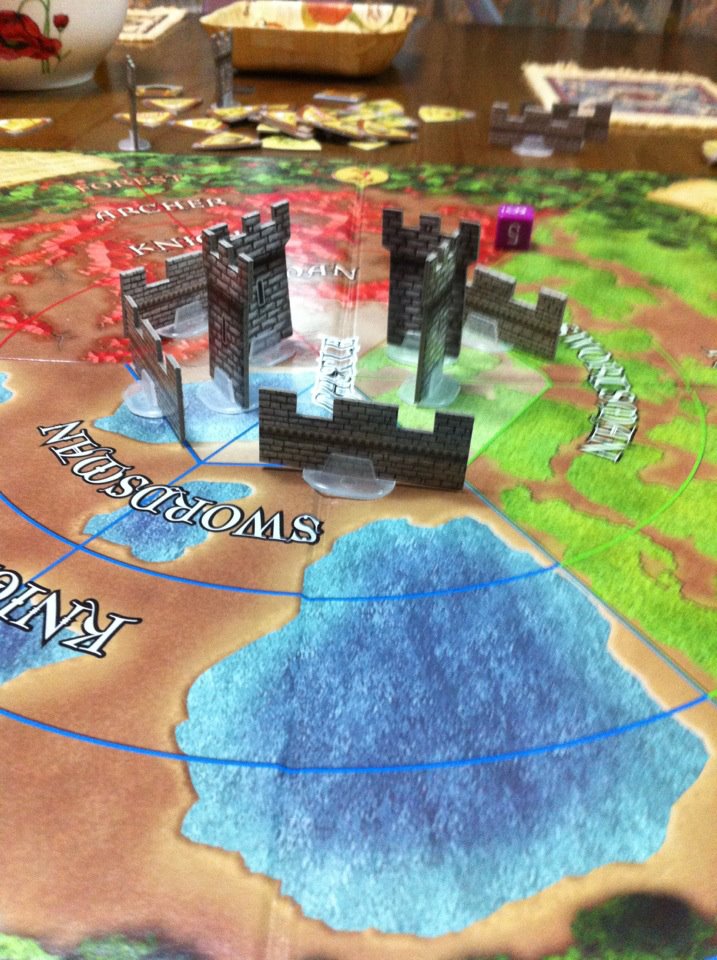
The game board has a series of concentric rings representing different range bands for specific cards (archers attack in the furthest, knights in the middle, and swordsmen in the innermost circle). Additionally the board is split into three different color sections. So a red archer can only attack the outer ring in the red section. Got a pesky goblin in the green section? Tough luck.

After drawing and trading a player attempts to destroy as many monsters as possible. Each card played will do one damage to a creature. While goblins are easily dispatched with one hit, orcs and trolls take a few more attacks to drop. If a monster is destroyed, it’s taken by the player that killed it.

After a player makes all their attacks, monsters on the board move closer by one space. Hitting an outer wall of the castle inflicts damage to the monster, but also removes that wall. If monsters are inside the castle courtyard, they destroy a tower section instead. If monsters remain alive inside the courtyard and are required to move, they move clockwise one section, destroying another tower section.

Players have very few options to destroy monsters once they reach the courtyard, relying solely on rare heroic cards that can dispatch these beasts. This makes for a frantic time as all the players are trying to wipe out as many as creatures as can and try to predict where monsters will be on future turns. Every player turn, monsters move closer in and more are added to the board. Throw in special monsters that heal creatures, ones that allow current baddies on the board a free move, to tokens that rotate each monster one section over, you end up with a frantic race against an ever encroaching horde of creatures.

As I mentioned the game is semi-cooperative. Players keep the monsters they killed. If they survive the onslaught, the player with the most monsters slain wins the game. This is a nifty aspect of the game as you are trying to ensure the survival of the tower so everyone doesn’t lose, all the while judiciously handing out cards to make sure you are slay the biggest creatures awarding the most points. It’s a very optional part of the game, but one I found enjoyable allowing for a little competition in what could also be a very cooperative game.

The Good –This is a fun and engaging game. There is plenty of player interaction as you are constantly bartering for cards. The mechanics are simple and easy to grasp, but still has an interesting puzzle aspect as you are continually seeing the optimal cards to play and trade as you tackle certain monsters and try to predict where others will be on later turns. The added individual victory condition of killing the most monsters is also a nice touch (which can be easily dropped if looking for a true cooperative game).

The components are colorful and the castle being represented by actual standing cardboard sections is a nice touch. The monster tokens are thick cardstock and the entire means of recording damage by simply rotating the triangular token is a great idea. All of this adds to a tactile experience playing the game, and allows for easy bookkeeping.

The Bad – The game can be very unforgiving if you get a bad turn and poor luck can be an issue. While there is strategy and a need to plan for future turns, there are enough wildcards in the game to throw everything into a chaotic mess. You can lose this game through bad luck which can rub some people the wrong way.

Also while the tokens and board were very sturdy, I found the card stock of the cards lacking. An accidental spill on the table for me resulted in some cards almost disintegrating. So the component quality is a bit of a mixed bag.

The Verdict – Castle Panic is great and doubles as a wonderful family game. It provides a frantic play experience as you continually go through a roller coaster where you think everyone has a handle on the incoming monsters, only to experience sheer panic as things suddenly spiral out of control. The rules provide some different variations to make the game easier or harder, including an option of pitting one player as an evil overlord fighting against everyone else.

It can accommodate quite a few players, and also be run as a light solo game. The turns move rather quickly and trading also helps in reducing downtime between turns, keeping everyone engaged in the game. It’s a light, family friendly game which can be challenging for adults. Definitely one to add to your collection and a keeper if you have kids (or plenty of pals in the mood for a beer and pretzel game).

Armourfast Cromwell Tanks

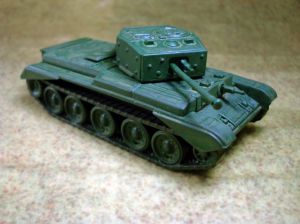
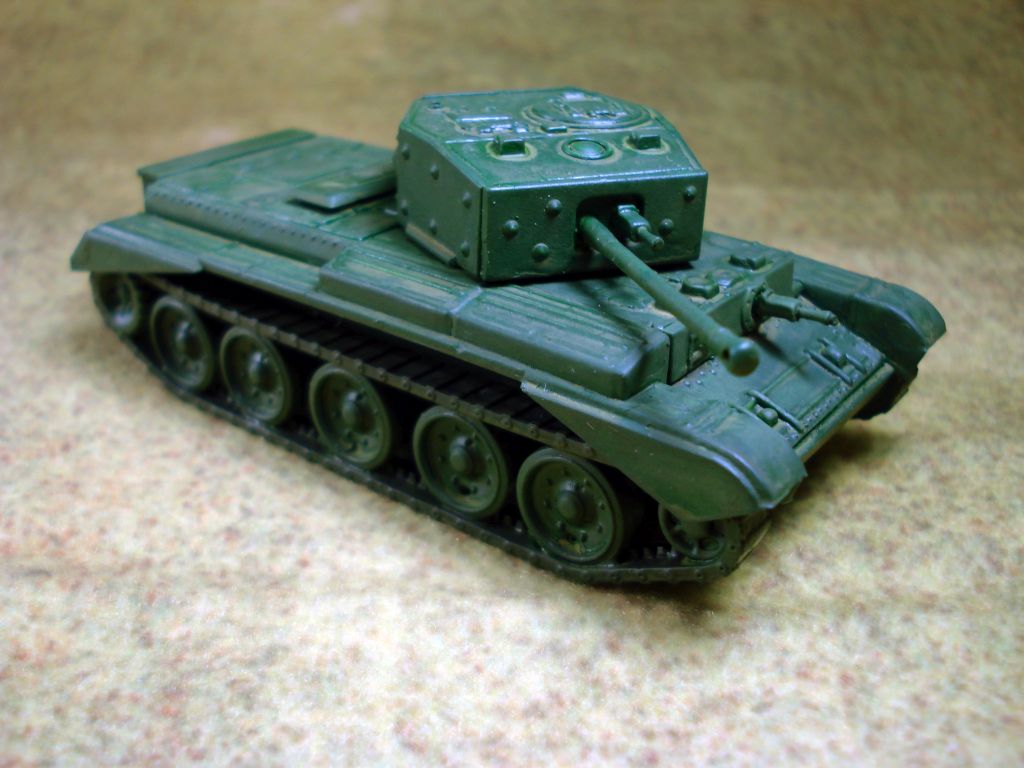
As I’ve been wrapping up my British platoon for Bolt Action, I wanted to get some armor to add to my force. For 1/72 scale there are a lot of options however I stumbled across Armourfast Cromwell kits and found them a nice buy. For a little over $12 you get two models in a single box.

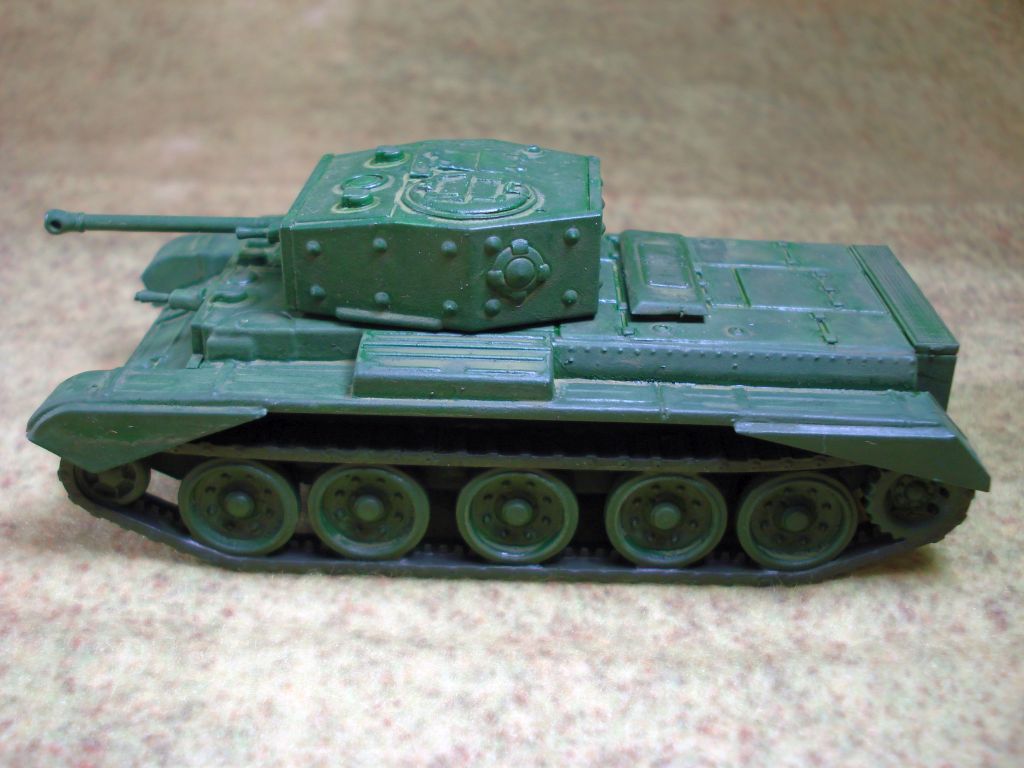
The Cromwell tanks assemble pretty easily. It’s very much a wargame level of detail. The treads wheels are pretty simple in their representation on the tank. However the hull has a fair amount of detail for the hatches and such. The turret fits pretty snug and can be removed. For Bolt Action games I see this as a plus as destroyed tanks are kept on the table. As I’m working on some flame markers, might end up popping off the turret and placing a huge flame marker on it to represent a destroyed tank.

There is a small gap in the side where the main hull sits over the treads when looked at from an upwards angle, but the gap isn’t too noticeable looking at it from the side. Another gripe I’ll have is the hull machine gun. There’s a housing for it, but no modeled barrel (unlike the coaxial mg in the turret). So I had to model my own using a pin wire. Nothing too difficult but a little disappointing. CromwellA

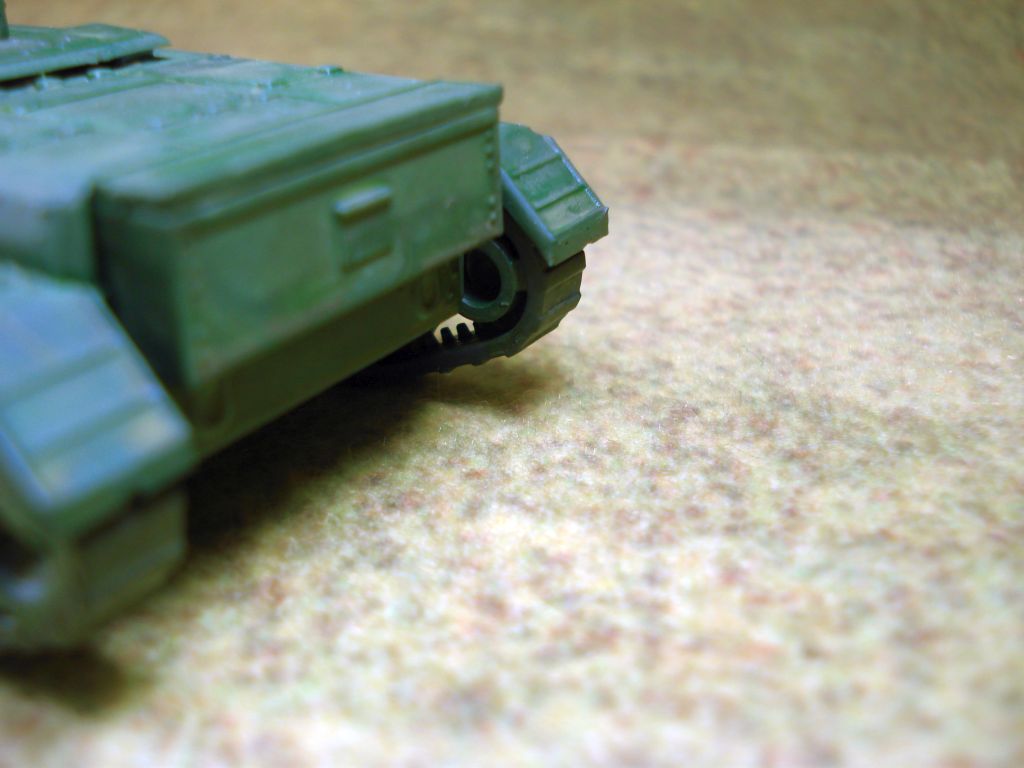
Another small bit is that the inside tread wheels are hollow. At a low rear angle, the rear treat wheel appears to be a free floating hollow cylinder.CromwellRearWheel

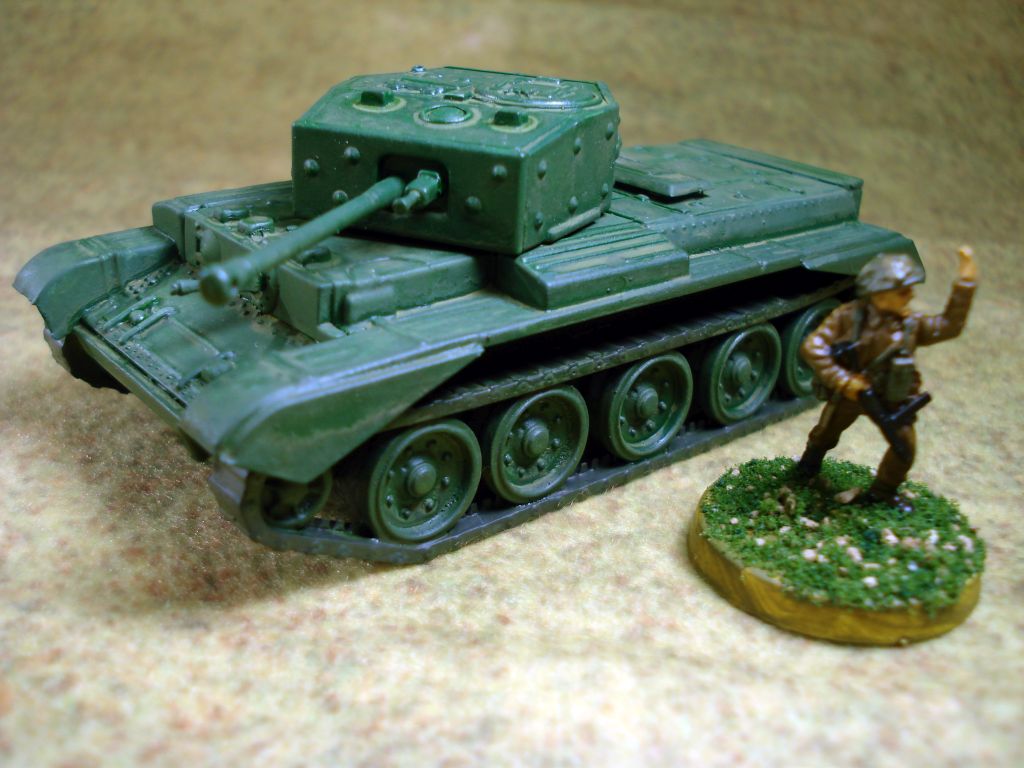
I’ve got a Plastic Soldier Co. British soldier as a side comparison for the dimensions of the tank. The Cromwell is nicely scaled (mind you the figure is on a pretty thick 2mm base) and looks appropriately bulky and menacing.CromwellInfantry

It’s been ages since I worked on tanks this scale. You can tell by the sparse detail I put on the tank markings. I might have to go back and touch up some more detail on the hull and treads. Here I gave it a wash and dry brush of mud on the treads which looks decent. For the price, you get a great set of tanks with good detail.

I will go on a rant here. I’ve noticed on a few of my photographs some white dots that would come out when I adjusted the contrast. With a large painted surface here, I definitely noticed white specks on the tank after I put Army Painter anti-shine varnish on it. Despite warming the can, spraying on a day with little humidity, and shaking the can well, I’d get these specs of white. Some could be brushed off, but some due to the matte spray were stuck on the model.

Now it looks like the matte spray is a clunker too. They seem to have nice paints, but I am not going to bother using their spray can products any more.CromwellB

Off for a while

Will be out of the country a bit again. This time for holiday. My blog will be on autopilot for a while so expect a few posts slowly dribble out while I’m away.

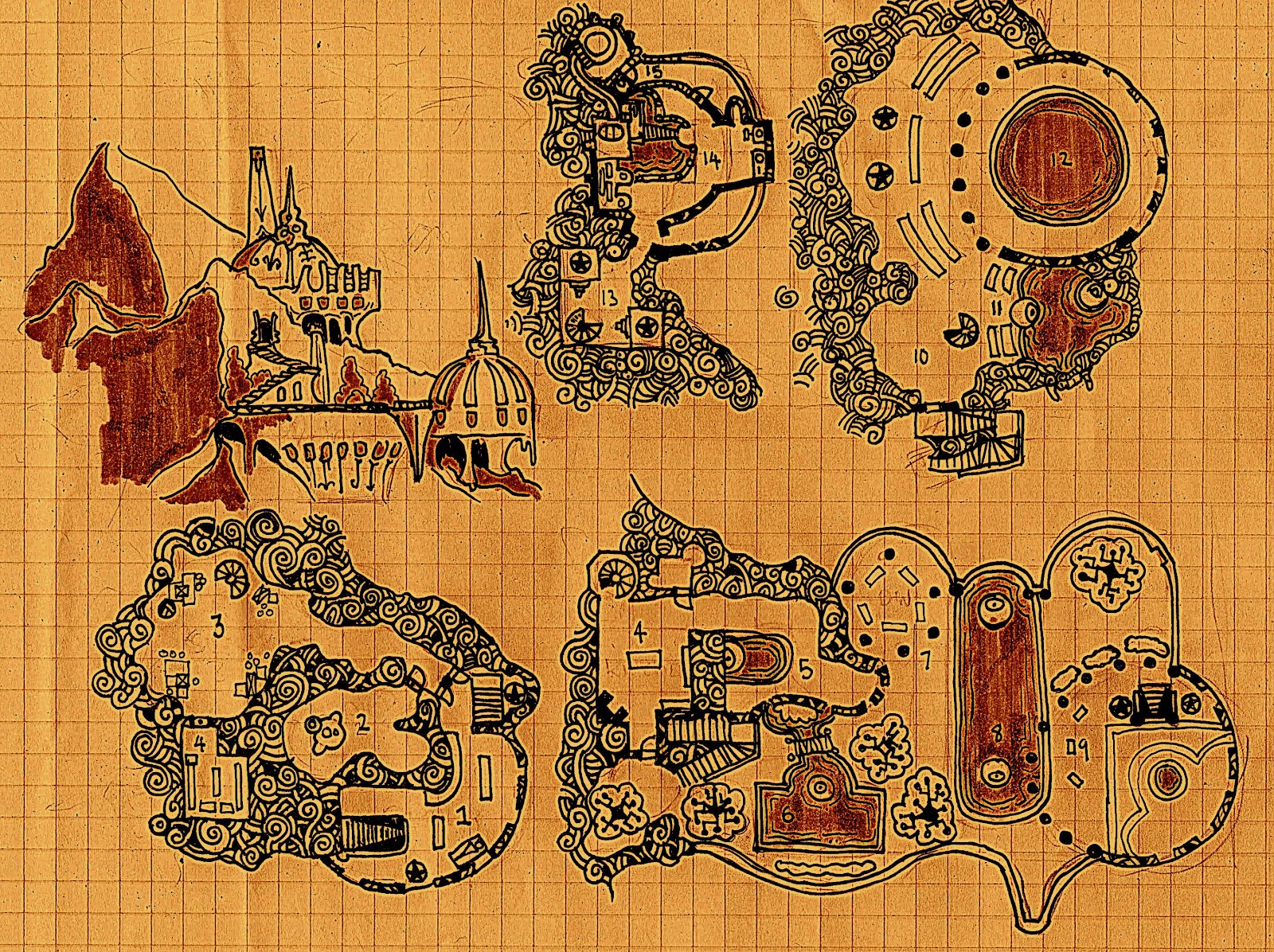
Until then enjoy a map from Dungeon of Signs and be sure to dig through their blog. Tons of inspirational images and maps are there, not to mention a few choice articles.

DnDNext without Games Workshop-like fans

The completely unsurprising news is that in 2014, the 40th anniversary of D&D, a 5th edition will be rolled out. From what the playtest version has shown us, this isn’t a huge departure from core mechanics like that of 4E. This is a game of ability scores, saving throws, Vancian magic, and fast, brutal combats. It’s an edition that will strive to be backwards compatible with previous modules and material. DnDnext is going to try and pull older players, likely folks running Pathfinder now, back into the fold.

4E pushed the game into new directions. Some was good and some was bad. Yet you could see WotC soldiering on promoting the game in new ways to new players. Face it, you’re likely shooting for a younger demographic with play sessions of writers for Robot Chicken and the podcast antics of Penny Arcade and PvPonline as they formed the adventuring company, Acquisitions Incorporated (so popular it culminated into many live session events at PAX). 4E was peddled to new players and old players alike. However it’s clear there were things that didn’t resonate with older fans.

DnDNext shows that. I got idea of reducing fluff in the core books with 4E. Why codify everything? Instead push the philosophy that it was your game, change what will make the game work for you. However as additional core 4E books were rolled out, fluff became a more prominent feature (take a look at the difference in MM1 and MM3). It was what fans wanted, a key characteristic of what a D&D book should be. Having additional, optional supplemental material (like the Dragonborn racial book) wasn’t ideal. That stuff had to be in the core books.

It became clear that 4E simply wasn’t getting the expected traction needed. I expect the sales for the soft reboot of the game with Essentials was pretty much a disaster. 4E was a departure from the game a lot of folks wanted and the DnDnext playtest rules demonstrated that. A focus on classic mechanics with a houserule treatment was wanted. Powers, these player abilities being broken down into turn elements with different timing characteristics was not D&D in people’s minds. So another set of rules are being rolled out to try and rectify that.

Games Workshop is a company that sells the immensely popular miniature wargame, Warhammer 40K (and it’s sister flagship game, Warhammer Fantasy). GW doesn’t promote their game much. They know their fans are absolutely rabid for their products. Some of it is well founded, as their models and quality of their product line is amazing. However updated rulebooks churn out with new versions ever on the horizon every 3-4 years.

It’s their existing community that make the bulk of future sales and at times it seems they are taken for granted by GW. There is a reason that Tau haven’t gotten a codex in years, while Space Marines have gotten one with every new release of the rules. People love space marines and buy them in droves. A new codex will sell new models. Tau just isn’t as popular, so that fraction of fans is left out in the cold. I never think it’s sustainable, that someday players will stop buying and move onto something else, but I’m continually wrong. GW has hit a rough patch of late but I don’t see the company folding. They have a way of promoting and selling their game and have a legion of GW followers that will continually buy what they sell.

In 14 years, 5 sets of D&D rules will have come out from WotC. Now I am certain WotC didn’t want to be in this situation. I think they would be perfectly happy if we were all excited about the release of a new 4E PHB4 and MM4, and wondering what might be in the pages of the upcoming DMG3. But it didn’t work out that way. Much of the D&D crowd are not like Games Workshop fans. There are key characteristics of the game that resonate with D&D fans. 3/3.5 hit a chord with folks that Pathfinder has managed to tap into, and as 4E tried to branch off into something different, it didn’t have that lasting appeal.

A while back I wondered if fans of Pathfinder and 3/3.5 would even bother getting into DnDnext. I felt trying to get new players around the table was more important. Clearly I was wrong. DnDNext is for the established fan of old. The push for the new alienated older players, and 4E failed. It’s long-time fans which make the game and more importantly seem to not blindly follow a brand. D&D should be a certain way. WotC realizes that and DnDNext is the result. There can be some tweaks, but the core engine of the game can’t be unfamiliar. Big mechanical changes should be saved for other games like FATE, 13th Age, and Dungeon World, where you’ll find many D&D players willing to dabble in them, as long as it’s presented as a different game.

So that allure of a new ruleset will be coming up the next few months, the excited buzz of a new D&D. There’ll be tales of fans pulling out their old, creased copy of White Plume Mountain and running a good old dungeon crawl. There’ll be accounts of a weekend jaunt against the giants as a group plows through G1-3. At the end of the year, you’ll be browsing a local big chain bookstore and stumble into the gaming section, seeing a shelf full of new D&D books. There will be that call. The clatter of dice. The groans, cheers, and table chatter of people having fun playing D&D. And I’ll likely be right there with them. I hate to admit it but I’m more like the rabid followers of Games Workshop when it comes to WotC. I’m a D&D junkie and will grudgingly follow the cult of the new books.