4ED Blog Roll

I thought I’d give a shout out to a few blogs I’ve been following. This is not an inclusive list by far, but they are some sites I’ve been reading as of late. I hope you all poke in and check them out too. So in no particular order…

Newbiedm.com – Despite just turning a year old recently, it has a ton of tips and tricks for the new 4ED DM. Some really great ideas on making your own markers and character tokens. Great posts on maps and even links to programs to depict landscapes. A solid site. Don’t let the name fool you, plenty of stuff for the new and old 4ED DM to be had there.

Roleplayingpro.com – Has a great group of articles about DnD and roleplaying in general. They pick apart some sticky topics, from character death to handling metagaming. A great place to pick up some ideas on the more particular nuances of DMing, running games in general, and providing some neat perspectives on roleplaying.

The Fearless DM– A little blog from a guy I know that runs a Living Realms campaign out on the East coast. His DM perspective is mostly for RPGA events. I think his take, and advice, for DMs is unique in that regard. Running a game for conventions, with complete strangers on a time schedule, is a tall order. Fearless DM delivers some great advice on that front. Not to mention, he offers a lot of tidbits for people running casual games too.

Again, this is not a complete list. I’ll be sure to post more in the future on sites I’ve been following. Be sure to check them out. I think you’ll find some great ideas for helping run your 4ED DnD games.

Solo monsters and the ho-hum single turn

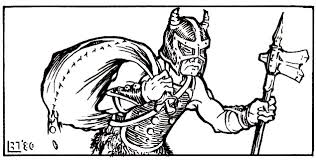
Trampier-BugbearA while back Mike’s Mind posted an idea of giving solo monsters more actions. I like the idea.

I find that typically the solo fights end up a tad boring. The excitement winds down as it becomes a slugfest to get rid of that last sliver of HP. Sometimes a well prepared party with plenty of tactics can chew through one. It just doesn’t make for memorable fights.

Quite a few people have posted similar problems. Usually most fights tend to drag on, and it becomes more of a matter of endurance than an exciting fight of maneuvering and cool attacks. The general consensus seems to be reducing the HP, and beefing up the damage by 1/2 a level for most brute-like creatures a good way to keep fights shorter and still remain a bit dangerous.

However adding a few extra actions outside the typical single initiative turn is something that would definitely shake up a solo combat. Yet, I still think having a ton of full extra turns might be a little overkill. I decided to tinker with the concept a bit.

I break down solo monsters to having a regular turn, and a bonus turn. At the start of the combat you roll multiple initiatives for the creature, one for each type of turn the monster gets. A regular turn is just that. The creature gets a standard action, a move action, and a minor action. A bonus turn can be either 1 standard action, 1 move action and a minor action, or 2 minor actions.

Depending on the level range of the solo monster, it will have varying bonus turns. A heroic solo gets 1, a paragon monster gets 2, and an epic creature gets 3. These are tacked on in addition to the regular turn each solo monster gets.

In the end you get a creature that is a lot more mobile and can dish out a few more attacks per round. Don’t discount the extra mobility, as it can likely lead to extra opportunity attacks against the group. The maneuvering and positioning is a big part of 4E. I think allowing that big bad solo monster a few extra actions during the turn something that’ll add a little excitement to a fight.

Board Game Review: Zertz

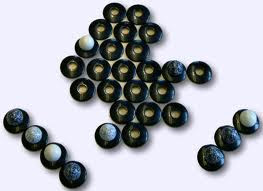
Zertz (pardon not using the accented e, damn simple text editor) is an engaging 2 player strategy game. This is from Belgium, but an english version put out by the folks at Rio Grande Games is available. The board is a series of disks placed in a hexagonal pattern. Different sets of colored balls are kept aside in a common pool for each player. As the game progresses, players capture these balls. The first player that obtains one of the varying sets of balls wins the game.

Each turn a player has two choices:

They can capture a ball. This is done by placing a ball next to one on the board and ‘jumping’ the ball into an unoccupied space. The ball hopped over is captured. They can make repeated captures with the same placed ball if its new position allows it.

They can place a ball on the board. Taking a ball from the common pool, it can be placed on any unoccupied space. However when placing a ball, they have to remove one disk from the board. The removed disk must come from an edge and cannot ‘disturb’ other board pieces (i.e. you must be able to freely slide the piece away without moving its neighbors).

There are three colors of balls of varying numbers. A player wins by capturing either 4 white, 5 gray, 6 black, or 3 balls of every color. Simple rules.

It is an incredibly challenging and fun game to play. The aspect of removing pieces of the board means you are continually being forced to make more and more limited choices. Many times you have to give your opponent a capture, in order to score one for yourself, as victory conditions are dependant on the color of the balls captured to make a winning set.

The Good – The game has simple rules, but is a challenging strategic game. Additional disks are provided to expand the board if players are up for a more abstract challenge. The pieces are sturdy and elegant. I have to say this is a game with a wonderful look. It really captures the attention of a lot of people passing by.

The Bad – The game can be a little too cerebral. Everything is based on strategy, so veterans will likely have a huge leg up on new players. The game is also for two people (but playing up to 4 using partners with alternating turns could work).

The Verdict – This is a wonderful strategy game for two people. It is quick, easy to pick up, and very deep for such a simple, elegant game. The extra board pieces can add some replayability. I’d highly recommend this game if you want a fun, light strategy game.

DM Tip: Creating spell effects for magical items.

I always loved wands in the previous editions. They are toned down a lot in 4E, but still pretty useful. In the PHB, rules are given to allow players can make their own wands, but I’m always hesitant approving that (pg. 242). However, I do think the suggestion of the DM designing their own wands great, especially as treasure in 4E is much more custom made for the group.

The rules are a good base, but what about the wizard that opted for another implement to specialize in? If they didn’t take wands, they are sort of missing out on all the versatility wands can give with an extra daily encounter or utility spell. A quick work around is to simply replace the wand with another implement keyword, and just run with it. So you can easily replace a lvl 8 power wand with the same properties, but make it a rod, staff, orb, or even a tome. They all grant the same +2 enhancement, and the player can finally get a nifty item that fits their implement mastery.

Don’t stop at arcane implements though. Take any basic magical item and use the rules for powered wands to grant it a spell effect. Increase the level of the listed item by 2 (notice a basic +1 wand is lvl 1, a +1 powered wand is lvl 3). To figure out the gold cost, use the base cost listed and multiply it by 1.88888, rounding up to the nearest 10, 100, or 1,000 (or 10,000 if needed). So a +3 magic robe could be imbued with a daily power to cast dimension door, and would now cost 17,000 gp.

Simple stuff, and now you can create all sorts of nifty magical gear without making completely game-breaking items.

9 character questions

Just a short post today. A friendly MMO acquaintance of mine writes fiction for a living (sorry, not going to name drop). Using a technique they use in their craft, they would also apply it to making character bios for the MMO they played. They came up with 9 questions. If you can answer each of these questions, you pretty much have a character well fleshed out. They’ll have their own motivations, and fears, and can react accordingly to plot events. On to the questions:

  • What does he love?
  • What does he hate?
  • What would he be willing to die for, real death, no rez?
  • What would he go through anything to live for (because there are things that are worse than death)?
  • If he were granted one completely unselfish wish, what would it be?
  • If he were granted one completely selfish wish, what would it be?
  • When he is all alone in the dark, with no one to see how he feels, what scares the crap out of him?
  • Where does he think he’ll be 5 game-years from now, and what does he think he’ll be doing?
  • If all the villains were defeated and he didn’t need to be a hero anymore, what would he do with his life?

If your characters are struggling a bit to think up a background, have them fill out this list (or at least most of it). For being a DM, I’ve found it indispensable information as a starting point to plan out adventures which can have some resonance with the group. Getting a few one-shot sessions, which tackle the psyche of one player can make for some memorable games. I also think this is great for NPCs too, and especially for the main heavy villains of your campaign. It’s also interesting to push players into confronting some of the answers on this list, and over time, see how much they’ve grown and changed.

I think this is a neat list, and hope you folks get some mileage out of it too for your campaigns.

4Eargument

When players don’t take the hook.

EarOtisCSo you’ve got a grand adventure planned out. Set up the initial scenario to draw the players in with the appropriate hooks. And none of them are willing to bite. Nope, they just rather head off to somewhere else and forget about what you’ve planned for the night.

Something similar popped up with the new D&D podcast. The DM laid out a notable quest, resulting in interest with some of the players, while others in the group were adamant about not getting involved. There are a few things to get around this. But laying out some quality bits of information and/or situations can help a lot in drawing the players in.

I’ve got a secret – I love this method. I really like parsing out small rumors or background information a few players beforehand. Typically I contact my group via email before the session to make sure everything is ready to go. If needed I’ll drop some info on one player. It can be a rumor, or just some background on a particular NPC or organization. Usually having one player armed with a bit more knowledge can smooth over party distrust to new NPCs. If Lord Fancypants wants the group to look into the Pirates of Black Death. When one player has heard about how rotten those pirates are, they can really help getting the other players get over that hump of trusting information from Lord Fancypants.

Make it personal – Take some information from a player’s background and use that to lure them towards a quest. That evil warlord that crushed your family? Yeah, he is across town running a group of mercenaries for merchants now. Expect one player to be chomping at the bit to make a beeline for those mercenaries and take them on, This ties a lot into the above point, but having a player have a personal stake in a quest can really work. This can load a lot of personal drama into the group dynamics, depending on how far apart views are from the party on which direction they should go. Still it is an effective tool in getting a group motivated to take on a quest.

Give the phat lewt! – Having a desirable item, large amounts of treasure, or at least the rumor of such a reward, is also a fair way to spark interest. There is typically at least one player with a more financial perspective on accepting quest in a group. They are likely the first to be asking what a job pays and what are the rewards. Dropping a juicy rumor of a large haul can sometimes be enough to get that player on the side of taking a quest. Don’t be afraid to fall back on greed of a player to get them interested.

Drag them kicking and screaming – Sometimes you can leave choice out of the matter. Put the players between a rock and a hard place, forcing them to move towards the adventure. Have them falsely accused, pursued by forces, or presented with a situation where they are compelled to act. It’s one thing to hear that the Pirates of Black Death are bad guys. It’s another thing to have the group see women and children being slaughtered before them by the hands of these pirates. I use this trick pretty sparingly. It definitely can cross into the territory of railroading the group. But it can be an effective means to push a group into tackling a greater danger because of the danger hot on their heels.

So have you had your characters just flat out refuse to follow a hook?

(Side note: I’ve been listening toe the Penny Arcade/PvP podcasts for a while now. I’ve noticed this one by far has more RPing from the group than previous episodes. It’s interesting to see how a group of new players are getting more involved with their characters. The new series is a hoot so far, I recommend giving them a listen.)

4E without miniatures?

So one of my players had hurt their foot and I was considering moving our game to their apartment for that session. The big problem was the place was a little small with no real room to plop down a whiteboard for minis (a typical apartment for most single people in Korea). Fortunately we didn’t have to change venues so I could host our regular game, but the situation got me thinking about playing 4E without miniatures.

As I’ve stated before I’m a big big fan of miniatures for playing D&D. I also think the way 4E is presented, going without a gridded map and minis would be a challenge. So if I were to run a game without miniatures and, more importantly, without a mapgrid how would I do it?

I would break down and still use some manner of tokens for play. It really helps visualize the action of who is where and whacking on what. Even if it were coins spread out on a coffee table, I think it would be difficult not having as least some kind of positional marker.

I would end up saying ‘yes’ a lot to players wanting to do cool things. If they wanted to charge across the room, yeah I’d likely let it slide and ignore any quibbles of actual distances. If they wanted to hurl out blast attacks and turn swathes of undead, yeah I’d likely just say yes a lot.

Sometimes though I’d want to throw a wrench in to see if a player could get into a flanking position, or if running by a monster might mean they get close enough for an attack of opportunity. I’d consider area attacks likely would hit 2 baddies with no problem, but I might roll a d8 for that third one. So a small chance that the monster is just out of reach, or the fireball didn’t quite get all 7 minions, all of those type of situations likely would require a roll of the die. Anything but a 1, and the player gets his desired result.

I’d use a 1d8 for typical resolution of player actions (with a bad result on a 1). I’d shift to a 1d4 or a 1d12, depending on how difficult the task, or actions of the player. Say a player needs to run by a monster in melee with another character, and wants to avoid an attack of opportunity. I’d normally pull out a d8, but the player says he is making a beeline to cross the room as quickly as possible, I might pull out a d4 to determine if he gets close enough for an attack (since he really isn’t worrying about getting swung at). However, if the player says he is trying to skirt around the fight as much as possible, I’d use a d12 (or just say he avoided the fight completely).

Using dice is a great way to randomly determine if someone springs a trap too. I’d use a 1D12 as a base (say a typical 8 x 8 room with 5 squares being trapped), and shift to other dice depending on the group’s actions (rushing through a hall rather than walking carefully). This is something I’ll likely start using in my regular game, even with using minis.

Typically my players map out a dungeon on paper, and switch to a map board once we get to a room that has an encounter. It sort of telegraphs the entire trap scenario when I suddenly need to have them place their figures out on the table. Using the die method, I can check each player to determine if they hit a trap first, then move the group to a grid board to resolve a trap encounter.

Why not a D6 and D10? I totally could use that. In fact a d20 is a good way if you need to resolve something at 5% to 10% increments (+/- 1 or 2). However, I like the simple idea of quickly shifting to different dice. It’s easy. More importantly when I roll in front of my players, I don’t have to twist around why this d20 rolled failed, while another d20 didn’t because of these ‘hidden’ modifiers and arbitrary DCs. They would know what happens when I roll a 1 on a d4, or with a d12.

I also like using a D4, D8, and D12 as the progression bumps up well with groups. Additive probability can be an issue with large groups. So that 1 in four chance of stepping on a trap trigger becomes almost a certainty in a party of 5. The same group would have an approximately 63% chance with D8, and 42% chance with D12. It scales pretty nicely.

I think 4E could totally be done without a gridded map. Less so without some kind of tokens (but I’d say the same with previous editions). I think quickly using a die roll would be a simple resolution to questions about ranges and distances. If you’ve been doing 4E without maps or minis, what tricks have you been using?

Lightening the coin load.

Being the nosey DM I am, I recently looked over the cash my characters were hauling around. So far they have not had a chance to spend a lot of the booty they recently earned, but I was surprised to see most had over 500 coins each (silver and gold combined). Even with the weight being pretty low, that is a lot of coins to lug around. As a US comparison in volume, imagine hauling around approx. 13 rolls of quarters on your person (not to mention a quarter weighs less than a standard D&D coin. Hold a dime and a quarter in your hand and you have about the right weight).

For portable wealth there are limited options for characters. Usually they are hauling around what they have. After a while, you get characters with an ungodly amount of coins. A DM could just forget about it and wave off worrying about encumbrance, or maybe seep a little realism into the monty haul players are lugging around. For me I usually don’t bother with encumbrance much. But once I get players carrying around 1,000+ coins, I begin to suggest looking into changing out some coins for more portable wealth. Here are some of the options I have in my game:

Spend it – I’m not a big fan of buying magic items, but I am warming up to the enchant item/transfer enchantment ritual. Visiting a local wizard to infuse an item with some enchantment is solid fantasy for me. I’m thinking of having a magic bazaar in one of the large cities my players will be visiting soon, and likely there will be more of an open market for some odd magical items.

I always push players to buy potions and other alchemical items though. And scoring a ritual scroll is always an option too. These are pretty useful items players can spend coin on. Given that they are one-shot deals, you don’t have to worry about having a player wield a potential unbalancing magic item.

Vaults – I don’t encourage this, but I keep the option open for players. I typically charge a 5% fee for depositing coins. Players get a note, and the satisfaction their money is in a secure location. But the problem is their cash is stuck in one place. They can’t get access to those funds in another city. I don’t consider vaults as a network of institutions where people easily transfer wealth (I’d tag on another 5% withdrawal fee if I did). They are vaults. Just a place where players can store items for long term in a relatively safe location.

Money Changers – This is something I use a lot. Simply an establishment that exchanges coins for other currency (or items of value) for a fee. I charge a 2% fee or 1 silver (whichever is higher) to exchange coins. I bump it up to a 5% fee for coins to gems (as precious stones are a bit less circulated). This is a quick easy fix to for the party that manages to get stuck with a lot of coin.

Magic – Consider having a wondrous magic item in your next parcel to tackle this. A bag of holding is a standard, but there are a few items that can do the trick. The Pouch of Platinum (AVault) is a handy item that not only converts gems to coins, but can also convert gold to platinum.

Rework Treasure Parcels – Consider giving out more gems. Expand on providing ornate artwork as treasure rather than coin. Sometimes it can be a chore, but having a few descriptive valuables in a pile of coins adds a simple touch to an otherwise boring haul. Also the players have a few less coins to lug back to the next town.

I figure most DMs don’t bother with the number of coins their players drag around. I usually don’t myself. But when it gets to a certain point, I like players to lighten the load with something more portable. What else have folks used in their games?ErolOtis-Treasure

Skill challenge scenarios: Find the wizard, Nightshade (part 2)

So with part 1 of the challenge I set up my conditions for players finding the residence of an unpopular local wizard, Nightshade. This is how it played out…

Our rogue quickly went off to work her magic of interacting with people, very quickly she was able to track down someone that knew of Nightshade. He did indeed live overlooking Fallon Square, and finding the market should be a fairly trivial task (passed streetwise check). The druid decided to also try his hand at finding Fallon Square with some moderate luck (passed his streetwise check). The paladin of the group decided to wrangle up a local street urchin to act as a guide with the promise of a few copper pieces, but had no luck (failed his diplomacy check abysmally).

1st round tally: 2 successes and 1 failure

The group had spent the last hour making their way through the city and approaching the quarter that housed Fallon Square. The rogue again managed to work what contacts she could find to get to Fallon Square the quickest way, with the druid in tow, likely aiding by providing a menacing presence to more tougher-looking characters (passed streetwise check with the druid successfully making an assist check). The paladin decided to drop some serious coin with the promise of 5 silver to any that could guide them to the residence of Nightshade, and was able to get an urchin that knew of the odd wizard (passed a diplomacy with a +2 modifier due to spending some silver).

2nd round tally: 4 successes and 1 failure, leading to a partial victory (and 1/2 the exp from completing the challenge)

I asked the rogue of the party to make a perception check which she passed with flying colors. The group managed to wind themselves through several streets, and after nearly 30 minutes, came to the Fallon Square market. They noticed a wizard slowly beckoning them from a balcony. He motioned to a door below and entered a simple residence.

As the players moved towards the door, the rogue noticed a man skulking near an alleyway. She is certain the man had been following them since they entered the city quarter. They decided to enter the wizard’s residence, as time has slipped into mid-afternoon. But they were on their guard and agreed that once they obtained the potion, they should be ready for a fight.

I’ll be sure to post more of these as I run through challenges in my game. I’d be interested on other’s recounting of how their skill challenges worked.

New WoTC Message Boards

Seems the new and improved boards at WoTC is the topic of internet ire recently. Personally I think it is a bit clunky and hard to navigate. But the previous boards were a little dated and all over the place too. I never hit the boards much myself in the past. I don’t think they sport enough improvements to make me do so in the future.

If you have an opinion, why not vote in a little improptu poll?

How do you like the new WoTC Boards?