Saturday Gaming Spark: Lost rain forest ruins

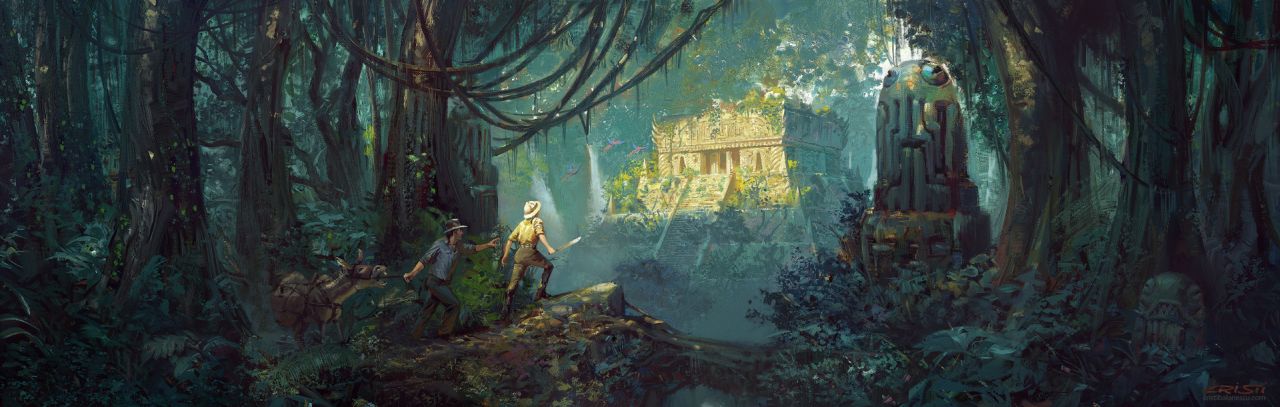
Hidden away in the deep jungles was a rumored lost civilization. Following snatches of information and the research journal of an old colleague, intrepid explorers have stumbled upon its location. But the local guide slipped off the night prior, and the pack mule has been restless the entire day. Do they sense something evil within the overgrown stone structures? Link.

Lock n’ Load Tactical, the ignored wargame?

Decades ago I played Squad Leader which was my first WW2 hex and counter wargame. A few years ago I wanted to get back into something tactical with a similar theme and started looking around. I knew Multi-man Publishing picked up the ASL banner, but I was looking for a more modern implementation of tactical games instead of retreading old designs.

I heard good things about Conflict of Heroes but it always seems out of print. Combat Commander was another game that seemed interesting. I did manage to snag that and enjoy the game immensely. But a sticking point for me is that there’s no armor.

CC:Europe is a wonderful game and it’s heavily geared towards capturing that infantry tactics feel. However I really wanted some rules which would allow me to throw in an APC, a lone tank, or a light AT gun. The rules just didn’t have anything for that. So I started looking around some more and stumbled onto the Lock n’ Load Tactical series.

It looks like a fun set of rules and allows a smattering of armor units to add to engagements which is a plus. Now I always had heard about LnL on the periphery but never really gave it a thoughtful look. Seems the online presence and chatter were heavily skewed towards CC: Europe or Conflict of Heroes. LnL Tactical just appeared to be ignored.

I probed around BGG some and the Combat Commander and Conflict of Heroes series have almost 5,000 and 3,000 owners, respectively. While the LnL Tactical library has only a little over 1,500. Note also this is a set of rules that has been out about as long as those other games too.

Yes LnL Tactical has gone through a few editions. However it blows my mind how the game seems to have such a small online community presence, despite it being heavily supported by the publisher. There are lots of expansions, supplementary products, and more importantly most of it is in print. The rules are online for free with a starter set of counters and a map for $15. That’s a pretty low bar of entry to check out how a game runs.

When peeking around for a WW2 tactical hex and counter wargame, one guy came out of the woodwork raving about the system. I think I’ve now become that guy. In a while I’ll be able to get my mitts on the game proper, and at the very least be able to take the solo rules for a spin. Yet, I expect in the near future I’ll be posting more about this game.

Saturday Gaming Spark: Giant’s Toe Hold

Perched atop a hill, overlooking the abundant farm plains, Giant’s Toe Hold is a bastion of order on the Bleak Frontier. Simple hovels which dot the periphery of the fortress, have peasants go about their work peacefully. They know that any orc or goblin raids which come, they can seek safety within the thick stone and granite walls, able to weather any siege for almost a year due to the ample holds of grain locked away in its deep vaults. Link.

Saturday Gaming Spark: The Soot

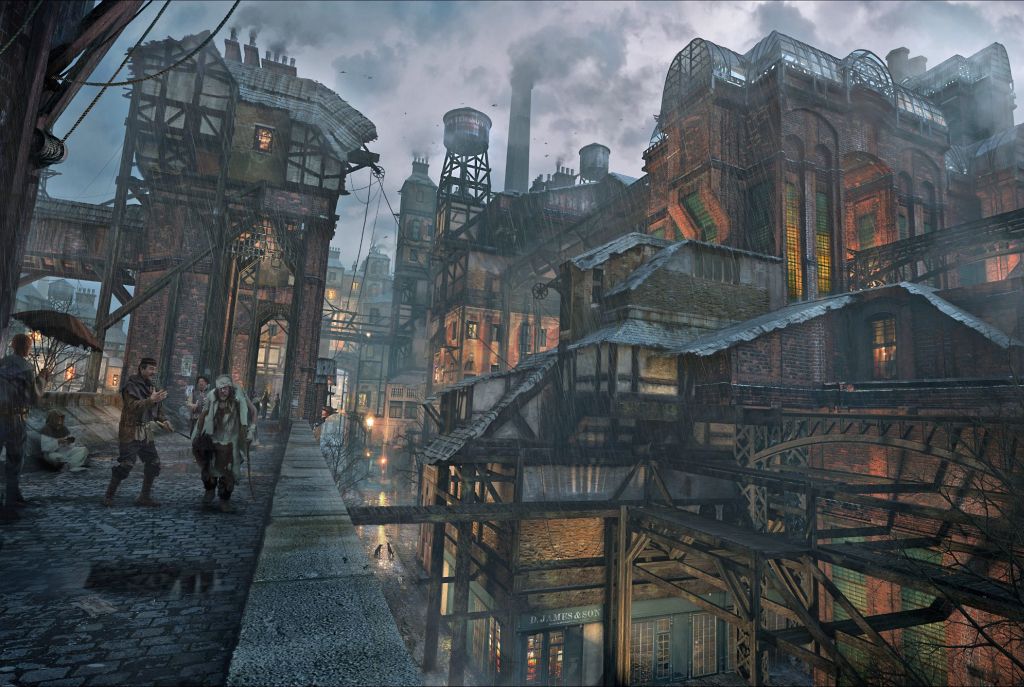
A warren of thieves, beggars, whores, urchins, and cutthroats, the Soot is a quarter of the Imperial city one should avoid. Named for the choking foul air from the smokestacks of ever-burning wood and coal, it’s a haven for rogues and assassins. However it’s also the perfect place for those seeking unsavory work, ill gotten goods, or a place of refuge from the law. Link.

Painting Miniatures: Games Workshop Contrast paints

I am not a fan of Games Workshop paints. They are good quality paints but are overpriced. Additionally (and can say this after using a new set of paints recently at a convention) the design of the pots are poor. While the lids allow for applying paint to the brush, paint also pools up on the lip tab and it gets difficult to get a proper seal closing the pots. Seems after time you are either going to have to scrape out a bunch of paint from the lid seal or you’ll have problems with your paints drying out (who knows, maybe the pot design is intentional in that regard).

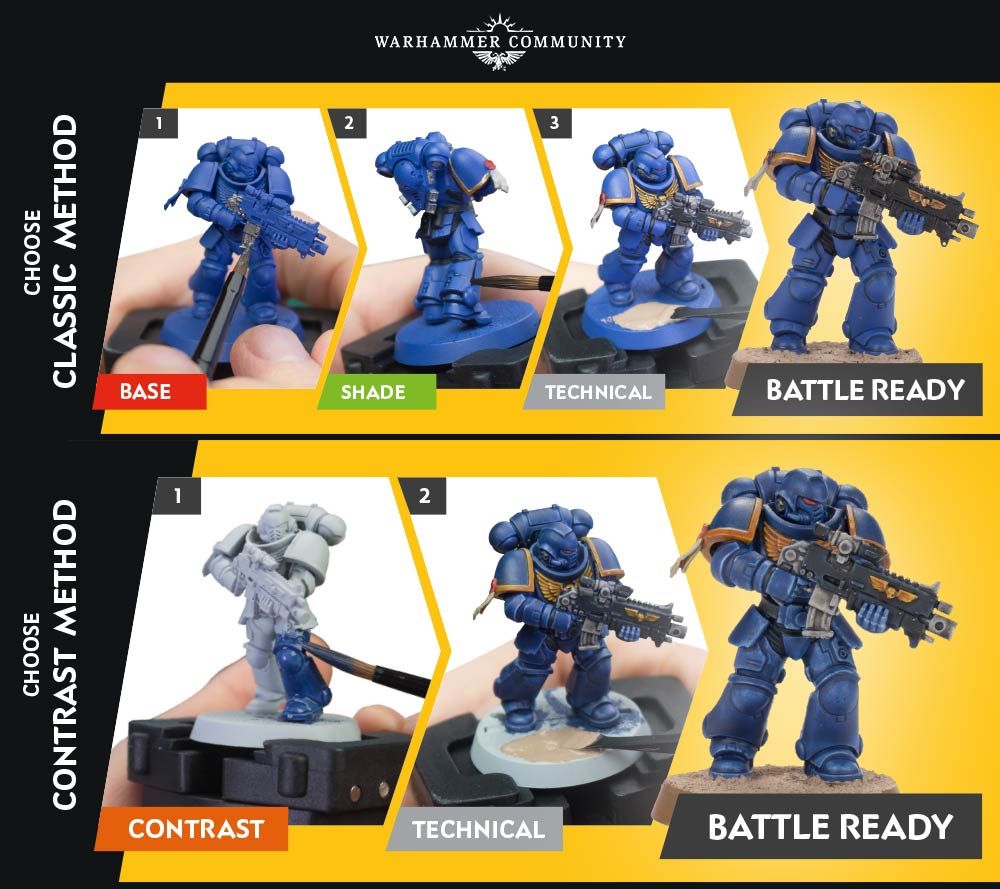
Nonetheless, GW has introduced a new paint line which has piqued my interest. For folks new to the hobby it might be worth checking out. It appears the paints have a glaze medium already mixed in. In effect you get a thinned coat of paint along with a wash all in one go.

I love this. New miniature painters should certainly be looking at these paints. There is a learning curve using them, one of which is using a specific type of primer. While I balked originally at this, I discovered not only are spray versions available but also primer that can be brushed on (providing a lot more functionality of the paint line).

There is some technique to working with them, applying darker colors, then prime and paint sections you want to have a lighter color. A good coat of varnish is needed. Lastly it looks like applying thicker, heavier coats for the contrast paints are the way to go.

You end up essentially applying both a base coat and a wash in one go. Throw in a light highlight or conventional drybrush, you’ve got a tabletop standard paint job. For a slew of rank and file models this looks like a great product. I’ve suddenly got a positive feeling about finally tackling all my Zombicide minis.

Honestly the results using these paints look promising. While it won’t give you a super fantastic paint job, with careful application you can get decent results and save a bit of time essentially cutting out steps to apply washes. I’m excited to see this out there and hope it opens up more people to taking a stab at painting minis.

Saturday Gaming Spark: Ward Elves

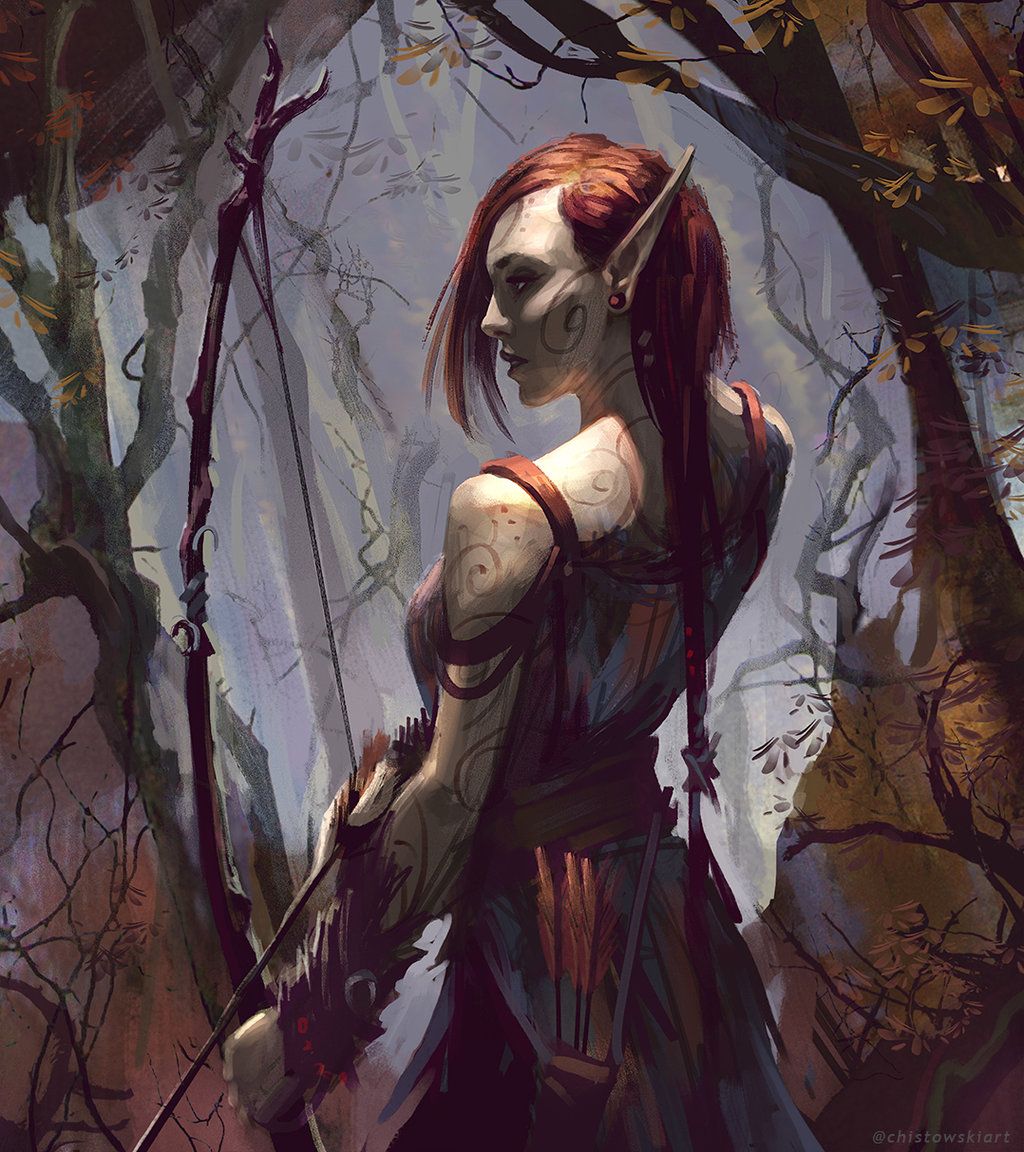
Known for their survival and tracking skills, the ward elves are highly sought as guides through the dense forests of the Western Reaches. They take their namesake from the arcane glyphs of protection which adorn their body. Tales say it is from the blood of their first kill, infused into their skin through some ritual of primal magic. Link.

Using Genesys story points for bennies in Savage Worlds

I’ve dug through FFG’s Genesys rules for a while now and like them. There is still that hump of learning the rules where I’m not sure if I will run it any time soon. It’s not quite a streamlined system like Dungeon World or other PbtA games. However as much as I waver on running a game, I still find cool stuff to use from the system.

One thing in particular I’ve ported over to my Savage Worlds game are story points, and tweaked it for how I disperse bennies. In Genesys, both the PCs and GM can use story points to boost dice rolls or alter the narration some (say a PC spends a point so their thief character has some equipment which could quickly open a door). The catch is that the number of points is static, they just pass between the GM and the PCs. So as PCs use them to their advantage, they transfer over to the GM which can use them to crank up the difficulty for the players.

I love it. One thing that consistently hampers me is the passing out of additional bennies. I tend to get wrapped up with running the game, I overlook some opportunities to distribute more bennies. I do award some around during a game, but I typically look back over a session afterwards and realize there were missed chances. So I started using a similar story point system in Genesys.

For Savage Worlds I use bennies of two different colors. One is for common bennies (white) and the others are wildcard bennies (blue). The common bennies will always have the same total in play, but the wildcard bennies are removed from the game when used.

A. Assemble the pools: Both the PCs and the GM each have their pools for common (white) bennies. For each player, a common bennie is placed in a shared pool for the PCs. The GM gets 2 common bennies in their pool. Every player gets an additional wildcard bennie of a different color (blue). If the player has edges which give them additional bennies, this will be the a wildcard bennie. For each wildcard NPC run by the GM, that NPC will have 1 wildcard bennie.

B: Common bennie use: Common bennies once used are passed to the other pool. So if players use a white bennie, that is passed over to the GM for them to add to their pool of common bennies. Likewise if the GM uses one, it is passed over to the players. The total number of the common bennies will never change but instead pass between the players and GM. Note that for players, their common bennies are in a single pool shared among all the players. Any PC can use them freely. Otherwise the bennies function as per Savage Worlds rules.

C: Wildcard bennie use: Wildcard bennies are used as per the Savage Worlds rules. Once used appropriately they are removed from the game. In addition, a player can freely give their wildcard bennie to another player. If there are situations where the GM feels that a bennie should be awarded to a player during the game, they will give them a wildcard bennie (blue).

D: GM and common bennie use: It is their final discretion, but the GM is encouraged to use common bennies over GM wildcard bennies. As the common bennies pass between the players and GM, it makes for a more dynamic game to only use GM wildcard bennies as a last resort for that NPC.

This has worked wonderfully for my game. My players at times agonize using those common bennies. However I’ve been using my common bennies more to throw wrenches into the PC plans. More so because in the end I am giving them resources to get those clutch rolls when needed.

The ability to grant wildcard (blue) bennies to other PCs is also a nice touch. Sometimes a PC pulls off a great feat during a game that I want to reward. Having them turn around and give that bennie to another player when needed just adds to the camaraderie at the table.

If you occasionally struggle getting the bennies flowing at your game, I highly suggest using these rules. I never fret now if I’ve awarded enough bennies. And as the pool of common bennies begins to grow on my side of the screen, it’s a reminder to use them for opposition rolls, new action cards, or pull the story into another direction, so that the players can get those back into their side of the table to use. Hope folks find this useful for their games.
NISEI, new players, and growing Netrunner

Sadly with FFG pulling the plug on Netrunner, the future of the game looked bleak. However the community pulled together resulting in Project NISEI (now Null Signal Games), filled with folks eager to keep Netrunner chugging along. They’ve done a wonderful job trying to promote competitive play and tinker with deck construction formats like a new core set pool and MWLs. They even were able to get a new expansion pack out which has been pretty phenomenal as fan-made creation. So for existing players of Netrunner I think you’re covered as Nisei looks to keep the love of the game alive. Yet I wonder a year from now, when available core sets evaporate what will happen to the player base as a whole.

The community of Netrunner is going to contract. Period. FFG is no longer producing it and people are going to move on to other games. Nisei will be doing a lot to keep fans engaged, playing, and even expanding their collections. That’s great and I am sure it will stem the hemorrhaging of Netrunner players some, but I’m hoping more will be done to help grow the game too.

The elephant in the room is that cards aren’t being produced any more. Players will have to work on using proxies. Some folks have offered tools to help that which is great. But the effort to go in to making two 46-50 card decks (including IDs) is daunting and likely so much effort that new players won’t even bother. Not a lawyer, but gut check is third party print sites are treading light copyright ground with printing old FFG design cards. So could Nisei work on having an alternative set of cards to help new players get into the game?

Downfall is proof of concept that physical cards can be made and still be able to skirt copyright issues. Something similar could be done for a core set. Creating a full product to replicate the variety of cards similar to that in previous core sets would be daunting though. And options for printing up 240+ cards would be cost prohibitive. So what about altering the product format into smaller chunks, that would still give a new player a foundation of cards to expand from?

A rough concept would be similar to the Netrunner draft packs. New players would buy a base core pack which has bread and butter neutral cards for both the corp and runner, call it a neo-core. Then compliment it buying faction sets, picking and choosing the corp/runner options they want. So a player might opt to purchase an NBN set as their corp of choice and skip getting other corp factions.

One roadblock to this would be not tripping up on FFG’s art, text, and other copyrighted material. With Downfall they were able to alter the icons and layout enough to pass legal muster. However working with a new set of core cards, it might be more prudent to replicate card abilities but have different art and card names. That Sure Gamble could instead be ‘A sure bet’ using different art. Deck construction rules would also have to altered to limit these in order to prevent a player from stacking 6 cards with the same ability. Even though these are different cards, essentially they would work as copies of other existing FFG ones.

The other hurdle to overcome would be to boil down the variety of cards to an essential minimum. It would be folly to try and replicate the variety of cards in existing core sets. Instead pruned sets for each faction could be pursued. You’d need about 14 different cards to make up the neutral corp and runner core base, with 3 copies of each. Then you’d need around 10-11 different cards for each faction (again going with the idea of 3 copies of each card). That’s a lot of art and alternate text to work up. No two ways about it, designing core packs would be a huge task to undertake.

However an evergreen product which new players can purchase providing a base set of physical cards could be a boon to helping expand the Netrunner community. The possible prospect of making proxies for say, 12 cards compared to making an entire deck would be more enticing for new players. Time will tell if the demand for core set cards needs to be addressed. Next year Nisei will have a better idea of how the community is faring and can get feedback if this would be received well. Yet with card printing options and crowdfunding at Nisei’s disposal, certainly something like this could be pursued in the future.

[EDIT: Note Project Nisei has now adopted a new name, Null Signal Games]