Category: Board Games
Jumped into the YouTube Pool
Welp, decided to go with the rising tide of streaming and videos. Enjoy blogging and still think I’ll be putting up written reviews for things that strike my gaming fancy. But I can’t deny that the days of the written blog are waning. I still enjoy making gaming content and likely focus more on documenting my bench and tabletop time with videos going forward. My first effort is linked below.
Card Hand Holders for Solo Board Gaming
Skimming through the interwebs I’ve seen some folks excited to dive deeply into the Arkham Horror LCG and Marvel Champions. I enjoy them immensely and a common trait for both is to helm different investigators/heroes while playing. Especially for Arkham Horror, you can try to tackle scenarios true solo with a single investigator, but that can be a tall order for deck construction. It’s easier to have another “player” at the table to help with stretching limited actions out during the investigator’s phase. So commonly I’ll play these games two-fisted, playing two separate hands simultaneously.
But keeping track of cards in play and sort out which ones are in which player’s hand can be difficult. That’s why I use playing card hand holders. There are a lot of options out there from plastic to wooden ones. But do look thoroughly at products before you buy, especially if you use card sleeves. Plastic ones commonly are a tight fit and might pinch sleeved cards more than you’d like. I got a simple set of wooden ones and the slot size for holding cards is quite ample.
It makes playing so much easier having these at the table. I can keep things more organized allowing me to have more visual cues which cards belong to which hand. Also it allows me to look at what the other “player” is holding on my turns. This is especially nice for games like Marvel Champions where you have quite a bit of cards and abilities that are useful to play on other people’s turns.
So if you dabble in solo board gaming, do consider picking up some card hand holders. They are a nice addition to contribute to a more enjoyable play experience.

Null Signal Games ditching the last of FFG Cards
Netrunner has continued chugging along with the help of community support and Null Signal games. I think overall they’ve done a great job and offered lots of cool on-ramps for new players, and nifty stuff for the seasoned vets, to enjoy Netrunner. Some news that creeped out is that Null Signal games is moving forward with retiring the old FFG cards.
I can understand this reasoning. It’s a way to entice new players into the game, and help tread around legal landmines with FFG. Null Signal Games saw the need to get some type of core set out there for new players. Can totally get how another part of my old post is coming to fruition, offering alternatives to staple FFG cards. It’s interesting they are going further and completely dropping FFG cards altogether going forward as an evergreen product.
NSG has put out a lot of expansions, but I have one thing I’m hoping for in their next big core set supplement (codename Dawn), more IDs. I can see focusing on a pool of cards to offer an expansive floor for the future of the game, with lots of choices for breakers, ice, assets, resources and such. But honestly small expansions, adding a few tinkered and tested cards, can work for that. A lot of variety in Netrunner can come from simply using a different runner or corp ID. I really hope that NSG embraces that idea and offers 4-6 options for each respective faction, that we get a bevy of IDs to play with this neo core.
Regardless, it’ll be fun to see what they have planned for this year.

Project NISEI (now Null Signal Games): System Gateway
FFG pulled the plug on Netrunner, but the community has been hard at work keeping the game going. Two years ago Project NISEI (now Null Signal Games) released a brand new expansion which was pretty stellar for a fan made product. However a lingering issue was the lack of cards that could introduce new players to the game. You could work with getting a bunch of proxies made up but it was a fairly monumental task and not something a new player could navigate through.
Project NISEI understood this and at the end of March, 2021 will be releasing a brand new core product, System Gateway. It consists of 3 different products. The Starter set offers basic corp and runner tutorial decks with a few extra cards for some tinkering. Looks ideal for providing an easier experience learning the nuances and rules of Netrunner. It’s followed up by the Deckbuilding Pack which expands your pool to include all the factions allowing a taste of their different playstyles.
This is a nice implementation for a new player experience. You get a bare bones introduction offering a simpler, yet solid, means of learning the game, along with some additional cards to branch out into different deck construction options. This is further expanded with a third product, System Update. These are old Netrunner cards given a new design. For a brand new player they provide an even deeper delve into deckbuilding.
Time will tell how these sets fare. However I like that if you happen to get people into Netrunner, there are some options out there for people to build their own card collection. My one nitpick is that Netrunner does require a lot of tokens. I’ve got some simple turn and credit trackers, along with some other play aids to keep track of viruses, tags, and the like. They are ugly, bare bones designs but are functional. At least a cheap way to keep record of stuff with a handful of coins or glass beads.
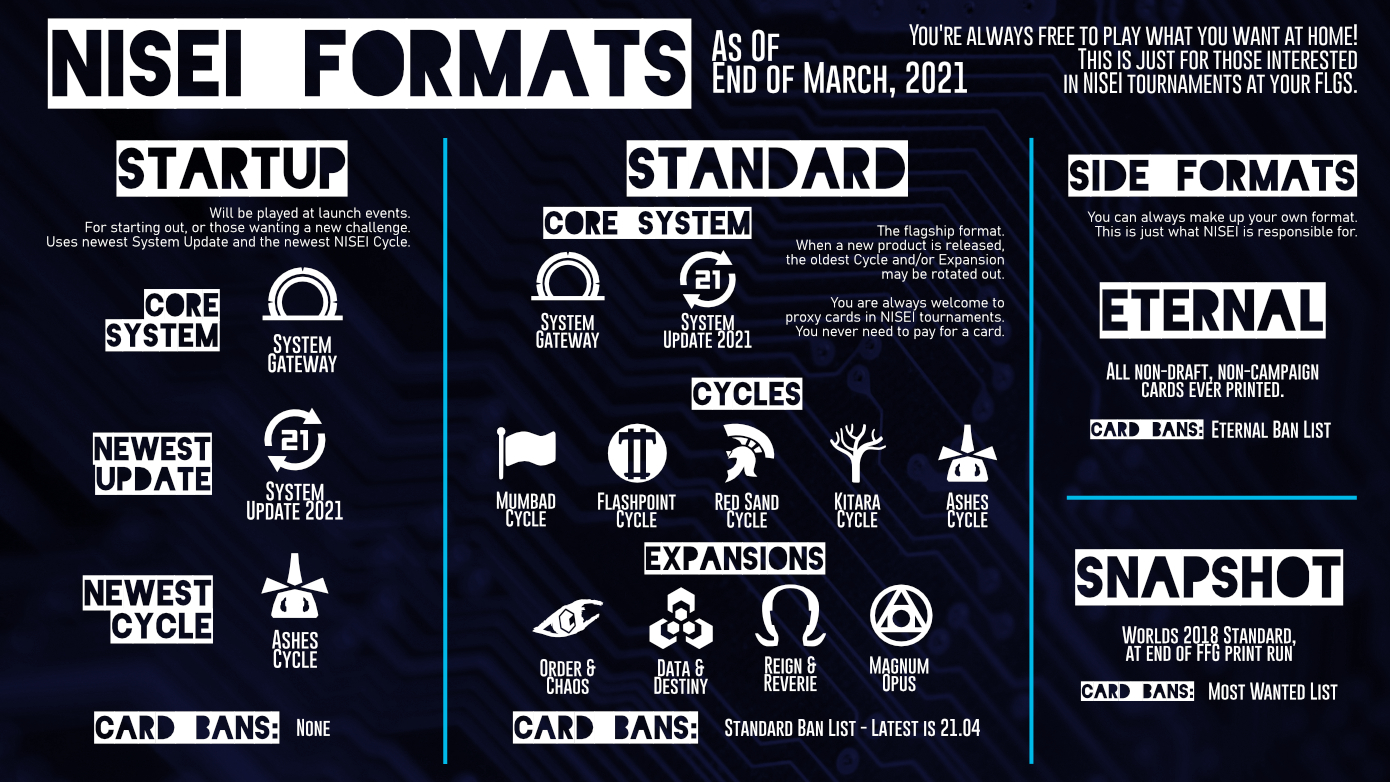
For older players, there seems to be a lot of official formats out there. A reddit post summed the formats up in a nice graphic. Interestingly, I feel the System Gateway format of just NISEI products looks like it would be a lot of fun. A telling sign I hope which will encourage people to take up the mantle of getting new players into Netrunner. Knowing there are cards out there new folks can get if they like the game, that seems an endeavor worth pursuing.
What to buy next for Arkham Horror: The Card Game
You’ve tackled the core set multiple times and finally want to look deeper into the abyss that is Arkham Horror. What do you pick up next? Unfortunately the product line for the Arkham Horror LCG has exploded over the years. While it’s great to see the game have tons of support from FFG, wading into the LCG as a new player can have your head spinning on how to expand your card collection. So here are some suggestions.

Do you need a second core? This is a resounding no, a second core is not needed. Maybe four years ago there would be a lot of conventional wisdom behind doing this. But the game is at a different point now. So no, you don’t need a second core set.
I could see years ago why folks felt this way. Fortunately, my original criticism of the game finally seems to have been addressed. The old core set gave you a taste of the game for up to 2 players. You really could not do much deckbuilding with just a single original core set. Even worse, you can’t explore all the investigator combinations as they rely on dipping deep into a common pool of cards for others. There is a revised core set that takes those issues head on.
There is a dogmatic view it’s required to have two copies of certain cards to make any deck viable (notably Machete and for mystic investigators, Shrivelling). Additionally there were neutral skill cards in the core set considered staples for deck building.
The card pool has greatly expanded giving you lots of other options. While some weapons might not be on the same efficiency scale of Machete, there are decent variants, and also other tools (Prepared for the Worst) to help a player dig through their deck to find that lone copy if needed. Lastly I’d argue that neutral skill cards are too limiting. You now have lots of other cards which can help bolster lagging skill icons and these have other abilities to boot. However now this argument of requiring additional core set for investigator cards is moot.
There is a revised core set in the pipe that removes the need for a 2nd core set entirely. All investigators will have 2 copies of their class cards and additional neutral ones. You can pick an investigator and all the cards will be there to play them. As an additional plus, FFG threw in some new upgrade card versions (which had all been released from previous expansions). So you now have even more deckbuilding opportunities as you progress through the core campaign.
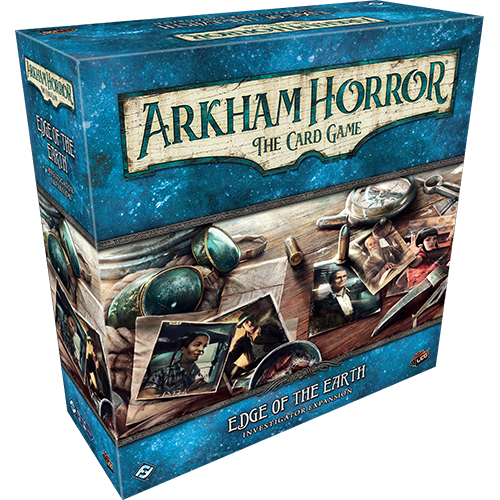
Campaign Cycle Expansions – If wanting to get more bang for your gaming budget, this is an excellent way to expand your card pool. Now FFG has changed the expansion cycle packaging to make it far more easier to get into. Each expansion now comes as two products, one is all the investigator cards in one go. While another boxed set consists of new encounter and scenario cards for the campaign itself. This is far better than the old product line packaging.
Previous campaigns were structured around a big box product that had 2-3 scenarios, new investigators, and encounter cards specific to the entire expansion cycle. And was then followed by 6 additional scenario packs that also had more investigator cards. From the old product line, a typical release schedule was playing the expansion box scenarios first, and then getting each scenario pack sequentially. Or you could get the entire expansion cycle in one go, adding all the investigator cards to your pool from the start. Fortunately this multiple pack format will no longer be an option for older campaigns, making it easier to get, and a better way to expand your investigator card pool.
I would utilize resources to find out what cards would synergize well with investigators you’d want to play. Keep in mind not all campaigns are created equal. I feel some of the more recent ones (particularly the Forgotten Age) were designed for players that have a complete investigator card pool from previous expansions, and the overall cycle difficulty is increased to reflect that.
On the flip side, the Dunwich Legacy and Path to Carcosa don’t really stray much from the gameplay mechanics of the core set. Both have great investigator cards, but you might say Dunwich Legacy feels like a longer campaign akin to the core set. I enjoyed both, and the Path to Carcosa is a community darling. However if you wanted to play an expansion that utilized different game mechanisms, you might want to try out a more recent cycle.
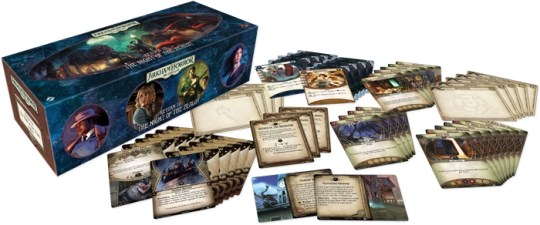
Return to Expansions – To add some longevity to expansion cycles and the core set, FFG released small products titled ‘Return to: (campaign cycle)’ which are decent for adding some replay. However for expanding your card pool they are a poor choice. There will be some additional investigator cards which are commonly higher XP versions of cards in that cycle and/or core set. Another reason to hold off on the Return To expansions are the difficulty level.
If you’ve played a cycle to death and beaten it soundly at the expert level, the Return To expansions might be something you’d be interested in. They add more difficult locations and encounter cards to ramp up the challenge offered by the original versions. If you particularly enjoy a campaign, the Return To expansions add variety and small tweaks to offer more replay. But for expanding your card pool as a primary focus, they aren’t a solid buy.
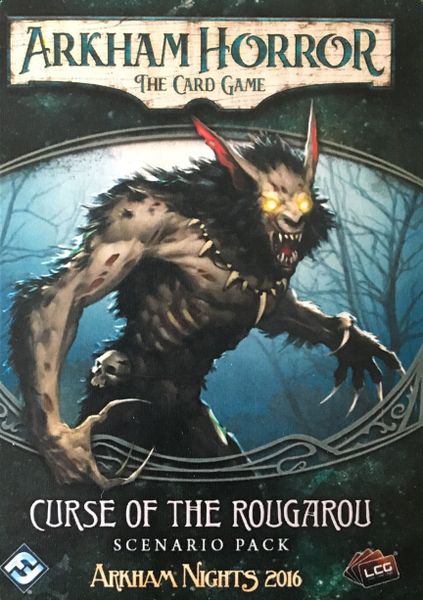
Stand Alone Scenarios – This is another low priority buy if wanting to expand your investigator card pool. These are 1-2 scenarios intended for a one shot game. While they can be added to a longer campaign, they are really designed for a lone jaunt seeking answers to the mythos. The contents in these packs are geared towards scenario cards, where investigator cards (if any) are intended to be given as rewards for its successful completion.
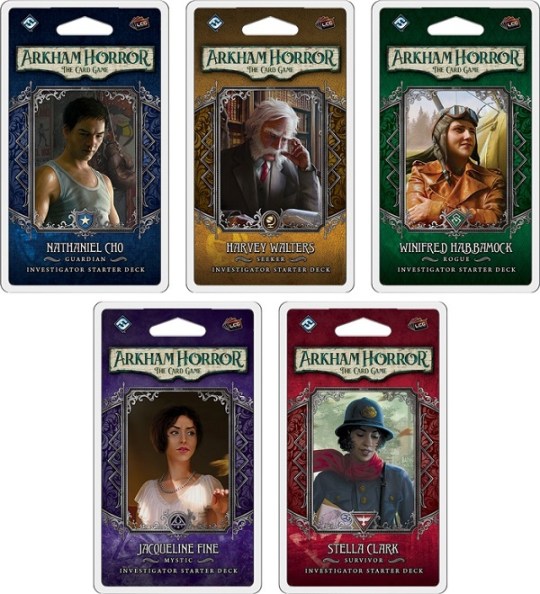
Investigator decks – These are a wonderful, especially if looking to bolster the card pool for a particular type of investigator. All of them are designed to provide a complete investigator deck, along with additional cards to be purchased with experience as you wind through a campaign. I think that’s the primary strength of the decks. Want to add a 3rd or 4th player to your older version core set? You can buy these and each additional player will have a complete deck. More importantly, the decks themselves are pretty solid.
These have some good cards which can supplement the lack of duplicate cards if you have an old core set. As an example Azure Flame is a great option to brace up that lone copy of Shrivelling. Sadly the guardian deck, while a good one, doesn’t quite have a replacement for Machete. You could argue that a fair amount of the cards really work best with the investigator they come with. However there’s a good number that’ll work with just about any other investigator. These decks are something to look into if you like a particular class. As they are solely composed of player cards they are an ideal product to broaden your player card pool.
Game Nite – Board games in Saint Louis
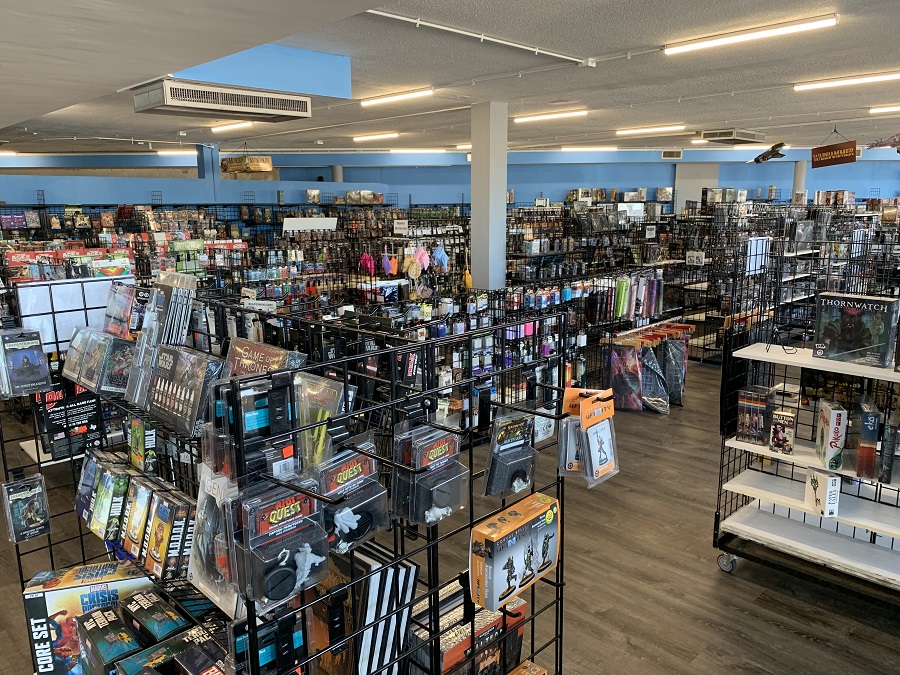
I’ve gotten some more opportunities to check out the options of board game stores in Saint Louis. Another popular haunt, especially for wargamers, is Game Nite. They carry quite a large selection of board games and miniatures. GW is pretty popular as well as Infinity. But other games like those from Privateer Press are carried also, in addition to paints and modelling supplies.

They have an expansive collection of board games and card games. Interestingly they also offer shelf space for used games. I imagine it’s more of a consignment system, but they allow for folks to unload older games. It seems worth giving them a gander too, as most of the offerings are near mint or lightly played. A great way to pick up on stuff that wanes in light of the ever-changing BGG hotness of the month.
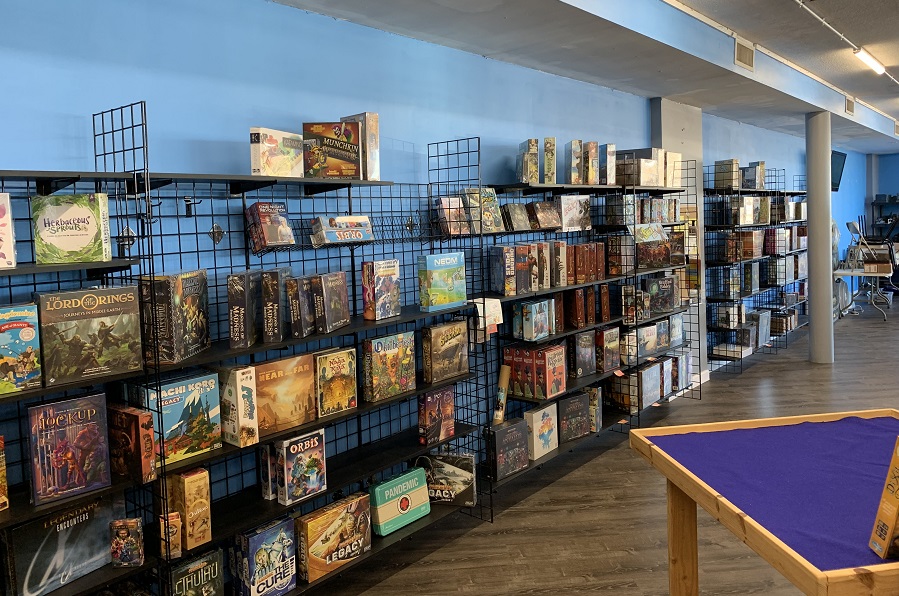
There are also a fair number of tables for in store gaming. Not only are tables set up for miniature wargaming, but there are several tables for card and board games too. Both the weekends and weeknights look to be popular times to visit. I do believe that priority is given to people wanting to run organized events, so plan ahead accordingly if wanting to run a game for just your friends.
They also have a decent sized game library. Combined with ample table space, you’ve got plenty of opportunities to try new games out. Or potentially consider trying a game out before buying it. Pretty nice aspect of the store.
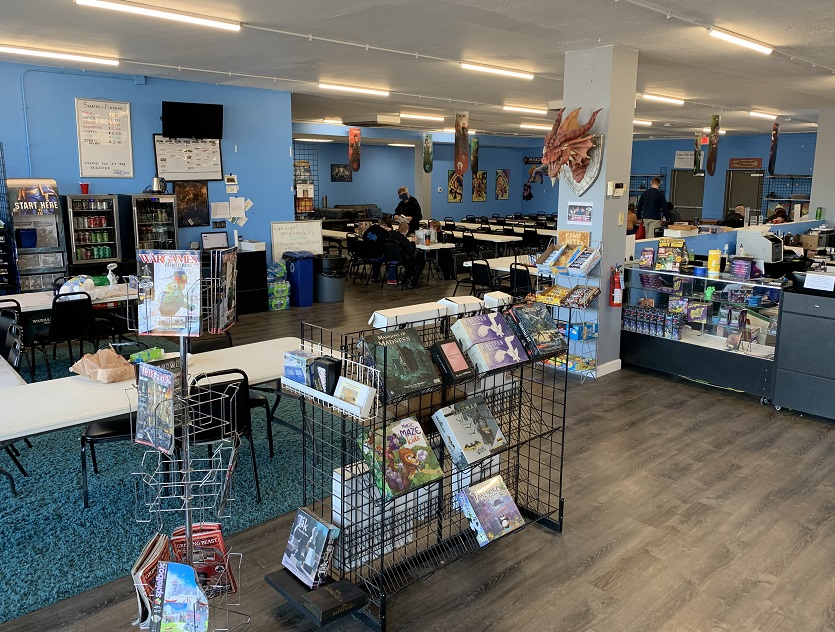
Game Nite is a good place to visit for board and card games (even for the miniature wargamer too), and certainly worth checking out their calendar of events to see if anything tickles your fancy.
Return to Night of the Zealot: Go7 Box Insert
Mentioned a while back, FFG has released Return to Night of the Zealot which is a mini-expansion of sorts for the campaign in the original core set. I still haven’t had a chance to play through it. So no impressions yet on how the campaign is. However I do appreciate FFG looking at ways to stretch the first campaign out some.
It appears that this might be a popular direction for expansions as they’ve announced a similar product for some of the earlier campaigns. You get a decent size box and one thing I immediately thought was to whip up an insert for it. Fortunately Go7 Gaming has you covered as they offer a MDF insert of their own design.

It assembles pretty easily. The divider sleeves have a clever design with a higher edge tab being off center. This way you can alternate the dividers giving support to cards in the box and eek a little more organization into the layout (as you could write on the dividers if you wanted). I’ll admit I now have a little buyers remorse as the new design sports more dividers and tabs (now 14 compared to my box which has an early design of 7). Looks like they realized the variety of encounter cards required more slots and spacers.

The cards are well supported and you have enough dividers to break up cards so that you can take a few out and still support others upright in the box. The insert and dividers also work with the card dividers provided in the expansion. Overall a nice little product worth picking up to squeeze some more functionality out of the expansion packaging.

Terraforming Mars Mat Overlays
Terraforming Mars is a pretty fun game. Still need to noodle through it more to offer a decent review. While the card art is a little bleah, I love the tactile feel of all the resource bits the game has. The downside though is that they are fiddly. It’s so easy to jostle your play mat, scrambling your resources and status markers for everything.
Fortunately other folks have found solutions to this. Of some third party products, I went ahead and picked up clear acrylic overlay trays from Board Game Boost. These fit directly over the player mats.
They are quite nice. The cubes fit snugly and don’t move around. And it’s easy to pick them up and place them in other slots. Additionally there are slots to keep track of higher values if you happen to go over the initial printed tracks. And a nod to the designer, the extra slots can also hold a 5 value (silver cube), so it’s possible to indicate both 10s and 20s on the resource track if needed.
The person also offers another design with a back board, so that you can seal the entire player mat. However I opted to go with just the simple overlay. Something worth looking at if you wanted a functional way to bling out your Terraforming Mars game. One bit I’d mention, the vendor has an instructional video on how to peel off the paper backing and pop out some of the tabs. I would highly recommend watching it before you go to town with the inserts.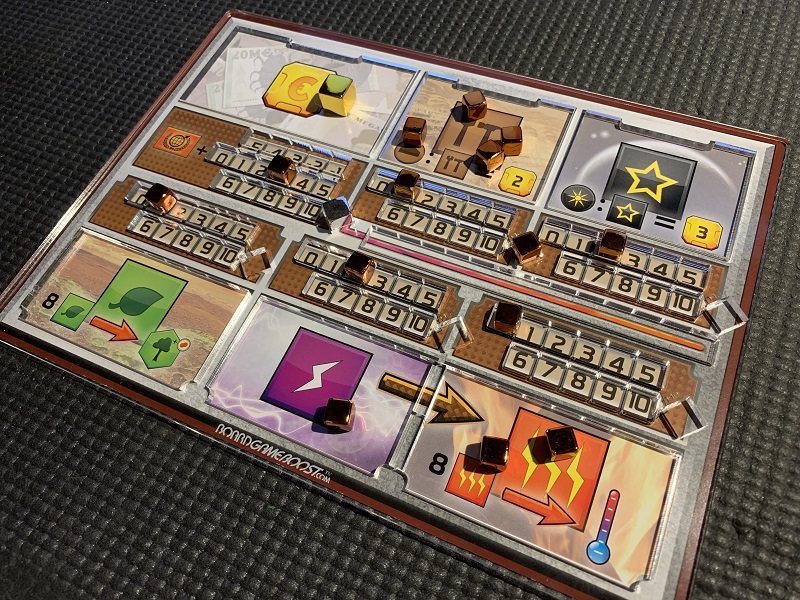
Miniature Market – Board games in Saint Louis
It’s a new year and big changes for me as I’ve transplanted myself from Korea back to the US. Gaming has been on the back burner for a few months but now that I’ve gotten settled some I’ve been peeking a bit on local gaming haunts. Miniature Market was high up on my list as it’s got a pretty big footprint as an online store. I was able to swing by the shop finally and have to admit I’m pretty impressed.

They have a large selection of board games and also cater to the miniature wargamer too. Aside from a lot of GW, Malifaux, Infinity, a smattering of Bolt Action, a wide selection of Reaper Miniatures among other stuff can be found on the shelves. In addition to paints and supplies, they also carry quite a bit of terrain. Well worth checking out if gaming with miniatures is your bag.

They carry a wide selection of board games and card games. Not to mention a well stocked bookcase of RPGs. I’d say most of the physical store delves more in the new hotness on BBG. But you can find some older gems, and I understand it’s always worth asking the staff about a particular game as it might be in the warehouse (or check their online store). The staff always seems helpful and engaging. I quite liked them being proactive asking if I needed assistance instead of being holed away behind the register as I wandered around the store.

The store also has quite a large dedicated space for gaming with several open tables that is well lit. They also seem to have a pretty active schedule running events every weekend and weeknights. I’m impressed with the amount of space available for in store gaming. Keep in mind they try to cater to folks running organized events. You could likely get some space to meet with mates and play a game for the afternoon, but understand that priority will be given to people registering on their calendar of events.
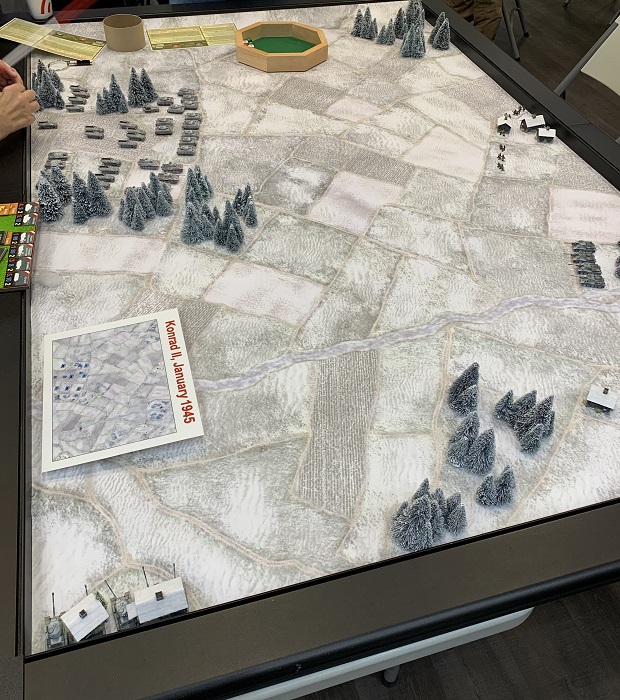
It’s a well stocked store, with lots of opportunity to get a chance to meet people and play. If running through the Saint Louis area, Miniature Market is certainly a place to visit.

Review: Marvel Champions: The Card Game
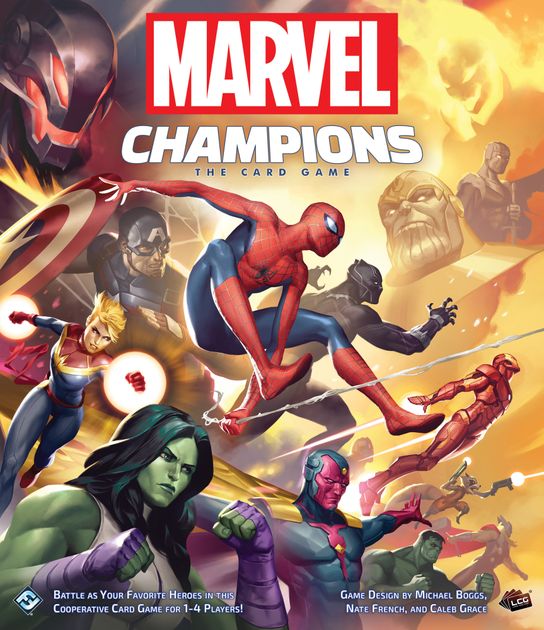 In the footsteps of other LCGs in the Fantasy Flight Games’ catalog notably, The Lord of the Rings and Arkham Horror, a new cooperative card game has emerged, Marvel Champions: The Card Game. For 1-4 players, each person controls a hero and works together to defeat a dastardly supervillain. Pulling from the Marvel comics and using a tried and true formula similar to other FFG Living Card Games, this cooperative deck construction game has a lot going for it.
All players represent a particular hero, each one having hand size limit and cards specific to their comic character. The superhero character cards comprise of about half your typical deck. In addition players can tinker with their deck composition using cards from one aspect (essentially sets of cards that have a particular flavor of game mechanics), along with more generic use neutral cards.
Each hero gets their full turn, starting with the first player that’ll rotate each round, before passing to another player. The hero can play cards from their hand that either does a one time action, has some long term effect, or potentially be an ally remaining in play to help in thwarting the villain. Lastly, the player can use their hero to either attack the supervillain directly or try and address the villain’s scheme. After playing all of their cards along with committing the actions they want, they can discard as many cards as they’d like and draw up to their hand size. This is where the fun part of the game comes in as the player can also do a special once-per-turn action, flip their hero card to an alter ego (or vice versa).
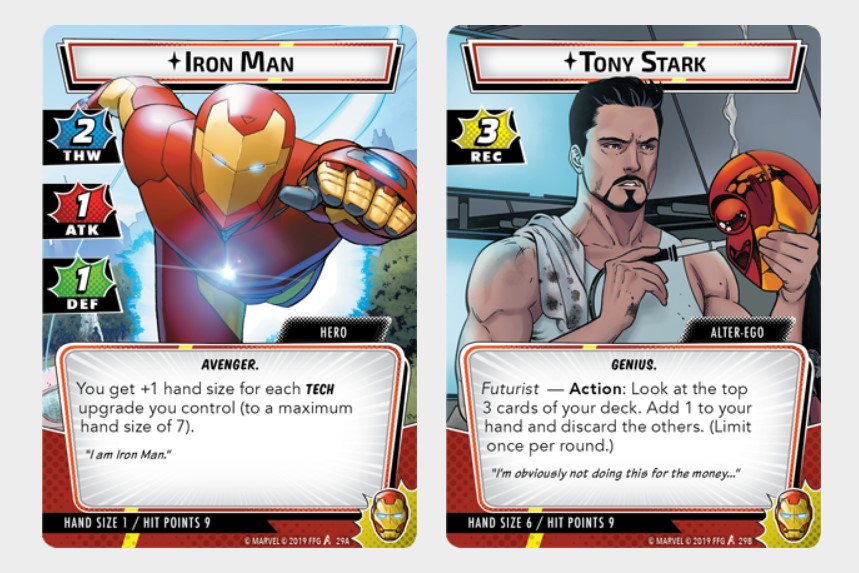
Each hero persona has an alter ego form. In the non-hero form the player commonly has a larger hand size and can heal damage taken by the villain. While in hero form the player can be more proactive taking on the villain or stopping their plans, but can potentially leave themselves open to being attacked. In addition to this, in hero form the player will also have a limited hand size. So usually they need to have a pretty solid board state with cards in play to provide resources or allies to help take the fight to the villain.
After all the players have had their turn, the villain will act. Threat, a means to indicate a timer of sorts, is added to the main villain scheme. If the threat equals or exceeds the threshold for the villain’s scheme, the players lose. Then the villain will attack each player one by one, doing damage equal to the villain’s stat plus a potential variable amount based on cards drawn from an encounter deck that can ‘boost’ the damage. If a player ever takes enough damage to equal or exceed their hero’s health, they are out of the game. If all the players are eliminated, they all lose.
A hero can attempt to defend against an attack, reducing the damage they take. However this will exhaust them. You can only ready your hero and cards in play at the end of your turn. So essentially you’re giving up your next turn when defending against a villain attack. If a player is in their alter ego form the villain doesn’t attack them, but instead adds threat to the main villain scheme. This all leads to some really interesting choices aside from playing cards for the player.
Do you settle on being in your alter ego during the villain turn? This will ensure you can get a larger hand size to help out the following one, and even potentially heal up if needed. However main scheme will get even more threat piled onto it, ramping up the end game condition for losing. Or instead do you settle on having less cards to throw down next round, but the flexibility of either attacking the main villain or addressing the villain’s main scheme? Or maybe if in hero form, you block an incoming attack essentially shrugging off the damage (yet that also means limiting your actions on the next turn). Fun choices to noodle through while you are playing.
This all gets compounded even more so during the villain turn. After the main villain attacks (or adds threat to the main scheme if a player is in their alter ego form), each player draws a card from the encounter deck. Like Arkham Horror, the villain has a special deck to add complications to the scenario. This might mean adding more dire schemes players have to take on, or minion villains that attack the players during the villain phase, or even cards to hinder future attacks against the main villain. This layers on challenges for the players, ratcheting up the difficulty as the game moves on.
All the while the players are in a desperate fight against time. They have to inflict enough combined damage to essentially enrage the villain further, transforming the foe to another form (or stage). If there are no further stages for that villain the players win. This is the only way the players can win the game. While they can try to address the main villain scheme, they can never stop it completely. They have to balance between keeping the main scheme in check and also chip away at the villain’s health, hoping to eventually hit their enemy hard enough over time to vanquish them.
Actually playing cards from your hand is easy. Every card will have a cost to put into play, and in addition they provide resources of certain types indicated with symbols. To play a card, a player discards cards from their hand with enough resource icons to match the cost. Resources spent this way can be of any symbol type, but commonly you’ll get a bonus if a specific resource is used.
Players will eventually have upgrades, resource cards, and allies in play to help out from turn to turn, reducing the need to have a large hand size. But note that while a player can have ally heroes in play, they are temporary. There are limited means to heal damage allies take after stopping a villain’s attack. Also most allies sort of damage themselves when used to stop a villain or reduce the threat on a scheme, so effectively it puts a turn limit on their use.
The Good – There are some immense pros as a cooperative game. Unlike many other LCG games from FFG, this offers a fair amount of deck construction options just using the core set alone. The game is challenging, with options to make each villain more difficult. The game play is flexible enough with resource costs that you can usually do something during your turn, reducing the downtime. But typically the game forces you into some challenging situations and critical decision making. The art is colorful with simple icons and symbols, the components are thick cardstock, and the box roomy enough to hold a few more expansions.
The Bad – There really isn’t much story akin to what you’d get in the Arkham Horror LCG. The game is pretty much about beating down the villain and there isn’t any real progression of the villain master plan as the game progresses. So there isn’t some rich, story telling happening when you play or a longer campaign to look forward to, and instead it’s pretty much a drawn out fight against a villain. The game is deceptively simple and some keywords and card interactions are going to have you grabbing the rules every once in a while to ensure play is moving along as intended. While much of the art is top notch, some of it is a little disappointing, which is odd considering you have such a wealth of Marvel source material to draw from.
The Verdict – Marvel Champions is an immensely enjoyable coop card game. While there is some card jargon and mechanisms to work through, it’s far more approachable than other similar coop LCGs from Fantasy Flight Games. I love Arkham Horror, but it can be so daunting with terminology, task resolution, and restrictive player actions, that Marvel Champions is a downright refreshing take. But don’t think there isn’t a lot of play here. You are going to make some agonizing choices and will have that same roller coaster feeling from turn to turn, with highs getting great draws and a player board that just ‘clicks’ with efficiency, to abysmal lows as you suddenly draw a dire villain encounter card. Fun stuff.
Yes, there isn’t much story to the villains and their minions, but every villain deck can choose from a particular subset to make up the encounter deck. This allows you to tailor the difficulty even more and also offer some change ups to the opposition and challenges you’ll face stretching out that replay value even more. Aside from this are the heroes. You’ve got 5 hero choices for a 1-4 player game, and every hero can dip into different aspects to give their decks some changes to play style. Mind you deck construction is still hobbled some but there is a fair amount to play around with just using the core set (and quite a departure from previous LCG offerings from FFG).
Lastly, as a coop game Marvel Champions is just a solid experience. You really get that feeling of working together to stop a supervillain, and mechanisms of the rules encourage this type of cooperation. With difficult choices, plenty of variable replay, room to tinker with deck construction, and an entire universe of untapped superheroes and villains to draw from, you’ll find a wonderful card game here.
 Geek Ken